Maggie Brewer
The Milliner’s Girl
But then her face,
So lovely, yet so arch – so full of mirth,
The overflowing of an innocent heart. Rogers.
Maggie Brewer is all day alternating between the shop and the room back of it, selling bonnets, flowers and feathers in the one, and stitching “for dear life,” in the other. Never on any account, looking dull or stupid, or forgetting the fact that she is an exceedingly pretty girl.
Old Mrs. Stitchem, the proprietess of the establishment, declares that Maggie is worth fifty other shop girls, and Miss Betsy, the forewoman, had rather have her services than those of any of her assistants. As for the ladies who patronize Mrs. Stitchem, they are equally well pleased, for Maggie is never weary of looking for “just this shade of blue,” or “just that width of ribbon,” and will disembowel fifty boxes for the benefit of their curiosity, without a single murmur. May and many a young man, allured within the glass doors, by the pretty face behind the counter, and, intending to spend nothing, has found his pockets lighter by several dollars, and his hands full of gauzy nothings, of which he could make now possible use – for Maggies is a thorough little tradeswoman, and uses her smiles and beauty as well as she does her nimble fingers. She can flirt in the most approved manner, and is as wicked as coquette as can be found upon this mundane sphere; but, as far as virtue is concerned, she is incorruptible, and would guard her honor with her very life.
Maggie is quick of speech, and can express herself, fluently, but her grammar is somewhat deficient, and she is fond of superfluity of negatives. Any thing she disapproves of, is stigmatised as “real mean.” Over-work is “real mean,” bad needles are “real mean,” and scolding is “real mean.” A rainy day, or too fastidious customers – a rent in her best dress or a bad dinner, all are “real mean.” There is no stronger term in her vocabulary. Maggie’s dress, on holidays, is as scrupulously arranged as that of any Fifth Avenue belle. Her bonnet, with its gay flowers, shades of the glossiest of ringlets, and her long skirt sweep the sidewalk with as great a disregard of economy as though she was worth a million. A shabby garment is the only thing which will give Maggie a fit of the blues, and a badly fitting basque is the object of her supreme and unlimited disgust.
Maggie’s home is situated on the “East side” of New York, beyond the Bowery, in on of the streets running down towards the river and there she dwells, in company with her widowed mother and several sisters, who are either dress makers or tailoresses. The young men of the neighborhood cast glances of admiration on Maggie, as she goes toward the shop in the early morning; and teh butcher around the corner is driven to distraction’s verge by the prejudice which old Mrs. Brewer entertains against him.
One of Maggie’s sisters is engaged to a prosperous journeyman tailor, and the others have each “their young man,” who is supposed to be paying “particular attention,” by all the watchful observers. But, in general, she passes to and fro without disturbance, thinking of all those objects of interest which the humblest life affords, or calculating (if it be Saturday night) how far the little sum in her portemonaie can be made to go; and on the whole is perhaps as happy as many a richer maiden who rolls past her among the cushioned seats of their father’s carriages. During her shopping excursions, Maggie patronizes the Bowery. There the colors are brighter, the patterns larger, and the clerks mor loquacious. There are bargains to be met with. Damaged lace at less than cost, veils from auction, at half price, pink lilies and blue roses, to be purchased for a mere song, and embroidered cotton handkerchiefs, which the shopmen declare can never be told from linen, for a shilling a piece.
It is Maggie’s delight to visit these stores by gaslight, in company with several young women of her acquaintance, and then and there expend all her superfluous cas in the purchase of various articles of adornment, and go home chatting about that “real pretty clerk who measured ribbon,” or that “real mean man who would not throw off sixpence on the muslin.” Another great enjoyment is to be escorted in the evening, by some spruce young beau, to an ice cream saloon, and there to be overwhelmed with attentions. Other girls are there to observe and admire, and other beaus to grow jealous. There is always such a pretty fountain in the centre, with a white statue throwing water over its head, and such a nice display of artificial flowers, and the waiters, in their white aprons, are as polite as though they were serving a princess. Indeed, Maggie quite imagines herself a great lady, and draws off her kid gloves with an air. Going home, they always walk slowly, and are disposed to talk sentimentally. The young man says, he “would have like to have stayed in that place for a considerable time.” And the young lady inquires “”Why?” And her escort answers, “‘Couse he had such good company.” This brings a brighter red to her cheek, and she turns away from him. Then, somehow, Maggie finds herself looking out of her little attic window, long after she ought to be asleep, wondering “whether he really meant anything by it,” and imagining the feelings of a bride, in white attire and orange flowers. Some of these bright evenings there will be more smiles and blushes, and a strong palpitation of a certain, honest heart; and after that, Maggie will “keep regular company,” and will have lovers’ quarrels, and make them up again; and finally, she will get married, and settle down as wife and mother, in some compact little second of third floor. Such a time as they will have at the wedding defies description. All the relatives and friends will be invited. Sarah’s young man, and Lizzie’s young man, will come, of course; and there will be a plentiful feast prepared for their entertainment. The rich old aunt, from Peekskill, will bring a present of teaspoons, and will make Maggie blush by whispering to her, that “in a year she will also give her a cradle.” The bridesmaid will have to endure sundry jokes, about bridesmaids being always destined for brides, in the shortest space of time. And the sisters will be informed, by all the old ladies, that their turn is coming next. All the gentlemen will salute the bride, and try to kiss the bridesmaids; and there will be much screaming, and running into corners, and the ugliest damsel will be far the easiest to capture. And after supper, there will be a good deal of singing, and a number of tunes upon the somewhat cracked piano-forte, and as much dancing as can be managed in the limited space between the table and the fireplace; and a little after midnight, the guests will take their departure, and Maggie Brewer will bid them adieu as “Mrs. Smith.”
If Maggie’s husband is prosperous, she may some day move from the second floor to a brown stone mansion, and, perhaps, eventually keep her own carriage, and a dozen servants. Should you meet her after she gets up in the world, you will recognize her by some lapses in grammar, and a habit of wearing very gay flowers in her bonnet. But, although neither refined nor educated, she will still have the same light spirit, gay heart, and nimble fingers, as when she measured ribbon for Mrs. Stitchem; and although she may be sneered at “for having risen from nothing,” and looked upon with ridicule by some of her more well born neighbors; she will be very happy, and make a loving wife, and good mother.
But Maggie Brewer is better off than the great multitude of shop girls in New York. Maggie has a home where she can live with a good, kind mother, and in the companionship of her sisters and little brother. She receives nine dollars a week for her services in the shop of Mrs. Stitchem, while her co-laborers get only three or four.
There is a mischievous spirit governing the will and actions of all working females. They seem to cherish the idea, that being women, they should live without labor. From Infancy up, they are continually counting upon assistance and support from relations or friends, or looking forward to the time when they shall have a husband to provide for their wants. It is frequently said, that in New York, there is nothing for working females to do; or that the compensation they receive is not adequate to their wants. How could it be otherwise, when there is such a total lack of care or concern, on the part of operative females, towards the interest of their employers. They work only for their wages, and anxiously watch the clock for the hour to quit. They submit to it spitefully, and only for the time being, expecting, of course, to drop it to-morrow or next week, and fly into some harbor of rest, – some have of repose, where their wants must be provided for, and where luxuries shall be showered about them. And such is the feeling of shop girls generally. No wonder then, that their employers can not pay them more. It would be unreasonable to reward their assistants for inattention and neglect. Maggie Brewer is an exception to the masses, and consequently she receives fair compensation.Some get even higher wages, but they are still more competent and useful, and increase the profit of their employers, where others would carelessly let in waste and destruction. If shop girls acted upon the same principle that men are obliged to, they would be worth far more to their employers, and feel a thousand times happier themselves.
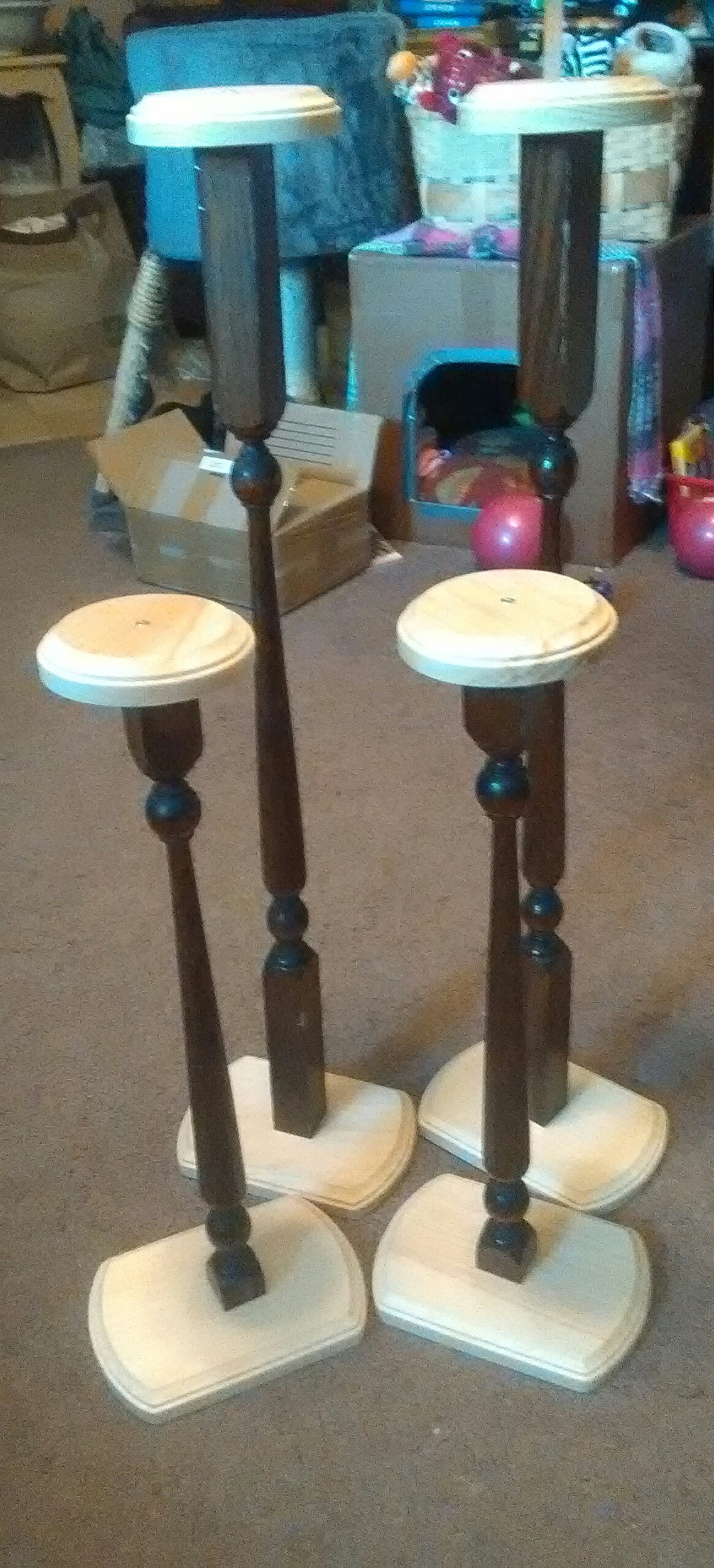
 A new antique bonnet block arrived. This block is just darling. It is petite. I do not know yet if it is just a small style, a small size, or even a child’s size. Because of all the pin holes, the many many pin holes, in the plaster, I am hesitant to use it regularly to block. I may just try the one to find out what the finished piece looks like.
 and this block for me. It would be great to have usable copies of all four plaster blocks.

 June finally brings an event for me – the Genesee Country Village and Museum’s War of 1812 event. Find me in Foster, the building just ahead as you walk through the toll booth, demonstrating sewing straw hats and bonnets. I missed this event last year because I was visiting the hospital instead. So, I am doubly looking forward to this year. (right: the demo from two years ago.)




 Excerpt from









 If I Had My Own Blue Box: