Part 1: Wednesday chat…
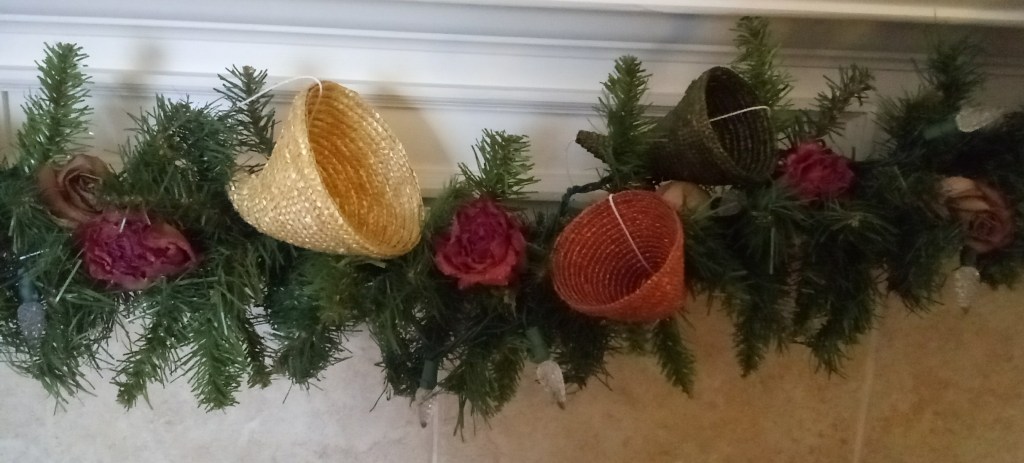
Part 2: Introducing Share the Spirit of the Holidays!
Find the Cornucopia in the Holiday Whimsy section of my Etsy shop.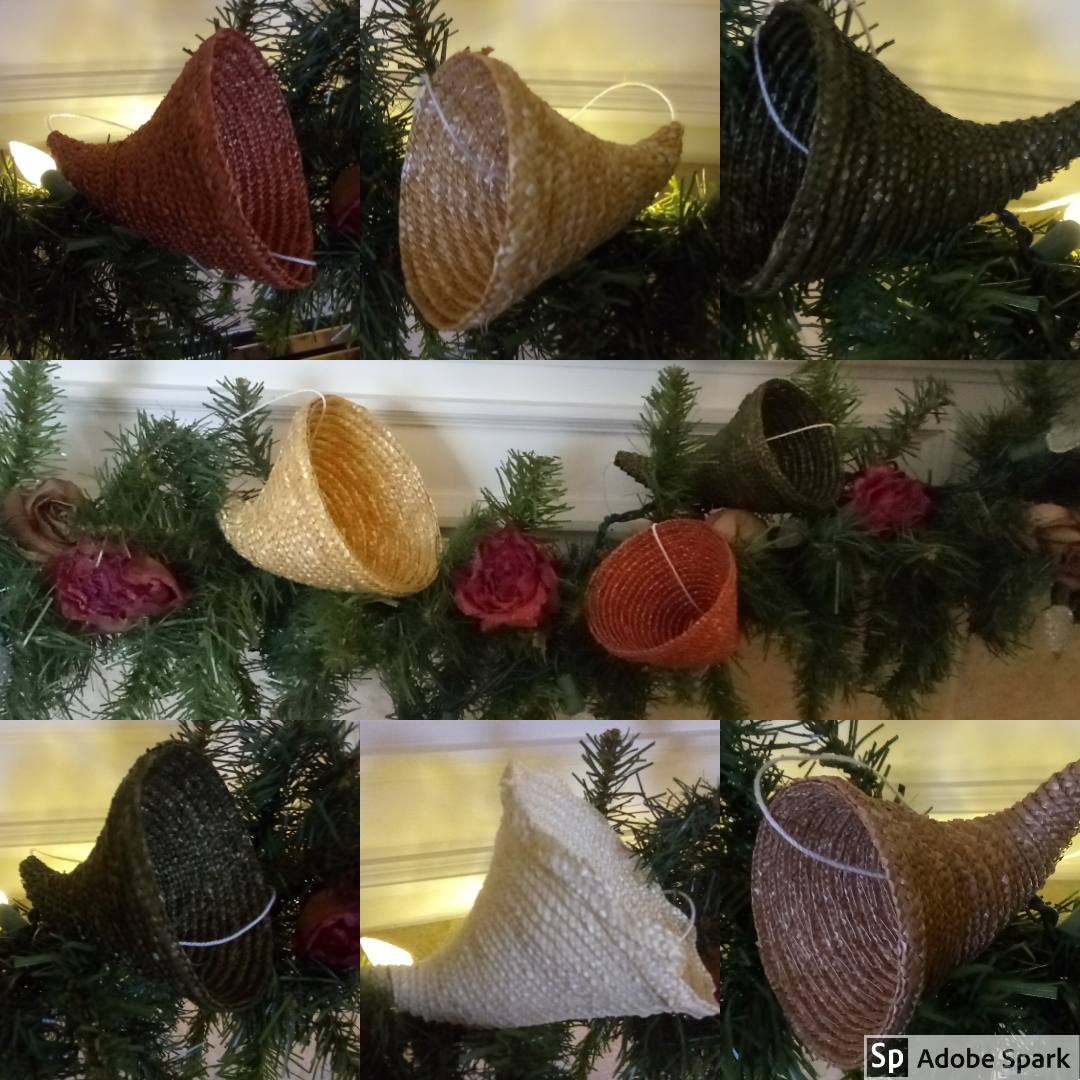
Part 1: Wednesday chat…
Part 2: Introducing Share the Spirit of the Holidays!
Find the Cornucopia in the Holiday Whimsy section of my Etsy shop.

I want to say Thank You to everyone who takes the time to leave a review or send me a note when their package arrives.
Reviews can be a big pick-me-up, especially in these stressful times. Knowing something I make brings joy to others, brings joy to me.
Reviews also help us, craftspeople and artisans, know what people like and where to focus our attentions. This could be favorite items, styles, colors, materials. Today’s review helped me make a decision on fall/winter materials.
I thought it would be nice to make it easier to find the free projects I’ve shared here on If I Had My Own Blue Box as well as those on Don’t Paint the Cat. After all, if it is challenging for me to remember and find each of the projects I have offered, it is likely challenging for my readers. Here is a collection of the projects I’ve offered over the years. They are in a variety of formats including videos, pdf printables, and blog posts. Note some of the projects from my video series span multiple posts/video.

——————————————
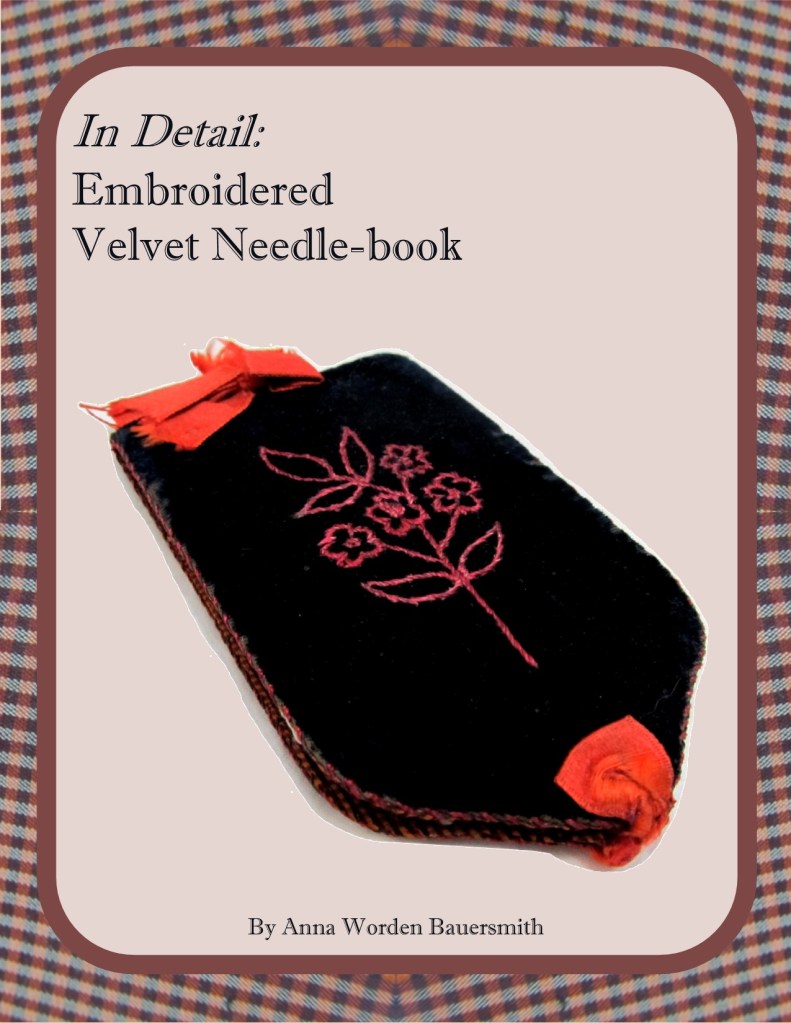
Find the In Detail downloadable PDF here:
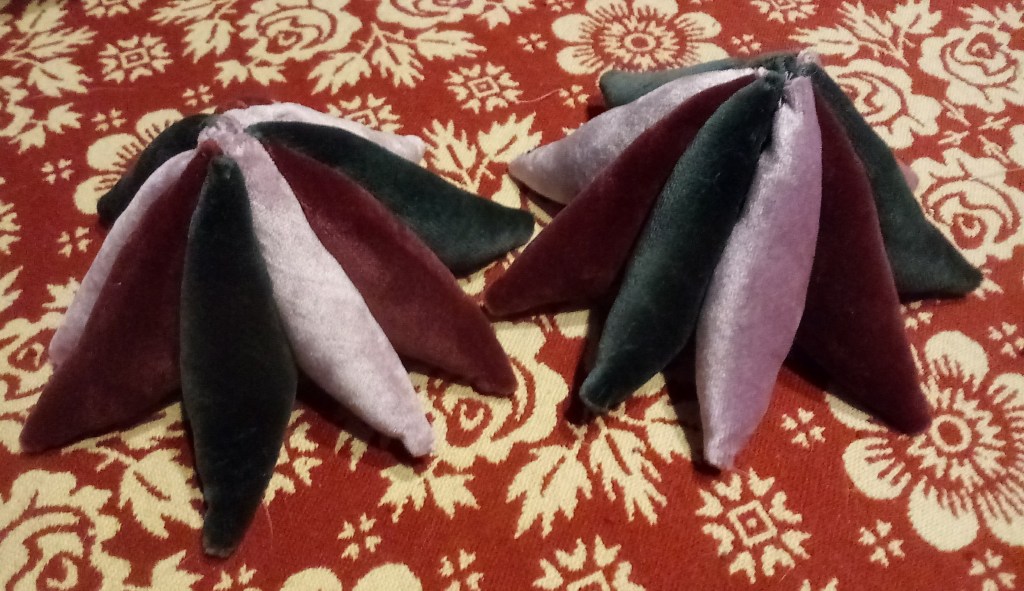
Find the Limited Edition Kit here:
(Remember – You need to order both the Kit and PDF)

I actually did a happy dance at the mailbox. I am pretty sure the frogs in the pond were as excited as I was. Then, I even jumped up and down as I pointed to my envelop, yelling “Thank you” to my delivery person. She was kind enough to yell back at the overly-enthusiastic, possibly crazy person, as she drove by.
So…. what had me so excited?
A small, 9×10″ padded manilla envelop.
This is an envelop that I wasn’t really sure would ever arrive. When I stumbled across it early in July, I thought I was seeing things. I had been looking for one of these for years. Really. Years. But, there is was. Well, not it. They. There they were. Dirty. Filthy. Worn. Damaged….. Perfect.
And… in England…. in the middle of a Pandemic…. in the midst of a global postal slow-down……
The shipping notification gave a two week window. Knowing how things were going, I figured they might show a week or so after the window. As events evolved, I started to wonder if the package would even make it. Would it get lost? Would someone get sick? Would it get mixed up with mystery seeds?
Then, mid-day-ish, I went to the mailbox to get a box of flowers my delivery digest said was coming. I open my mailbox to see not a long, skinny box, nor even a key to open another box, but a little manilla envelop…..
Que: “It’s here!” (loudly) and happy dance
Que: pond frogs replying in mutual glee…..
okay. maybe not so much with the frogs.
Some of you may be looking at the video wondering “What are those things?” or “What is she so happy about?”
I suppose I should back up and start with:
What are Straw Splitters?
Straw splitters were tools used for splitting a cylindrical tube of wheat or rye straw into almost-sorta flat pieces that can be braided/plaited or used for making straw motifs/decorations.
There were a few different kinds of straw splitters used in the nineteenth century. Here is an article from The Straw Shop showing the different types of straw splitters. Mine are similar to those in the fifth photo down. As you can see from their article, straw splitters initially were very small tools easily lost in their time or over time. I can’t help but wonder over the decades, how many disregarded mystery items found tucked in workboxes were in fact straw splitters.
As I said in the video, I am very excited to have these and to be able to display them in the future. At one point in the video, I had to remind myself I was recording. I could have sat there staring at these little tools for a long time wondering whose hands used them, how many hundreds or thousands of straws they split, what hats or bonnets they became, if they helped feed a small family or maybe a large one, and how they were lost……
My next steps will be to temporarily add them to the display case I have. I don’t foresee being able to get the case I want this year. The craftsman only does this one event a year. I think the temporary case will be the safest place for them for now. Eventually, I will get the right case. In the meantime, it would be nice to find a blacksmith who could reproduce a straw splitter like this.
*Note: I mis-spoke in the video. These are not archeological finds. These were found by a person using a metal detector.
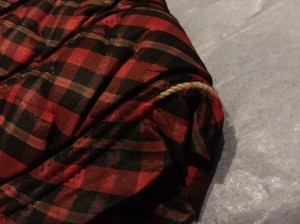
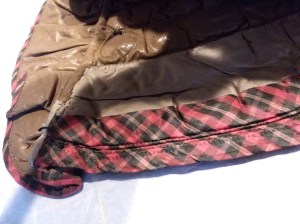
A nice winter hood arrived today. This is a wadded or pumpkin style hood in a red and black plaid silk taffeta. Inside is a brown polished cotton lining and a tan silk facing.

This is the largest of the wear spots that almost all appear to be from rubbing in storage. This is part of the triple set cords.
Here you can see the cord placement, a triple set closest to the front, followed by two double set cords.

This shows some of the interior:
Personal linens protect your clothes from… well…. the biology of life.
All too often, our personal linens become an after thought or an overly procrastinated project.
This challenge is to make personal linens for your wardrobe. This can include: cuffs – collars – kerchiefs – fichus.
As with the previous challenged, this is for fun, you set your authenticity goals, you pick your era.
How to participate:
Join the Facebook Group: Linens Challenge. There will be questions to answer so I know you are a real person.
We will begin discussion officially August 1st.
What to do:
Decide what personal linens you need and share your progress as you make it or them. Your project can be from any era and any region.
Share your progress. This can include: pattern, directions, or inspiration piece, your material choices, and steps as you work.
Rules:
This is for fun. Each person will choose their own goals for this project. I ask that we support each other in those goals. Participants may choose to do any era, region, and size container. I also welcome those who wish to work in doll scale.
Mid-stitch, I decided to grab the mail since it is so hot outside. I figured the video below would be a funny unboxing as I opened a package of a silly purchase. The photos in the listing showed what looked like an odd, fadded, tattered hood. I wasn’t sure what my $11 purchase was going to be.
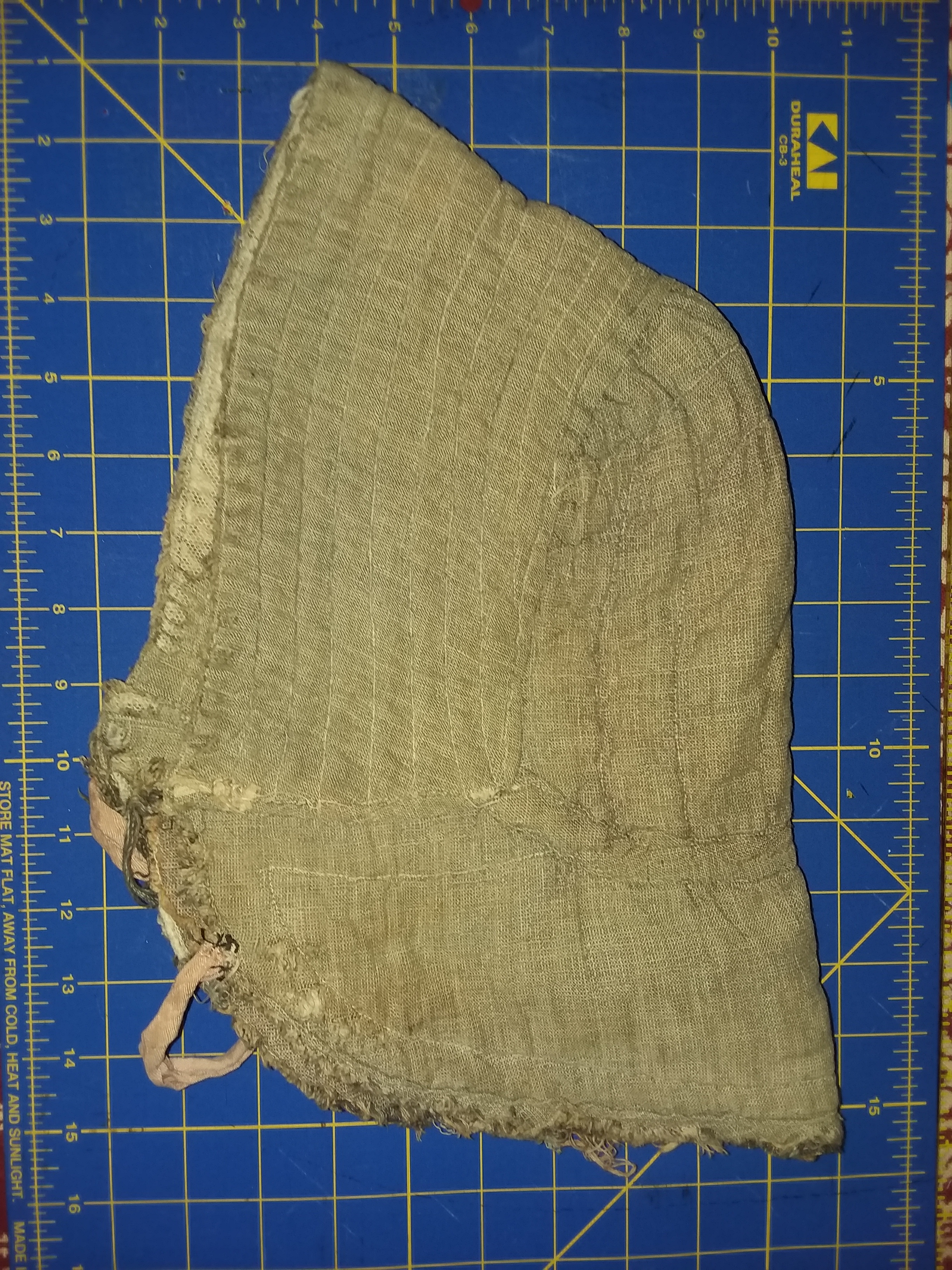
If you are looking over at the photo on the right, you may be confused or thinking “what is the big deal about that plain thing?”
Well…. This plain looking hood is an oddity. It turns out I am completely perplexed…. And very glad I bought this on a whim.
As you watch the video, you’ll see me going from assumptions to questions. I suspect my tone changes in the video too, as I start realizing just how odd this oddity is.
I mention a few featured in the video. These photos show those areas better:
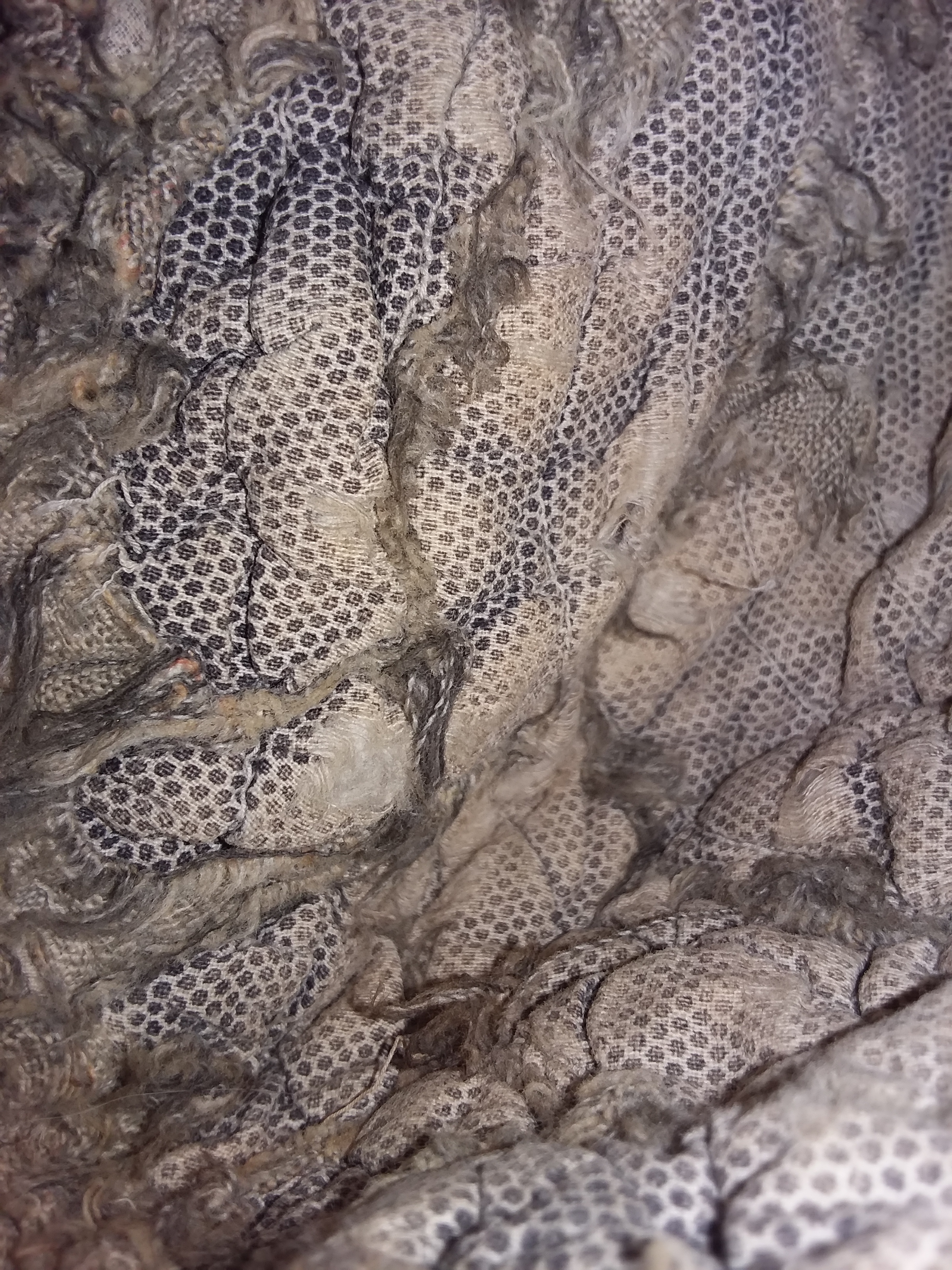
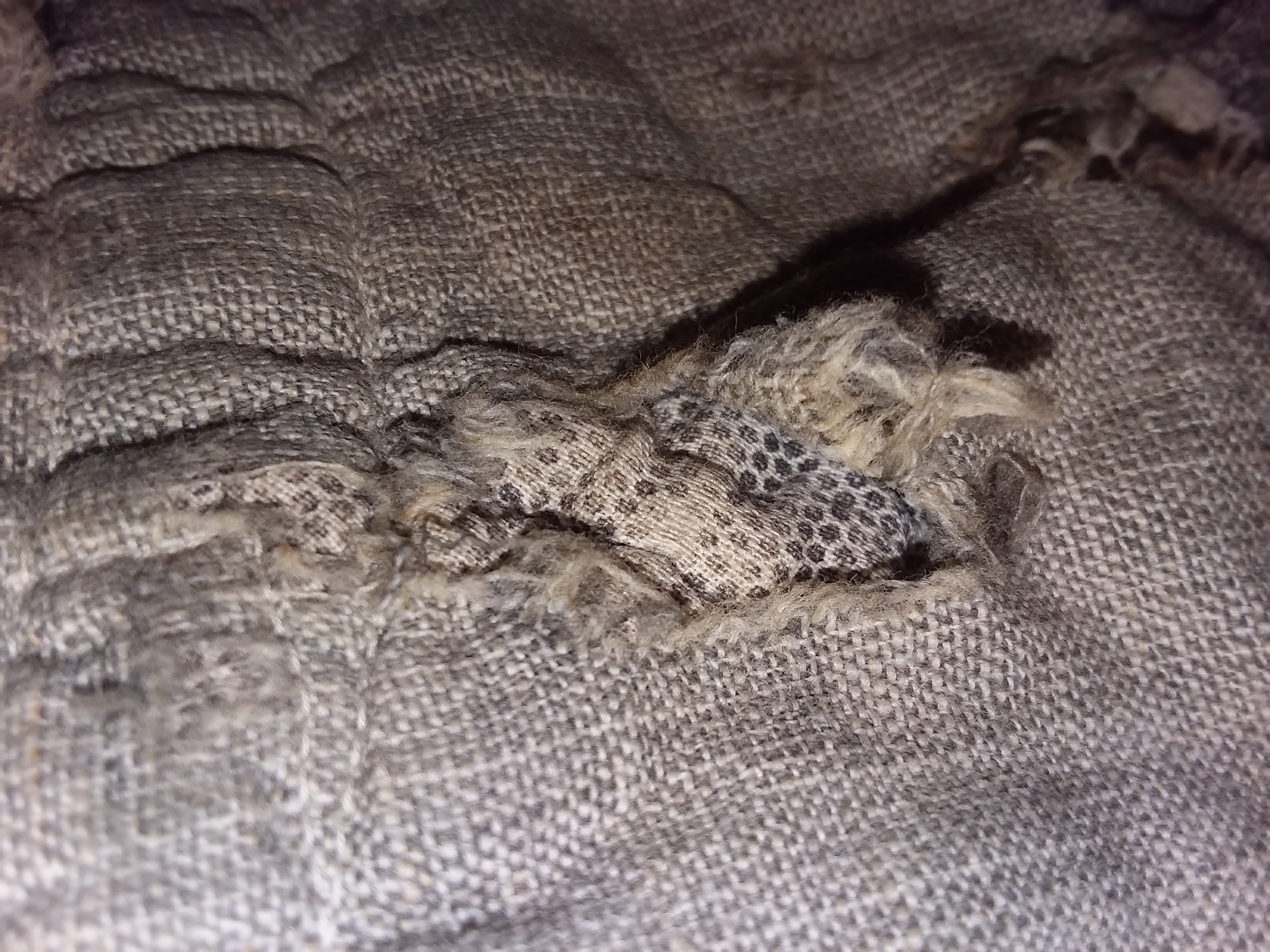
The inner lining that looked like it might be net or dotted fabric in the listing. The fabric is tiny printed hexegons in black.
The pink, bias cut cotton ties attached with black threads and (below) the location of previous ties.
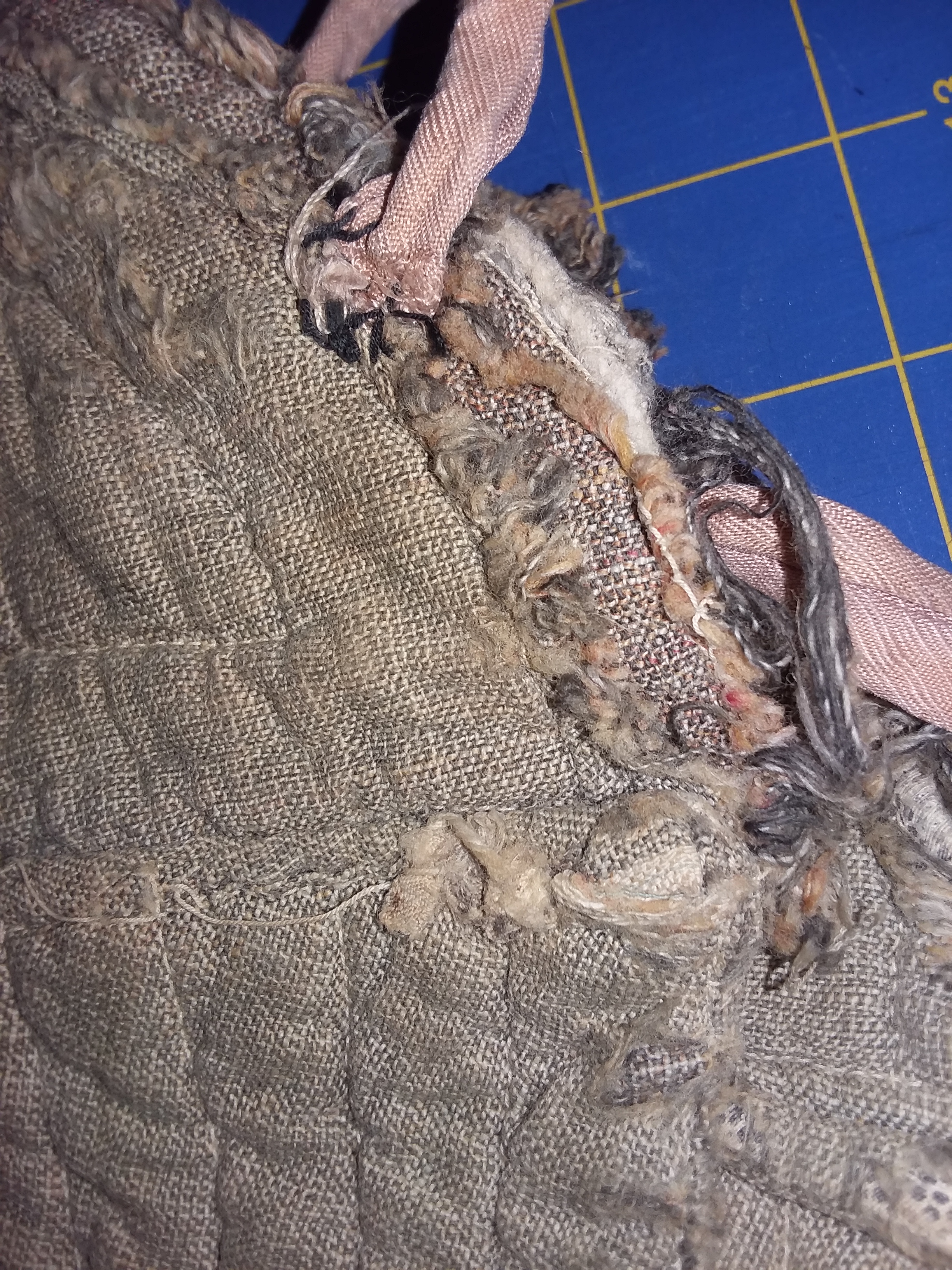
The wear spot that made me re-question the fiber content of the exterior and interior fabric.
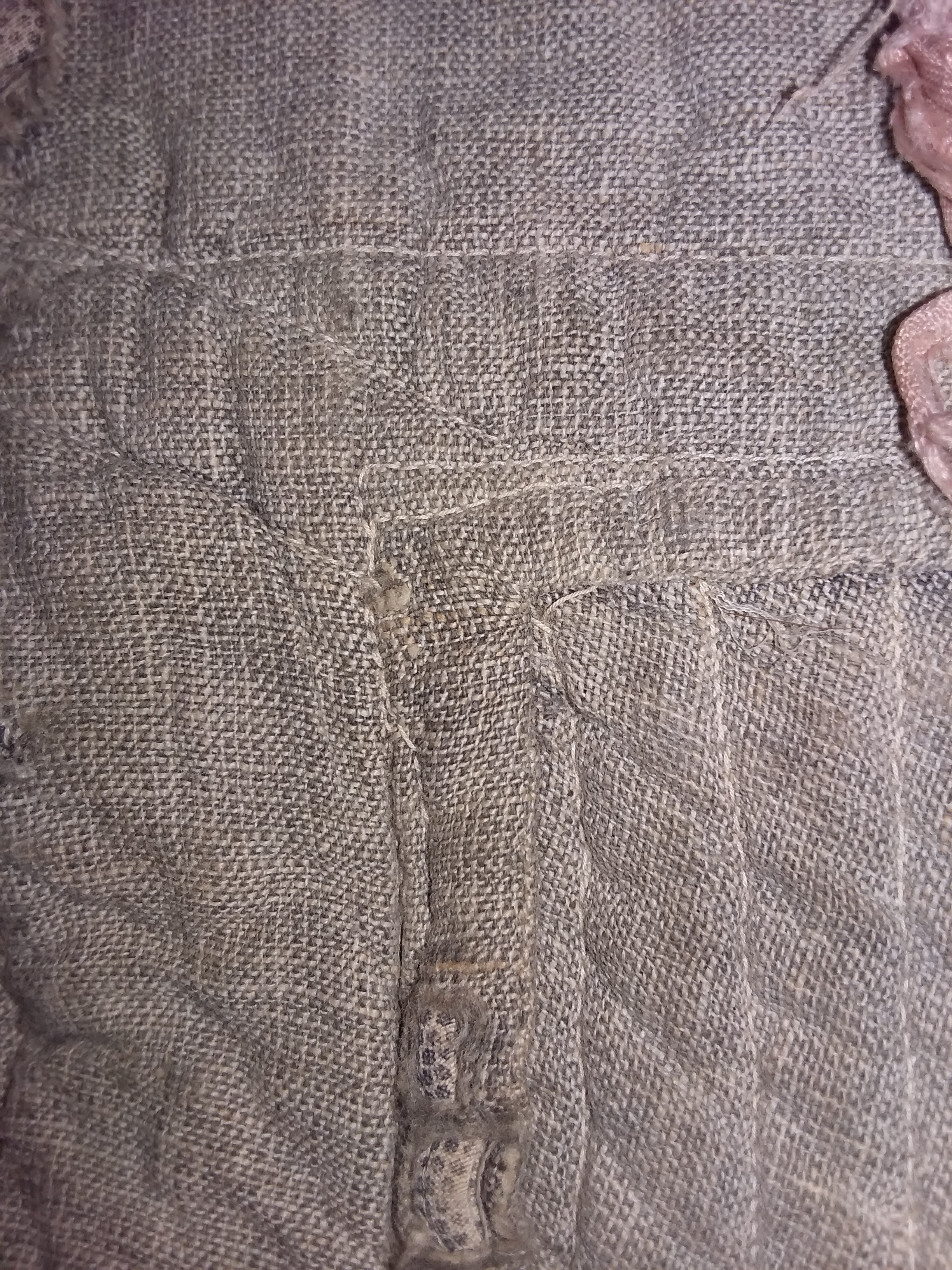
The neat corner where the crown/bavolet piece joins to the brim. This areaseems to be very skillfully done by hand, while the machine stitched quilting is not even. (I am trying not to jump to the conclusion that quilting by machine was newer to the maker.)
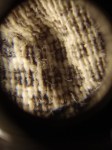
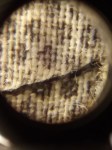
Early on, I say it is not wool and not silk. This was too quick of a statement. Not having a clue what this material is, I asked Instagram and Facebook colleagues for assistance in identifying the material and fiber. The up close images are taken with the little National Geographic phone microscope I ordered from Michaels at the beginning of lockdown.
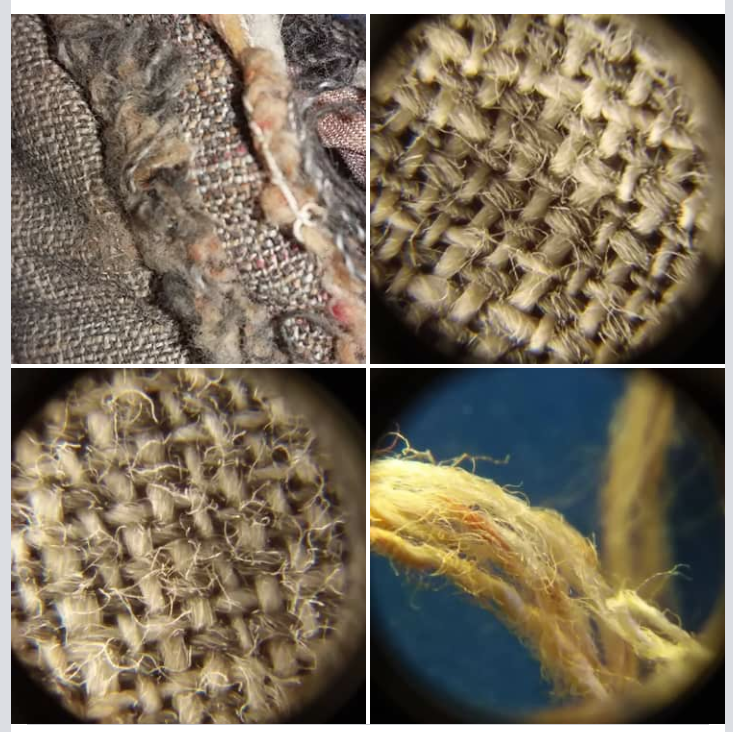
A
I also took some close-ups of the inner lining.

This weekend would have been the Civil War event at the Genesee Country Village and Museum. Of course, as with so many events this year, the event needed to be canceled for the safety of all involved.
I thought it would be nice to look back at the event over the last few years.
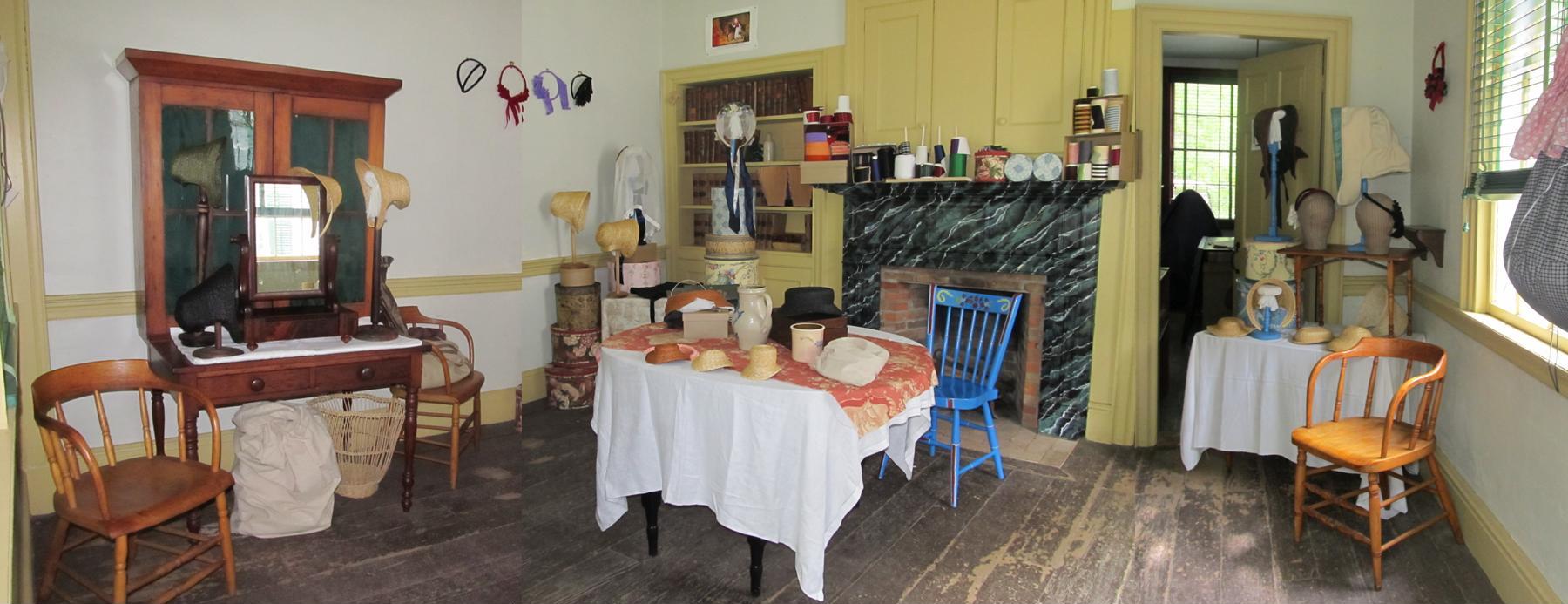
This is the event where I get to transform the museum’s insurance office into a millinery shop for the weekend. I enjoy taking over the building for the weekend, but I also enjoy the planning that goes into it. Each year, I start planning the day after the event for the next event, then dive deeper into the planning come each January. My goal is to have an authentic shop which is also a welcoming learning opportunity for those visiting.
(I am searching for the non-Wordpress photos and videos from 2017 and prior. There is a slight technological snag. Obviously, I would really like to see the videos and photos from 2017 as those were my surgery year and it is a little foggy. The year prior was when Lily was in the shop with me. Before that, I was in the Dressmaker’s shop, aka the frying pan.)
Lily and I in the shop in 2016


The shop in 2017
What I wore post surgery. The stays I had on kept my incision from fully opening up on Sunday during pack-up.


2018 was my 20th CW event at GCVM. Here is a look through the before and after of the set-up.
Saturday Morning:
What is in my Sewing box:
Sunday morning (and more about the day.)
2019 was one of the hottest events I can remember, or at least since I’ve been aware of the heat as problematic. Read about that here.
Walk through the millinery as it was set up in the evening:
Saturday morning. I am already looking red.
I guess I didn’t take a Sunday video last year. I am sad about that now.
Prior to interpreting the millinery shop in the insurance office building, I set up in the dressmaker’s shop, which has no shade and gets quite warm. Here is the post for the year I did not make it through the weekend. Here is the shop the year prior in 2014:
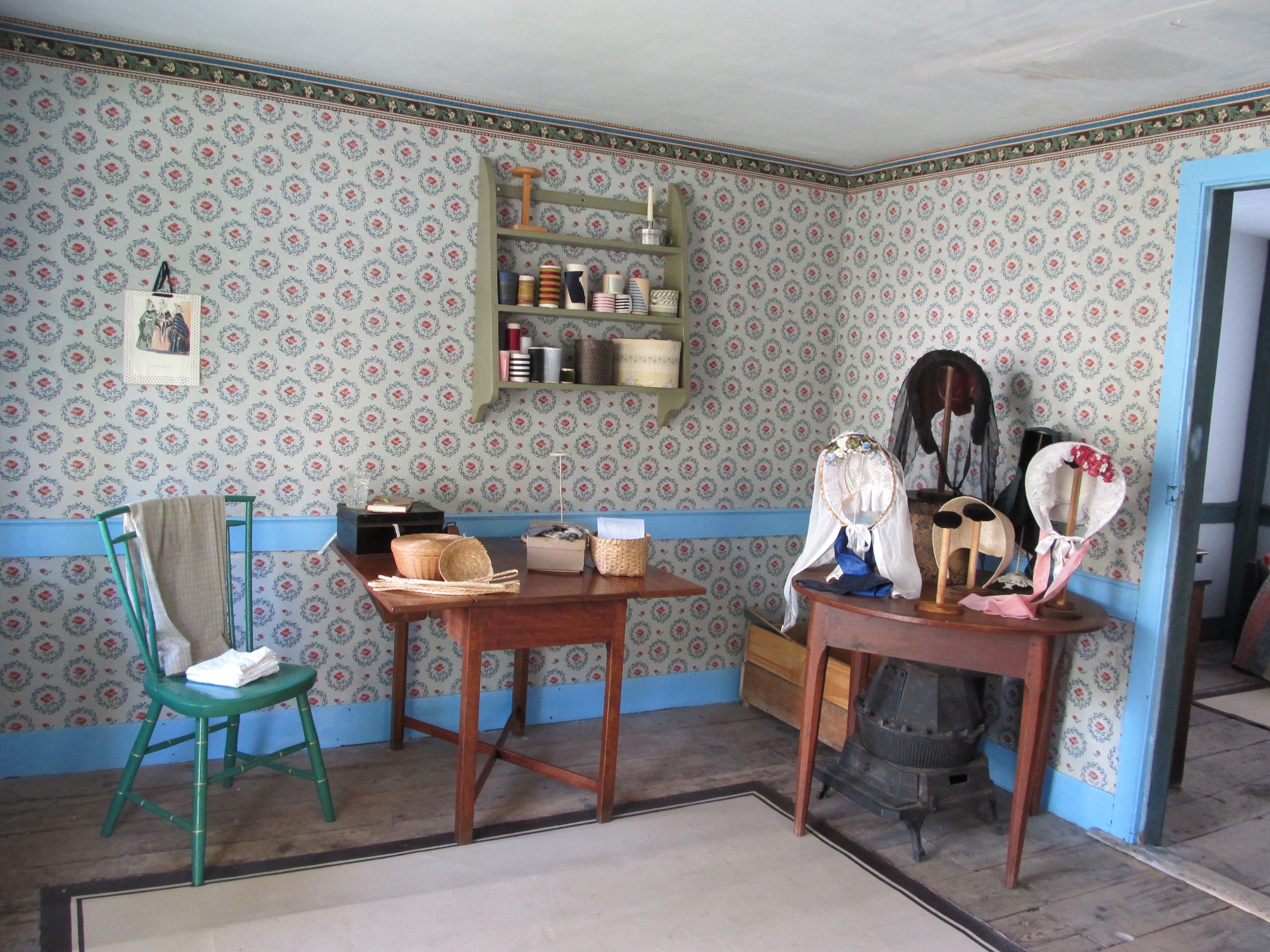
2013 I was in the Dressmaker’s Shop doing a book signing. Wow. Time does fly. More about that weekend here.

There are no photos from 2012 because I was in the office at that time. In 2011, I stayed with friends in Jones Farm and lead a sewing circle. That post is here.














 If I Had My Own Blue Box: