My Etsy Store!!!

I finally, after much persuasion, have my own active Etsy store!

I’ve spent the last week learning about the site, posting items and playing with features. It turns out they have favorites, circles, teams and treasuries. I’m not completely certian how each of these are supposed to work. I’m having fun marking favorite stores and favorite items. I’ve decided the treasuries are going to be quite fun. Not only can I call attention to certian items under different themes like dressing a bonnet or filling a sewing case, I can pick out items for a certain project someone is inquiring about. So, if you want to decorate a straw bonnet of your own but want some advice on materials, I can make you a treasury of recommendations. Isn’t that cool!?!

Published in: on July 20, 2011 at 1:59 pm  Comments (4)  

Storing Shawls

Another post I started a while back but didn’t finish to post…

A recent conversation led to thinking I should put together a post about storing shawls. Ideally, I could show you photographic examples of what can result from different conditions. Until I can give you those photos, we will stick with a list – Folding can cause creases and breakages. Moist conditions can lead to mold, mildew and rot. Dry conditions can lead to fiber brittleness. Bugs can cause holes. Contact with wood or acidic surfaces or being stored in non-acid free containers can lead to discoloration. Pretty awful right?

Guidelines for the Care of Textiles from the Textile Museum in Washington DC

How do I store antique textiles at home? From the Smithsonian

Preserving Your Treasures-Care and Storage Methods for Clothing and Textiles by the Missouri Historical Society


Published in: on July 20, 2011 at 1:43 pm  Leave a Comment  
Tags:

Fire Pits

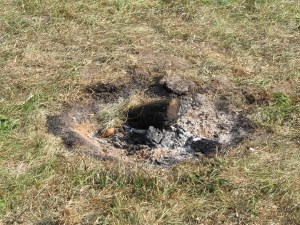
While doing a double check walk through following the conclusion of a recent Civil War event something stood out…. Fire Pits.

Living history events are often held on park property or historic sites. As such, special care needs to be considered when building a fire pit inorder to leave the least amount of damage to the ground afterwards.

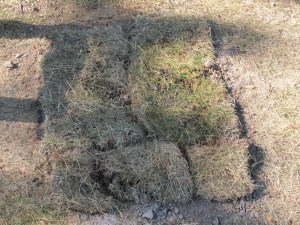
Please take a look at these photos and consider what each will look like in a week or a month while visitors walk by.


Yes, one may be more period correct. The other leaves less of a ground scar.

Published in: on July 18, 2011 at 1:35 pm  Leave a Comment  

Back at GCVM’s ‘Mumford’ Event

Finally after two years away for me and eight years away for my husband, we were back at the Genesee Country Village’s Civil War event popularly called “Mumford”.

The weekend was wonderful. I spent the whole weekend in Jones Farm, a house regularly depicted as an 1830s farmhouse. In the dining area, I led a sewing circle where we worked on sewing cases. Some of these were donated back to the museum for their interpretive use while others were given to the sewers’ soldiers as housewives.

The sewing circle was a wonderful time to talk with old friends and new.

We were both quite pleased with our slippers. They were made with left-overs from the new carpet bags, lined with wool and leather soles from my friend Gail. They were perfect for around the house as well as runs to the out house. I found the soles of mine held up very well to a good amount of walking as I wore them most of Friday evening and all day on Monday.

As I stayed in Jones Farm for the weekend, I was able to see the event from a different angle than I usually do from the central village.

Somehow the whole weekend passed without the opportunity to take the photos I had intended to of our slippers, carpet bags, Dan’s shirts and my new dress. I didn’t even get a single photo of my husband and I.

Published in: on July 12, 2011 at 10:02 am  Leave a Comment  

More Sewing Cases

Here are a couple more sewing cases.

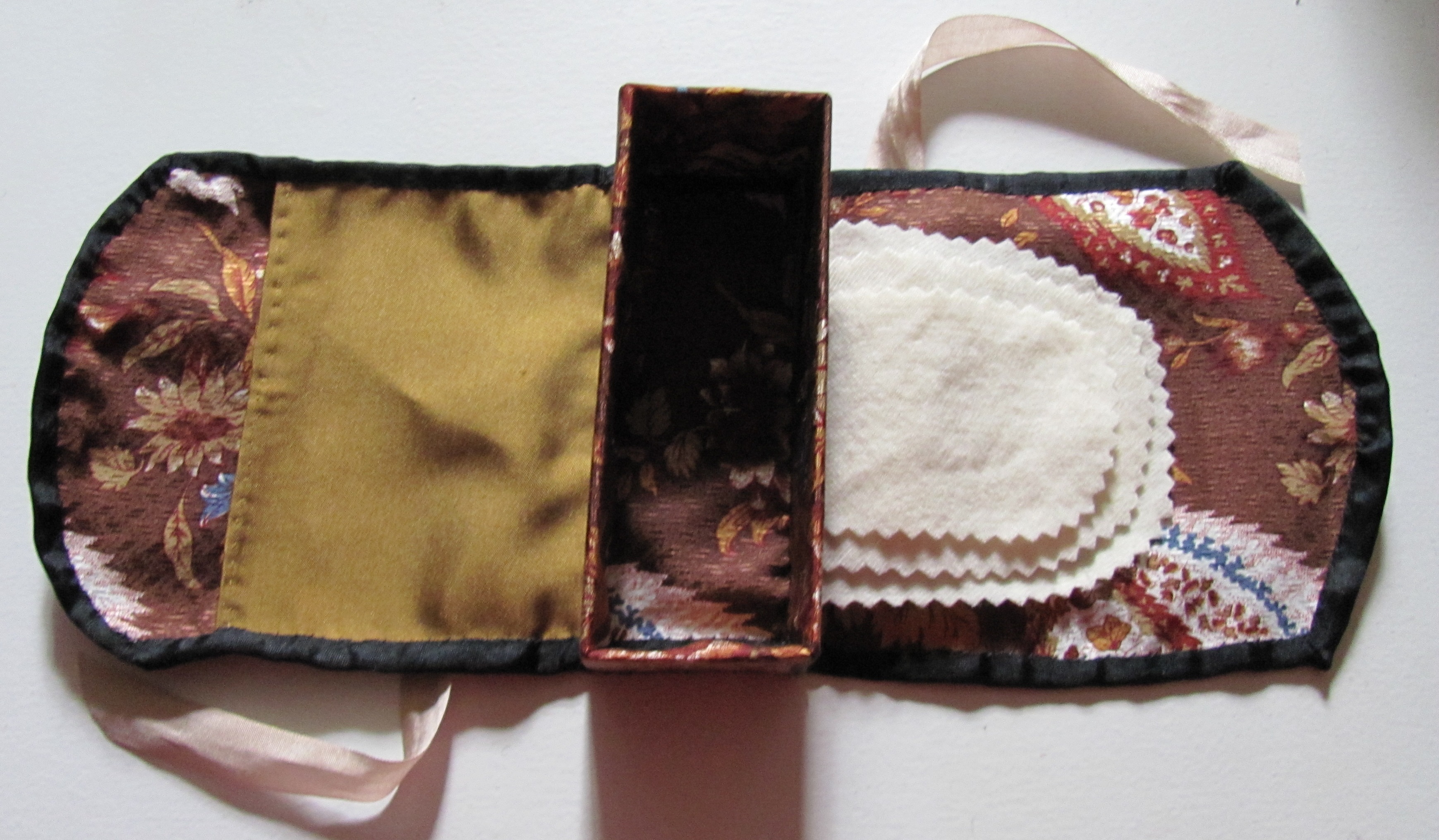
I am particularly fond of this fold-over case style. It has lots of room to store needles, thread spools, thread winders, scissors or what have you. The exterior is a black felted wool. The interior is a silk with a cone motif on a damask weave. The pocket is a twill weave golden silk. The whole case is bound with black silk taffeta ribbon. The trio of wool pages will hold plenty of needles.

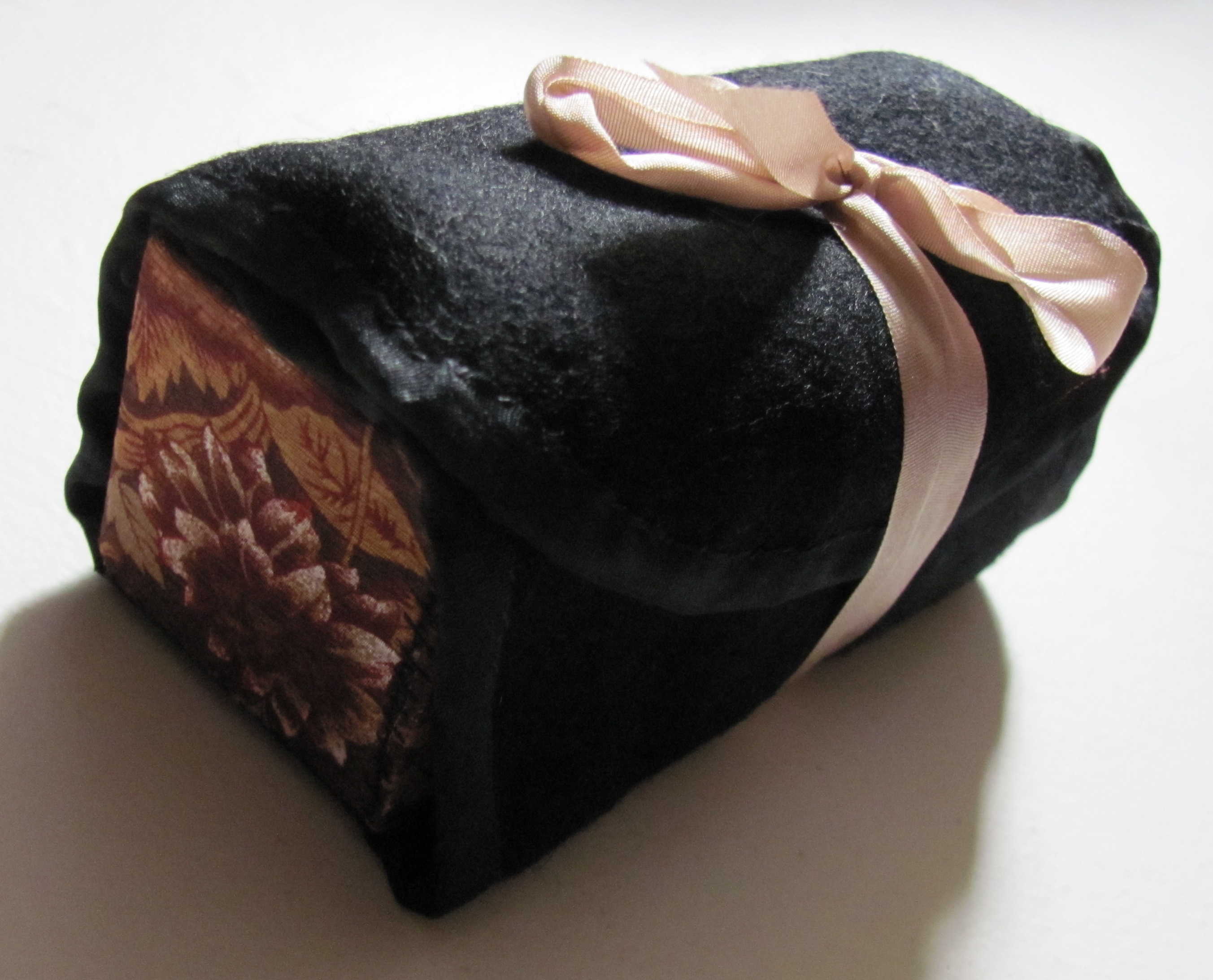
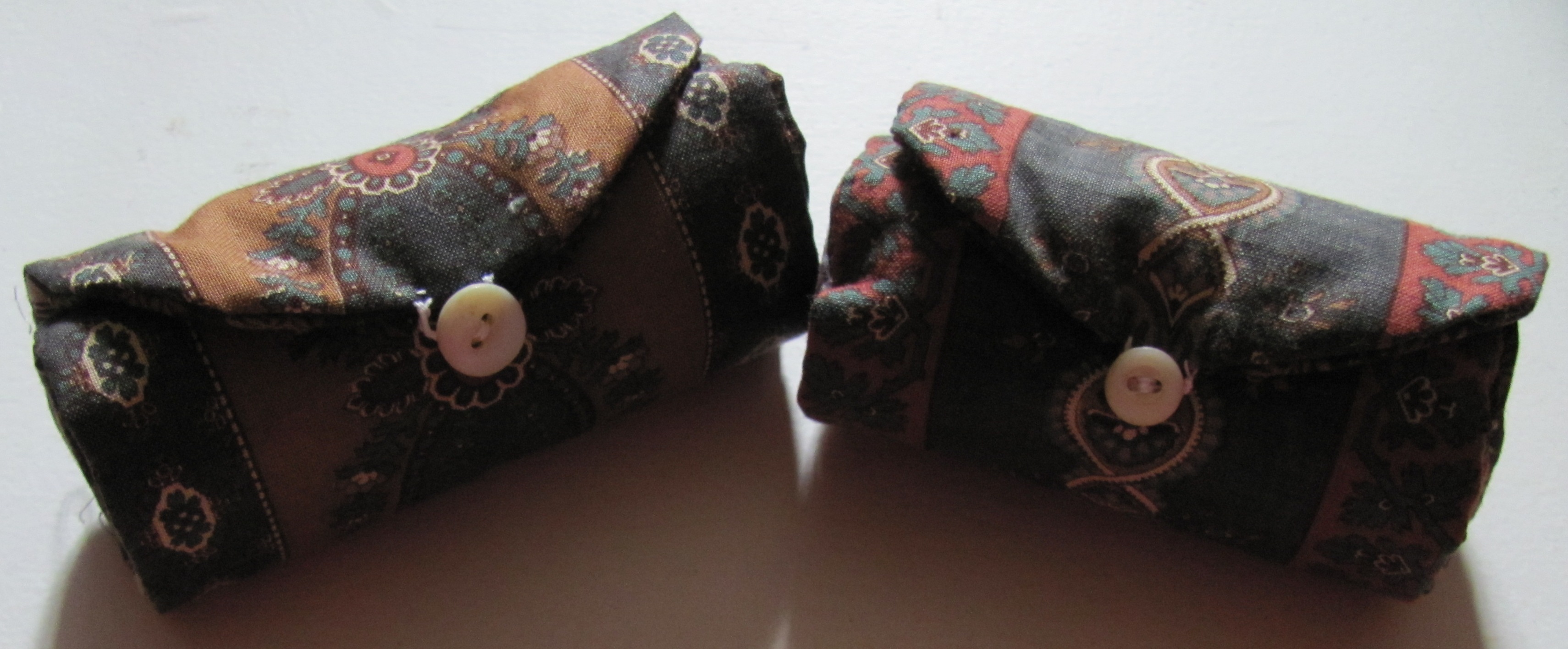
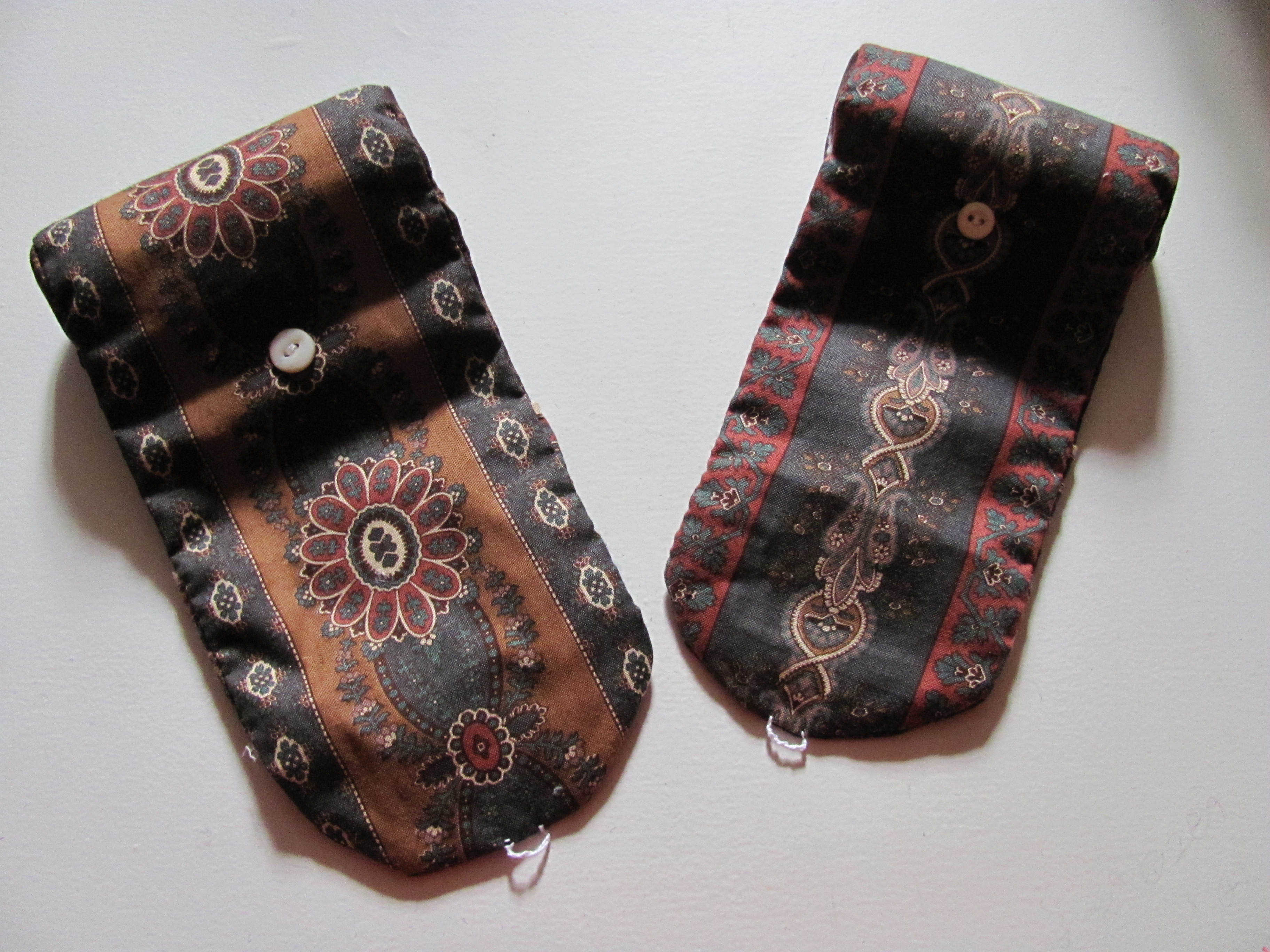
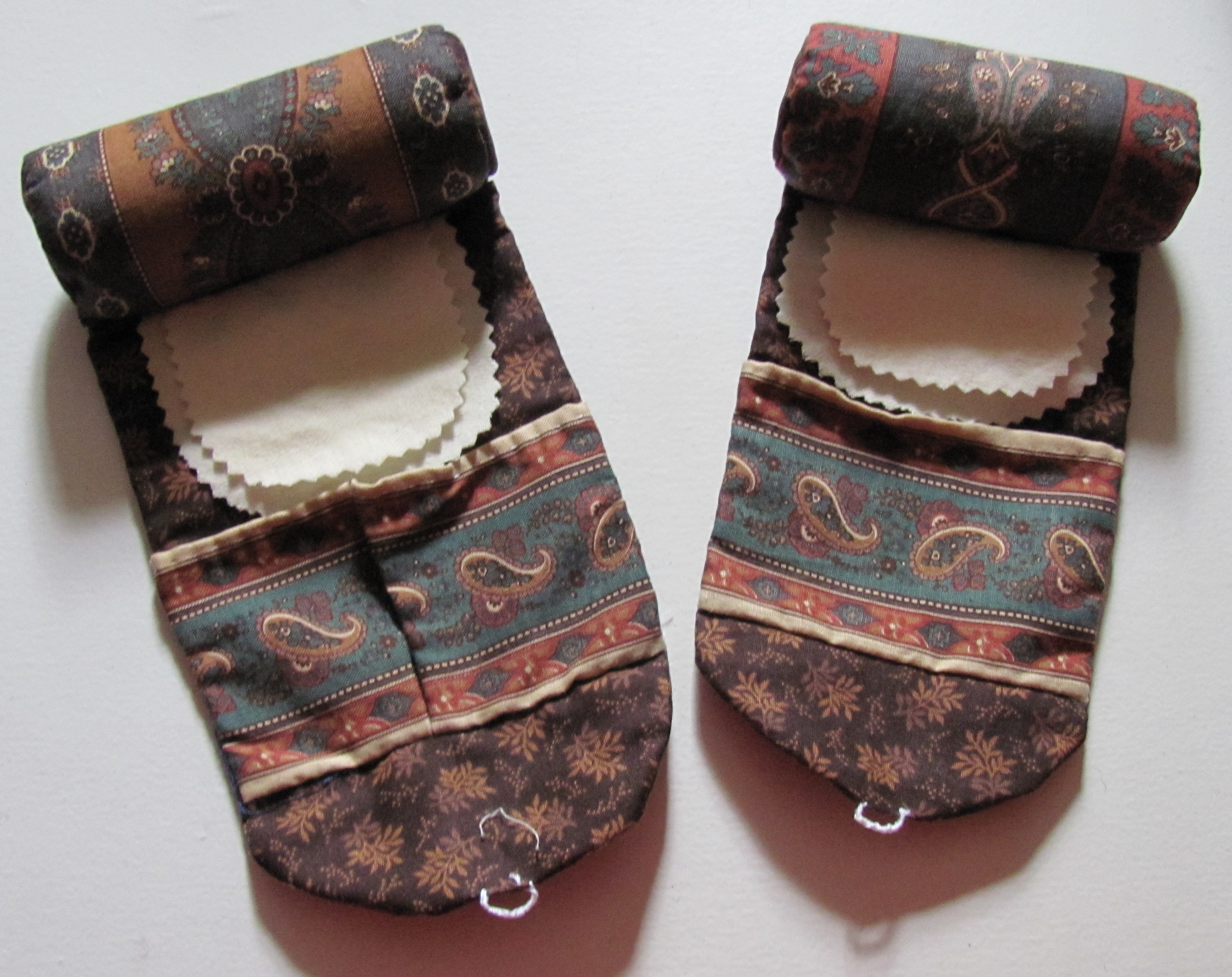
When I saw this fabric, I knew it had to be a sewing case. Or, in this instance a pair of sewing cases. I would love to see this pair say as a pair possibly for a husband and wife, a pair of brothers or a father and son. Each rolled case is handsewn. The pinked needle-pages are off white wool. The button placement with button loop allows the case to be filled and still closed.

Published in: on May 26, 2011 at 9:40 am  Comments (5)  
Tags:

Barbara’s Sewing Case

For months now Barbara has been asking me to make her a sewing case all her own. After months of saying ‘no’, I finally broke down and said yes. Now, Barbara is the one and only owner of a custom sewing case based on an original mid-century sewing case.

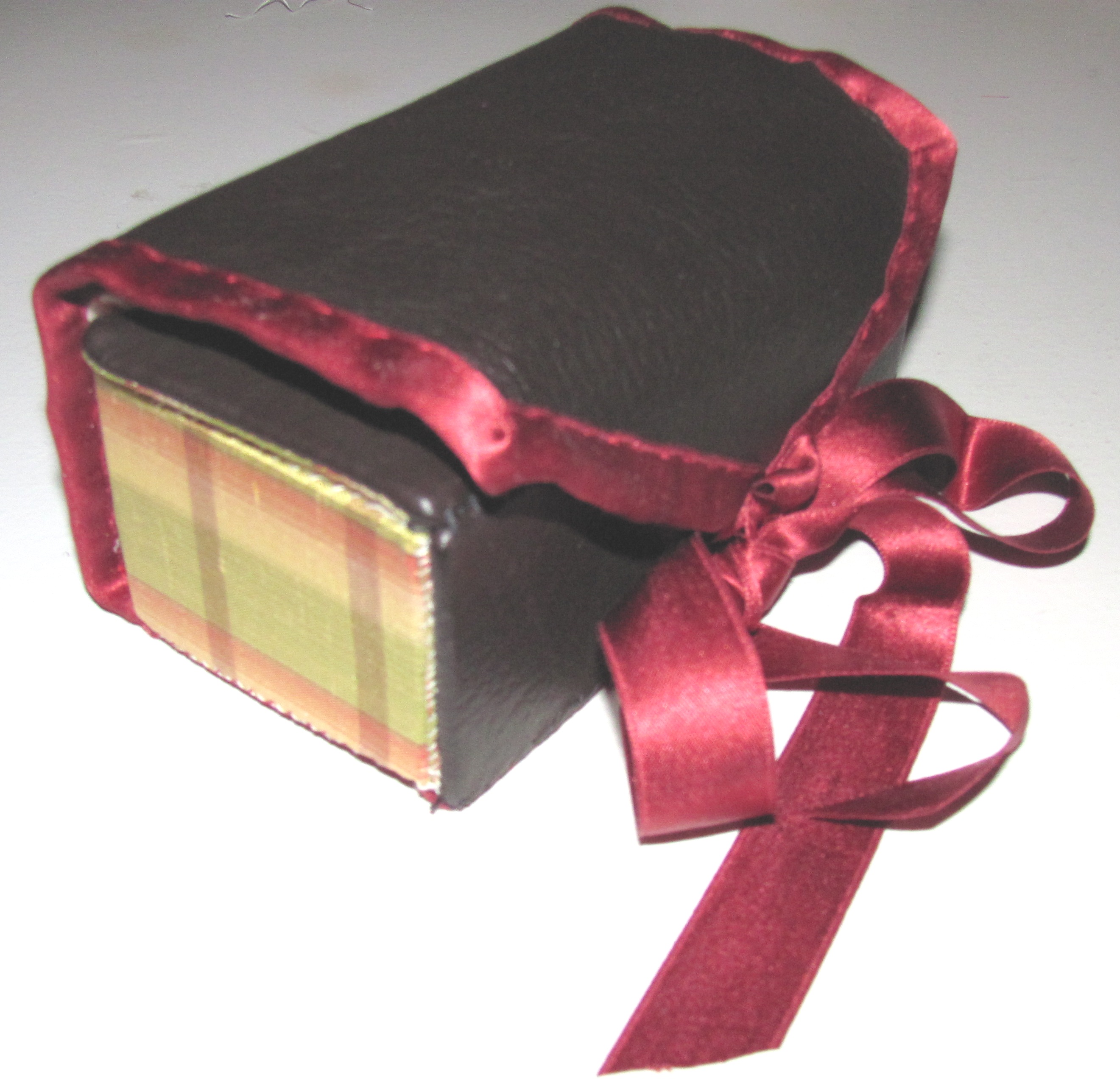
Barbara’s case has a dark brown leather exterior bound with red silk, satin ribbon.  Inside it is lined with a red and off white large scale plaid. The case is a red, yellow and green plaid. The scissors case, also of dark brown leather, was shaped to fit her scissors, tying closed with a cream silk taffeta ribbon. The pages alternate red and off white, each with a blanket stitch. She also has a bell shaped needle-book of silk with pinked wool pages inside.


The interior case opens to show a pincushion of off-white wool and space for sewing notions. 

How do you get this case?

You don’t. It is Barbara’s. She has the only one. I may be talked into doing a similar one. But, as Barbara will attest, it takes a bit of coaxing.

I will have other cases available though including a lovely striped silk rolled case I have been working on. (Stay tuned for photos.)

You can also make your own case following the directions in Fanciful Utility: Victorian Sewing Cases which should be ready for taking pre-publication orders in early August, shipping in early September.
.

Published in: on May 23, 2011 at 6:43 pm  Comments (3)  
Tags:

Sewing Cases….. Available Soon

With my job search comes the need to de-stress. Lucky for those who have been asking for sewing cases, I’ve been de-stressing with sewing some cases and needle-books.

For those of you wanting to make your own sewing cases or needle-books, Fanciful Utility: Victorian Sewing Cases & Needle-Books should be available for pre-publication orders in Early August for shipping in Early September.

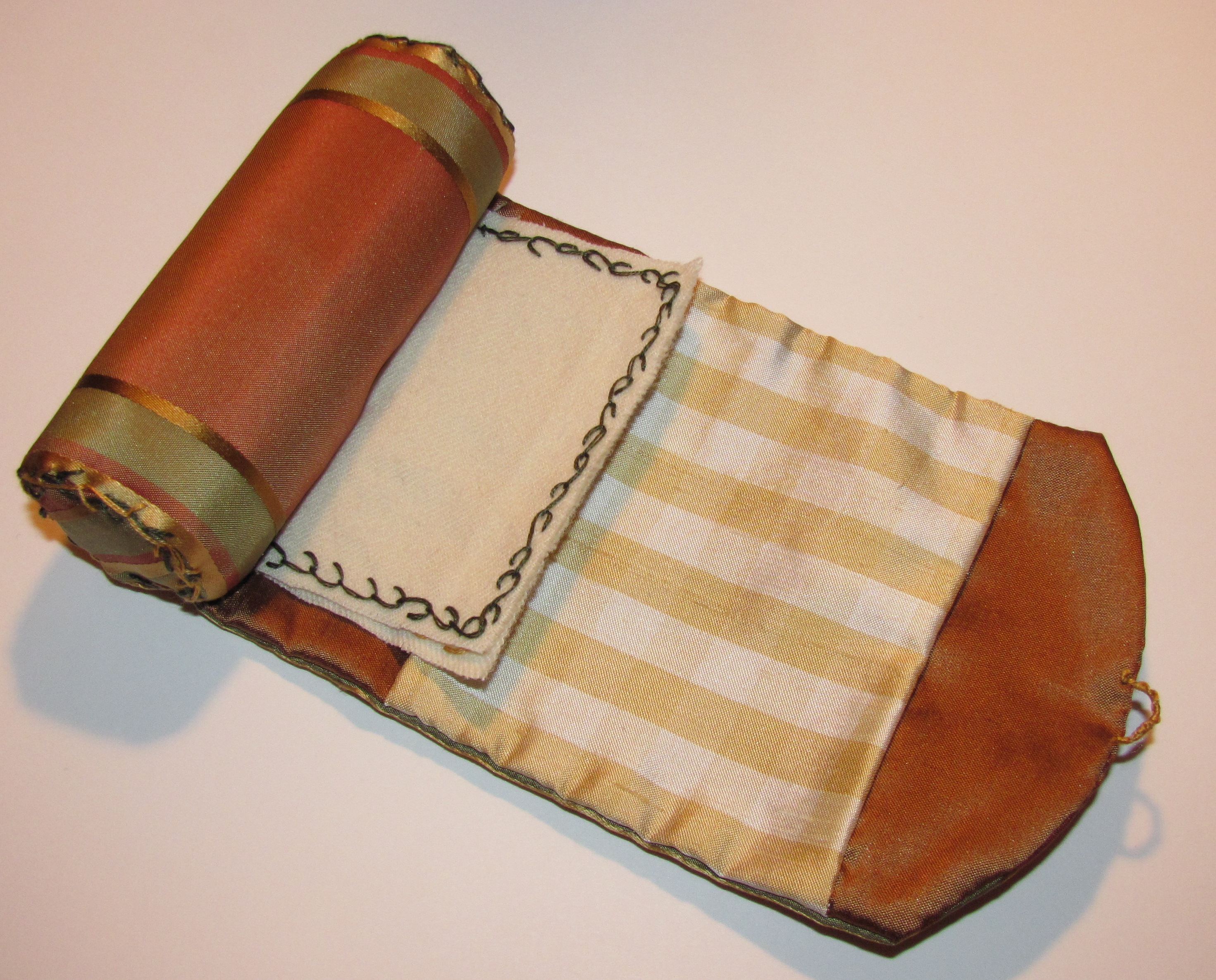
This case is made with a lovely fall toned striped silk on the exterior and a coppery shot silk on the interior. The spacious pocket is a white and golden yellow plaid silk. The two off white wool needle-pages are vine stitched with dark green on the first and golden yellow on the second. The viney stitch is continued on the ends of the cotton batted roll. The case is held closed with a tiny mother of pearl button and loop. This case is entirely hand-sewn and based on an original formerly in my collection and featured in the up-coming  Fanciful Utility

The bell shaped needle-book is made of coppery silk with a pair of off white needle-pages inside. It is tied at top with a cream silk taffeta ribbon.

Published in: on May 23, 2011 at 5:58 pm  Comments (2)  
Tags:

Hats against Bonnets – Peterson’s 1865

My friend, Sue L., found a must share passage regarding the wear of hats in a July, 1865 Peterson’s Magazine.  On page 74 in the Editor’s Table….

Hats against Bonnets.–The attempt to make hats unfashionable has not succeeded. There are, indeed, more bonnets worn: but many ladies still prefer hats: in fact look better in them. The hats are so various that it would be difficult to indicate which form is preferred. Some ladies wear hats more like the high-crowned black hats worn by men: the crown is not quite so high, and the brim is broader–these are the only differences; we have engraved one of these hats. Very little trimming is added; a flower is usually placed at the side, and appears to fasten a scarf, which is twisted round the top of the brim and falls on the shoulders. These hats are made of either black or white sewed-straw, and the color of the veil corresponds with that of the hat. The toquet, with brim turned up at the sides, and forming a point both at the back and front, is very becoming to the generality of faces; a long feather is won round these toquets, and forms the sole ornament to them. The jardinière hats are also worn. These have round brims, which are turned down and bound with velvet, to which is added either a gauze or lace veil. These hats are worn alike by young girls and their mothers, and especially by those who are not sufficiently youthful to adopt any of the faster forms.

Working with Teaching Methods

 Over the past half century or so, educators have worked with a learning pyramid to aid in understanding learner retention. At the top of the pyramid are techniques with the least retention while the techniques at the base of the pyramid provide the greatest amount of retention. Over the years this pyramid has evolved as new techniques develop through evolving technologies.

This Learning Pyramid is my design for techniques in the living history environment. As with the traditional pyramids, at the top are the techniques with the least personal connectivity with visitors/learners. At the bottom are those techniques providing the best connections with visitors/learners. The strata of the pyramid do not represent good to bad. They represent the varying ways to connect with visitors at different depths. The top of the pyramid can give a good over view of a subject, while the base of the pyramid can provide visitors with an in-depth, personal experience and ingrained understanding. By utilizing a combination of the techniques the full height of the pyramid, visitors are offered a  complete experience, which through their choice meets their particular needs.  


Let us examine the pyramid from the top down.

Lecture Style Presentations  can include most presentations where a single or small group of interpreters talks to a group of visitors in a stagnant setting such as a classroom, gallery or auditorium, or in a mobile setting such as in guided or even self led tours. (In self led tours, the presenter and setting changes while the presentation style remains the same.) One can also include introductory videos in the category as well. In this technique, the visitor is primarily a listener and observer with the occasional opportunity to ask questions. (I will say in hind-sight of the visual presentation of this pyramid, I would like to have made the top level longer as there are so many formats which fall under the lecture style presentation.)

Self-led Inquiry includes examining original artifacts (or in some cases reproductions), reading original documents such as diaries, letters and ledgers, and looking at original images such as photographs or genre paintings. Self-led inquiry does not include significant guidance from a knowledgeable person or source. Instead, it is entirely learner/visitor led. 

Interactive Exhibits are guided inquiry. These exhibits use instruction, often through text and visual panels or other media, combined with hands-on examination. They are organized to lead the learning and exploration process.

Demonstrations and First Person Presentations are live-action multi-sensory learning experiences allowing visitors/learners to see, hear and smell how something works or is done. These are meant to be interactive (If they are not interactive, they belong further up  they pyramid.) where visitors can ask questions, feel samples, examine tools, etc.. These techniques use multiple senses in connection with a live, interactive education source.

Hands-On Activities and Play to Learn opportunities go one more step beyond the above techniques. The focus transitions from the demonstrator showing how to the learner/visitor learning how. In this technique the learning process is guided according to the project or activity.

Role Playing and Experimental Archeology because wholly learner centered. Here, the learning process becomes learner lead.  Granted, event or site staff are present for consultation and to ensure the safety of participants and the site.

Originals verse Repros

The recent discussion of buckles on the SA led me to want a buckle. Than want of a buckle has led me to revisit the original verses reproduction debate.

I am one who has long since adamantly apposed the use of original/extant garments. Simply handling many garments can cause irreparable damage. It is impossible to wear any piece of clothing, whether a petticoat or shawl, without causing wear and damage.

 I’m also not fond of the use of original housewares in most event situations. Originals are ideal for stagnant museum displays or in-situ museum displays. In each of these situations the items have been placed there for an extended period of time by curatorial staff trained in their care. In most cases, visitors are not invited to handle the items. (Some specially designed exhibits provide for controlled handling with appropriate protection for the collection.) At most LH events items are brought in for a day, two day or week long display or interactive interpretation. The best case scenario will see each piece unpacked from mobile storage, handled gently, displayed, not touched through-out the event, then repacked and stored at the end of the event. While this can seem harmless, when this is multiplied by several events throughout the year and unpredictable weather conditions are considered, none of us can guarantee the safety of any item.

At the same time, I want visitors to be able to handle items in order to satisfy several learning styles. Many reproductions can be used to replace originals such as pottery, clothing or a quilt. But, so much more can be learned from the original in many cases. There are also items which do not have any or adequate reproductions available. In such cases, where is the line for using the original for hands-on education verses a hands-off display verses not using the item at all?

Of course I’m missing several aspects of this discussion this morning. There is the ‘abundance verses rare’ perspective as well as the ‘balanced representation verses over representation’ perspective. I’ve also heard a ‘level of risk’ perspective in respect to how easily damaged a material can be.