Barbara’s Sewing Case

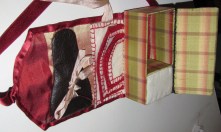
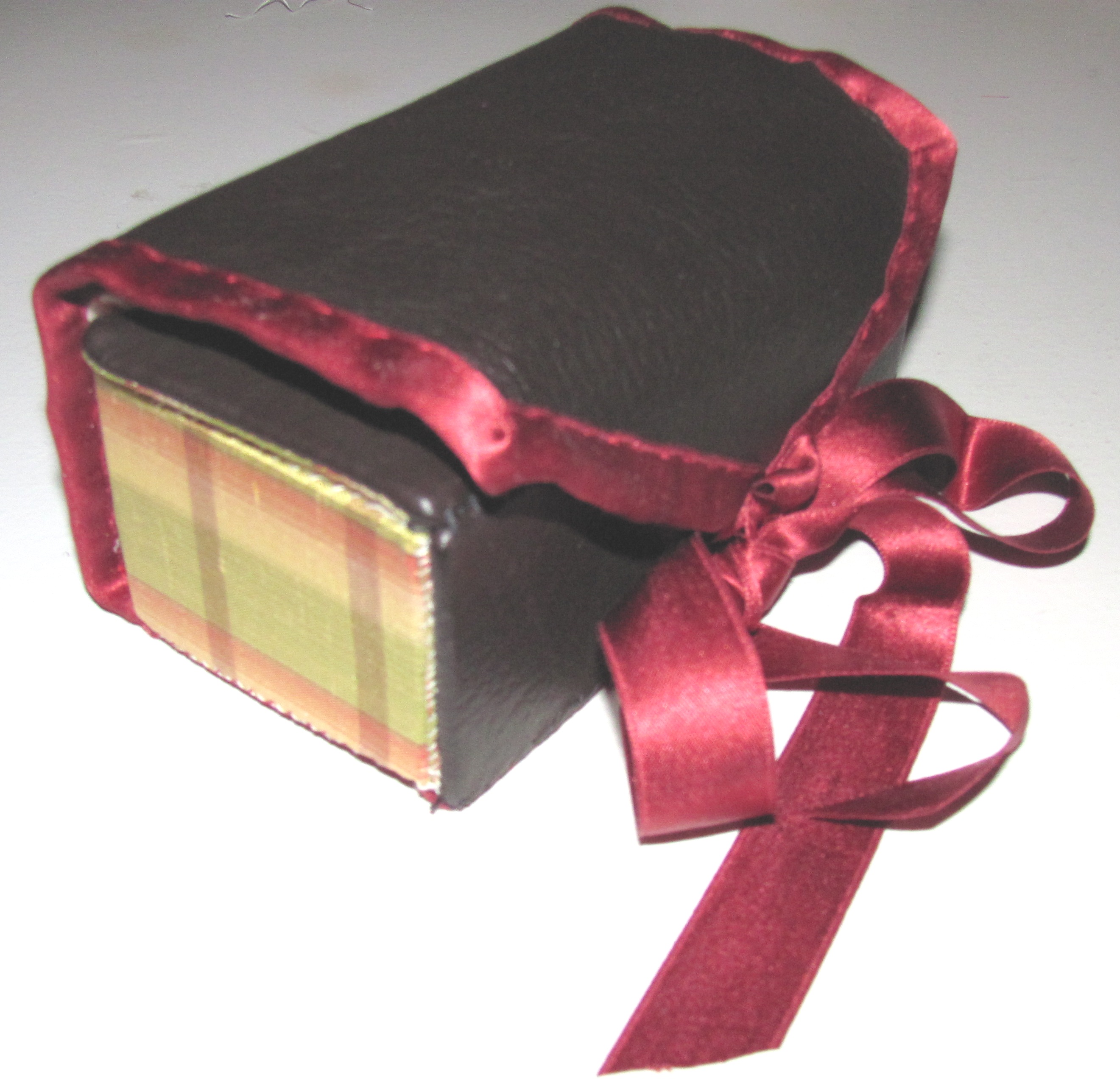
For months now Barbara has been asking me to make her a sewing case all her own. After months of saying ‘no’, I finally broke down and said yes. Now, Barbara is the one and only owner of a custom sewing case based on an original mid-century sewing case.

Barbara’s case has a dark brown leather exterior bound with red silk, satin ribbon.  Inside it is lined with a red and off white large scale plaid. The case is a red, yellow and green plaid. The scissors case, also of dark brown leather, was shaped to fit her scissors, tying closed with a cream silk taffeta ribbon. The pages alternate red and off white, each with a blanket stitch. She also has a bell shaped needle-book of silk with pinked wool pages inside.


The interior case opens to show a pincushion of off-white wool and space for sewing notions. 

How do you get this case?

You don’t. It is Barbara’s. She has the only one. I may be talked into doing a similar one. But, as Barbara will attest, it takes a bit of coaxing.

I will have other cases available though including a lovely striped silk rolled case I have been working on. (Stay tuned for photos.)

You can also make your own case following the directions in Fanciful Utility: Victorian Sewing Cases which should be ready for taking pre-publication orders in early August, shipping in early September.
.

Published in: on May 23, 2011 at 6:43 pm  Comments (3)  
Tags:

Sewing Cases….. Available Soon

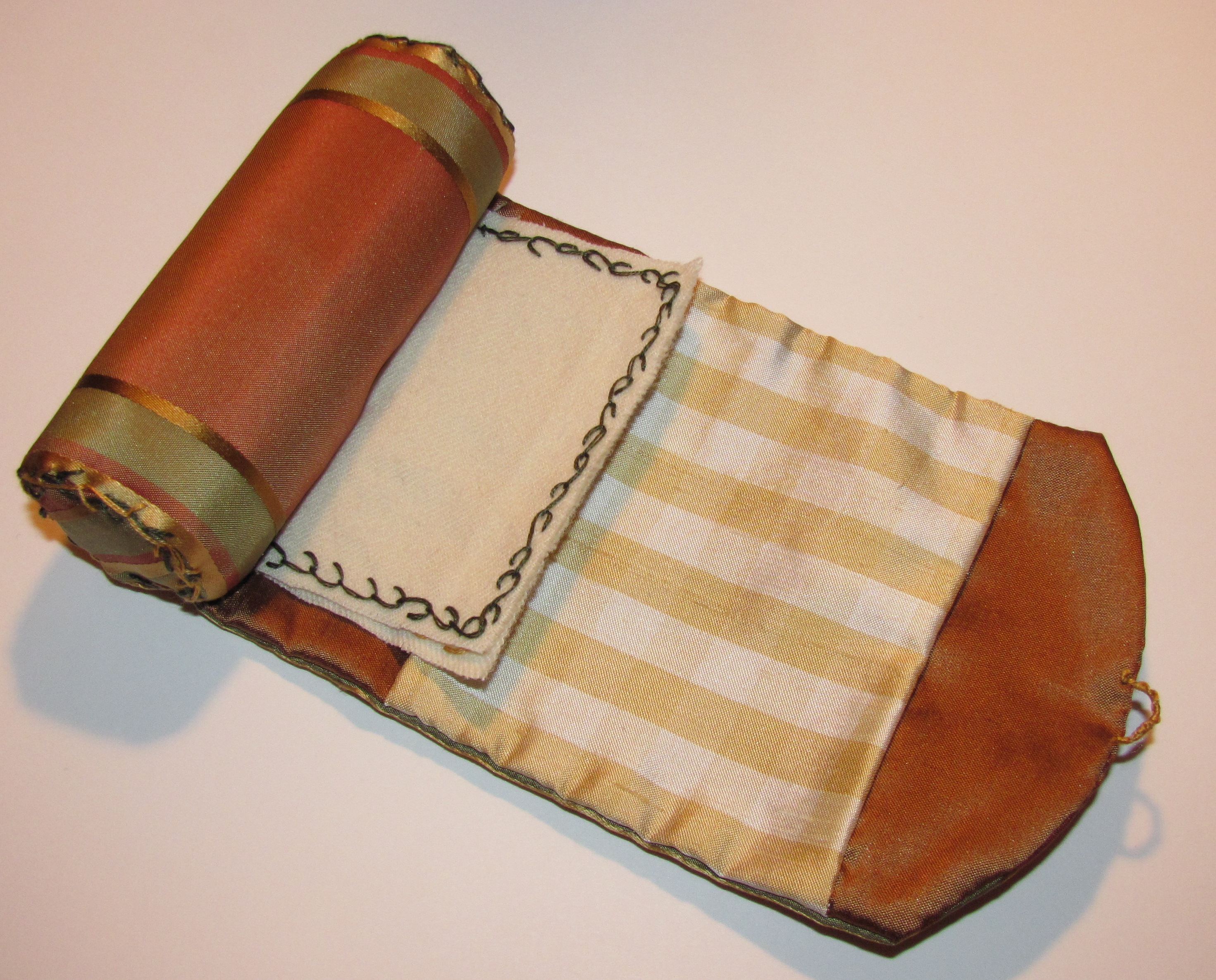
With my job search comes the need to de-stress. Lucky for those who have been asking for sewing cases, I’ve been de-stressing with sewing some cases and needle-books.

For those of you wanting to make your own sewing cases or needle-books, Fanciful Utility: Victorian Sewing Cases & Needle-Books should be available for pre-publication orders in Early August for shipping in Early September.

This case is made with a lovely fall toned striped silk on the exterior and a coppery shot silk on the interior. The spacious pocket is a white and golden yellow plaid silk. The two off white wool needle-pages are vine stitched with dark green on the first and golden yellow on the second. The viney stitch is continued on the ends of the cotton batted roll. The case is held closed with a tiny mother of pearl button and loop. This case is entirely hand-sewn and based on an original formerly in my collection and featured in the up-coming  Fanciful Utility

The bell shaped needle-book is made of coppery silk with a pair of off white needle-pages inside. It is tied at top with a cream silk taffeta ribbon.

Published in: on May 23, 2011 at 5:58 pm  Comments (2)  
Tags:

Hats against Bonnets – Peterson’s 1865

My friend, Sue L., found a must share passage regarding the wear of hats in a July, 1865 Peterson’s Magazine.  On page 74 in the Editor’s Table….

Hats against Bonnets.–The attempt to make hats unfashionable has not succeeded. There are, indeed, more bonnets worn: but many ladies still prefer hats: in fact look better in them. The hats are so various that it would be difficult to indicate which form is preferred. Some ladies wear hats more like the high-crowned black hats worn by men: the crown is not quite so high, and the brim is broader–these are the only differences; we have engraved one of these hats. Very little trimming is added; a flower is usually placed at the side, and appears to fasten a scarf, which is twisted round the top of the brim and falls on the shoulders. These hats are made of either black or white sewed-straw, and the color of the veil corresponds with that of the hat. The toquet, with brim turned up at the sides, and forming a point both at the back and front, is very becoming to the generality of faces; a long feather is won round these toquets, and forms the sole ornament to them. The jardinière hats are also worn. These have round brims, which are turned down and bound with velvet, to which is added either a gauze or lace veil. These hats are worn alike by young girls and their mothers, and especially by those who are not sufficiently youthful to adopt any of the faster forms.

Working with Teaching Methods

 Over the past half century or so, educators have worked with a learning pyramid to aid in understanding learner retention. At the top of the pyramid are techniques with the least retention while the techniques at the base of the pyramid provide the greatest amount of retention. Over the years this pyramid has evolved as new techniques develop through evolving technologies.

This Learning Pyramid is my design for techniques in the living history environment. As with the traditional pyramids, at the top are the techniques with the least personal connectivity with visitors/learners. At the bottom are those techniques providing the best connections with visitors/learners. The strata of the pyramid do not represent good to bad. They represent the varying ways to connect with visitors at different depths. The top of the pyramid can give a good over view of a subject, while the base of the pyramid can provide visitors with an in-depth, personal experience and ingrained understanding. By utilizing a combination of the techniques the full height of the pyramid, visitors are offered a  complete experience, which through their choice meets their particular needs.  


Let us examine the pyramid from the top down.

Lecture Style Presentations  can include most presentations where a single or small group of interpreters talks to a group of visitors in a stagnant setting such as a classroom, gallery or auditorium, or in a mobile setting such as in guided or even self led tours. (In self led tours, the presenter and setting changes while the presentation style remains the same.) One can also include introductory videos in the category as well. In this technique, the visitor is primarily a listener and observer with the occasional opportunity to ask questions. (I will say in hind-sight of the visual presentation of this pyramid, I would like to have made the top level longer as there are so many formats which fall under the lecture style presentation.)

Self-led Inquiry includes examining original artifacts (or in some cases reproductions), reading original documents such as diaries, letters and ledgers, and looking at original images such as photographs or genre paintings. Self-led inquiry does not include significant guidance from a knowledgeable person or source. Instead, it is entirely learner/visitor led. 

Interactive Exhibits are guided inquiry. These exhibits use instruction, often through text and visual panels or other media, combined with hands-on examination. They are organized to lead the learning and exploration process.

Demonstrations and First Person Presentations are live-action multi-sensory learning experiences allowing visitors/learners to see, hear and smell how something works or is done. These are meant to be interactive (If they are not interactive, they belong further up  they pyramid.) where visitors can ask questions, feel samples, examine tools, etc.. These techniques use multiple senses in connection with a live, interactive education source.

Hands-On Activities and Play to Learn opportunities go one more step beyond the above techniques. The focus transitions from the demonstrator showing how to the learner/visitor learning how. In this technique the learning process is guided according to the project or activity.

Role Playing and Experimental Archeology because wholly learner centered. Here, the learning process becomes learner lead.  Granted, event or site staff are present for consultation and to ensure the safety of participants and the site.
Originals verse Repros

The recent discussion of buckles on the SA led me to want a buckle. Than want of a buckle has led me to revisit the original verses reproduction debate.

I am one who has long since adamantly apposed the use of original/extant garments. Simply handling many garments can cause irreparable damage. It is impossible to wear any piece of clothing, whether a petticoat or shawl, without causing wear and damage.

 I’m also not fond of the use of original housewares in most event situations. Originals are ideal for stagnant museum displays or in-situ museum displays. In each of these situations the items have been placed there for an extended period of time by curatorial staff trained in their care. In most cases, visitors are not invited to handle the items. (Some specially designed exhibits provide for controlled handling with appropriate protection for the collection.) At most LH events items are brought in for a day, two day or week long display or interactive interpretation. The best case scenario will see each piece unpacked from mobile storage, handled gently, displayed, not touched through-out the event, then repacked and stored at the end of the event. While this can seem harmless, when this is multiplied by several events throughout the year and unpredictable weather conditions are considered, none of us can guarantee the safety of any item.

At the same time, I want visitors to be able to handle items in order to satisfy several learning styles. Many reproductions can be used to replace originals such as pottery, clothing or a quilt. But, so much more can be learned from the original in many cases. There are also items which do not have any or adequate reproductions available. In such cases, where is the line for using the original for hands-on education verses a hands-off display verses not using the item at all?

Of course I’m missing several aspects of this discussion this morning. There is the ‘abundance verses rare’ perspective as well as the ‘balanced representation verses over representation’ perspective. I’ve also heard a ‘level of risk’ perspective in respect to how easily damaged a material can be.

Update & Plan

Based on my emails and messages on Facebook, there are some people wondering what we are up to with this cross-country move. Let us just say April has been absolutely crazy with a short notice move out of NM, my leaving my job, a cross-country drive and an on-going search for a new job and place to live. So, for everyone wondering…..

The general plan is to look for jobs here in New York (the Genesee Valley area not NYC), find a place to live and get some family time that we’ve both been missing.

In terms of living history activities, once I get my head on straight I will be ready to get back into period clothes. I have a new series of workshops and presentations ready to go once I get the necessary business paperwork taken care of. Those programs can be found here with descriptions and a brochure.

Published in: on May 6, 2011 at 10:19 am  Comments (2)  

Bass Pro Shop

You are probably wondering what this vegetarian, non-hunter was doing in a Bass Pro Shop. We needed to replace our shredding tarp during our cross-country move. Even with that answer, I’m sure you are wondering why I’m writing about a sportsman store on a living history blog.

Simply – If you haven’t been to a Bass Pro Shop, you need to go.

Bass Pro Shops are an excellent example of an extraordinary customer experience. From the moment you approach the store with its undeniable presence the stage is set from more than just the purchase. Their signage at the entrance is more like what you would see at a theme park than a store. As you cross the parking lot and drive you are guided by fish stamps for the cross walk and various animal prints to the door. Through the door the space opens to a full view of the multi-story water fall and mountain-side feature. The similarity to a park is continued with the turn-stile about 20-25 feet inside the door. This space is important because it emphasizes the vastness or openness of the stores while providing a great view and a ‘welcome, we’ve been waiting for you’ feel.

At the center of each Bass Pro is a colossal rock wall and water feature that looks exceptionally natural. So far, from what I’ve seen, each store’s monumental earth and water structure is different. They incorporate a waterfall, ponds with large fresh water bass and trout, large and small animal mounts, and details in the wood work of the stairs.

The experience is optimized by the various hands-on opportunities. Traditional galleries are just like those at amusement parks. Digital games include both shooting and fishing using X-box and Wii . They also hold classes.

As you wander the store, you find pleasant looking mounts of just about every animal you could imagine. The walls are covered with photos from around the world. There are seating areas with comfortable chairs, tables and lighting simultaneously embracing their brand and conveying that ‘at home’ feel. Take a look at this photo of the chairs with the real tree or mossy oak pattern set nicely with the original trunk as a table. This comfortable area is something many men would love to have in a cabin. It invites visitors to sit while shopping. Incidentally, this seating area is in the midst of the toy area.

There is a children’s tree, on the other hand, in the ladies’ clothing area. This tree, while a play area doesn’t come across as but a natural feature blending in. (sorry I lost that photo)

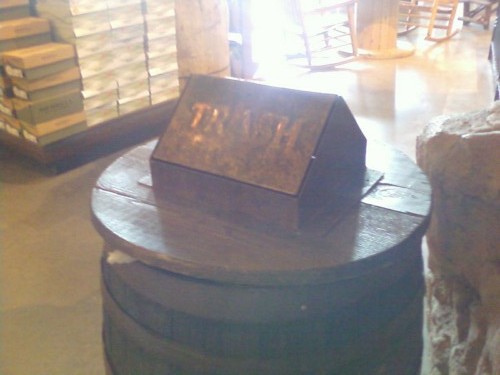
Their attention is right down to the details. I love this trash can, which has a rustic, earthy feel yet is clearly marked and clean.

 Their bathrooms are immaculately clean while continuing the branding/theme onto the walls and fixtures.

The Bass Pro we stopped at had a restaurant inside the store as well. The front sign included a sign for the Grill. But, what I really liked was the eye appealing menu on the wall of the elevator. This placement is great. It is one spot where visitors are going to stand in one place. The menu tempts people’s appetites, reminds them they can eat in-house and invites them to stay longer. I should also point out, I like being able to look at a menu before going into a new restaurant. If it hadn’t been for our wind induced scheduling problem, being able to look at this menu would have allowed us the opportunity to decide to eat there.

Food for thought

What do you call the people who pay as they walk through the gates to learn about history from you?

Here are some definitions thanks to dictionary.com

Visitor – “a person who comes to spend time with or stay with others, or in a place. A visitor  often stays some time, for social pleasure, for business, sightseeing.”

Guest – ” is anyone receiving hospitality, and the word has been extended to include anyone who pays for meals and lodging.”

Spectator “a person who is present at and views a spectacle, display, or the like; member of an audience.”

Customer – “a person who purchases goods or services from another; buyer; patron.”

Liz gets “Snoody”

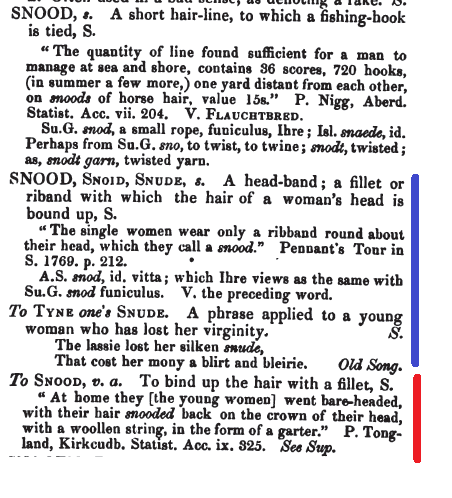
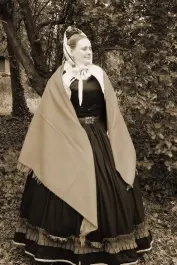
I have to give it to Elizabeth Clark. She addressed something I’ve avoided like the plague ever since the “To Net, or Not to Net” article…. the word “snood” actually existing in the 19th century. Check out her article “Getting Snoody”. She addresses nicely how the word snood actually refers to a ribbon rather than a net. Major Kudos.

I’ll admit, I dreaded trying to explain why nets are nets, not snoods but snoods did exist. I just figured it was too complicated and would confuse people. Bad, bad me. Then time rolled on and I got interested in other topics. Bad, bad me. Now, I really wish I had my binders with me so I could pull out the definition that uses the word snood as a verb. My stressed brain isn’t even pulling the name of the dictionary to the surface. I just recall this nice explanation of the word as a verb as I looked through the magnifying glass at this dictionary I would never be able to afford myself. With a lack of that excerpt, take a look at this on from the Scottish Dictionary and supplement, vol 2 from 1841 with the verb part noted in red:

Published in: on April 14, 2011 at 3:30 pm  Comments (4)  

Optimizing the Visitor Experience at Living History Events

Part 2

The details can greatly improve visitor experience. These are often the things that we don’t want people to find fault in. But, to really enhance the visitor experience at LH events, we need to give them what they ask for before they ask for it. Ideally, they will never notice they needed it in the first place or be completely “wowed” by the fact we thought about it.

Let us start with one of the biggest needs people will have at every event…. the bathroom. Did you know there are actually blogs which discuss the conditions of bathrooms and what they mean in terms of customer service? There are. While we likely can’t have beautiful spa bathrooms at events, we can strive to have the best services available. But, I hear you. What can we do to make porta-potties nice? First and foremost… Keep them Clean!!! To do this, there needs to be the right number of potties for the people. To few potties makes for messy potties and long lines. Next, a solid cleaning schedule. Potties must be professionally emptied every morning or more frequently if there is non-invasive access. But, don’t leave the cleaning to the service. A housekeeping staff needs to check on the potties throughout the day. I know, ick. Who wants to do that? You do, because that means happy visitors and happy attendees who will return and spend money. Now, how do we improve the bathroom experience when dealing with porta-potties? Don’t just line them up out in the sun. Be smart. Find a way to turn the potty set-up into a more pleasant bathroom type experience filled with the amenities a bathroom would have. One method I have seen which does this well uses the back of a barn which creates shade and wall-type fencing. The potties are lined up in the shade of the barn with the truck access point on the far side. The side towards the event has a wall made of fencing. From the outside, you just see the wooden fencing. From the inside, you see a counter filled with “running” water, paper towels, hand sanitizer and mirrors. Benches were provided for those waiting in line. A curtained changing area provided a private area for infants. While not an indoor bathroom or a period correct one, this provided a well improved visitor experience.

Another must for visiting an all day event is food and water. Well fed visitors stay longer and remember the event well. Hungery visitors are tired, cranky, irritable and just want to leave. You must include on your advertisements and website whether food will be available. If it is available, mention what kind of food will be there. This will help those with special diets or allergies determine if they will be able to eat and plan accordingly. If food will not be available, invite visitors to bring a picnic. This way they know to bring food. Provide picnic space whether it is on tables, under a large tent or simply on a blanket on the ground.

How many times have you been asked if you are hot in your clothes? Chances are if a visitor is asking if you are hot, they are also hot.  Not everyone has the constitution to walk for hours and hours through an event, standing in the sun watching demonstrations. Events need to have places where visitors can sit down in the shade. This could be where there is natural shade along a tree line or under a tent. Presentation and demonstration areas need to be placed where natural or building shade is available. Seating should also be provided for those who get tired or can not stand for an extended period but still wish to listen and watch. This seating should be well placed with a good view. Seating could be wooden benches or even building steps if need be.

A few weeks ago I had some very puzzled looks when I was asking at a meeting about quiet areas during a different kind of event. It was okay; they didn’t understand. Once you hear a toddler burst in to blood-curdling screams at the sound of a cannon or see an incredibly grateful mother as you welcome her and her terrified child into a quiet gallery, you will never forget just how important a quiet area is for children. Cannons and gun-fire can be loud and scary. Every event should give parents of small children an alternate option to battles and louder demonstrations. Otherwise, families heading to the solace of the car may leave and be leery of returning. If there is an onsite house or gallery building, these will be ideal for reducing the sound. If such a space is not available, a children’s area with a moderate size tent and shaded fly set a good distance from the battle or in a comfortable area can be made to work. In either type of area, provide comfortable places to sit, small water bottles, ear-foams in their packages, and a variety of toddler safe toys. Also have items for older kids who may be frightened as well.

If at all possible, alternate transportation should be available at larger events despite issues with being an anachronism. Older individuals and families with children will greatly appreciate the availability of a trolley or wagon. There are many medical conditions that decrease a person’s ability to walk long distances or be in the sun. These visitors will also appreciate being able to access parts of an event they would not otherwise be able to reach. A trolley can circle an event stopping at designated points or criss-cross an event.  

I think this is all for now. Please stop back for additional thoughts on planning events looking at the visitor experience.