It is that time of year. Time to reflect on the year past and look forward to the year ahead. Well, 2017 was quite a year. I could call this post simply “A Year in Review” or “Personal Reflections on 2017”, or something more accurately: “The Good, the Great, and the Ugly” or even “The Stone that Tried to Kill Me.”
It really was that kind of year, wasn’t it.
Here we go…..
The Good
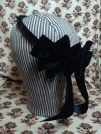 The world of millinery went rather well this year. By the time the snow fell again, I made 57 straw millinery pieces this year. I lost track of the winter hoods. I also added a line of evening headdresses, focusing on simple, classic looks of the mid-nineteenth century.
 Thanks to some wonderful people, a trio of original bonnet blocks arrived early in the summer. I’ve only been able to really work on one, Serenity, which I Love. (It was a mobility thing.) I look forward to working with the other two. I also had a beautiful custom block made for Regency era pieces. I still need to start the adventures with this block. Accompanying the trio of blocks, was a beautiful hand dyed length of straw awaiting being sewn up. (I’ve come to notice I do this thing where I save things I really, really want to do for the end or when I’m feeling particularly good. I need to fix that because this comes too close to the dessert or favorite food thing. You know, where you save your favorite part of a meal for the end so you can enjoy it, but then you end up too full to truly enjoy it.)
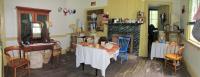 I did make it to a couple events. I am aware that I made it out to the Independence Day celebration in modern clothes. Though, I don’t remember much at all. I did make it to the GCVM Civil War event in July.
 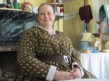 I set up my Millinery Shop and managed to pull off period clothes that didn’t hurt. I had two excellent helpers. Thank you Elyse and Elizabeth. It wasn’t until packing up time that I did damage to myself. I also made it to Preparing for the Holidays, where I got to spend an exceptional day working with a great craftswoman.
The Great –
It is all a bit of a blur right now, but 2017 was pretty awesome for workshops.
In June, I had the pleasure of offering my Millinery in Miniature workshop for the national ALHFAM conference co-hosted by the Genesee Country Village. This was an incredible opportunity. It was great to get to attend parts of the conference as well. (see below)
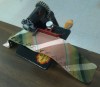 In November, I offered two very different workshops at the Museum’s Domestic Skills Symposium. On Friday, I offered Tools and Trims, a completely different, kinda crazy workshop looking at how to mimic the trims of the later 18th and 19th centuries. I spent much of the year acquiring pinking machines and dies for this workshop. On Sunday, I offered a favorite with a twist: A Pin Cushion Sampler. This year the sampler included Victorian favorites: a strawberry, a walnut, a seashell and and acorn.
The Ugly
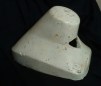
 Ah, the ugly. That which dictated much of my 2017. I mentioned in my 2016 personal reflection that I started feeling ill around the time I was releasing my second winter hood pattern, November Thanksgiving-ish. As it turns out, that is when my gallbladder started spitting out stones causing all sorts of ruckus. I just had no idea. I figured I was eating something wrong, then had pulled a back muscle. Now I know I carry pain differently and have some stress coping mechanisms. It has made for an interesting, dysfunctional, challenging, eye-opening year. Now, 3 ER/Urgent care visits and 4 surgeries later, hopefully we are wrapping up the gall stone drama. (Please meet the 12mm stone that finally did me in to the right.)
2017 Goals
With 2017 playing out the way it did, many of my personal and millinery goals kinda just didn’t happen. I did not exceed my 2016 sales. I did not sell 100 publications. I did not explore straw techniques to the extent I wanted. I did not explore straw dying in the back yard. I did not set aside a monthly amount for a new house. I did not finish either of my personal fiber goals. I did not make it to Farmer’s Museum nor Rose Hill this year.
 On the other hand…. I did do pretty decent for someone who totally got her butt kicked by a 12mm stone. I actually feel pretty darn good about that. Despite utter exhaustion on many days and this weird pain in my side, I made some pretty great pieces this year, I kept the shop up, and learned a few things.
2018 Goals and Plans
In many ways, the goals of 2017 are a do-over. I do have three over-arching goals for 2018:
- Focus, Streamline, and Simplify – This goes for my millinery, FanU pieces, and the Etsy shop. I was considering adding shop sections for vintage pieces. Nope. That just doesn’t do it for me.
- Make time for the Joy. Some time around mid-November it hit me that I just wasn’t enjoying what I was making. Part of it may have been burn-out, part just the year. But, I became very aware that I need to take more time to do some projects that are just for the fun of it.
- Sink my teeth into something. What this is going to play out to be… we shall see.
Don’t worry, there are some more specific things that are on the list for 2018:
- I have a couple books to finish. Wintering Warmly has, um, ballooned or, um, something like that. There are some spacial, technical things I need to work out to get that on ‘paper’. To Net or Not to Net: Revisited is much closer to being available. I need to just lock myself away for a few days to get some solid writing and layout completed.
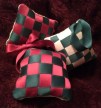 If you haven’t noticed, I have started a monthly project post that I hope to continue through the next year. Each one will be something small with some guidance or direction on how to do it your self. They won’t quite be a thorough as the Sew Alongs.
- Another blog goal is to write a Monthly Update. This was inspired by a favorite blogger I follow, Victoria Elizabeth Barnes. Her blog meanders beautifully between stunning antique finds and adorable foster kitties. I enjoy the way any one of her posts can have a little of both, as well as what is happening in her life, projects she is working on, what she is reading and such. My monthly update posts may fall just about anywhere in the month.

![IMGP2067[1]](https://annaworden.com/wp-content/uploads/2009/05/imgp20671.jpg "IMGP2067[1]")

![IMGP1881[1]](https://annaworden.com/wp-content/uploads/2009/05/imgp18811.jpg?w=300&h=200 "IMGP1881[1]")
![IMGP2003[1]](https://annaworden.com/wp-content/uploads/2009/05/imgp20031.jpg "IMGP2003[1]")
![IMGP1913[1]](https://annaworden.com/wp-content/uploads/2009/05/imgp19131.jpg "IMGP1913[1]")


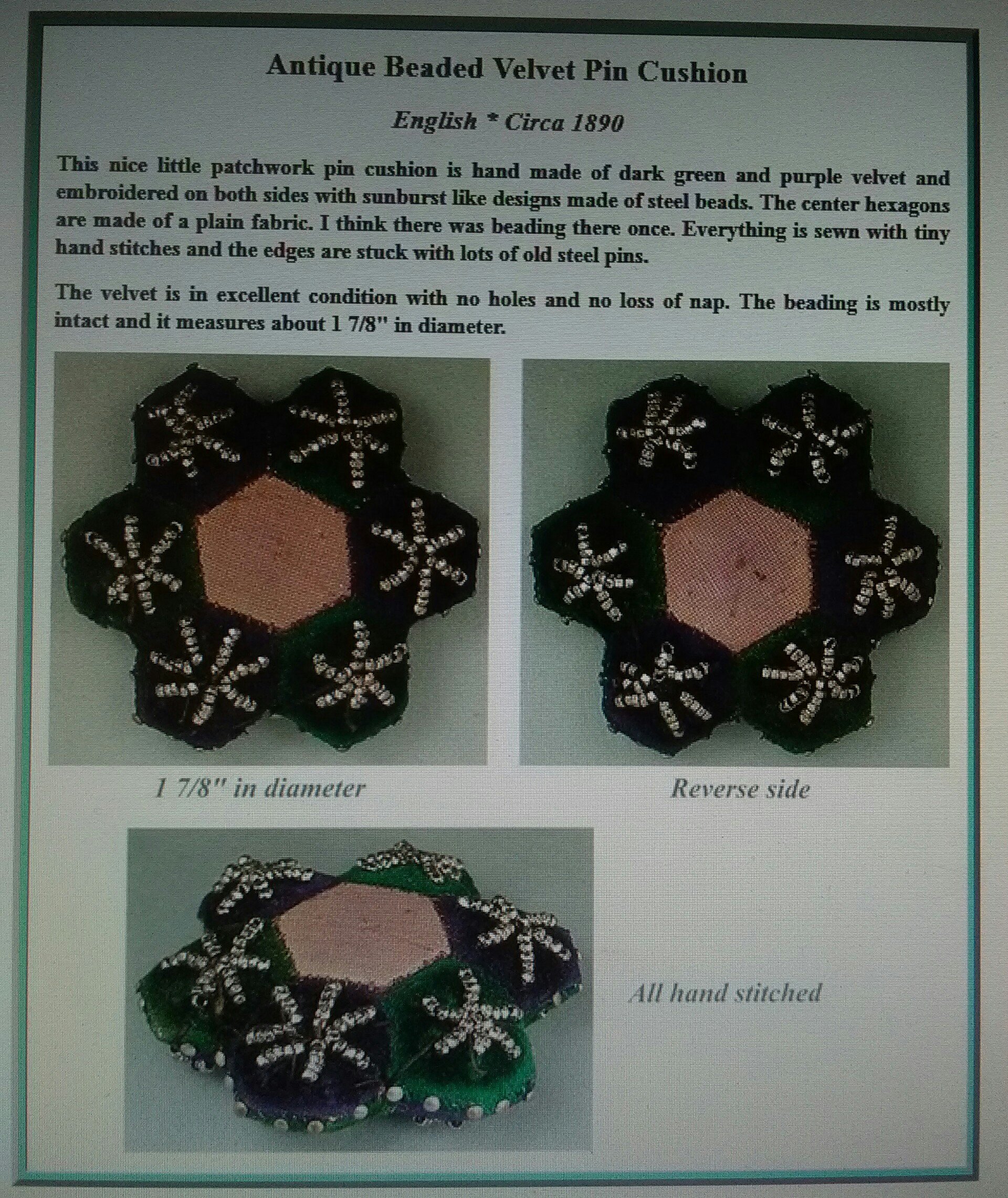
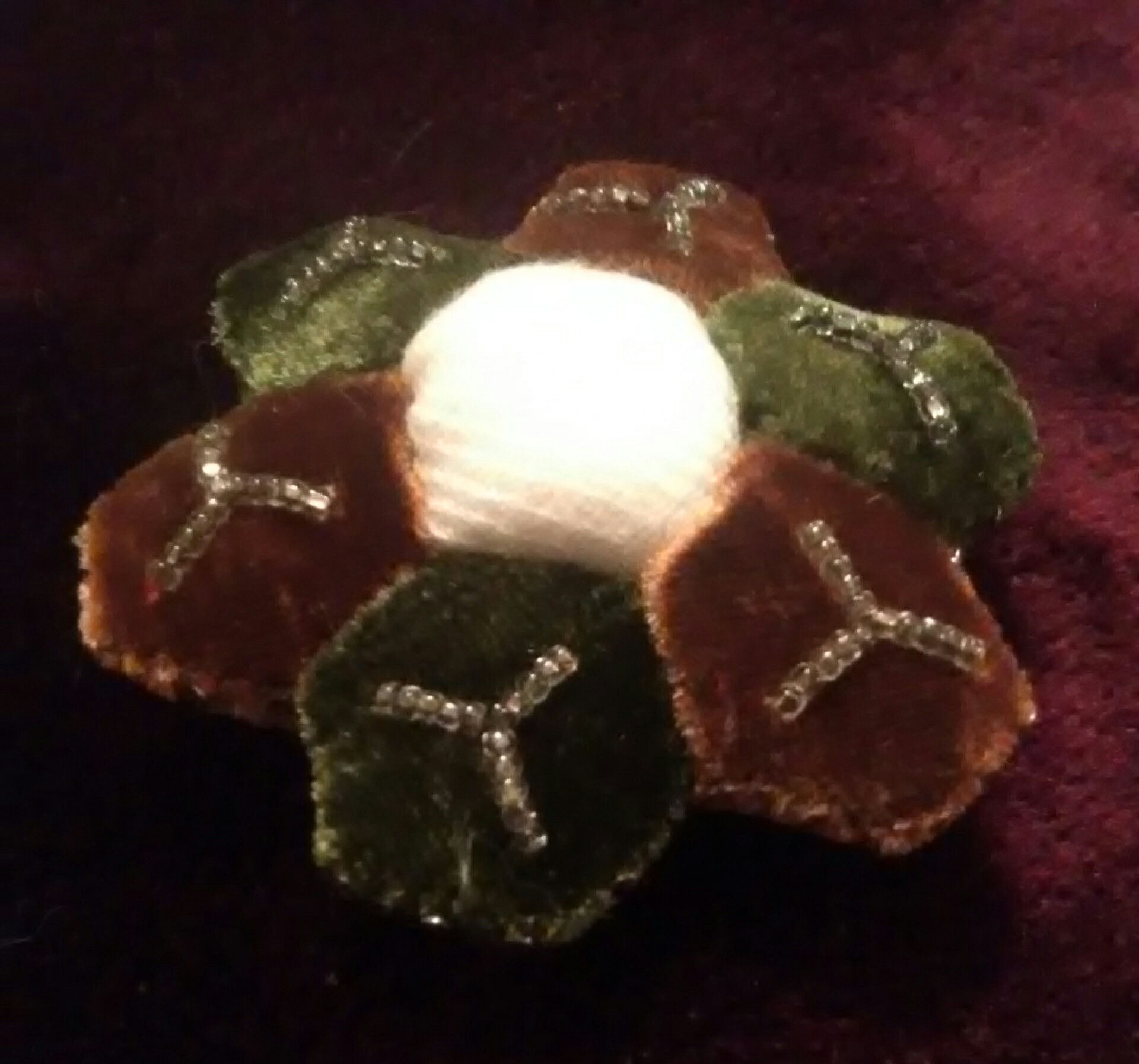

 I’ve been cutting the materials for my new Exploring the Work-box: Tools and Trims. This is the workshop held on Friday. Next, I have to make sure I have all the samples organized and pretty. Attendees will be making their own sample book filled with trim samples made with the antique pinking tools I am bringing. I hope this will be the first in a series of “Explore the Work-box” workshops. Btw, I think I will be naming the pinking machines.
  The materials for the Sunday’s Pin Cushion Sampler are almost ready. Well, they have to all be put in one box to make their way to the village. We will be making popular pin cushions of the nineteenth century – strawberries, seashells, walnuts, and acorns.
 The weekend following is GCV’s
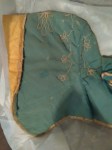


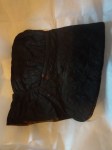
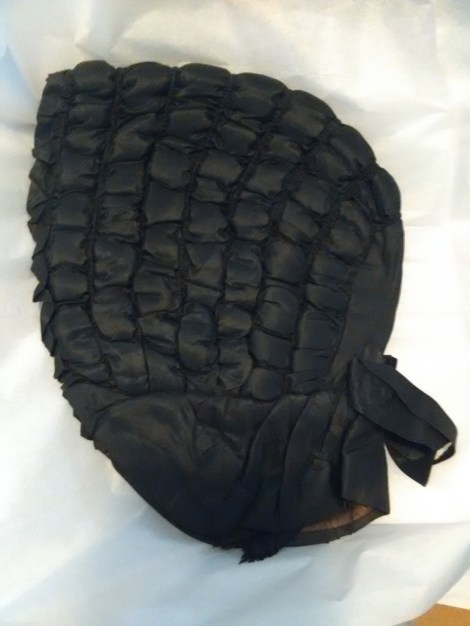

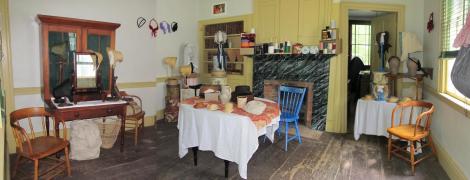
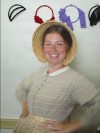 A few of the millinery pieces found new homes. This coarse straw bonnet, meant for a laboring working class impression, was one I thought would be a long term display piece. Katie came in to say hi and the bonnet somehow ended up on her head. It was absolutely perfect for her and her impression.