My Sheer Evolution

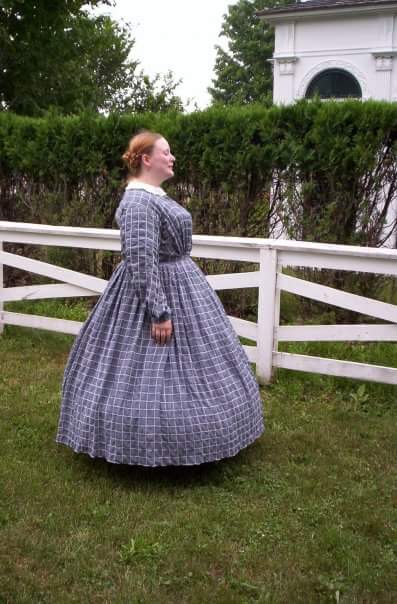
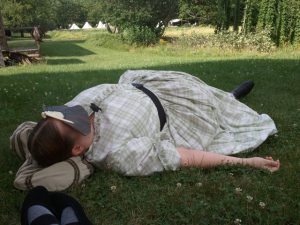
This is my first sheer dress made around 2000. It has major construction issues as I had no idea how to turn at the waist for a sheer. The fabric was oh so comfy. The skirt support was prior to me figuring out how to get better poof off my hips. The collar is too wide for 1861-4. (I have a eyes closed problem with photos.)
image

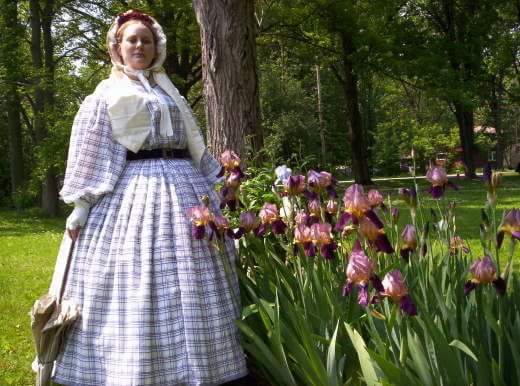
Here is my second sheer, made the same year or the next as the grey. This one does have a cotton strip folded into the turn. I put it under the fold…. It slipped…. I learned. This fabric had a very loose weave and snagged on everything.
image

I remade it to fit a significant weight gain, when we were unemployed. The remake was done on an air mattress.
image

Sheer dress three was the dress I wore for mourning Dad. (Yes, I now know sheer cotton may not be supportable for mourning. It was real mourning. I had little money. I was numb. Live with it.) This was a private gathering for just a few of just a few of us.
image

Jump forward many years….
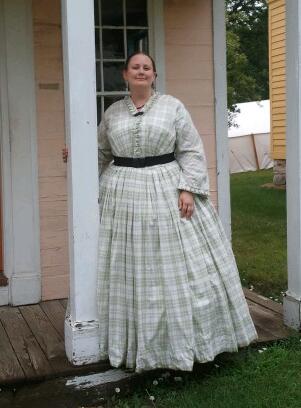
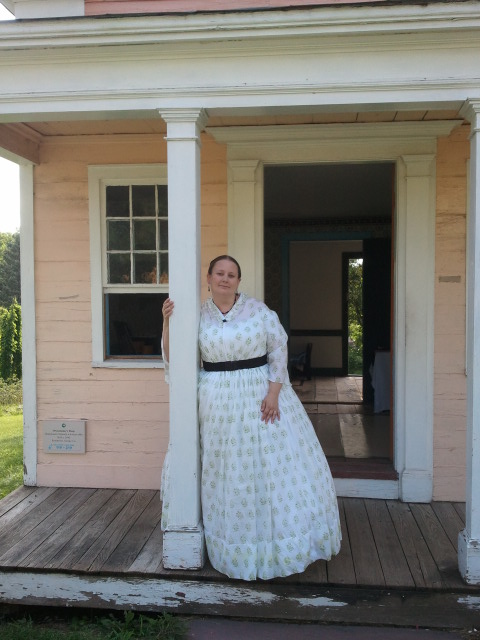
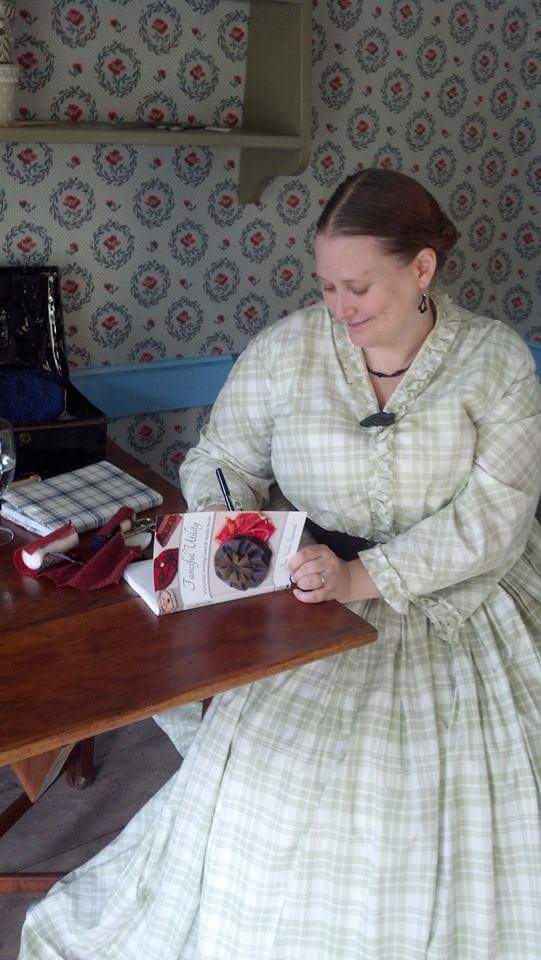
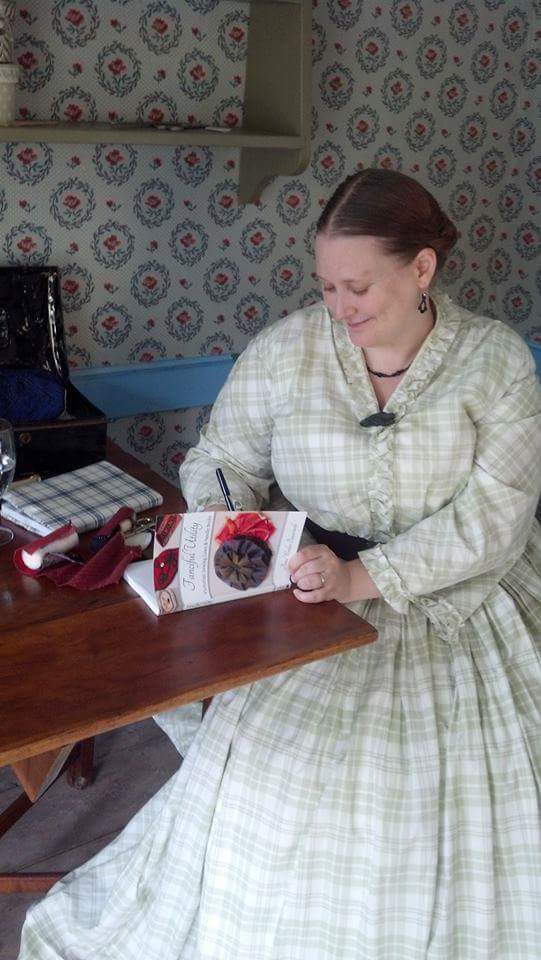
The next two sheer dresses were from my green stage in 2013. They were the first dresses I made in what felt like a long time. The green plaid is a cotton lawn; soft, comfy, airy, easy to wrinkle. The green print is a loved gift, a block print from the V&A. It is also very nice to wear. It can not get wet.
image

image

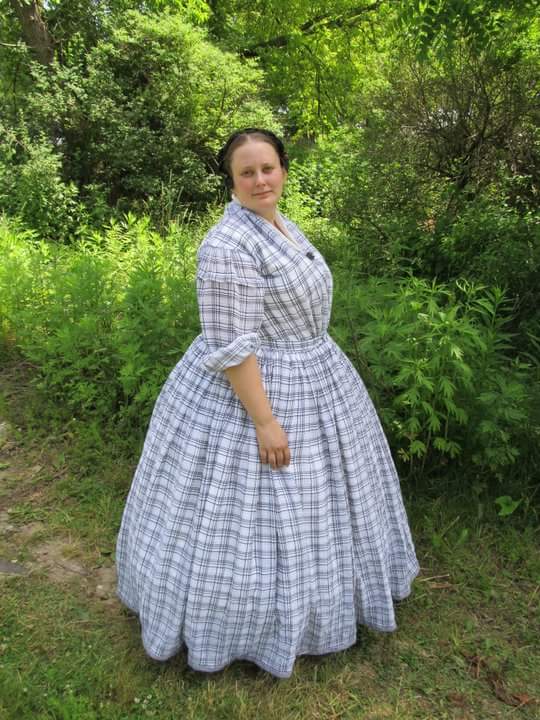
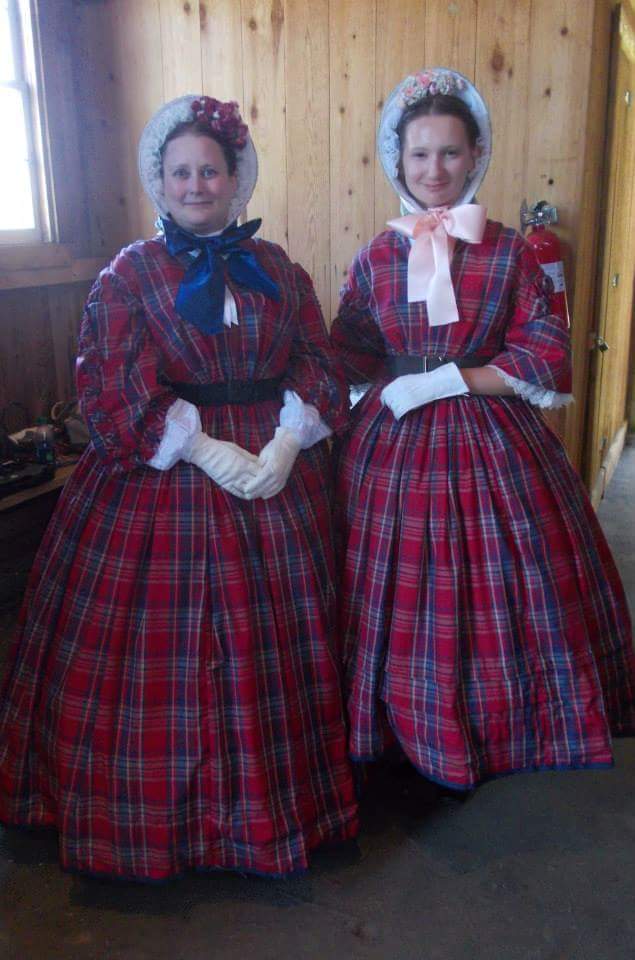
The following year, in 2014, I made the matching fabric dresses for Lily and I that we wore for the GCV Mother’s Day fashion show. This sheer cotton shirting was easy to work with and forgiving. It does feel a tad heavier than the white & green dresses. These got hem tape.
image

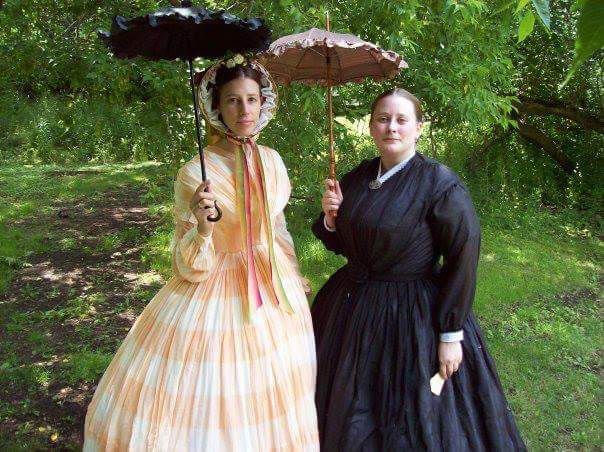
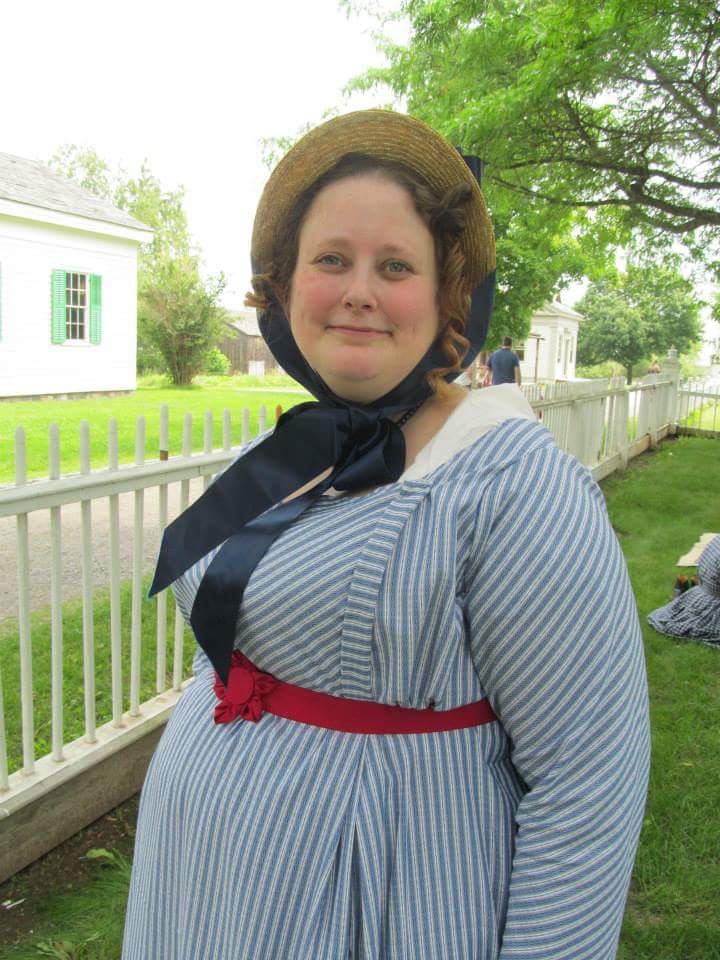
The next sheer is an earlier dress. The fabric came from a friend. It is lovable both for the ease and the wear. I want to make new undergarments to truly benefit from the lightness of this dress. (Photo by Eileen Hook)
image

I’ll admit, I’ve loved wearing sheers so much, I have a hard time wearing some opaque cottons because they feel heavy to me. I have a couple more sheers in the stash. They seem to draw my attention so much more than the period prints.

Hmm. A couple more photos….
image
image

image

Published in: on April 2, 2016 at 10:06 pm  Leave a Comment  

Today’s Millinery

This is one I would Love to finish in the style of the inspiration painting, Louise Élisabeth Vigée Le Brun’s, Portrait of a Young Woman, 1789. But, the more I think about it, I fear it would be cost prohibitive to do it right. I already broke the 12 hour mark for sewing and blocking. To finish it off with silk tulle, net or organza edged in red with that beautiful plume, would be lovely but pricey. So, I will be offering it un-decorated for the future owner to finish as desired. This will allow it to be the versatile hat it wants to be. Look for it in my Etsy shop.

Published in: on March 31, 2016 at 12:43 pm  Leave a Comment  

Today’s Millinery

Today’s millinery in miniature may already have a home. (I’ll let you know if that changes. Size depending.)

Cali says this hat is oh-so pretty with its open brim with decorative straw. She says it is a tad too small for her 9 1/2″ head, being 8″. It will best fit a doll with a smaller head, 7-9″.

Published in: on March 31, 2016 at 12:13 pm  Leave a Comment  

Today’s Millinery

Today I have a hat with a bit of whimsy for you. I made some zigzag straw that I was going to put on the edge of a hat. But, then I had a better idea. I rather like this hat. It is available in my Etsy shop.

This straw hat is a natural pale straw with an inset zigzag accent. The zigzag straw is hand shaped by me.

This hat will fit an average to large size head. Those with average size heads may wish to add a ribbon or lining for comfort. The shallow crown is made to sit high on your head. The brim dips forward with a nice curve fashionable in the era.

The numbers you’ll want to know:
Inside the crown is 21″
Side to side – 12″
Front to back – 12″
Crown height – 2.5″ in front (shallower on the sides)
Brim depth – 3″

Published in: on March 28, 2016 at 8:55 pm  Comments (2)  

Today’s Millinery

Today, I have a larger size hat. I know several of you have been waiting for one. This one has a shallow crown, a fashionably shaped brim and a scallop edge. It is available on Etsy.

The numbers you’ll want to know:
Inside the crown is 22″
Side to side – 12″
Front to back – 12″
Crown height – 2.5″ in front (shallower on the sides)
Brim depth – 2.5″

Published in: on March 26, 2016 at 9:49 am  Leave a Comment  

Interpreting the Straw – a Pondering

I’ve decided I need different attire if I am going to interpret sewing straw in public. While my working middle class attire is appropriate for interpreting in the millinery shop, I do not feel it is appropriate for interpreting the sewing of straw done in a domestic setting.

I’ve decided to take a closer look at the clothing worn in illustrations, and the occasional painting, to see what the women work while plaiting and sewing straw.

There is one small or not so small glitch in my plan for different attire, it needs to be suitable or easily tweekable for a couple different decades as I may be out at the museum while different periods ranging from 1812 to 1860 are being interpreted.

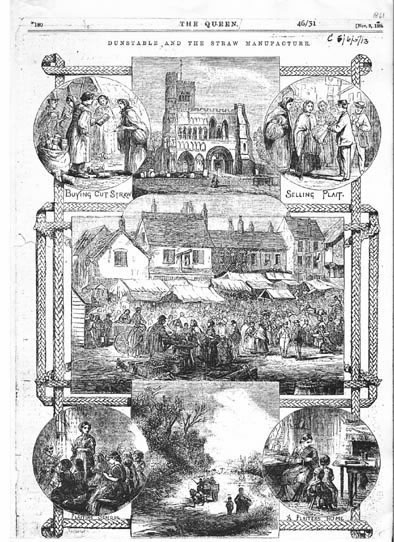
This illustration nicely shows the stages of straw manufacture as it takes place in England. Alas, the system was different here in the US. (Please, read From Field to Fashion to know more.)

plait20market_jpg

Dunstable and the Plait Manufacture, The Queen, 1861

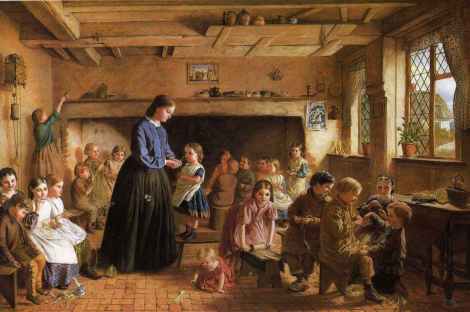
This painting is quite informative. Two downsides. First, it is again England. We didn’t have plait schools here. Second, as much as the loose bodice could appeal for comfort, I really do not want to propagate the bodice and skirt separates myth that this attire could me miss-construed as.

strawplaitingschool_brownlow

George Washington Brownlow – A Straw-Plaiting school in Essex

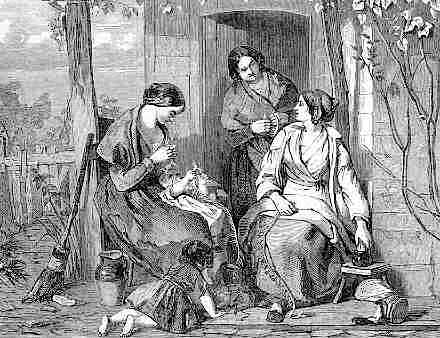
This may be one of the more comfortable and practical sets of clothing I’ve seen illustrated. While published in the mid-century, the actual date of illustration is unknown. By the hat on the ground to the lower right, I suspect this is the 1840s. This could be a versatile foundation to work off of. That being a cross-over style sacque, skirt, and apron with a shawl added if necessary.

straw-plaiting

Straw plaiting in St Albans.
From ‘The Illustrated London News’ 1853

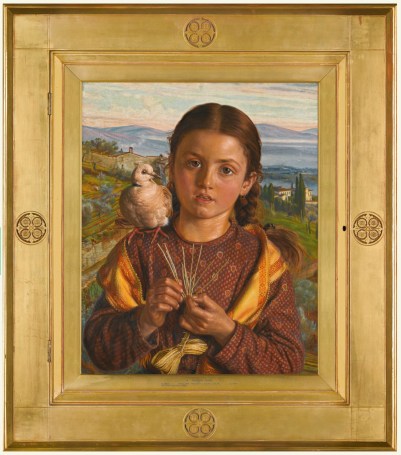
Although not the age, era or area I need to be looking at, I need to share this painting because it is just so wonderful:

holman-hunt-tuscan-girl-framed-pic

Tuscan Girl Plaiting Straw

Published in: on March 21, 2016 at 6:00 am  Leave a Comment  

Where Can I Wear That Hat?

Recently, with my focus on hats, I have been asked a several times “where can I wear that hat?”

This is an excellent question. I love that people are asking. It means they are thinking about when and where they can appropriately wear a particular hat. It also means I don’t have to worry as much about one of my hats appearing in an inappropriate scenario. (Yes, I worry about such things.)

I want to cover the background to the answer(s) rather than just the answer.

First, where do we look to find out what situations are appropriate for different types of hats? We need to look at visual references for context. This will include context based photographs (cdvs, sterioviews), illustrations and paintings. This will show us the scene, the type of hat, the wearer and the clothing it accompanies. We should also include textual references, keeping in mind the written descriptions can misinterpreted due to various reasons.

Second, we need to keep in mind the chronology and geography of references. What was common in the 50s may not have been common in the 60s. What may have been common in an urban area may not have been common in a rural area. What may have been common in New England may not have been common on the Gulf coast.

Let’s look at some images. (Just as start. I’ll try to come back and add more.)

2016-03-04-08.09.29-1.jpg.jpeg

2016-03-04-08.09.29-2.jpg.jpeg

This pair of images I recently found after completing the violet velvet hat. These women are from a family photo that I lack citation details on. The daughter is holding a croquet mallet, indicating a recreational situation. Both women are wearing straw hats with brims that curve down all the way around, providing some sun protection. The hats appear to be simply decorated with ribbon. The clothing suggests a date between 1860 and 1863/4.(the link provided does not agree, estimating the photo is just post-war.) I estimate the girl to be in her young to mid teens, the mother in her 40s.
Straw Garden hat clip 2

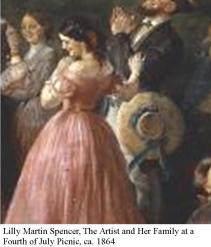
Continuing with the recreational scenario, this shot from a Lily Martin Spencer painting depicts a picnic on the 4th of July. The hat is a larger hat. It has a wide brim that would shade the face. The crown is shallow, maybe 2″ high. It is simply decorated with a ribbon and possibly a ribbon or flower arrangement in the front, bow in the back.

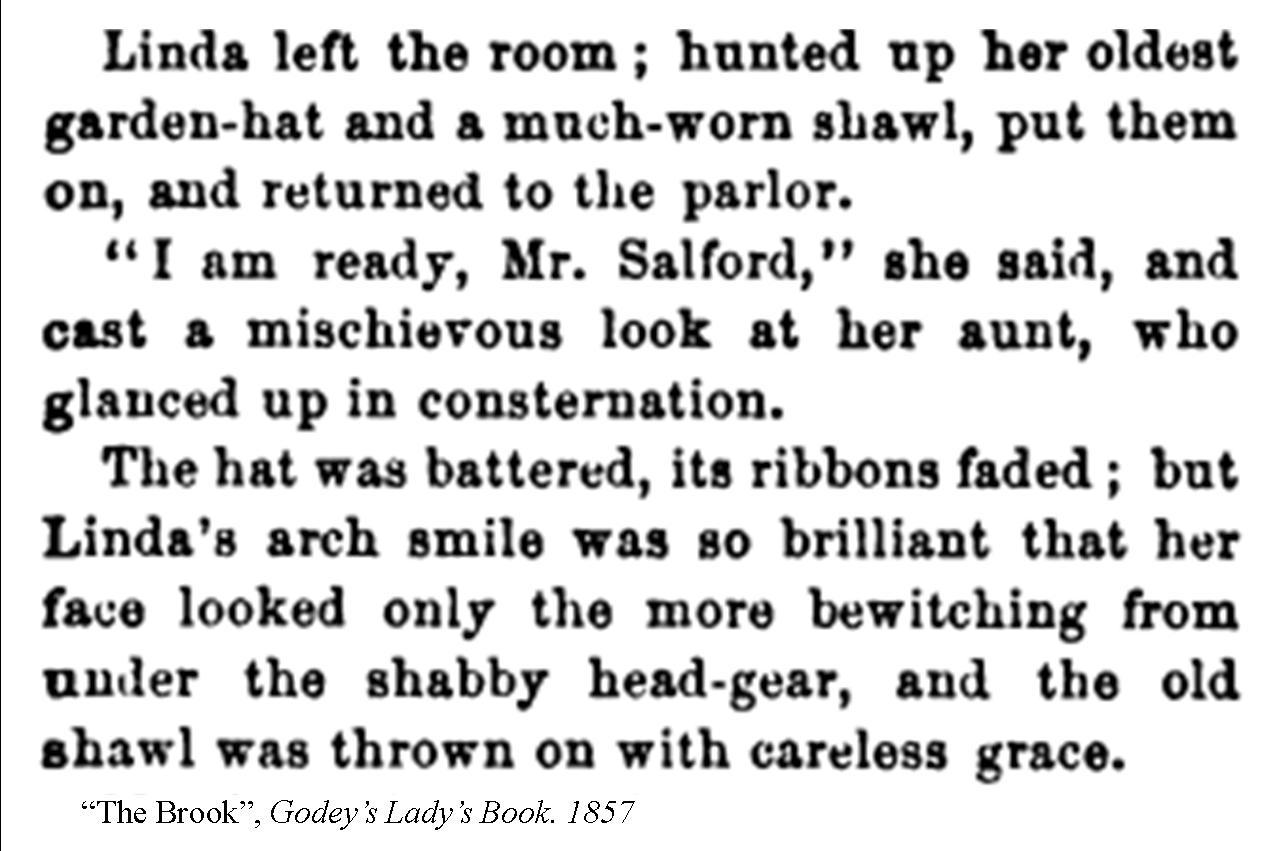
2016-03-16-13.21.13.jpg.jpegThis stereoview, A Charming spot for a Country Home,  shows what appears to be a small town or rural garden of a comfortable family. Dated 1865, this image is from New Jersey. We can see a woman seated in the chair with her back to us, wearing what appears to be an undecorated straw hat (with little blocking in my opinion.) This hat reminds me of this description of a well worn, favorite garden hat. Near the fence is a pre-teen girl in a wide brim, low-ish crown hat with a simple bow. Hats to do seem to fairly common in photos of people in the yards or gardens (upper working class, leisure class homes.)

Harpers Monthly June 18502016-03-16-13.23.13.jpg.jpegThis next stereoview, View of grounds at Newport, is estimated to be 1860, taken in Herkimer, NY. This can also be considered a recreational image as the woman stands in a field alongside a haystack. Her hat is smaller, with a very shallow crown and brim that reaches just about the depth of her face. (meaning the brim comes about as far forward as her nose.) This is a fashionable shape for a hat that I believe would be appropriate for a walk in a village as well. Compare it to the hats to the right from June of 1850, which have significantly larger brims.
Seaside hats from Charles Wynne Nicholls

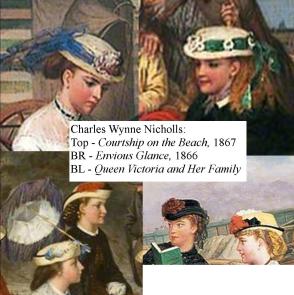
One can not mention recreation without touching on seaside. I don’t think many of us truely get to do impressions that spend time seaside. I think large, shady hats often come to mind when thinking seaside recreation. But, as we see in these late and post war paintings (English), smaller hats were worn seaside.

Close ups of how to wear a hat Stereoview The Baptisim


As a general rule of thumb, formal occasions were not appropriate for fashionable or casual hats. This includes church. This stereoview clip suggest there were some exceptions, in this case a baptism. (I’ll see if I have the whole scan saved elsewhere.)


Scenario Specific Hats (I really ought to find time to write more about):

  • Coarse hats
  • Southern made hats
  • Reform hats
  • Riding hats
  • Sporting hats (archery)
  • Resort/Watercure hats
  • TBD

More hats in context:

Published in: on March 16, 2016 at 4:07 pm  Leave a Comment  
Today’s Millinery – Fancy Edge Hat

Today, I offer a millinery piece I have looked forward to making and I am having a hard time letting go of. It will be available in my Etsy shop as soon as I pick the price and hit the button.

IMG_9027This hat is trimmed in a fancy vintage plait. I have all of the plait that was offered, but there wasn’t much of it. It combined a scroll of twisted straw threads and arrangements of flat straw.

This stylish fashion hat is made with a beautiful natural straw with speckling in the plait and a vintage fancy straw edge.
The crown is flat on the top. It is sized to fit an average size head. The brim is fashionably shaped, dipping in the front and back.

**Full disclosure – The fancy straw plait is backed with a faux horsehair that did not exist in the 19th century. I have stiffened the fancy plait to hold the shape of the hat. I highly suggest not wearing it in the rain or holding the hat by the edge.**

IMG_9029


Published in: on March 15, 2016 at 5:20 pm  Leave a Comment  
Tags:

Today’s Millinery

Today, I have three hats to share, one garden hat and two doll hats. Each are available in my Etsy shop.

Garden or Croquet Hat, Trimmed in Lilac Purple Velvet

EDIT TO ADD: Take a look at this photo. I saw it after making the hat. It makes me want to do another, with beads this time.

This fashionable hat will be perfect for a mid-nineteenth century garden party or game of croquet. Made of a narrow, light color natural straw, this hat’s brim curves down all the way around. It is trimmed with Violet Purple velvet ribbon.

The ribbon is one of Hyman Hendler‘s taffeta back velvet ribbons. While this is a modern fiber ribbon, it is a quality ribbon. I believe it is color #609 Violet.

Inside, the crown is lined with a white cotton sateen ribbon. I added cotton sateen ties to tie behind your hair.

This hat fits my average head that measures 21.5″ around at the hairline. It may fit larger and smaller heads slightly differently.

Fashionable Doll Hat

Cali loves this hat with its shapely brim dipping in front of her face. She suggests it be worn by a doll with a similar size head (9 3/8″) or slightly larger. She also recommends a lining and ribbon ties to help it stay on.

Small Doll Hat

Cali is holding the next hat because it is far to small for her. This small hat best for a doll with a 5″ or 6″ head. The crown is about 6″ around inside. Cali suggests a lining and ribbon ties for under the hair to help it stay on your doll’s head.

**Cali is also telling me it is far past time for her to wear something  other than her Christmas dress.**

Published in: on March 13, 2016 at 1:52 pm  Leave a Comment  

What Shall I Call Thee?

We often call the rolled and folded sewing cases a “Housewife” or “Huswif”. Here is a perspective that considers the phrase to be old-fashioned. (Yes, the name is still used through the era. There just may be a connotation we are not yet understanding.)

There is an old-fashioned kind of pincushion, which looks rather clumsy, but it is extremely convenient for a journey. The cushion is nearly an inch thick; no pasteboard is put on the outside, in order that there may be more room for pins; the inside is a piece of cardboard, covered with silk; a round hole is cut in it, and a piece of cardboard, just big enough for a thimble, let in. Little bars, stitched across on each side of the thimble-hole, form places for scissors and bodkin. All this should be arranged before the stuffing is put in, and the bit of silk for the outside fitted; it is very inconvenient doing it afterwards. The pincushion forms but half of the establishment. Flannel leaves are put in for needles, and the outside is of covered silk, with a little pocket for thread. This pocket consists of a plain piece of silk, nearly the size of the pasteboard, fastened to the outside by means of little gores at each end.

What used to be made in old times, and called housewives, are similar to the travelling pincushion. These had a piece of silk, the same width as the cushion, and a little more than a quarter of a yard long, neatly stitched into compartments to answer the purpose of thread papers. This was rolled round the cushion, and fastened by a small loop and button. Housewives were very useful things, but they are out of fashion now.(The Girl’s Own Book)

This is in both the 1858 edition (here) and the 1833 edition (here).


Published in: on March 11, 2016 at 6:00 am  Comments (2)