(Previously published in 2009)
Most everyone who knows me well knows I am by far not a fan of cold winter weather. I am continuously cold to the bone and fearful of ice all winter long. Between my general dislike of winter and the impending cost of keeping our homes warm we will all be facing this winter, I couldn’t help but be curious about the techniques our 19th century counterparts used to keep themselves and their homes warm in the winter cold.
To get a general understanding of how our mid-nineteenth century counterparts saw their winters, let us look at some reports on the weather and descriptions of the home in winter. These reports come from the January 10th, 1856 New York Times presenting a cold spell of weather from a few major cities:
In New York City – “Yesterday was a very cold day. The thermometer at sunrise was 4 degrees below zero, and throughout the day it ranged from 8 to 20 above. The wind blew fresh all day from the northwest. The mean temperature of the last fifteen days has been unusually low, being 19 deg, at sunrise, and 24 deg. At 8 P.M. We seldom have so long a continuance of consecutive cold. Excepting only on the 3d inst., the thermometer has not risen above the freezing point once during that time, even at the warmest part of the day.”
In Boston – “The weather is much colder, The mercury at sunrise yesterday indicated 29o; at 11 o’clock, 33 o; at 6 ½ o’clock, 22 o; at 8 ½ o’clock, 14 o; and at midnight only 4 ½ o above zero. The wind was light from the southwest of the day, but went around towards the northwest in the evening. –Boston Advertiser, 9th inst.”
In Philadelphia – “The Mercury was lower in Philadelphia, this morning, then it has been for many years. On the 20th of January, 1852, the thermometer was 2 ¼ o below zero. On the 7th of February, 1855, the thermometer was at zero. We well remember that day. It was the only occasion last Winter upon which the mercury got below Zero. – Philadelphia Bulletin, 9th”
In Newark – “During the present Winter we have not experienced such severe cold as was felt here last night and early this morning. They day promised to be as moderate as could be desired; but late in the afternoon the thermometer fell rapidly, and during the night reached, in one part of the City, 5 o below zero, in another, 9 o, and in another 10 o. If these reports are to be relied upon, last night was even colder than the memorable 7th of February last, which was at the time, said to be the coldest weather felt here since the year 1850. – Newark Adv.”
Two weeks later the Times prints a letter from Lawrence, Kentucky reporting “Excessive Cold” in Leavenworth causing some to evacuate to Lawrence. “Matters have not changed materially for the last three days, nor is there any serious apprehension that they will for the next three. At Leavenworth the waters have settled clear again, so far as pertains to anything outward that the public can discern. Four of five more ‘fugitives’ have arrived in town from that place during the last twenty-four houses, and Mr. Minard, who attempted to return to his family on Wednesday, came back last night, having learned that scouting parties were on the alert for him, and that it was for him to be seen in that vicinity. He has decided, together with the others from that place, to take up his residence in Lawrence until Spring, for personal safety. …This is called the coldest Winter known here for twenty years. There is about six inches of snow now upon the ground, and the weather is by no means severe, today. Wednesday morning the thermometer was 12 o below zero, but for the last two days it has stood above zero. The ground is frozen about 18 inches deep, and the river about the same. Several nice ice-houses have been well packed with ice since the cold weather began.”
Mrs. Stowe describes in her House and Home Papers what she considers a typical household living through the winter:
“It is a terrible thing to reflect upon, that our November to May, six long months, in which many families confine themselves to one room, of which every window-crack has been tightly calked to make it air-tight, where an air-tight stove keeps the atmosphere at temperature between eight and ninety; and the inmates, sitting there with all their winter clothes on, become enervated both by the heat and by the poisoned air, for which there is no escape but the occasional opening of a door.
“It is no wonder that the first result of all this is such a delicacy of skin and lungs that about half the inmates are obliged to give up going into the open air during the six cold months, because the invariably catch cold if they do so. It is no wonder that the cold caught about the first of December has by the first of March become a fixed consumption, and that the opening of the spring, which ought to bring life and health, in so many cases brings death.
“We hear of the lean condition in which the poor bears emerge from their six months’ wintering, during which they subsist on fat which they have acquired the previous summer. Even so, in out long winters, multitudes of delicate people subsist on the daily waning strength which they acquired in the season when the windows and doors were open and fresh air was a constant luxury. No wonder we hear of spring fever and spring biliousness, and have thousands of nostrums for clearing the blood in the spring. All these things are the pantings and palpitations of a system run down under slow poison, unable to get a step farther.
“Better, far better, the old houses of the olden time, with their great roaring fires, and their bed-rooms where the snow came in and the wintery winds whistled. Then, to be sure, you froze your back while you burned your face, your water froze nightly in your pitcher, your breath congealed in ice-wreaths on the blankets, and you could write your name on the pretty snow-wreath that had sifted in through the window-crack. But you woke full of life and vigor, you looked out into the whirling snow-storms without a shiver, and thought nothing of plunging through drifts as high as your head on your daily way to school. You jingled in sleights, you snow-balled, you lived in snow like a snow-bird, and your blood coursed and tingled, in full tide of good, merry, real life, through your veins – none of the slow-creeping, black blood which clogs the brain and lies like a weight on the vital wheels!” (Beecher, 1874 quoting Stowe)
In drastic comparison we find the poor living in homes ill equipped to withstand blowing winter snow or able to purchase what is needed to keep a family warm. A New York Times writer paid a visit to tenant houses and shanties during the winter of 1855. Of one shanty he describes: “The door, which opened from the wood-house into the room, had a large gap over it, and another under. The wooden walls had great chunks, in which the snow filtered. There was no fire in the little stove, and the mother and two little children lay head by feet in the bed, under a covering of some bits of old carpeting, a thin shawl, and a piece of an old blanket. Newspapers were used to keep off the snow. They shivered as they lay, and the woman, with a chattering tone, said she was waiting for her husband, in hopes he would find something to bring home. A chicken was frozen to death under the table. It was a wretched place.” (February 12, 1855)
DEALING WITH FREEZING, ICE, AND SNOW
In the modern world we deal with issues of ice sealing our car doors closed, our water pipes freezing in less heated parts of our house, and snow piling up in our driveways. While we have de-icer, electrically heated pipe insulation and snow-blowers, what did our predecessors do to face the complications of winter head on?
Icy steps transcend the centuries. Looking at domestic advice books, we see using salt to melt and soften the ice was used then similar to now. “ICY STEPS – Salt strewed upon the door-steps in winter will cause the ice to crack, so that it can be easily removed. (Child 115) Eliza Leslie gives us more specific directions for maintaining the steps and to prevent ice along with subsequent injuries.
“THE FRONT DOOR – It would be well if all door-steps were furnished with hand-rails. Without them, there is much danger of slipping down in icy weather, or at night, or for persons that are lame. …. A foot-scraper is an indispensable appendage to a front door. As soon as a snow has done falling, and before it has time to freeze, it should be immediately cleared entirely away from the door-steps, and pavement. It is then an easy task, but a very difficult one after it has frozen. To say nothing in regard to the danger of persons slipping down on the ice, and being severely injured, (of which there are instances every winter,) an ice door-step or pavement has a wretched and slovenly appearance, gives a mean aspect to the house, and is altogether [unclear] for if you have not a man-servant to clear it away with a space or large shovel, you can get it done for a trifle by the poor men who go about for that purpose after a snow, and to whom such a job is frequently an act of charity. We have seen stout little boys, the sons of gentlemen, fid great pleasure and good exercise in shoveling the snow from the front door in a bright winter morning. Also, let the pavement and steps at the back door be cleared from the snow as soon as possible. If, however, the snow has been allowed to freeze on these places, keep the ice always well covers with ashes, or sprinkle salt on it. Every winter there are limbs broken, and lives endangered, from falling on icy pavements or frozen door-steps; accidents that would never happen, if every citizen did his duty in keeping his own premises free from ice, and if the public bodies were equally vigilant in having the snow immediately cleared away from the vicinity of the public buildings.”(Leslie 330-331)
I am particularly fond of her suggestion of making use of the boys eager to clear the steps of neighbors. She continues to suggest, as many other advice writers did as well as a few newspaper articles, the wearing of carpet slippers or moccasins. “If obliged to walk on snow or ice: carpet moccasins are excellent preventives from slipping; and so are broad-soled India-rubber shoes, of the thick old fashioned sort. (Leslie 331)
Water sources freezing was a concern for everyone whether water was supplied by a pump or running water. If you have a pump outside, Child suggests: “In winter, always set the handle of your pump as high as possible, before you go to bed. Except in very rigid weather, this keeps the handle from freezing. When there is a reason to apprehend extreme cold, do not forget to throw a rug or horse-blanket over your pump; a frozen pump is a comfortless preparation for a winter’s breakfast.” (Child, 16)
For those with plumbing in the house insulation with straw or cloth is suggested.
“When frost appears to be approaching, water-pipes should be covered with straw or cloths, or anything which will keep in the heat and prevent freezing; but in order that this may be done, the pipes should be place where they can be conveniently got at, and not hidden in some inaccessible recess in the wall if the outside of the house, so much the better, for cracks in the pipe, which are not observed so long as it is filled with ice, will soon show themselves when a thaw comes and the water rushed through them down the stairs, or forces its way through the ceilings into bedrooms, drawing-room, dining-room and kitchen” (Stevens 64)
I was surprised to find a suggestion from Eliza Leslie regarding sky-lights during the winter. “Care should be taken that all the wood-work of the sky-light (as well as the glass) fits tightly; otherwise it will not only leak from rain, but from melting of the snow, when it thaws. As soon as the snow has ceased falling, some one should go up and remove it at once (while it is still soft) from the skylight, which will otherwise be entirely darkened; and, if the snow freezes on it, may probably remain obscured for some weeks.” (Leslie 328)
KEEPING WARM WHEN OUT AND ABOUT
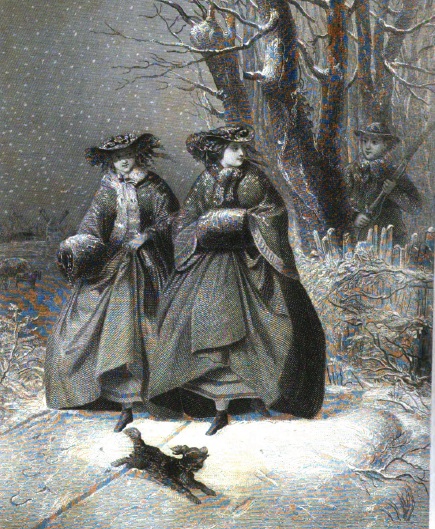
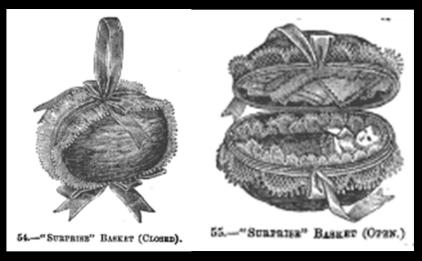
In either century, we often find we need to go out and travel in the depths of winter for both necessity and for pleasure. Numerous methods of keeping warm were used to keep warm while in the carriage, sleigh, or wagon.A description of sleighing in the New York Times covers some of the basic clothing for a winter outing. “On with rough coat and warm gloves, thick soled books, and throat wrapper… hire a gallant sleigh; drive round to —-‘s house; receive there a consignment of shawls, wrappers, and buffalo robes, surmounted with a pretty Winter bonnet, relived by the sight of a delicate kid-gloved hand, peeping out from the comfortable mass.” (New York Times January 17, 1853) A Quaker girl from Wheatland, NY used hot bricks to keep warm during an excursion to Bergen. (January 19, 1856) Another suggestion from Eliza Leslie is to use little baskets lined with fur to put your feet in while riding in a carriage or sleigh. (321)
KEEPING THE HOME WARM
A key part of keeping the home warm in the mid-nineteenth century was the use of a fire-place and/or stoves. A home could be heated with wood or several other fuels. Homes using wood to heat and/or cook with needed to plan ahead seasonally and yearly to have the right wood. Wood needed to be seasoned, dry, not freshly cut and green. Eliza Leslie suggests laying out wood for winter fuel in the summer due to the cost of the wood. Beecher says to purchase wood in August and September saying it is cheapest and most plentiful then. This is a slightly later time than Leslie’s suggestion, possibly a slight geographical variation from Philadelphia to New York. Each domestic advice author had different preferences for types of wood. Leslie’s suggestions for woods:
“The best wood for fuel is hickory, and the next is oak. Locust is also very good; so are walnut, beech, and maple. Birch is tolerable. Chestnut wood is extremely unsafe from its tendency to snap and sparkle, and to throw its small coals all round. Pine wood is of little value as house fuel. It blazes freely at first, but when its resinous qualities have exhaled, (which is almost immediately,) the sticks turn black, and seem to moulder away without emitting any heat. Pine chips, however, from the rapidity with which they ignite, are excellent for kindling.” (Leslie 121)
Comparatively, Beecher considers the best woods to be hickory, hard maple, white ash, black birch, yellow birch, beech, yellow oak and locust in that order. She considers elm, soft maple, white birch, pepperage, and pine to be inferior fire woods along with chestnut, butternut, cedar, sassafras, red oak and buckeye.
The other fuels available in the mid-century included charcoal, anthracite coal, coal, coke, and bituminous coal or English coal. It takes approx. 3 tons of anthracite to heat during 1 season in the middle states, more in colder areas. It needs to be ignited with charcoal or chips of dry wood. It needs to be replenished about every six hours (Leslie 134) Also according to Leslie “It goes further, lasts longer, gives out more heat, with less waste from slate-stones and ashes, and leaves better cinders when it is extinguished; and good cinders may always be turned to account by burning them over again.” Bituminous is softer than anthracite, emits more smoke, and produces more dust and ash. It creates a less intense heat and a bright blaze. It is imported from England and from the Appalachian region. Bituminous is softer than anthracite, emits more smoke, and produces more dust and ash. It has a less intense heat, bright blaze.
Coke was considered a very convenient and economical fuel for spring and autumn because it emits a moderate heat. It makes fewer vapors than other coal. It ignites quickly and makes a bright fire. “Charcoal is extremely useful to burn in portable furnaces for making sweetmeats, and cooking various little things.” (Leslie)
“For those, who use anthracite coal, that which is broken or screened, is best for grates, and the nut-coal, for small stoves. Three tons are sufficient, in the Middle States, and four tons in the Northern, to keep one fire through the Winter. That which is bright, hard, and clean, is best ; and that which is soft, porous, and covered with damp dust, is poor. It will be well to provide two barrels of charcoal, for kindling, to every ton of anthracite coal. Grates, for bituminous coal, should have a flue nearly as deep as the grate ; and the bars should be round, and not close together. The better draught there is, the less coal-dust is made. Every grate should be furnished with a poker, shovel, tongs, blower, coal-scuttle, and holder for the blower. The latter may be made of woolens, covered with old silk, and hung near the fire.” (Beecher, 1854, p281)
Living Spaces – Parlors, Dining Rooms, Kitchens
In living spaces, such as the parlors, dining rooms, and kitchens a key concern in domestic advice books is the drafts in a room. As many of us know from our own homes, drafts can come from doors, windows, fire-places, and mysterious places we try to seek out. Securing the cracks, crevices and gaps at the onset of winter helps keep a room draft free and feel warmer. These are Eliza Leslie’s suggestions for stopping drafts:
“Before the cold season commences, the window-sashes of the chambers should be made tight, and the doors secured against the admission of currents of air when shut. This will scarcely be necessary in a very well built house, where the doors and windows all fit perfectly, and where the wood-work, being well seasoned, has not shrunk.
“When there are large cracks at the bottom of the door, have a thick slip of wood nailed on the floor outside. A similar slip may be nailed along the side of the door-case where it opens. We have seen these lathes covered with green baize only. Also, keep the key always in the lock, as a strong draught of air rushes through an open key-hole. For inferior rooms you may nail a stout slip of listing (the selvage of cloth) all along the outside of the crack; taking it off in the spring. We have seen, in old fashioned houses, gilt or brass nails round the crack of a door; and as it was considered ornamental as well as useful, it was left there all summer. A long narrow bag, made of carpeting or thick cloth, and filled hard with sand, will somewhat lessen the draught at the bottom of a door, if laid on the floor outside.
“For the outside doors, and those of the best rooms down stairs, it is usual, to have a broad, thick, brass ledge fastened to the floor, so as to screen the crack at the bottom of the door.
“In the chamber of an invalid, it is well to have a tall, standing screen, place just within the door, that when it is opened, the rush of cold air may be felt less sensibly.
“In a very severe climate, where it is thought best not to raise the sashes during the winter, they may be made air-tight, by pasting slips of thick paper over the cracks, fitting them neatly; or by nailing all round the window-frame, laths covered with baize. Some persons stuff the cracks with wadding, put in with knife or scissors. There is frequently, however, great difficulty in removing the wadding in the spring; bits of it working in so far, and sticking in so fast, as to prevent the sash from going up and down. A window-sash may be kept very tight, by merely sticking into the cracks little wedges of wood two or three inches long, and about and inch and a half wide, and shaved quite thin towards one of the ends.” (Leslie 322-323)
I still haven’t figure out how the last suggestion works with piece of wood this thick. Leslie also points out some houses in the north have double sashes. (Leslie 232)
Another method to make a room more comfortable is through the use of carpets and curtains. While most advice authors do not directly discuss the use of carpets and curtains in the winter, they do suggest taking carpets out in the summer, replacing them with straw matting as well as not leaving heavy curtains up in the summer to allow fresh air to enter the room. Both of these recommendations suggest that curtains and carpets were seen as adding warmth and comfort during the winter.
One more suggestion is like a portable heater. “Small portable foot-stoves of perforated tin, set in a wooden frame, and containing a little iron pan to be filled with hot coals, are excellent for keeping the feet warm in the winter, when sitting still. They cost but a trifle, and no house should be without them, particularly where wood is burnt.” (Leslie 321)
Bedrooms, Beds and Sleeping
A comfortable bed was essential to a good night sleep and, as some were learning in the mid-century, important to health as well. There were numerous suggestions to take the winter chill from the bed and make it more comfortable in the winter. Combining a feather-bed on top of the mattress provides more insulation with-in the bed. For sheets, linen was the preference for summer while thick cotton was preferred for winter as it was considered warmer. For blankets, Leslie suggests a progressive series of up to three blankets.
“Except in very cold climates, it will not be necessary to allot more than three blankets to each bed; beginning with one in the autumn, and adding the second and the third as the weather grows colder. The blankets should be larger every way than the bed, to allow for tucking in, and for turning down at the head. Blankets of the best quality will last many years. At the close of spring they should always be washed before they are put away. Where the winters are very severe, eider down quilts and cotton comfortables are frequently used, in addition to one or two blankets.” (Leslie 310)
Bed curtains are useful in keeping the immediate sleeping area warm.
“We think, however (to say nothing of the dreary and comfortless appearance of a curtainless bed, in cold weather, particularly when a sick person is lying in it,) that the winter climate of most parts of America is such to render curtains highly desirable at that season, to all who can conveniently procure them. It is not necessary to draw them closely all round; but if the heads of the sleepers were always screened from the cold air of a cold room, there would, perhaps, be fewer tooth-aches, rheumatic pains, coughs, and sore-throats.” (Leslie 304)
To warm the bed or to keep it warm while you are sleeping, a few options are suggested. The warming pan is a long-handled, often brass pan, which is filled with hot coals. It is placed under the sheets with the upper layers of bedding turned down. The pan is moved about to heat the bed. This is a temporary heating since the pan must be removed. A brick, heated in the stove or fireplace can be wrapped in a thick old cloth and placed in the bed. The wrapping must be secure and thick enough to prevent the burning of the bed clothing or the bed’s occupant. It is suggested the brick remain at the foot of the bed through the night. [Author’s note – if you plan to try to use a brick as a heating device, be sure to use a brick safe for heating.] A hot water bottle can also be used to warm the foot of the bed. This bottle is described as a “large black bottle” with a cork. This is also wrapped in cloth. This bottle must loose its heat sooner than the brick because Leslie suggests having a second bottle ready to replace the first. Another suggestion is for a bed-tin filled with water:
“If any of the family keep late hours, it is unkind to keep a hard-worked housemaid up for the purpose of warming the bed. This may be avoided by having a bed-tin, filled with boiling water, and covered with flannel, placed in the bed by the servant before she goes to her own room. At any hour it will only be necessary to move this tin about a little to have the whole bed comfortably warm. The water will remain hot for many hours, and if left at the foot of the bed under the clothes, will keep the feet quite warm.” (Bowman 63)
KEEPING YOURSELF WARM
The right clothing can make all the difference whether you are inside or out in the cold. The New Orleans’ Daily Picayune has a January 10th, 1864 advertisement for S.N. Moody’s who lists several warm items for the cold weather.
“Scarlet and White Shaker Flannel Undershirts and Drawers.”
“Woolen, Merino, Cashmere and Canton Flannel Undershirts and Drawers.”
“Heavy Hosiery of Every description.”
“Traveling and Campaign Wool Overshirts”
“Seasonable Gloves of Every description.”
“Wool and Cashmere Mufflers.”
“Silk and Wool Scarfs and Ties.”
“Wool stockings”
“Flannel wool drawers and petticoats”
Since many other resources are available detailing clothing for different weather conditions, I will briefly summarize the suggestions for what to wear. Warm stockings and socks were a must. These can be made of thick cotton or wool. Under-clothing such as drawers or petticoats can be made from wool flannel. A quilted petticoat can be especially warm in extreme cold. Leslie gives this description for how to make a quilted petticoat from two old dresses:
“The skirts of two silk dresses will make a very good winter petticoat, interlining them with cotton wadding. They should first be ripped apart, ironed smoothly, and turned. If you have not a quilting-frame at hand, you may quilt a petticoat on a large table, or by spreading it on a bed. The most convenient way will be to quilt the breadths separately, (each with its wadding and lining,) and then sew them together afterwards. They should be quilted in large diamonds, with three or four rows along the bottom of the petticoat, which ought afterwards to be bound with very stout ribbon or broad galloon.
“A wadded petticoat may be made without quilting, by tacking or basting sheets of wadding to the lining, as is done in making a cloak or pelisse. It should be basted with very strong sewing-silk in long needlefuls; taking care to tie firmly the end of every fresh needleful to the end left of the last. Run several straight rows along the bottom after you have put on the outside silk.”
(Leslie 314-315)
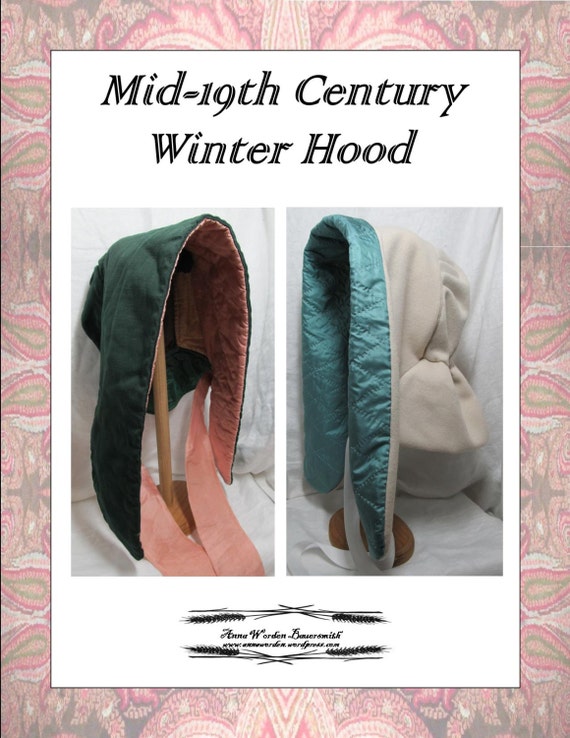
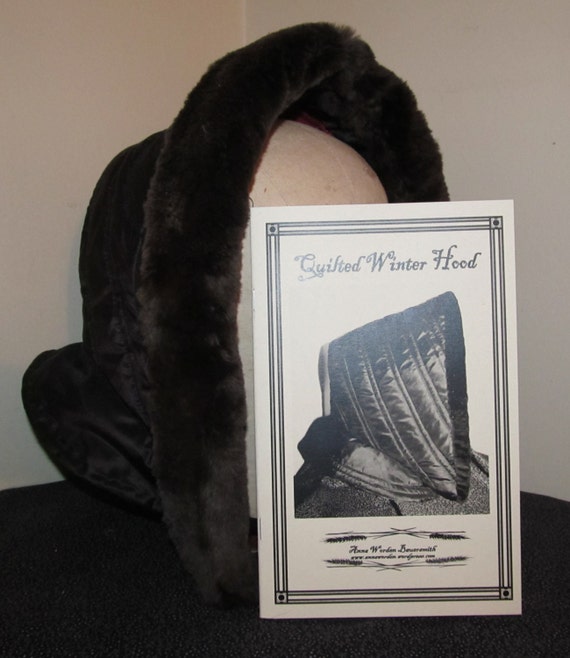
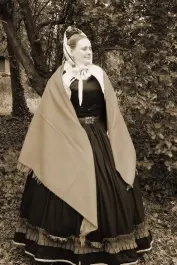
For sleeping, night-gowns of white flannel can be worn instead of cotton or linen. The Workwomen’s Guide suggests “dressing-gowns are generally made of warm materials, for the winter, as flannels, either printed or plain, merino, shawl, either the real or imitation, and for gentlemen, of cloth or jean.” (p68) In the morning at home a double or quilted wrapper can be comforting. Directions for double wrappers and quilted wrappers can be found in Leslie’s book on pages 400-403. Shawls were the most frequent recommendation for keeping warm. Wristlets and knee warmers were knitted accessories meant to keep these areas warm. [Knitting directions can be found in Knitting A La Mode and Knitting Two A La Mode.] When looking at outer garments, we see a variety of coats worn far more frequently than a cape. These coats, accompanied by a warm hood can keep out most of winter’s chilling winds. Directions for hoods can be found in Leslie’s book on pages 403-405.
Types of clothing in the winter not only helped keep you warm, it also served to protect you from the dangers of several sources of fire in the home. Mrs. Leslie details how and why it is important to dress children in woolen clothing in a section of her book where she addresses the very important topic of fire safety. “Children, in winter, should be dressed entirely in clothes of woollen or worsted, as these are less liable to catch fire and blaze, than linen or cotton. Even their aprons should be of worsted; for instance, bombzet or merino. Small children should never be left alone in a room in which there is a fire; and their sleeping apartments should, on no account, have the doors locked. Every winter, we have at least one instance of a little child perishing horribly, by the mother leaving it alone, tied in a chair, and placed near a fire, while she is engaged in a distant part of the house, or perhaps gone out on some errand. This is a practice too dangerous for any circumstances to excuse. So is that of the parents going out in the evening, locking up the house, and leaving all the rest of the family in bed. Such parents, on coming home, may find their house on fire, and their children perishing in the flames.” (Leslie 148)
“TO MAKE A SILK QUILT. – This is a light and convenient article for a couch or for a child’s crib, and will be found extremely useful in a sick-room. It can be made economically out of two silk dressed, after the bodies are past wear. Take the two skirts and (first removing with Wilmington clay any grease-spots that may be on them) rip them apart, turn them and sew them together again. You may add to the length by taking the two sleeves, cutting them straight after ripping them open, ad joining them across the top of the breadths. After all the silk has been turned and resewed, sprinkle and fold it, and iron it on the wrong side, pressing the seams well. Take care that the irons are not very hot, or they will discolor the silk. Then put it into a quilting frame, a lay one thickness of glazed cotton wadding in sheets. Quilt it in large diamonds.
“In most families, at least one quilt a year might be made of left-off silk dresses, exclusive of those that may be converted into petticoats.” (Leslie 314)
|
“TO MAKE COTTON COMFORTABLES. – These are soft thick quilts, used as substitutes for blankets, and laid under the bed-spread. One of them is equal in warmth to three heavy blankets; and they are excellent in cold winters for the persons who like to sleep extremely warm. In chambers with fire, or in a room that has had a fire all day, a comfortable will generally be found too warm a covering, except in severe weather. IT is best to use them in cold apartments only. If the house should be crowded with guests, so as to cause a scarcity of beds, a thick comfortable may be found a convenient substitute for a mattress.
“Early in the spring, all the comfortables belonging to the house should be washed and put away till winter.
“A comfortable for a large or double bed ought to be three yards long and three yards wide. You may make it of glazed coloured muslin, (in which case it cannot be washed,) or of furniture chintz, or cheap calico. It is best to have both the lining and the outside of the same material. Having run the breadths together, place it on a quilting-frame, and lay on that cotton bats thickly and evenly, each one a very little over the edge of the other. A comfortable of the above size will require three pounds of carded cotton bats. It should be quilted in very large diamonds, laid out with chalk and a long ruler, or with a cord line dipped in raw starch, wetted to a thin paste with cold water. In quilting a comfortable, you need not attempt to take close, short stitches.
“In laying the cotton between the lining and the outside, leave unstuffed about half a yard on each side and at the bottom; but continue the stuffing quite up to the top or head of the comfortable. Let the thin part, however, be quilted the same as the rest. By thus leaving a thin border round the sides and bottom, you prevent the inconvenience so often objected to comfortables, their tendency to slip off the bed; as the thin part can easily be tucked in, so as to secure it perfectly from the danger of sliding out of place.”
(Leslie 313-314)
|
Author’s reflection
Now for a confession: in the cold of winter, I am very happy to became obsessed with this hobby. Not only do I have an excuse to stay at home doing research or sewing, I also happen to have a few useful items hanging around. On extremely cold mornings, I wear my quilted petticoat or wool flannel petticoat to work. It keeps my achy legs nicely warm in the car during the morning drive. My wool wristlets are great to wear while typing or writing. One of my many shawls is a must in my cold classroom to either keep my shoulders or knees warm depending on the day’s lessons. Another favorite are my wool stockings.
This brings me to a favorite method of keeping warm which happens to be a gap in my findings. I grew up with what we called “soap-stones” decorating the fireplace mantle and speckling antique shops. In my first apartment, I found these warmed nicely when stored in the gas kitchen stove heated by the pilot-light and warmed the chill from my bed. I also used these fairly regularly when I first began reenacting during events in the early spring and the cold fall. But, I was unable to find period documentation of these particular stones by the name soap-stones. I did find references to the use of bricks in the bed and to stones from Cornwall, which could retain heat for an extended period of time. At a recent antique show numerous dealers displayed these stones, each labeled as soap-stones. Either these stones were not yet used, not written about, or were called something else. I would love to hear from anyone who can shed light on this subject.
Works Cited:
- Beecher, Catharine Esther. A Treatise on Domestic Economy, for the Use of Young Ladies at Home. 1854
- Beecher, Catherine. Miss Beecher’s Domestic Receipt-Book. New York: Harper, 1856.
- Beecher, Catherine. Miss Beecher’s Housekeeper and Healthkeeper. New York: Harper, 1874.
- Bowman, Anne. The Common Things of Every-day Life. London and New York: 1857.
- Mrs. Child. The American Frugal Housewife: Dedicated to Those Who are Not Ashamed of Economy. New York: Samuel S. & William Wood, 1841, 27th edition.
- Daily Picayune. January 10, 1864, p. 2, c. 4. Vicki Betts’ newspaper research.
- Haskell, Mrs. E. R.. The Housekeeper’s Encyclopedia of Useful Information for the Housekeeper. New York: Appleton, 1861.
- Leslie, Eliza. Miss Leslie’s Lady’s House-Book: A Manual of Domestic Economy. Philadelphia: A. Hart, Late Cary & Hart, 1850.
- New York Times. 1850-1865.
- Stowe, Harriet Beecher (Christopher Crowfield). House and Home Papers. Boston: Ticknor and Fields, 1865.
- Stevens, Rev. Edward T.. Domestic Economy for Girls. London: Longmans, 1877.
- The Workwoman’s Guide. London: Simpkin, Marshall, and Co., 1840.






 Directions: