February Reflections

For a little month, February sure has been packed full this year.

New Publications

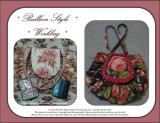
I released two new publications this month. In Detail: Blue Ribbon Sewing Case is the first of a series of In Detail e-publications. This volume looks closely at an original sewing case made entirely from a blue plaid ribbon. Next, Balloon Style Workbag

Millinery

My hands were busy this month. I sewed 10 straw millinery pieces, decorating most of them. I really enjoyed decorating a bunch back to back. I still have several decorating ideas in my head too.

Have you subscribed to my blog yet? This is the best way to get notified first of new millinery pieces and new articles. Enter your email address to get email notifications and/or click “Follow My Blog”  to get WordPress feed notifications. Capture+_2019-01-03-08-20-41-1.png

Little Projects

There were several little projects I worked on as well.

This first one was a spur-of-the-moment making. As I was neatening up the coffee trunk, I decided I had enough of the over-size spools not having a place on the spool holder. It was past time for a new spool holder. I happened to have an extra mini-plaque from the hat stands. For the sticks, I was too lazy to run to the hardware store, so four chopsticks worked just fine. I “polished” it with the dark wood polish to give it a little color.

Now, I have one spool holder for the small color spools and one spool holder for the straw colors.

I had this fabulous celestial fabric from Chestnut Bay. It was one of those fabrics that I just had to have but had no idea what I would do with it. After finishing up the directions for the balloon style bag, I realized this would be a great fabric to test up-sizing the bag for modern use. It came out as a really fun bag.

Coming up….

I am not sure what to put for coming up for March. It have lots of little life things scheduled, including some stressful ones, but I don’t have any events planned unless I do something for Maple Sugaring.

For the year, I am looking at several GCVM events: Jane/1812 in June, Independence Day, Chocolate weekend, and the Civil War event in July, A Novel Weekend in August, Ag Fair in October…. I will be giving a millinery talk in April at a closed event.

Projects:

It seems, I have made no progress on the Running Project Checklist:

  • The Super Secret Project
  • Pink Plaid Parasol
  • Rose stripe sheer 1860s gown
  • Pink plaid gown
  • 1830s dress (Still from 2017)
  • Red wool petticoat – hanging on the rail w/ the ribbon
  • Blue wool skirt with tbd work bodice – wool hanging on the rail
  • Embroidery on ticking relaxation project (kit from Colleen)
  • Millinery piece for me
  • Birdcage Windsor Chair – IN PROGRESS
  • Modern quilted silk bag – pieces hanging on the door
  • Winter Hood Book – LOTS of PHOTOS NEED TO BE TAKEN
Published in: on February 28, 2020 at 6:00 am  Comments (1)  

New Publications!!!

I am excited to announce 2 New Publications in my Etsy shop!

In Detail: Blue Ribbon Sewing Case is an in-depth look at an amazing nineteenth century sewing case. This 12 page e-booklet explores the details of how this beautiful sewing case was made from a stunning blue plaid ribbon. It is packed full of more than three dozen photos.

I have been asked many times to put the directions for the Balloon Style Workbag together into a single PDF. It is Finally here! This type of bag spans the full of the nineteenth century, first as a reticule, then as a workbag. This 11 page e-booklet walks you through how to make this much loved project with directions and photos.

*

*

In celebration….. All my Etsy based publications are on a special SALE!!!

This sale runs through my February Recess.

Now is an excellent time to download a mid-winter read or project!

From Field to Fashion is on SALE

Paisley, Plaid, & Purled is on SALE

To Net, or Not to Net is on SALE

My Winter Bonnet Pattern is on SALE

My Winter Hood Pattern is on SALE

Published in: on February 14, 2020 at 5:58 am  Comments (1)  

Hearts for Valentine’s

If you need a Snow Day project for the coming Valentine’s Day, or just because, Eliza Leslie and I have you covered.

Both of these projects can be made child friendly.

heart 1

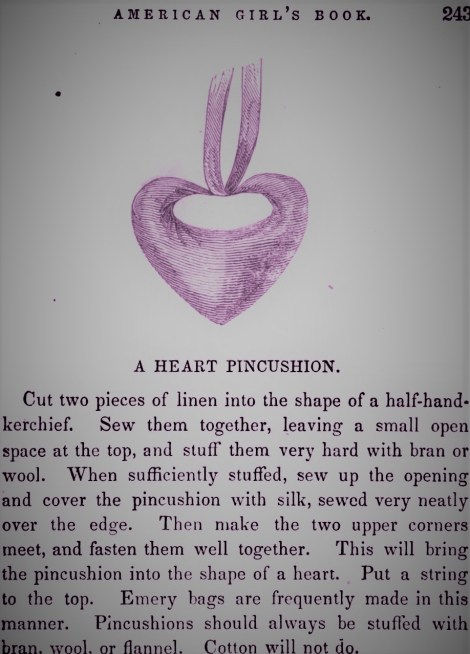
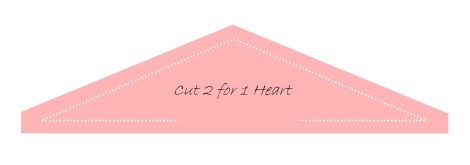
This fun heart from An American Girl’s Book is made from an elongated triangle. These can look great in silk or cotton. Each heart needs 2 triangles. Cut them out like below. Sew the two short sides completely. Sew the long side, leaving a space open. Turn the triangle right side out. Fill with emery or batting. Stitch the opening closed. Run a strong thread along the closed long side. Pull it up into a gather bringing the points together. A heart will form. Tie a ribbon on if desired.

Heart Pincushion Triangle

Heart 2

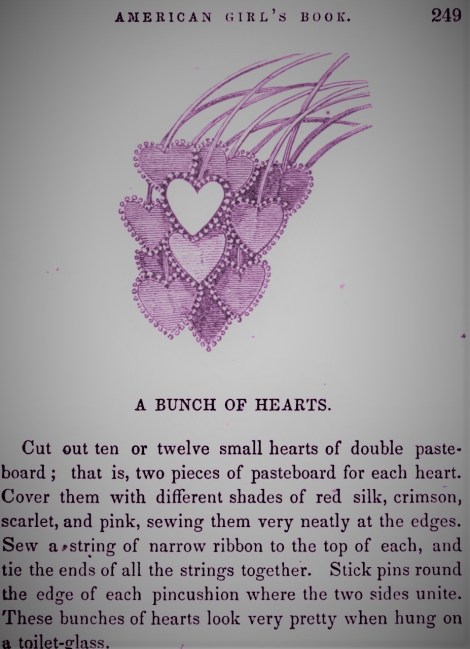
For this playful pin-holder, I would recommend lighter weight pasteboard if using it as a pin-holder with small hearts. If this is for decoration, cardstock will do nicely. Embroidery ribbon would work well as the strings.

Published in: on February 7, 2020 at 4:14 pm  Leave a Comment  

January Reflections

This has been the January that hasn’t felt like January…. At least for me. I am going to attribute this to the unusual weather we’ve had here in NY. Usually, January is “batten down the hatches” and “curl up by the fire.” Not this year. I haven’t checked the data, but I feel like we’ve had more days above freezing than below. The snow comes… piles up…. turns to ice… and melts. It has felt like we are tossing back and forth between two seasons: winter and spring.

My sewing has also tossed between winter and spring, with an assortment of snuggly winter hoods and looking ahead to warmth straw. Here are the pieces I made this January:

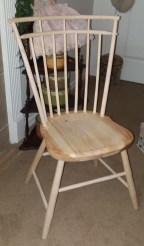
I started putting together my birdcage Windsor chair. This was a kit I picked up at the Big Springs Museum’s yardsale last summer. I thought it would be a good winter project. I just have a few finishing bits before it is completely assembled. Then, I get to paint it. That will be an outside project, I think. I am teetering between yellow and green right now. I can’t seem to document bright blue for this style.

wp-1580132331482.jpg

I happily added a new plaster millinery block to the collection. Be sure to catch the video about it’s arrival. It is a mysterious shape. This addition has me thinking about a display with the blocks accompanied by examples of the styles they make.

Coming ahead:

I think I will do a glove sale during February recess. I have so many gloves from estate sales, but wear few of them. It is silly to have them sitting around in a box. I will photograph about a dozen or two ranging from wrist length to elbow length and put them up in Etsy at fun prices.

Projects:

I am going to try something new since I simultaneously have difficulty making time for projects for myself and recalling the little spur-of-the-moment things I make. In each month’s reflections, I will keep up a running project checklist to see if it helps me keep track.

Running Project Checklist:

  • The Super Secret Project
  • Pink Plaid Parasol
  • Rose stripe sheer 1860s gown
  • Pink plaid gown
  • 1830s dress (Still from 2017)
  • Red wool petticoat – I am now eyeing the brown moire ribbon – hanging on the rail
  • Blue wool skirt with tbd work bodice – wool hanging on the rail
  • Embroidery on ticking relaxation project (kit from Colleen)
  • Millinery piece for me
  • Birdcage Windsor Chair – IN PROGRESS
  • Modern quilted silk bag – pieces hanging on the door
  • Winter Hood Book – LOTS of PHOTOS NEED TO BE TAKEN
  • Jewelry box for me – Considering feet on the glove boxes
  • Something with the wool yarn and silk/wool yarn – yet tbd
Published in: on January 30, 2020 at 10:54 am  Comments (3)  

New Block

https://youtu.be/iYGrwJOLz-A

EDIT Saturday morning: I keep staring at this block. One hour, I am two thirds pleased with my assessment. The next hour, I think I am wrong. Its that crown.

Published in: on January 24, 2020 at 2:44 pm  Leave a Comment  

What is a Pumpkin Hood?

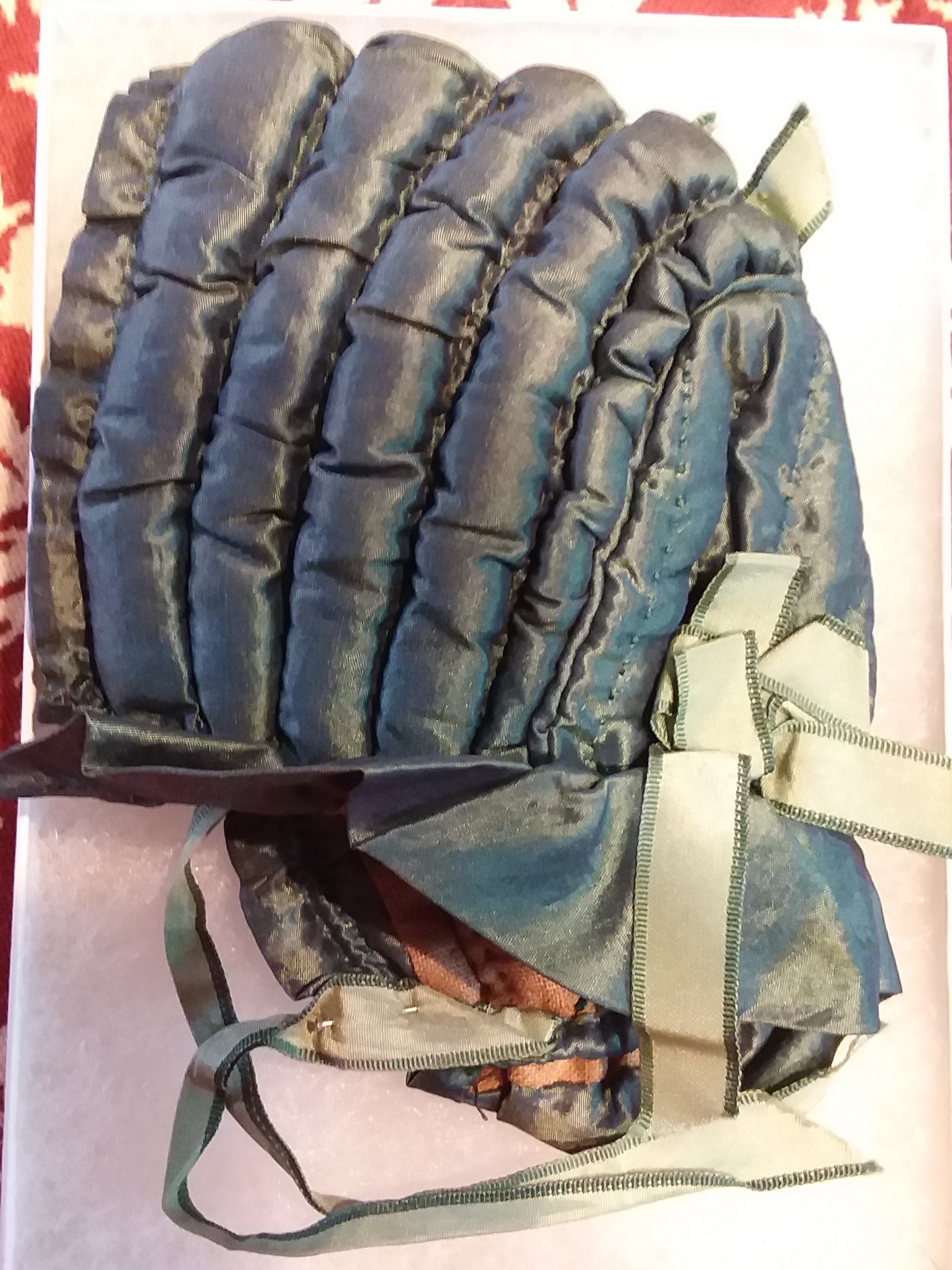
A Pumpkin hood is a style of sewn winter hood made in the first half of the nineteenth century and later eighteenth century. This type of hood is also known as a wadded hood or an “ugly.”

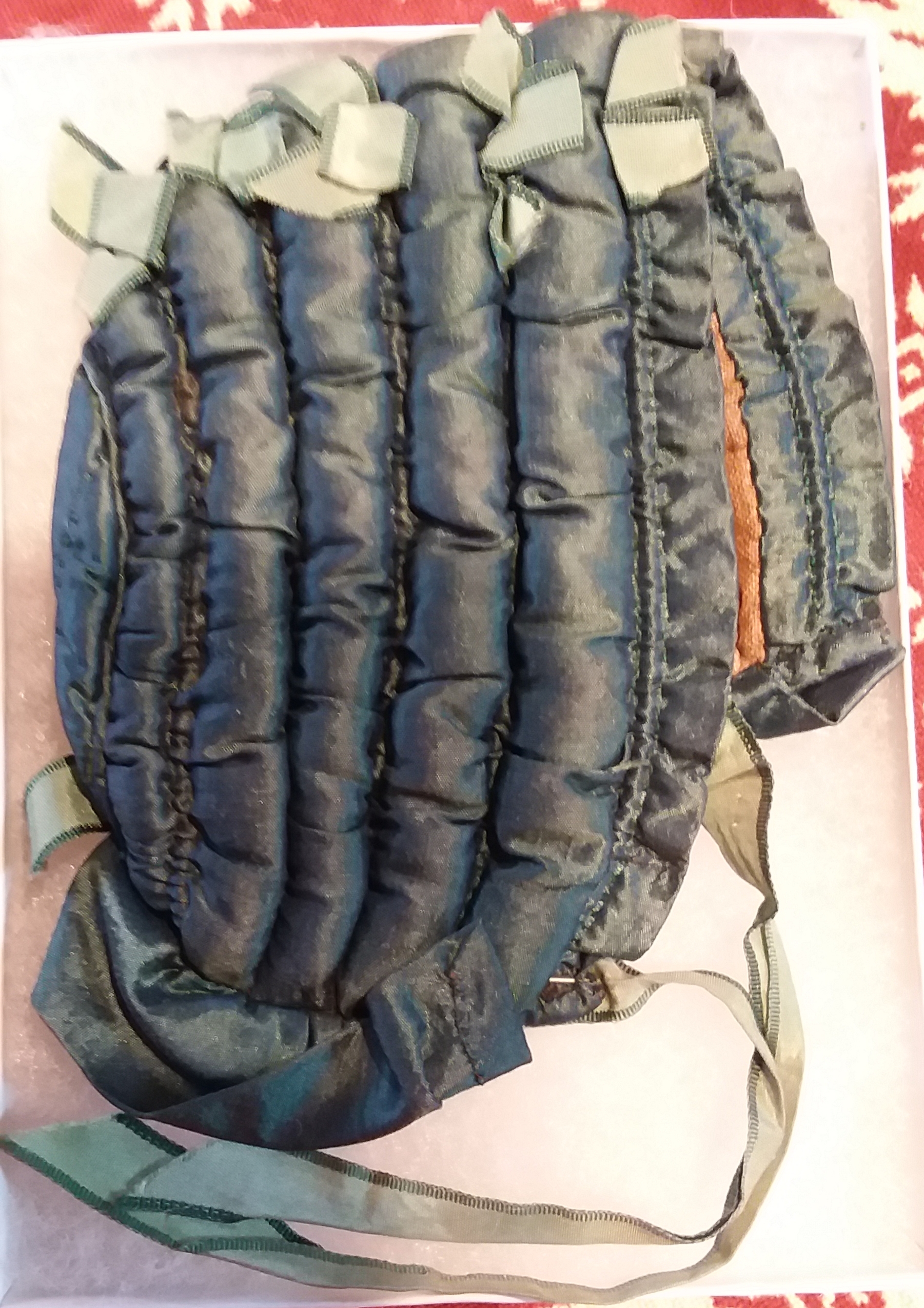
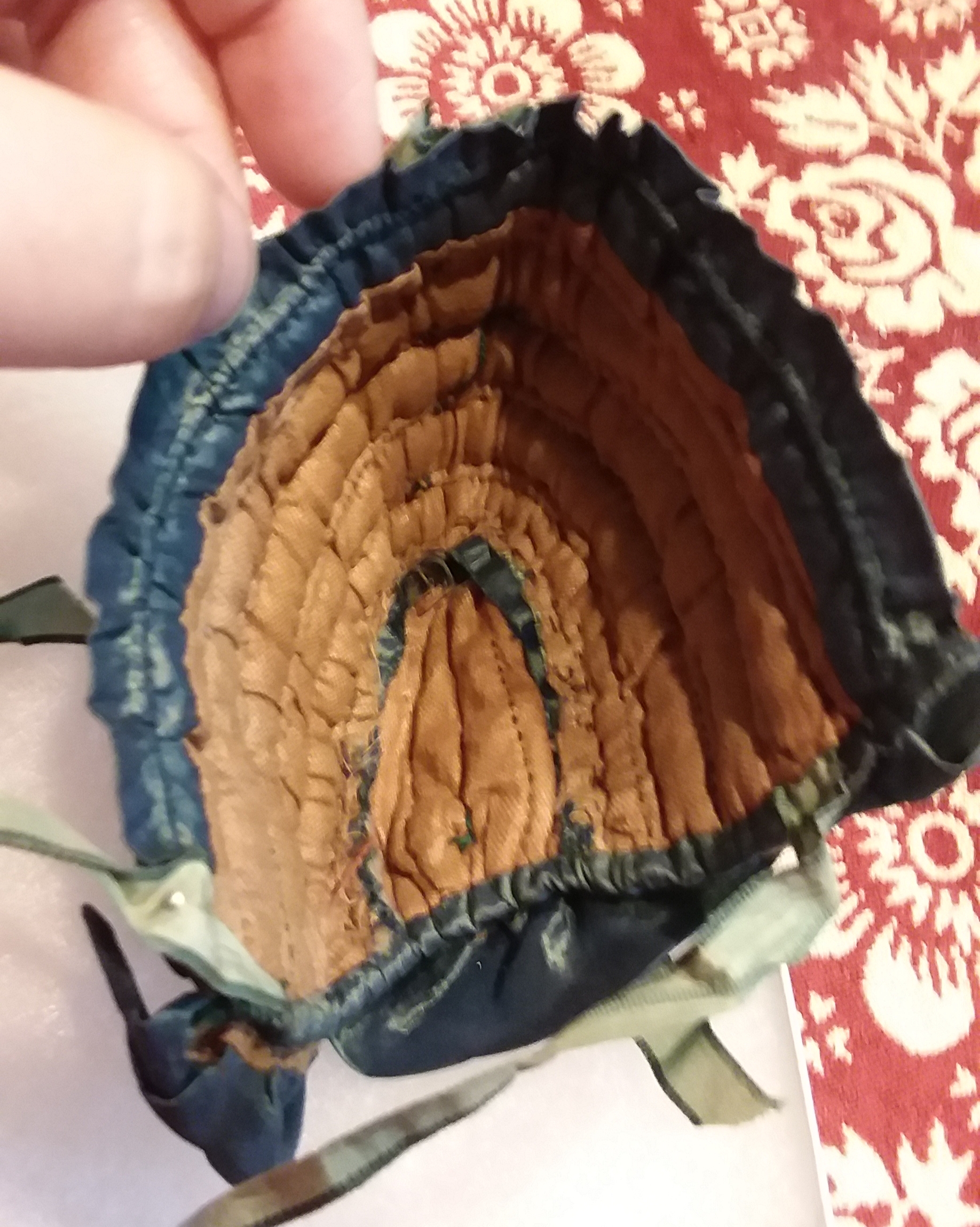
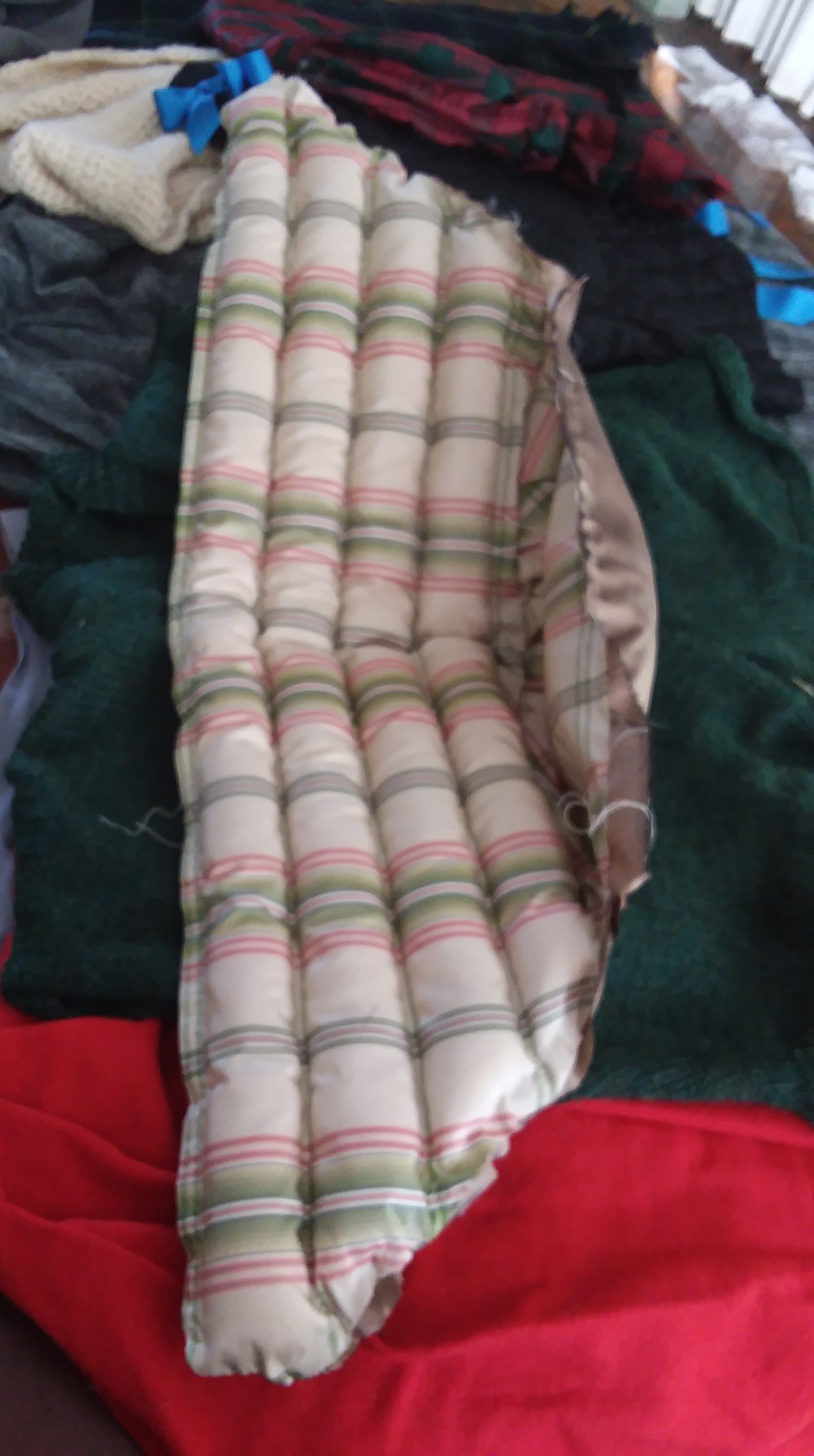
The pumpkin hood was commonly made with three pieces: the brim, crown, and bavolet. Rather than being quilted, the brim has parallel channels sewn across the head which were filled with wool wadding or down. Between these channels, narrower channels of cord help draw up the brim and give it light structure. Occasionally, some of these channels are cane or wire, though not as often as in quilted styles. The crown of this style tends to be small, with a row or two of additional wadding. The bavolet ranges from rather a rather short couple inches to as much as four inches.

The Pumpkin hood is one of the, if not the, warmest style hood as it hugs the head snuggly. The draw back is there is no protection for the face.

The exterior fabric is most frequently silk taffeta. The smooth, tight weave helps with moisture control. Dark solid silks out number the plaids and lighter colors, which were also used. The linings tend to be polished cotton or cotton sateen in neutral browns and creams. Most pieces have a facing of the exterior silk.

I find wool wadding to appear more frequently in originals than down. The wadding fairly evenly fills the channels, though not as firmly as some quilted hoods. These hoods are quite soft. The bavolet tends to be very lightly filled, though I suspect some loss has occurred over time for some pieces.

A bow tends to embellish the center back of the crown at the neckline. Some pieces also have a row of smaller bows or mock-bows along the top of the brim.

Additional Examples in Other Collections:

Late 18th, early 19th century example at the Boston Museum of Fine Arts

Mid-19th century plaid example at the McCord Museum

Plaid example at the Boston Museum of Fine Arts

1840s example at the Henry Ford Museum


Published in: on January 15, 2020 at 7:22 am  Leave a Comment  

Lappet Style Winter Hoods

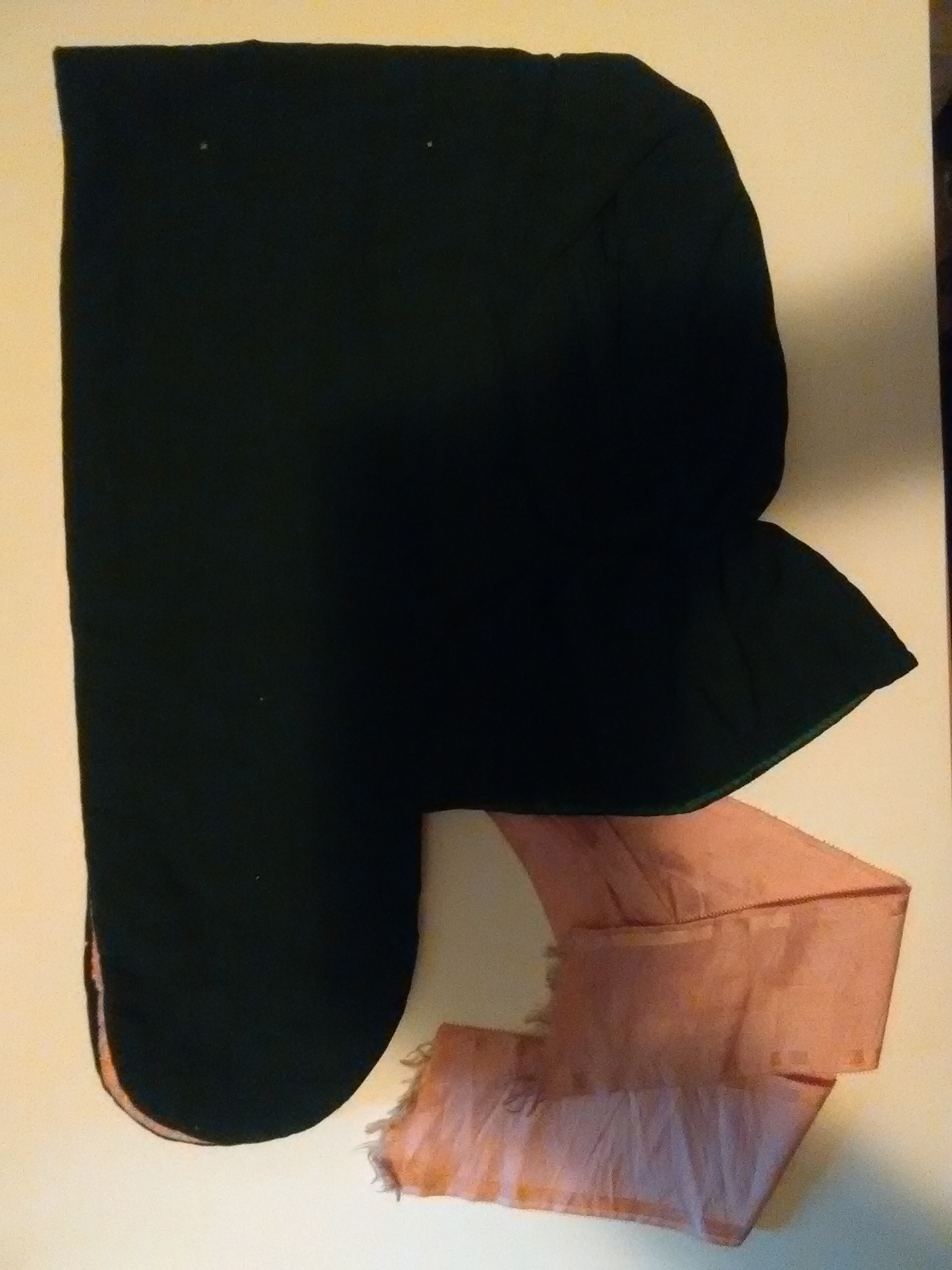
A lappet style winter hood is distinguished by its elongated cheektabs reflecting the look of a lace lappet. These extended cheektabs align with a deep brim that comes forward of the face. Lappet style hoods are batted thinner than many other hoods. This makes it easy to fold back the brim. Laid flat, this deep brim and long lappets can protect the face. Folded back it allows for ease of vision.

This style hood is distinct among its quilted and wadded counterparts, yet lacked a name. The distinct long, wide cheektabs so similarly reflect a lappet’s shape and position of wear, the name lappet became obviously appropriate.

Lappet style hoods are found with three piece construction and two piece construction.

This hood is a three piece construction: crown, brim, and bavolet. This example has a green wool exterior and pink silk interior for the brim while the crown and bavolet are lined in green polished cotton. The pink silk interior would be visible if the brim was turned back. In most of this style, the neck edge of the crown, where the bavolet is attached, a channel is created so it can be drawn up for fit.

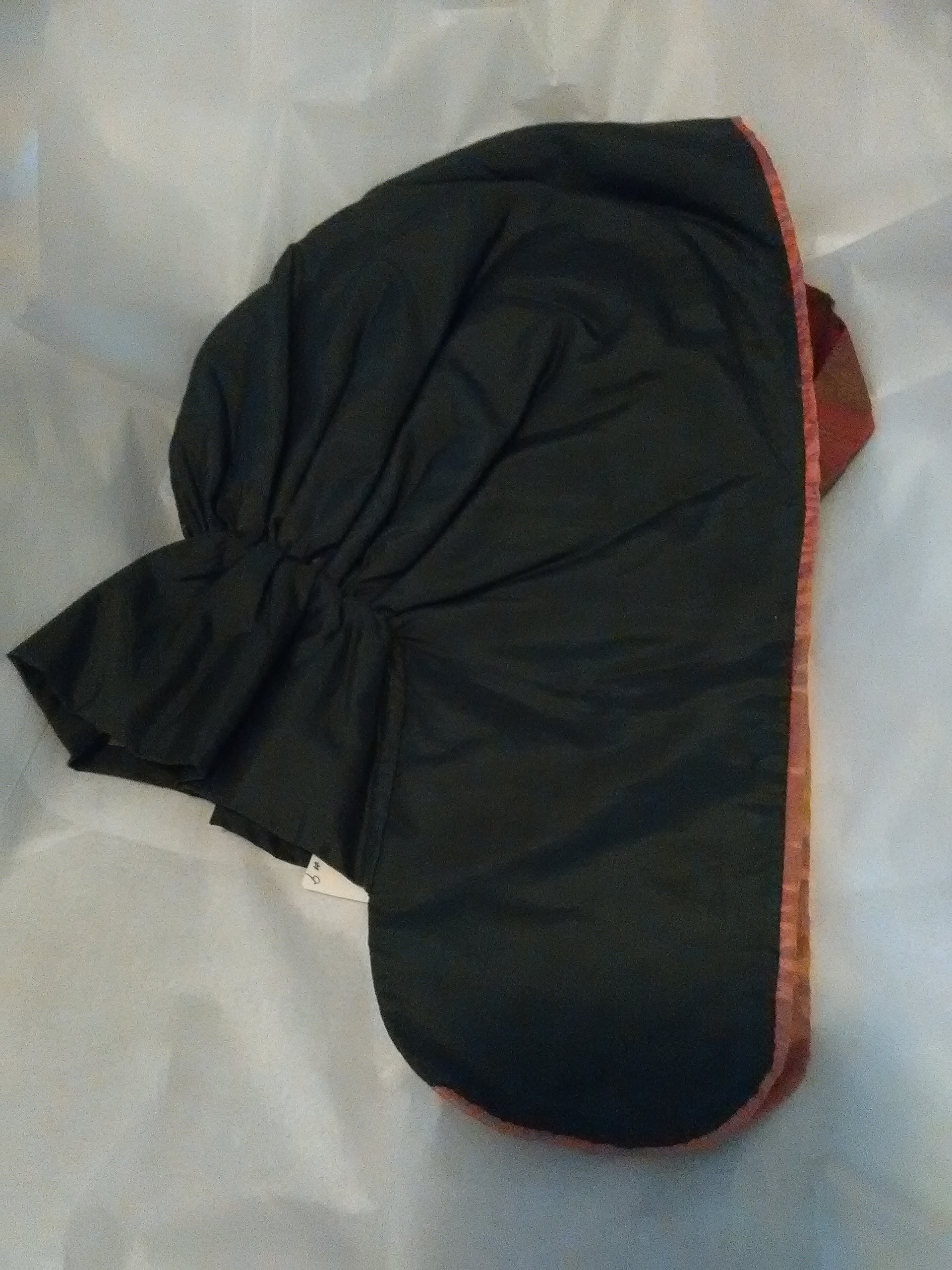
This next hood is a two piece construction: a combined brim/crown piece and a bavolet. Notice the bavolet length is on the longer side compared with other styles of winter hoods. This hood had the same green with pink color combination as the one above, but the exterior and interior are both silk.

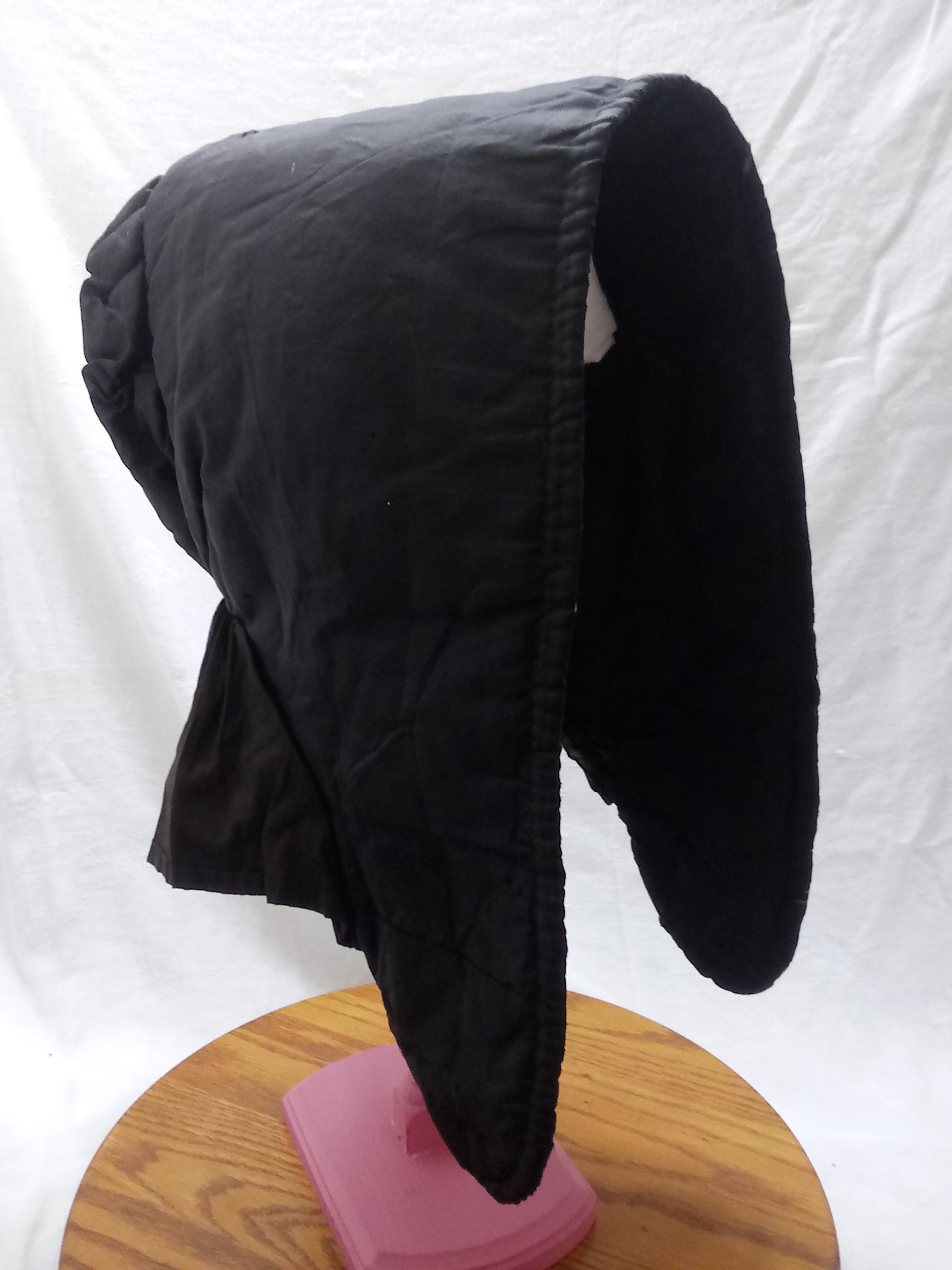
This all black example is a three piece construction with an silk exterior and interior. You can see a line where this brim was turned back.

Lappet style hoods in other collections:

This pink lappet style hood is currently on display at the Genesee Country Village and Museum. It is shown with the brim turned back. You can see how the neck edge of the crown can be drawn up inside for comfort and fit.

18th century example at the Boston Museum of Fine Art

1850 example at the MET

Pattern:

To make your own lappet style winter hood

Published in: on January 14, 2020 at 5:34 pm  Leave a Comment  

Unboxing… The Tiniest Winter Hood

It is amazing how the construction of this tiny doll size hood follows that of similar human size hoods. The five wadded channels are seperated by little cords. A narrow ruffle edges the front brim. The horseshoe back is hand quilted. The inside is brown cotton. Tiny bows top the brim and the bottom mid-crown.

Okay, so I am attempting to type as factual as possible, but I am really squeeling inside. This hood is soooo ridiculously fabulous. It is so small and so perfect. I feel so lucky to now be its caretaker.

The inside

The back and top

Details

Published in: on December 28, 2019 at 11:40 am  Comments (1)  

Pen Wiper Doll

I was so very, very excited to stumble across one of these pen wiper dolls in such excellent condition. The doll is intact. The pen wiper is intact.

This pen wiper doll stands 2 and a quarter inches tall. Her arms and legs are moveable. I am not entirely sure if her legs are wired and meant to move. I am not going to fuss with them. Her painting is very nicely done, especially for this scale. (I am noticing this size penny doll often has too quickly painted eyes and mouth that aren’t always where the eyes and mouth belong.) Her hair is reddish blonde, not the most common of doll hair colors. Her pen wipers skirt is made of 24 wool triangles fanning around her body, 12 red and 12 tan. These are gathered together at her chest and feet. I can not tell if there is additional threads or an adhesive at the center. I was hoping this would tell me more about the construction of this type of pen wiper. Her little feet stick out at the bottom. She has a slight lean to one side as the wool is curved. The wool is dense but not thick. It is also not fuzzy. I do not see a sign of use, meaning no ink is left on her. The top of her pen wiper dress is a single red ribbon stitched in place and tied in a bow at back. She has a lace collar. Dating the lace may help date her. Currently, I am going to leave that an open second half of the nineteenth century.

Oh, her name is now Holly.

Here is Holly along side Hope, the penny doll.

Because all tiny dolls need a palm photo:

Notes:

This pen wiper is quite similar to those in the Mount Lebanon Shaker Museum: https://shakerml.org/search/#/?q=Pen+wiper

Published in: on December 27, 2019 at 5:54 pm  Comments (1)  

And That Makes 100

I am still surprised there is a 100th piece of millinery this year. Even though it has been a little over a week since I counted and realized, I kinda amazed with myself.

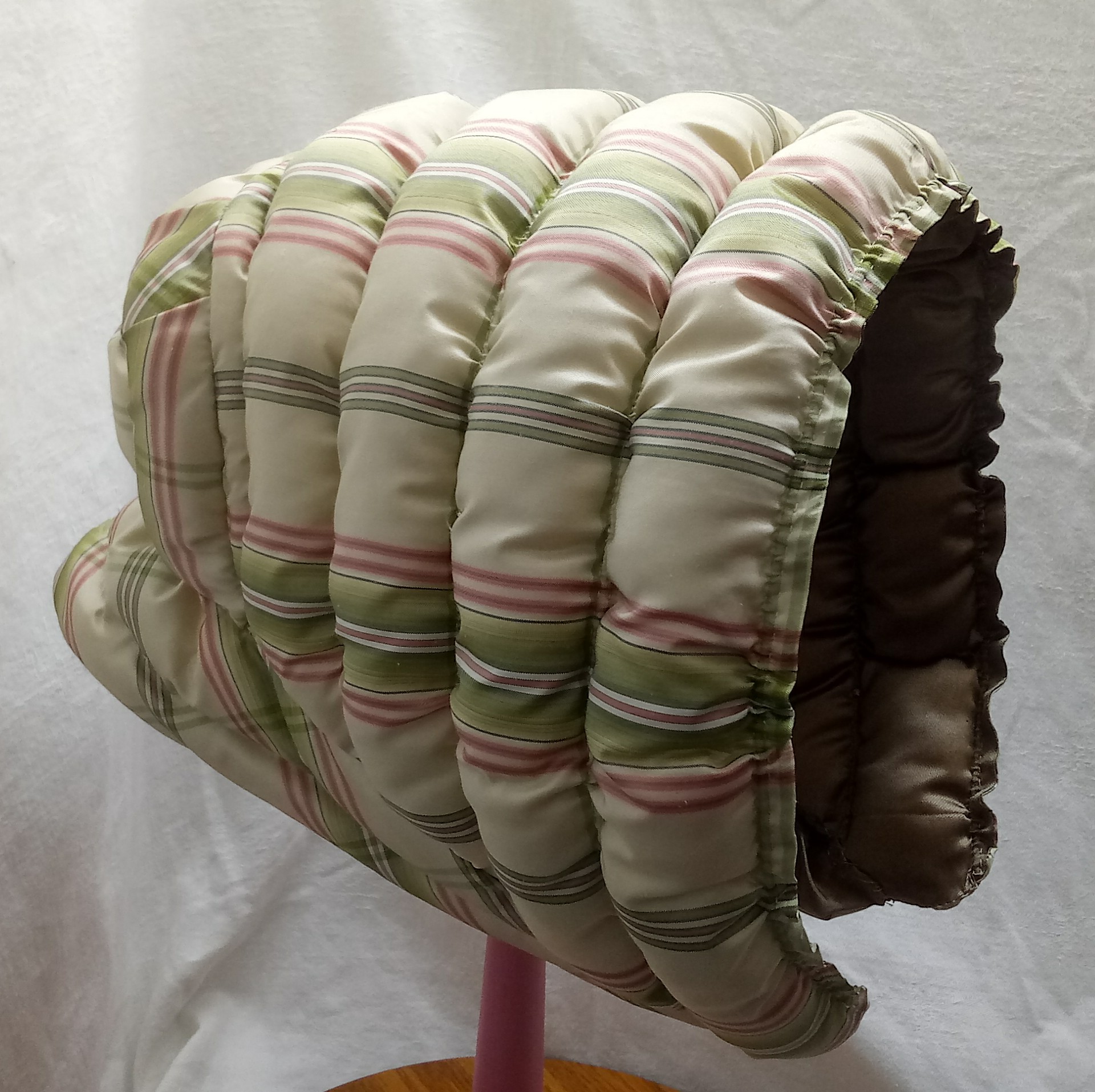
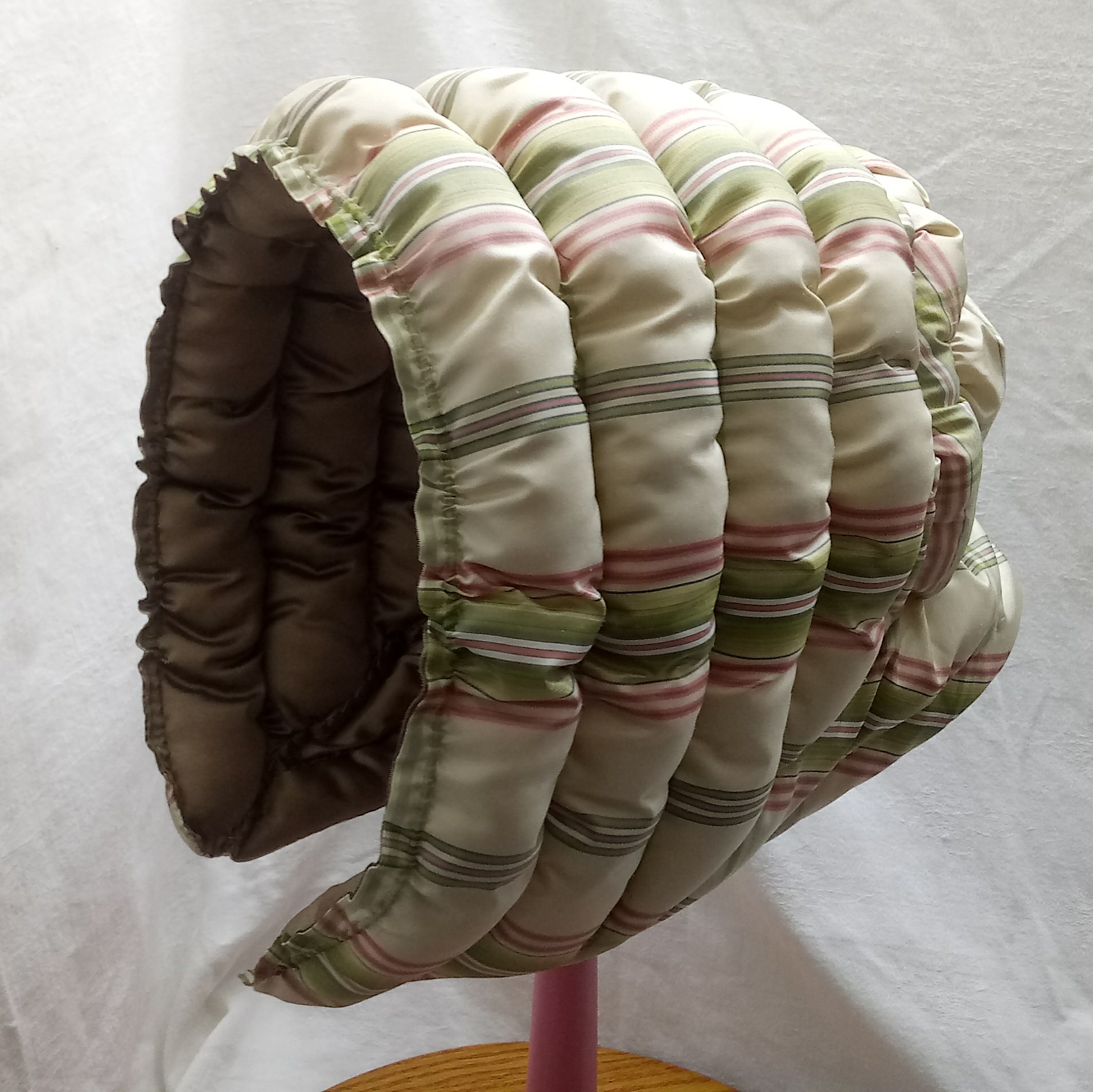
While this wadded pumpkin hood is not anything “wow” or spectacular in its design or finish, it gets to be one with its own story, or stories.

This hood was started as a demo piece for Preparing for Winter. It was pulled together from silk remnants in the millinery box as I searched for my winter hood pattern pieces that were absent-mindedly packed whe we moved. There was just enough plaid to squeeze out the mismatched pieces. The brown shot silk soft in color to go with the plaid.

Along to the event it went with one other style hood to be made, J under the dillusion that I would finish one of the hoods and get started on the next. It seemed I had forgotten how long it takes to hand quilt and hand sew each of the construction details in reflection of originals. I also hadn’t realized just how busy the day would be. I managed to get the brim together and stuffed with nearly all the wool I brought with me.

In the basket the hood stayed until the next event.

If Preparing for Winter busy with visitors, Holiday Open House was doubly so. Again I thought I would finish the hood. Again I was wrong. I managed to get the back of the hood together.

I do think I was able to get in more stitches than breathes. People were very interested in how the pumpkin name reflected the shape and how it hugged the head. I found myself talking about the naming, where it can be found, how the hood compared in function and construction to the other hoods I brought.

To my delight, some guests remembered me working on it in November and were pleased to see its progress. For this reason, I’ve decided this will continue to be a demo/display hood. This way visitors can see it completed. They will also be able to feel the difference between wadded hoods and quilted hoods.

Published in: on December 24, 2019 at 5:41 pm  Leave a Comment