Millinery Monday Wrap-up

We’ve reached the end of my 3 month long series of Millinery Monday re-post. The idea was to share popular and useful previous posts each week. As we close and I plan ahead, I have a couple questions:

☆ What was your favorite post or topic?

☆ Is this type of regular series helpful?

☆ If you linked to a post from social media (such as Facebook or Instagram) did you read other posts while you were here?

☆ What did you find most useful?

☆ What would you like me to write about in future posts?

The ReShare Posts of the Last Three Months (plus a few others)

  • March 14 – Got Perch?
  • March 21 – Measuring Your Head for Mid-19th Century Hats
  • March 28 – Common Hat Styles
  • April 4 – Where Can I Wear That Hat?
  • April 7 – Oh Where, Oh Where… What Should I Wear…
  • April 11 – How They Wore Their Bonnets
  • April 12 – Why is this Good … Looking at Clothing
  • April 14 – I got this Hat. Now What?
  • April 15 – Making Friends With Your Bonnet
  • April 18 – Millinery Care and First Aid
  • April 18 – Hair Essentials Kit
  • April 28 – Wearing the Mid-Nineteenth Century Hat
  • May 2 – Improving Your Impression for Less than a Pizza
  • May 9 – Hairnets – The Basics and More Indepth
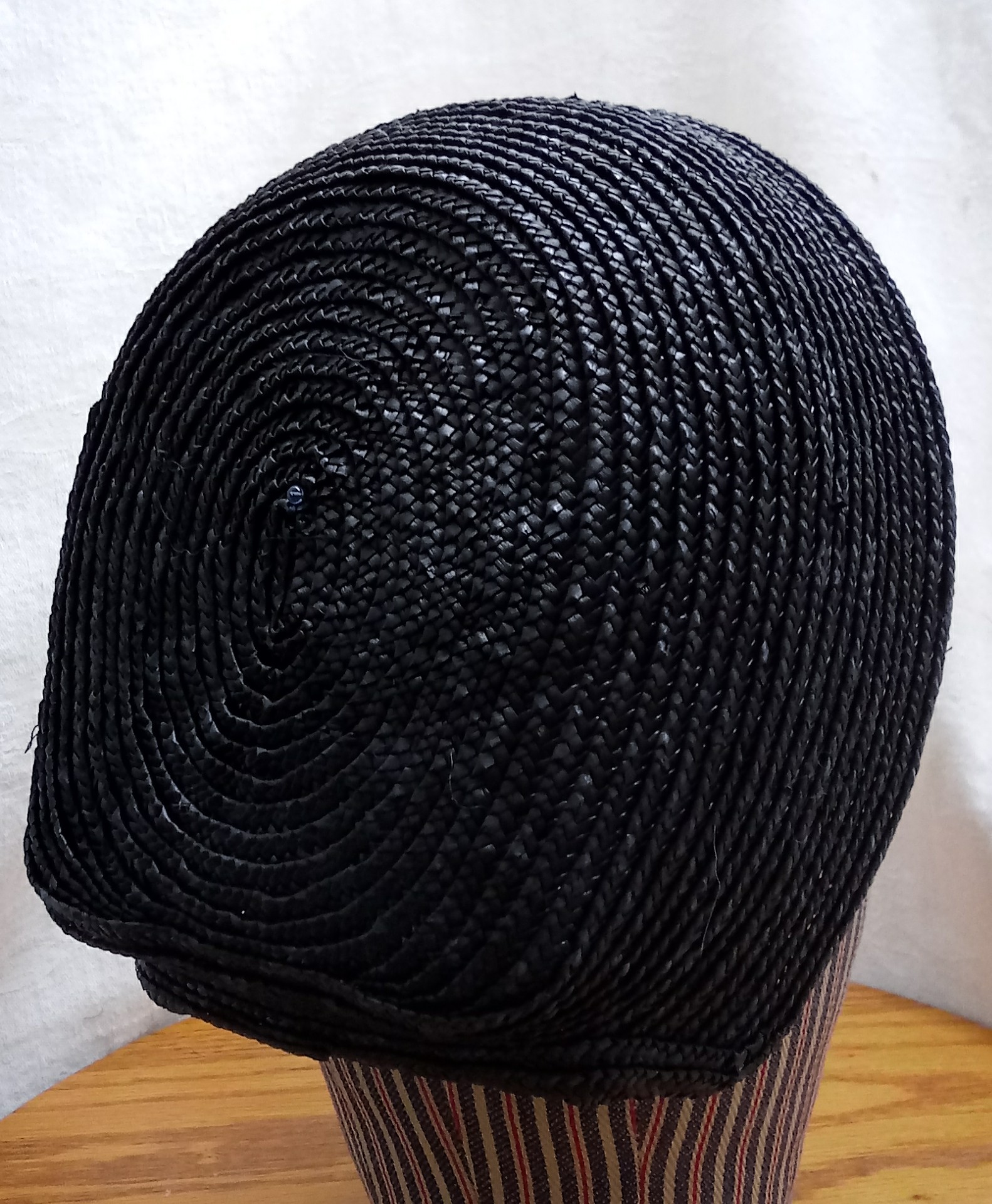
  • May 16 – Finishing a Straw Bonnet
  • May 16 – Veil 101
  • May 23 – The Weather Outside is…. Drenching
Published in: on May 23, 2022 at 1:00 pm  Leave a Comment  

The Weather Outside is…. Drenching

I am reposting favorite helpful posts each Monday throughout March, April, and May. This post will wrap-up this series. Starting in June, I will share posts focusing on the the questions I am asked most often when Intepreting.

With this soak-you-to-the-bone weather leading up to and likely through the weekend event, I am thinking about ways to keep dry. As I think through my list, I realize most of them won’t happen because the bits and pieces needed are buried deep in storage. That doesn’t mean I can’t share them with you.

  • Reenacting events inevitably mean walking, likely through grass or even mud. With wool boots, I find my rubber over-shoes a must. They slip right over my boots covering up to about my ankle. Extant rubber over-shoes were found when the Steamboat Arabia was uncovered. Those made by Tingley seem to be the closest.
  • Just in case, still pack extra stockings or socks for everybody.
  • A wool coat can help keep the wet off of most of you. A long paletot gives you great flexibility in the arms while buttoning up the front to keep you dry.
  • If you don’t have a coat, consider the largest, plain or plaid wool shawl you have. Wrapping this around you will help keep you dry.
  • We talk a lot about parasols in reenacting but not much about umbrellas. Use an umbrella, a period umbrella of course.
  • Skip the fashion bonnet. Instead opt for a sunbonnet or for a hood. Water can cause a bonnet to soften, warp and even run.
  • If you carry a bag, make sure it is water-resistant. You may want to try a pocket instead. A pocket hidden under layers of skirts can usually stay dryer than a bag carried out in the open. If you must carry medicines or modern technology put them inside painted canvas bags or zip-lock bags just incase.
  • For larger bags, choose one with a heavy carpet and good closure. If it has a leather or painted canvas bottom, even better. Leave the bandbox at ‘home’.
  • You will be happier with your tent if you have sod-flaps and overlapping doors. Also put down a good water barrier under your flooring. I find a wool rug helps control the moisture better than other fibers.
  • Inside your tent let wool rule. Wool rugs on the ground help keep the area more comfortable. Put a wool blanket layer over your cot or ticking first. Be sure it drapes almost to the ground on each side. This keeps the moisture from coming up from underneath. Make you bed how you prefer. Then cover it all with a wool quilt or blanket. This will keep the moisture from getting in during the day. If you are sensitive to a moist pillow, wrap it with an extra wool shawl during the day to keep it dry.
  • Don’t hang your clothes. Put them in a trunk or box with a layer of wool covering them to help keep moisture down. You may consider a layer of wool on the bottom as well.
  • As you settle in for the evening, light a candle or two (safely). Whether the candles really do help cut the moisture or not, they help psychologically.

What do you do if you do get drenched?

  • If you can lay or drape your dress flat that will be best. Hanging it can cause it to stretch under the weight of being wet. If you have a trim that can run, be sure to lay the dress so the fabric does not lay back on itself particularly the trim.
  • If your bonnet get damp, set it up on a hat/bonnet stand. If you don’t have on make-d0 with something like the back of a chair. Do not lay it on its side because it will warp.
  • If your bonnet gets particularly wet, try to blot the trimmings so there is no running water. If your flowers are pinned in or on, consider removing them so they will not run on the bonnet itself.
  • If your boots get wet inside, stuff them with newsprint or fabric to absorb the water. Do Not put them near the fire as they can be damaged. (most warranties do not cover fire damage)
  • If your corset gets wet, layer it inside material to press out any excess moisture. Drape it over the back of a chair to dry.
Published in: on May 23, 2022 at 6:05 am  Comments (1)  

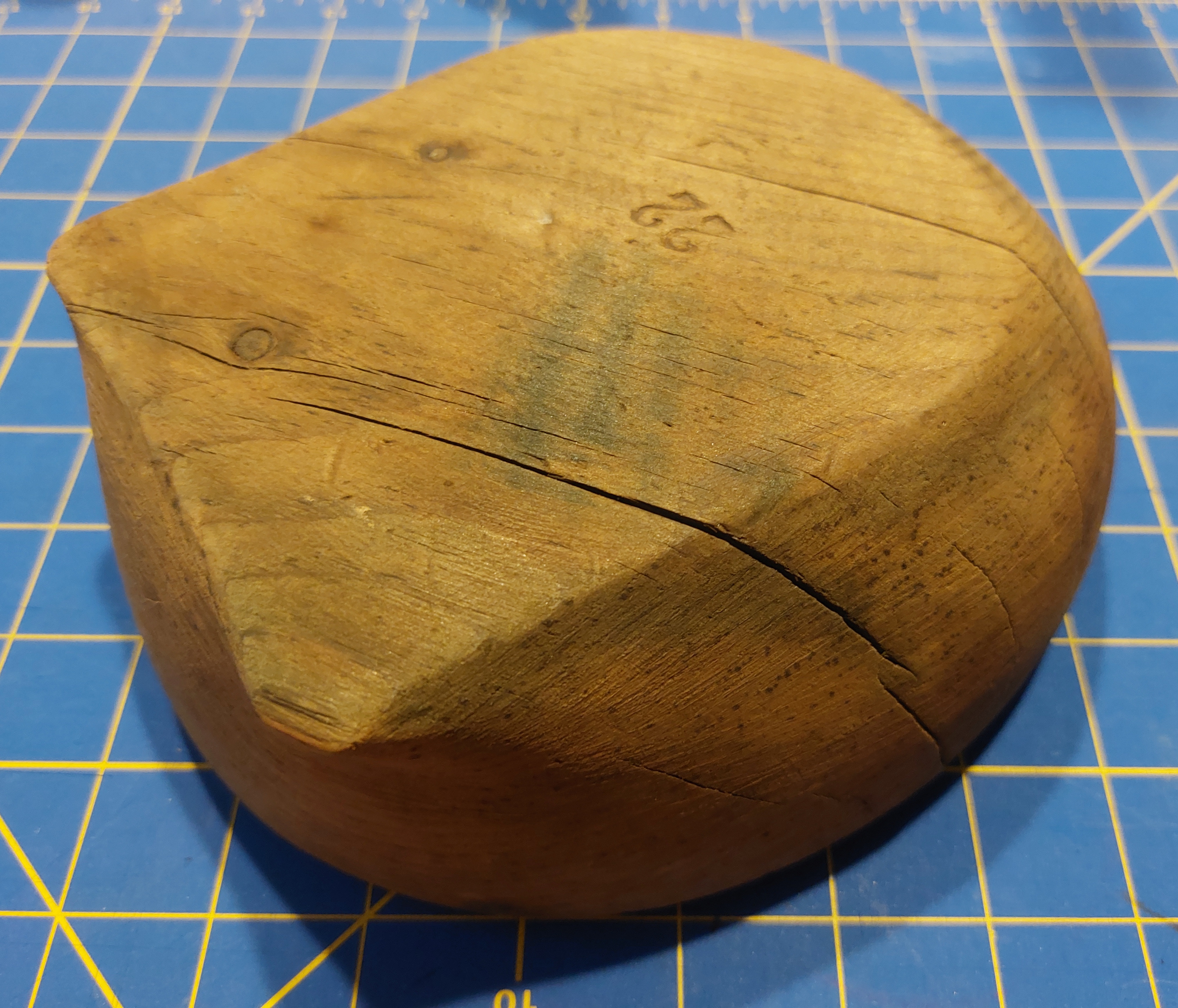
Getting to know an 1880s Bonnet Block

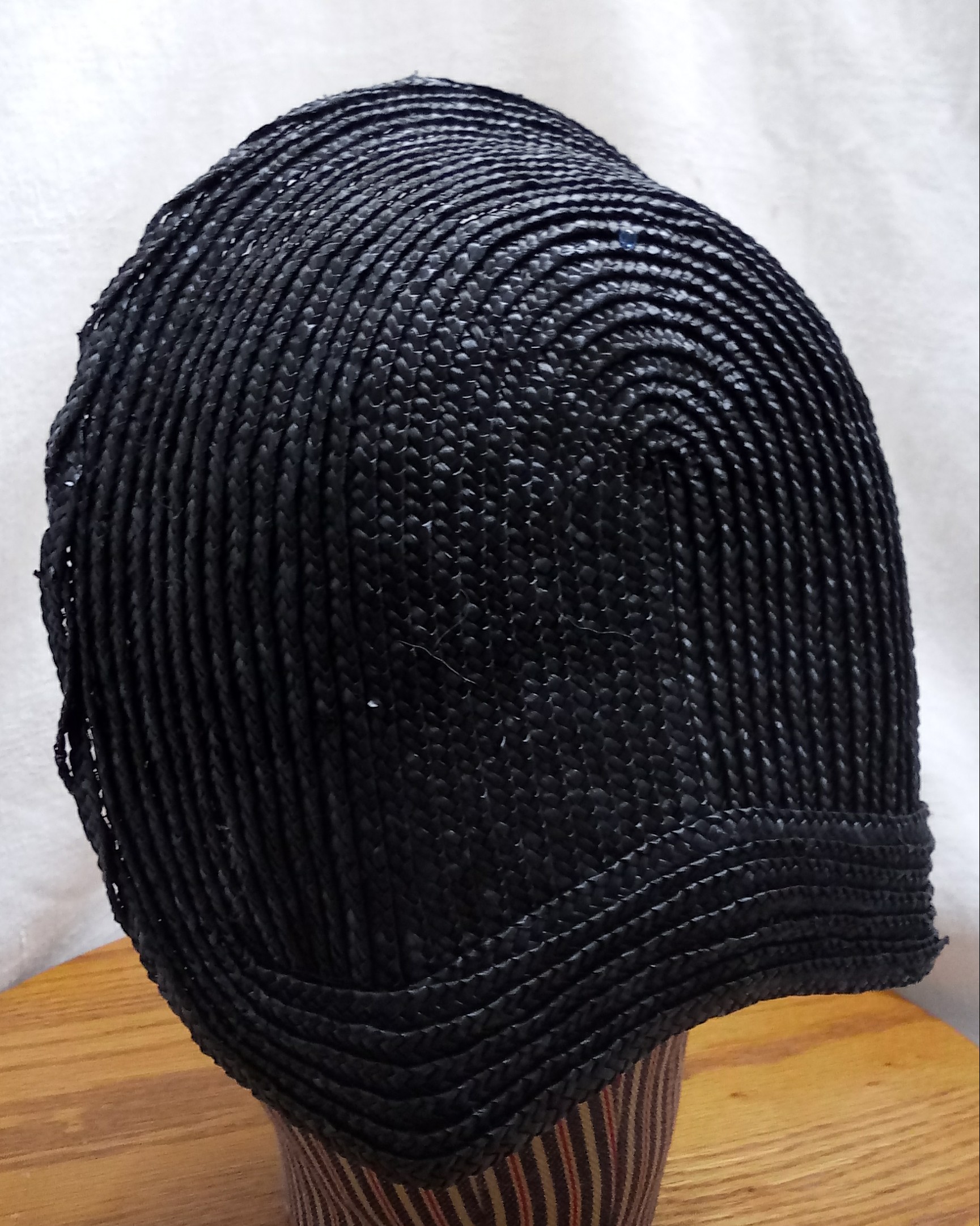
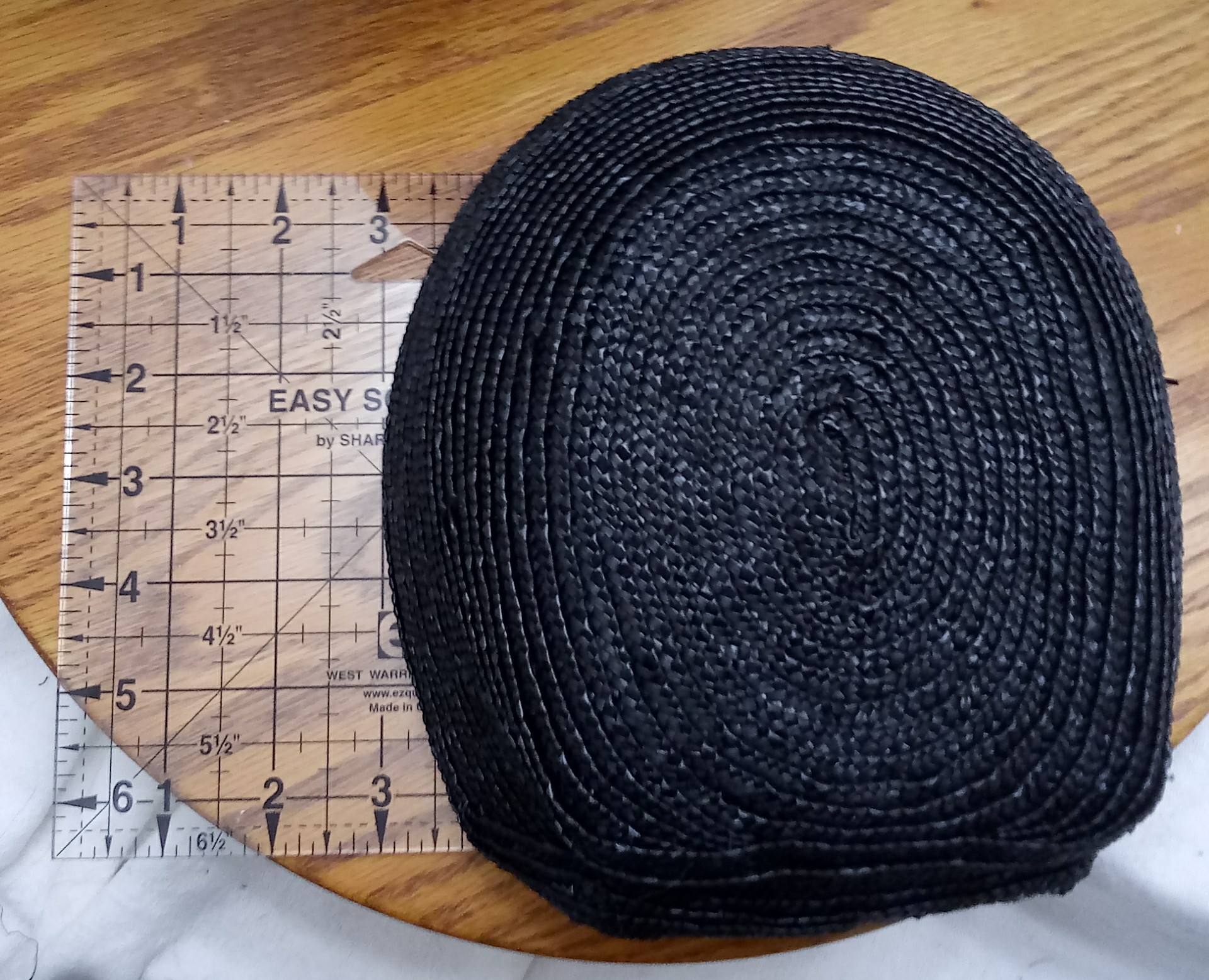
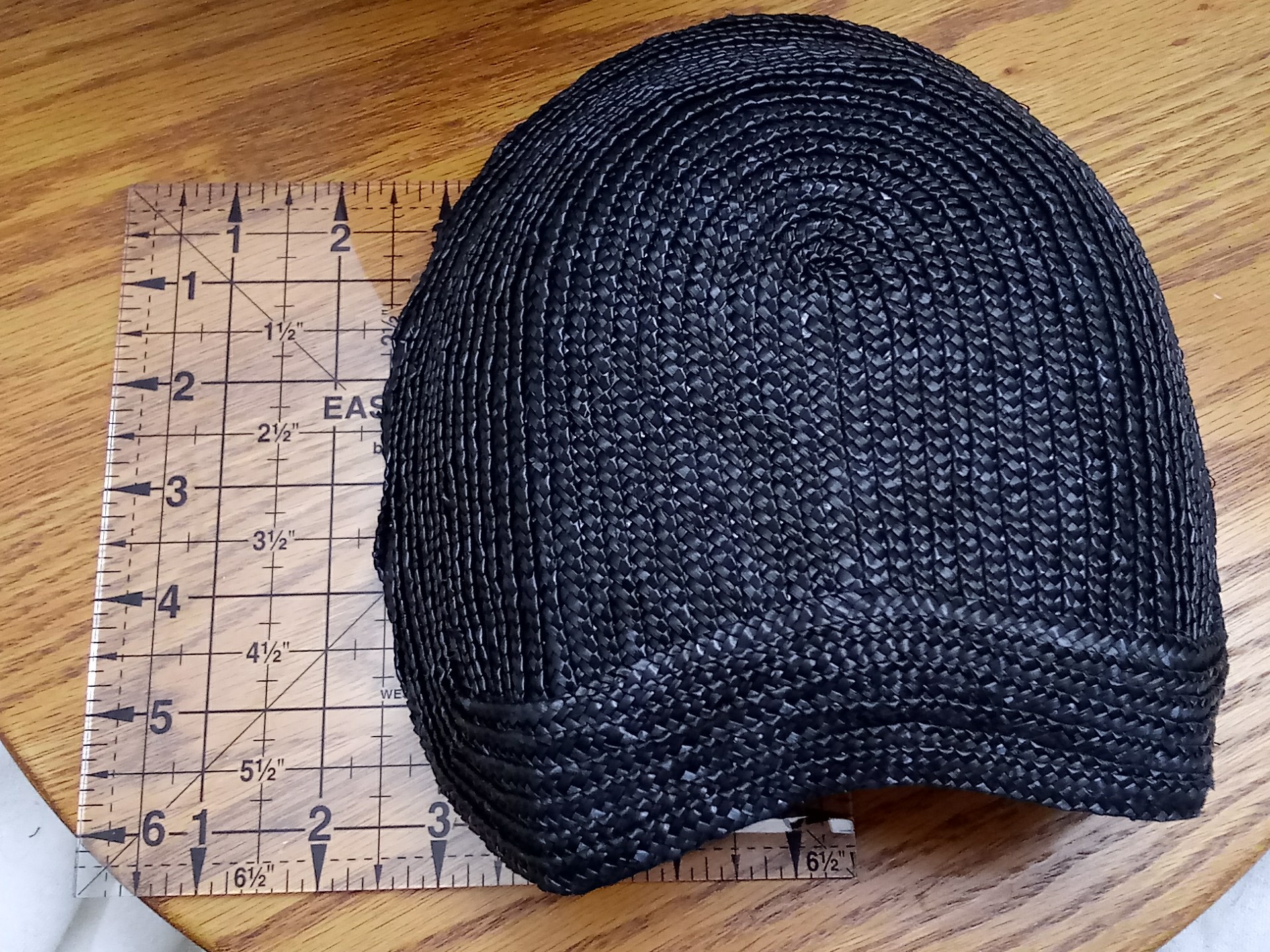
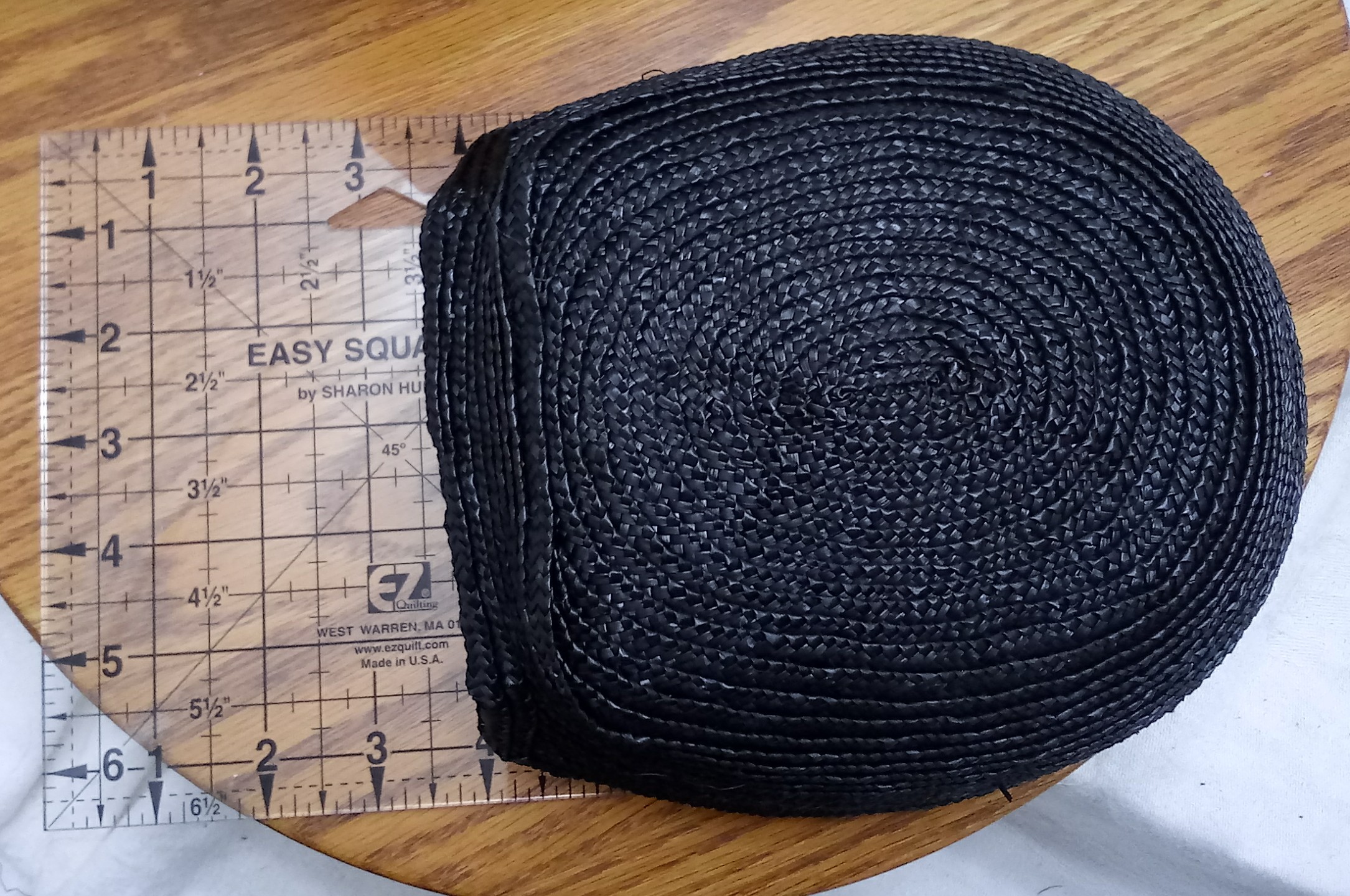
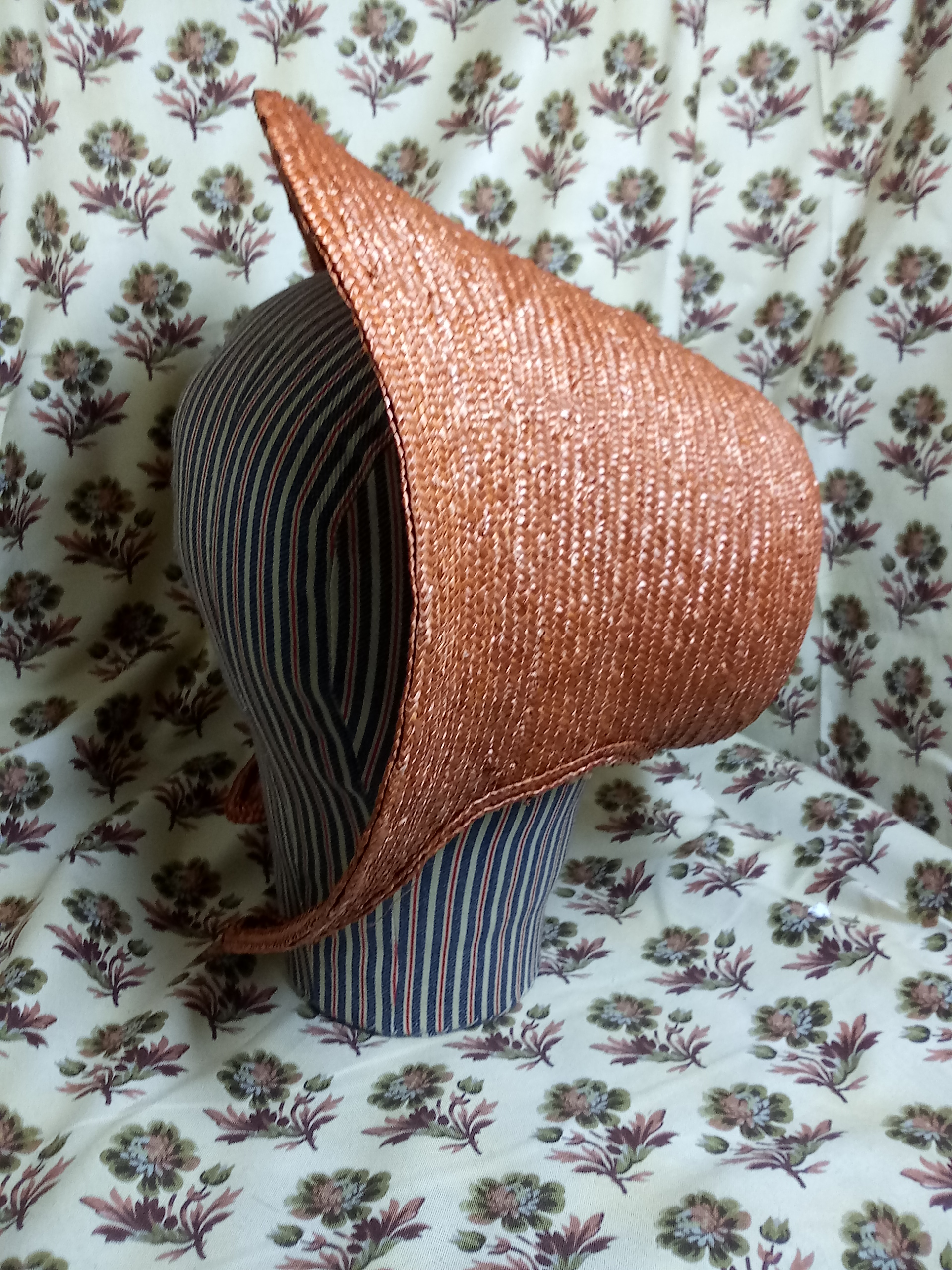
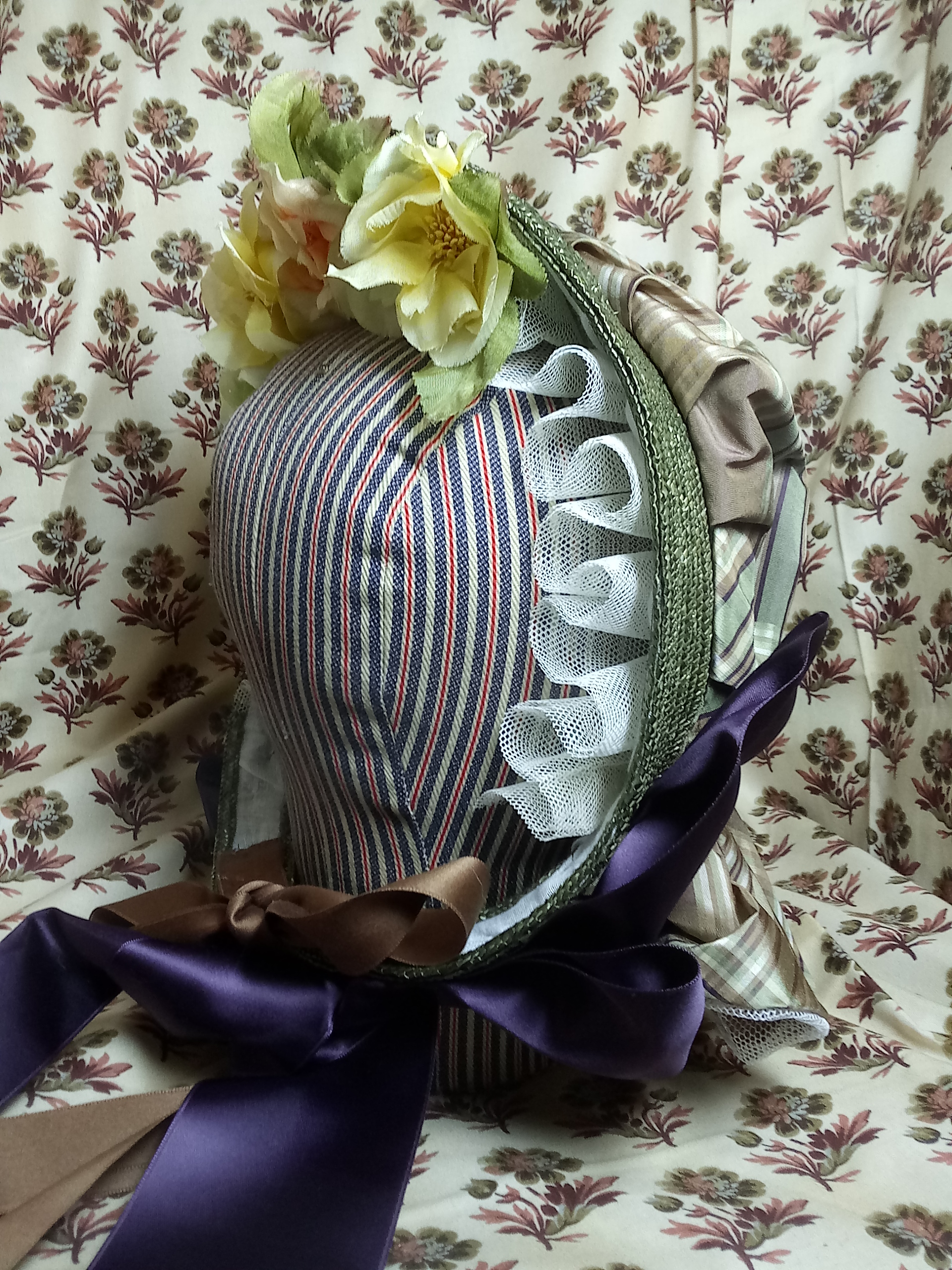
The week or weeks, I’m not quite certain with how busy it has been, I’ve spent time with my new millinery block. Here are the first two 1880s bonnets I made with it.

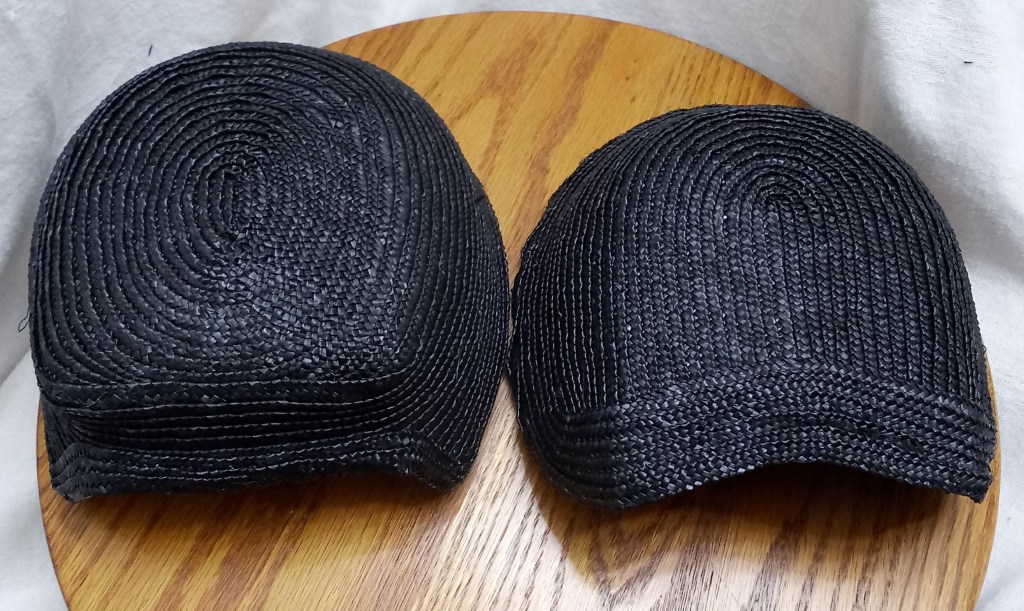
I tried two different styles, each based on what I see in originals. On the left, the first has a more circular, though slightly oval back and closed lower crown with a deeper “brim.” On the right, the second has a horseshoe or arch back with an open lower crown and a decorative brim edge.

Before continuing, I need to share that I am having difficulty with the naming of the bonnet parts because they diverge so much from what I am accustom to in the 30s through the 60s. Being so petite, these bonnets do not encompass the back of the head the way their predecessors did. While the 1860s bonnet perched on the head, the 1880s bonnet perches on tip-toe. There is little definition between the crown and brim. On the block itself the change is just a few degrees of an angle. So, I find myself saying “yes, that still is the brim.” or “yes, that is the crown.”

Back to the bonnets.

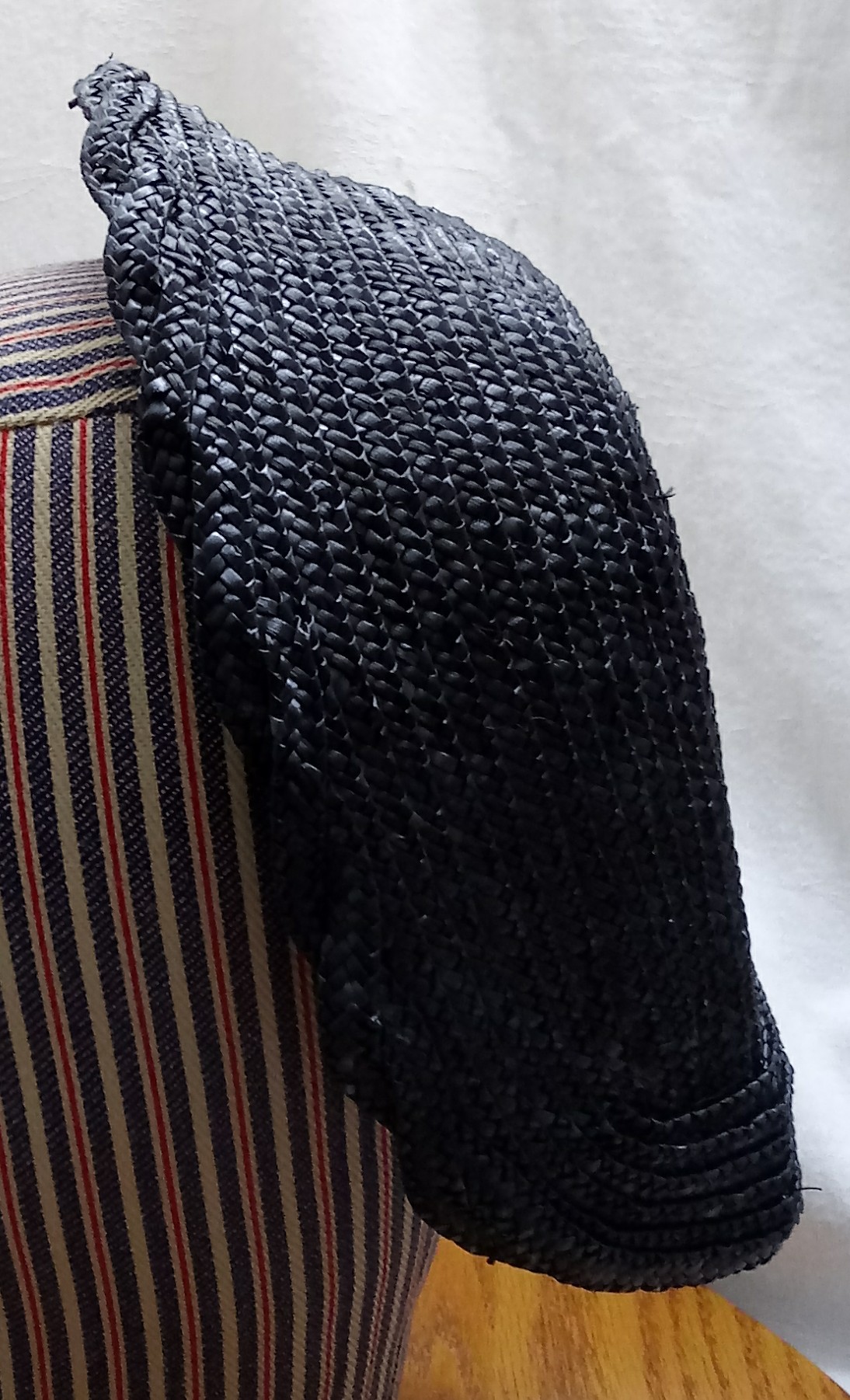
Here they are in profile. My model head does not show well how they will sit on the full 1880s hair style, which would suspend it above and behind the head. I found the block to create a bonnet slightly larger than I expected. Placed on my own head, the bonnets feel large. I have a small head and far from volumous hair though. Once lined and trimmed, I anticipate they will fit most well. I observed this type of bonnet often had a light weight polished cotton, often cream, brown, or black, gathered towards the center back in a way to cup the hard and hair.

Looking at the backs of original bonnet crowns, I saw circles, near circles, and archs or horseshoe shapes. I started the first bonnet, left, with an almost circle. This proved to not be the right proportion for this block. It tooms some fiddling. I do not anticipate starting for this block this way again. A circle may work better. The arch, or horseshoe, worked well for this block creating a back that fit with the block very well.

I was surprised to find this block, though smaller than my norm, to be more fiddly. This may change over time. I still need to better understand the nubs at the base of the crown.

For the first bonnet, I wanted to work around the whole block to get to know the shaping. This method creates the bonnet style with a full, closed crown. When working the rows around the whole bonnet, I found the plait wanted to flare ar the bottom of the crown, almost like a straw bavolet would. As this area is ofen covered with trims in photos, I need to examine more straw pieces of this style in person to decide whether to force the straw not to do this. I could easily see this style done with a decorative edge. I also see this as possibly working for a bonnet with a wider, deeper brim. Though, it may create a larger bonnet size wise.

For the second bonnet, right, I wanted to try the open bottom for the crown with the inverted V I was seeing on some bonnets. This block seems to be very well suited for this. I am please with the overall shape as well as the decorative edge. I have several decorative edged ideas in mind for this shape with the hop of mimicking the plait combinations of the time without access to those plaits.

These photos should give a sense of the sizes. The second bonnet is the smaller of the two. The first was blocked to the size of the block with the finishing rows added after. The second was blocked to the size of the block, including the vining decorative edge.

I will be adding these to Etsy momentarily.

Published in: on May 21, 2022 at 12:39 pm  Leave a Comment  

Relatability

I ventured to the local fleamarket on Sunday. I like to go opening day, but this year I was extra busy. I made it a couple weekends in. I woke early with the assistance of a certain feline who wanted to be fed. I ate half a bowl of cereal and headed out. This allowed me to arrive shortly after 7, when finding a parking spot was easy, attendance was light, and some vendors were still unpacking. There were many empty spots, likely due to the forecast of rain and thunderstorms. Muddy ground and wet weather can be more problematic than it is worth.

The fleamarket was a local destination since childhood. As a kid, I looked forward to buying a little trinket with change, or, maybe if I was really lucky, finding a Breyer horse for a few dollars. Now, I still hope for that little trinket or Breyer horse. I also have an eye open for a few other things.

This year, I would like to find some small, doll size jewelry, sewing accessories, Victorian fancy work of particular types, a doll head for the ooops too big body, the right curio for the little dolls, hat blocks, and something curious.

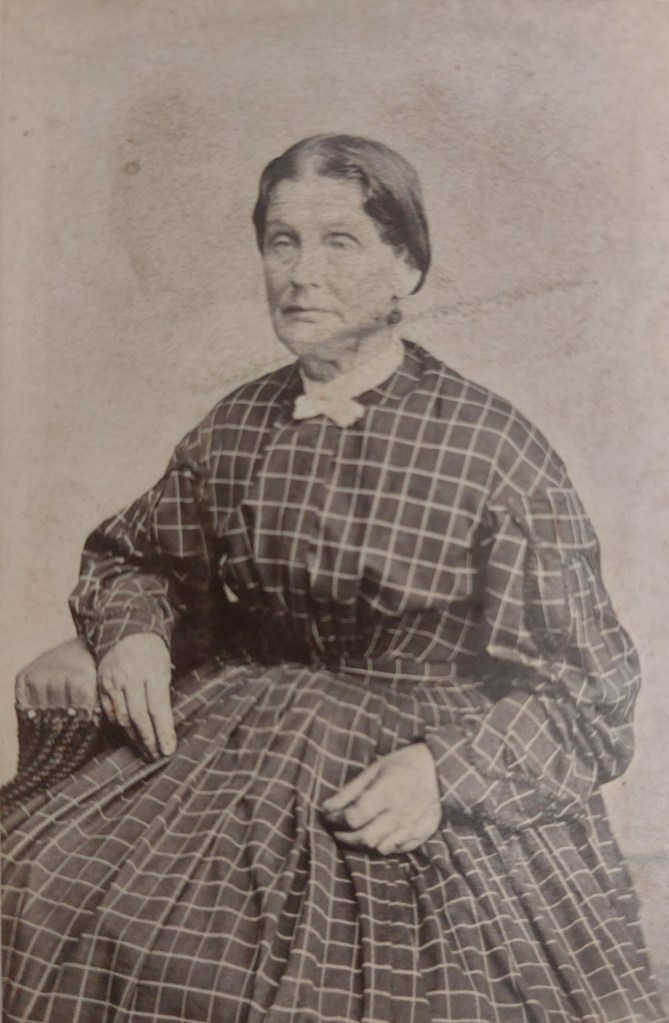
Sunday there wasn’t much that caught my attention for coming home. There was one Breyer in the whole place, of the wrong size. No sewing accessories old enough. Nothing curious enough to fit my interests or research focus. I came home with a lone pair of gloves and this cdv.

This CDV caught my attention for what I am going to call Relatability.

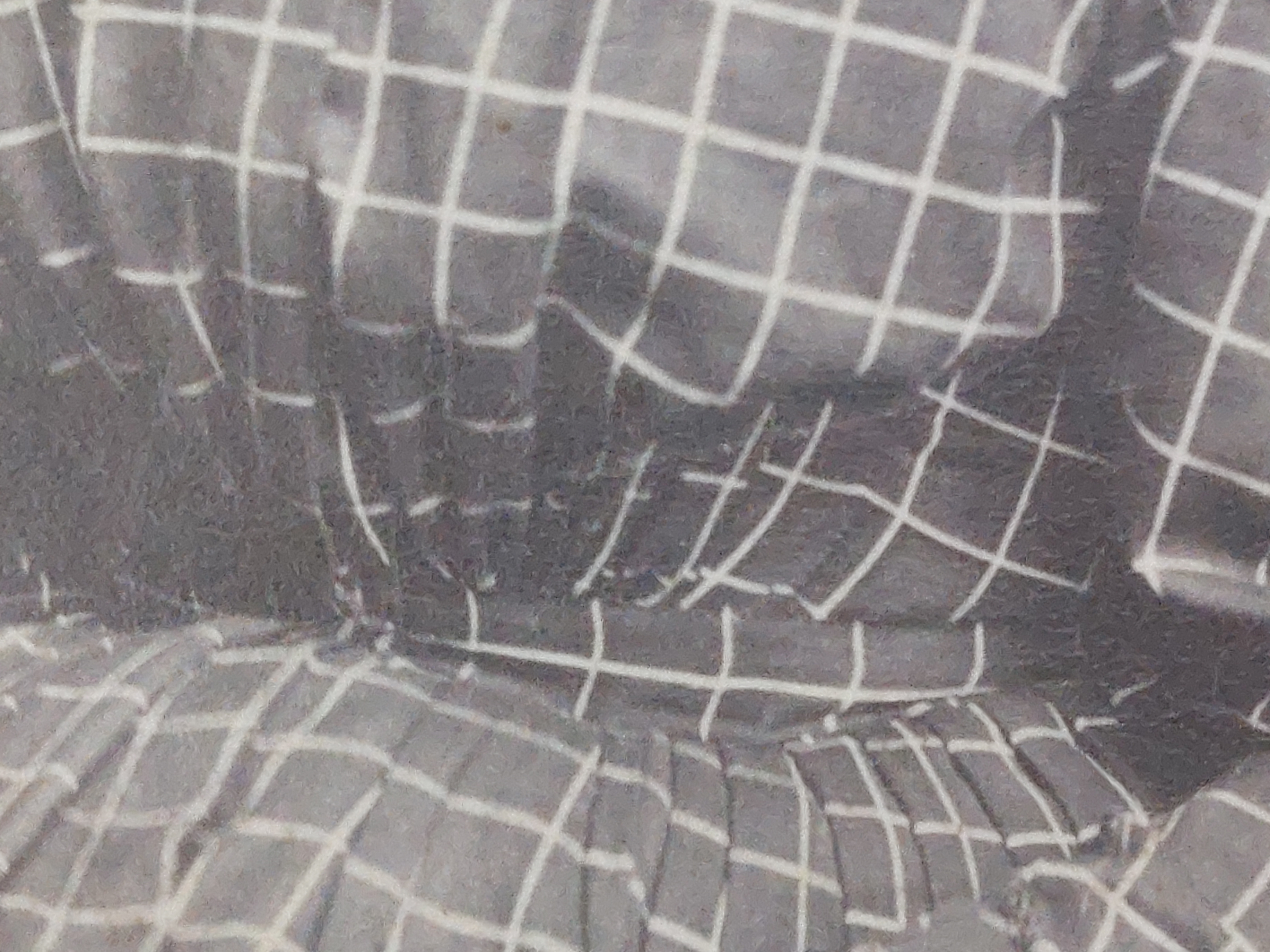
It was her bodice that I saw initially. It is loosely fit through her bust rather than fitted smoothly. The fullness gathers in to the waist in controlled pleats rather than plain gathers or darts. This would make me think this is a more casual dress, but then, when looking at the sleeve with its embellishment and detail, it is seen not to be the case.

At home, I took some time with this image. Partly for a closer look. Partly to see how clear the camera on my sorta new phone does with cdvs. I am pleased with the latter.

The closer look showed me things I did not see standing in the morning sun with sunglasses and hat on. This woman was older but not old. She has wrinkles in emerging in all the natural places. She has graying hair in wisps. She has fullness at the back of the collar indicating the rolling of neck or shoulders that happens when working or reading over many years. She gave herself room in her bodice possibly for comfort, physical or mental, while her sleeves show an attention, creativity, and detail.

Each of these aspects are as much true of being then as now, now as then.

Here is the bodice fullness that first caught my attention. The fullness is brought into the waist with pleats rather than darts or gathers. I can tell you from experience this control lays differently, flatter at the waist than regular gathers do. It appeals to me as a fluffier woman who doesn’t know how my fluff is going to behave some days. *There may be a dart on the right. Count the third square from the right to see it. Also worth noticing is her choice not to wear a belt. The tendency currently in reenacting is to wear a belt. This is not necessary.
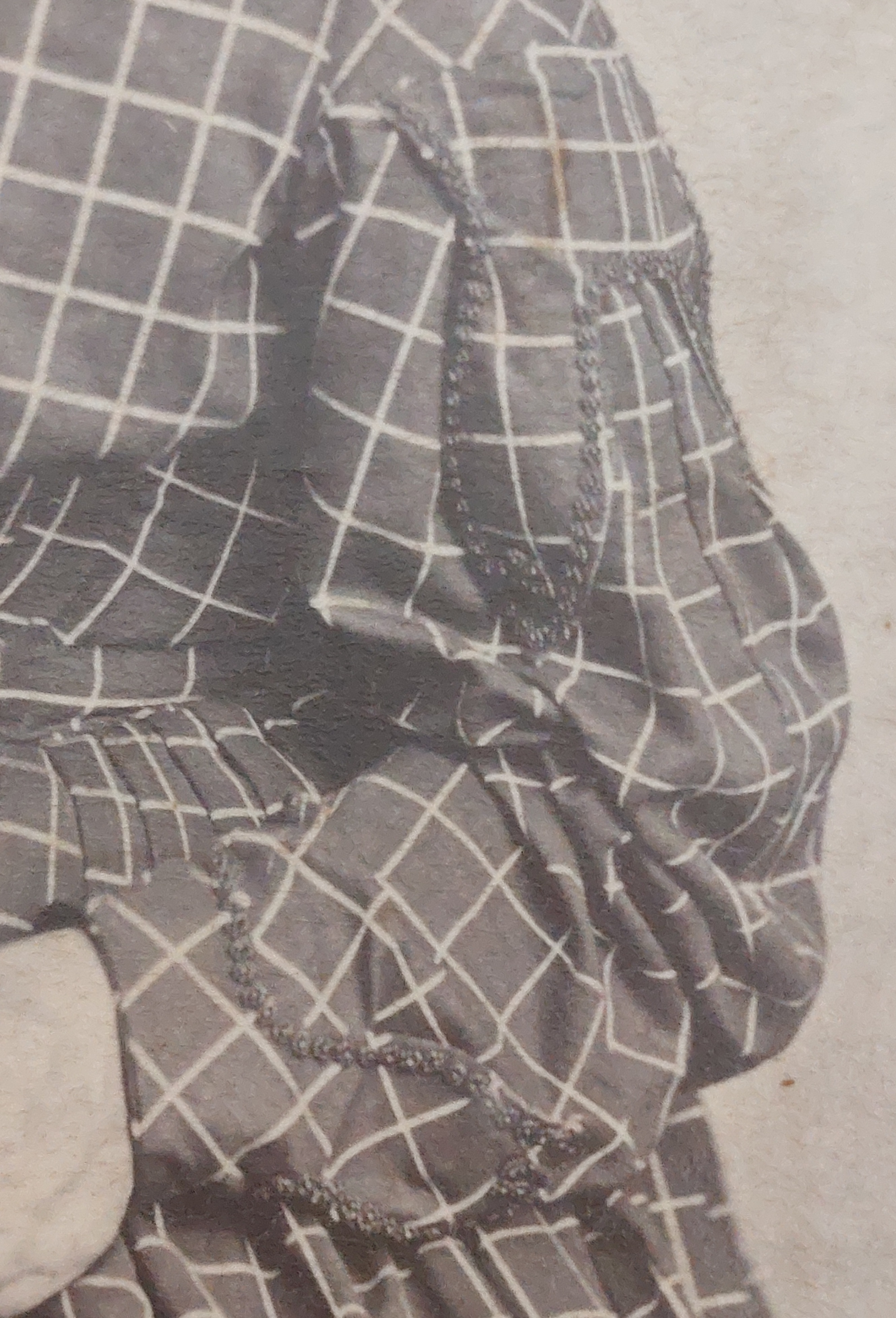
I did not see this sleeve a when I first picked up the cdv. It is beautiful in both finish and concept. This appears to be a basic, slightly full coat sleeve with an epaulet-esque overlay and a cuff. Both the epaulet and cuff have a petal like shape used in the design. Each are outlined in a trim (below.)
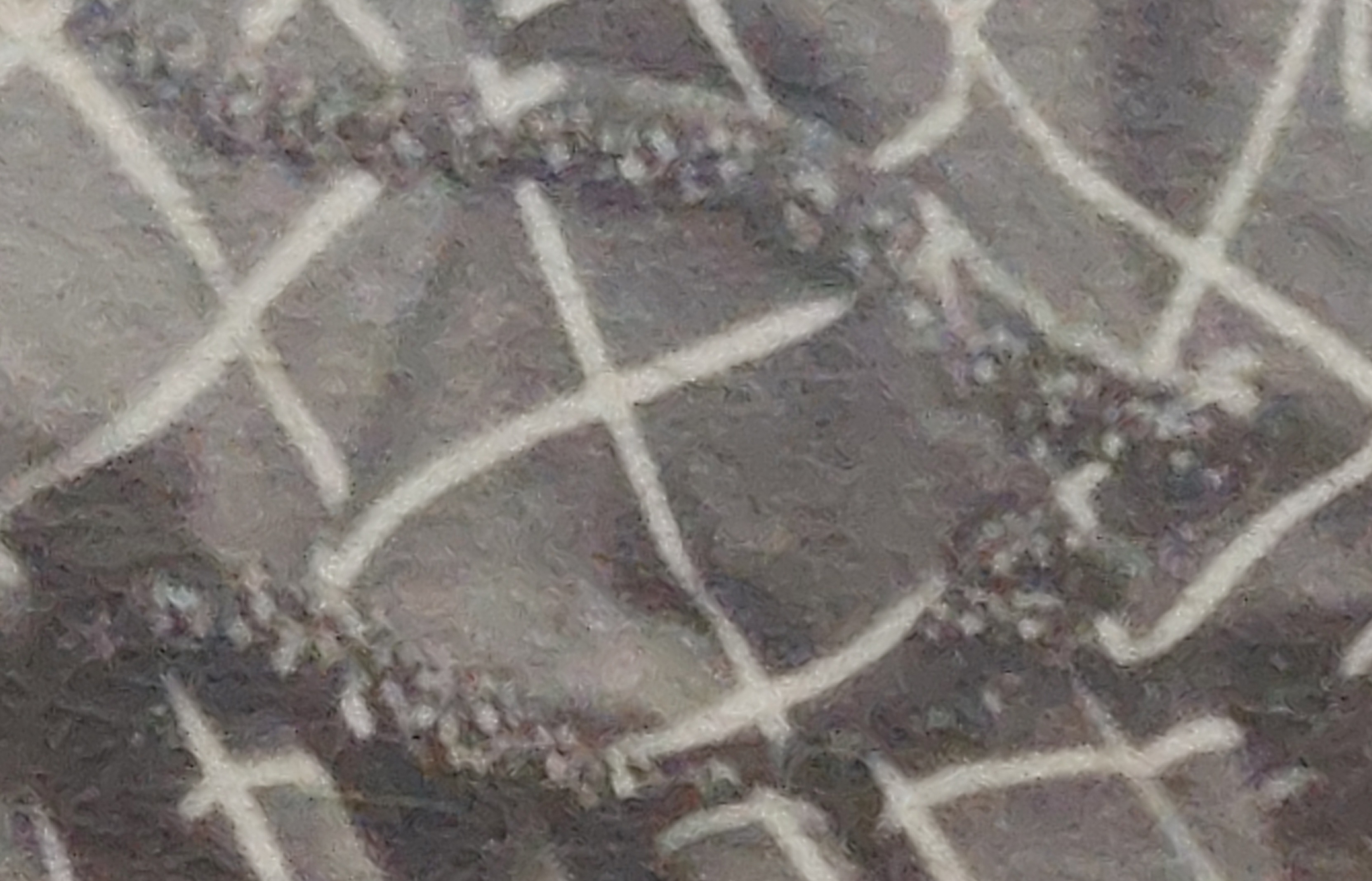
Looking closer at the trim, it appears to be a chain of flowers.
I was impressed by what I could see in her hair. Usually, I look for the shadowy line that indicates a hairnet or not. But, in this image my eyes moved forward, first to the wisps of grey hairs just above her ear. These light color strands create such pretty waves. Then, I saw the the section above that wanted to be a curl that day. I can’t help but wonder if that curl frustrated her because it would roll smoothly into her coiffure or reminded her of days when she let ringlets of curls fall.
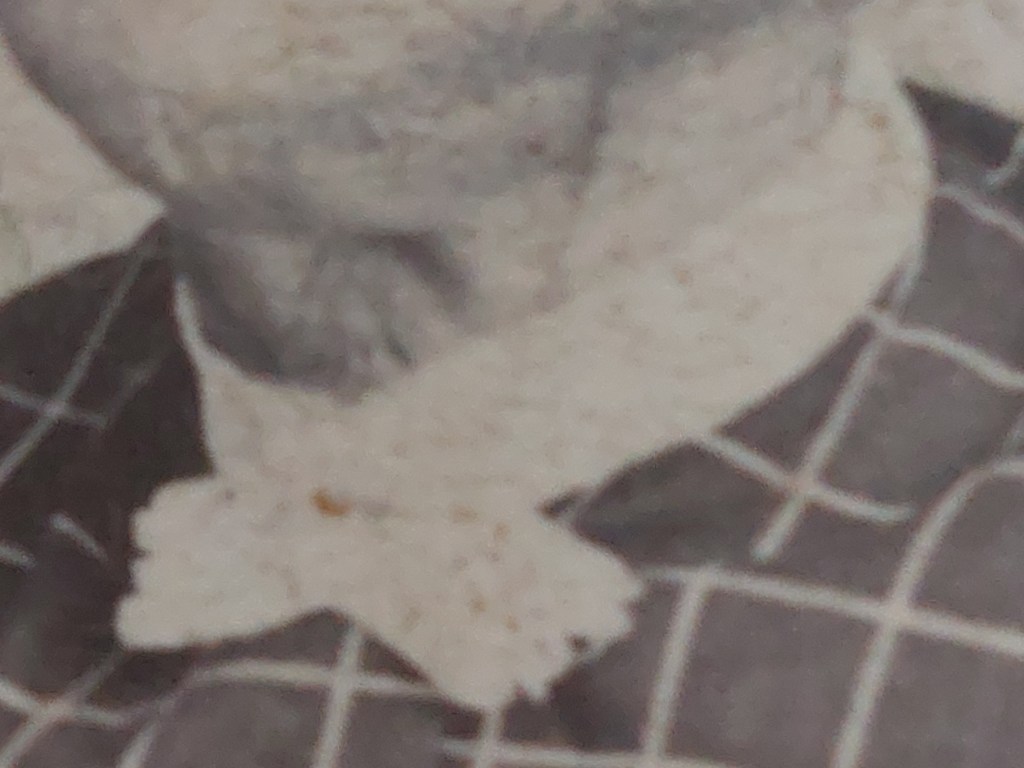
The first close up I tried with the phone was of the collar. This was a 6.5 zoom, later cropped for upload. This shows not only the collar but also some bunching up at the neck. I think the specks are discoloration rather than a pin at the crossing of the collar, but I am not certain.
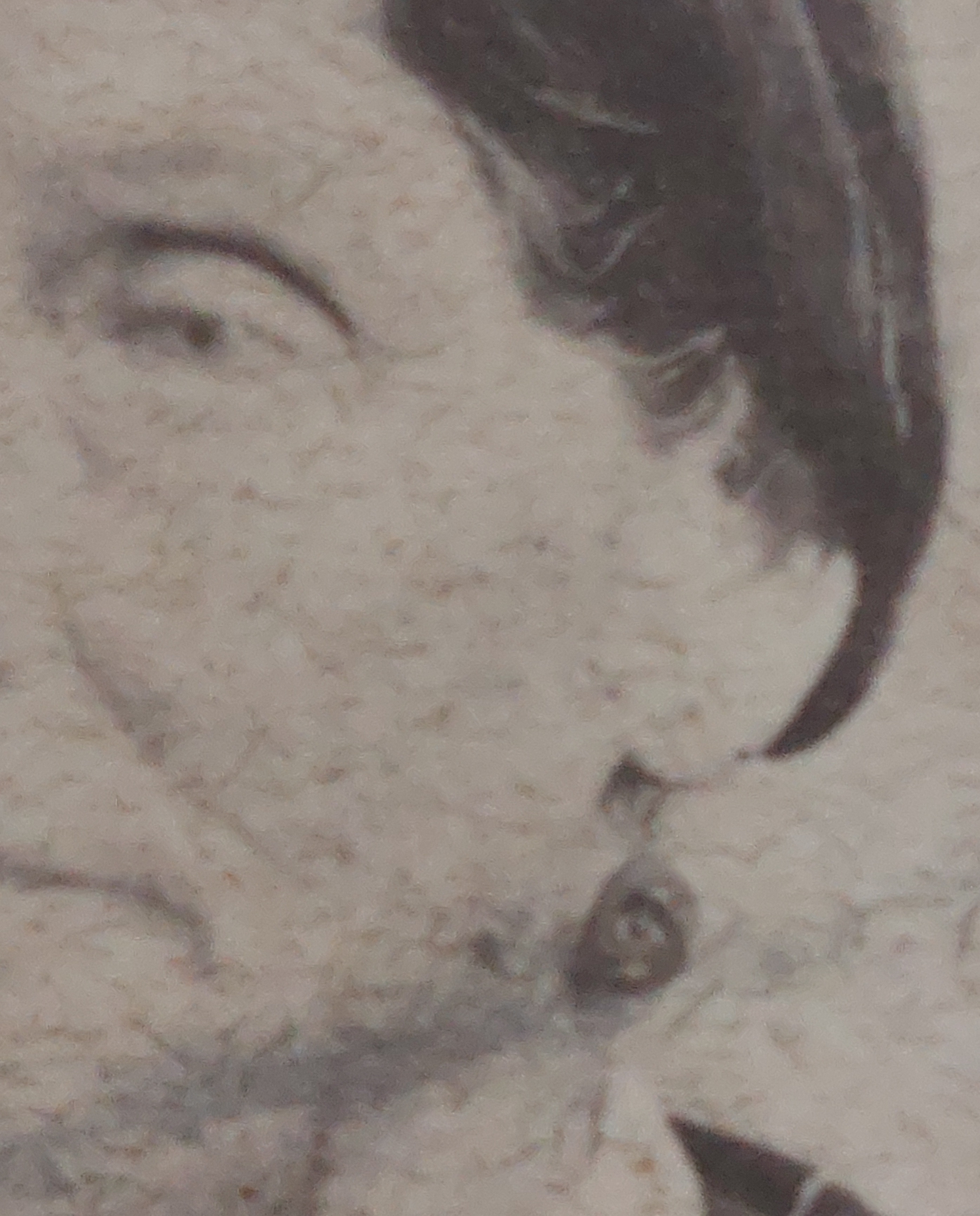
Other than her ring, these earrings appear to be the only jewelry she is wearing. They are not a type I can identify.

Published in: on May 17, 2022 at 6:05 am  Leave a Comment  

Veil 101

I am reposting favorite helpful posts each Monday throughout March, April, and May. This post will wrap-up this series. Starting in June, I will share posts focusing on the the questions I am asked most often when Intepreting.

This look at veils concentrates on the everyday veils of the mid-19th century, the 1840s through 1860s. It does not include mourning veils.

As some of you know, I have issues with sunlight that can trigger migraines or full-body crashes. So, veils are very important to me. This is very much a “don’t leave home without it” item.

You will notice each of the veils I wear are silk gauze. This is for two reasons. First, when we started exploring veils locally, some years ago, the silk gauze at Dharma was what we felt suitable. Our research has expanded. Second, personally, I find the gauze helps with my light issues nicely. I am kinda afraid to make the change to net. But, I will be giving net a try when I find a net that I feel mimics the feel of those originals I’ve held.

Veil Shapes
wpid-2014-08-30-18.09.42.jpg.jpeg

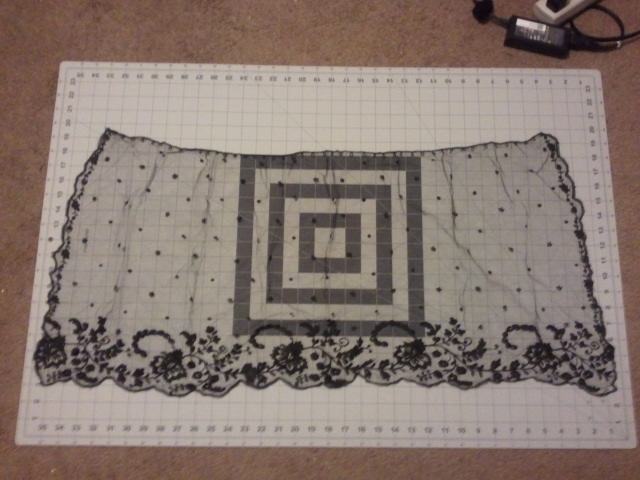
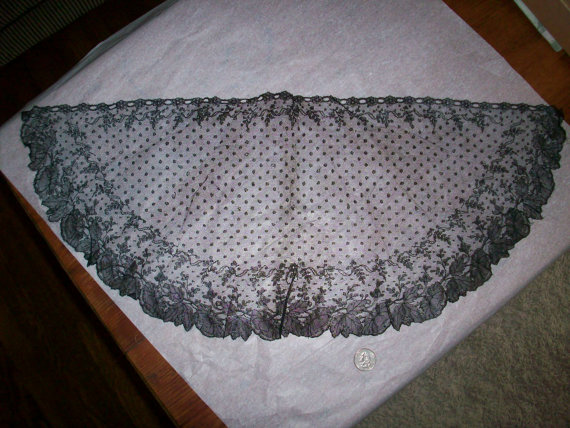
The most common shapes for veils included the wide rectangle and the semi-circle. In each shape, they tended to be wider than they are long, ranging approx from 30″to 40″ wide and 15 ” to 20″ long based on those I’ve been able to see in photos and in person.
il_570xn-642507724_qoqn

Right above: A rectangular net veil, approx 36″ wide by 17″ deep. Right below: A semi-circular veil. I need to double check the dimensions, as I am pretty sure I bought this one but haven’t a clue where I put it.

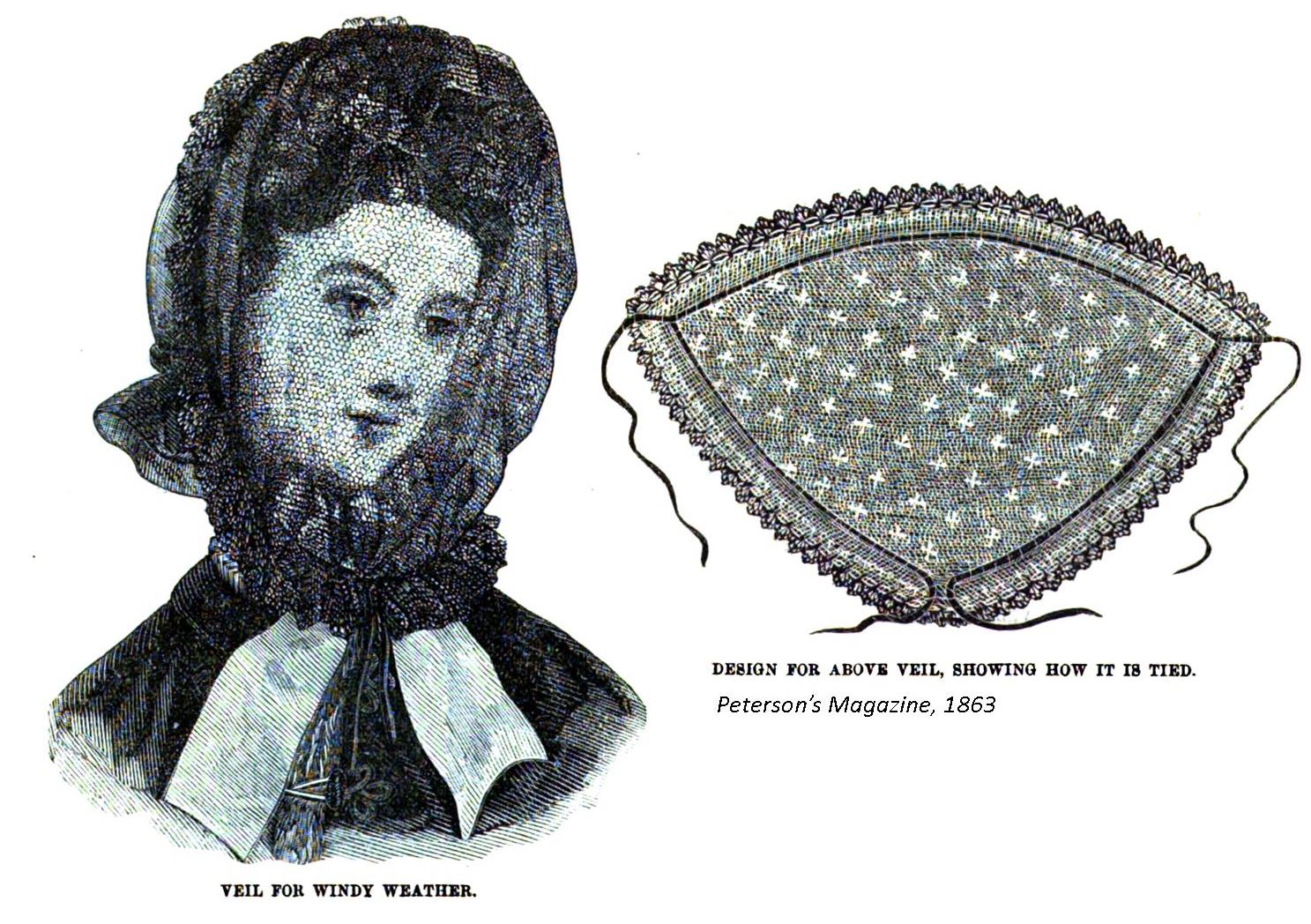
There were some variations to these shapes. This example at the MET may be mid-century. It is a variation on a rectangle with the top and bottom edges curving. There is a shape I would call a petal, with two sides each an arc. At the bottom of the page, you will see a quasi-triangle shaped veil meant for windy weather.

Be sure to browse your favorite and local museums to see original veils.

Veil Materials
wpid-2014-08-30-18.10.14.jpg.jpeg

Let me first say I am utterly clueless about lace, or at least entirely lacking confidence in my knowledge of lace. I will leave the details of which lace is which and which is correct to those who have studied lace in depth.

That said. In minimum:

In terms of fibers, silk, linen, wool and cotton all come up for nineteenth century shawls in museum collections.

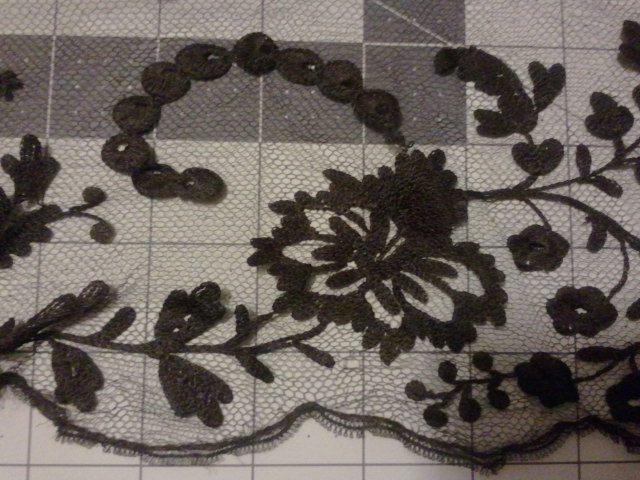
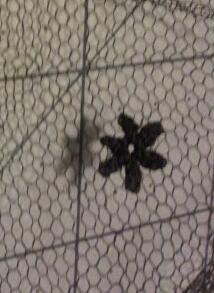
When looking at the net ground of net or net lace, you want little hexagons. You do not want the little rectangles or diamonds.
wpid-2014-08-30-18.10.36-1.jpg.jpeg

Veil Colors

1830s travel program me 1

The most commonly found veil colors for the century are black, white and ivory. We can also find blues and greens. These do tend to appear more frequently in earlier remaining veils then in those of the 40s, 50s and 60s.

To the left is an image of me in an 1820s bonnet with a green veil. This is a dyed silk gauze veil made by Bevin Lynn. I found this green to be gentle on the eyes when out in the sun, given moderate protection. It did not give glare as some white veils can do. It did play with the light giving a streaked color effect similar to what some migraines can produce.

I have also worn white and black veils. I find black silk gauze to give the most protection from the sun. It also gives the most vision dampening of the colors I’ve worn. White give some light protection. I prefer it on moderately sunny day for short walks across the tree filled square.

Attaching a Veil
wpid-2014-08-30-18.11.51.jpg.jpeg

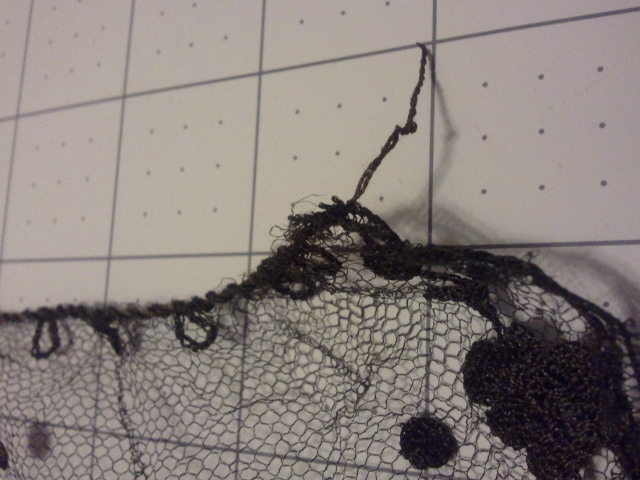
This is how I attach my veil. Original veils show either a channel at the top of the veil or worked holes, through which a thin cord or ribbon can be drawn. In my veils, I prefer to put a small knot or loop in the end. This helps keep the cord from sliding back through and makes it easy to grab.

IMG_3831

Once this cord/ribbon is drawn up, the veil can be positioned along the brim edge. I drape the veil over the back of the bonnet.

I prefer to pin just back from the edge. With my drawn bonnet, seen here, I pin under the second cane. On my straw bonnets, I pin a row behind the fancy plait or about the 3rd row back. The end pins are pinned upward sorta following the row of cane or plait. In the center top, I pin one or two pins across the veil, trying to catch the cord,

parallel to the cane or plait. (pinning perpendicular to the plait will allow the veil to pull forward or backward as it drapes.) Here you can see how this veil drapes forward and back. This is a silk gauze veil made for me by Bevin. It is trimmed in silk ribbon. It is a little longer than most 1860s veils. Some 1850s images do show a similar length.

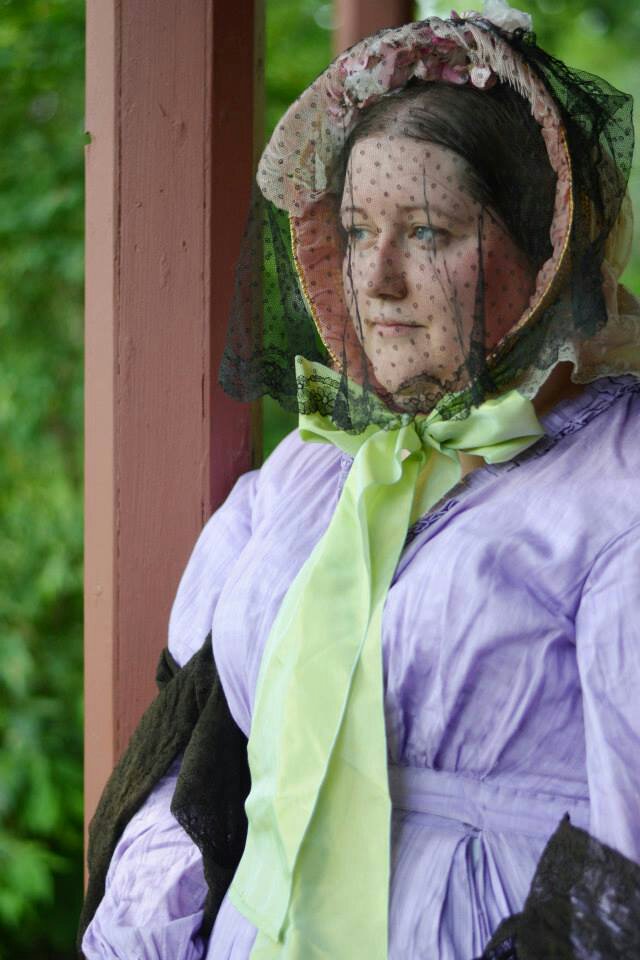
Here Betsy Connolly is wearing a semi-circular veil. Notice how she doesn’t have the ends pooling on either side as a rectangular veil would.
wpid-534186_556635881040979_23383459_n.jpeg

Specialty Veils

3

Note for the repost: This is one of those posts I intended to get back to and provide additional information on but didn’t because life happens. I do hope to do another post about veils addressing several questions and details. Hopefully soon.

Published in: on May 16, 2022 at 9:10 am  Leave a Comment  

Finishing a Straw Bonnet


I am reposting favorite helpful posts each Monday throughout March, April, and May.

20180723_092546.jpg

We are entering the time of year when people are thinking spring and about decorating their bonnets. Straw bonnets have a great appeal because they are cooler to wear in the heat as the straw allows the head to breathe, and the embellishments can be changed fairly easily without leaving as obvious thread holes.

Just as with most other garments and material culture pieces, millinery is an investment. You want to finish your straw bonnet as accurately as possible. This will include several factors:

  • A lining to protect the straw from your hair products and to protect your hair from snagging on the straw. While not every extant bonnet has a lining or evidence or a lining, a lining can extend the life of your bonnet
  • A frill or cap for the inside of the bonnet’s brim. This frill simultaneously frames the face and helps hold the bonnet in place. You may also want to add a facing to the front couple inches of the inside of the brim. This is found in many originals.
  • The bavolet will need a cotton net lining to give it the proper fullness. I believe this net also physically supports the materials of the bavolet. The silk, whether from fabric or ribbon, is most frequently seen on the bias in original bonnets. The net will help the bias cut hold its shape, especially if addition elements such as straw, lace, or bead-work is added. Consider reading “Understanding the Ribbon Bavolet” for additional information.
  • A bonnet will need 2 sets of ties – A functional set of narrow ties which will hold the bonnet on, and a decorative set of wider ribbons.
  • You may want to add a stay to assist in holding the bonnet to your head. The easiest to add is a simple strip of velvet. More information with images can be found in the post “Bonnet Stays
  • Then, of course, you need your decorations – flowers, feathers, ribbons, lace, etc.
  • I will add – A storage box and stand – While this is not an immediate need, a stand and box will help your bonnet last by protecting it from being mis-shappened, and from dust.

Recommended Shopping List:

  • I highly recommend Danielle’s book from Timely Tresses: Finishing a Straw Bonnet Form
  • Cotton net to line your bavolet
  • Fine cotton or silk net (bobbinette), or silk organza or lace for your frill/cap
  • Fine cotton voile or silk taffeta to line your brim
  • 3 yards minimum of wide (silk or quality rayon) ribbon (2 yards for ties, 1 yard for bavolet, additional for decoration/bows) (silk taffeta is also an option for the bavolet.)
  • 1 yard of 3/4″-1″ wide silk or cotton sateen ribbon for ties.
  • Ribbon and laces of choice for decoration
  • Flowers and feathers of choice for decoration
  • 1/2″-3/4″ wide velvet for optional stay

20180730_175702.jpg

Recommended Reading List:

20180730_175123.jpg

Godey’s, November 1856

Straw Bonnets.—Straw bonnets generally require some sort of lining, crape, muslin, or a thin silk. Very few are now worn with a plain lining. It requires just the same quantity to make a little fullness, which is more becoming. I will explain to you how to make a plain lining or a plain bonnet will take just the same quantity; or, if any difference, the plain requires more than the full. I think I hear my readers say this if very strange. You are aware that, in cutting out a plain bonnet or lining, there are several small pieces cut out to the shape. The piece make the fullness, for the material is used on the straight when put in the easy and on cross-way when plain, which compels you to cut pieces off , which on the straight and put in full, is not required. A head lining of silk or muslin should be put in after the lining to make all neat and clean when the bonnet is worn. Straw curtains are worn; but a great many ladies prefer a silk curtain made of the ribbon to match the trimming. The curtain is best cross-way with a narrow straw on the edge. The curtain will not quite take a yard of ribbon; three and a quarter or three and a half are sufficient to trim a bonnet. Plain colors on a straw are neater than mixed, such as primrose, light or dark blue. Sarcenet ribbon is better than satin. It is a good plan to sew narrow strings on the bonnet at the same time you sew the wide tie; the narrow first: it keep the bonnet more firm on the head. When I say narrow ribbon, I mean an inch and a half wide. An old fancy straw bonnet will make up again very weill by putting some silk between each row of straw. You must have a wire frame, and unpick the bonnet; cut some pieces of silk on the cross for puffings, and now lay your straw alternately with the silk. Unless the straw is a very good color, mix colored silk with it. This bonnet will require a lining.


Are you one of the many readers enjoying my millinery blog posts?

Consider becoming a Patreon patron. Doing so helps support my work and helps me write more useful articles.

https://www.patreon.com/AMillinersWhimsy

Published in: on May 16, 2022 at 6:05 am  Leave a Comment  

Unboxing: An 1880s Bonnet Block

Published in: on May 12, 2022 at 5:29 pm  Leave a Comment  

How is a Tie-on Pocket Worn

I was asked to talk about and show how a tie on pocket is worn. Here is a short video that looks at how a separate pocket ties on around the waist and how they are accessed through the skirt. I also give examples of what might be found in a pocket whether it is worn for interpretive use or keeping modern essentials.

I forgot to mention in the video that having the emergency/essential items in a tie on pocket reduces to chance of losing or forgetting something in transferring from one dress pocket to another.

Left: Items for interpretation or period use: notebook and pencil, fan, workpocket with sewing items, hairpins, candy, lavender sachet. Right: Modern essentials: Emergency or medical needs, hand sanitizer, lip balm. Inwould also include: keys, emegency/medical forms, phone. Note: I wear period items on the right and modern items on the left.
Published in: on May 9, 2022 at 8:00 am  Leave a Comment  

Hairnets – The Basics and More Indepth

I am reposting favorite helpful posts each Monday throughout March, April, and May.

There are several resources available to learn more about hairnets…..

Are you confused about the word “Snood”? Read Getting Snoody by Elizabeth Stewart Clark.

Do you want to know what basic hairnet to buy and have in your hair kit? Watch this video:

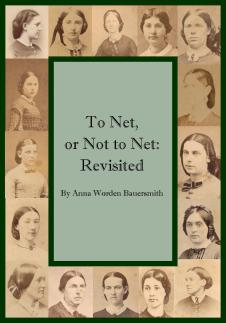
Want to know the basic ins and outs of hair nets? Read To Net, or Not to Net an article by Anna Worden.

Want to know the details of hairnets, who wore what kinds and when with lots of photos and illustrations? Read the full-length e-book To Net, or Not to Net: Revisited, by Anna Worden Bauersmith.

to-net-or-not-to-net-revisited-cover


Are you one of the many readers enjoying my millinery blog posts?

Consider becoming a Patreon patron. Doing so helps support my work and helps me write more useful articles.

https://www.patreon.com/AMillinersWhimsy

Published in: on May 9, 2022 at 6:05 am  Leave a Comment  

Connection

We all yearn for connection,

whether we know it or not.

My goal for the day was a simple one: sew a doll dress by the end of the day.

After a slow start, I found myself thinking about connection.

We connect in many ways. We connect with our senses. We connect emotionally. We connect physically. We connect through story.

To lack connection, or worse, to be denied connection can be detrimental, can be tragic.

On this Mother’s Day, sitting in the sun and shadows, I found myself listening to a story. I often listen to stories in this spot. This story was different. The words came from their mouth but the story came from the heart and eyes. The story was one of lack of story, of being denied story. It tugged at my heart.

I am grateful I heard what I could in that moment.

As days filled with sun and people go, moments fly away.

I was no longer working on my simple goal for the day. I was connecting with one of my Grandmas by sitting where she used to sit, while connecting with one of my Grandmas by sharing a love she loved.

I share with you Theo:

Theo was named by a moment, a moment created by two pairs of siblings. As I finished her dress and was ready to put it on her for the first time, the first pair of siblings came in. They were darling in how captivated they were. They watched wide eyed, both eager and polite, as I tucked and fussed and adjusted, then presented the newly dressed doll. I said: “She still needs a name.” The first sibling said “Theo.” The second sibling said “Yes, Theo.” both said “Hello, Theo” as two more siblings walk in and one says “Hello.” One of the new pair of siblings was also named Theo. It was obvious to me, the doll is Theo.

Theo is dressed in an 1850s style dress made from one of GCVM’s reproduction kerchiefs. This is one of three reproduction kerchiefs based on originals in the Susan Greene Collection and produced by Burnley & Trowbridge. When I saw this beautiful red and black on white print, I knew it had to be made into a doll dress. I am delighted with how the dress came together today. The skirt is the full 36 inch width of the kerchief with the border design around the hem and up the front. The design lined up creating a circling leaf motif centered on the bodice. The sleeves are open sleeves with the border edge at the wrist. This is the one change I would make: I would make the sleeves more funneled.

The dress will be accessorized with a black belt and mother of pearl buckle. I will add a broach as well to the deep V neck bodice. Theo will also be getting hands soon.


If you read my “Transparency” post you may be wondering how the day went for me, the part of me that has been exhausted. Today was much needed. Approaching this weekend, I was not sure how I was going to do it; I wasn’t sure if I could do it. The morning started hard for me. I was struggling to feel my groove and zone. Then I got there. The above happened. Suddenly it was closing time and I wasn’t tired. I reached the end of the day without feeling like it was the end of the day or the end of me for the day. I wasn’t even tired a little bit until the drive home. When I got home, it didn’t hurt to get undressed, well except for the bit about gravity. I hoped in the shower. I ordered dinner. I uploaded. started editing and writing. In this moment, I am good; I feel that soft sigh of “this is good.”

Published in: on May 8, 2022 at 6:40 pm  Comments (3)