Summer Plans

One more week and Summer starts for me.
Well, mostly, sorta, kind. I have a few things to do at school after the last day.

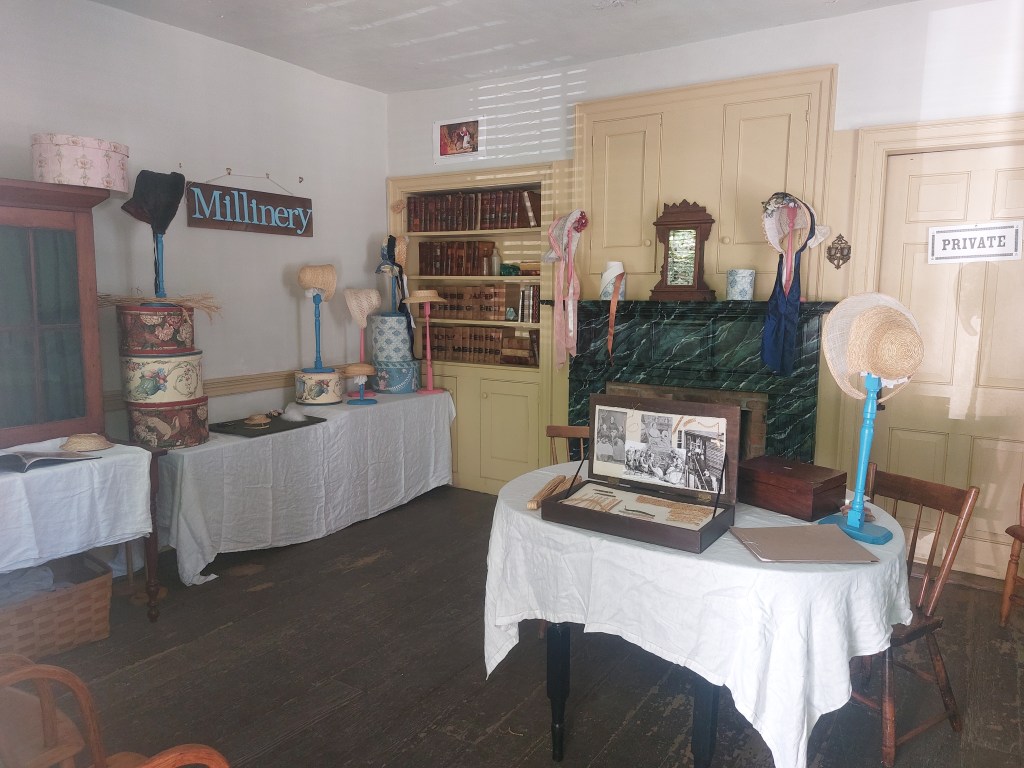
Millinery Shop Plans

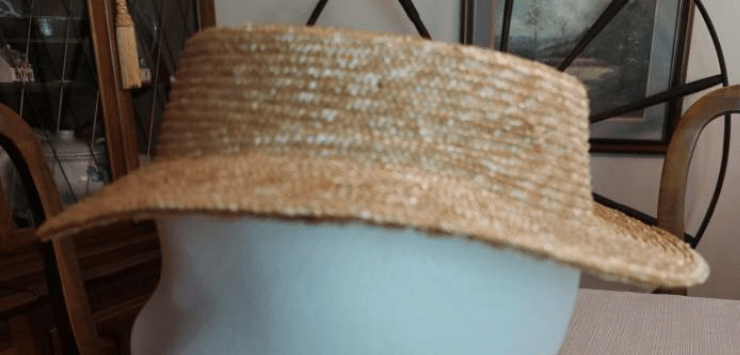
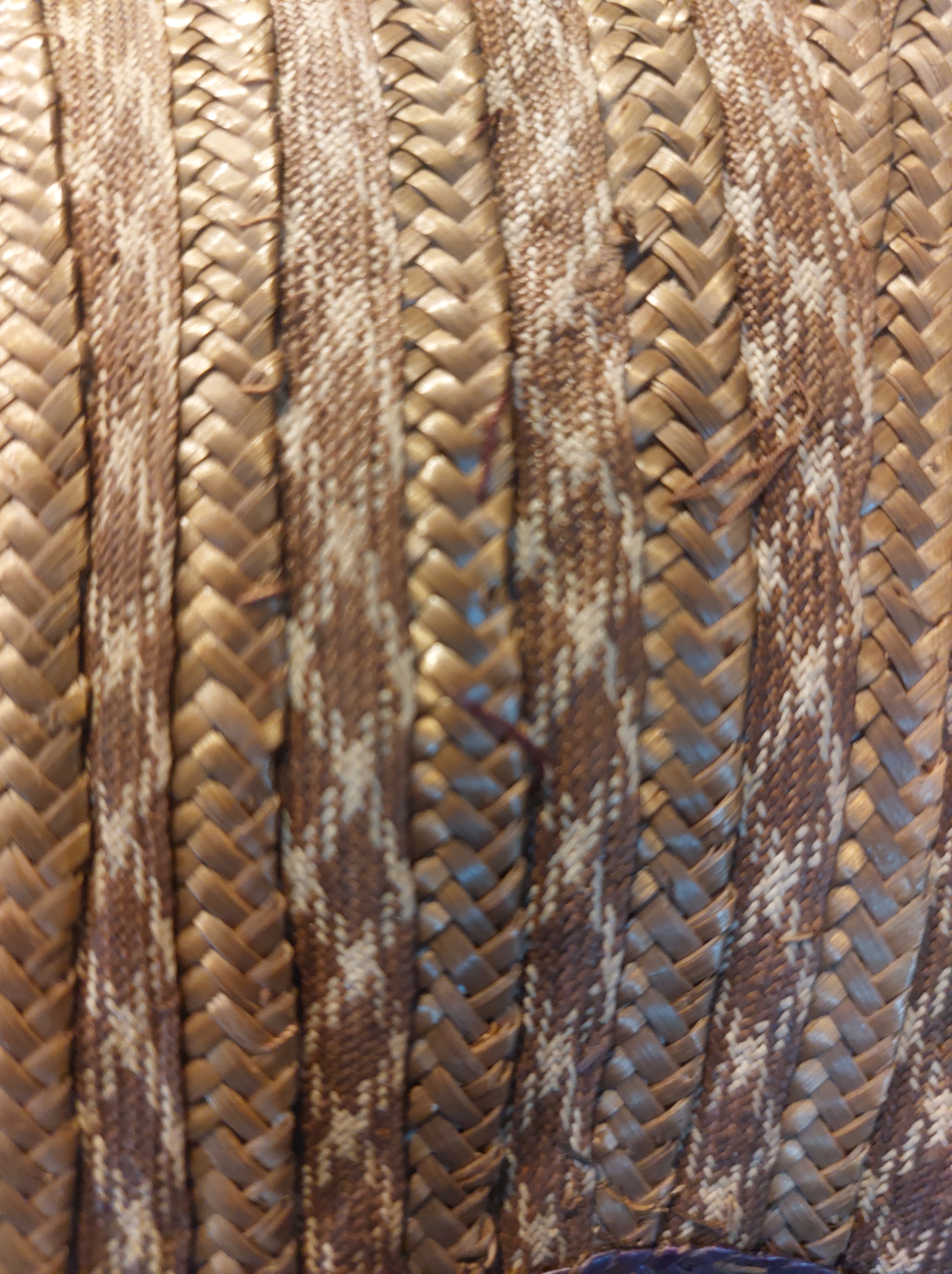
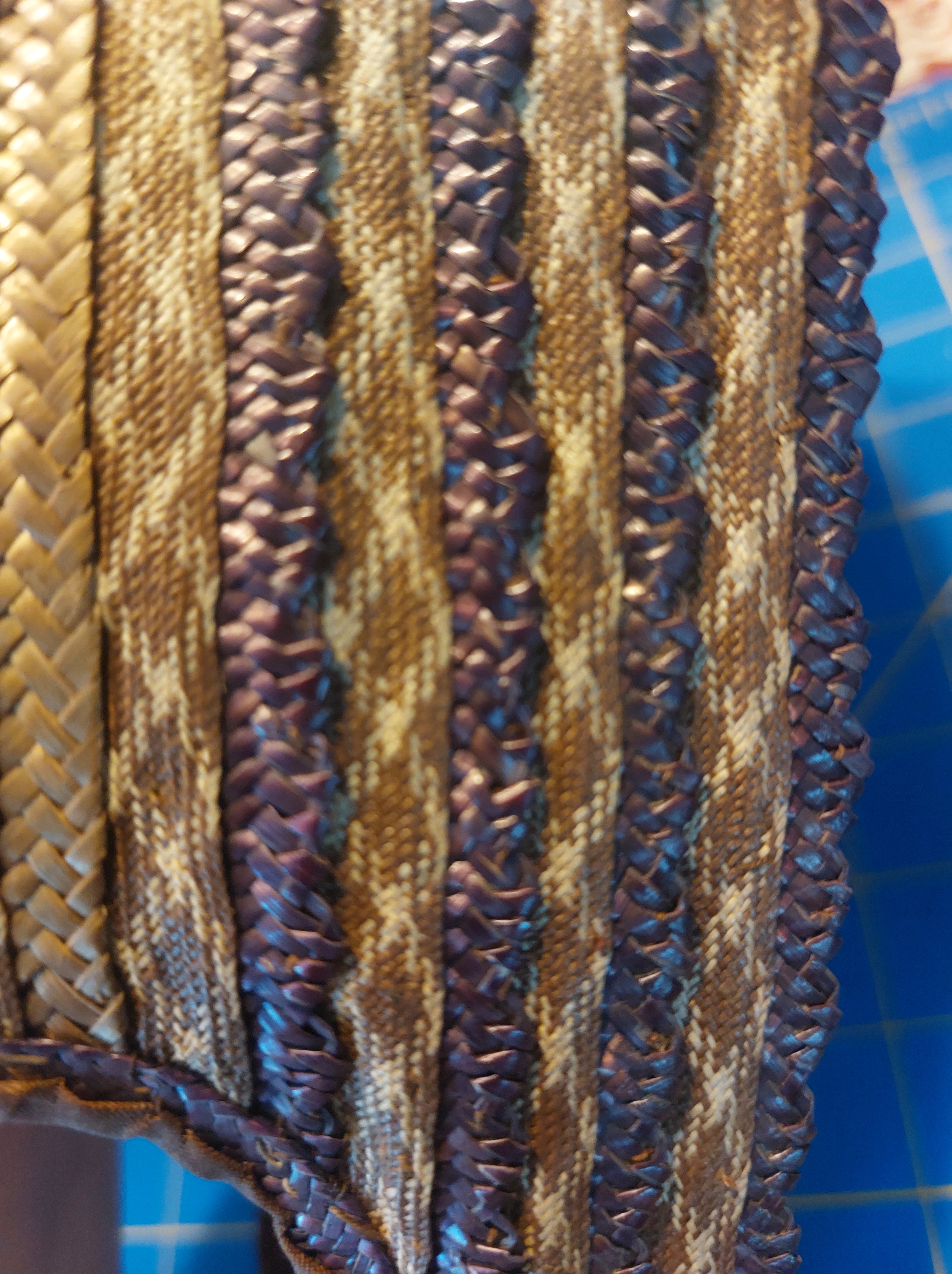
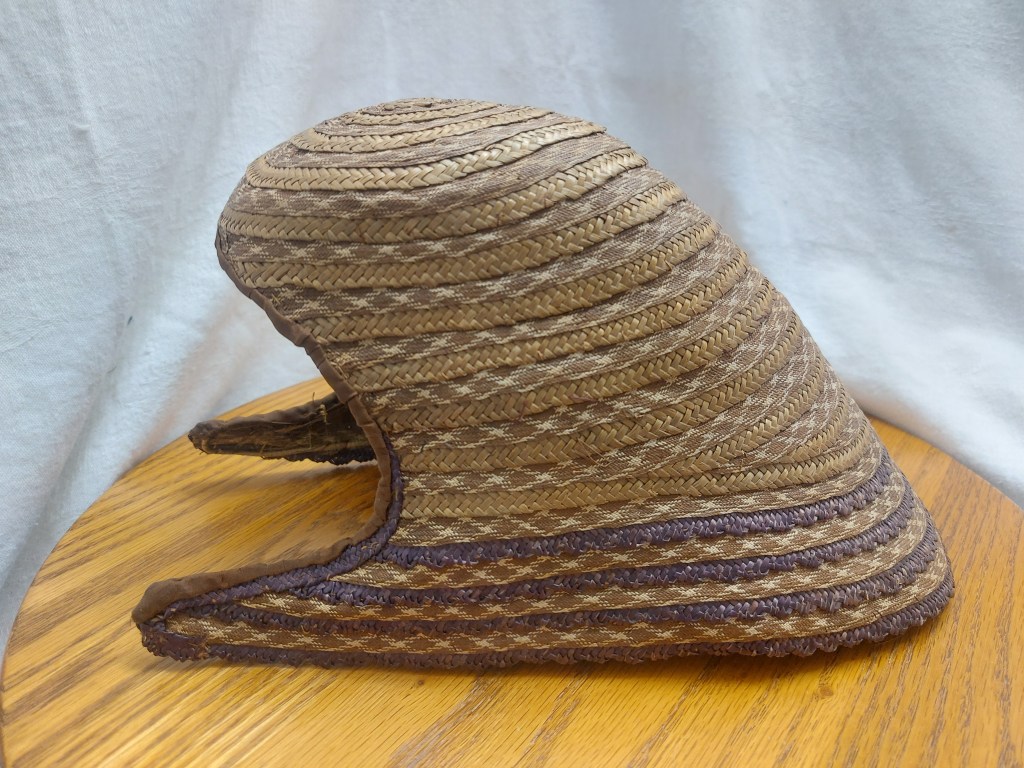
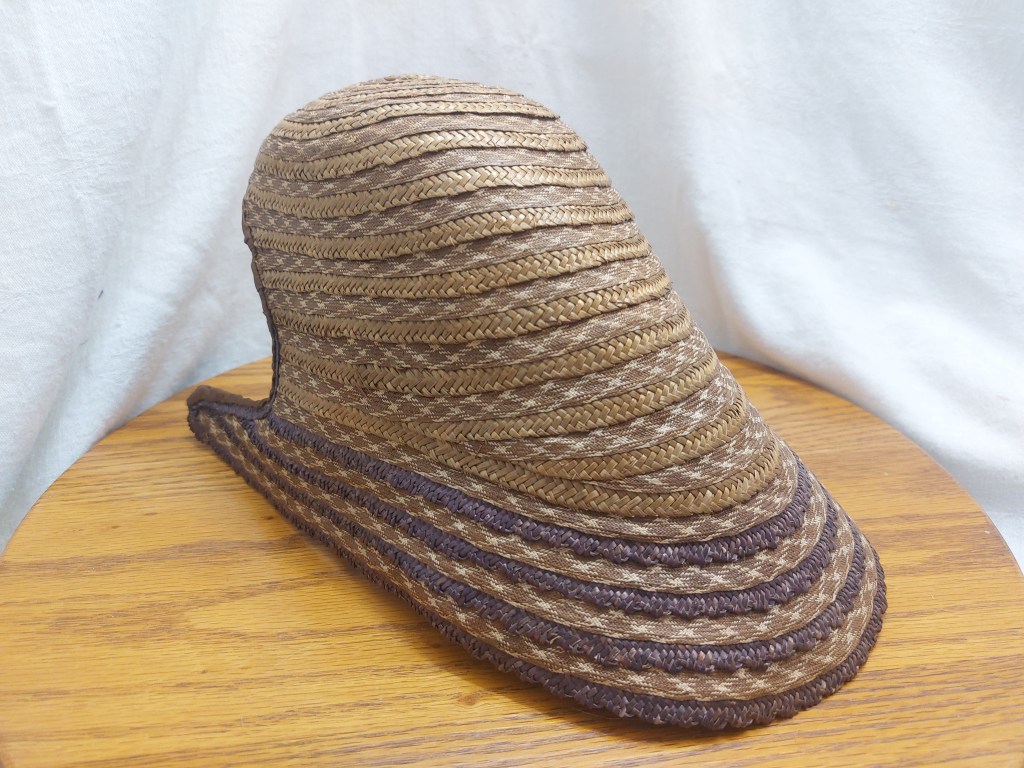
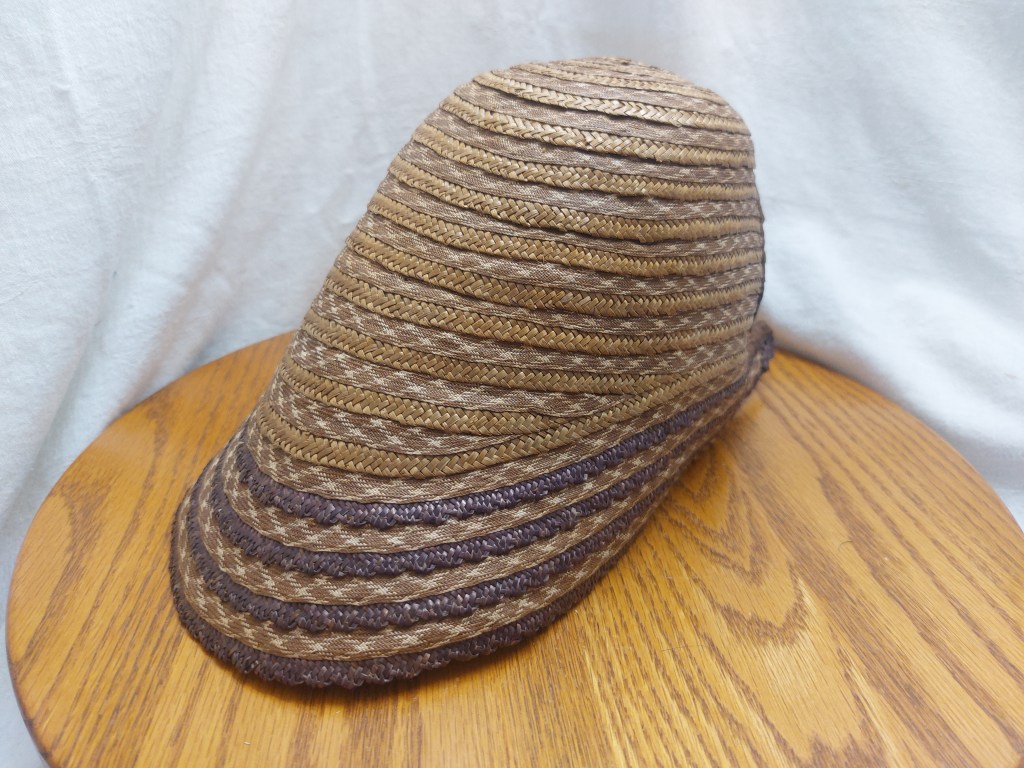
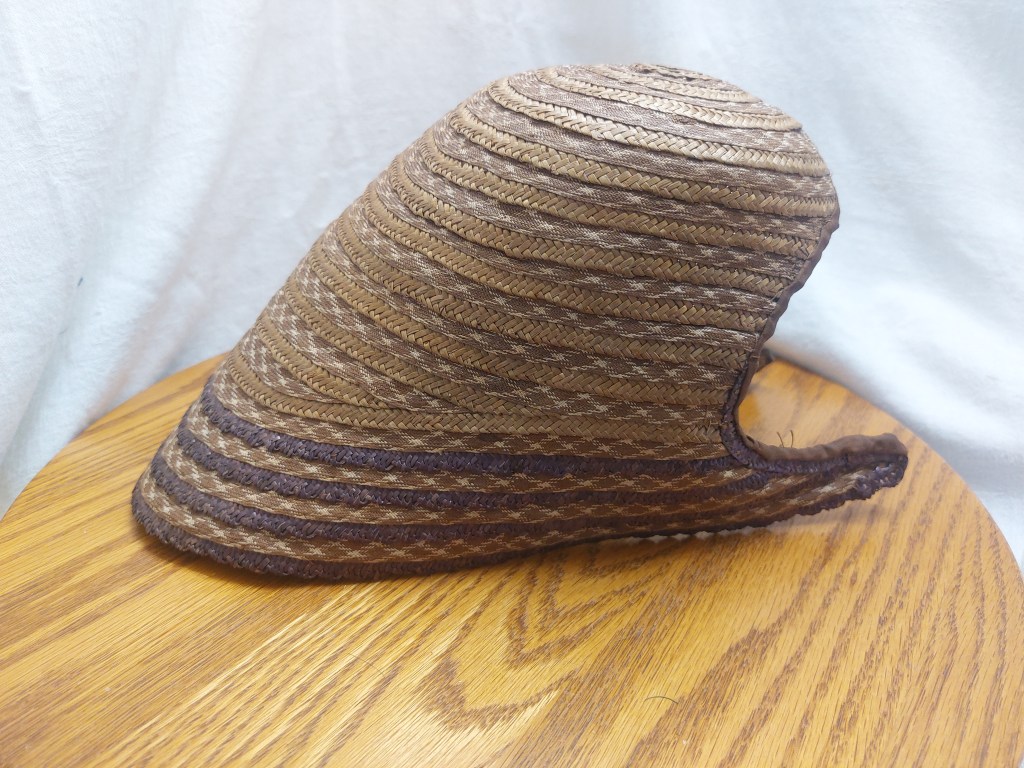
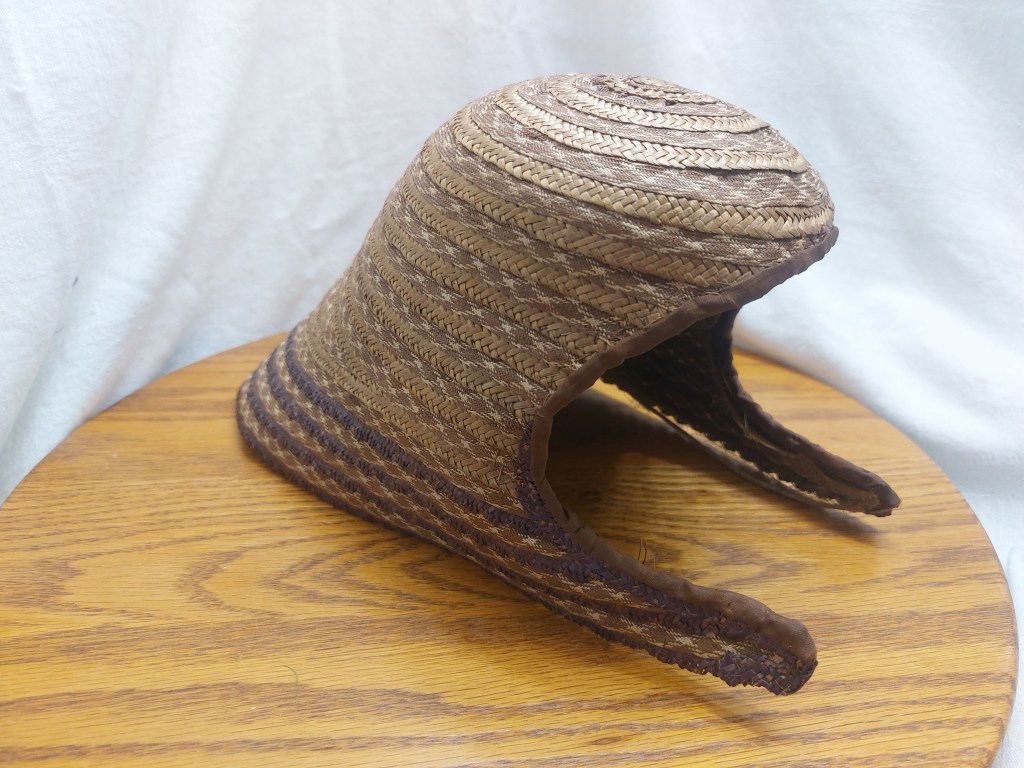
My goal is to try to make 20 pieces each month this summer. I want to offer a balance of bonnets and hat, both decorated and undecorated. I have been holding back some woven straw so I can offer some fancy woven pieces. I will be doing some Regency era and later Victorian pieces as well as the mid-century pieces.

In July, some of these pieces will need to go to the museum for the millinery shop interpretation first.

Summer To-Do List

  • The future Peppermint doll awaits her body and clothes. I may end up making her dress from red/white striped cotton instead of silk.
  • Finishing my new corset is a must early in the summer. I started it weeks ago but got stalled out.
  • I am considering making a large block quilt with some of the fabrics from the fabric swaps years ago.
  • I really, really need to spend some time walking in the woods and wandering aling waterfalls.
  • Then there are a bunch of small things I can’t seem to recall as I write.
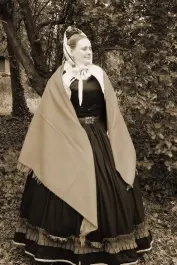
  • Hmmm….. and its about time I make either my green or brown wool dress.

Events

  • This weekend I have a strawberry pin cushion class. This is a modern crafty class at a local quilt shop.
  • Independence Day at GCVM is of course tradition.
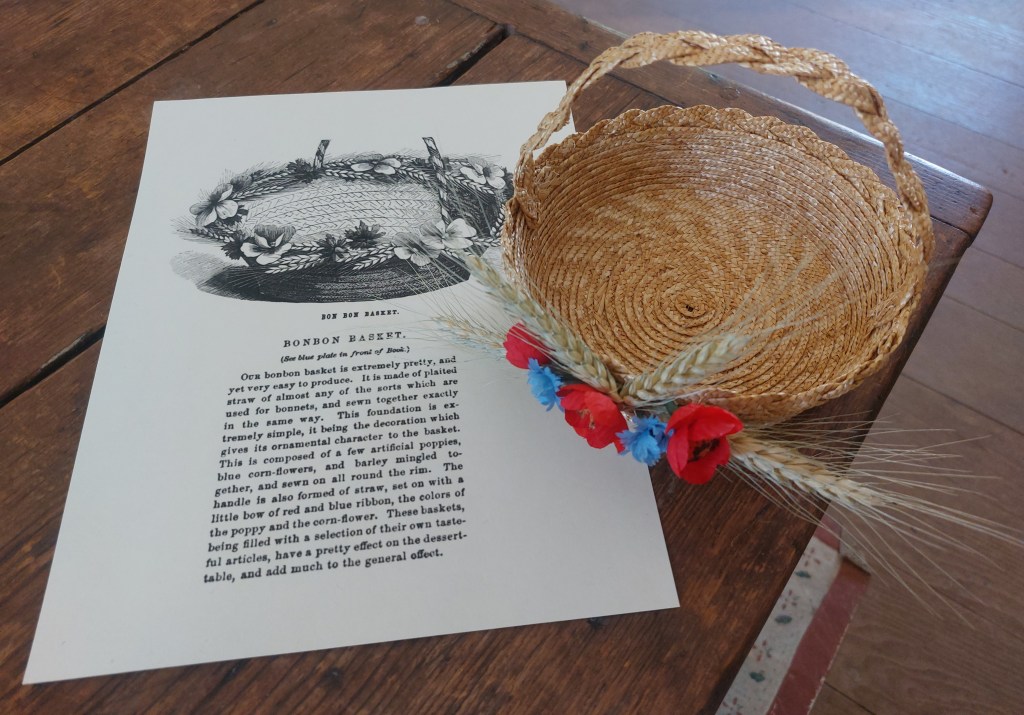
  • Chocolate Weekend is the 16th and 17th of July at GCVM. I will be talking about Victorian fancy work and chocolate while making a straw Bon Bon Basket, or two.
  • GCVM’s Civil War Living History Weekend is July 23rd & 24th. I will be setting up the women’s employments interpretation.
  • A local Old Fashion Day lands on the last Saturday of July. This is a relaxed event to sew and chat with attendees.
  • August is less packed with a tbd day or days for interpreting a new idea I’ve been working on. Plus one last weekend before I am back at school/work at the end of the month.

Additional Question

I have something else I am trying to think through. 🤔 Is there some digital content you wish I made available? Of I had a sister shop, what would you want to see there?

Published in: on June 19, 2022 at 6:05 pm  Comments (2)  

Summer Series – “How much did a milliner make?”

This is a harder question than it seems on the surface. A woman may take many roles from an assistant to an employed milliner to a millinery shop owner. Each of these roles could take place in a larger or smaller shop, in a large city, small city, or small town. 

Skill level and shop sales were factors as well.  In the agreement between Newman and Stout, Emma would initially be paid $8 per week. A clause was included that if after 6 months “if business is good”, her pay would increase to $9 per week. (The full document, with notes is available to Patrons in Patreon.)

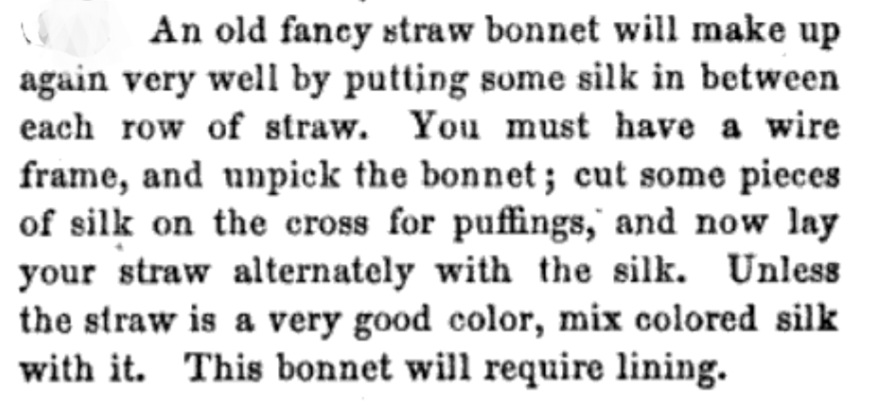
There are a few resources that help us understand what a milliner made.  Virginia Penny breaks down many of the rolls within the millinery industry in her book The Employments of Women. Penny looks at their pay as well as the training needed and some of the negative ramifications of some roles such as influence on health. This excerpt shows that overall some women in the role of milliner could make more than those making many other items. but the details show a wide range of income:

Looking at her more detailed sections, Penny breaks down her findings by city and type of job. Millinery shop assistants, who she calls “girls” are noted as being paid between $2.50 and $6 per week in Philidelphia in 1853. These are the young women who decorated bonnets and hats. In New York City, a shop owner would pay “first class workwomen” between $6 and $7 per week. Sales women in larger urban shops are said to have been paid $1 per day (Philadelphia, 1853.)

The workday would be long by our 21st century standards. This was true for both larger, urban millinery shops and smaller goods shops. Some passages I’ve read talk about work days starting before dawn, being fed quickly at the shop, and working until mid-night from Monday through Saturday. Penny accounts as slightly shorter day:

I called in a small store of dry and fancy goods, with which was connected a millinery. The young lady waited on customers, and in the intervals trimmed bonnets for the store. She received $1 a day, and is at the store by half past seven, and leaves at nine at night.”

It is important to understand the millinery industry was a seasonal one. Shop assistants were often employed for the spring and fall seasons with the work hours running from dawn to past nightfall during the busy times and minimal to no work during the off seasons.


I would be remiss if I did not include this particular passage of Penny’s. She is discussing the work and living conditions in New York City, including how they vary. She notes “On the back streets and avenues in New York, women work longer, and the stores are kept open later than on Broadway. On Division street, large cases of bonnets are exposed for sale in summer on the sidewalks. In the poorer portions of a city, people live much and sell mostly out of doors. Their crowded apartments and the high price of rent account for it.” Her observations differ from this shop owner:

“He [D., on Broadway] says his girls spend all they make on dress. He has two forewomen, to each of whom he pays $500 a year. They never save a cent. He had one to whom he paid $1,000, but she never aid by a dollar. Women, he thinks, have not as much originality of thought as men. They seldom invent. He would give $1.000 a year to a woman who would think for him, and originate styles, and combine and arrage the trimmings of his bonnets with taste. He walks Broadway, and studies the fashion of bonnets; but none of his women ever do. (Perhaps they have no time.) Women, he thinks, never acquire such proficiency as men. They advance to a certain degree in the art, and ever after are stationary. He thinks it is partly because they majority look forward to marrying, and partly because they are constituted that they are not susceptible of acquiring the highest decree of excellence. (I fear that D. does not consider that women have not had as much time nor so many opportunities for improving themselves as men, nor have they as much to stimulate them.) He pays women from $3 to $8 per week.”


Do you enjoy reading my blog? Do you find it helpful? Please consider supporting through Patreon or Sending a Tip..

Published in: on June 13, 2022 at 6:00 am  Leave a Comment  

Summer Series – Sneak Peek

Millinery Monday’s Summer Series kicks off tomorrow with the first of my visitor question posts.

Each week through the summer, I will answer one of the common questions I am asked by visitors when interpreting millinery.

Here is a sneak peek at the first few questions I will be writing about:

  • What is cottage industry?
  • How much did a bonnet cost?
  • What bonnet should I buy first?
  • Do you hand sew it all?
  • How much did a milliner make?

Do you want to be a virtual visitor and ask a question I may include in the series? Ask in the comments.

Published in: on June 12, 2022 at 11:55 am  Comments (1)  

Introducing a New Series

I enjoyed having a regular series of Monday posts through the Spring. This Summer, I will continue with regular Millinery Monday posts.

This Summer Series is inspired by what inspires me: Visitors

Each week’s topic will be a question from visitors, either a commonly asked question or a unique question.

Starting out, some of the questions that come to mind are:

  • How much did a bonnet cost?
  • What is Cottage Industry?
  • How much did a milliner make?
  • How long did it take to make that?

I plan to focus on one question each week. I expect more past questions to come mind and new questions as the summer progresses.

Published in: on June 6, 2022 at 6:05 am  Comments (2)  

Tools of the Trade: Millinery in the 19th Century

This past weekend, I did a presentation focusing on straw millinery as cottage industry. This developed out of a larger program I have been envisioning as Tools of the Trade, where an assortment of trades focuses on the tools they use.

I had planned on sharing the details of my plan following the event. As you read on Saturday, that is not where my mind was come that evening. With some delay, here is the breakdown of what I had in mind.

The goal – Open discussion about the different roles within the millinery trade and the materials used.

The tools and supporting materials (tools in bold):

  • Natural straw stalks
  • Straw Splitter
  • Split straw
  • Straw being braided
  • Braided straw
  • Straw hat in progress
  • Straw hat completed (easier to visualize than a bonnet)
  • Bonnet or hat block
  • Flower petal or leaf dies
  • Cut silk petals/leaves
  • Examples of completed flowers
  • Ribbons
  • Sewing work box with needles, thread, scissors, etc

Last minute, I made a reference book with images of original blocks and illustrations/photos of womenworking with straw. I’ve been trying to bring more reference materials with me in case visitor discussion needs it. For other recent events, I’ve brought reprinted books. This compilation was lighter and more condensed.

A similar interpretive discussion display could be created focusing on dressmaking. Tools included for discussion prompts could include a pinking machine, sad iron, flutting iron, and an equipt sewing workbox.

  • An equipt workbox
  • Sewing bird
  • Sad iron
  • Fluting iron
  • Pinking machine
Published in: on May 31, 2022 at 9:06 am  Leave a Comment  

Neck Closures

Every so often I start writing a post…. then…. it gets forgotten in the depths of the draft folder. This is such a case.

This first set of images uses a National Geographic microscope attachment. This magnification tool is sold as a toy, but can be quite useful. It attached to my previous phone very easily. (I have yet to try it on my new phone with its many camera lenses.)

Here I am using it with an assortment of CDVs. Each shows the neck closure in magnification.

Published in: on May 29, 2022 at 6:06 am  Leave a Comment  

Respite

Respite. Not a word you would normally expect as an article title on a historical interpretation blog. Not a word I would have expected to be using.

That is what today was for me: Respite

This week was difficult… shocking…heartbreaking. It started Monday morning at 6am and kept shocking me through Wednesday when I realized my legs were shaking in class from mental exhaustion. As Friday came, I questioned if I should be trying to do today or if staying in bed was best.

I am so glad I stuck to my commitment.

Today was truly a day of respite. I was able to relax my mind and body. I think I was even able to rejuvenate a little.

I had excellent, meaningful conversations with visitors.

I was able to share the story of women and straw with them. I feel as though I was truly able to communicate fully the important connection I see between straw millinery and everyday women’s history. This meant a lot.

Here is an iceberg tip:

My focus was meant to be on tools of the trade for the day because of the museum’s antique show taking place. With the weather being rainy, I realized the pinkers would not work at all and that negated the storyline of some of the other machines/tools I had in mind. So, I focused on the tools of the cottage industry end of millinery. I am very glad I did because this let me truly focus on that part of the story as it builds into the whole story. The other way around, the women sewing and plaiting at home seems to be lost. As I talked today, the power of a tiny straw splitter really grew for me. The idea that a tiny tool, small enough to disappear in a hand or be lost in the dirt, was the starting point for turning a tubular grass into a durable, lasting pieces of clothing, was wow.

As I talked today, I finished the closest hat, which I will wire tomorrow.

Published in: on May 28, 2022 at 9:18 pm  Comments (1)  

Exclusive Patreon Content

Did you know I share Exclusive Content on Patreon??

I do!

I share Exclusive Content about extant items and original documents on Patreon. Sometimes it is Victorian fancy work. Sometimes it is millinery history. Past content has included:

  • “The Milliner’s Girl” an excerpt from The Women of New York
  • Squirrel!!!! (My squirrel pocket’s design)E
  • Eva’s Book and Excerpts from Eva’s Book
  • Repaired! a look at how I repaired a miniature millinery block
  • Straw Explorations – A look at straw motifs and learning to make them
  • One Hundred Presents an excerpt from St. Nicholas’s Magazine
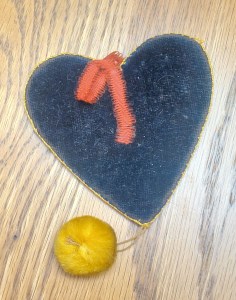
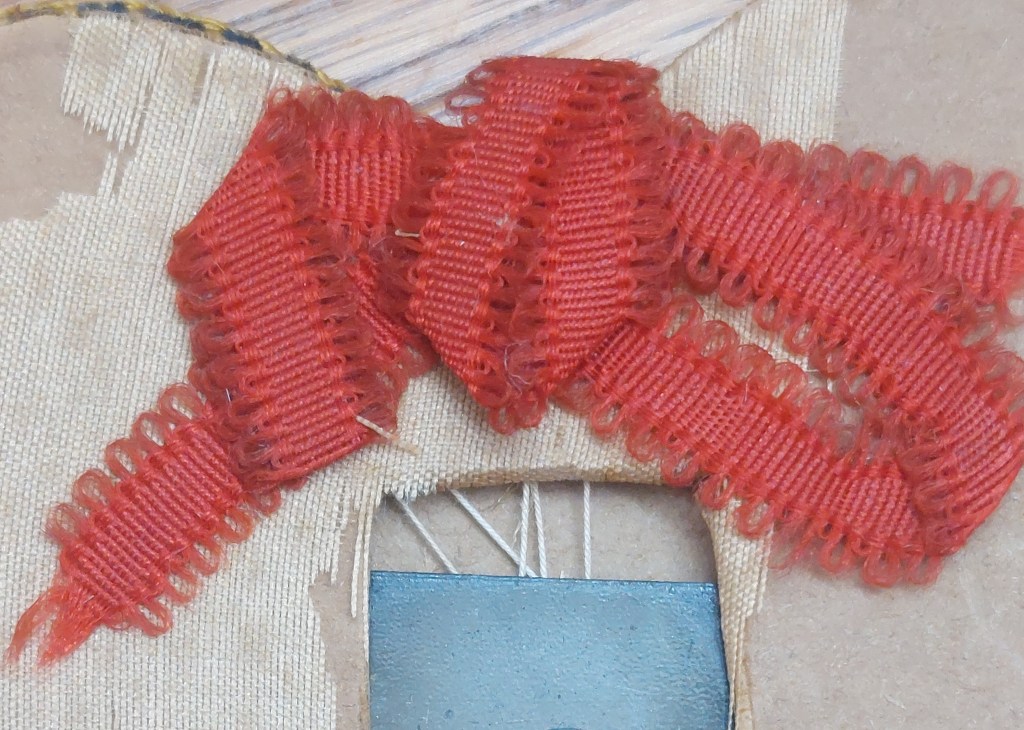
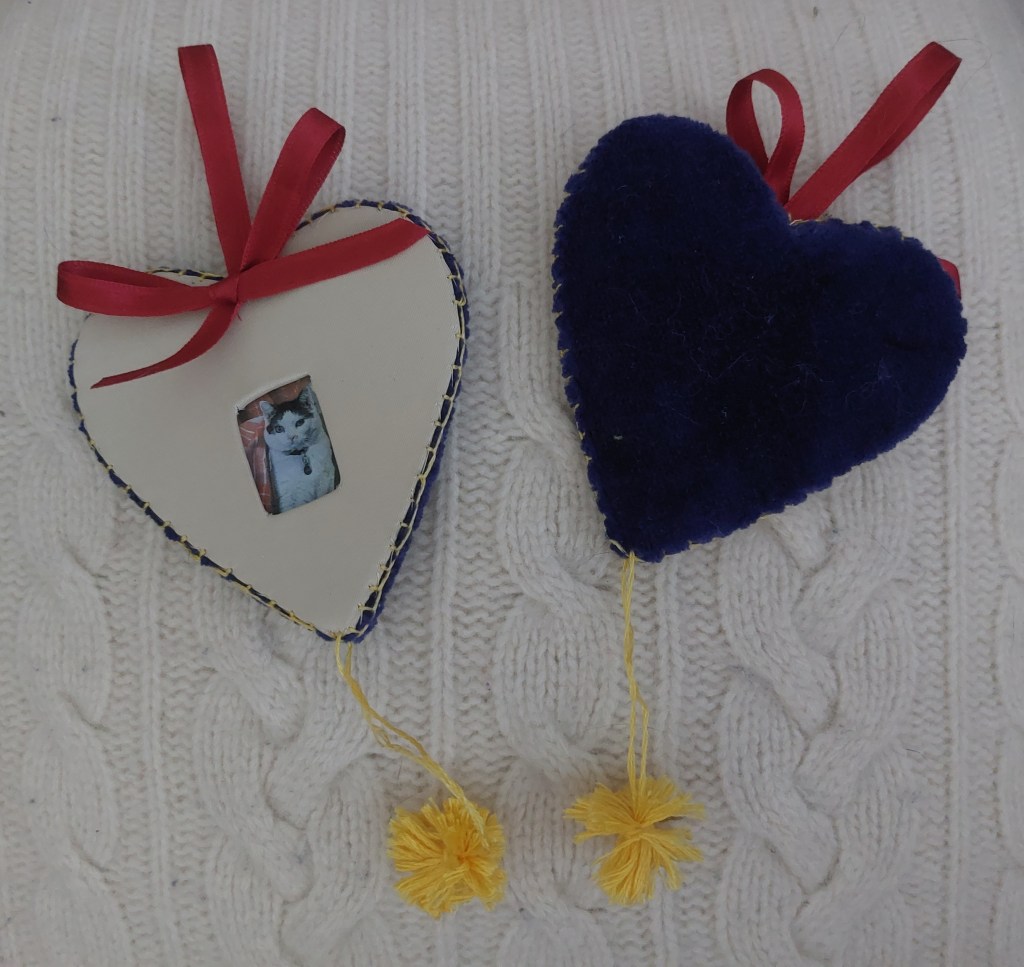
  • In Detail Exclusive: Heart Pin Cushion
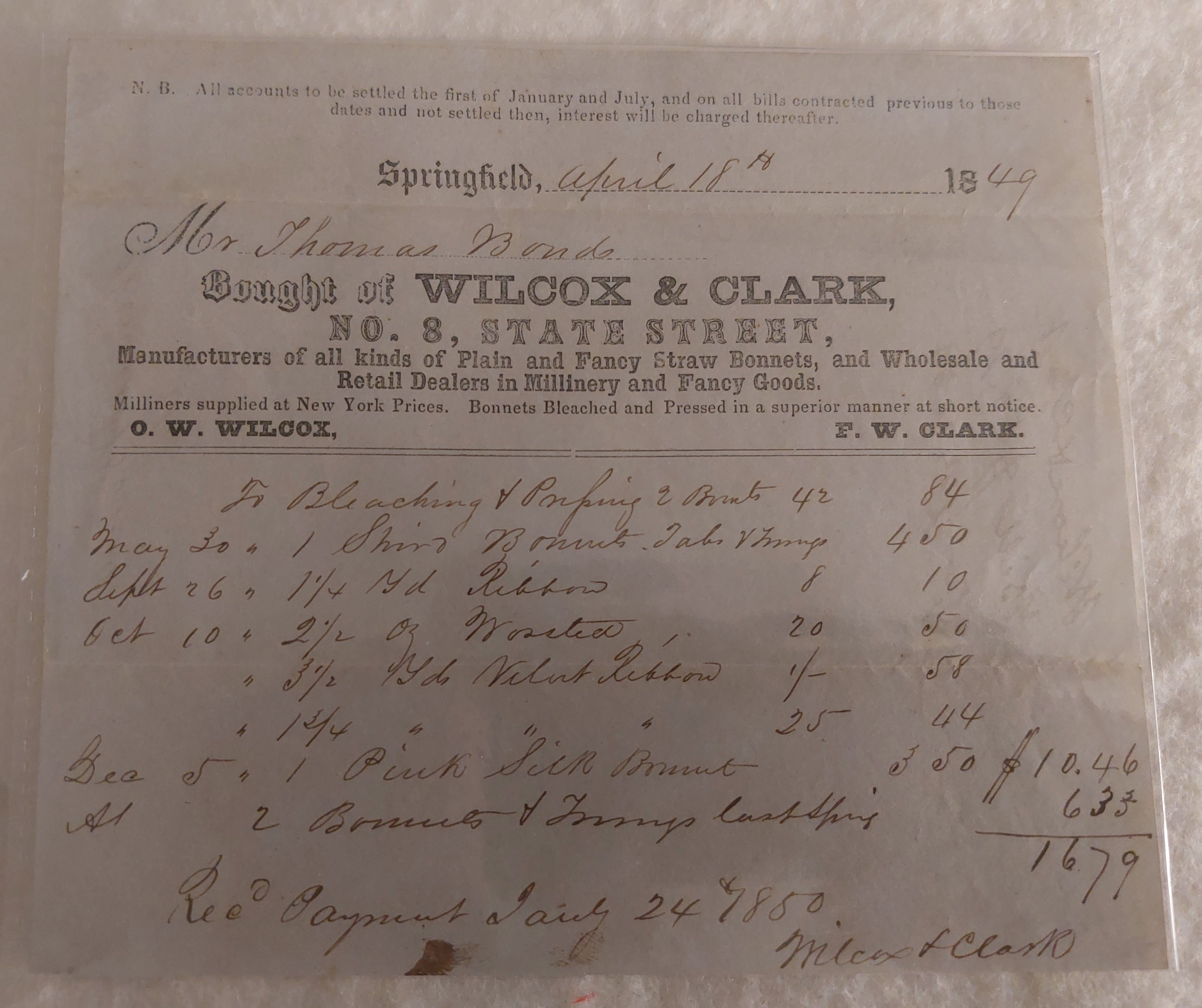
  • An original millinery bill
  • Original straw bonnets and restoration exploration

Patrons also get access to In Detail publications as they are created. (Initially these were emailed. Then I discovered I could share them right in the posts.)

You can find me under:

A Milliners Whimsy

Capture+_2020-03-22-11-36-10-1.png
Published in: on May 24, 2022 at 4:55 pm  Leave a Comment  

Millinery Monday Wrap-up

We’ve reached the end of my 3 month long series of Millinery Monday re-post. The idea was to share popular and useful previous posts each week. As we close and I plan ahead, I have a couple questions:

☆ What was your favorite post or topic?

☆ Is this type of regular series helpful?

☆ If you linked to a post from social media (such as Facebook or Instagram) did you read other posts while you were here?

☆ What did you find most useful?

☆ What would you like me to write about in future posts?

The ReShare Posts of the Last Three Months (plus a few others)

  • March 14 – Got Perch?
  • March 21 – Measuring Your Head for Mid-19th Century Hats
  • March 28 – Common Hat Styles
  • April 4 – Where Can I Wear That Hat?
  • April 7 – Oh Where, Oh Where… What Should I Wear…
  • April 11 – How They Wore Their Bonnets
  • April 12 – Why is this Good … Looking at Clothing
  • April 14 – I got this Hat. Now What?
  • April 15 – Making Friends With Your Bonnet
  • April 18 – Millinery Care and First Aid
  • April 18 – Hair Essentials Kit
  • April 28 – Wearing the Mid-Nineteenth Century Hat
  • May 2 – Improving Your Impression for Less than a Pizza
  • May 9 – Hairnets – The Basics and More Indepth
  • May 16 – Finishing a Straw Bonnet
  • May 16 – Veil 101
  • May 23 – The Weather Outside is…. Drenching
Published in: on May 23, 2022 at 1:00 pm  Leave a Comment  

The Weather Outside is…. Drenching

I am reposting favorite helpful posts each Monday throughout March, April, and May. This post will wrap-up this series. Starting in June, I will share posts focusing on the the questions I am asked most often when Intepreting.

With this soak-you-to-the-bone weather leading up to and likely through the weekend event, I am thinking about ways to keep dry. As I think through my list, I realize most of them won’t happen because the bits and pieces needed are buried deep in storage. That doesn’t mean I can’t share them with you.

  • Reenacting events inevitably mean walking, likely through grass or even mud. With wool boots, I find my rubber over-shoes a must. They slip right over my boots covering up to about my ankle. Extant rubber over-shoes were found when the Steamboat Arabia was uncovered. Those made by Tingley seem to be the closest.
  • Just in case, still pack extra stockings or socks for everybody.
  • A wool coat can help keep the wet off of most of you. A long paletot gives you great flexibility in the arms while buttoning up the front to keep you dry.
  • If you don’t have a coat, consider the largest, plain or plaid wool shawl you have. Wrapping this around you will help keep you dry.
  • We talk a lot about parasols in reenacting but not much about umbrellas. Use an umbrella, a period umbrella of course.
  • Skip the fashion bonnet. Instead opt for a sunbonnet or for a hood. Water can cause a bonnet to soften, warp and even run.
  • If you carry a bag, make sure it is water-resistant. You may want to try a pocket instead. A pocket hidden under layers of skirts can usually stay dryer than a bag carried out in the open. If you must carry medicines or modern technology put them inside painted canvas bags or zip-lock bags just incase.
  • For larger bags, choose one with a heavy carpet and good closure. If it has a leather or painted canvas bottom, even better. Leave the bandbox at ‘home’.
  • You will be happier with your tent if you have sod-flaps and overlapping doors. Also put down a good water barrier under your flooring. I find a wool rug helps control the moisture better than other fibers.
  • Inside your tent let wool rule. Wool rugs on the ground help keep the area more comfortable. Put a wool blanket layer over your cot or ticking first. Be sure it drapes almost to the ground on each side. This keeps the moisture from coming up from underneath. Make you bed how you prefer. Then cover it all with a wool quilt or blanket. This will keep the moisture from getting in during the day. If you are sensitive to a moist pillow, wrap it with an extra wool shawl during the day to keep it dry.
  • Don’t hang your clothes. Put them in a trunk or box with a layer of wool covering them to help keep moisture down. You may consider a layer of wool on the bottom as well.
  • As you settle in for the evening, light a candle or two (safely). Whether the candles really do help cut the moisture or not, they help psychologically.

What do you do if you do get drenched?

  • If you can lay or drape your dress flat that will be best. Hanging it can cause it to stretch under the weight of being wet. If you have a trim that can run, be sure to lay the dress so the fabric does not lay back on itself particularly the trim.
  • If your bonnet get damp, set it up on a hat/bonnet stand. If you don’t have on make-d0 with something like the back of a chair. Do not lay it on its side because it will warp.
  • If your bonnet gets particularly wet, try to blot the trimmings so there is no running water. If your flowers are pinned in or on, consider removing them so they will not run on the bonnet itself.
  • If your boots get wet inside, stuff them with newsprint or fabric to absorb the water. Do Not put them near the fire as they can be damaged. (most warranties do not cover fire damage)
  • If your corset gets wet, layer it inside material to press out any excess moisture. Drape it over the back of a chair to dry.
Published in: on May 23, 2022 at 6:05 am  Comments (1)