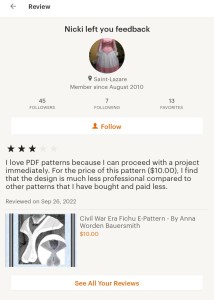
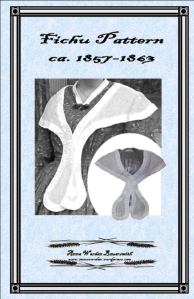
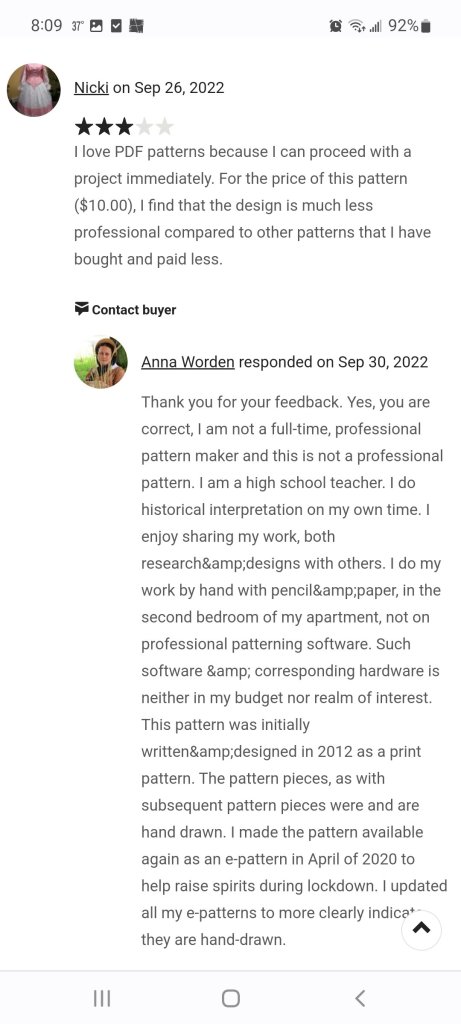
I received this review for my Fichu e-pattern. I would like to reply to this feedback, but I do not see where I can do so in Etsy. So, I will here.
Thank you for your feedback. Yes, you are correct, I am not a full-time, professional pattern maker and this is not a professional pattern. I am a public high school teacher. I do “historical interpretation” on my own time. I enjoy sharing my work,, both research and designs with others. I do my work by hand with pencil and paper, in the second bedroom of my apartment, not on professional patterning software. Such software and corresponding hardware is neither in my budget nor realm of interest.
This pattern was initially written and designed in 2012 as a print pattern. The pattern pieces, as with subsequent pattern pieces were and are hand drawn. I made the pattern available again as an e-pattern in April of 2020 to help raise spirits during lockdown. I updated all my e-patternsto more clearly indicate they are hand-drawn.
Feedback is important. It allows us to reflect and evolve in our art,, craft, and/or work.
Being a decade old, it maybe time to retire my Fichu Pattern as I recently did my first winter hood pattern.
To help me decide, for the month of October my Fichu e-Pattern will be half price. I invite you to take a look and let me know in the comments on this post if I should retire it at the end of the year.
Edit: I found the place to respond in Etsy. I had to edit my response a little to get under the character limit:
My local meteorologist shared the annual map of fall foliage showing the percentage of change from greens to autumnal colors. As the many shades of yellows, golds, oranges, reds, and burgundy over take the landscape, now is the perfect time to venture out to collect a few leaves for those little sewing projects. The Victorian work-table found many uses for leaves, both found and imagined. Both ladies’ and children’s literature abounded with projects from penwipers to pin keeps to shaving papers to fire screens. As you wander the falling leaves in all their colors, here is a sampling of projects to try. (Don’t worry. If you don’t have leaves to collect, you can use your imagination to create your own.
A Shaving-Paper Case. This is a nice thing to make for papas and grown-up brothers.For a pattern take a grape leaf, lay it down on card-board, draw round its edges with a pencil, and cut the paperin the same shape. Buy half-a-dozen sheets of tissue-paper, red, blue, white, green and yellow; fold them over four or eight times, according to the size, lay your card-board pattern down over them and cut the shape roundwith sharp scissors. It is on these soft sheets of thin paper that the razor is to be wiped clean. Make the cover ofthe same form, in green silk, or cloth, or Japanese canvas. Overcast the edge, or bind it with ribbon and imitatethe veins of the leaf with long stitches of green sewing-silk. The tissue-paper grape leaves are inserted between the outside leaf-covers. There must be a loop of ribbon at the stem end of the leaf to hang it up by. (One Hundred Christmas Presents, and How to Make Them from St. Nicholas’s Magazine, December 1875
Leaf Pen-Wipers. The directions for making a shaving-paper case will enable you also to make a leaf pen-wiper, except that younow require a smaller leaf for your pattern (say an oak or maple leaf), and you put leaves of black cloth instead of tissue-paper between the two outside leaves. These outside leaves should be the color of the leave whose pattern is chosen – red or yellow for maple, and brown for an oak, unless you prefer green. (One Hundred Christmas Presents, and How to Make Them from St. Nicholas’s Magazine, December 1875)
A Leaf Pen-Wiper. Your pattern for this must be a beech-leaf again, – a long one this time, – or you make trace the shape from the illustration. Outline the shape as before, and from the model thus secured cut six leaves in flannel – two green, two brown, and two red, or red, white and blue, or any combination you like. Snip the edge of each leave into very tiny points, and chain-stitch veins upon it with gold-colored floss. Attach these leaves togetherby the upper ends, arranging under them three triply pointed leaves of black broadcloth or silk to receive the ink, and finish the top with a small bow of ribbon. (A Budget of Home-Made Christmas Gifts. St. Nicholas’s Magazine, December 1877)
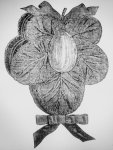
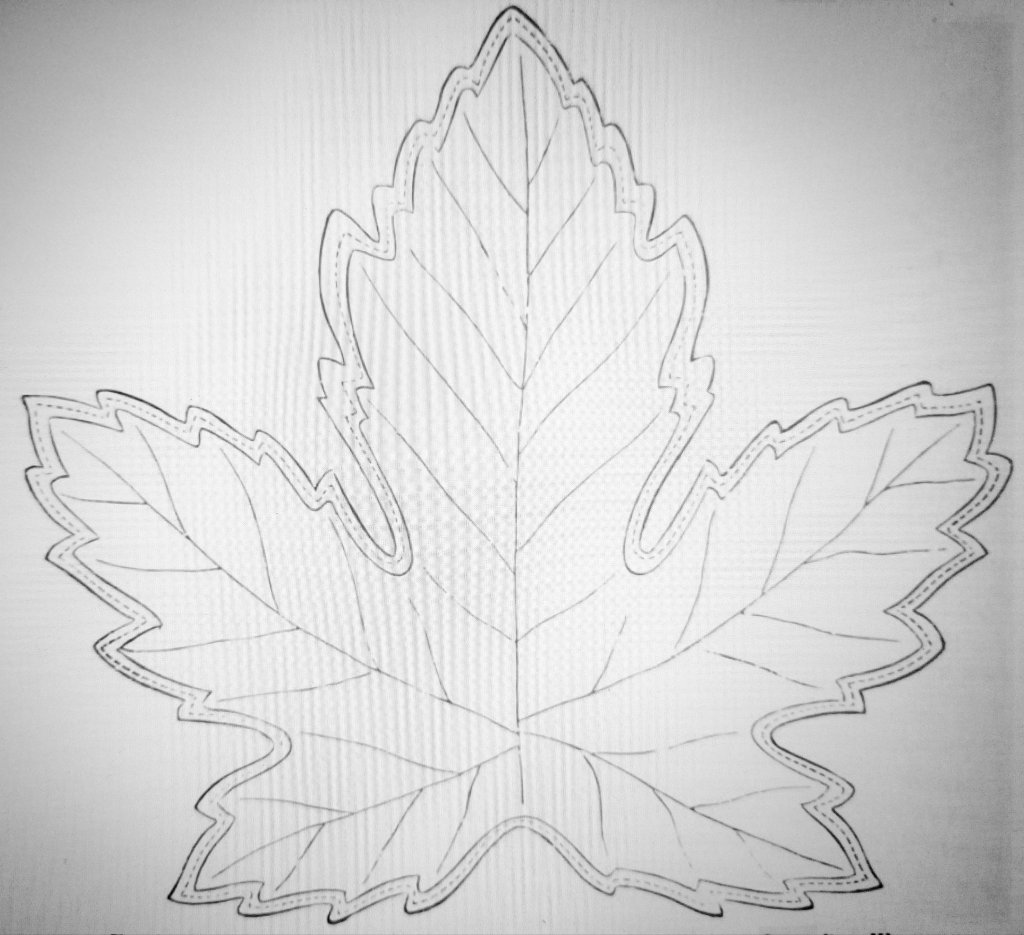
A Leaf Needle-Book. For this needle-book you will need the following materials: One-eighth of a yard of crimson or greenvelvet, one-eighth of a yard of lining silk to match, one-eighth of a yard of fine white flannel, two skeins of whitesilk floss, a bit of Bristol-board, and a half yard of narrow ribbon. Cut in the Bristol-board a couple of leaf-shaped pieces like the illustration. Cover each with the velvet, turning in the edges neatly, line with the silk, and button-hole both together all round with white glass. Stitchthe veins in the leaves with the floss, held tightly, so as to depress the lines a little. Cut three leaves of flannel inthe same shape, button-hole the edges, lay them between the leaves and fasten all together at the top with a bow of ribbon. A tiny loop and button should be attached to the point to hold the needle-book together. (A Budget of Home-Made Christmas Gifts. St. Nicholas’s Magazine, December 1877)
Household Ornaments – Pen Wiper. Miss Lizzie Holmes, of Des Moines Co., Iowa, sends us the following sketch and description. (The engraver hasmagnified the leaf-veins to an unnatural size, in order to show the stitches. The engraving is a little more thanone-third the size of the article itself.) “A very pretty Pen Wiper may be made as follows: Cut two pieces ofblack, gray, or brown cloth, the shape of the above pattern. Work the veins on one leaf with green silk orworsted, in chain or herring-bone stitch, and on the other with red. Then cut two pieces of black silk of the same shape, and baste on the underside of each leaf as a lining; finish the edge of each in button-hole stitchwith worsted or beads. Cut half a dozen leaves of some soft, black material, and lay between the two covers, fastening at the stem with a bow of narrow ribbon, or covered wire.” (American Agriculturalist, 1868. https://hdl.handle.net/2027/mdp.39015082453773?urlappend=%3Bseq=153%3Bownerid=13510798897170707-159 )
Needle-book. – This we think a very captivating pattern. The five leaves that form one side are covered withgreen silk, gathered in the center and veined with gold beads. Each leaf is bordered with a cross-stitching of corn-colored silk, and edged with chain-stitch. It may be lined with crimson, and the white flannel leaves thathold the needles inside edged with crimson in buttonhole stitch. Over the joining of the leaves is placed the half of an English walnut shell, the perforations necessary for attaching it each covered with a large gold bead. Theribbon bows may be either green or brown. (The Lady’s Friend, 1864 https://hdl.handle.net/2027/umn.31951000753433o?urlappend=%3Bseq=486%3Bownerid=13510798903022 398-512 )
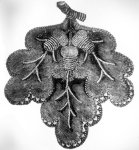
Penwiper. Materials.- Scarlet, black, or green cloth or velvet; black mull muslin; gold beads; green and brown embroidery chenille; silk. Cut out from the cloth or velvet two leaves of the shape and size of the design. Work the edges with thebutton-hole stitch in silk, the acorns with the green chenille, and their cups with gold beads; the veins of the leaves are in gold beads. Make a little branch of wire for the holder, cover it with brown chenille, and work the upper part of the stalk also with brown chenille. Cut four or five inner leaves of the mull for wiping the pens; notch the edges and fasten them between the two worked leaves. (Godey’s Lady’s Book, 1868 https://hdl.handle.net/2027/mdp.39015067908890?urlappend=%3Bseq=171%3Bownerid=135107988870492 83-171
The Leaf Penwiper This can be easily made out of odd pieces of cloth or cashmere. Three leaves each cut four inches and a half long, and two inches and a half wide at the widest part, are to be worked through the center with sik of some slightly papped at the top and fastened with a velvet or ribbon bow. These form the outer part; and the under leaves, which are to be used, can be made of black cloth, cut in one piece in the shape of the outer leaves after they are joined; only a little smaller. (Demorest’s Family Magazine, 1874 https://hdl.handle.net/2027/umn.31951000970016t?urlappend=%3Bseq=929%3Bownerid=1351079890267 0568-953 )
“Leaf Penwiper. “Choose a pretty maple or oak leaf for the pattern of your penwiper, and select cloth of a color that would suggest the leaf, – reddish-brown for an oak, or yellow for a maple. Take a paper pattern of the leaf bylaying it on stif paper, tracing the outline with a pencil, and then cutting it out with a pair of scissors. Cut out two leaves of your brown or yellow cloth, and three inside leaves of chamois-skin or broadcloth. If you like, you can imitate the veins of a leaf by embroidering them with silk in stem-stitch on the upper leaf of the penwiper.” ( The American Girl’s Home Book of Work and Play, 1902.)
“Leaf Pen-Wiper. – Work a leaf in green cloth, with the veins all marked in lighter silk, and black pieces underneath. Any shaped leaf can be taken; a fern will do even, as the pinnules can be worked on it to imitate the shape tolerably.” (Three Hundred Decorative and Fancy Articles for Presents, Fairs, etc. by Lucretia Peabody Hale, 1885.)
A Leaf Pen-Wiper. Your pattern for this must be a beech-leaf again,—a long one this time,—or you may trace the shape from the illustration. Outline the shape as before, and from the model thus secured cut six leaves in flannel—two green, two brown, and two red, or red, white and blue, or any combination you like. Snip the edge of each leaf into very tiny points, and chain-stitch veins upon it with gold-colored floss. Attach these leaves together by the upper ends, arranging under them three triply pointed leaves of black broadcloth or silk to receive the ink, and finish the top with a small bow of ribbon. (St. Nicholas Magazine for Boys and Girls, Vol 5, 1877.)
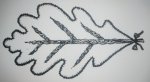
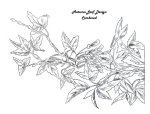
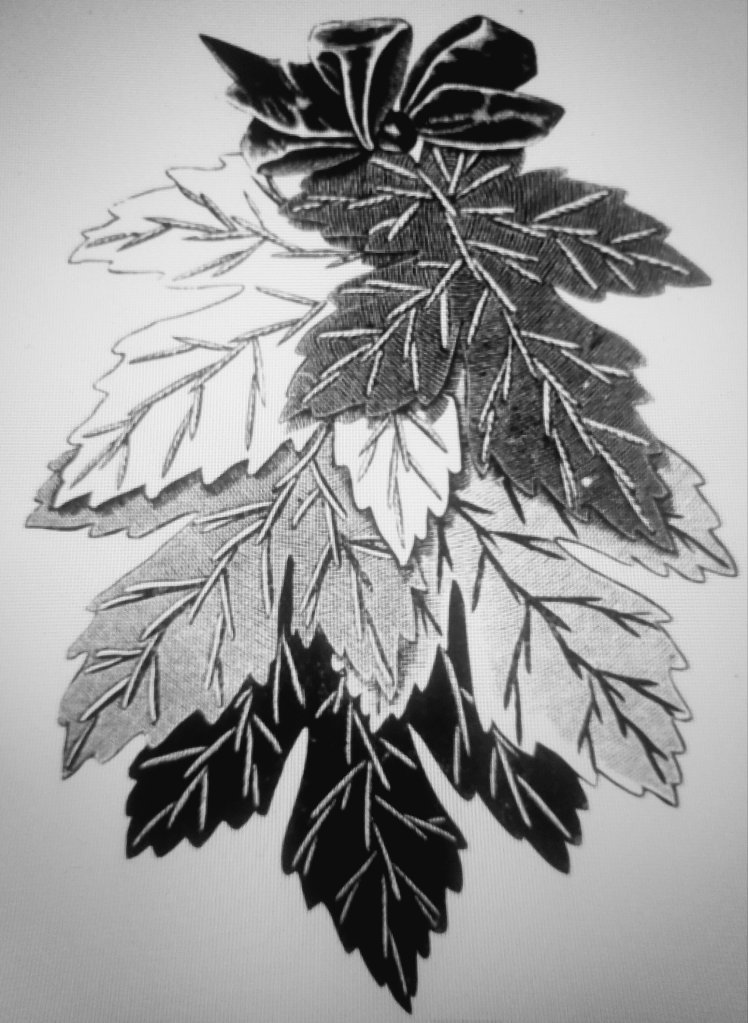
Now, this is where I am going to get a little sloppy. I sprained my wrist at a yardsale. So….. The 1888 edition of Needle and Brush has several projects of leafy goodness including a cluster of wool leaves for a pen wipe and a two page design for embroidery or painting. I did my best to clean up the design and make it printable (in Paint and Publisher with my less dominant hand.) I sized the design in two ways and reversed it. I would love to see it worked up.
Autumn Leaf Pen-Wiper
Do let me know if you make any of these autumn leafinspiredpieces.
Do you enjoy reading my blog? Do you find it helpful? Please consider supporting through Patreon or Sending a Tip.
I have two more mini witch hats for you tonight. One, the one marked M6, has a larger headband for a larger head. Actually, I cut the band and set it differently. I likely won’t have a hat for Friday evening because my hand needs to rest tonight.
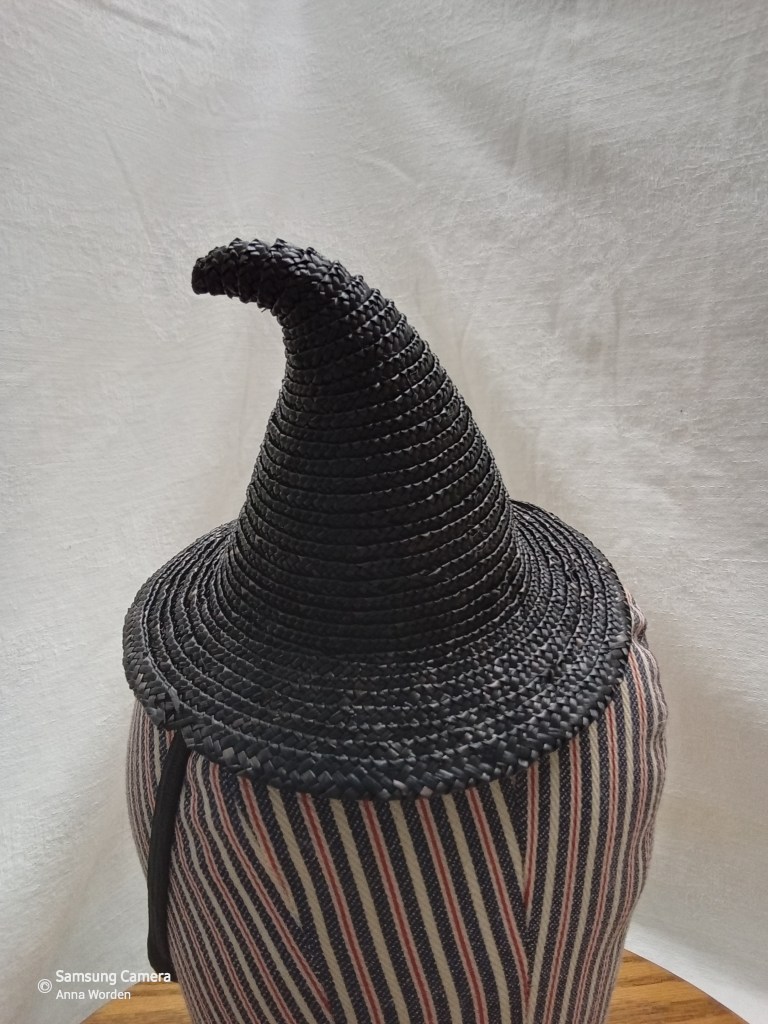
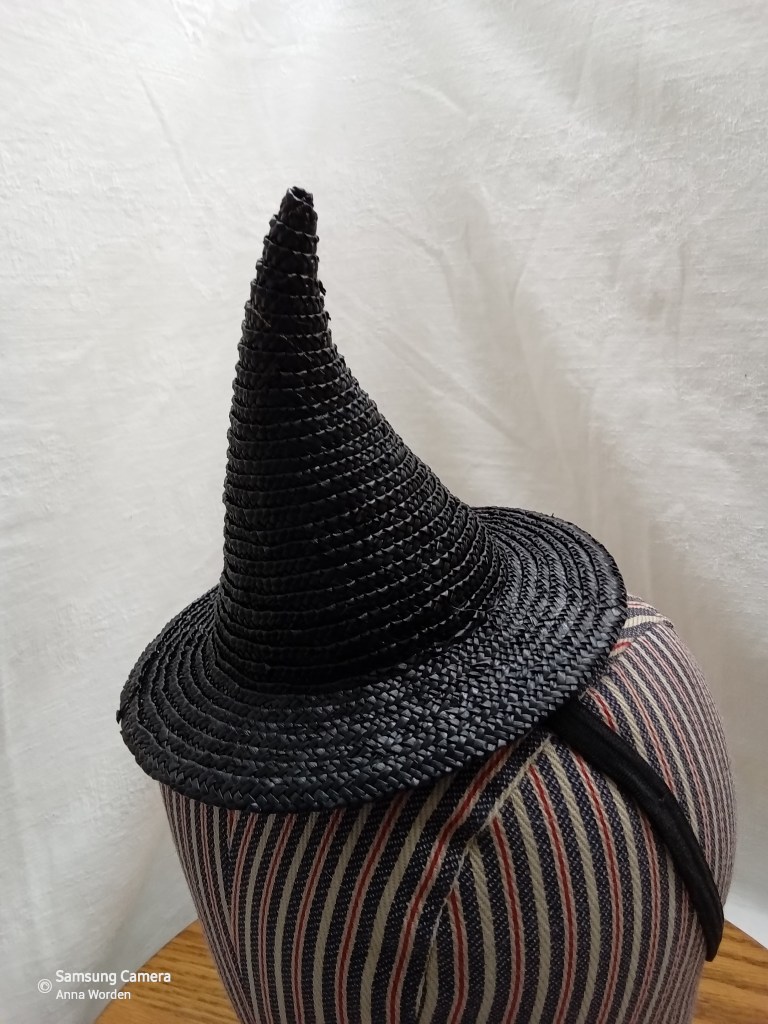
This year, I am offering my popular Mini Straw Witch Hats as wearable perchers. I set this straw hat on a simple elastic headband so you can wear it.
As with my reproduction hats, my mini witch hats are hand sewn and blocked. Each hat is unique, shaping as the straw desires. Some stand straight, some tall, some curve, developing their own personality.
Here are the first 3 available. The one on the left stands about 5 inches tall with a little curve at top. The center one is a tall, skinny one standing 5.5 inches tall. The one on the right is petite at about 3 inches.
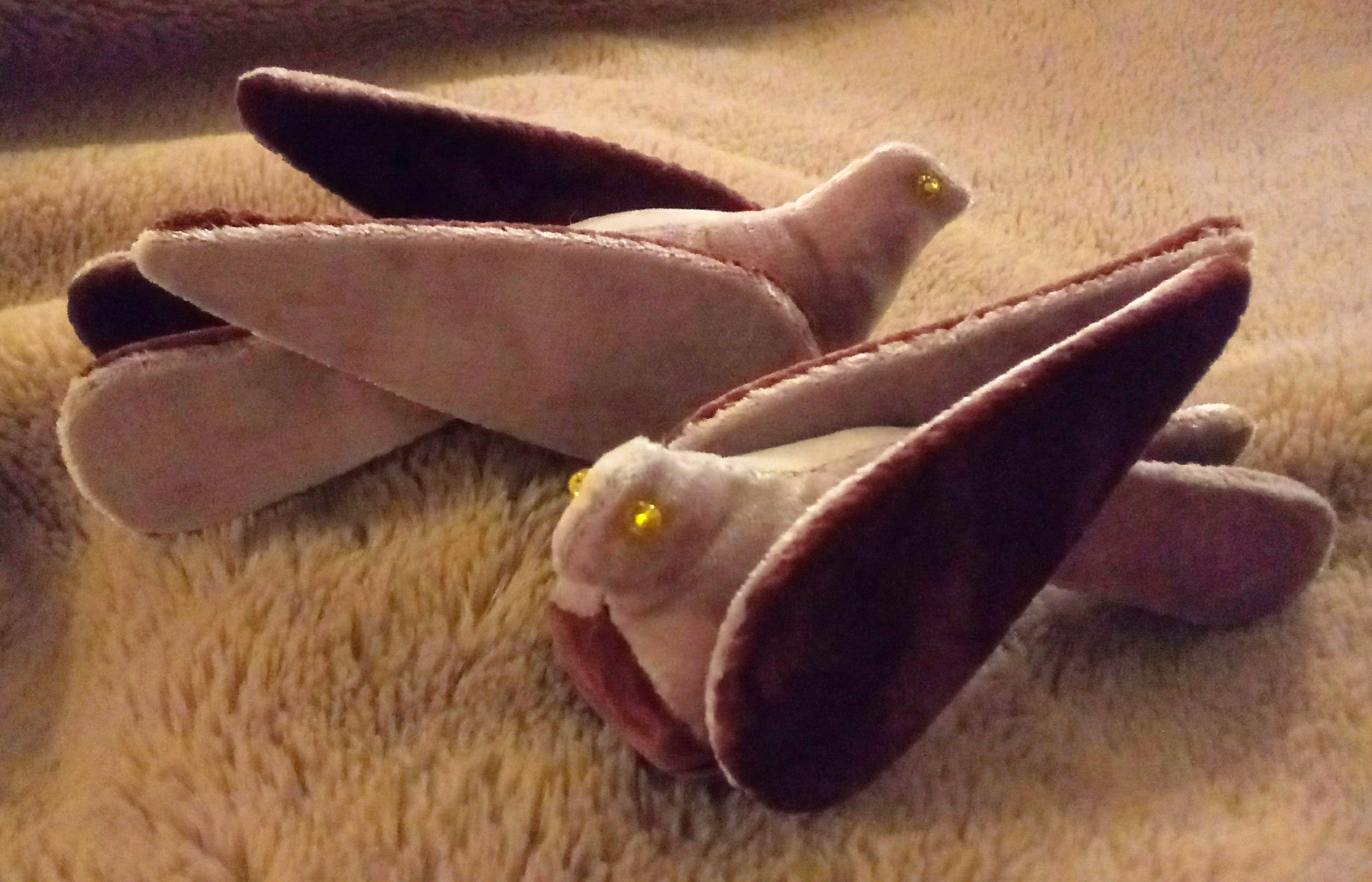
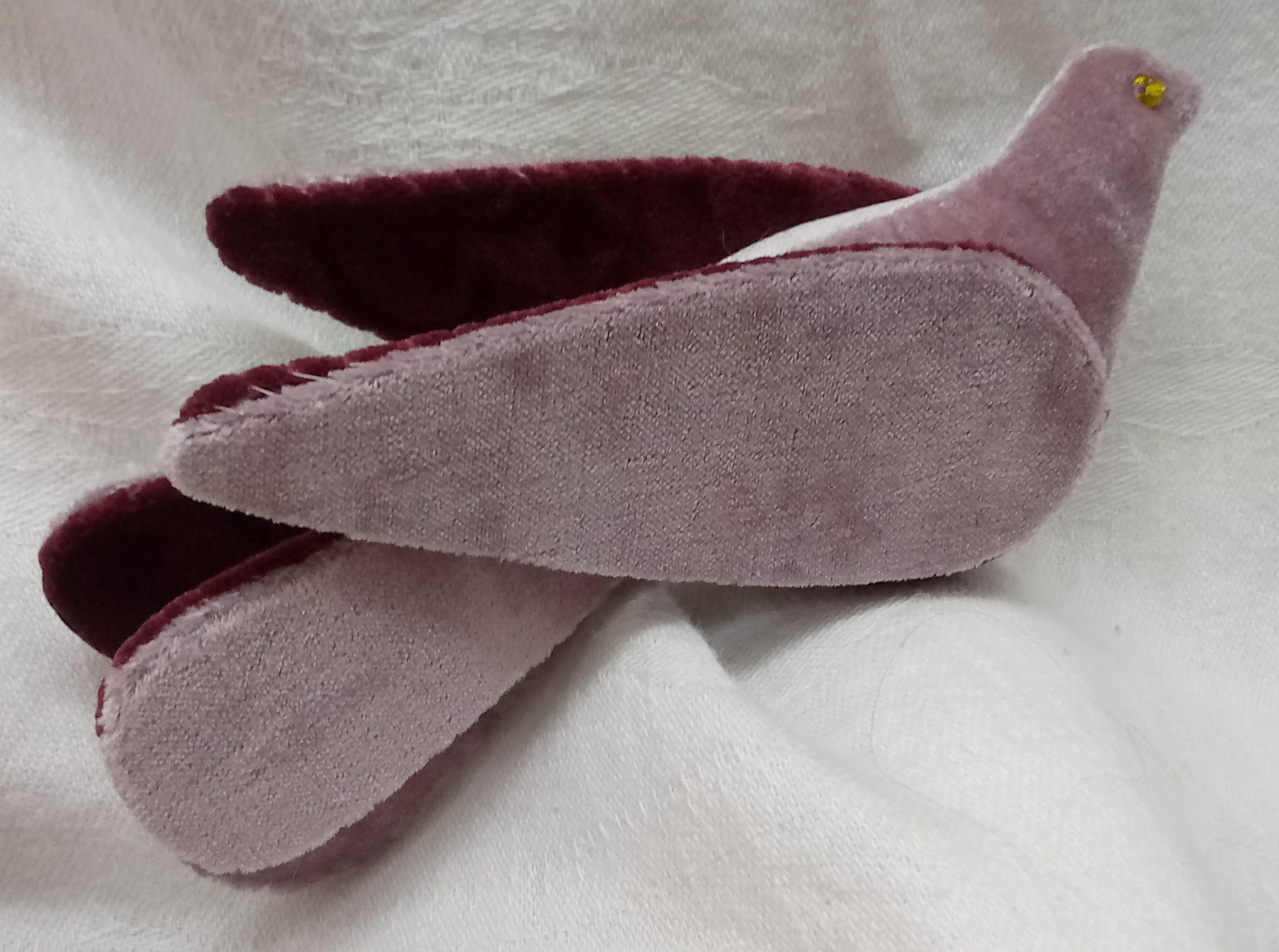
Today’s project is a sweet velvet bird ornament inspired by an original pincushion I saw on Ebay a few years ago that was too far out of my reach. Since then, Gleekruger shared a similar original velvet bird pinkeep on Instagram. This one was made with brown and cream velvets.
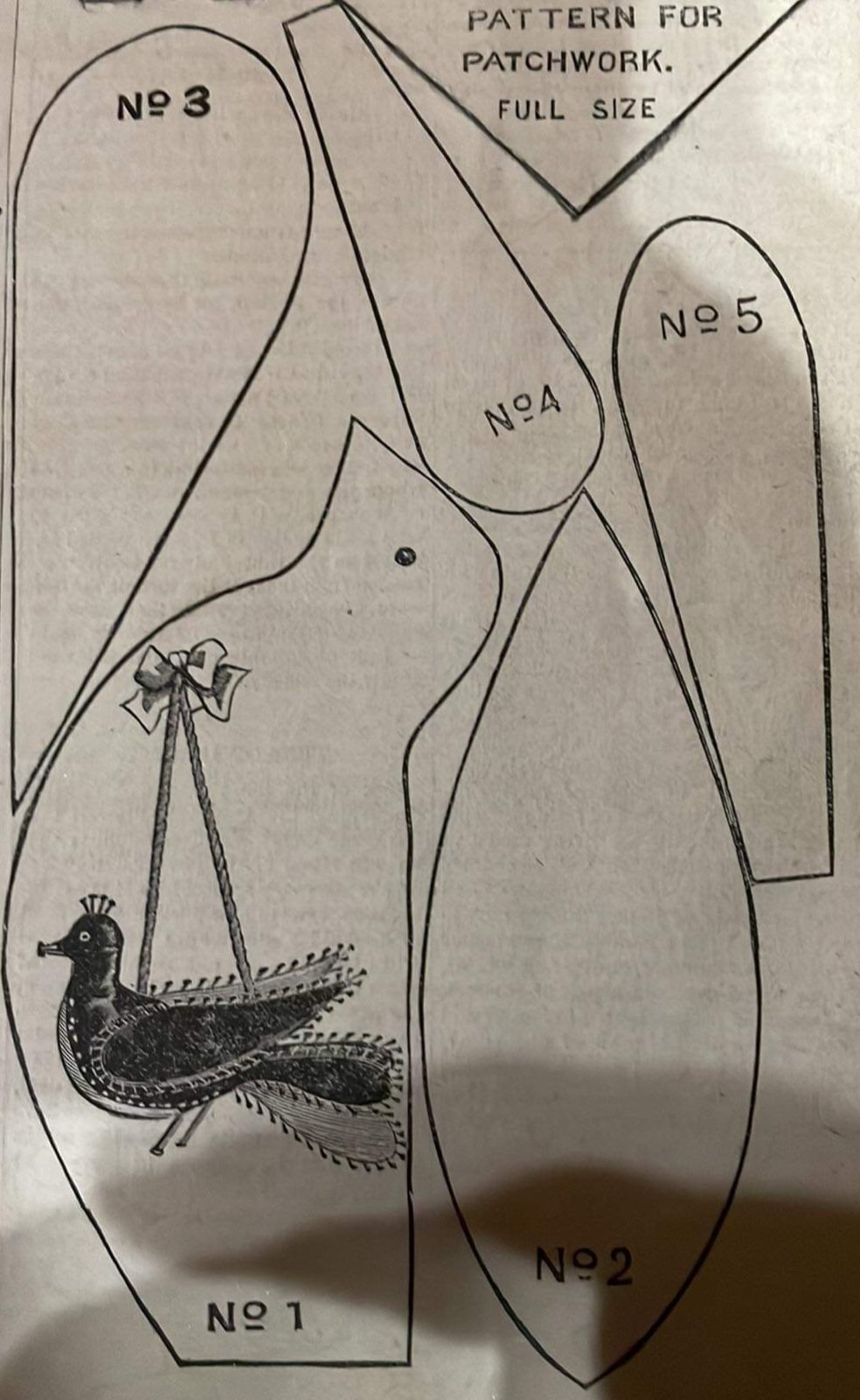
Recently, a friend discovered the original directions for this pretty bird in Demorest’s Monthly Magazine, 1876. I was delighted to see I wasn’t far off. The directions called to make this hanging bird in brown and red velvet, filling it with curly hair and wool.
(Video recorded previously)
Use this template to make your own bird ornament:
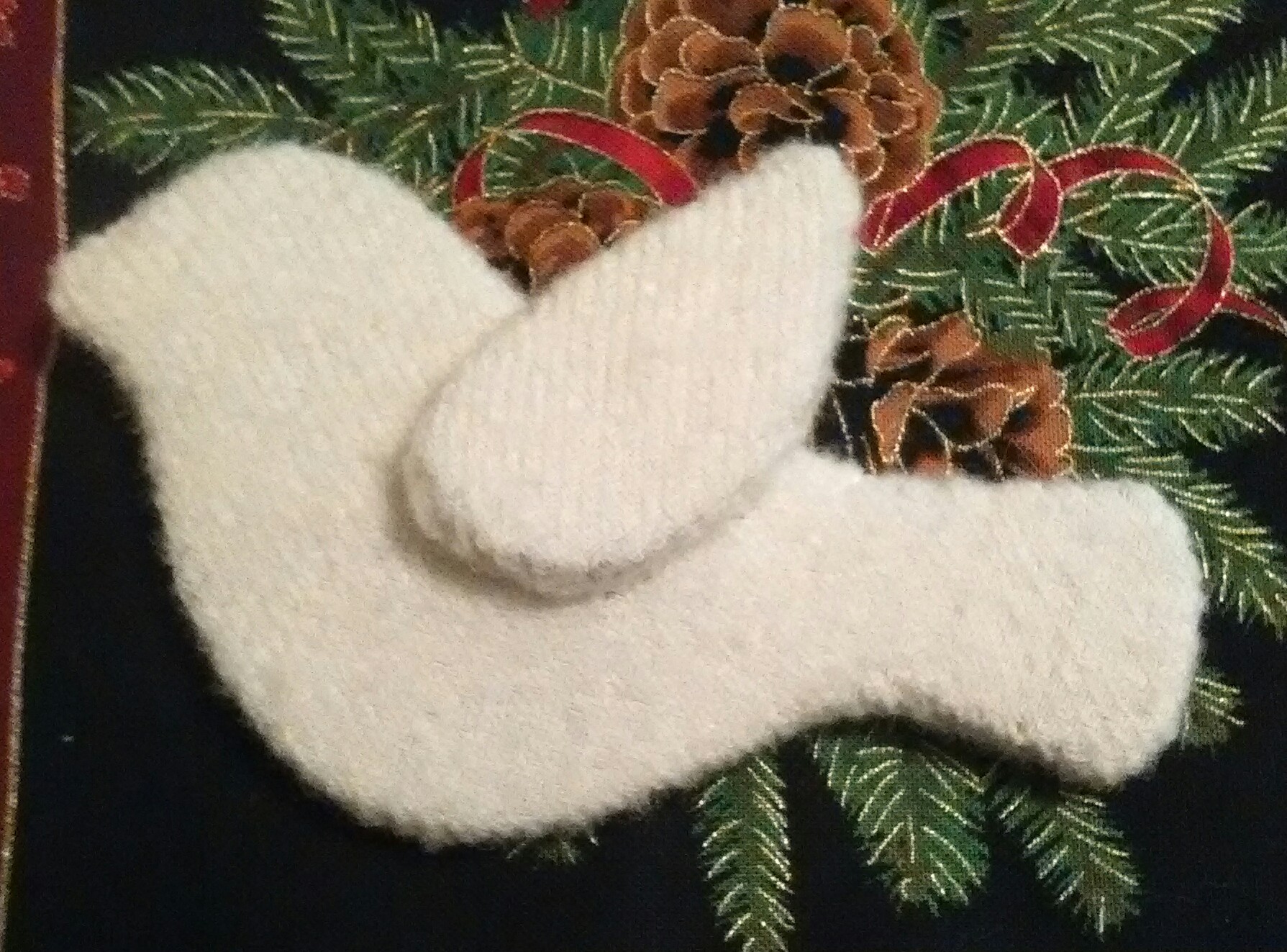
If you enjoy birds or want a simpler project, consider this bird ornament from 2017:
My goal is to share a Fancy Work project each Friday through the fall of 2022. Some will be updates of previous favorites. Some will be now projects.
Continuing my book fascination, today I made a fabric book full of pockets from this oh-so-pretty map print I picked up at Chestnut Bay Quilt Shop. The concept of the book was inspired by a later 19th century sewing kit sometimes called “A Friend In Need.” For more on this book style case, read Dawn […]
This summer I came across a book title Dubious Documents this summer. It is a puzzle book comprised of envelopes each filled with a document clue. As we’ve been working on puzzle boxes at work, the beautiful little book caught my attention and had to come home with me. The construction, envelopes made of decorative […]
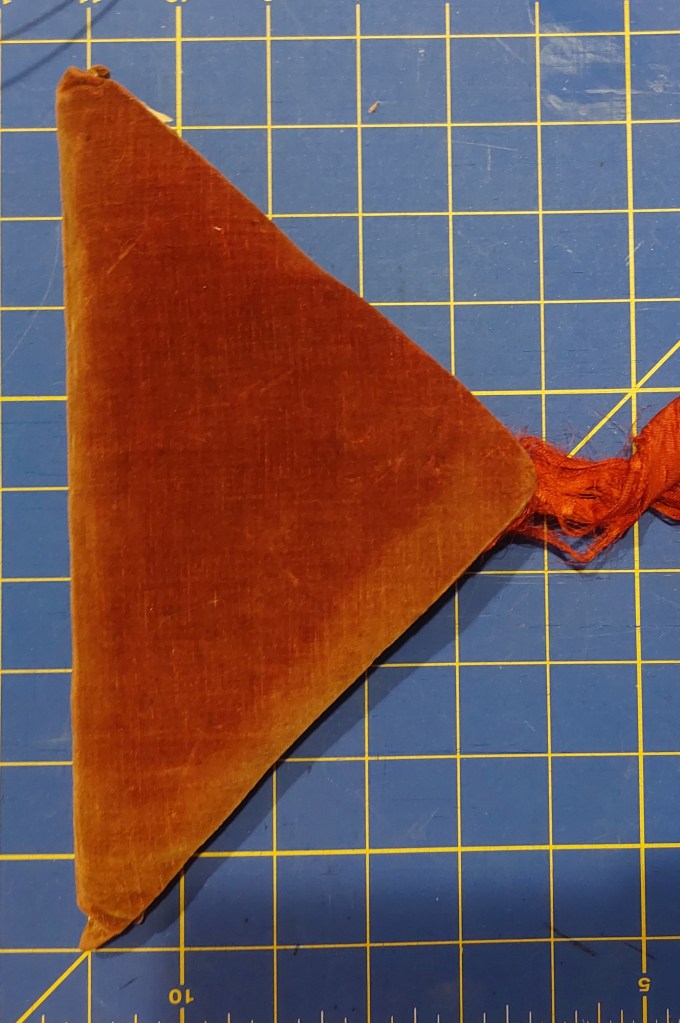
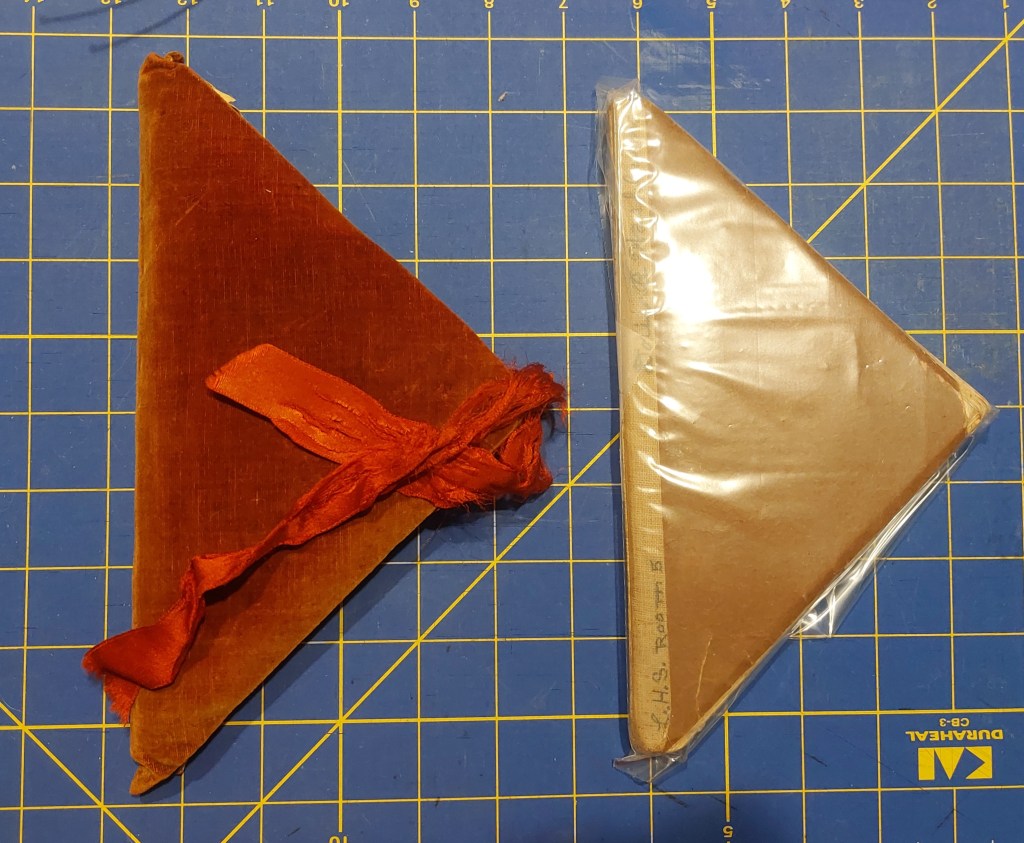
Some 8 months ago I unboxed triangular shaped book covered in velvet. The pages of this hand made book were folded in upon itself, each containing a letter, memory, or passage to the recipient of the book. The folds were sealed with die-cut flowers, hand cut stars, and other motifs, annotated with direction for opening including date, time and location. If you missed the unboxing video for this turn of the century book, you can find it here on YouTube.
Since opening this sweet book, I have wanted to recreate it. Finally, today, I did.
The base of the book is the well know Composition Book, with its thick pasteboard cover in black and white, with thin lined pages and simple sewn binding.
I began by unstitching the binding to remove half of the pages reducing it to 50, slightly less than that found in the original. I set aside the removed pages to create a second book. Both sets of pages needed to be restitched, without the cover.
Each page needed to be folded, first from the bottom outer corner up. Then, from the upper right corner down to create the right angle of the triangle.
I covered the pasteboard cover with red velvet. In doing so, I folded each side in to the wrong side about an inch, down to the corners of the cover. The four corners of the created rectangle fold down over the sides of the cover. This put folded edges close together to be sewn snug onto the pasteboard. I did this from memory of the book as it is pack away. After completion, I found these folds overlap on the original rather than come together. While this does give more complete coverage, it also creates more bulk, which my mimic lacks.
After covering the cover, I stitched the pages into the spine.
I am pleased with the finished book. I find it sweet with the velvet cover soft. I will be adding red ribbon ties when I find the right ribbon.
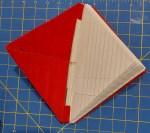
Left: Original red velvet triangle book. Center: Red velvet triangle book created with composition book cover. Right: Red velvet triangle book created with pasteboard cover.
If people are interested in step by step directions, I can putthose together. I remembered to take photos of this process.
I was very excited to find a second triangle book some months after finding the first. This book predates the red 1902-03 book, bearing an 1897 date according to the listing. I have yet to open this book so not to distract myself.
Back before school ended, it may have been May, I said I would do a video and post about how I make my hat/bonnet stands. As school is starting tomorrow, I felt I really needed to get this recorded.
Here is a sampling of hat/bonnet stands I use at home and events. The blue stands were made from a 3 legged table and the cross pieces with plaque bases and tops, with the tops covered in velvet. The two tilted stands are from the cross pieces. The pink stands, also with plaque bottoms and tops, were made from spindles sold for a dollar a piece at a yard sale. The unpainted stands farthest to the right are the ones I made first. They are made with dowels, plaque bases, and foam tops covered in velvet. While I like the velvet covers, I found the foam does not hold up to the travel and wear I put them through. I will be replacing the tops of two with wood.
For the center spindle, select or cut, a spindle to your select length. I recommend at least 10″ for a mid-century bonnet or at 14″ for larger bonnets. In the video, I am using a spindle from my local chain hardware store. Initially, I wanted to purchase one table leg, a tall, thin one, similar to the legs I previously used. I found they were very limited in selection now. I selected a spindle from the section of stairway banisters instead. This is on the more expensive end of the pricing. It cost $9.90. I had it cut right at the store because I do not have the space or tools at home to cut properly. As you see in the video, this was not the neatest cut. Also, I found after purchasing there is a hole drilled into the bottom of this style spindle. I prefer to use found spindles from yardsales or roadside, such as those from broken chairs or tables. But, for this video I wanted to have an accurate cost for purchasing from a store.
Another option for shorter stands I may be trying in the future is wooden craft candles. These seem to be sold in pairs or larger groups by some craft sources. This image is from Oriental Trading. I anticipate the bases and tops will need to be glued in place rather than screwed.
The bases and tops I use are the small palques sold at chain craft stores in the unfinished wood section. The bases need to be larger, approximately 7″ by 5″, rectangles, circles, or ovals. These can be combined with a second plaque like the layers of a tiered cake. To do this, a longer screw will be needed. The top should be a round plaque 3″ to 4″ in diameter. For smaller millinery such as 1880s capotes, you may want an even smaller top.
These tops a can be left uncovered, painted or stained as the stand. Or, the top can be covered with a little cotton batting and fabric like velvet or velveteen to add cushion and a little grip inside the hat or bonnet.
















 If I Had My Own Blue Box: