Loving Checks!

???????????????????????????????aka New Drawn Bonnets!!!

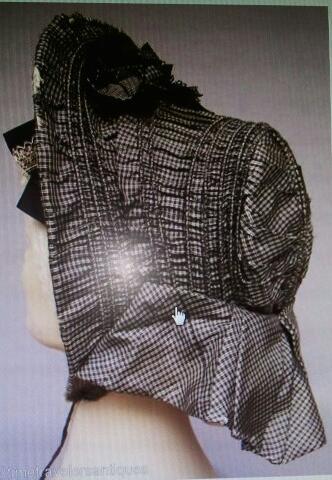
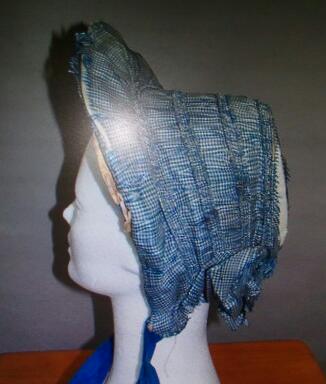
If you read the post a few weeks ago on Drawn Bonnets, you may have noticed a black and white check and a blue and white check. There was just something about these bonnets that screamed “make me!”

wpid-mntsdcardDCIMCamera2014-06-12-14.50.42-1.jpg.jpg wpid-mntsdcardDCIMCamera2014-06-12-14.50.51-1.jpg.jpg


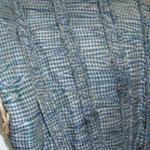
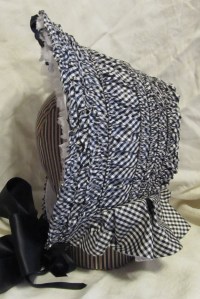
The black and white is a taffeta silk with approx 1/6″ checks. The silk is drawn on cane over a light weight wired buckram. The slightly flared brim is prettily flounced.  The fashion ties are a high quality double faced satin and the functional/utility ties are a silk taffeta.  It is lined in cotton voile. The frill is a silk organza. The interior decoration pulls directly from the inspirational original that was done in ribbon and lace. This one has handmade ribbon petals and delicate white violets set on a wire and tacked into the bonnet. I really was quite giddy when I finished the exterior of this bonnet. I was so please with how it came out.
??????????????????????????????? ???????????????????????????????

???????????????????????????????

Since my silk merchant had a blue check in a shade that nearly matched an original blue check, I just had to make that one as well. This check is a tissue taffeta with a tiny check. It is also drawn on cane over a buckram bonnet, with one drawn section over a wire. The interior is cotton voile lawn with an organza frill. On the inside are blue paper flowers. On the outside is a garland of small velvet blue blossoms. The utility ties are an ivory silk taffeta and the fashion ties are a German moire.

??????????????????????????????? ??????????????????????????????? ???????????????????????????????

I had just enough of the black check taffeta left. It really wanted to be a soft crown.

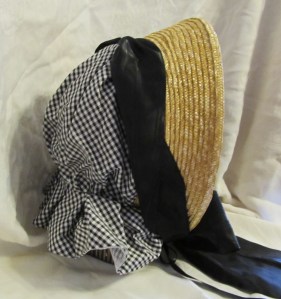
This is a straw plait brim with the black and white silk taffeta soft crown. The interior is lined and has an organza frill. The fashion ribbon is a black German moire while the utility/functional ties are a narrow black silk taffeta. I was so very tempted last night to trim this out in peacock feathers and black velvet berries. I wasn’t sure that people would like that, so I held off.

??????????????????????????????? ??????????????????????????????? ???????????????????????????????


Here is a sampling of checked drawn bonnets:
Check thumb 1 Check thumb 2 Check thumb 3 Check thumb 4

A Year in Millinery Fashion – 1864

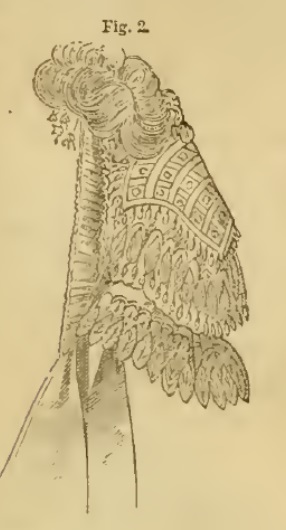
Fig. 2 is a dress bonnet of white tulle; down the front edge is a fulling of tulle, and at the top of the front is a plume of white feathers. The top and crown of the bonnet are covered
by a square of white lace, edged with a small white silk ball fringe; at the top edge of this square is a deep flounce of white lace, edged with ball fringe. The strings are of white silk, and the cap has a few small pink flowers at the top. (Godey’s, July, 1864)

1

Readings for Rural Life

From Moore’s Rural New-Yorker in Rochester, NY

June 25th, 1864

What is Becoming.

The effects of color on complexion are learned from experience, and the subject cannot be treated successfully in a short paper like present. Portrait artists know how many are the colors that mingle in one face, and slightly varying porportions[sic]and small omissions produce difference in the skin, so that colors which suit one person are not becoming to another, although the complexions of the two are supposed to be the same. A candid friend, or the more candid looking-glass, must be the ultimate appeal. Now that we have touched the delicate subject of the mirror, let us notice the fact of how much the position of a glass, in reference to the light, has to do in making a person satisfied or discontented with his, or her, appearance. The most flattering position for the glass is when placed between two windows, the equal cross-light reducing inequalities and roughnesses to a minimum. The most unbecoming reflection is from a glass in front of a window, the only one in a room. It is remarkable, and perhaps unexplained, that any irregularity of the features, anything out of drawing in the face, is increased when seen in a glass. There is a great difference in the color of the glass itself; some glasses are very pure and white; some have a greenish tinge, necessarily producing disheartening reflections.


Published in: on June 25, 2014 at 6:06 am  Leave a Comment  
Tags:

A Year in Millinery Fashion – 1864

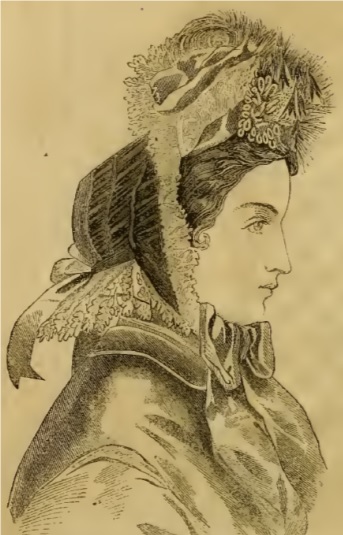
Fig. 1 is a bonnet of rose-colored crepe, with curtain of the same. Near the front edge is a narrow band of the crepe, edges by a white lace; at the top of front is a group of roses and rose-buds, mixed with fulling of lace or blonde; from beneath the group, a passing down the back of crown, is a fulling of tulle edged with narrow lace; at the back curtain is a small rose-bud with leaves, from under which, falling over the curtain, is a broad lappet of tulle edged with white lace. The strings are of pink silk. (Godey’s, July, 1864)

1

A Year in Millinery Fashion – 1864

Round hats are now very generally adopted. Some of the prettiest we have seen were in cuir-colored straw trimmed with velvet and feathers to match. Others were of chip, straw, and imitation Leghorn, elaborately trimmed with spun glass, shells, plaid velvet, and feathers. Veils, or rather scarfs, of white or black lace, are frequently looped at the side of the hat, and fall as a streamer at the back. The hats we have seen were not as high and pointed as those of last season. The brim fits rather closely to the face, and the back of the brim droops, and is much longer than the front.

We noticed some very pretty hats trimmed with bands and loops of velvet in front, and a pointed cape of velvet edged with lace covering the brim at the back.

Little girls are wearing half gypsies of straw. These are rather pointed in front, flare much at the sides to display a full cap of lace and ribbons, and at the back turn up like a turban. Cased silk bonnets with inimitable muslin and lace crowns, trimmed with the lightest of feathers, are also among the Spring costumes for little girls. Muslin and lace caps of every description are worn, they are generally of the Marie Stuart shape, with quite deep capes at the back. They are highly trimmed with ribbons, and frequently a tiny bunch of bright flowers is nestled among the soft lace on one side.

…

Mask veils are altogether worn. That is, the veil is drawn closely over the face, and fastened on top of the bonnet or hat with an insect pin. It is, however, difficult to arrange an ordinary veil in the mask style, on the small turban hats now so much worn by young ladies. We would therefore recommend the veil manufactured for the purpose, and just introduced by G. W. Vogel, of 1016 Chestnut Street, Philadelphia. These veils are a little over a quarter yard wide, perfectly  straight, and just sufficiently long enough to fit round the hat. For the Spanish hat there is another veil, which is decidedly novel. This has a hole in the centre, which passes over the crown of the hat; round this is a beading in which the elastic is run. The veil is pointed in front, and at the back, while the sides are shallow.

(Godey’s, June 1864)

Thinking Summer (and Fall)

With yesterday being the last day of classes, I am running summer thoughts around in my head. (I technically have a week and a half of exams yet.)
Before I talk about summer, I do need to skip ahead to fall. I lost my list of who wants to know about reprints. So,I need to recreate this list.  Please, comment below if you want to be email about reprintings of From Field to Fashion or my Quilted Bonnet/Hood Pattern. While we are at it, also let me know if you want to be emailed about new publications. (Yes, there will be new publications.)
Back to summer….
I have a few summer millinery goals for this summer. They are both personal/artistic and financial/budget based. After all, millinery pays the bills for the summer & early fall.
I have some fun ideas in mind that I think you will like.
I also want to know what you are looking for.
What bonnets & hats do you want to see?
What pieces will meet your needs?

Published in: on June 14, 2014 at 6:52 pm  Comments (6)  

Drawn Bonnets (the less ubber-quick version)

When talking about drawn bonnets, we should start with a little vocabulary and “how it is done”.

Drawn – Drawn is when the fabric, most often but not exclusively silk, is sewn with channels into which cane or wire is inserted. The fabric is then bunched, or drawn, up along the length of the cane/wire to create a gathered effect. The drawn cane/wire is attached to the bonnet form.

Shirred – Shirred is when a fabric, often silk, is gathered without additional structure. This can be flat or with flounces.

A single bonnet can have either drawn or shirred techniques, or it may have both.

Construction can be done with individual strips of fabric or larger pieces with multiple sections of drawing or shirring. These were done on both wire only frames and frames with light foundation. Drawn and shirred sections are seen on the brim, on the brim and crown, evenly spaced, unevenly spaced, edged with a different material and even running front to back in some cases.

Now, let us look at some examples. (My apologies for the flash in the images.)

In this fashion illustration and description, the bonnet is directly referred to as “drawn”. This bonnet would have the crepe gathered on cane or wires passing over the bonnet. This bonnet could have been made with two drawn sections, one for the brim and one for the crown.

2

The bonnet of drawn cuir-colored crepe, trimmed on the front with a fanchon of white lace, loops of green ribbon, and Scotch feathers. The inside trimming is of bright flowers, of the
Scotch colors. The cape is covered with a fall of white blonde. (Godey’s, May 1864)

This bonnet, from the MET, has very easy to see canes which the silk is drawn on. 4 canes draw a single piece of silk onto the brim, while a separate piece is set smoothly over the crown and tip. These canes are on the thicker/larger size, being round. (the widest cane channels I’ve seen in an image are on this Henry Ford Museum corduroy bonnet.)

wpid-mntsdcardDCIMCamera2014-06-12-14.52.09.jpg.jpg

This bonnet also has the drawn sections on the brim while the crown is smooth. It appears to differ from the previous bonnet in that the canes are drawn on separately in strips. The very edge of the brim is covered with one strip. Three strips are drawn onto canes. These are applied from the back to front, with the front most strip being drawn onto 2 canes, creating a little flounce just behind the front edge.

wpid-mntsdcardDCIMCamera2014-06-12-14.51.36-1.jpg.jpg

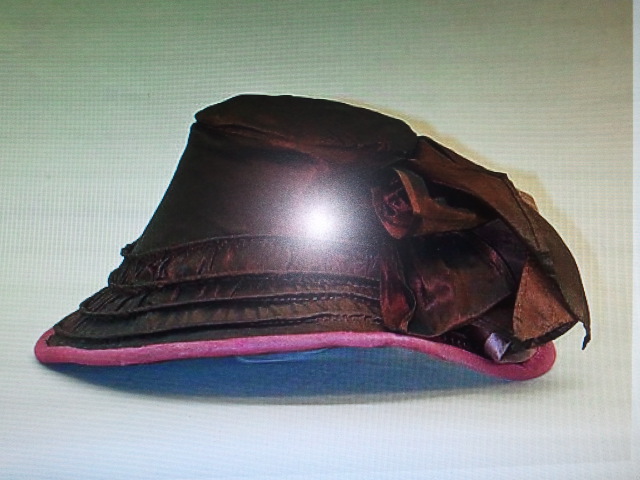
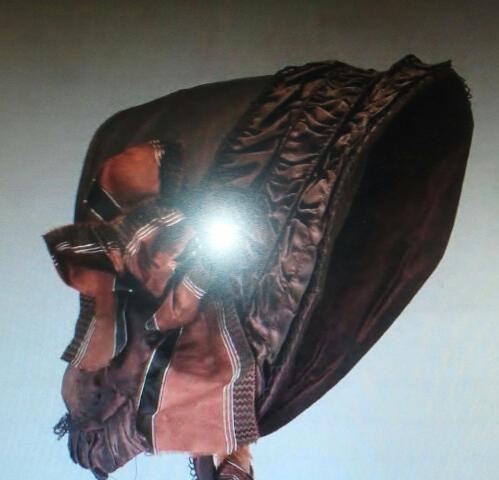
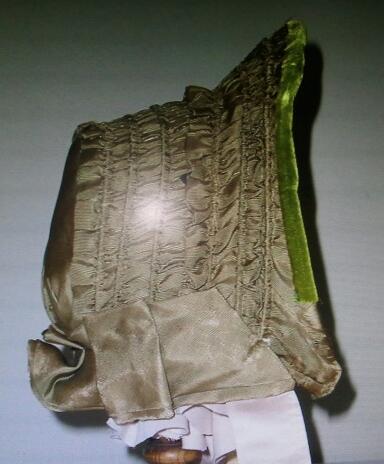
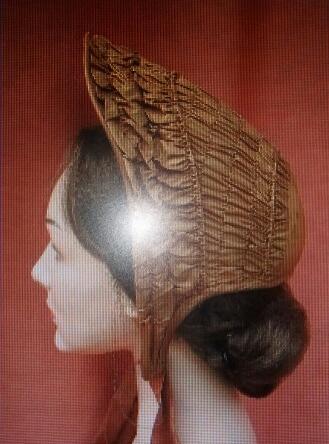
The next several bonnets show drawn silk on the brim and crown. Notice the variety of spacing used. Some are set snuggly, while other are set with quite a bit of space. The green bonnet has fairly evenly spaced drawn canes/wires.  The blue and white pairs the drawn canes together.  Flounces drawn on cane or wire are tucked in as well. The black and white one has a flounce just where the crown meets the brim. The brown bonnet highlights the angles and overlapping that was done on some bonnets. This helps add to the curvy movement to some bonnets.

wpid-mntsdcardDCIMCamera2014-06-12-14.50.42-1.jpg.jpgwpid-mntsdcardDCIMCamera2014-06-12-14.50.51-1.jpg.jpgwpid-mntsdcardDCIMCamera2014-06-12-14.51.48-1.jpg.jpgwpid-mntsdcardDCIMCamera2014-06-12-14.52.35-1.jpg.jpg

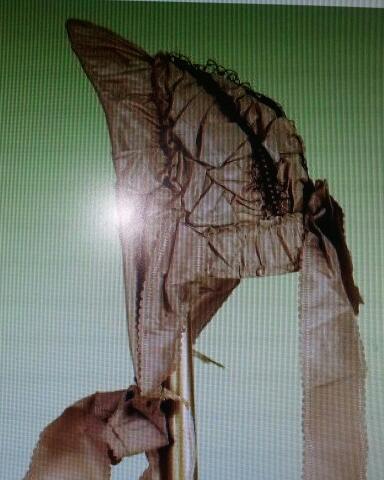
This example shows that gathered sections can be worked vertically, over the back of the tip. This may or may not be drawn. A better example, where the canes can be seen, showing it is truly a drawn bonnet can be seen HERE

wpid-mntsdcardDCIMCamera2014-06-12-14.51.19-1.jpg.jpg

This last illustration show that a drawn brim can be done with a soft crown. (A tempting idea for this summer. Maybe I’ll make one.)

1

This bonnet has a front of drawn green silk. The graceful soft crown is of white silk. The trimming consists of a tuft of meadow grass and field flowers, also loops of white silk placed directly over the crown. The inside trimmings is of white and black lace and field flowers. (Godey’s, May 1864)


This is my pin board of 1840s through 1860s drawn bonnets. (I’m splitting drawn and buckram. Bare with me.)


Published in: on June 13, 2014 at 6:00 am  Comments (2)  

Fanciful Utility (for new followers)

I’ve had a surge of new followers in the last few weeks. First,  thank you!

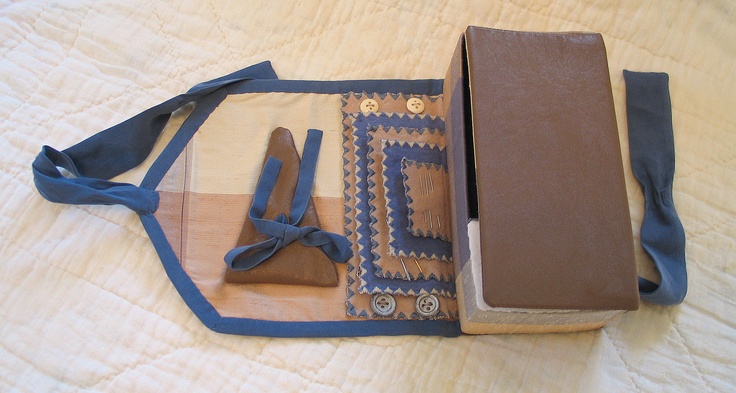
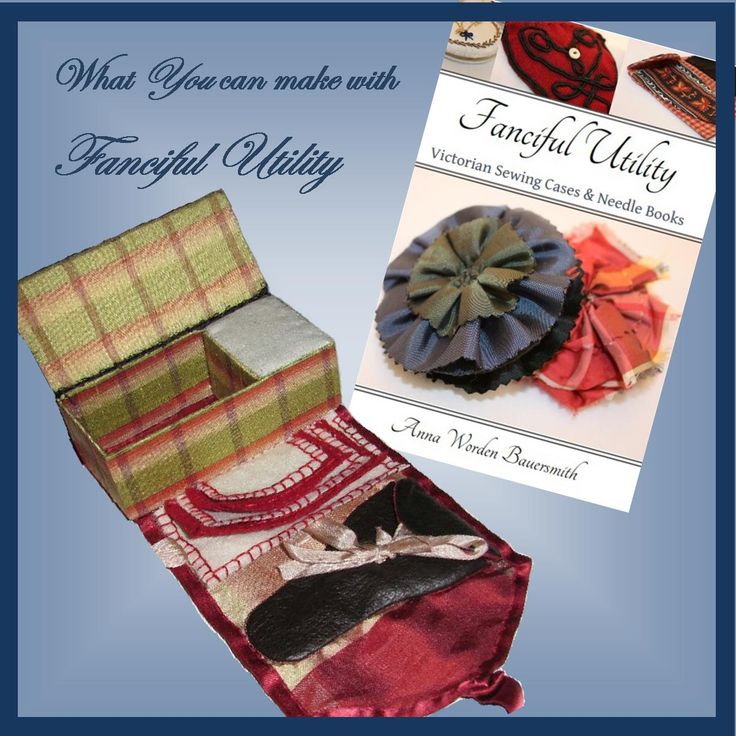
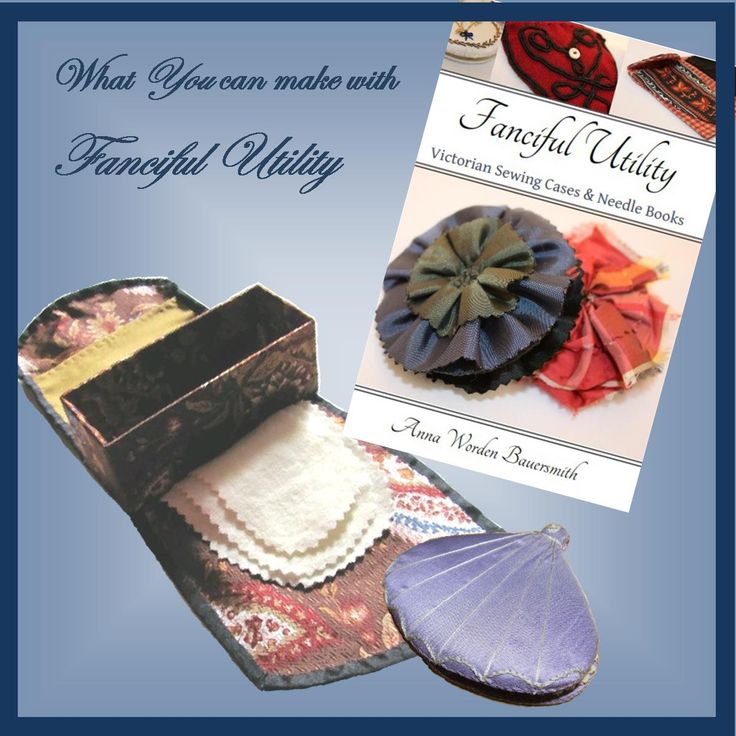
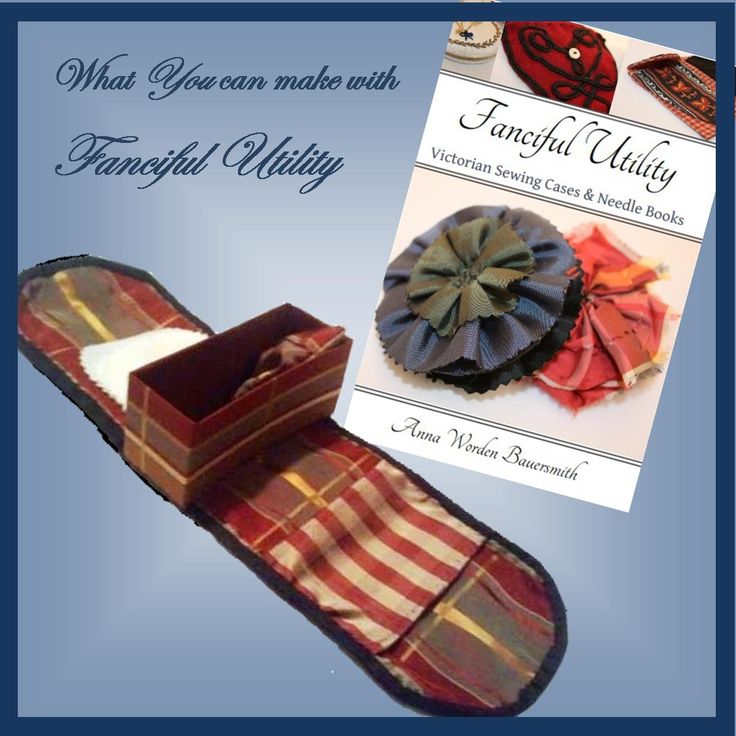
FanU-Cover-SnapSecond, a little self promotion. I want to make sure you know about

Fanciful Utility: Victorian Sewing Case and Needle-books.


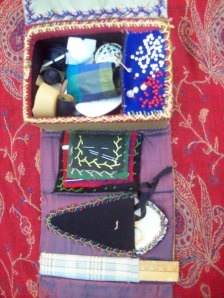
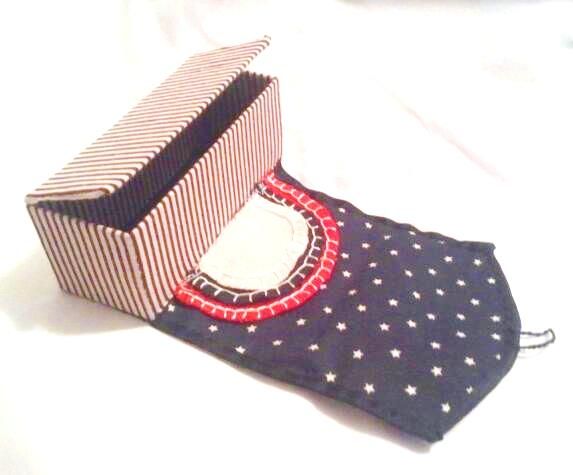
This book is packed full of directions and templates for making housewives, work pockets, rolled sewing cases, structured sewing cases and needle-books.

Fanciful Utility, or FanU as we abbreviate it in blog posts, can be ordered from ESC Publishing.


Here are just a few of the projects you can make with Fanciful Utility: Video

Maggie S

Bevin L

e

a b  c d


As added fun, I host a FanU Fabric Swaps and I periodically release special templates that go along with Fanciful Utility. These have included a boot needle-book, seashell needle-book and a balloon bag (aka button keep).


Published in: on June 12, 2014 at 4:00 pm  Leave a Comment  

A Must Read on Poison Green

I remember when I first heard of “Poison Green” dresses. I found it fascinating. This post helps clear up the realities of dangerous arsenic. I highly recommend reading it:
Drop Dead Gorgeous: A TL;DR Tale of Arsenic in Victorian Life

After you have read the article, hop over to the Fashion Victims: The Pleasures and Perils of Dress in the 19th Century  exhibit at the Bata Shoe Museum.

Published in: on June 12, 2014 at 8:52 am  Leave a Comment  

Readings for Rural Life

From Moore’s Rural New-Yorker in Rochester, NY

June 11th, 1864

The American Young Lady Talking

I said that all the young ladies can talk. A flow of sharp, shrewd, intelligent talk, is the shinning attainment of all American ladies, and from the school-girl upward. All the school-girls themselves talk with an ease and volubility that would astonish the superintendents of the ladies’ colleges at home. There is no blushing, no stammering, no twiddleing of the fingers, no plucking at boquets, or nervous unhemming of handkerchiefs. The vapid inanities that pass between partners at the English ball would be scouted. To be shy is to be unpatriotic. The American young lady goes straight to the point. How is your health? How long have you been in the country? Do you like it? Have you had a good time? What do you think of the actions in the present struggle? Are you not stuck with admiration at the deeds of valor performed by the nation’s armies? Have you read Longfellow’s Wayside Inn? When is Tennyson’s Boadicea to appear? Was not England convulsed with enthusiasm at the appearance of Rev. Ward. Beecher? Don’t you think the room wants oxygen? Are not the monitors triumphs of mechanical construction? Have you been to Niagara? These are a few of the queries she rattles out. You are the first delighted, then amazed, and at last puzzled; for the intelligent and well dressed young lady continutally addresses you as “sir,” and every now and then she asks you a question so naïve, so artlessly ignorant, that you pause to inquire of yourself whether she can be more than six years old. Salo.


Published in: on June 11, 2014 at 6:00 am  Leave a Comment  
Tags: