Last night was a late night because I was determined to finish this hat.


This fashionable hat is in a beautiful midnight blue. It is appropriate for Civil War era impressions.


Yes, I named a hat “Hedgehog”
This hat is made with the batwing artisan plait. I had just enough left in a hank from a special project to make this shallow hat. It is currently available in my Etsy shop. (though, I sorta want to take it to the GCV CW event)


This little hat will sit high on the head, tilting forward. Here are some shots of me in our oh-so-very-green bathroom:


I suggest a silk lining and ribbon to help hold this hat in place. I could see some very pretty colors on the inside.
This is the Regency chapeaux I started at the Genesee Country Village and Museum’s War of 1812 and Jane Austen event. It turned out to be one of the largest pieces I have done.
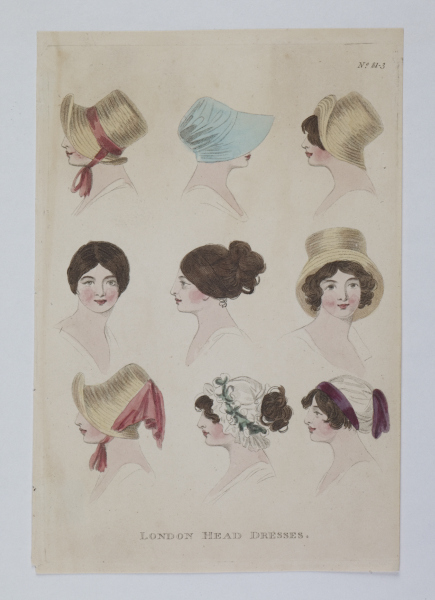
The high crown is firmly sized, while the shaped brim is lightly sized for flexibility if you want to add a ribbon over it. The brim dips on each side, while flipping up in the back as several fashion illustrations show. Creating the curves of this hat were very fun.
The hand sewn plait is a supple Milan straw. The brim is fully wired.


The numbers you’ll want to know:
Inside the crown is 23″
Side to side – 14″
Crown height – 6″ high
Brim depth – 4.5″ in front.
Be sure to catch the previous two posts to see which millinery pieces were on display and photos of the day. This is the post where I am overly honest and real.
Things I learned yesterday:
First, and foremost, Regency era reenactors are awesome. Seriously, the people I met and chatted with yesterday were so nice and polite and cheerful. Okay, so, it may just be that I am new to them and an outsider. But, it was so nice.
Second, the petti and shortgown combo is insanely comfortable. When I put it on in the morning, I asked myself why I didn’t do this earlier. If I were to compare it to my mid century clothes, it is like being in my underwear. I felt light and mobile. (Not that my CW clothes were not very flexible, functional and workable when I was fit and workable.)
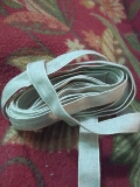
About my dress…. the straps are a must. I was counting on my torso fluff to keep it in place. While I have plenty of curve in the front to keep the petti up in the front, that is not the case in the back. Slip. Slip. Slip. I even managed to bend some pins in beautiful shapes. Linen tape acquired.
The kerchief…. I felt rather silly at home trying to figure out how to wear this thing. I can wear a fichu or an elongated diamond kerchief of the mid century, but this simple square baffled me. Being new from the package, it was full bodied, almost starched. It kept wanting to stick up in the back. Here I am giving it a try again.
Chairs… We’ve been talking a bit about chairs locally. So, I thought this observation would be amusing and useful. The chair at the kitchen table was a pretty painted yellow one. When I went to sit down, I found it was much lower than I was accustom. At first, I thought this would be good for my short legs. Then, I found I kept sliding. Basically, the slope of the back and the curve of the seat was causing my butt to slide forward in the chair. It was not a posture that worked for sewing. It may have worked for reading if I had a foot stool. Luckily, I was able to use a dining room chair. It had a flat seat and straight back.


Carrying in… I need a bag I can put over my shoulder. I don’t know if that is a market bag or just a bag with larger straps. In either case, it needs to be very utilitarian. I also have to decide on taking the tall stands. While they are definitely suitable for the millinery impression, I am iffy about them for this cottage industry. Though, they make it very easy to see the pieces. The catch is, they aren’t easy to pack and carry. While I do have a bag they lay in, it would have been much easier to throw a few heads in a bag tossed I’ve my shoulder.
I need to sew more bonnets.
Photos from today’s War of 1812 & Jane Austen event at the Genesee Country Village. All photos by Lily Phelps. (I will add another post on the day soon. I wanted to share these photos as some friends are asking.)
I spent the day I the kitchen of Foster, the building Grandma quilted in for so many years . I hadn’t realized previously what a nice breeze this space has. It was very nice to work in . It also gave lots of space for people to gather in.

You can see the millinery pieces I made just for this demo. I built the top of a crown while I was there. It is now blocking in my kitchen. It will be one of the tall crowns like the one on the head form.

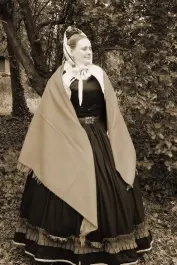
This is the dress I made rather last minute. When I put it on this morning, I asked myself why in the world didn’t I make and wear this sooner. It is ridiculously comfortable; exceptionally so compare to mid century.


Side note: I am often surprised by my fluffiness when I see photos of myself. This is true with these. While I really like the photos and the look of me in this dress, it is a nudge to do better on the fluff control. Additional walking must be integrated into the routine.
With the War of 1812/Jane Austen Event at the Genesee Country Village coming on quickly, the current few weeks of sewing has been all about Regency Millinery. Each of the pieces I’ve been working on are going with me to GCV, where I will be doing a straw millinery demonstration in the Foster-Tuft House. I have also been assembling an assortment of straw plaits, from fine to coarse, for visitors to examine. As someone else will be demonstrating straw plaiting, I may bring a few of the straw decorative elements I’ve been working on.
Here are the pieces that I will have on display. (Each will be available after the event through my Etsy store.)
Chapeaux de Paille with a high crown


Chapeaux de Paille with a low crown, scalloped shallow brim (spoken for)


Chapeaux de Paille with high crown


Bonnet de Paille in the Poke style


In progress: Chapeaux de Paille with a round crown
Some of my previous Regency era millinery


Oh, and since I don’t know where else to put it….. Check out this image that shows a nice hair to cap to bonnet fit.
There are these two pieces:


Both are at the MET. The one on the left is accession number C.I.49.43.3; dated to the 1850s; “Gift of Colonel Thatcher T.P. Luquer, 1949.” The one on the right is accession number 2009.300.1606; dated to 1835; “Gift of the Brooklyn Museum, 2009; Funds given by Mrs. Richard Palmer, 1978.”
Look at that plait.
*Note: I do not think the one on the left is an 1850s piece.
What a crazy month. Here is the last bonnet of May.
This bonnet is a cottage style with a round brim and just a enough height in the front. It is suitable for a late 1850s through 1864 impression. It will suit modest and practical impressions. The shape will flatter the round or square face. Find it in my Etsy shop.


First I pull out my copy of Every Lady Her Own Shoemaker, from the bottom right corner of the bookshelf….. Where is it supposed to be but is not. (Vow to make book plates with trackable gps chips inside for every book.)
In lue of said book, trace the bottom of each foot. Set aside to shape properly into the sole when either my copy of ELHOS appears or a copy arrives via ILL.

Remember, I have wide feet.
Move on to the top, which simply must get started.
Take the following measurements:
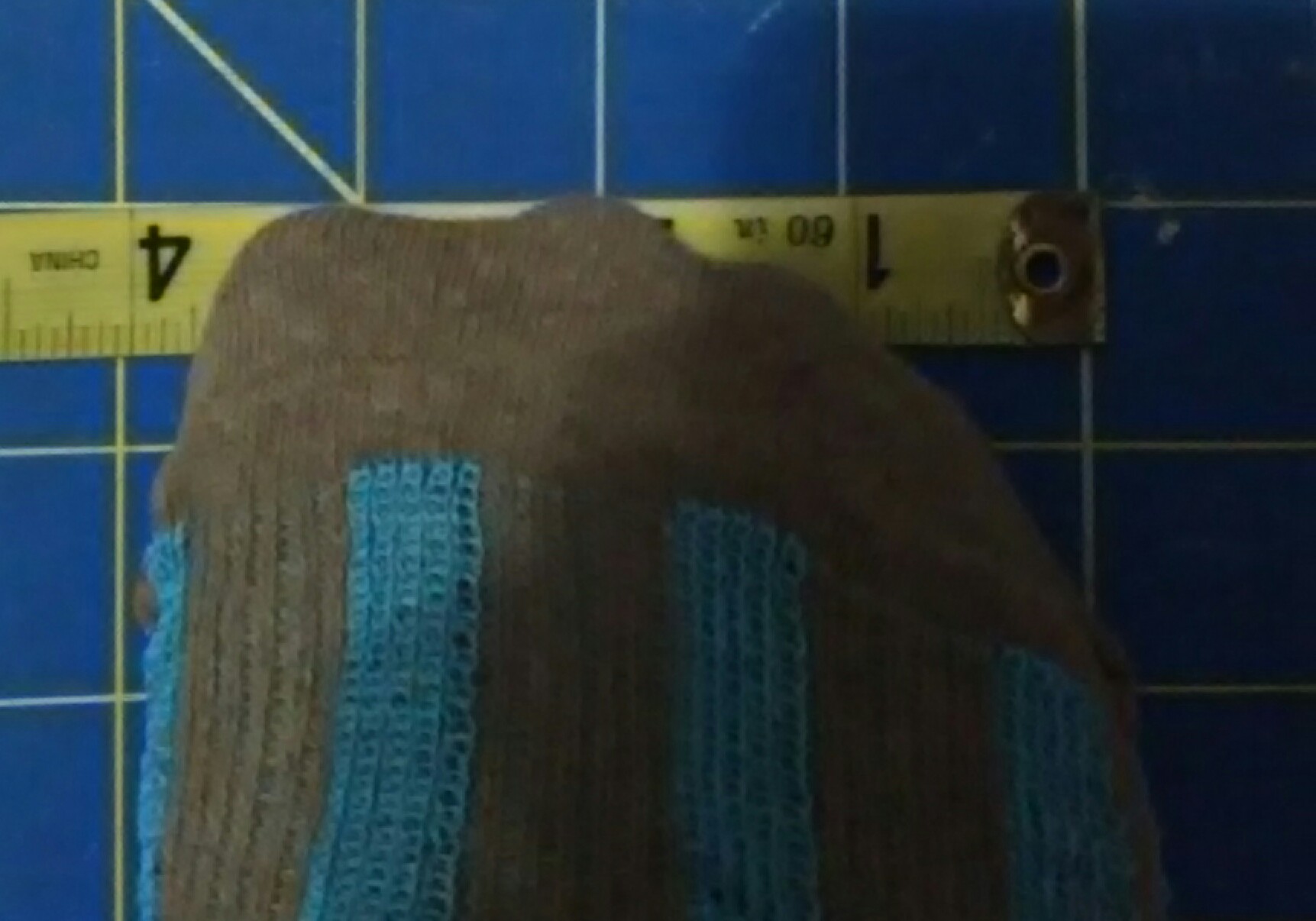
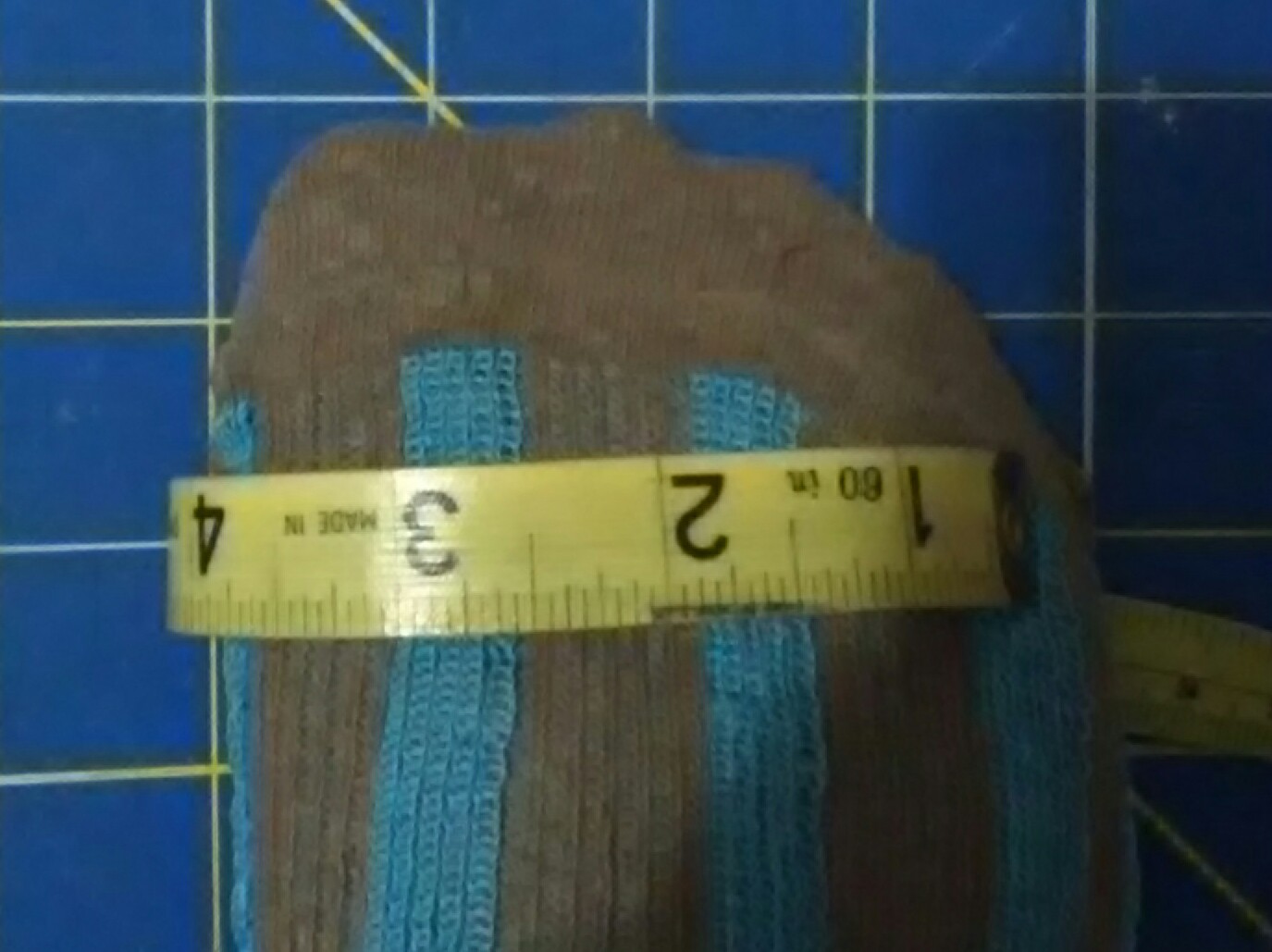
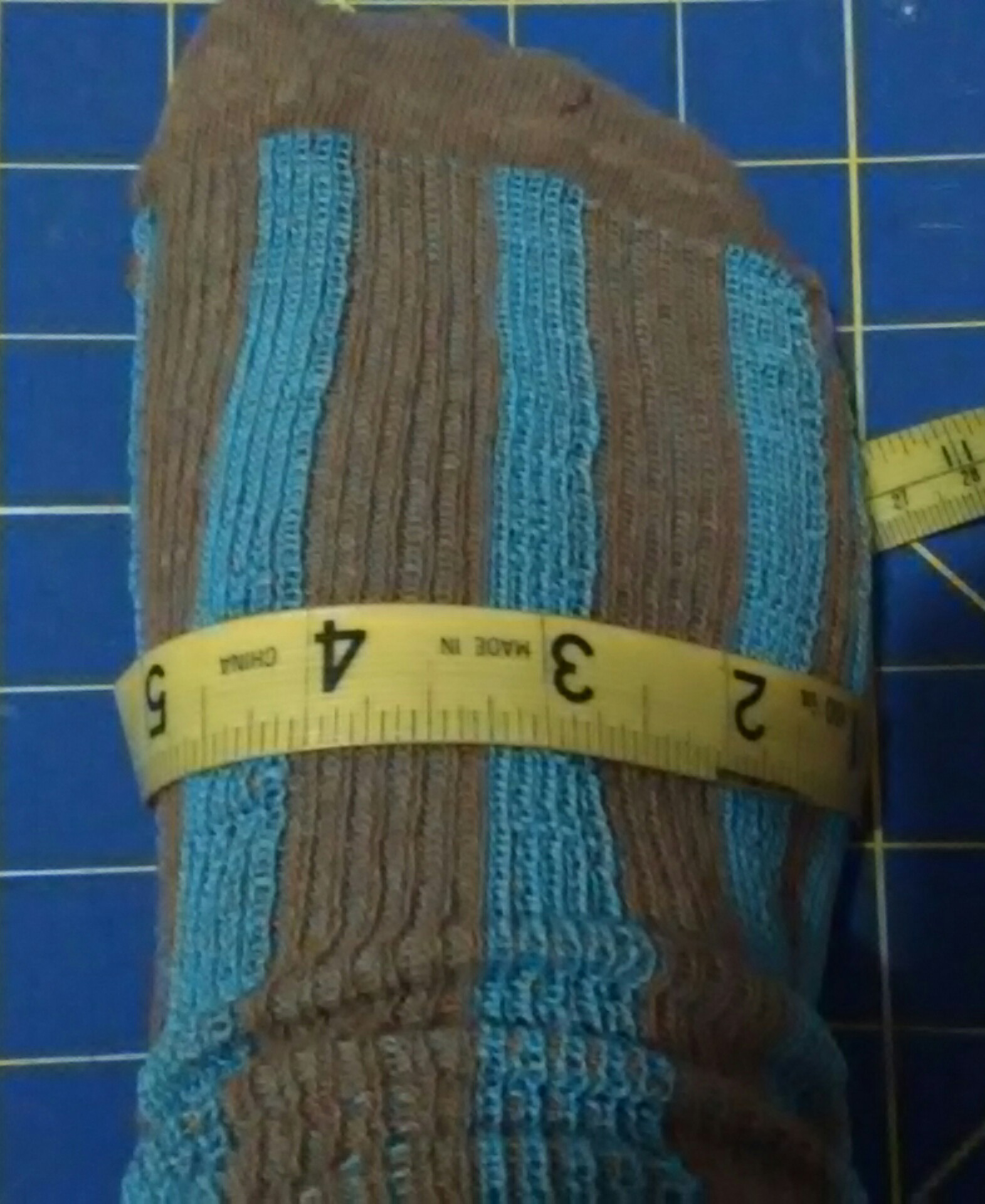
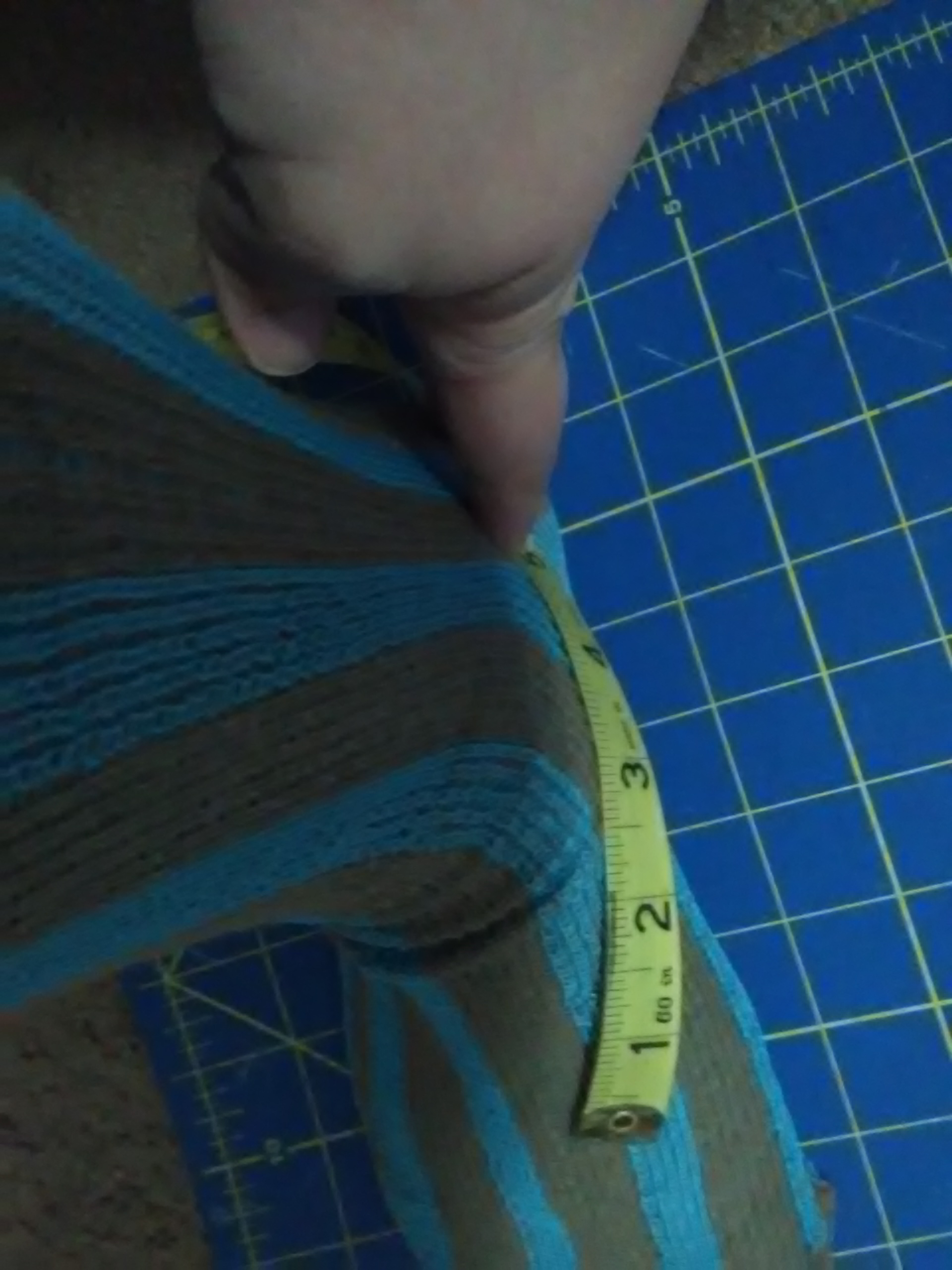
To make the U shaped slipper:
Lay these measurements out on a centered piece of paper. Connect all of the points. Shape to reflect your period’s slipper shape. Add seam allowances. I will use a half inch for the bottom (outer edge) and back seam, and no upper (interior edge) because I plan to bind that with ribbon on my wool pair. If I were not binding, I would leave a half inch, which I could trim down to a quarter inch.
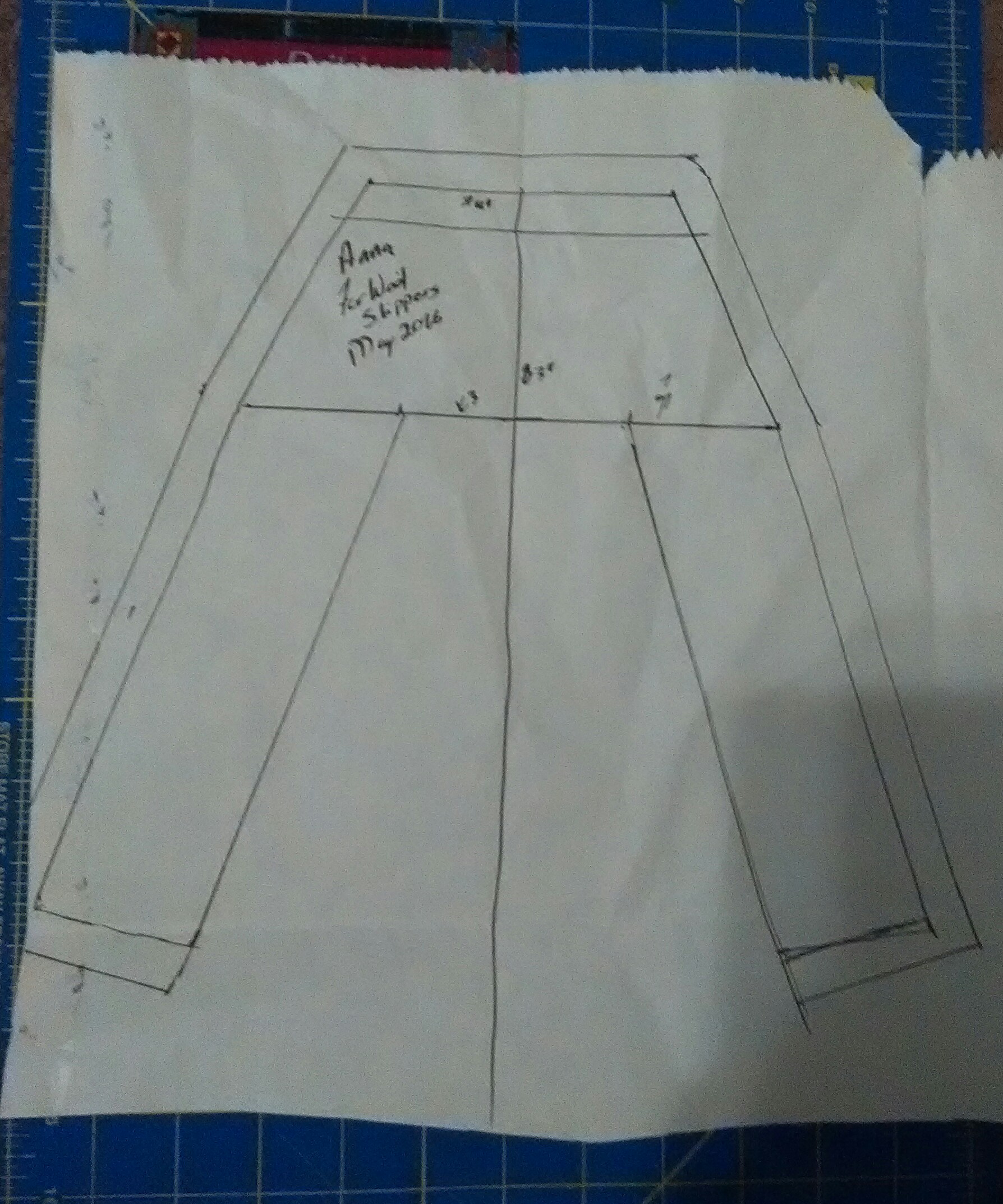
To make the front part or the two part slipper:
Lay out the measurements on a centered piece of paper, using those for the front of the foot. Connect and smooth the lines to reflect the look and fit of your period’s slipper. The back piece is simply a long rectangle that is twice the distance from the front of the foot around to the back. Add seam allowances. For the front, I will be adding a half inch for the seam that will attach to the sole and a half inch for where I will slide in my foot. (I have yet to determine if I will simply line with silk, line with quilted silk or bind with ribbon.) For the back, a half inch top and bottom will be safe as you can trim after.
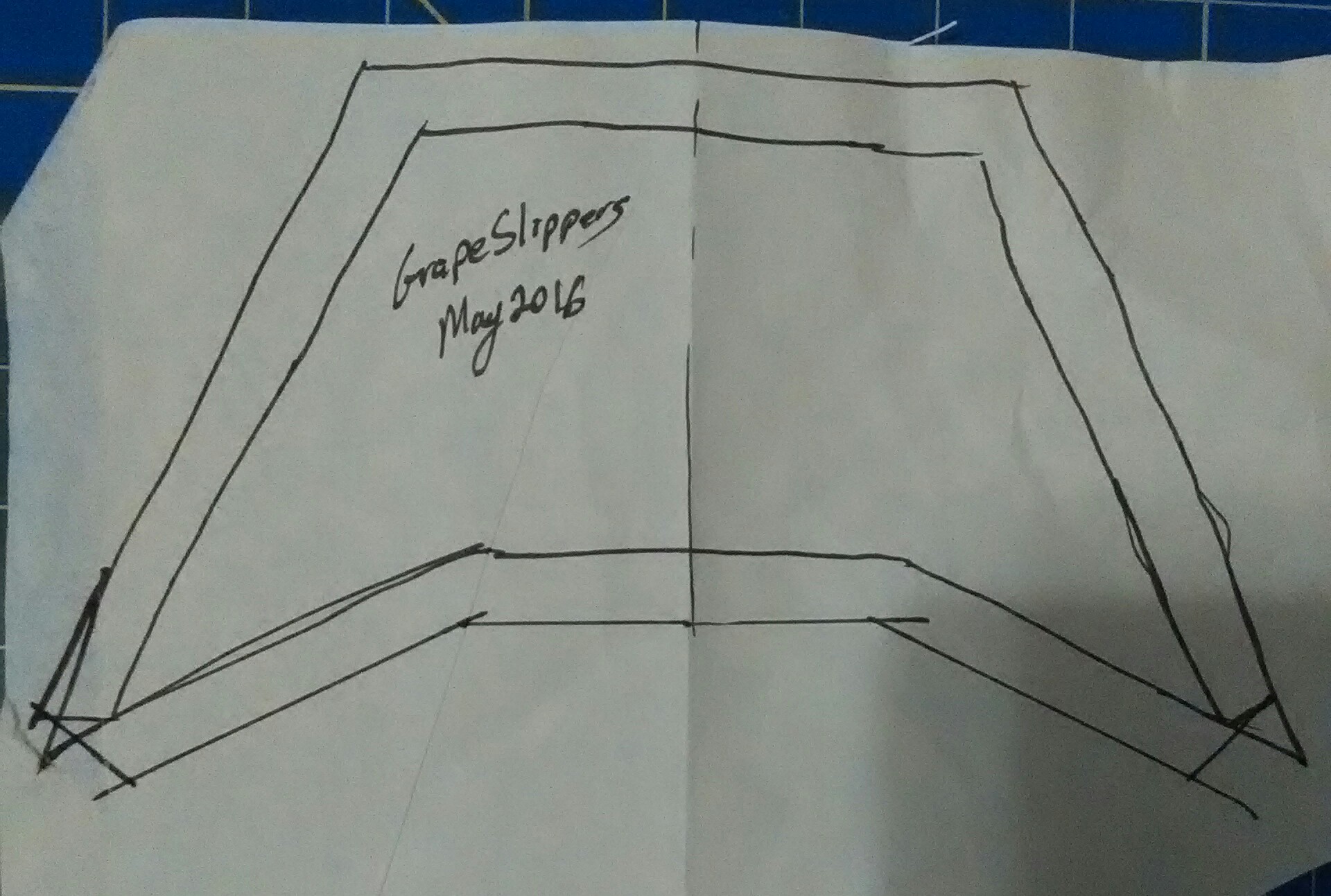
Notes on my slippers:
For the Berlin work pair with the grapes, at the moment of writing this, I plan to use an Aida cloth though I would much prefer to use a linen. I do not know if I have a linen in the stash that will work for a measured stitch. I feel linen is more correct and will be more durable. EDIT: As per Carolann’s note below, I will find and use canvas for my grape slippers.n
Also for the Berlin work pair, I plan to cut the upper much like the quilted green pair of slippers where the sides angle backwards. I feel this gives both a secure, comfortable fit and a period look.