It certainly is a COLD winter so far for most of us. We’ve been seeing single digits for days with days to come. Some have it much harsher with double digit negatives. I hope everyone is doing their best to stay warm and keeping their fur and feather friends warm as well.
With it being so cold, it is a good time to talk about the nitty gritty of wine get bonnets or hoods. Well, some of it. I need to save so e stuff for the up coming book.
Let’s talk about silk verses wool. One of the most common questions I get about winter hoods is if silk is better than wool or wool better than silk. The answer is “Yes”.
Both silk and wool are found in original bonnets from 1840 through the 1860s. Without tallying up those I’ve surveyed, including my personal collection, roughly 65%-70% of extant hoods have silk on the exterior and roughly 35%-40% have wool exteriors. Other materials show up as well.
Silk is nice for wet snow. Think about how an umbrella made of silk protects against the rain. In a wet snow, silk will hold up against the wet for a while. Eventually, the water will soak through. This happened then as it will now. Water marks can be seen on some originals. (There is a difference in water staining for when a bonnet was worn verses damage in storage.)
Wool helps with moisture for an extended time as well as providing insulation. Wool needs to be a smooth, tight weave though. A fuzzy wool, such as flannel, will act like a snow magnet, inviting it to cling to the fuzzy bits. Wool also needs to be very light weight. Thick or heavyweight wools are not regularly found on original hoods.


Left: Original hood with a solid color silk exterior. Right: Original wool hood with a plaid wool exterior.
Moving on to the inside, the batting or wadding – The vast majority of originals use some type of wool for the wadding or batting. A significant number are natural, just cleaned and combed off the sheep. I’ve seen a nice mix of colors inside some hoods. Some originals are lightly filled, while others are quite densely filled. Some thinner hoods have a thin batting more similar to 100% cotton quilt batting. Yet a couple others have a layer of fulled wool inside, completely covered (not as a visible lining.) Wool batting is by far the warmest option, over cotton batting. I have not yet determined if the thicker, fluffier, lighter wadding is warmer or less warm then the denser, tighter wadding/batting. I can tell more wool does seem to be more warm. There is also a point where there can be too much warm.


Left: Original wadded silk hood with fluffy wool wadding. This is sometimes called a pumpkin bonnet/hood. Right: Original silk quilted hood with wool batting.
I am going to leave the lining for the upcoming book. Linings are just too varied and fascinating for a single post.
How about wind? Some of us live in areas with amazing winter winds. There is a quasi-local event each February that sees frigid, harsh winds coming off Lake Erie and picking up some extra speed off a frozen pond before walloping us on the overlooking porch. For this type of event, I want both warmth and wind protection. A deep brim that reaches in front of the face with minimal rise will help keep the wind off the face. A long bavolet will help protect the neck. Another help can be longer sides or the long, lappet like sides.


Left: Original wool and silk hood with long lappet like sides. Right: Original silk and silk hood with long lappet like sides.
I will be working on some new hoods soon-ish. In the meanwhile, you are welcome to make your own hood from one of my patterns. They are available for instant download through my Etsy shop.

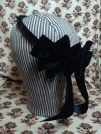 The world of millinery went rather well this year. By the time the snow fell again, I made 57 straw millinery pieces this year. I lost track of the winter hoods. I also added a line of evening headdresses, focusing on simple, classic looks of the mid-nineteenth century.
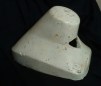 Thanks to some wonderful people, a trio of original bonnet blocks arrived early in the summer. I’ve only been able to really work on one,
 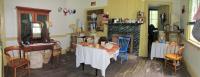 I did make it to a couple events. I am aware that I made it out to the Independence Day celebration in modern clothes. Though, I don’t remember much at all. I did make it to the
  I set up my Millinery Shop and
 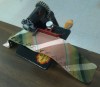 In November, I offered two very different workshops at the Museum’s Domestic Skills Symposium. On Friday, I offered Tools and Trims, a completely different, kinda crazy workshop looking at how to mimic the trims of the later 18th and 19th centuries. I spent much of the year acquiring pinking machines and dies for this workshop. On Sunday, I offered a favorite with a twist: A Pin Cushion Sampler. This year the sampler included Victorian favorites: a strawberry, a walnut, a seashell and and acorn.
 Ah, the ugly. That which dictated much of my 2017. I mentioned in my
  On the other hand…. I did do pretty decent for someone who totally got her butt kicked by a 12mm stone. I actually feel pretty darn good about that. Despite utter exhaustion on many days and this weird pain in my side, I made some pretty great pieces this year, I kept the shop up, and learned a few things.
 If you haven’t noticed, I have started a monthly project post that I hope to continue through the next year. Each one will be something small with some guidance or direction on how to do it your self. They won’t quite be a thorough as the
  In and around my experiments with lazy, I’ve made a few things. I started the month with
  I designed a
  The shop had a nice December. After a crazy year, I was of two hearts on the shop going into December. Part of me wanted to stock it with all sorts of goodies. Part of me was in dire need of down time. See above to figure out which won.




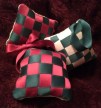
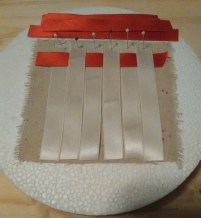
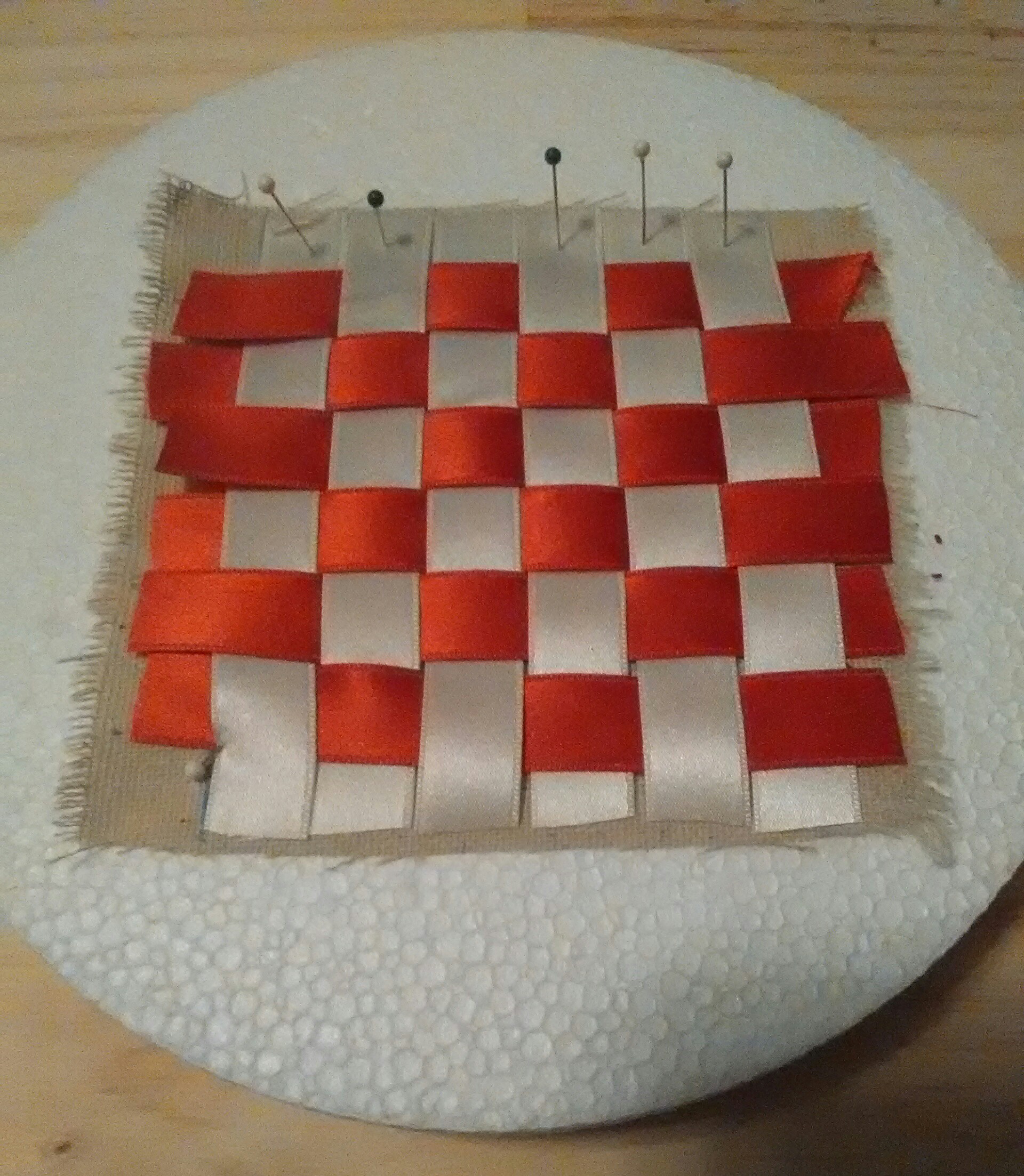
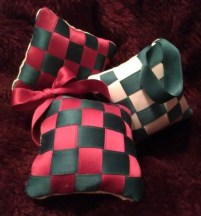 These pretty pin cushions combine two ribbons woven together either square on the cushion or on the diagonal. The ribbons are most often in contrasting colors, though not always.


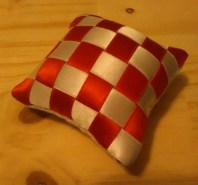 The silk ribbon acts differently than the cotton. No surprise there. This is most apparent while weaving the ribbon. The silk is slipperier and doesn’t want to snug up to it neighbors as well as the cotton. It is lighter weight and possibly less thick, or least less dense then the cotton. This effects how the sides of the cushion sit. I find the silk makes a smoother edge than the cotton, which can have more fullness. I suspect the cotton would wear better over many repeated pin stickings as the weave of the ribbon itself is tighter. I can’t say that I like one over the other though. Each has its own advantages.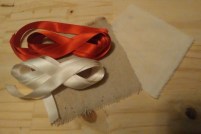

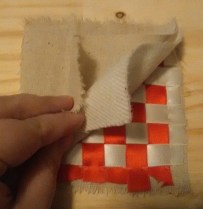 Trim the corners. Turn right side out.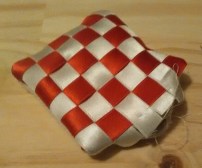






 If I Had My Own Blue Box: