Announcement from Ensembles of the Past

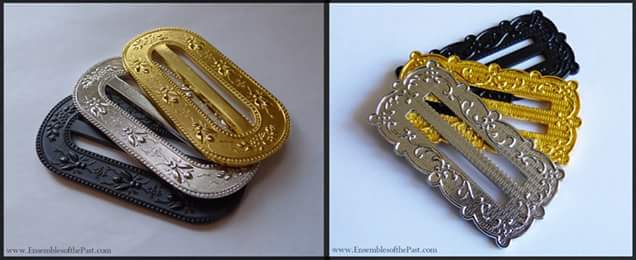
​Sara Gonzalez, from Ensembles of the Past, share a wonderful announcement. She will be exclusively producing the beautiful 19th century reproduction buckles created by Jeremy Richardson, the owner of JR&Co., who has ceased his production. Ensembles of the Past will be the sole manufacturer of these wonderful, high quality buckles. Sara says “I will be continuing the fabrication of Jeremy Richardson’s fabulous buckles, with additional styles to be added in the future. It is my hope that I will do justice to the endeavor Jeremy Richardson began, and I look forward to serving each of you through this new channel of my growing company in the coming days!”

Ensembles of the Past is currently offering the last of Jeremy’s buckles stock and pre-order buckles through the Etsy shop for $12 each. After, buckles will be $15 per buckle. Sara anticipates the first shipment towards the end of December. 

 
I own one of each. Yes, all six buckles between Lily and I. I love them. I find the quality to be exceptional, and the ease of wear wonderful. Having worked with Sara on fabric selections for my hoods, I expect she will continue the fine offerings Jeremy started. 

Please take a moment to visit Ensembles of the Past to purchase yours today. 

Published in: on December 10, 2017 at 1:01 pm  Leave a Comment  

Hexagons, Now and Then.

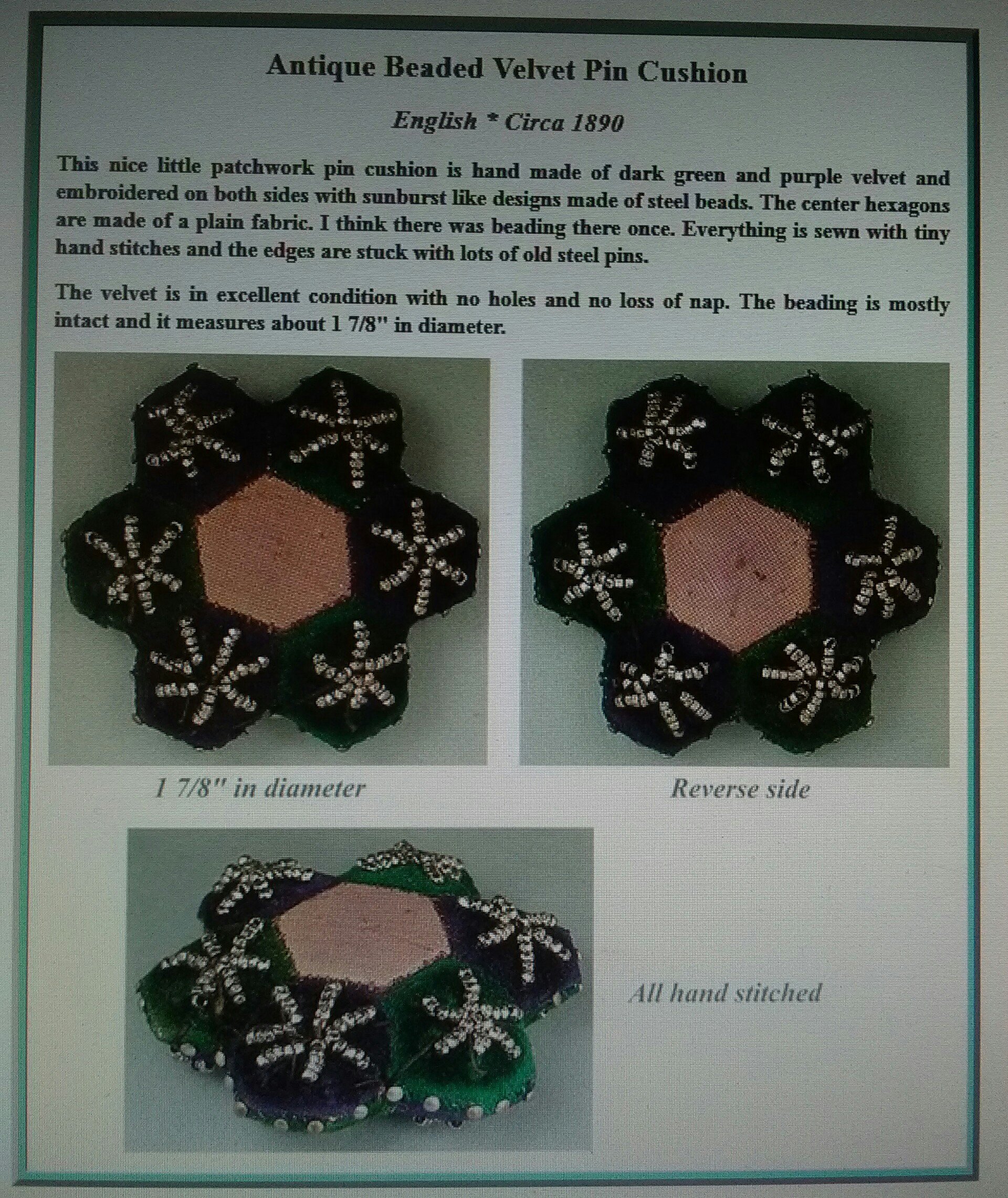
Last weekend, I sat with a local crafter at Chestnut Bay, the quilt shop with the great reproduction room within dangerously close distance, making the cutest paper pieced wreath ornament. A cute, modern project that I wasn’t going to mention on either of my blogs because it is her project. Well, I am going back on my decision because I saw this listing on Ebay:

A velvet pin cushion in nearly the same shape as the wreath, just with a center piece.

(Apparently, I just missed it, it having ended on Monday. I hadn’t been looking at Ebay because ’tis-the-season-of-not-shopping-for-myself. Then, Pinterest decided I needed to see it anyway.)

Well, let’s see…. we have tiny pieces, velvet, little stitches, and cute bead-work.

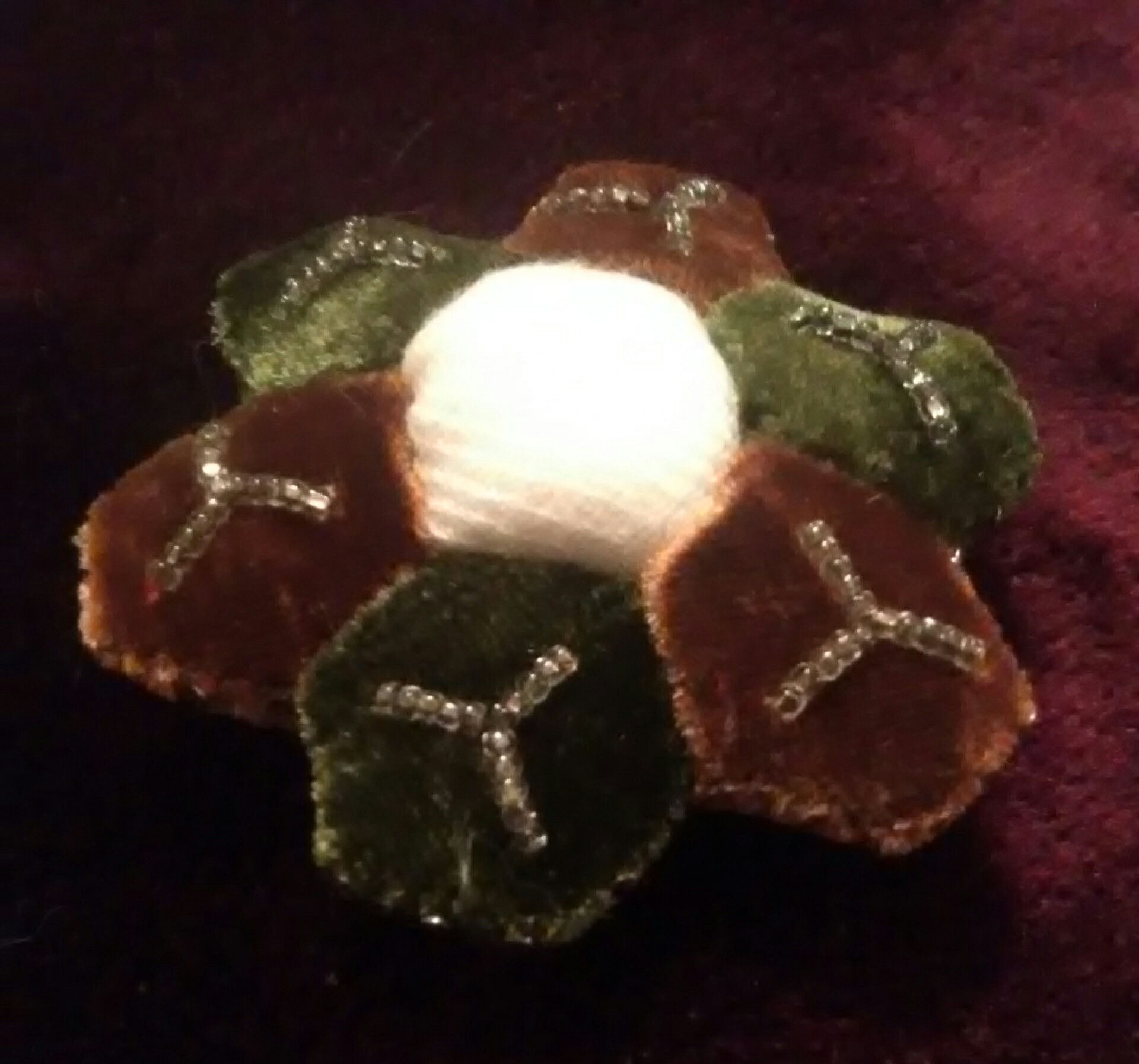
Of course, I am going to have to make this thing.

My version uses a silk/rayon blend pair of silks in forest green and russet brown. I really like how the velvet looks around the paper base. It does get pretty bulky on the back though. Mine came out larger, 2 1/2″, using the same hexagons as the wreath. I made two changes: The center is wool and packed fuller with batting rather than a fabric over a paper base. This way the center could be a pin cushion as well. I am so-so on how much I like that. I set the beads in trios rather than fives because i am a bit tight on beads. 

Published in: on December 8, 2017 at 8:56 pm  Leave a Comment  

December Project – Ribbon Pin Cushions

c.jpg

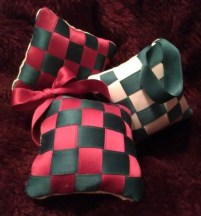
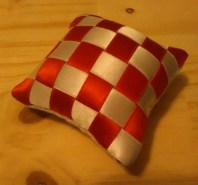
Woven Ribbon Pin Cushions have been catching my eye for a few months now.

There are only a few examples out there, that I have found. Most of them seem to be coming up on auction sites, often with the all too popular but not authenticated Shaker attribution. (I can not say whether or not ribbon pin cushions have a Shaker connection.)

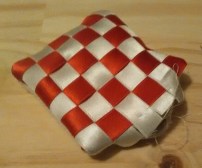
_20171128_060900These pretty pin cushions combine two ribbons woven together either square on the cushion or on the diagonal. The ribbons are most often in contrasting colors, though not always.

A bow can often be found in one corner or connecting two corners.  Sadly, the bottoms are not shown often enough to get a good survey of what materials are used. So far, one I have seen in photos has been edged with a cord.

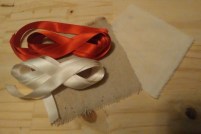
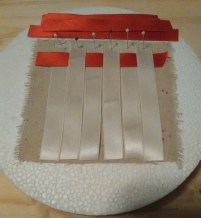
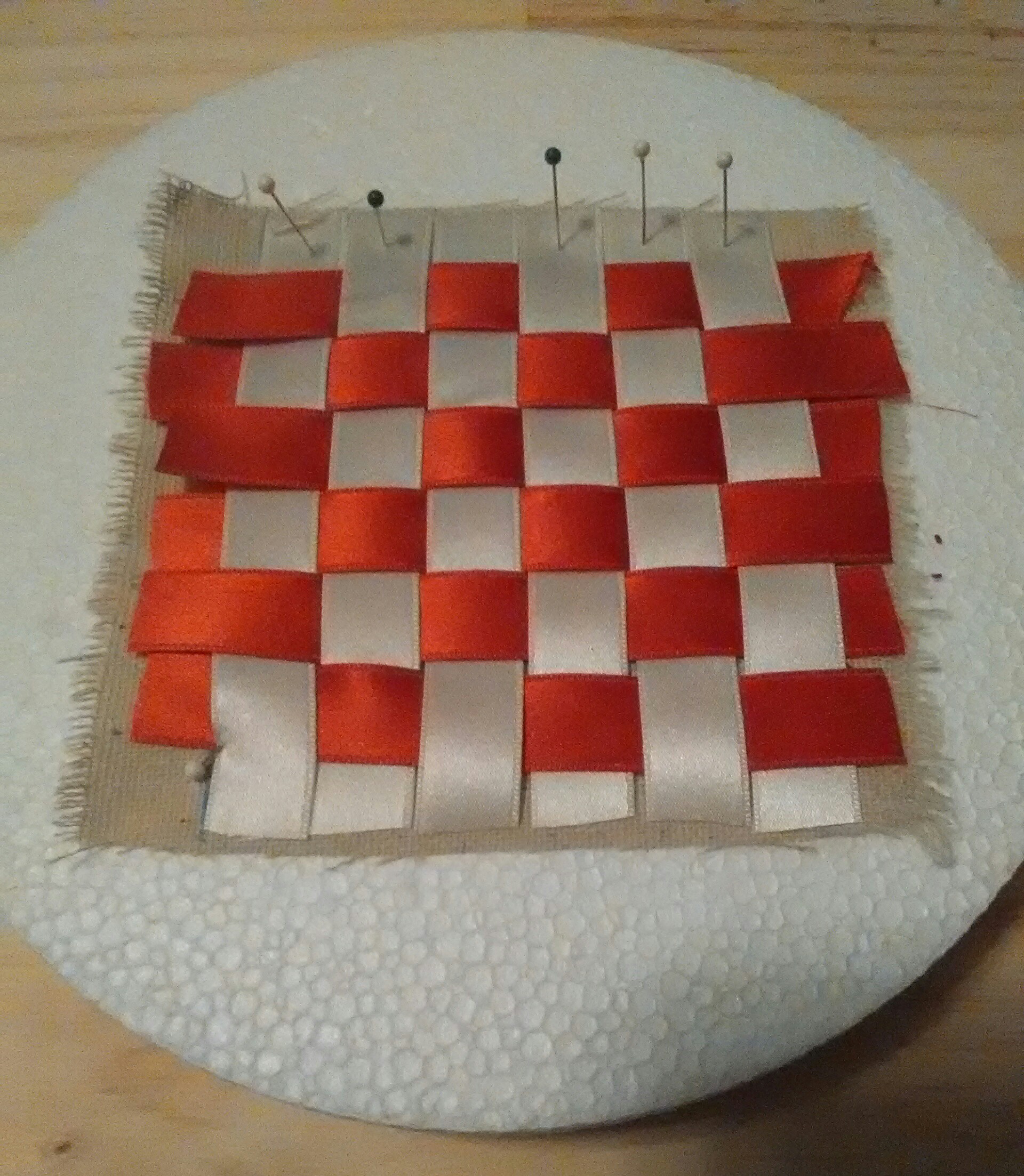
For the first few I made, I used the half inch cotton sateen ribbon from The Ribbon Store. I like the body and weave of this ribbon as well as its density of color. I found this ribbon was very easy to work with in this project because it was easy to weave, staying in place without flopping around, and had strong edges without fraying. I used a foam circle as a platform to pin and weave the ribbons on. Woven, the ribbons formed a roughly 3″ square. I basted the woven ribbons, at the cut ends, to a 4″ osenburg foundation. (I accidentally deleted these photos as I went to upload them. Sorry.) I used some ivory wool for the back. I had wanted to use a firm white silk taffeta. But, I can not figure out where I put that.

As you can see, I also used a wider white ribbon in the center of the green and white pin cushion.

While working on the cotton sateen examples, I had Carole at The Ribbon Store looking for silk ribbons and narrower cotton sateen ribbons. I wanted seasonal colors because I had a secondary idea in mind. She came up with a nice color assortment.

The silk ribbon acts differently than the cotton. No surprise there. This is most apparent while weaving the ribbon. The silk is slipperier and doesn’t want to snug up to it neighbors as well as the cotton. It is lighter weight and possibly less thick, or least less dense then the cotton. This effects how the sides of the cushion sit. I find the silk makes a smoother edge than the cotton, which can have more fullness. I suspect the cotton would wear better over many repeated pin stickings as the weave of the ribbon itself is tighter. I can’t say that I like one over the other though. Each has its own advantages.

Want to make your own?

You will need:

  • 1 yard each of 2 different color ribbons about 1/2″ wide
  • Backing fabric (wool or silk)
  • Lining fabric (Photos show osenberg. Muslin works better.)
  • Batting

Cut 6 4″ lengths of each ribbon. Cut 1 4″x4″ square of the backing fabric. Cut 2 4″x4″ squares of your lining fabric.

Place one layer of the lining fabric on a pin-able surface. You may find it helpful to mark a 1/2″ seam allowance and/or center points on the fabric.

Lay one color of your ribbon running vertically. Pin the tops of each. Begin weaving the second color starting at the pinned top, leaving a 1/2″ for the seam allowance. As you weave, be sure to keep the ribbons as snug together as they will allow.

When you have finished weaving, I recommend adding a pin diagonally in each corner, holding the ribbons to the lining. See the bottom left here:

Baste the layers of ribbon and lining together. Keep your stitch just about 1mm to the outside of the woven area (just outside the seam allowance.)

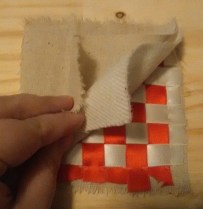
Layer all your layers: lining – ribbons – backing – lining. Stitch around three sides.  On the 4th side, leave 2″ open in the center for turning and stuffing. Use the basting line as a guide, sew just on the inside of it. This should put you right on the edge of the ribbon weaving. I recommend very small stitches 1-2mm in length. If you tend to have loose stitches, try a back stitch to hold the layers together.

Trim the corners. Turn right side out.

Fill the cushion densely with batting. I prefer wool batting. Other options to consider are wood shavings, bran, walnut hulls and wool scraps.

Once full, close the opening with a whip stitch or hidden stitch. You may wish to add a bow or loop in the corner.

Oh, that narrow 1/4″ ribbon? For miniature versions of course. This one is just over 1 1/2″ square.

Don’t miss theBird Ornament over on Don’t Paint the Cat.

Published in: on December 1, 2017 at 7:00 am  Comments (2)  

Giving

Despite what my ridiculously refilling inbox indicates, today is not Cyber Monday take 2. Um, no. Today is “Giving Tuesday” or locally “Roc the Day.”

Today is the day you say thank you to those organizations and sites that make the world better, that do the little things that mean a lot, that do the hard stuff.

My personal recommendations for your consideration today:

The Genesee Country Village and Museum

502ac64d-2d30-446e-a24f-c0f9432971caThis year, the museum’s annual appeal focuses on very special village residents – the animals:

“As you know, the museum would be a very different place without our animals! The joy they bring to our visitors is part of what makes GCV&M such a fun, educational, and unique place to visit. So this year, funds raised through our annual appeal will support the many animals who call GCV&M home.

As anyone with a pet can tell you, animals are not only wonderful to have but also expensive to care for. During the winter, our oxen each eat a bale of hay per day! Keeping our animals safe and healthy is a priority, and we hope you’ll help us do just that this giving season – and also come visit them (and their new babies!) in 2018.”

. Click Here

.

Keller’s Kats 

kellersbanner

Keller’s Kats is a special rescue that cares for special needs animals and finds them just the right home. In the past year, they have helped numerous cats in need, from losing a limb or an eye to learning to live with a neurological challenge. These are amazing people with amazing hearts.

. Click here

.

Hearthside Cats


This is our local rescue. As I’ve watched their post over the last few years, I’ve come to know they truly are a forever rescue. They go to great lengths to rescue those in need. Then they stand by those in their care for the long haul, be it many years or the hardest of days.

. Click here

Published in: on November 28, 2017 at 7:00 am  Leave a Comment  

This Holiday Season 

I hope everyone is having a lovely Thanksgiving, enjoying time with family and friends. I suspect some of you are winding down, putting your feet up, checking your computer or phone, and possibly considering a little shopping. With that in mind, here is a peak at what you can find in my Etsy shop this holiday season. 

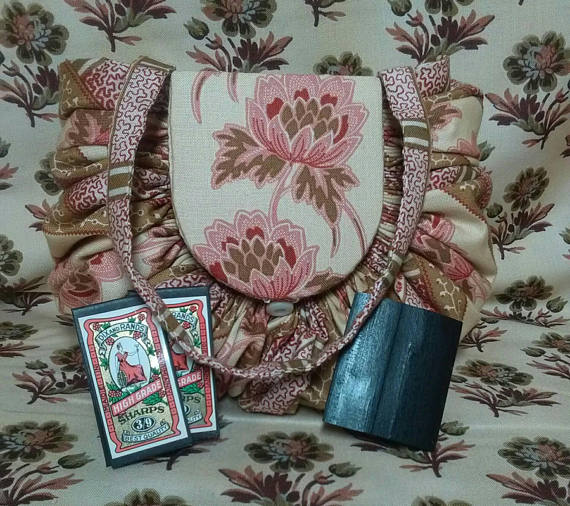
For those who sew on the go in historic settings, I have sewing workbags and the very popular workboxes

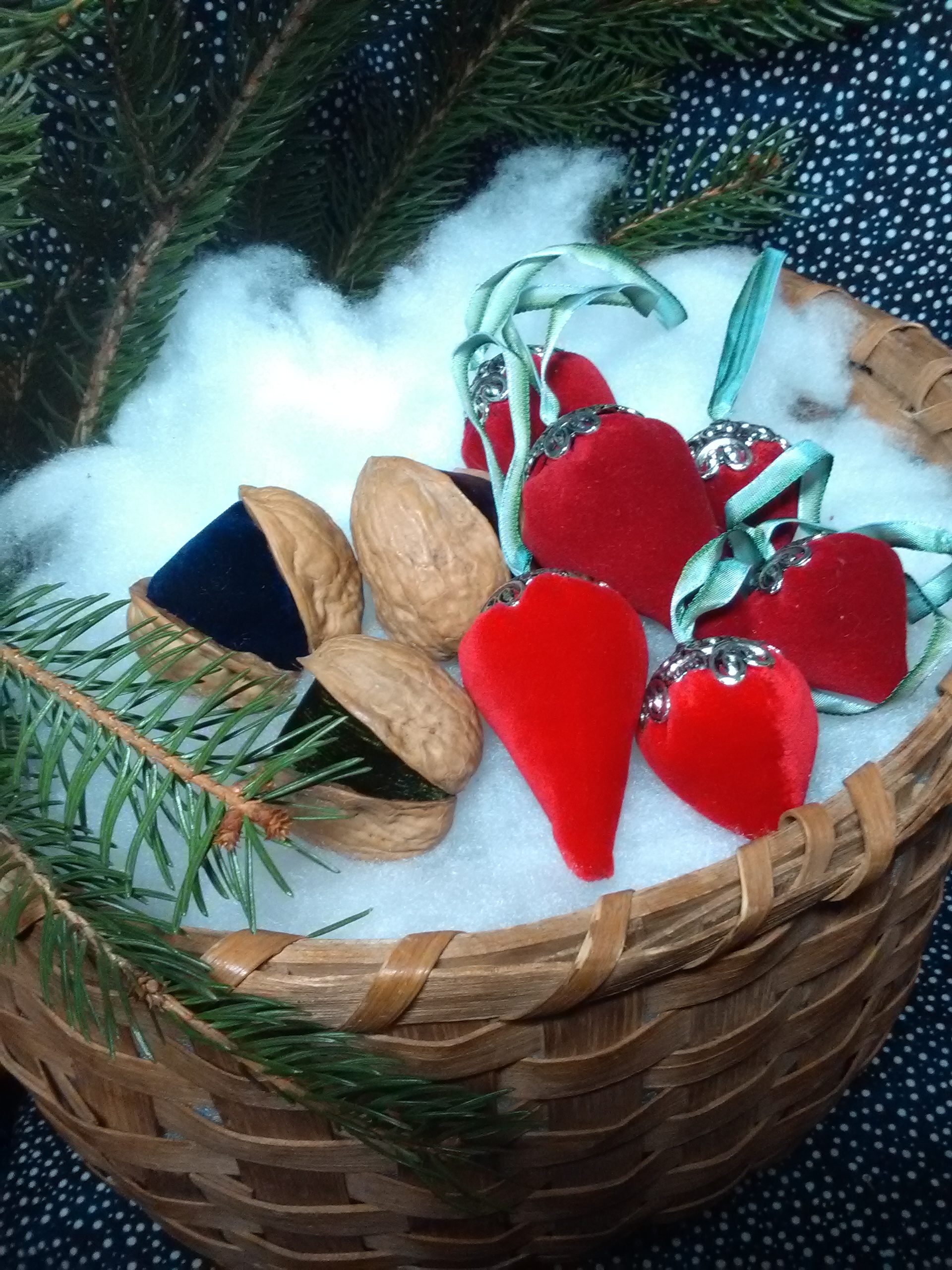
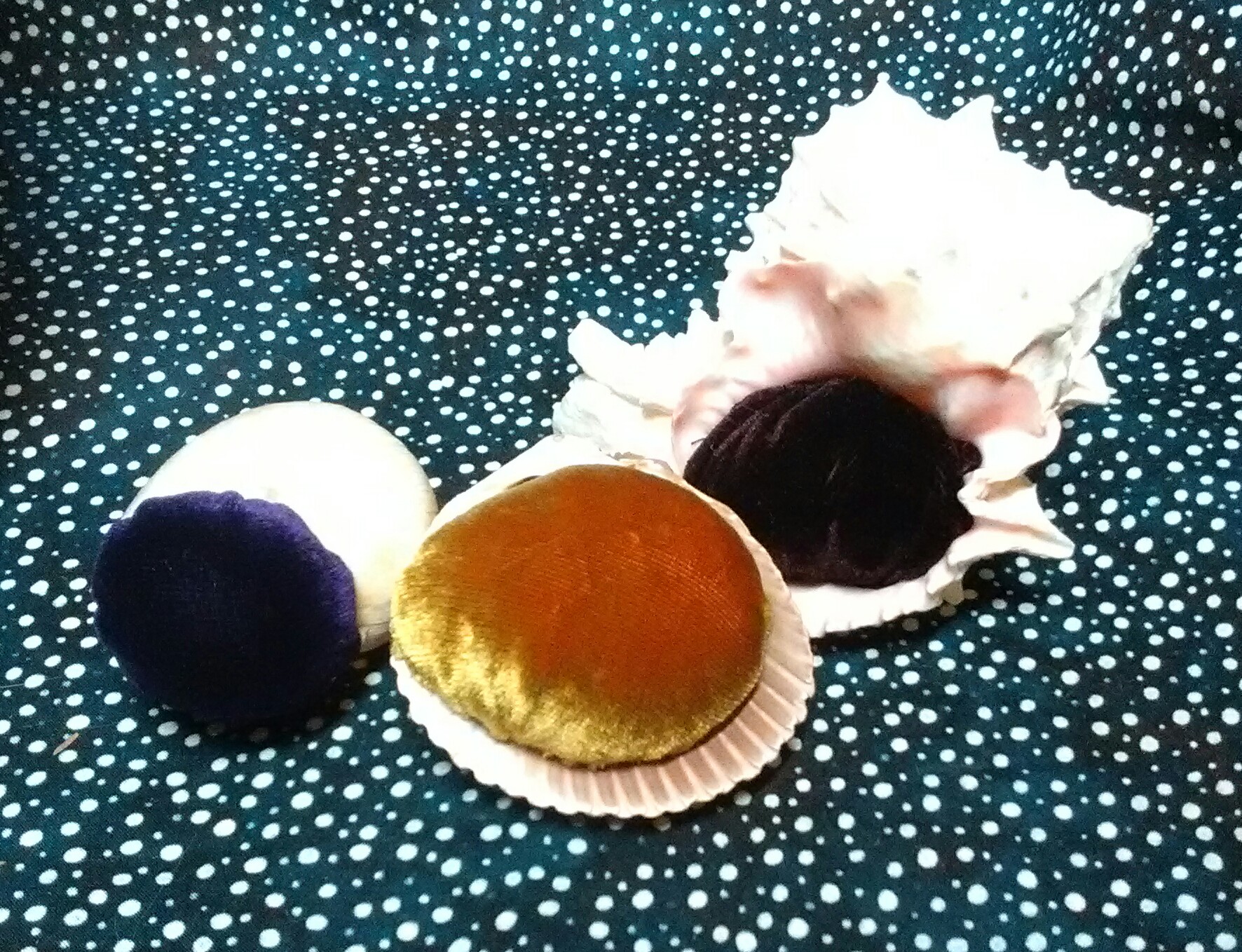
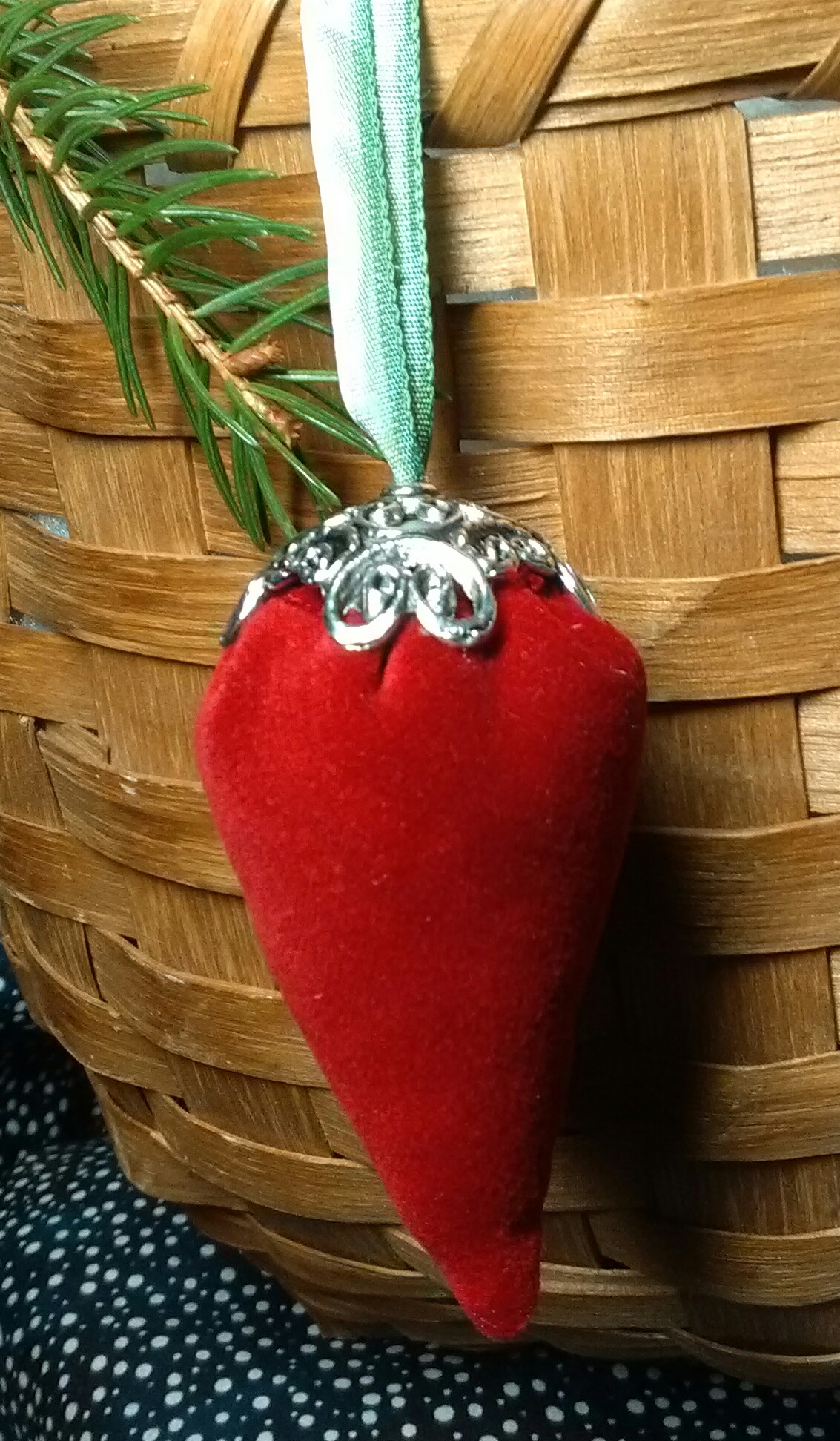
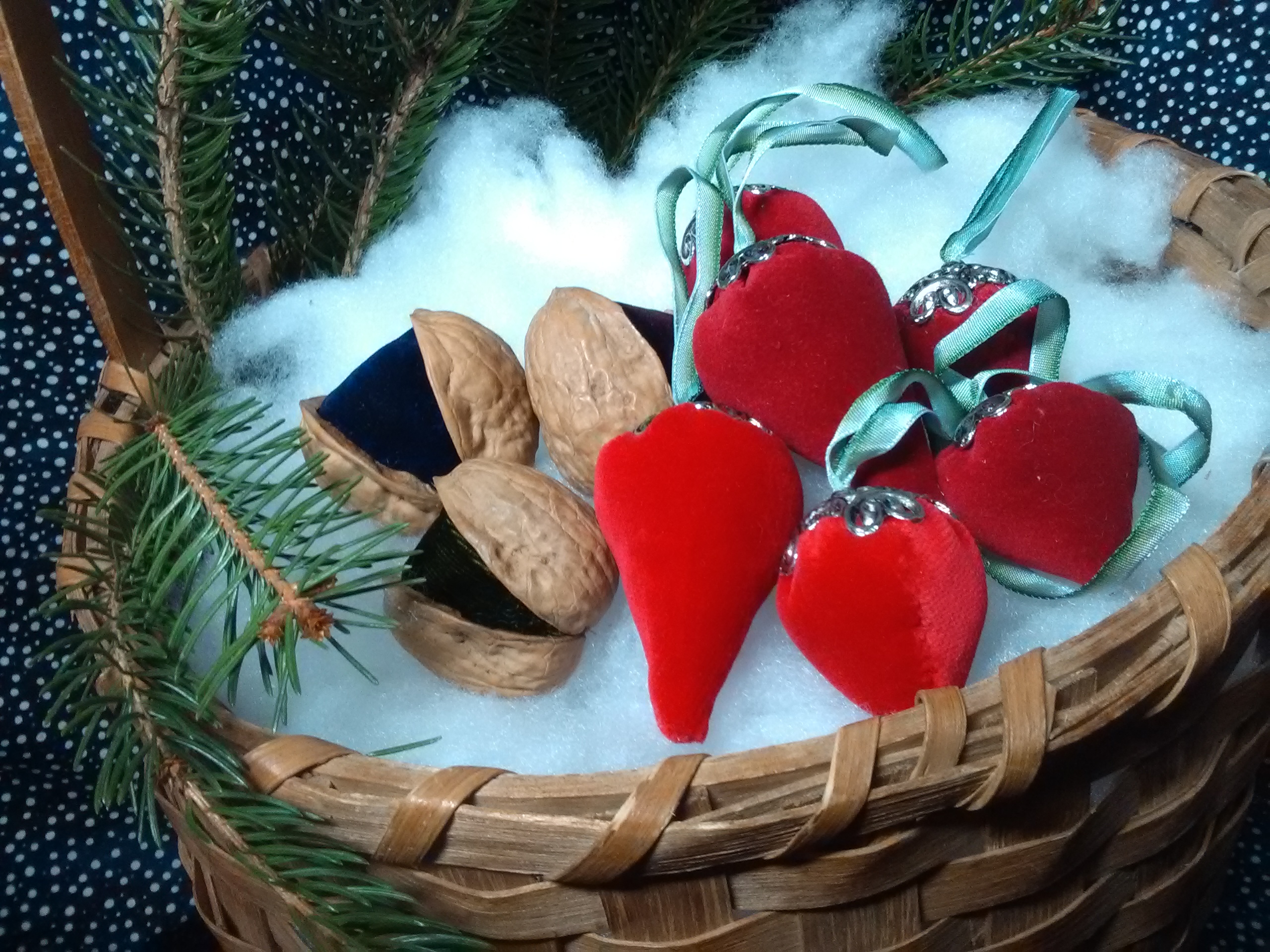
Fill her, or his, sewing box with a popular Victorian pin cushion. My shop is full of strawberries, walnuts and seashells, all hand made for the accurate impression. 

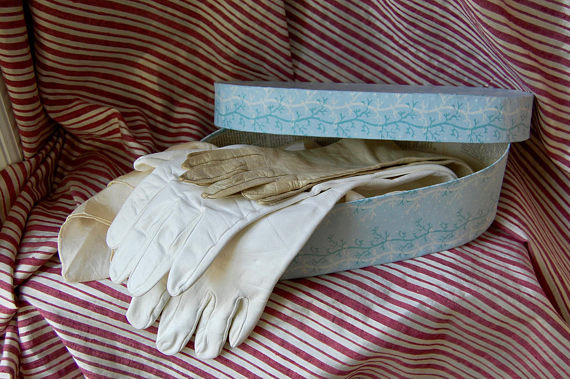
Not sure what to get the woman who has everything? Consider a vintage pair of gloves. I have several in my shop for early 19th, mid 19th and mid 20th century impressions. 

Looking for something special for their tree or yours? I made some strawberry ornaments as well. 

Of course, I have winter millinery for a warm and accurate mid-nineteeth century impression. I will be adding pieces as I get them finished. Each piece is entirely hand made and drafted from an original in my collection. 

Published in: on November 23, 2017 at 7:01 pm  Leave a Comment  

What do I Get My Wife for Christmas?

Back by popular demand, here is the 2017 version of What do I get my wife for Christmas. 

Gentlemen, are you asking yourself “What do I get my wife for Christmas?” or “What do I get my girlfriend for Christmas?”? If so, here are some reenactor approved gift ideas:

Fill her book shelf with these must haves:

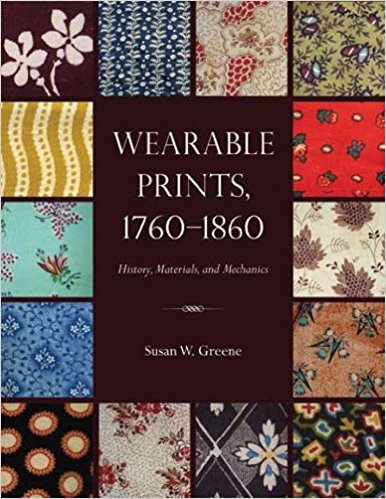
Wearable Prints, 1760-1860, by Susan Greene– This fabulous book is filled with extensive textile research and oodles of dress and fabric photos. This is a dream book. 

Fanciful Utility: Victorian Sewing Cases & Needle Booksby Anna Worden Bauersmith. This book is packed full of small projects including how to make several kinds of housewifes.

The Dressmaker’s Guide: 1840-1865 by Elizabeth Stewart Clark. This book is a must-have how-to for making women’s clothing during the crinoline era. (While you are there, check out the doll patterns too.) 
 

Love giving little things that mean a lot? 

 Kitty Calash is offering beautiful handmade bandboxes in her Etsy shop. These are well made with great attention to accuracy. She has glove boxes, sewing boxes, even comb boxes. 

Love the idea of giving a pair of gloves? I have several vintage the pairs of gloves in my Etsy shop. 
Looking for some stocking stuffers?  

I’ve filled my Etsy shop with small, heartfelt gifts for the historical interpreter in mind. You can choose from strawberry pin cushions, walnut pin cushions, seashell pin cushions, all very popular Victorian accessories. There are sewing boxes and work bags as well. 

If she enjoys writing at events or needs a journal, consider one of these pretty books from Talbott and Company. (A pair or trio would make an extra special gift.)


Want to pamper her? 

ReproDolls, over on Etsy, offers hand crafted reproduction dolls and accessories. Give her a beautiful period doll with accessories. 

Published in: on November 23, 2017 at 1:01 pm  Comments (1)  

Preparing for the Holidays 

This has become a favorite event of mine. Families pour into the Genesee Country Village on days that can be quite chilly, or even damp. Yet, they are full of questions, curiosity, and smiles. From shortly after opening until just before closing there are very few “down times” and often, we can’t see the other wall due to the number of people. 

Yes, this is the sort of event I love. 

Today, I got to spend the day with one of my favorite interpreters. Marie is a wonderful basket maker and person. I rarely get to spend a whole day working with her. For today, she made miniature baskets. 

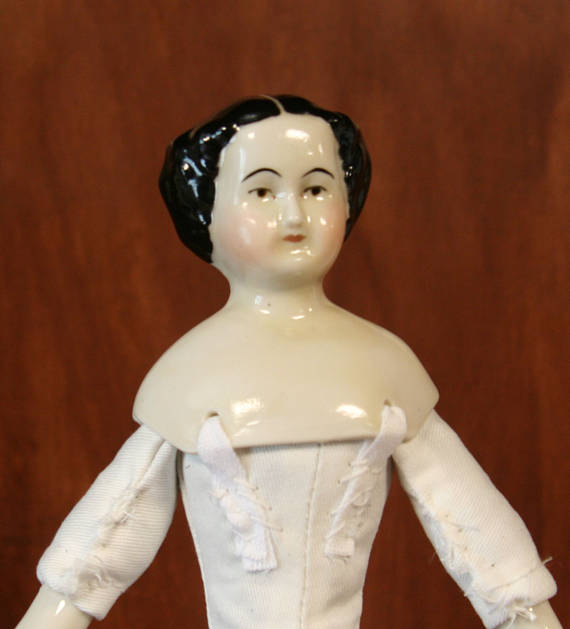
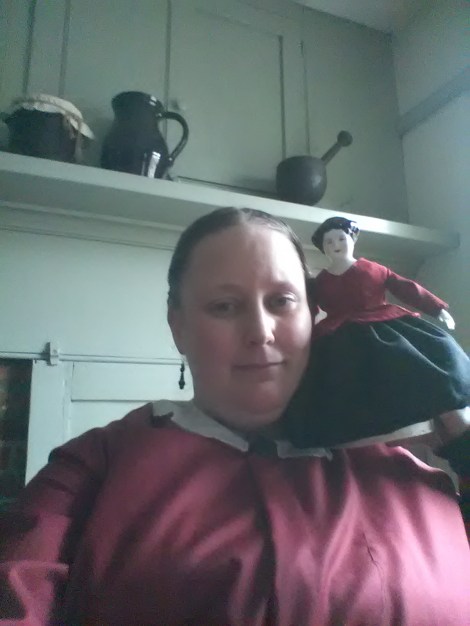
I brought the girls along. Milli and I dressed alike after all. 

This summer, I made Milli’s red silk basque and black wool skirt. (Read about those over on Don’t Paint the Cat.) Then I decided I liked the combination so much, I wanted a set like it too. I had made the black wool skirt to wear in July. I found a nice red wool, not quite as vivid as the doll basque. I debated back and forth whether to put the darts and shaping into mine considering I am still having issues with my pancreas, liver, and incisions. Up until a week ago, I planned to. Then decided I didn’t want to do them just to redo them next spring. Good decision. 

Now, readers know I often fail at getting photos. This time I really did try. These are not the greatest because the light was dim and, well, I didn’t get back to my chair fast enough for the timer. 

Hopefully, I can borrow some photos from friends to share. 

To give you an idea of how overcast the day was, here are some views out the window. You’ll notice some work being done on the walk ways. There used to be a wood plank walk there. It was lovely to walk on… when dry. I look forward to seeing what is done.  

*Please be sure to visit Don’t Paint the Cat for more on the Dolls’ day.

Published in: on November 18, 2017 at 7:12 pm  Comments (2)  

Solace in Walnuts

Yep, it has been a rough year. Then, this box of paired walnuts arrived.

I’ve found working with walnuts to be very relaxing. Surprisingly so. Oh, how I’ve needed a relaxing, pleasing project. Thus: Solace in Walnuts. I still love making my strawberries. Don’t worry. Those aren’t going away. Walnuts give an extra level of fiddliness, which you know I love.

The area squirrels will tell you walnuts are wonderful. The Victorians agreed!

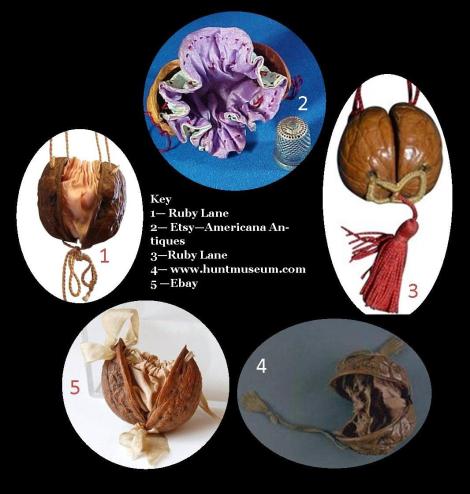
Between originals and crafty directions, there were oodles of adorable things made with walnuts…. pin cushions…. baskets… thimble holders… miniature purses…. doll boxes…

Here are just a few pieces I’ve found inspiring:

12

I find the pin cushions that use a pair of shells pleasing to make because I basically recreate the guts of the nut out of fabric. Sure, it would be possible to make a simple velvet covered bag and squish it into the shell. But, I find creating a shape that mimics the interior of each nut gives a nicer shape and better pin cushion.

The thimble holders that look like little purses are what I am currently exploring. Some of the originals show little holes for the ribbons, both as the handles and as the hinges. Period directions call for making these holes using a long sharp needle heated red hot in candle light. I am going to give this technique a try. But, I am also going to try my dremel’s drill.

Walnut pin cushions will be part of this weekend’s Preparing for Christmas while at GCVM.

~~~~~~~~~~~~~~~~~~~~~~~~~~~~~~~~~~~~~~~~~~~~~~~~

A couple nineteenth century directions for walnut crafts:1


Children’s Fancy Work, 1882

Dainty little pincushions and thimble-case can be made out of walnut-shells. Scrape the inside of the shell  till quite smooth, then stuff a little bag of some bright-coloured materials with wadding, making it as nearly as possible the shape of the shell; sew to this a handle—a bit of narrow capwire, covered, answers for the purpose—then drop a little liquid gum into the bottom of the shell and press in the cushion. This can be supplies with a pedestal in the following way: – Take two walnut-shells and pierce a couple holes in the centre  of each (A red-hot iron meat-skewer or knitting-needle will do this beautifully.) Now place the shells together against each other, and tie them together with a string or fix them with wire. In the upper half the cushion is placed; the lower forms the stand. For an emery cushion take two halves of a walnut-shell and having scraped the inside, brush over the outside with copal varnish. In both halves make narrow slits in the middle of the sides. Fill a little coloured silk bag with emery-powder and gum it into one half of the shell. Then join both halves of the shell together by means of a ribbon the slits in one side, and tied in a bow on the outside. Through the openings on the other side draw another piece of ribbon six inches long. This serves to open and close the walnut. A thimble-case is easily made of one half of a shell lined with pink wool stuck on with gum, then inclosed [sic] in a tiny bag of its own shape, but large enough to admit being drawn closely over the opening with a running cord.


I thought you might like a couple more later Victorian Walnut crafts.


Children’s Fancy Work, 1882

Toys made from walnut-shells will please the little ones, and the making of them prove no less enticing.

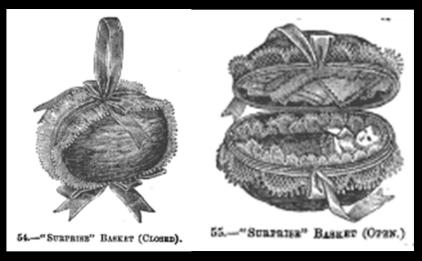
2

….. Nos 54 and 55. These two illustrations show a pretty little toy, the “Surprise” Basket, closed and open. Two exactly– fitting halves of a walnut-shell are scraped clean and lined with pink or silver paper. Holes should be carefully drilled all the way around in both shells, and then a frill of narrow lace sew round each for the outside and round the inside of the lower one. This is effected by putting the needle through the holes. The edges are then bound with pale blue silk so put on that the stitches do not show. In the lower half of the shell is a tiny wax or china doll with a tiny quilted covering over it. In the upper shell dolly’s tiny wardrobe is packed. The shell is closed by means of pale blue ribbon, a loop and end being sewn to each half.


Published in: on November 17, 2017 at 7:00 am  Leave a Comment  

November Project – Spool Holders

IMG_20171004_164216

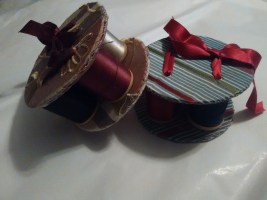
How often have you opened your sewing box or basket to find your spools have run amuck and thread is unrolled everywhere? In the nineteenth century, spools of thread were kept neat and controlled with spool holders and spool trucks. (We’ll talk about the latter later.) Spool holders can be both functional and pretty, using small pieces of silk and ribbon.

Here are a few basic spool holders I saved to my phone/tablet over the past year or so. (I was very bad in not saving all the locations.)


These spool holders are also an excellent way to expand your FanU skills. The top and bottom are constructed using the basic techniques found in Fanciful Utility.

Making a Spool Holder

IMG_20171004_164224
Materials:
1 sheet of pasteboard (8.5”x11”)
Silk pieces – 2 approx 8.5”x11”
Matching wooden spools of thread (number based on shape selected.)
Length of ½” wide silk ribbon – Approx ½ yard
A sharp awl and a bodkin
Long straight pins (optional)


IMG_20171004_164115Directions:
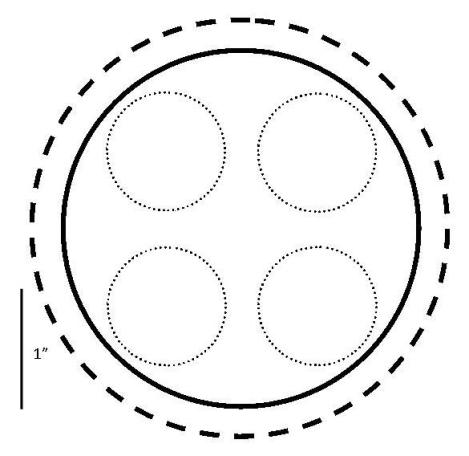
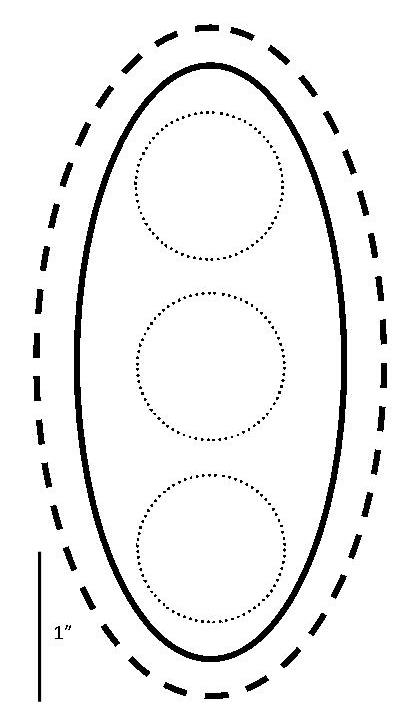
Choose the template below you wish to make.
Cut 4 pieces of pasteboard using the solid line.
Cut 2 pieces of silk using the dashed line. This can be one decorative silk for the outside and one plain silk for the inside.


Pair the pasteboard and silk into the top and bottom pieces. Pre-punch holes in the pasteboard using the awl. Make sure the holes for each layer line up.
Cover each set using your preferred method from Fanciful Utility (see pages 39-44)


Pierce the holes through the silk from the outside to the inside, for the top and bottom pieces. Be sure to not break the silk threads, but pass the awl between the weave.


Line top piece and bottom piece up with the spools inside. Place the pins through the holes into  the holes in the spools.


Thread the bodkin with the ribbon. Run the ribbon through the top layer, through the spool and out the bottom layer. Repeat until the spools are neatly held in place and a pretty bow can be tied.
.
Templates:
(You may need to copy and paste these into MSWord to size them and print. Use the 1″ line for guidance.)
CirclesShapes 3Shapes 4Shapes 5
Published in: on November 15, 2017 at 2:00 am  Comments (2)  

Are You Ready for Winter?

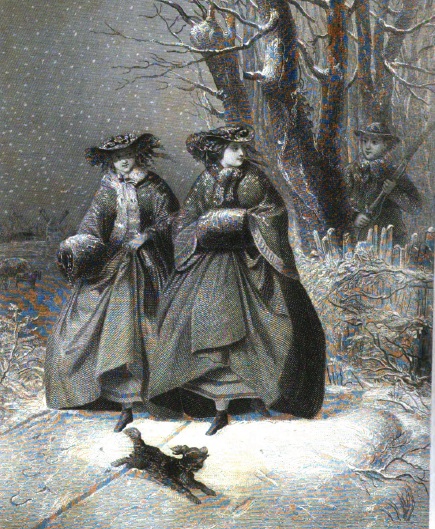
Here in the Northeast, summer held fast through much of the fall and Mother Nature was fierce. Temperatures would dip into the seasonal fifties, then hop back up into the seventies, close to the eighties, only to swing back again. Each swing was accompanied by a shift in air-pressure, wind, and rain. Some of these spells sent waves of walnuts bouncing off the neighbor’s new metal barn roof. Oh! That Sound! We had to be quick to catch the changing leaves because as soon as they would change the wind and/or rain would send them to the ground. Then… Thursday night came. Wind, pressure, rain became snow as the temperatures dropped. It was 50 degrees as I drove into work that morning; barely 25 the next.

Winter arrived begging the question:

Are You Ready for Your Cold Weather Events?

I invite you to enjoy this version of a long favorite blog article, with a couple revisions:

November tends to have cemetery services and even candle-light tours in honor of Veteran’s Day. A good many attend Remembrance Day activities in Gettysburg, which can be delightfully mild or down right blustery.

December brings Yuletide and Christmas events for many living history sites. Communities may also have festive caroling or even a Dickens festival.

January and February are perfect for social sledding events. I believe this is also when some groups do Winter of ’64 weekends in the depths of the snow.

March brings maple sugaring events when it can still be snowy or just plain wet, with the promise of cold.

For each of these events, attendees deal with ….. Cold!

(and also wet and wind and ice.)

How to be Ready for Your Cold Weather Events

Keep in mind – Layers are the Key to Warmth. This means your:

  1. Underpinnings
  2. Dress
  3. Outerwear
  4.  Accessories.

Your underwear  acts as your warmth protector and your moisture protector. Even though it is cold, you still sweat. You need to pull that moisture away from your body without it feeling retained in the fabric near your skin. Consider the following that can help you keep warm:

Aspects of your dress to consider:

Your Outerwear acts as warmth, wind and moisture protection. You want a garment that will protect you from the wind and snow, while minimizing the restriction on your movement and not requiring you to hold it in place.

While your outerwear protects your core, your Accessories help keep your hands and head warm. Consider these:IMG_20170402_102219
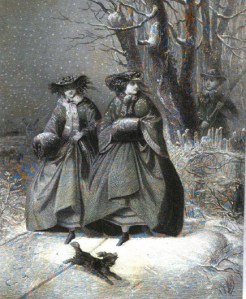
What did they say about dressing for the cold?

The following passage, published in The Home Monthly, comes from an area often struck with frigid cold and an incredible amount of snow, Buffalo, NY, in 1859

Winter Clothing – Style and Material

We do now propose keeping our readers in the latest Parisian style, for we have no Genio Scott, Genin or Brodie to consult, and we hardly think we shall fail of our purpose without them. We do not choose to cater to fastidious fondness for the very latest pattern, and encourage ladies in exhausting their entire time with thoughts in the “where-withal shall we be clothed.”

Every lady ought to be dressed well, if not her purse will permit, but that does not mean to cast off a garment, because something later than that has appeared in the fashionable world, and that too with no regard to the better uses to which such expenditures could be put. But of course we need not mention this, for that sort of woman would scarcely read a magazine without fashion plates.

To dress meanly with no reason for so doing, and above all, to make religion an excuse for shabbiness, as Timothy Titcomb says, is abominable. It lessens our usefulness. We should be as beautiful as we can make ourselves, but that is not accomplished by any means in following the rule of fashion plates.

Merinos, and all wool Delaines are the most sensible as well as most durable of all materials for out-door wear at this season. Cut with pointed basques on slender figures, and trimmed neatly, with a dainty cambric collar and sleeves, and you have a costume suited to all ordinary occasions for winter wear. One’s own taste and length of purse should be the guide for extraordinary ones. Large plaids on small people, stripes on very tall ones; and Bayedere on short persons, are all equally unbecoming. Indeed, all conspicuous patterns weary the wearer who has refined taste, as well as the beholder. Above all thinks, consult, if possible, in an indirect way those you love best as to color, &c., provided your complexion will permit a choice.

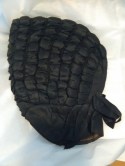
The prettiest and most serviceable bonnet for winter is a black velvet. It admits of remodeling, and can be worn with propriety with any colored outer garment, and any color about the face.

The loose sacque or raglan of ladies’ cloth, is exceedingly convenient, as well as pretty and inexpensive for a cloak, as not trimming is required – nothing but a binding neatly stitched on.

The same material to be used for children’s wear, both boys and girls. Pretty wool cheques are cheap and durable for girl’s winter dresses, and boy’s coatees for the house. Above all things, don’t let them be made too short at the top and bottom of the garment. Many a mother’s pride has been gratified by the praise bestowed upon the fair neck and rounded limbs of her child, and after her heart has been broken, while laying them from her sight forever. Which will your choose?

Dress them warmly and let them out into the frosty, fresh air to grow rounder and fairer, albeit no one but yourself see how fair. We did not purpose saying this much, but it is written. Quarterly we will endeavor to suggest whatever is worthy of mention among the novelties of the season, always keeping our peculiar views of substantiality and beauty side by side.

New Materials

The challies which are offered at very reasonable prices this fall, are pretty, and seem likely to be the most durable of any commone dress goods that we find. They are nearly all in bayadere stripes – some of them high colored, but where warmth and durability are required we think they will be found very desirable. There is also a new material of Angola wool for dresses – heavier than wool delanes or merinos, which we judge to be very desirable for these qualities, viz: strength and durability, unless the satin stripe that adorns it should be found to fray out. – Dresses of this material can be bought in New York at $6, the pattern. This comes the nearest to ladies’ cloth of anything we have seen. The high-colored printed cashmeres – merino styles – are offered as low as six shillings per yard, while we found recently at Stewart’s the best colors of printed French merinos at a dollar per yard. The bright chintz, patterned, all wool delaines are offered lower than ever before. But no delaine can be as cheap as a good merino at least to those who wear their dresses out. We are glad to see more durable material for dresses coming into market. Much time and labor in dress-making will be saved by those who emply these materials. It is also a saving of expense, for the cost of making and trimming a dress of good, and of worthless material is very nearly the same. Every lady, then, should feel that time and labor are wasted in the making up of flimsy material and even if her means should be at first seem too limited to purchase that which is better, she should make a special effort to save up “capital to economize with”.

(bayadere stripes = horizontal stripes)
Published in: on November 14, 2017 at 7:00 am  Leave a Comment