Fancy Work Friday: Recreating the Triangle Book

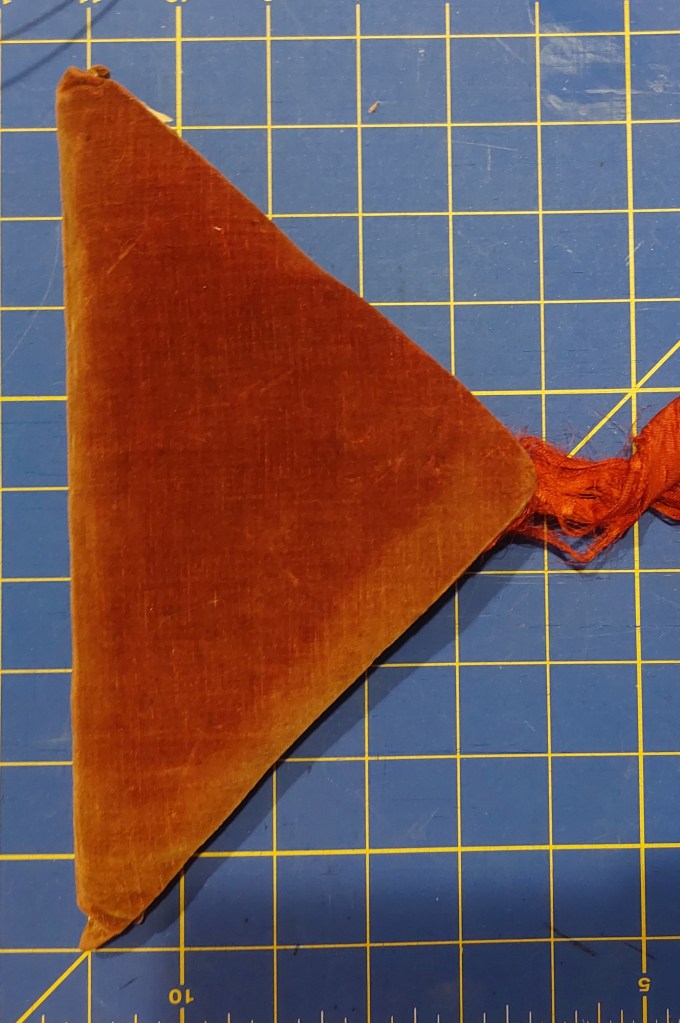
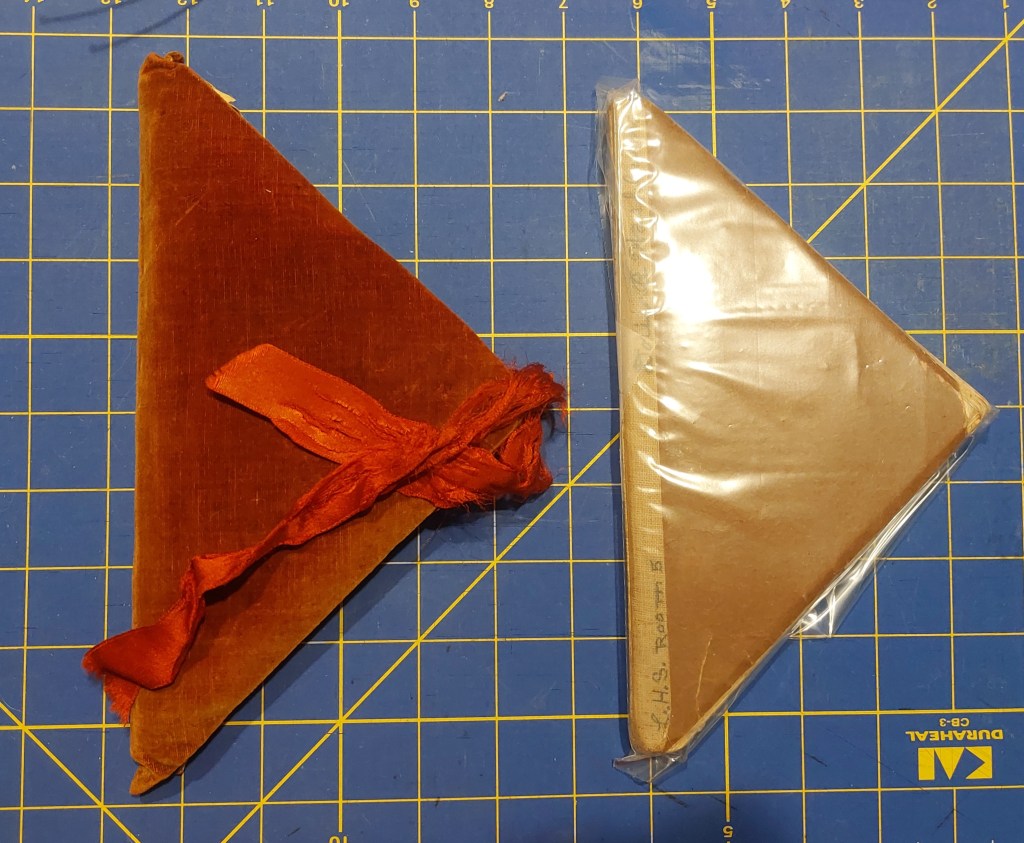
Some 8 months ago I unboxed triangular shaped book covered in velvet. The pages of this hand made book were folded in upon itself, each containing a letter, memory, or passage to the recipient of the book. The folds were sealed with die-cut flowers, hand cut stars, and other motifs, annotated with direction for opening including date, time and location. If you missed the unboxing video for this turn of the century book, you can find it here on YouTube.

Since opening this sweet book, I have wanted to recreate it. Finally, today, I did.

The base of the book is the well know Composition Book, with its thick pasteboard cover in black and white, with thin lined pages and simple sewn binding.

I began by unstitching the binding to remove half of the pages reducing it to 50, slightly less than that found in the original. I set aside the removed pages to create a second book. Both sets of pages needed to be restitched, without the cover.

Each page needed to be folded, first from the bottom outer corner up. Then, from the upper right corner down to create the right angle of the triangle.
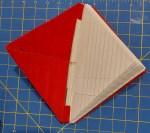
I covered the pasteboard cover with red velvet. In doing so, I folded each side in to the wrong side about an inch, down to the corners of the cover. The four corners of the created rectangle fold down over the sides of the cover. This put folded edges close together to be sewn snug onto the pasteboard. I did this from memory of the book as it is pack away. After completion, I found these folds overlap on the original rather than come together. While this does give more complete coverage, it also creates more bulk, which my mimic lacks.

After covering the cover, I stitched the pages into the spine.

I am pleased with the finished book. I find it sweet with the velvet cover soft. I will be adding red ribbon ties when I find the right ribbon.
If people are interested in step by step directions, I can putthose together. I remembered to take photos of this process.

I was very excited to find a second triangle book some months after finding the first. This book predates the red 1902-03 book, bearing an 1897 date according to the listing. I have yet to open this book so not to distract myself.
Published in: on September 9, 2022 at 6:05 am  Comments (5)  

How I Make Hat Stands (or Bonnet Stands)

Back before school ended, it may have been May, I said I would do a video and post about how I make my hat/bonnet stands. As school is starting tomorrow, I felt I really needed to get this recorded.

Here is a sampling of hat/bonnet stands I use at home and events. The blue stands were made from a 3 legged table and the cross pieces with plaque bases and tops, with the tops covered in velvet. The two tilted stands are from the cross pieces. The pink stands, also with plaque bottoms and tops, were made from spindles sold for a dollar a piece at a yard sale. The unpainted stands farthest to the right are the ones I made first. They are made with dowels, plaque bases, and foam tops covered in velvet. While I like the velvet covers, I found the foam does not hold up to the travel and wear I put them through. I will be replacing the tops of two with wood.

For the center spindle, select or cut, a spindle to your select length. I recommend at least 10″ for a mid-century bonnet or at 14″ for larger bonnets. In the video, I am using a spindle from my local chain hardware store. Initially, I wanted to purchase one table leg, a tall, thin one, similar to the legs I previously used. I found they were very limited in selection now. I selected a spindle from the section of stairway banisters instead. This is on the more expensive end of the pricing. It cost $9.90. I had it cut right at the store because I do not have the space or tools at home to cut properly. As you see in the video, this was not the neatest cut. Also, I found after purchasing there is a hole drilled into the bottom of this style spindle. I prefer to use found spindles from yardsales or roadside, such as those from broken chairs or tables. But, for this video I wanted to have an accurate cost for purchasing from a store.

Another option for shorter stands I may be trying in the future is wooden craft candles. These seem to be sold in pairs or larger groups by some craft sources. This image is from Oriental Trading. I anticipate the bases and tops will need to be glued in place rather than screwed.

The bases and tops I use are the small palques sold at chain craft stores in the unfinished wood section. The bases need to be larger, approximately 7″ by 5″, rectangles, circles, or ovals. These can be combined with a second plaque like the layers of a tiered cake. To do this, a longer screw will be needed. The top should be a round plaque 3″ to 4″ in diameter. For smaller millinery such as 1880s capotes, you may want an even smaller top.

These tops a can be left uncovered, painted or stained as the stand. Or, the top can be covered with a little cotton batting and fabric like velvet or velveteen to add cushion and a little grip inside the hat or bonnet.

Video Example Total Cost:

  • Spindle $9.90
  • Bottom plaque $2.29
  • Top plaque $.99
  • Screws (2 1.5″ wood screws) $.30
  • Total $ 13.48

Coming soon: A photo of original stands

Published in: on September 5, 2022 at 5:00 pm  Leave a Comment  

Millinery Monday

Published in: on September 5, 2022 at 6:05 am  Leave a Comment  

When a Pocket Isn’t Just a Pocket

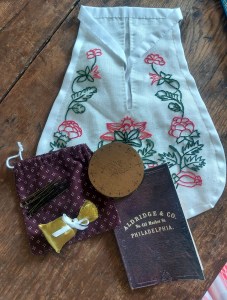
I spent today talking with visitors about pockets, the tie on pockets women wore under their skirts in the 18th into the 19th centuries. This weekend is GCVM’s “Neighbors Free Weekend,” inviting community members from the surrounding towns to visit the museum for free. This meant a good portion of the attendees would be first time visitors or returning after an extended time. To me, this was a unique opportunity to share an interpretive idea I’ve been working on this past year.

How could pockets be an interpretive idea? They are just some fabric and waist ties. Right?

Yes. And, no.

With this idea, I see pockets two fold:

As a platform for story.

And, a connection with history.

A pocket becomes a story with what it contains inside and in some cases, the style, construction, and state of the pocket itself. In its fullness, I picture presenting visitors with a table of pockets. Each pocket representing a woman in the historic village, filled with items that woman might have carried with her. After describing how a pocket was/is worn, visitors could pick a pocket to examine the contents further. With younger visitors, they could surmise who wore the pocket and, with encouragement, development a story about the person. With adult visitors, discussion can develop based on the items in the pocket, how they were used, their history, etc., or about the woman the pocket represents, their life and/or their job.
As story, a pocket and its contents are a conversation starter.

For young visitors, this is an open opportunity to think and talk rather than listen. They are able to connect what they know with what they see and what they wonder about. I found the youngest of children, approximately three years old, connected what they saw with a family member – mom sews or sister likes to read. As the day went on, I found I wanted to make pockets with some easier visual clues for roles young children would be more likely to know. I was delighted to have an elementary school age visitor bring in knowledge of a specific woman from history.

With adult visitors, I started most of the conversations drawing at a kinesthetic connection to the topic, asking about carrying a purse or bag. Nearly every time, this resulted in a non-verbal response indicating shoulder pain or the dislike of carrying one. This opened the door for talking about how women in the 19th century had the benefit of a pocket hidden under their dress, either as a tie on pocketor set-in pocket. This discussion generally flowed from questions of understanding to deeper questions and comments.

Questions of understanding included:

  • Does it just tie on?
  • How do you access it?
  • Is it heavy?
  • What can you fit in there?

Deeper questions and comments developed:

  • When did women stop having large, usable pockets in their clothes?
  • Why did women stop having useable pockets in their clothes?
  • Functional pockets as security or safety.
  • Purses increasing in size and number with the reduced size in pockets. Purses as a marketed item.

My hope is to have the opportunity to develop this interpretive concept further. I also hope to encourage others to think about what they carry in their pockets and how these items can be used as interpretive tools and conversion starters.

And now, tired has won out. Please ask questions or comment as it will help me expand this idea.

Published in: on September 3, 2022 at 6:59 pm  Comments (2)  

Straw and Strawberries – Thinking Ahead to the Holiday Season

With school started (for staff in NY) it is time to think ahead to the creativity and sewing for the Holiday season. I am defining the Holiday Season as the build up to Halloween and Samhain through Twelfth Night with the many holidays and observances in between.

This year I am planning to offer some of the small items I enjoy making most….

For my fall and Halloween loving friends, I will be making some miniature straw witch hats. I’ll try to make a handful of these in different sizes and maybe different color straws. I am undecided on whether I will offer any wool witch hats, either in full or mini size. I do have a fun one in mind for me.

I am already enjoying making these little baskets. I am picturing them nested in a Christmas tree, Yule bough, or wreath. Though they could span many holidays.

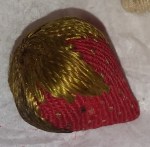
I bought a lovely length of red velvet….. which means….. strawberries are back!!! I love making strawberries. I am going to try my hand at embroidered tops similar to this original strawberry.

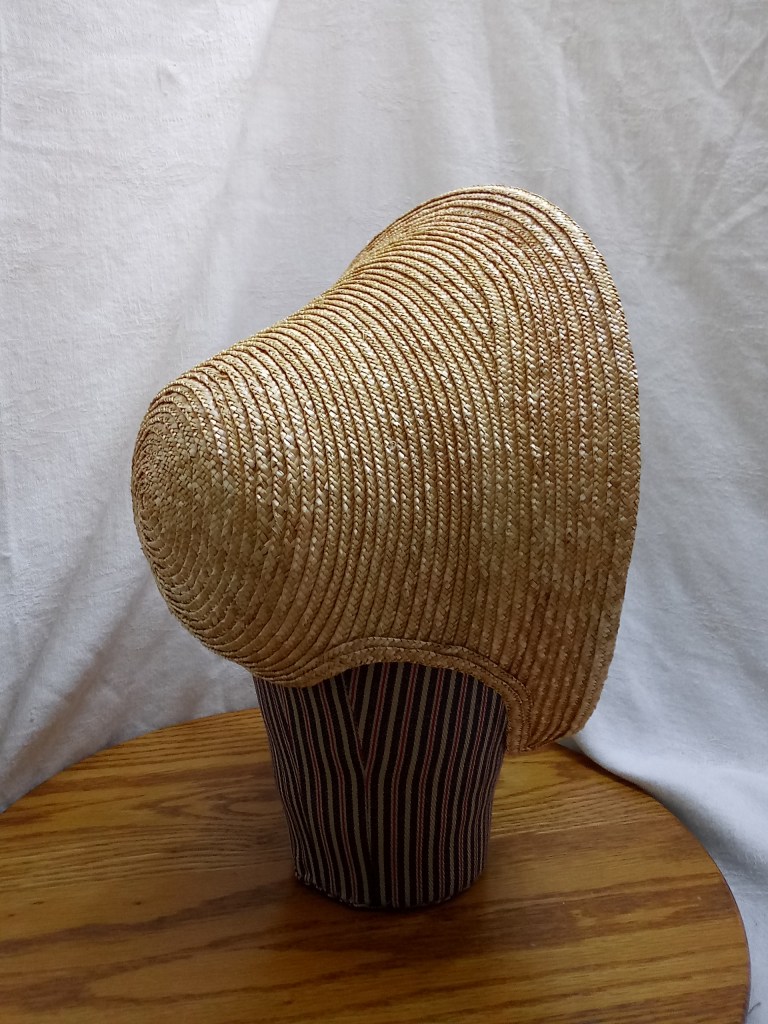
For those wondering about millinery – I will be making some straw millinery for those looking to gift those this season. I am undecided on making winter hoods.

I would like some feedback regarding gift sets. I offered a limited number of pockets full of already wrapped gifts last year. I am curious if people would be interested in something similar this year.

Published in: on September 2, 2022 at 6:05 am  Leave a Comment  

A Miniature Hat a Month?

I have a silly idea of making a miniature hat each month to hang by my desk. I may or may not be able to do this. Help me fill in the blanks:

  • September –
  • October – Straw witch hat
  • November –
  • December – Santa or elf hat
  • January – Little wadded hood in silk?
  • February –
  • March –
  • April –
  • May – Garden hat with some flowers
  • June –
  • (No school in July and August)
Published in: on September 1, 2022 at 11:45 am  Comments (4)  

Millinery Monday

Published in: on August 29, 2022 at 6:05 am  Leave a Comment  

Falling into Fall

It is that transitional time of year for me, when “summer” becomes “fall” with the onset of “back to school.” I would be lieing if I did not say I am sad to say goodbye to summer.

A Digression – I know summer continues for another month for most people. I currently mark summer as the end of school through the beginning of school. Once upon a time, I counted summer as the May through August portion of the museum season. It is complicated and more a mental state than a seasonal state. My fall events don’t actually start for another month. Hmmm, maybe I should rename this limbo period of not quite summer and not quite fall: fammer or summal.

This coming fall is speckled with a nice balance of time travel and classes. Let’s see if I can talk about these in order……

Agricultural Society Fair

This year, I am treating my Ag Fair entries as a culminative of the season, opting to display the main projects of this year, both those made during each of the events and some behind the scene. This will give regular visitors a chance to see the pieces they saw me working on when they visited. I also have a fun something up Mt sleeve.

Holiday Tree Class

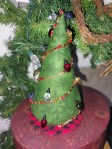
I will be teaching a modern crafty sewing class at Chestnut Bay in October. This cute holiday tree evolved from June’s strawberry class.

Preparing For Winter

Funny how I hate winter but love this event. While I do like the layers used in the era for staying warm in the winter, what makes this event for me is the visitors. — November 19th

Holiday Open House

Last year, while working on the bon bon boy, visitors asked for a peppermint doll. This year, I plan to meet their request. The doll head is waiting, body cut out, and dress fabric ordered…..

Published in: on August 23, 2022 at 12:05 am  Leave a Comment  

Summer Reflections

This was a summer filled with time travel. Personally, this summer was the most I felt like me in a long time. (I know summer continues for another month for most. But, I return to school/work tomorrow bringing my summer to an end. This, this post and it’s mate for “fall”.)

Events

The vast majority of early summer was spent fluttering about the nineteen century from event to event.

Pre-summer began with dressing Theo, thus named by visitors, in a dress made from one of the reproduction kerchiefs based on the Green collection.
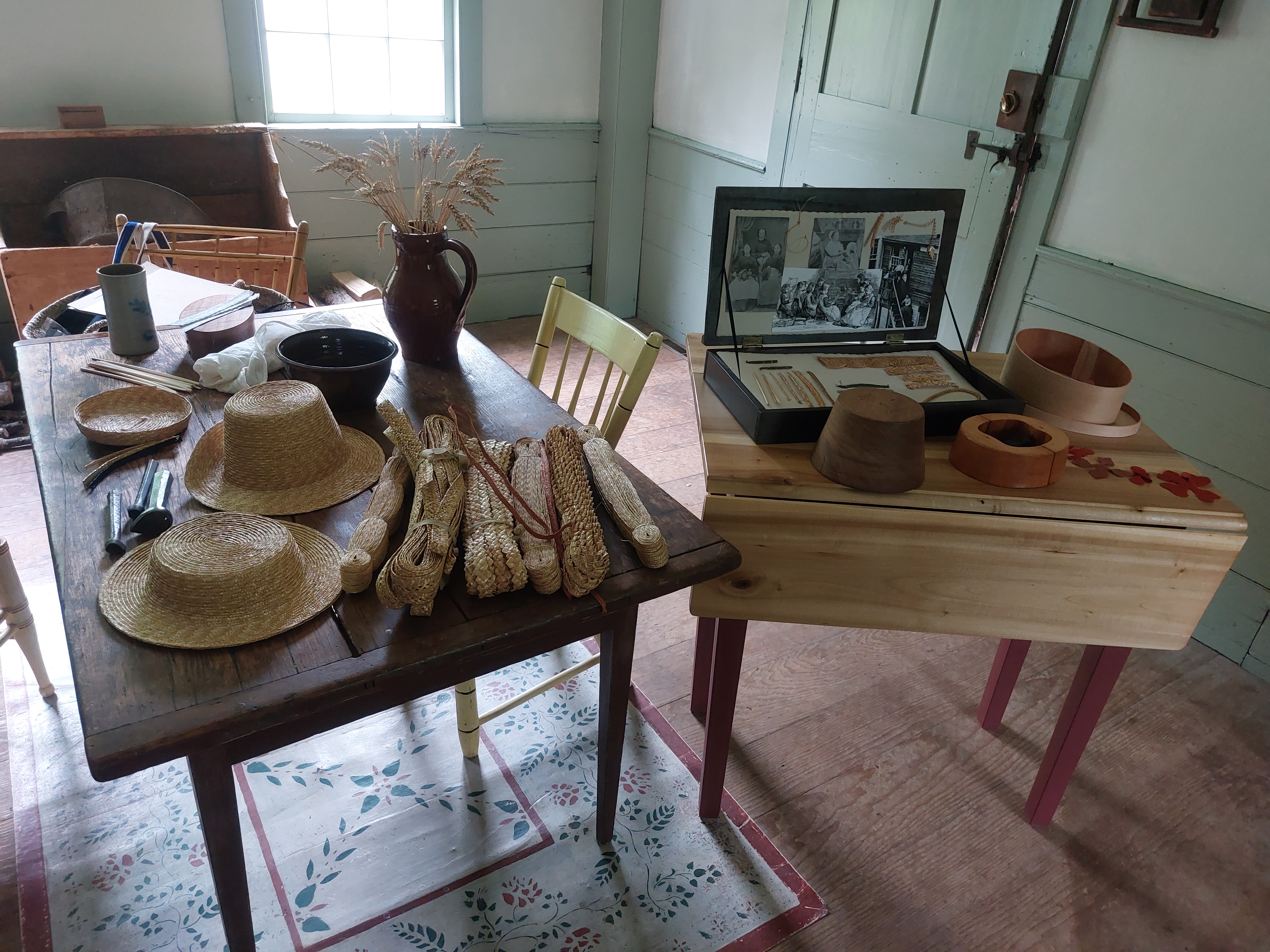
Tools of the Trade for weekend of the Antique Show. It was nice to see this display/demonstration concept come together for the first time. I toyed with it through the winter. I look forward to further developing it.
Independence Day Celebration – I was rather amused to not only have my photo taken, but to end up on TV.
Bon Bon Baskets for Chocolate Weekend – I was delighted with how well this went over with visitors.
Women’s Employments at the Civil War Living History Weekend – I entered this weekend in an emotional, stressed state. The company of my assistants and excellent questions from visitors turned my mood around.
A Novel Weekend: Sir Arthur Conan Doyle – I attended this event as a visitor. I enjoyed seeing visitors actively engaged with the weekend’s program.

Me

I managed to successfully remember to grab quick selfies most days in dress. This is progress considering I usually forget. Future goal: full dress photos at each event.

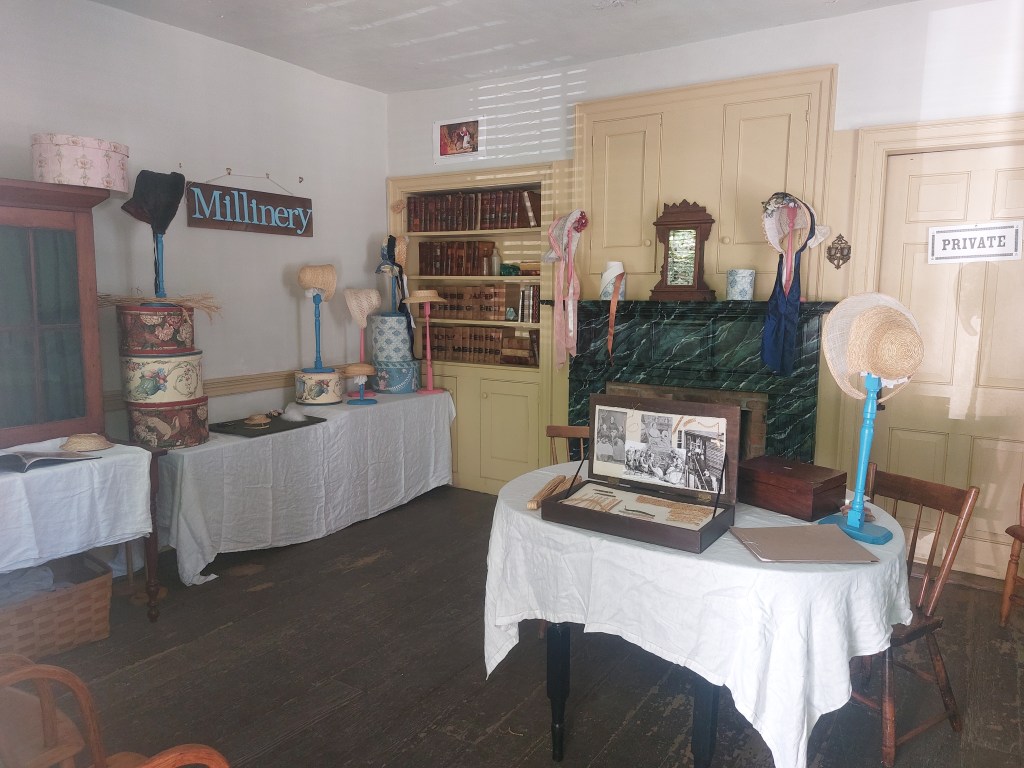
Millinery

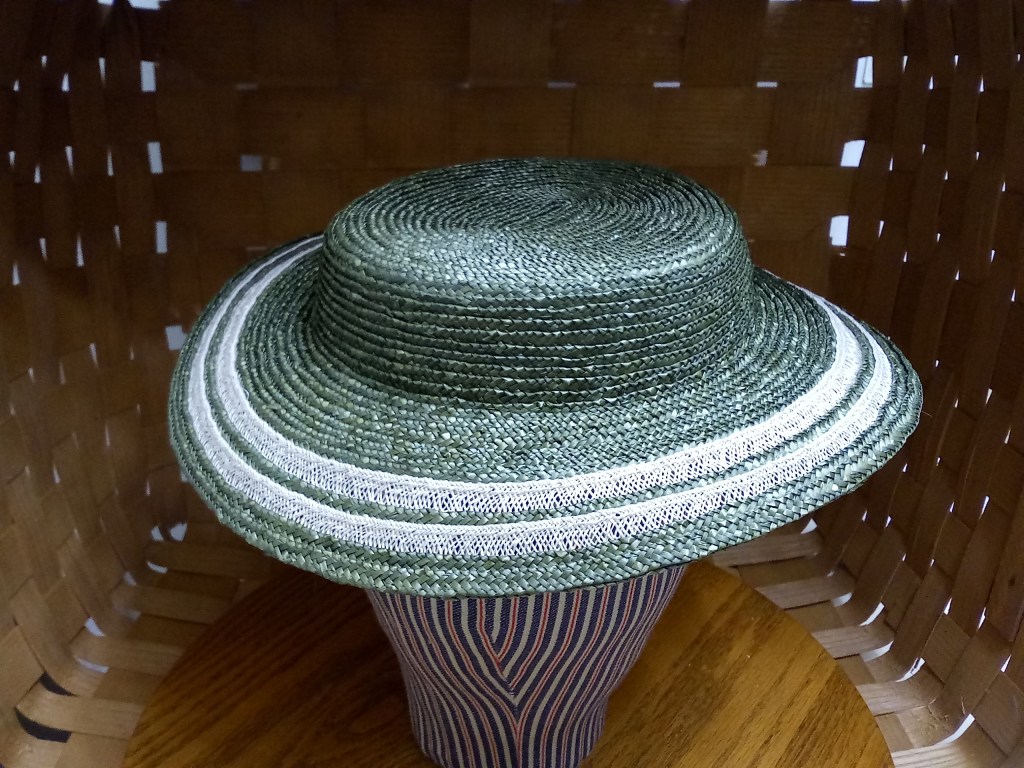
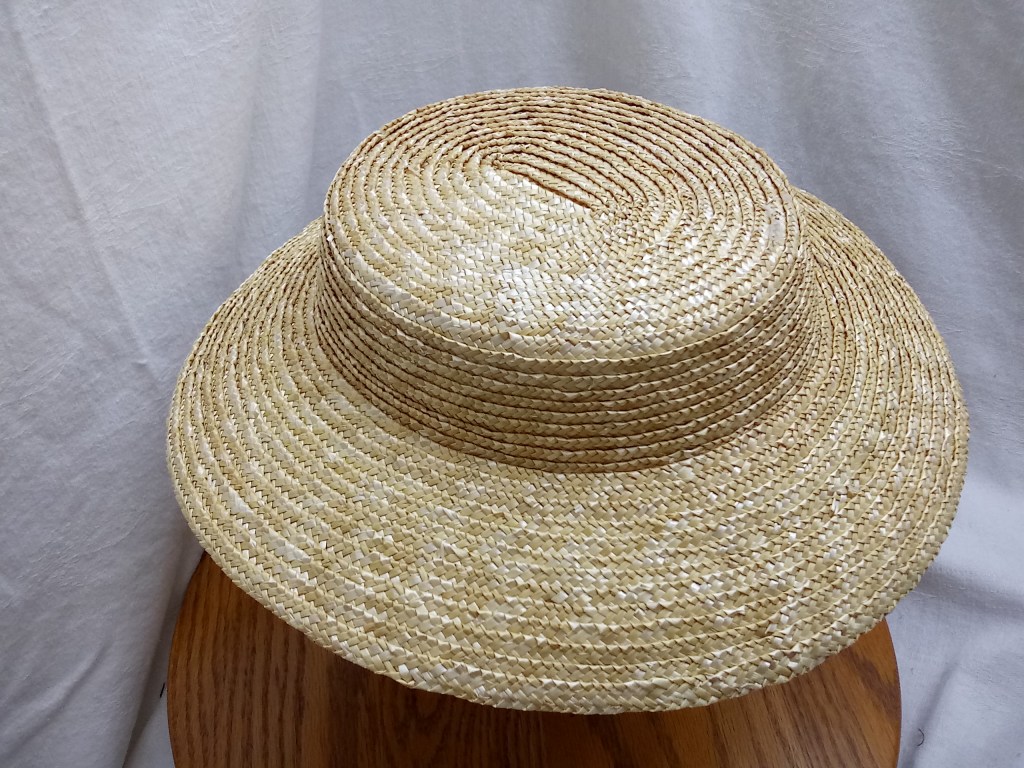
I usually like to report a total number of millinery pieces made…. I am not quite sure what the full count is. I think 🤔 for July and August I made 28 straw millinery pieces plus 2 special project pieces, 3 bon bon baskets, and an assortment of miniature straw pieces for the holiday season.

New Acquisitions

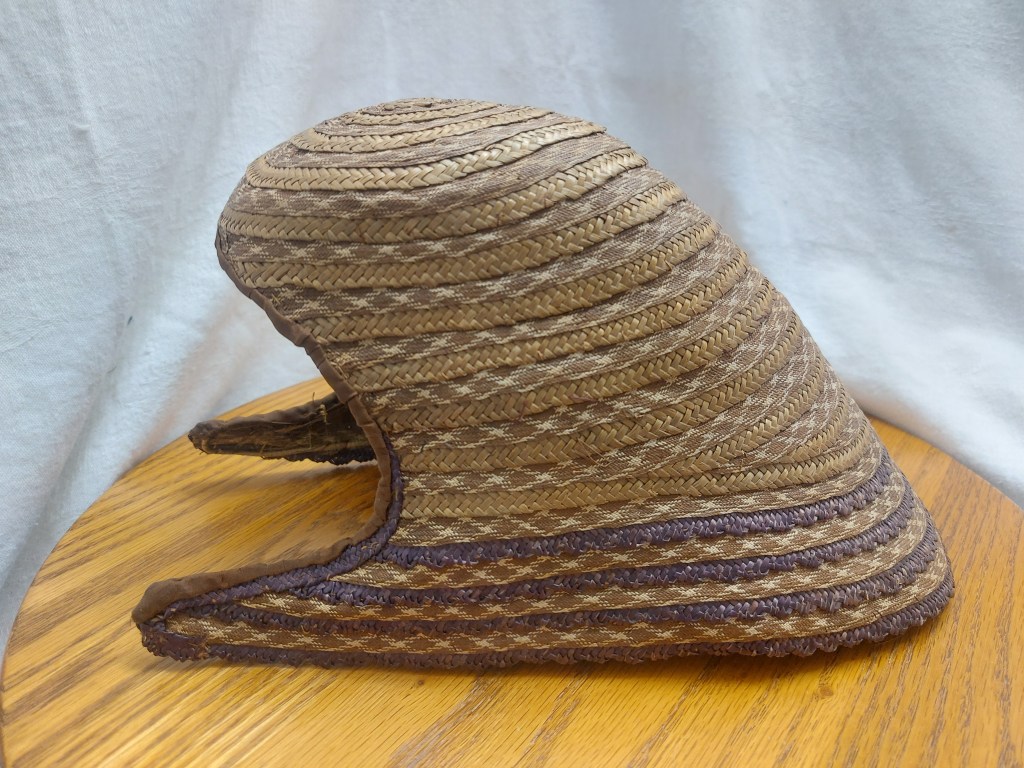
Each time I look at the photos of this bonnet, I pause because I still can’t believe it is mine. It is currently boxed away in the collections closet. This bonnet has nudged my goal of proper archival boxes further up the list. Ideally, I could make the right size boxes for each bonnet with custom supports for the bonnet inside.

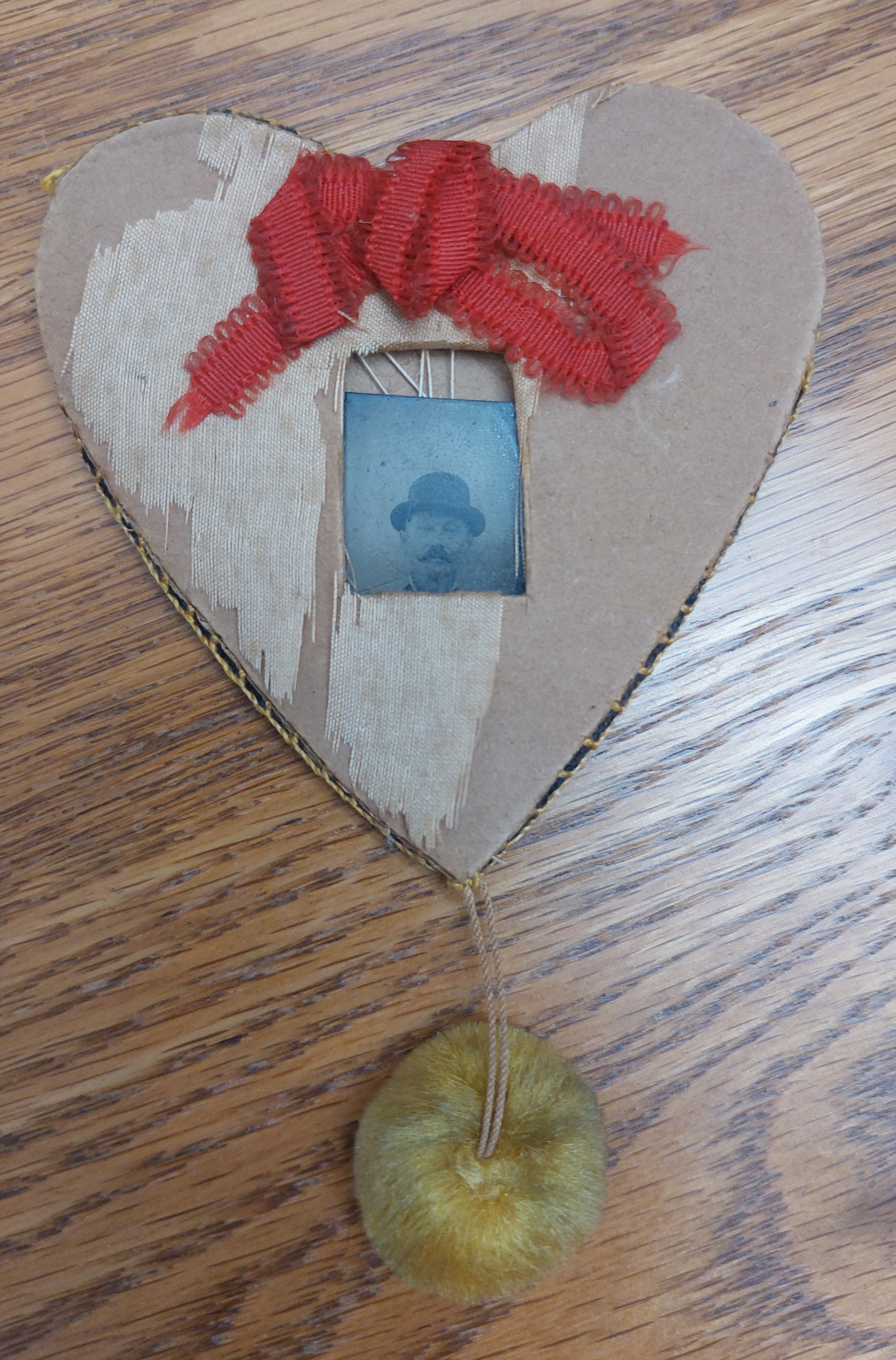
I’m still surprised I saw this little fancy work frame as it was tucked in a basket in an over stuffed antique shop in transition. (Hmmm, I should get back there to see how it is evolving. )

Research

I started a section of my millinery research that I’ve been wanting to do for quite a while. I am looking into the local milliners of the nineteenthcentury, starting with the milliners in Livingston County through the census records. I hope to develop a picture of most of the milliners of the mid century. This started with identifying them in the census and outlining each of their households. Next will be exploring local advertisements in newspapers to see if the shops they worked in can be identified and matched with milliners.

Published in: on August 22, 2022 at 10:44 am  Comments (1)  

Millinery Monday

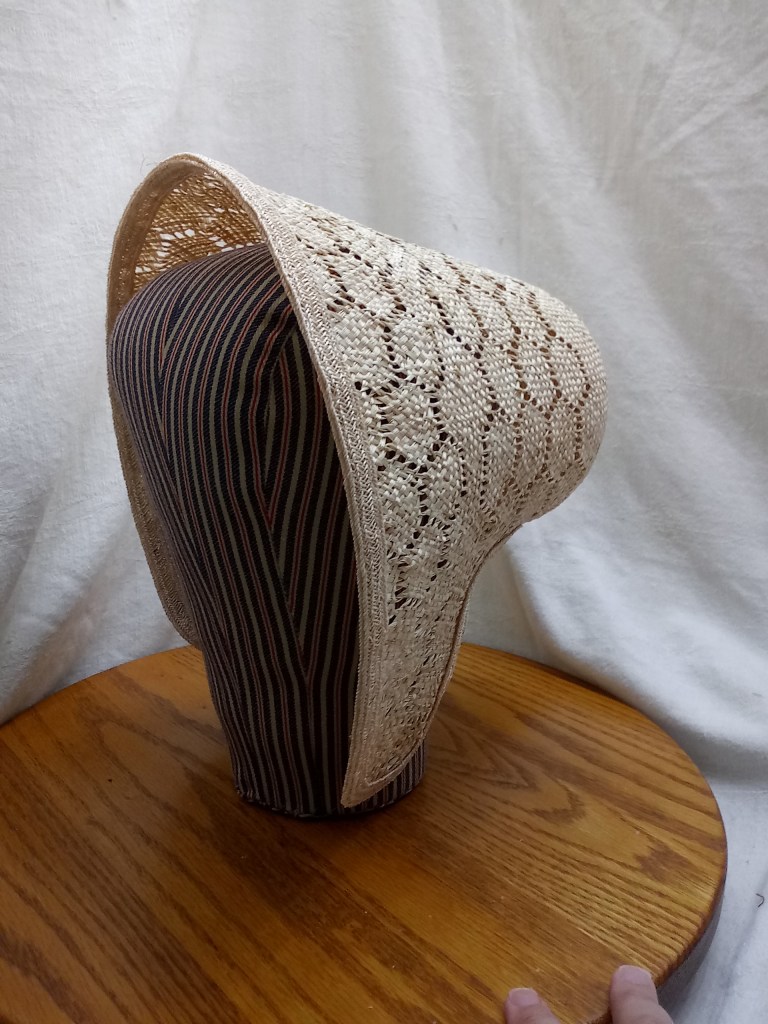
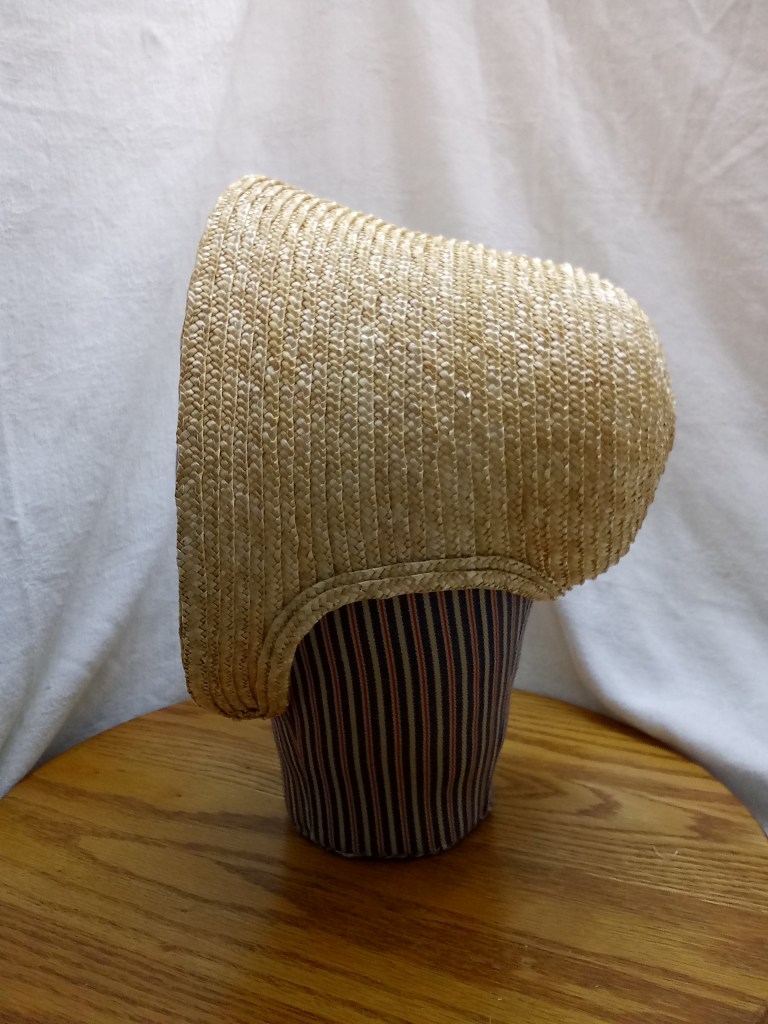
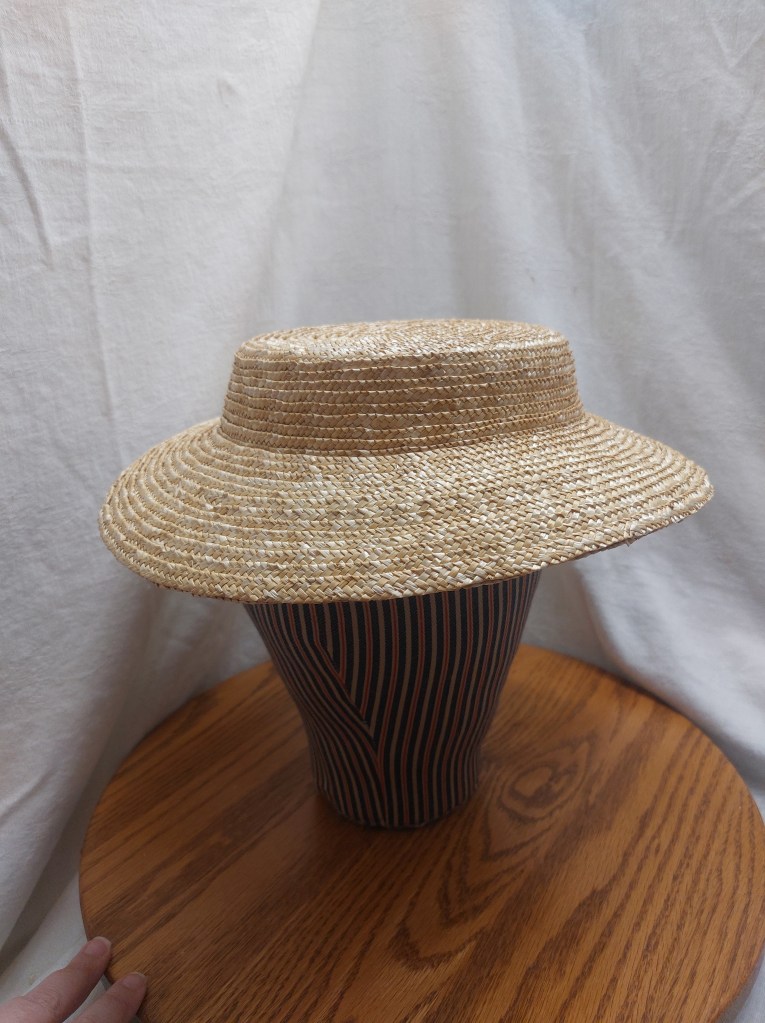
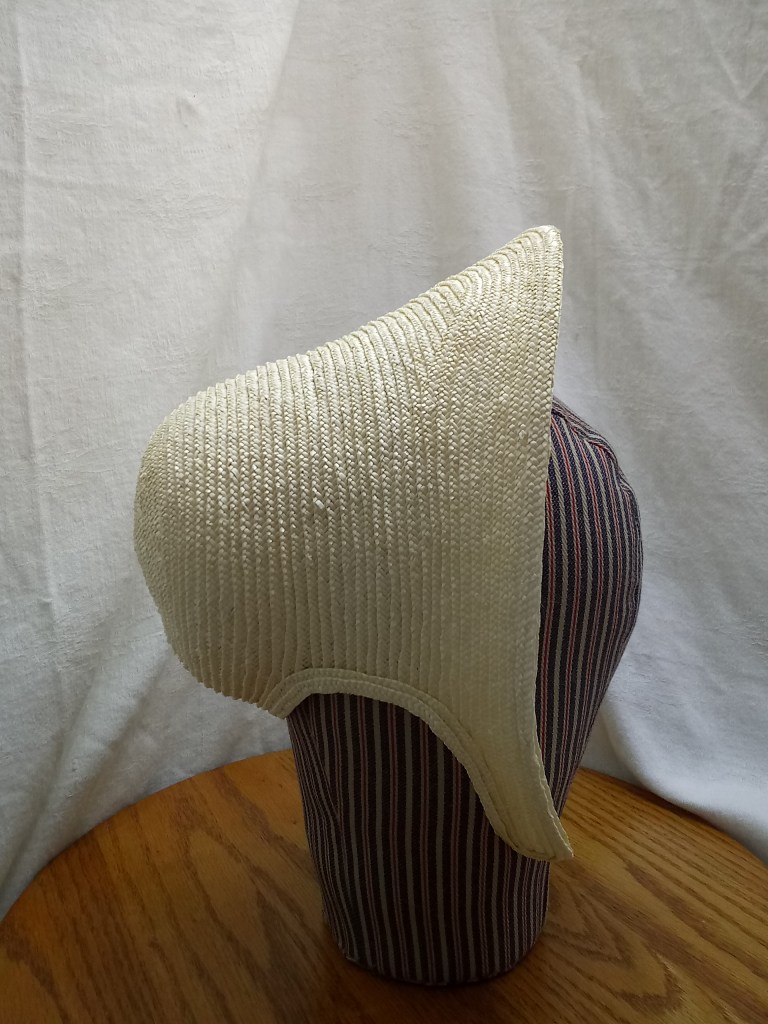
Published in: on August 22, 2022 at 6:04 am  Leave a Comment