12 Homemade Gifts of Christmas – Day 2

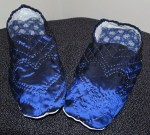
For the second day’s Homemade Gift, we have one of my husband’s and my favorites…. slippers. We love our slippers both for at home and at events.

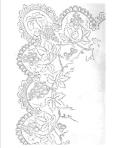
When it comes to making slippers, you have lots of choices. In period magazines you can find embroidered slippers, quilted slippers, appliqued slippers, corded slippers, crochet slippers and even easy to make hospital slippers. This file has an assortment of slippers to start from.

The way I construct my slippers requires:

  •  An outer material either already decorated in the case of needlework, embroidery, and applique or not yet decorated in the case of quilted or corded.
  • An inner lining
  • An inter lining – either something supportive or batting
  • A sole – painted canvas, leather or cork
  • A sole lining
  • Insoles – two layers of soft wool

For the soles, I trace the wearer’s foot and adjust it to look period. If you don’t have a foot to work from because this is a surprise gift, use inexpensive insoles from the store as a guide.

Layer your uppers together, right sides together. Sew around the inner curved cut or the flat top of each slipper. Turn the pieces right side out. Baste the lower edges together. If you are doing a quilted slipper now is the time to do your quilting. This is also a good time to do your cording or braiding.

Layer your sole and sole lining together. Baste around the edge.

Line your uppers face down on your sole. Pin the front toe and the sides in place. Sew around the edge. Finish the edge with a whip stitch. Turn right side out.

Lay the two layers of insole wool together. Sew around leaving enough space to turn it right side out. Turn right side out and close. Insert into your slipper.

Wear inside.

Published in: on October 22, 2011 at 1:00 am  Comments (2)  
Tags:

12 Homemade Gifts of Christmas – Day 1

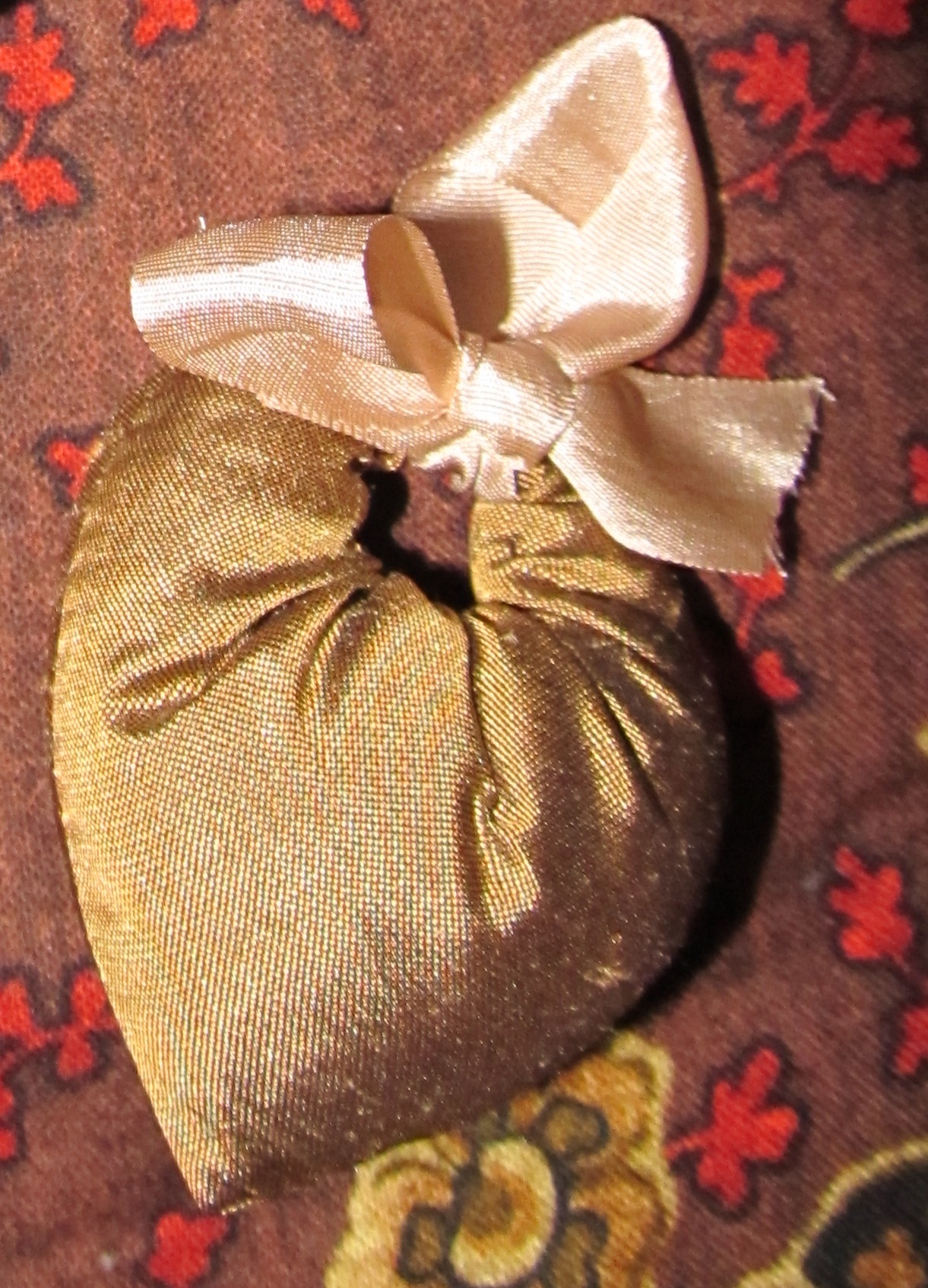
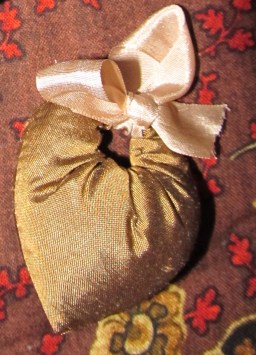
For the First homemade gift of Christmas we have a heart shaped pincushion which will also make an adorable ornament.

From Eliza Leslie’s American Girl’s Book, this heart pincushion is made from two pieces of triangular fabric, ribbon and batting for the inside.

  • Use 12 day Christmas Heart Ornamentwith the longest side twice the length of the two legs.
  • Sew right sides together along all three sides leaving enough space to turn the triangle right side out.
  • Stuff with batting or emery and sew closed
  • Gather along the longest side
  • Pull tight forming a heart, securing the points together
  • Add a ribbon to hang the heart from or a bow and hanging loop
Published in: on October 21, 2011 at 1:25 am  Comments (5)  
Tags:

On the 12th Day of Christmas, My True Love Made for Me….

I’m the first to admit I’m not the most musical. But, I just couldn’t resist making a list of 12 great 19th century gifts you can make for your loved ones. Here is a list with a little for her, a little for him and a little for the tree….

On The First Day….  Heart Shapped Pincushions (also make cute ornaments.
On the Second Day ….A Pair of Slippers
On the Third Day….. A Cuffs and Collar Set
   On the Fourth Day … A Pretty Ribbon Needle-book
 On the Fifth Day….  Lounging Cap.
 
On the Sixth Day….A Handkerchief
 
On the Seventh Day….   A Pocket.
On the Eigth Day…. A little purse
 On the Nineth Day…. A Set of Stationary
 
On the Tenth Day…. A Patchwork Ball to Play With
On the Eleventh Day…. A Book Marker
On the Twelfth Day….. It will be a surprise…. even to me….
https://annaworden.wordpress.com/?p=1984


Published in: on October 20, 2011 at 1:02 am  Comments (5)  
Tags:

My Chocolate Hood

One would think with all the other hoods I’ve been making, I would have made one for myself before now. Nope. Not ’til now.

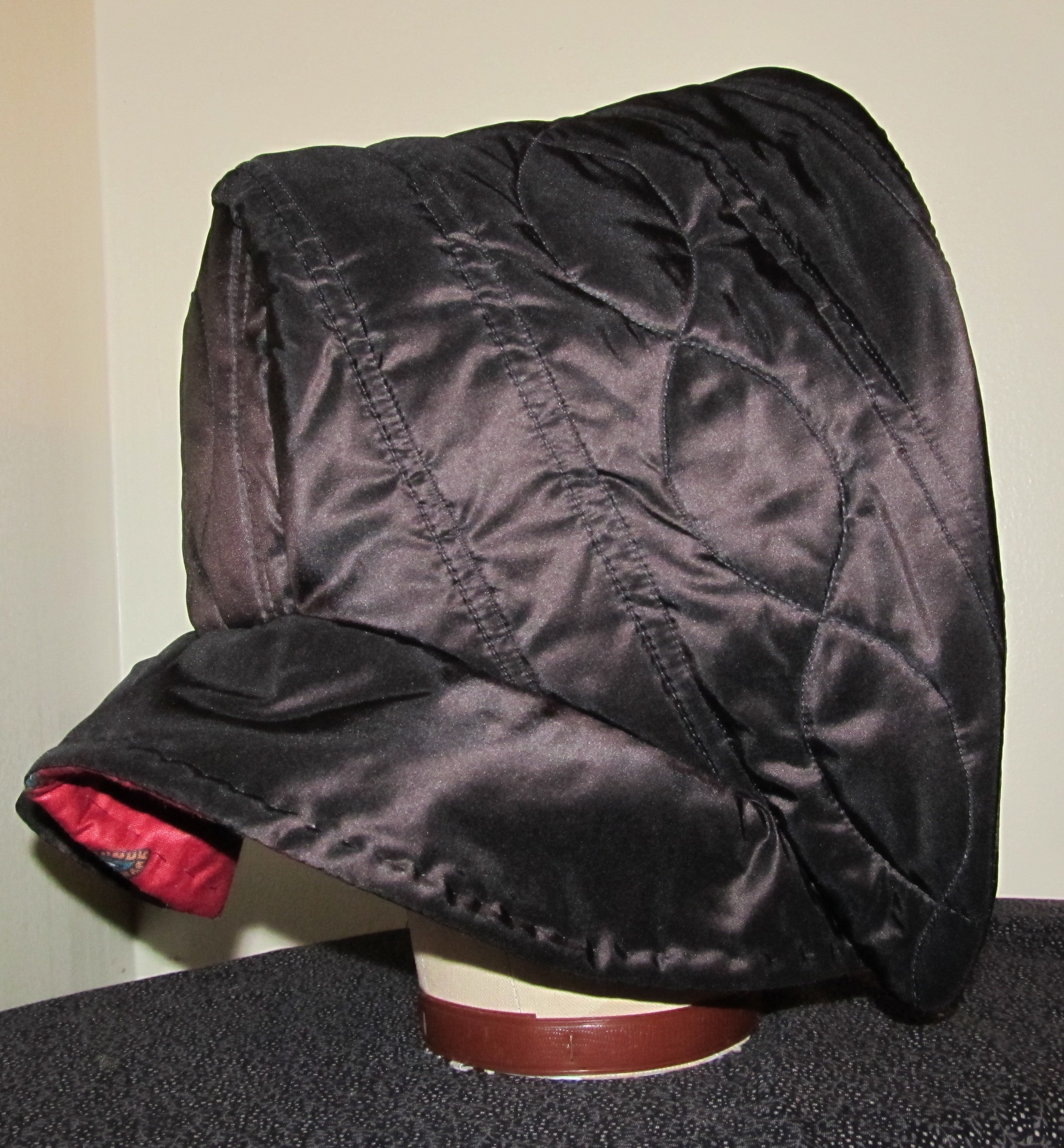
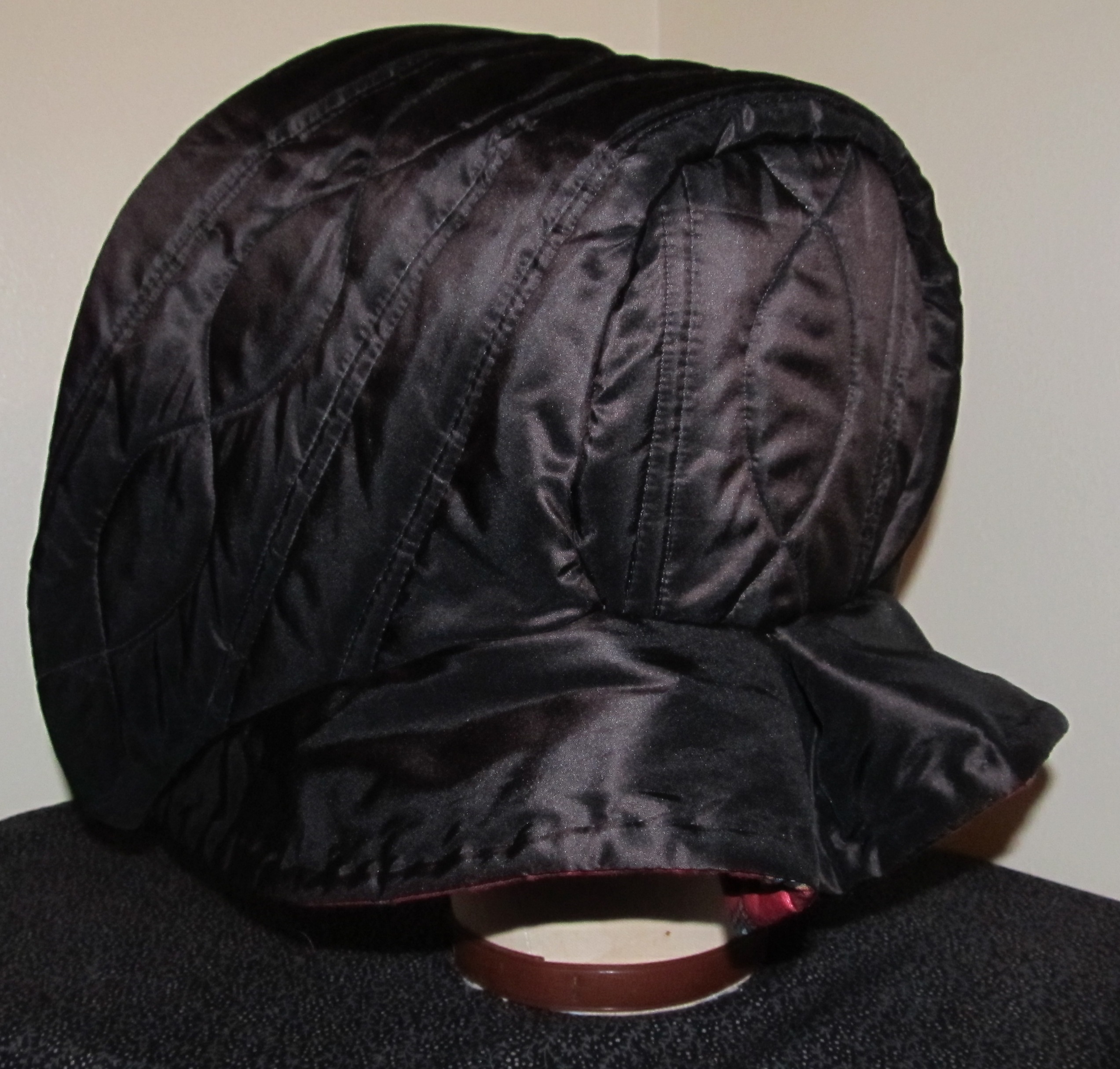
My hood is a chocolate silk taffeta purchased last year. The lining is this great red polished cotton with paisley motifs. It is quilted with a simple double line and curved chain, which I’m sure has a real name in the quilting world. The brim is trimmed with a wonderfully soft mink. (Huge Thanks to Gail for the lining and fur)

Here is the hood pre-fur. You can see the quilting here a bit better. This vertical diagonal is achieved when the quilting runs directly across the crown. A shallower, more horizontal angle is achieved with quilting directly front to back.

Here is a look at the great lining fabric. The quilting looks really great against this red. One thing I did learn though – my machine really hates polished cotton. It just doesn’t like to move it along with the feet, even with the walking foot. Polished cotton will be hand-quilted from now on.


If there is a video at the end of this post, it is an advertisement. My apologies for the inconvenience.

Published in: on October 6, 2011 at 8:33 am  Comments (3)  
Tags:

“Our Dictionary of Needlework”

 Have you ever stumbled across something and instantly thought “everyone should see this”? That is what happened when I scrolled over Peterson’s Magazine’s 1858 series called “Our Dictionary of Needlework”. The odd thing is I’ve gone through this edition countless times looking for shawls, hoods, needle-books, etc., yet it didn’t stand out until today.

So, of course I had to put the year long series into a single file for everyone…..

Our Dictionary of Needlework” from Peterson’s 1858

If there is a video at the end of this post, it is an advertisement. My apologies for the inconvenience.

Published in: on October 5, 2011 at 11:54 am  Comments (1)  

Update on the Hood Pattern

2 New Updates!

I have just a bit more left to do with the images. Then I’ll be ready to take the pattern to the printer. Availability could be as early as next week. Look for a Pre-Order Announcement. 

I also have the printer estimates which means a price estimate. Based on the printing costs it looks like the pattern will be  $12.60 plus shipping. This price may adjust that again once the printer has the materials.

 ——

Thank you to the many of you who voiced an interest in having my hood pattern available.

I am focusing this week on getting the text, illustrations and pattern pieces in a publishable state. My goal is to have it available for those who will want to make a hood for this winter. Fingers crossed there since this is both a matter of preparation and funds for publication.

I would also like to pull together the hood workshop some of us discussed.

For the published pattern, here is what I have in mind:

  • Pattern pieces for an adult hood in two depths (I was going to include the child’s hood but am having difficulty fitting that.)
  • Directions that are short and easy to understand using a combination of illustations and photos, including information on quilting.
  • An explanation of this type of quilted hood along with observations of extant hoods.
  • Tips on a successful hood in terms of materials and techniques.
  • Passages from Godey’s, Peterson’s, etc regarding quilted hoods and bonnets.
  • Ideas for how to trim your hood based on originals and extant hoods.
  • I’m hoping for a price point between $10 and $15, which will be based on what my print shop can do for me. (they are great.)


If there is a video at the end of this post, it is an advertisement. My apologies for the inconvenience.

Agricultural Society Fair

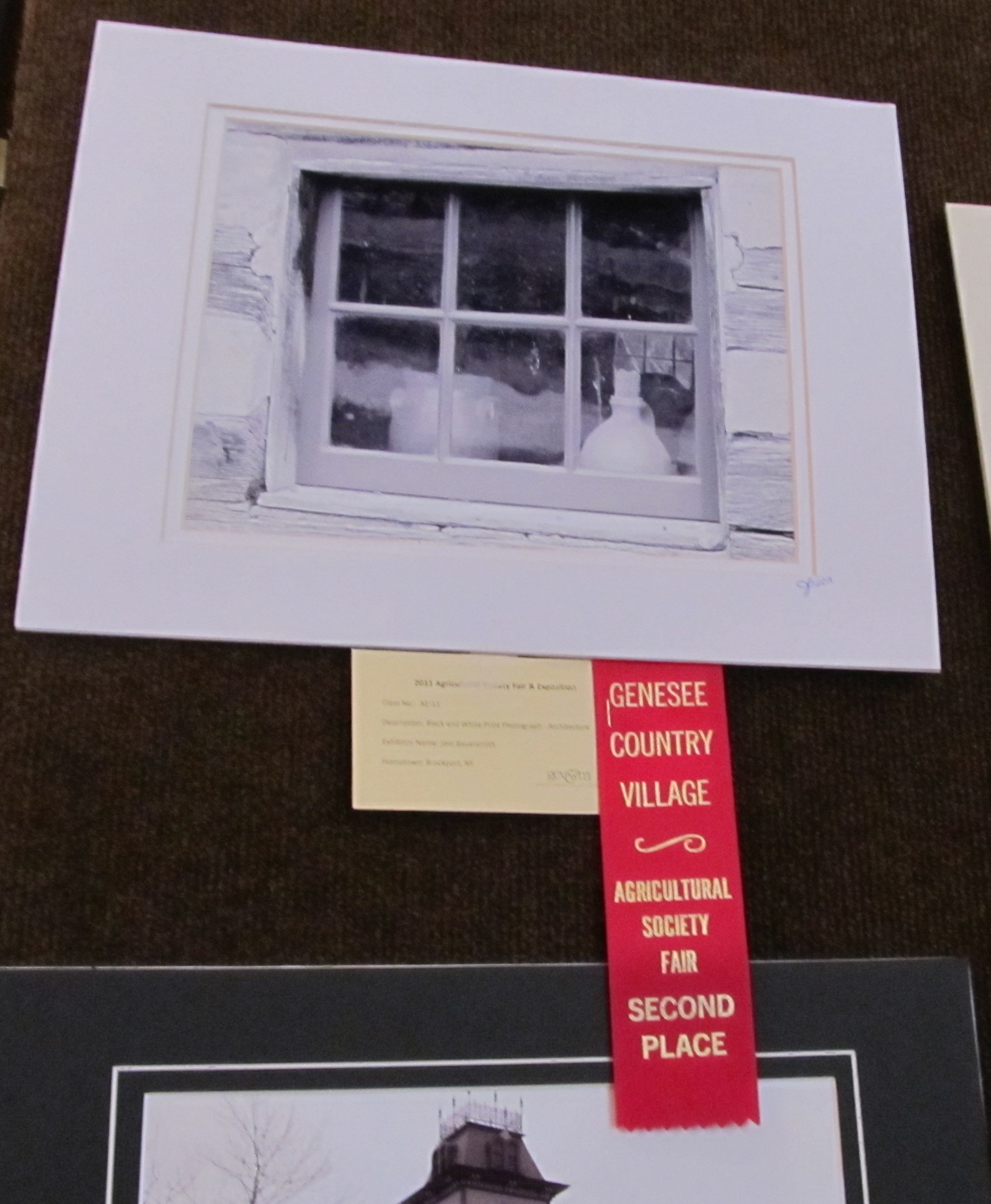
I still have my ribbons from when I was younger and entered work in th Genesee Country Village’s Agricultural Society Fair. I remember going through their box, making sure each one was perfectly neat inside. I also remember Grandma Kramer making a point to get her one last hooked rug finished before she passed away so it could be in the fair. I would have rather her had a chance to do the other border around it with the birds at each corner. So, needless to say it was important to me to get to enter a few things in this year’s fair. Next year I’ll get a rug in.
The ribbon count between myself and family came to something like 7 blue ribbons, 4 red and 4 white. Mom, Lily and Joni each entered work as well.

This is my quilted pocket. It is pieced from cotton prints some of which have been used for needle-books others from Dan’s quilt or my cloths. There are two freehand curves at the top. The rest is stitched in the ditch. The quilted front gives this pocket nice body. It will be nice to see how well it holds its contents when worn.

Here are my brown silk purse and pair of rolled sewing cases, blue and red ribbons in the 19th century sewn article of clothing and 19th sewn household item categories respectfully. I love this type of purse. It is so cute and fun to make. The pair of sewing cases are some of my favorite out of those I’ve made.

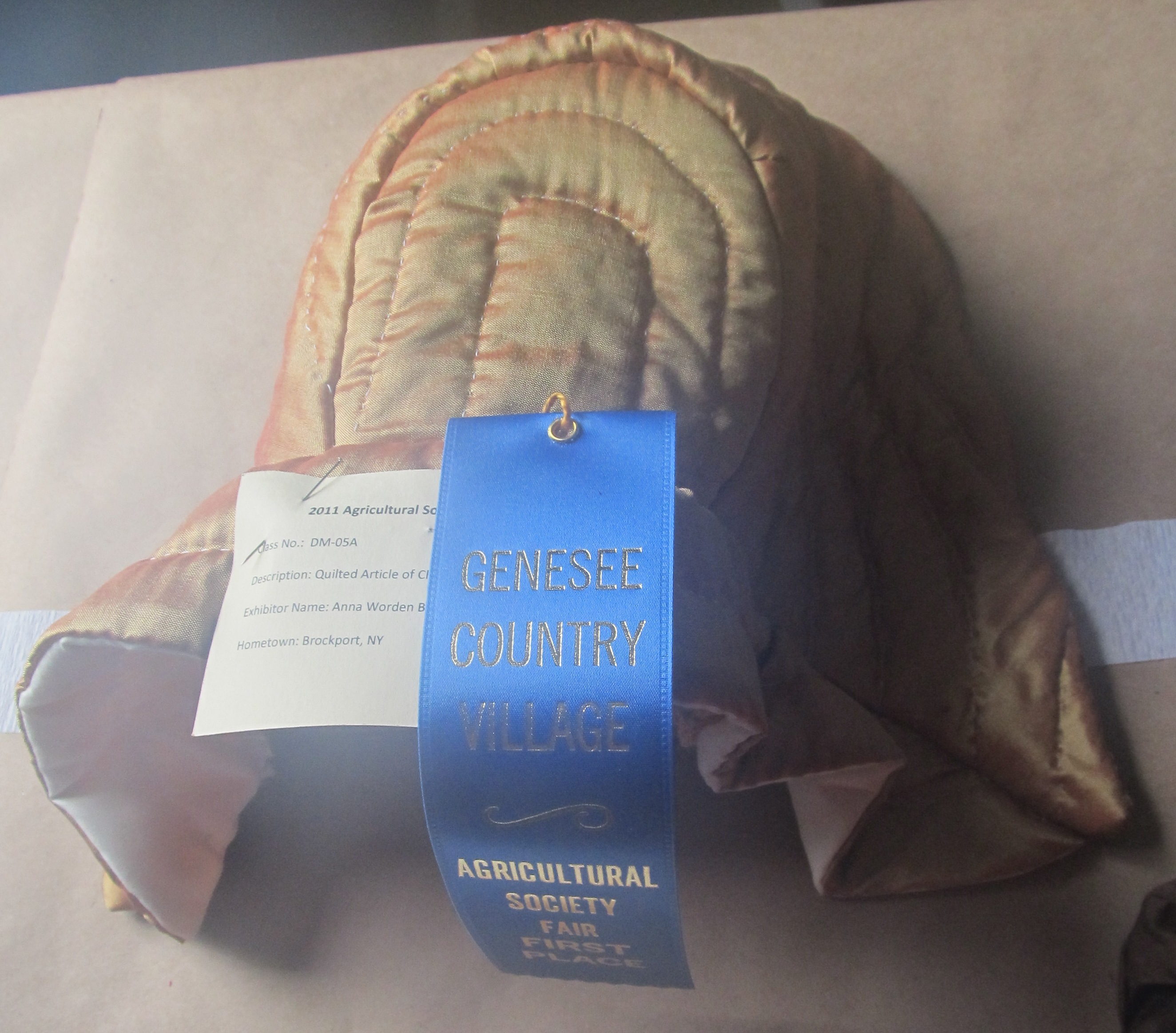
This is the sunset silk quilted hood. It won a blue ribbon in the 19th century quilted article of clothing class.

This is my only 21st century class entry, the black velvet hood. It won a blue ribbon. Now, if only the blue ribbon would tell what to do with the lint the hood collects.


This is one of my little sister’s two entries. This is her corn bread which was entered in the 21st century children’s class for corn bread. This is her first blue ribbon.

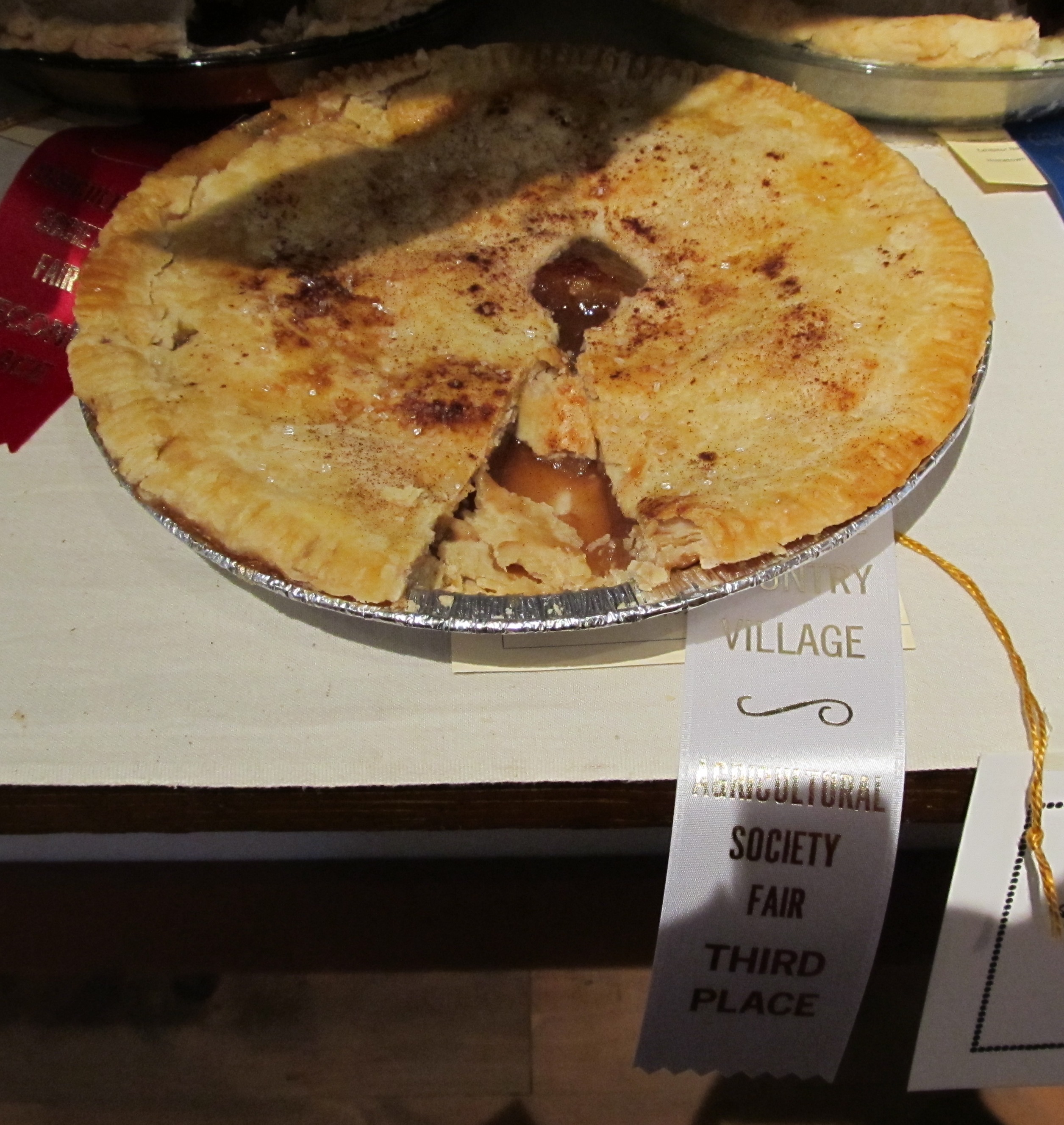
This is my little sister’s apple pie entry. I have several ideas for her to work on for next year’s fair.

This is mom’s bread. She was trying to explain to me what it looked like. Now I know what she was talking about when she said it had a thing on the side. It looks like it tasted good.
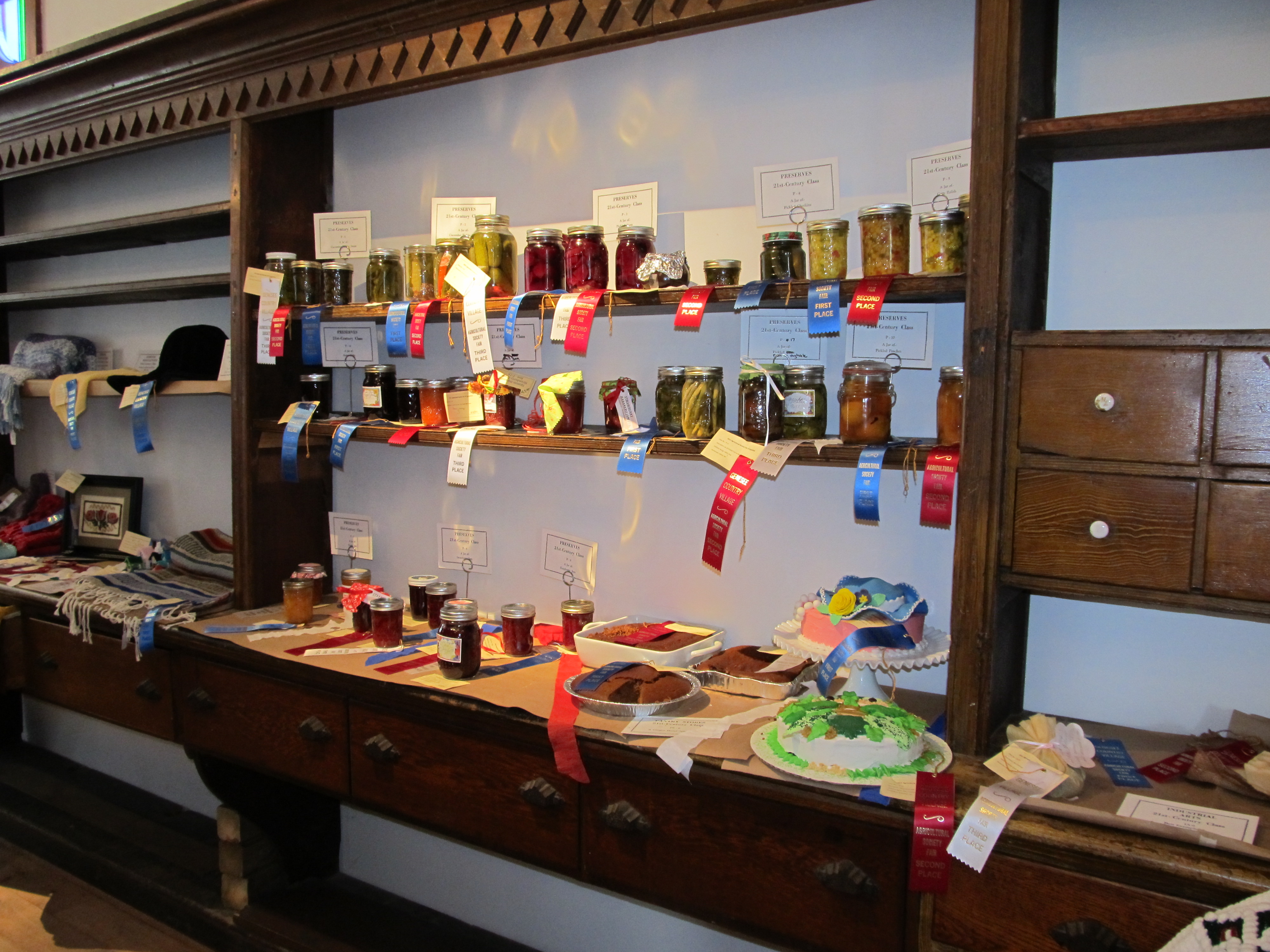
This is one of I think 9 canned foods mom entered. She got ribbons for a few jams, sweet pickles and beets. (I hope I got that right. I was a bit too short to see the labels on the top shelf.) The photo below shows the display of 21st century canning entries.

I think mom was pretty excited about this one, her ginger bread entry. I hope we’ll get a chance to taste this one in the future.

I was able to talk Joni into entering this year too. She got a red and white ribbon for two of her photographs. The red ribbon is a neat look through a village window while the white ribbon is a shot of the cannons at the Civil War event.


Published in: on October 2, 2011 at 5:31 pm  Comments (3)  

The Newest “Must Have” Books for Your Christmas List

Whether shopping for the perfect gift for someone special or making your own wish list, there are some great new books out this fall that ought to be on your Christmas list.

For the needle-worker, seamstress and quilter, there is Fanciful Utility: Victorian Sewing Cases and Needle-books by Anna Worden Bauersmith. This book shows step-by-step how to make an assortment of well researched sewing cases, housewifes and needle-books. Filled with templates and color photographs, this book is sure to keep the hands busy all winter long.

Everyone who dresses for the Civil War era will want Dressing the Victorian Civil War Lady: A Guidebook to Dressing the 1860s by Joy Melcher of the Civil War Lady. This book is filled with original photos, illustrations and tips for interpreters, reenactors, seamstresses and stage costumers.If you love to dance, you will have to have the West Side Soldiers Aide Society’s release of  The Ball-Room Manual of Belfast, Maine from 1863. The facsimile book has page after page of period contra dances acceptable to “the Young, as well as the Old Folks at Home”.

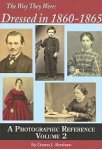
I was very excited to see this second volume available. The Way They Were: Dressed in 1860-1865, Volume 2 by Donna Abraham. Volume 2 takes a closer look at the details of the clothing women, men and children wore through newly published photographic images magnified for an indepth study.

The following books aren’t brand new, but if you don’t already have them, you should have them on your wish list:

Anyone making their own mid-century clothing, or just looking to understand it better should own The Dressmaker’s Guide by Elizabeth Stewart Clark.

Donna Abraham’s The Way They Were: Dressed in 1860-1865 is packed full of original CDV images. I just love this book as my copy is filled with notes and arrows.

What else is on my wish list? Well, I need to learn more about men’s clothing so I can make my husband a full set of civilian attire. (I also need to convince him this is a great idea.) With that in mind, on my wish list we find The Victorian Tailor by Jason Maclochlainn as well as Mr. Ruley’s digital version of Louis DeVere’s 1866 Handbook of Practical Cutting on the Centre Point System.

How I Made the Hood Veil

Many people have asked about the veil I made for the hood last week. I’m happy to share. But first I must say the person who has done the research along with the trial and error on veils is Bevin Lynn. She’s done a good deal of research and working with different shapes, materials and colors. I keep waiting and hoping that she will put all of her great work into an article. But, now she has herself incredibly busy. So, we shall see.

In the meantime…..

The veil I made was a request from a client to go with her black taffeta winter hood. She wanted both some sun/glare protection for her eyes and face protection from the cold winter wind.

This black silk hood is edged with black velvet and is draped with a veil. Commission/Sold

I used the 3mm silk gauze from Dharma which Bevin determined to work nicely. I chose black. They have a white which can be dyed. Bevin determined plain white actually makes the sun glare worse. Dharma’s gauze comes 45″ wide. The selvage is there but barely so, therefore usable. I do not know if there is a comparable net to originals at an affordable price.

 
For this veil I went back and forth deciding between a simple rectangle or the semi-oval/fruit wedge shape. Since I had not worked with this incredibly fine gauze before, I opted for hemming the straight lines for the rectangle. (The hemming wasn’t bad at all. So, the curve should be quite doable.) I cut the gauze in half to get a piece 36″ by 22.5″ giving a veil approx 35″ by 21″, which is in the realm of the original sizes I looked at online. One tip for working with this gauze, this slippery gauze – find your cutting line and draw out a thread from the weave. This is easy enough to do slowly and gently. The drawn thread will provide a cutting line when laid against a contrasting surface.
 
I do not have the skill to do the incredibly beautiful lace work on the edge. I used a simple rolled hem, which I rolled over three times rather than twice. The hem is about 1/8th of an inch wide. I tend to use a technique where I dampen the edge of fine fabric for a hand-rolled hem. Liz has a technique where she presses the first turn, trims it and uses a stitch to grab the edge and draw it into the hem.(I’ll grab that link when I re-find it.) The gauze did hem nicely to the point where I stopped dampening the silk because it turned quite nicely without much fraying. This hem went on both sides and the bottom edge.
 
For the top, which is where I put the selvage, I turned under a half inch hem with enough space to draw a cord through. On either end of the cord, I made a loop. I was really guessing here since I didn’t want to bug Bevin on her way to Zoar. Another option would have been to gather the veil onto a ribbon (example). I wanted my client to have the flexiblity of moving the veil to her other bonnets or hood as she needed, making the flexiblity of the drawn cord a better option.
 
The veil is simply drawn up on the cord, centered on the hood and pinned in place.


Published in: on September 27, 2011 at 8:51 am  Leave a Comment  
Tags: ,

A Story of A Hood

I came across this passage in Peterson’s that I just had to share. Not only does it talk about a type of hood, it says a bit about society and fashion in a small town. The article is called “A Story About Peterson’s” by “A Minister’s Wife”, from the November, 1862 edition.

“Rigolettes, as they are called, were not in fashion: that is, they had not penetrated to Woodstock, there being as I have hinted, only one Peterson in the place, and that was mine. When the women did not wear their best, they generally came out in homely cape-bonnets, which, if they were plain, did not improve their looks, and, if they were pretty, almost deformed them. I saw a beautiful pattern in Peterson, and, as I always considered it a duty to look as well as I could, I forthwith devoted my spare time to manufacturing one of the aforesaid rigolettes. (By-the-way, that isn’t a pretty name for them.) I knit it in plain colors, blue and drab, I believe, and, when it was finished, it was really an exquisite thing, at once convenient and becoming.

“What! Are you going  to dare wear that to the prayer-meeting?” asked Ward, after he admired it sufficiently to suit even my fastidious taste.

“To be sure I am. What could possibly be neater?” was my reply.

“Nothing – if you are prepared to be victimized. It is new, and the Woodstockers resent every innovation. Besides, you look so provokingly pretty, that they will be jealous, even of the minister’s wife!”

“Let them say and think what they please,” was my rejoinder. “I shall not care. When I put my dress on, whatever it is, there is and end of it – it never enters my mind again. If they are weak-minded enough to allow distracting thoughts of any kind to disturb them in such a place, that is their fault, not mine. To be sure, I shall wear my new, pet head-gear.” And I did. Some were foolish enough to stare – no doubt others made invidious remarks, but it did not vex me in the least.

The next day, pretty Annette Sawyer, one of the sweetest girls in the church, came over to the parsonage.

“I must see that beautiful hood, – no, not exactly hood – you wore last night, “ she said, after her good-morning kiss. I brought it for her inspection. She tried it on, and had enough human nature to be pleased with the sweet pink and white face, whose freshness was enhanced by the rich shades of the rigolette.

“It’s just the thing. Where did you get it? If I only had the pattern, I’d make one right off. Haven’t you the pattern?”

“My dear, I paid two dollars for the privilege of using it.” I said, quietly.

“You did? Oh! Dear me; then I can’t have one!”

“Oh! yes, you can. Come over here with your materials, and I’ll show you all about it.”

“Thank you – how kind you are! the best minister’s wife I ever saw.” I knew by the emphasis on the I, that she had heard some disparaging remarks about me, but forbore to question her. She was a constant visitor for the next week, and there were soon two rigolettes to be seen in Woodstock. From that time they multiplied. Cape-bonnets were discarded in summer; and in winter, pumpkin hoods were replaced by warm, thick, but lighter and more convenient wool.


Published in: on September 27, 2011 at 6:05 am  Leave a Comment  
Tags: