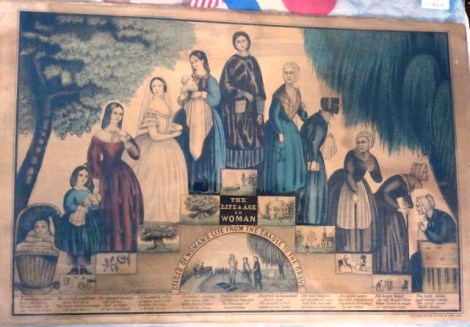
The Life and Age of Woman

 When I saw this over the weekend, I really, really wanted it. But, I couldn’t cover the price. *pout* I’ve wanted to have my own copy

This hand-colored lithograph may be attributable to Kelloggs & Comstock. I say may because there are several similar image that each attributed to a different person or persons between 1848 and 1850. (See below for some variations.) Moving up and down the stairs we see a woman at at each stage of her life. At the left and right we see trees symbolizing youthful vitality and motherly caring. Beneath the women are miniature illustrations of that stage in life.

In the very center of the stairs is the burial plot. Along the bottom we read of each stage of life:


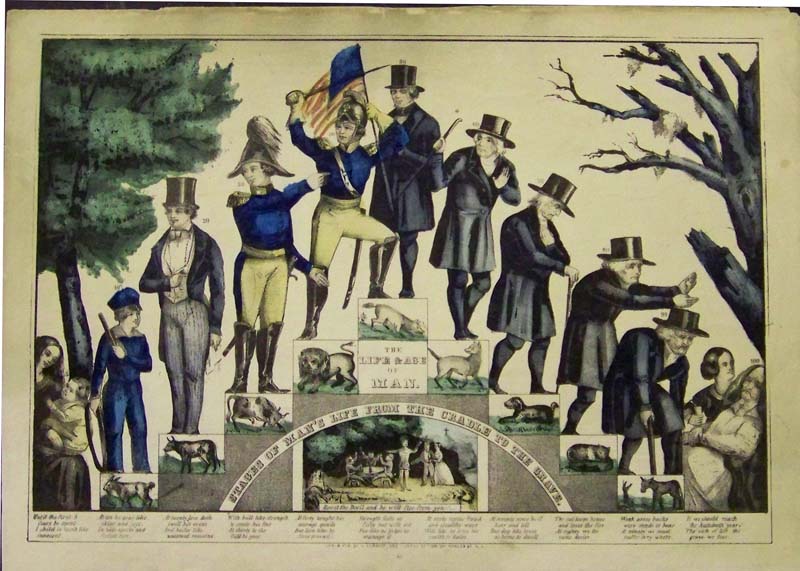
This is a different version attributed to Nathaniel Currier and James Merritt Ives, ca 1848-50. Here is yet another variation attributed to James Baille, ca 1848. This site provides a nice zoom tool for seeing Baille’s version. This version at Harvard, is one I would really like because the top figure is wearing a shawl. Yes, I have an obsession.

A similar look at the life of man was also created as well as a temperance look at alcohol.

Published in: on June 6, 2012 at 4:27 pm  Comments (3)  

Fanciful Utility News!!!!

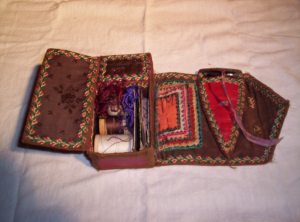
Fanciful Utility: Victorian Sewing Cases & Needle-books

Take a look at the lovely Video Liz has put together…

… there is a special announcement at the end!!!

Published in: on June 4, 2012 at 4:12 pm  Comments (4)  
Tags:

Anatomy of a Bonnet

There is a helpful little file here for developing a better understanding of late 50s & early 60s millinery. Use it alongside browsing museum collections.
https://annaworden.wordpress.com/welcome/pdf-pages/

Published in: on May 29, 2012 at 7:39 pm  Comments (1)  
Tags:

Wandering Findings

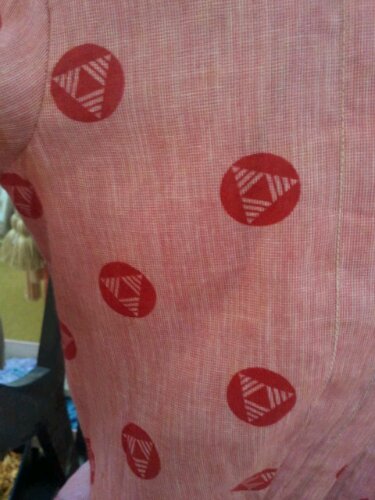
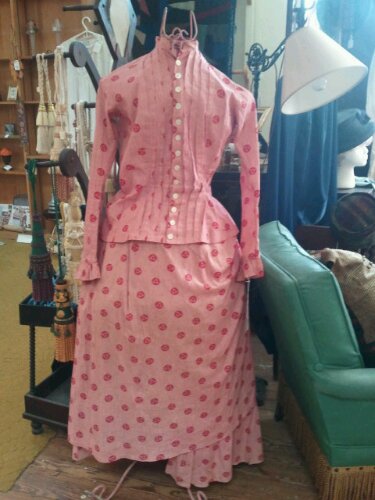
Here are two pretties we saw yesterday. (I’m not yet sure how to rearrange the photos on my phone.) This first is a dress tagged 1880-90s. I thought folks would be interested in the print.

image

image

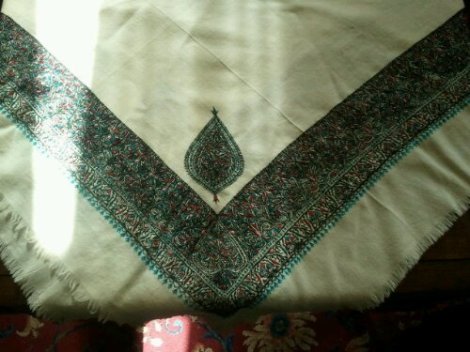
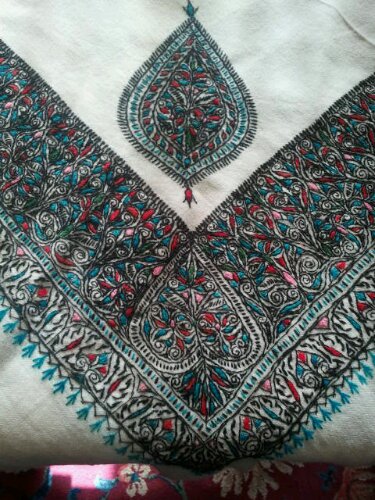
This next is the wool shawl I wanted but had no price on the tag. I have to laugh at the no price bit because that happened to Dad all the time and now seems to happen to me. Based on the size and embroidery, I would say it is 1840s. Somewhere in my image notes for my embroidered shawl project (which I will get back to soon) is a shawl I remember being similar. I’m hoping the seller (this was a co-op store) will call with a nice price.

image

image

Published in: on May 27, 2012 at 8:15 am  Comments (5)  

A Must Have Book

When looking for tid-bits to accompany my previous post on neckerchiefs, I discovered first a neat description of a carriage bag then what I would call a Must Read Book for anyone who sews any type of reproduction anything from the mid-nineteenth century.  This description happens to be in said book:

To Make Up Carriage Bags

Very nice frames are sold for these. They are of a stout calico on the outside, and a nice striped ditto inside, with a handkerchief pocket. The sides are of leather; and the upper of the frame and the handles are the same. The work should be one piece for both sides – the canvas, of cloth edges turned in at the sides, and sewed to the edges of the bag. At the top, the edge of the canvas must be laid under the leather, which is stitched down over it. The handles are merely tacked on. They must be removed for mounting, and afterwards carefully sewed down in the same places over the canvas. Cover all the seams, and the edges of the leather along the top, with a fine silk cord. Observe that the work must be made to fit the frame, not the latter to the work, as frames are made only in certain gradations of size, except to order; and what is call an out size, even if smaller, always more expensive.

I would love to have an illustration of the frame the author writes about. Depending on what that frame really looks like, I can picture a few different versions of this bag coming together.

Now on to this must read book.

If you have not read The Lady’s Dictionary of Needlework; A Complete Guide to all the Signs, Terms, and Contractions Used in Every Sort of Fancy Work with Illustrated Instructions for the Elementary Stitches, hop over to Google Books and download it. I am pretty certain I have stumbled on this book before while compiling shawl information, but I never scrolled cover to cover so to speak. I should have. This book is packed full of useful information – a glossary of material, stitches and oodles of how-tos. This is one I would very much like to see reproduced or at least reprinted so I could pull it from the shelf as needed. Lacking that, I foresee a trip to my printer sometime soon to see about printing up a copy for myself.

Published in: on May 25, 2012 at 5:25 pm  Leave a Comment  

Kerchief Images

I had a request for images to help show how to wear the kerchief style shown in yesterday’s post.
Here is a link to Lily Martin Spencer’s Shake Hands at the Ohio Historical Society. The subject wears a kerchief around the neck crossing in the front. It may or may not be secured with a knot or pin.
http://www.ohiochannel.org/MediaLibrary/Media.aspx?fileId=4053&returnTo=Collection

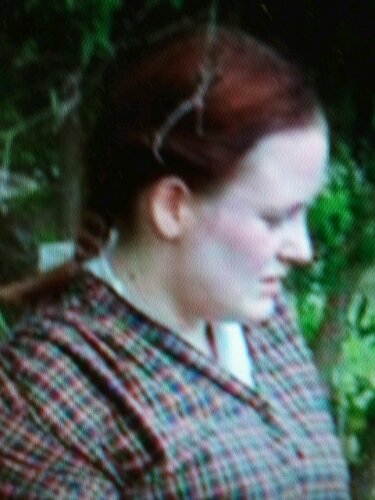
Here are two photos of me wearing a kerchief. In each case a good portion of the kerchief is inside the neckline. Perspiration ends up on the kerchief more so hen the neck of the dress.

image

image

(Yes, my hair is falling down. Building fences is hard work.)

Published in: on May 25, 2012 at 9:10 am  Leave a Comment  

Kerchief

When I recently mentioned the possibility of writing out and publishing my fashionable fichu pattern, a friend and reader asked me about a neckerchief style fichu. It took me a few more weeks to get that information to her than I initially planned due to the wild fun of work and husband sewing. But, finally I did. Now, here that information is for everyone else.

Since I am very fond of V neck dresses, I find a long diamond a very useful and functional form of neckerchief. (Oh, I should say it seems through the first half of the century the word fichu referred to a kerchief that was worn about the neck. Then as we reach the 50s, or the mid-50s, the word fichu is used for a more fashionable accessory still worn about the neck technically, though it was more often pictured draped around the shoulders, high at the neck in the back, then falling gracefully over the bust to the waist or past, sometime crossing in the front. The accessory I am showing here is of the first instance.) Folded lengthwise, the short points nicely tuck inside my dress’s collar following the V in front. Sometimes I will pin the point of the V the kerchief creates, other times I will leave it as is. My use of this diamond shape comes from a discussion on The Sewing Academy some years back. So, I can not take credit for the initial design.

This diamond shape can be seen in several extant kerchiefs including:

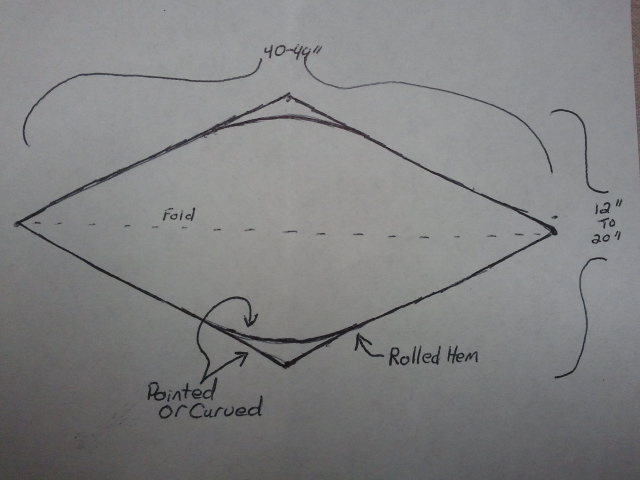
To make this version of a kerchief, I cut a diamond as shown in the illustration. The diamond is 40 to 44 inches long and 10 to 15 inches wide from point to point. This size fits nicely across the width of most modern fabric. The fold line should be set on the bias. On the body, this length will drape around the neck, over the inner bust down to about the ribcage. The length should be long enough to sit inside the front of the bodice without pulling out while you work. I prefer less bulk and go with a narrower short width. A wider short width would be helpful if the kerchief is to be used during labor where one expects to perspire more.
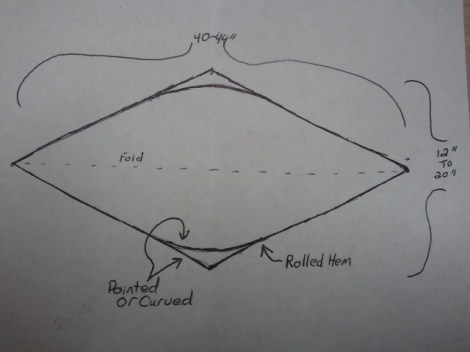
The edges can all be finished simply with a rolled hem. The short points can be rounded off into a nice curve as well. If you are good at fancy needlework, add something decorative as well.

Another type of kerchief is half of this design, as if it was cut and hemmed along the fold line in the illustration. This long triangle is half the fabric, thus half the bulk of the diamond version. This shape appears quite frequently in originals. Without tabulating to be certain, I suspect the triangular version appears more frequently than the diamond version.  You can see examples here:

As you can see from each of the examples, a variety of materials were used. This is supported by this passage from The Ladies’ Work-Table Book. The passage mentions different treatments of the edges. It also mentions a curious bit about tapes which will be nice to learn more about.

 Neck and Pocket Handkerchiefs – These are made of a great variety of materials, as silk, muslin, cambric, lawn, and net. The neck handkerchiefs are generally a half square, and are hemmed all around. It is a good plan to turn up the extreme corners, as it makes it more strong and durable. A tape is set on, which comes ‘round the waist, and ties in front. Sometimes a broad muslin hem is put on the two straight sides, which looks extremely well. Some ladies work a border to their neck handkerchief, which gives to those made of net the appearance of lace. Pocket handkerchiefs are neatly hemmed, and sometimes have a worked border. Those used by gentlemen are of a larger size than those of ladies. (The Ladies’ Work-Table Book.)
Published in: on May 24, 2012 at 5:23 pm  Comments (6)  

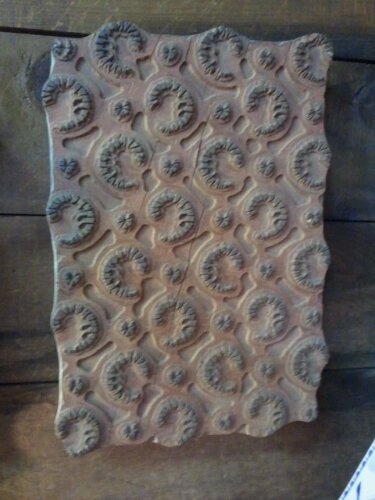
Printing Block

image

Of course this had no tag as do many to most things that catch my attention. I inherited that from Dad.

Published in: on May 21, 2012 at 8:06 pm  Comments (2)  

A Little Camera Shopping

In recent strolls through antique shops I’ve seen a variety of items I would like to own. As both money and space are basically non-existant, I’ve been “shopping” with my camera phone. (I have Lots of photos)
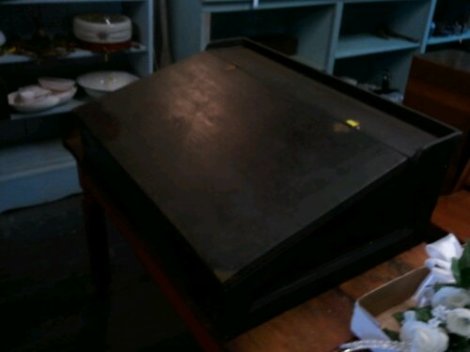
Dan has mentioned he would like a desk. While there have been several that were nice, there was just something about this one I liked. I don’t know if it is the wood or what that appealsto me.

image

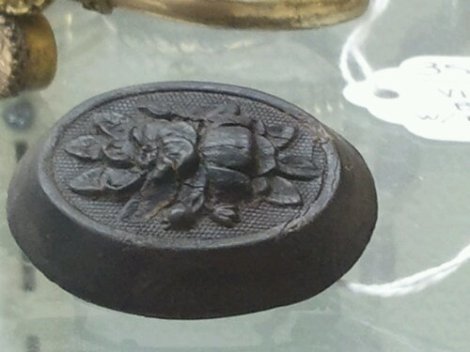
Oddly, with aisles and aisles of cases many packed with jewelry, this is the only gutta percha broach I saw. This one is small, less than an inch across the shorter way. The simplicity appeals to me.

image

Interestingly, both of these items were priced the same.

Published in: on May 17, 2012 at 7:55 pm  Leave a Comment  

A little survey

I’m trying to figure out what size shawls people are looking for. This is for wool, silk, sheer & domestically made shawls. Please let me know if you would prefer:
A) a square shawl 36″ square (this is called a handkerchief shawl)
B) a rectangular shawl about 40″ by 80″ (this is called a three-quarters shawl)
C) a square shawl less than 50″ square
D) a square shawl between 50″ and 55″
E) a rectangular shawl 50″x100″ to 55″x110″
F) a square shawl between 55″ and 60″ square
G) a rectangular shawl 55″x110″ to 60″x120″
H) a square shawl between 60″ and 65″ square
I) a rectangular shawl 60″x120″ to 70″x140″
J) a square shawl greater than 70″ square
K) a rectangular shawl greater that 70″x140″

Published in: on May 9, 2012 at 6:20 am  Leave a Comment