Household Decorative Art – Embroidery

Cassell’s Household Guide: Being a Complete Encyclopedia of Domestic and Social Economy Volume II, 1869 (published in London and New York.) This shorter passage I am allowing to stand alone because I had not considered appliqué a form of embroidery. I would love to hear readers’ thoughts on this.

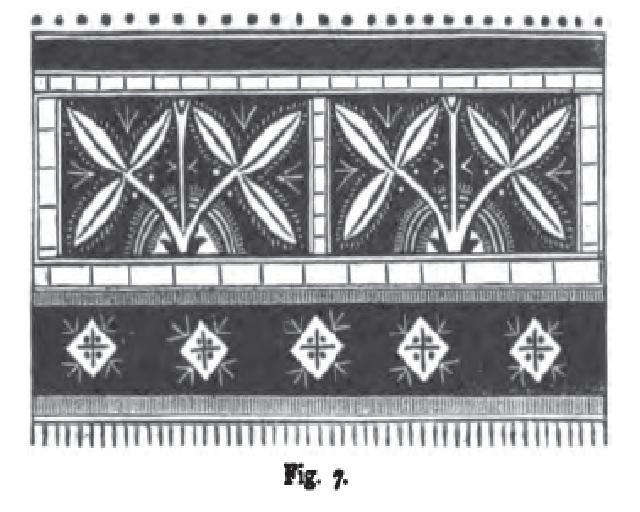
In appliqué, which is a very ancient and always a favourite method of embroidery, broad, flat masses of colour are gained by fixing one fabric over another. In fig 7 we give a design for a mantelpiece hanging to be worked in this manner. For appliqué the materials chosen are usually velvet, silk, cloth, and cloth of gold or silver; when velvet is used it should always be silk velvet. In may be employed for a variety of purposes, such as cushions, curtains, the covering of chairs &c., and though shading cannot be attempted in it, it produces rich and fine effects in flat patterns.
The ordinary method of preparing the materials is, by stretching some thin grey holland, say about a shilling a yard, on a common embroidery frame and covering it evenly with paste. The paste used by shoemakers, and to be bought from them will do, but in the section which we shall devote to materials, a receipt for proper embroidery paste will be given. The material must be laid upon the holland and smoothed till it adheres evenly. It will require about twenty-four hours to dry, and after being removed from the frame, the designs which are to be formed in the material may be traced upon the back of the holland, and cut out with a sharp pair of scissors. The above preparation refers more especially to cloth, velvet, &c; for silk, white lawn is preferable, as a black and whit starch should be used with it instead of paste; and indeed for all white materials a white back-lining should be used. Different parts of the design may of course, be formed in different colours, each to be prepared in the same way. Being cut out, they have to be laid upon the background, which, in our illustration, is supposed to be of black, or dark purple, or maroon cloth, and fastened to it round the edges with sewing silk. There are two ordinary ways of edging the pieces the pieces laid on in appliqué, that which has the richest effect is bordering them with a moderately stiff cord (as shown round the trefoils in our illustration) and sewing over this with silk. Gold-twist makes the most splendid bordering of this kind. The other is that shown round the semi-circular pieces at the roots of the stems, and which consists in working round the applied material with bright-coloured silk in button-hole stitch. It will be observed that a considerable space is left between these stitches to give them their full effect.

Published in: on October 15, 2012 at 1:00 am  Leave a Comment  

Household Decorative Art – Embroidery

Cassell’s Household Guide: Being a Complete Encyclopedia of Domestic and Social Economy Volume II, 1869 (published in London and New York.) We propose in the course of this article to give some description of the various methods of working and of the stitches used in them, as well as of the materials required. We shall also give a series of original designs, but we trust that our readers will not, after perusing the above remarks [previous post] content themselves with merely copying these, but will use them only as stepping stones to embroidery work in which patterns will be of their own devising.

The methods of embroidery practiced at different times and in different times and in different countries, as well as the various stitches employed in them, are almost endless. Taylor, the water poet, in 1640, mentioned by name no less that twenty-one distinct stitches as being in vogue among the English embroideresses of his day. We have not, however, at the present time to deal with the antiquarian aspects of embroidery, but to speak of it as it may be applied to modern practice.

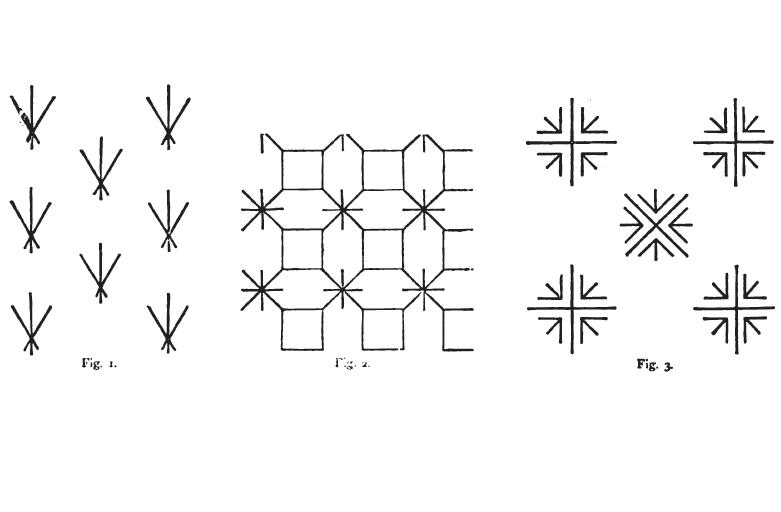
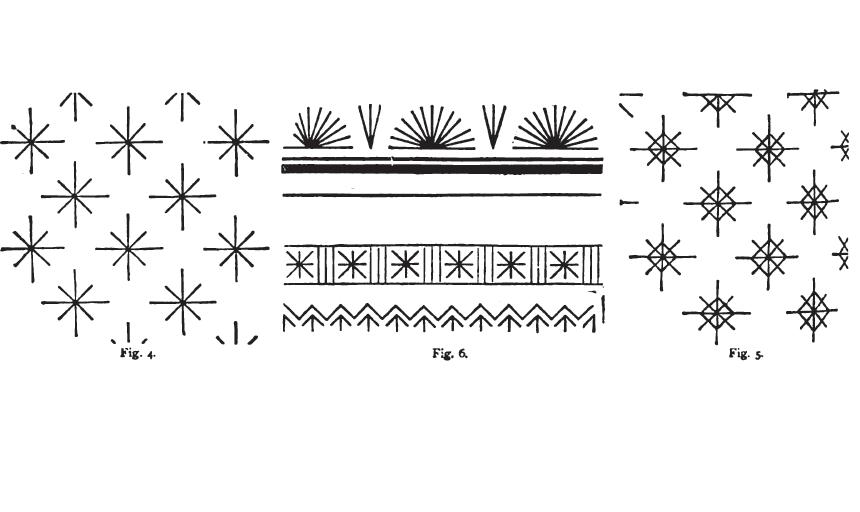
Between ordinary German wool-work and legitimate embroidery there is an intermediate style, which has latterly been somewhat freely practiced. It is susceptible of far better effects than the former, and is by now means difficult. Over the ground of German wool, worked in cross-stitch upon canvas, diapers such as those given in figs 1 to 6 are over-stitched on silk. Thus treated the German wool-work loses its objectionable flatness, and gains great brilliancy. While on the subject of German wool-work, we would beg our readers to remember, if they continue to practice it in preference to better styles of embroidery, that though it is capable of being enriched as above, it is a method of work which is, artistically speaking, exceedingly limited, and really fitted for the production of flat patterns only, such as geometric designs, of conventional ornaments, In cross-stitch it is impossible to shade objects in such a manner as to give them any satisfactory resemblance to nature, and the representations of animals and flowers which have been attempted in it, are as numerous as they have been lamentable failures, and ought merely to be preserved as examples of bad taste.

Published in: on October 13, 2012 at 11:38 am  Leave a Comment  

Household Decorative Art – Embroidery

I came across an interesting section on embroidery in Cassell’s Household Guide: Being a Complete Encyclopedia of Domestic and Social Economy Volume II, 1869 (published in London and New York.) The book divides it into two parts. I will divide it up a little more for ease of reading. I find this article to be interesting because it shows one mid to late nineteenth century perspective of a skill many of us try to imitate. I will start with this section looking at history with a bit of contemporary observation… “The art of embroidery was originally derived, like many other of our arts and sciences, from the Spanish Moors, by whom it was introduced into Europe early in the Middle Ages. As applied to tapestry hangings, it was at first ued among Christian nations for the decorations of churches, and for employment on State occasions only, till Eleanor of Castile set the example of using it for domestic purposes, which was soon generally followed by the wealthier classes. Throughout the Middle Ages needlework embroidery, chiefly for hangings, but also for some other uses, formed the great occupation of ladies when not engaged in domestic or other duties; and the beauty of their work, together with the invention and design which they displayed in it, are such as might well raise the admiration and envy of the ladies of the present day. These old works have not merely the conventional prettiness which is generally the only, though not the invariable, characteristic of modern needlework, but have often real artistic beauty, and display not merely fancy, beu even imagination, in the designs. In this respect certainly they have little in common with modern “fancy work,” which is apparently so called in a sarcastic sense, from the utter absence of any fancy displayed in it. The modern lady, instead of exercising her inventive powers, simply copies a pattern set before her, stitch by stitch, without the slightest idea of deviating from it if its forms are bad, or of developing this mere copying and counting of stitches demands too much mental exertion, and she must either purchase her “fancy work” ready begun, and the pattern laid out for her, or perhaps even with the ornamental group of flowers or other device already finished, and with nothing left to be done beyond filling in the back ground. This degeneracy in skill and taste from even the standard of those qualities in their own grandmothers, is in great measure to be attributed to the substitution of so limited a style of work as German wool embroidery for the more beautiful and legitimate styles that preceded it. In Berlin wool-work, as it has usually been practiced for the last forty years, anything like real beauty or flow of fancy is an impossibility. That this absence of invention and good taste in their lighter occupations, should continue among ladies is neither necessary pations, should continue among ladies is neither necessary nor desirable. An abundant fancy is a characteristic of the female brain, and ladies would be far happier and better in many ways if they would allow its free development. Few things could be better calculated to effect this than a return to the graceful and beautiful occupation of their female ancestors. There is at the present time much desire for this shown among the upper classes, and legitimate embroidery is again rapidly becoming a fashionable employment.

Published in: on October 11, 2012 at 6:00 pm  Leave a Comment  

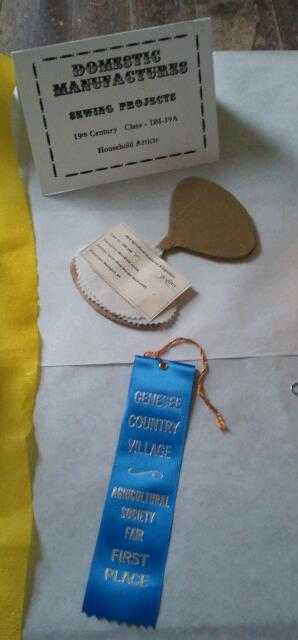
Ag. Fair pt 2

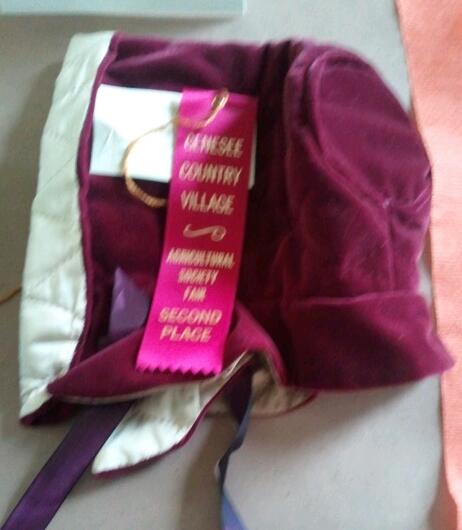
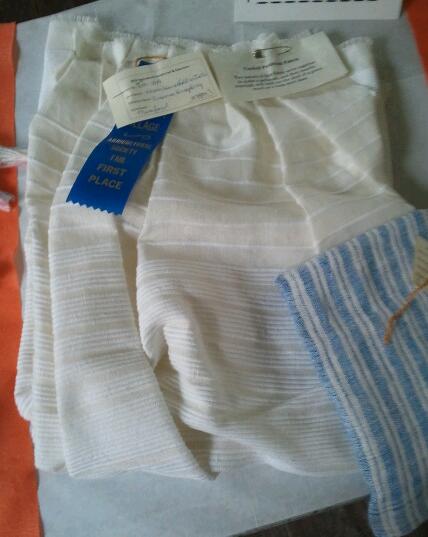
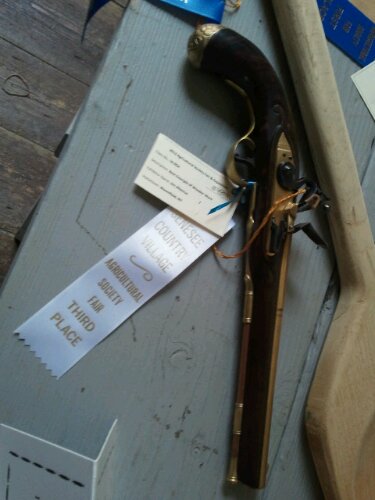
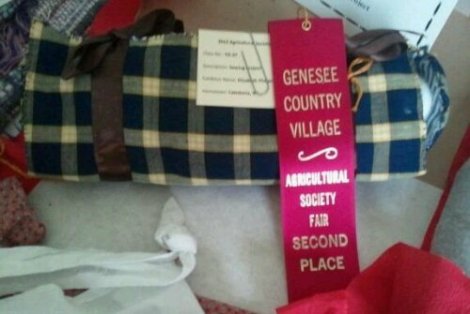
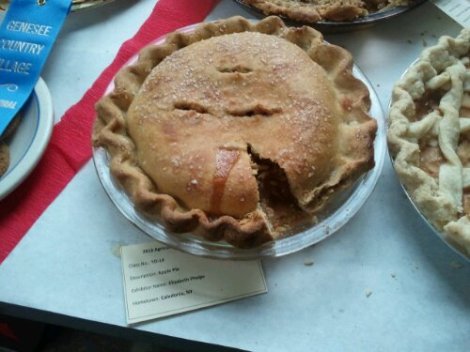
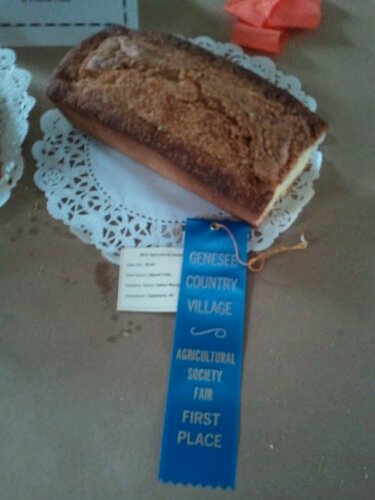
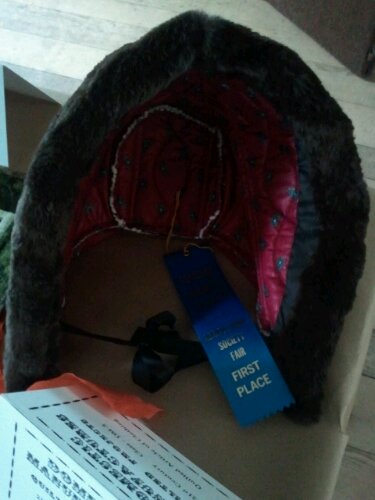
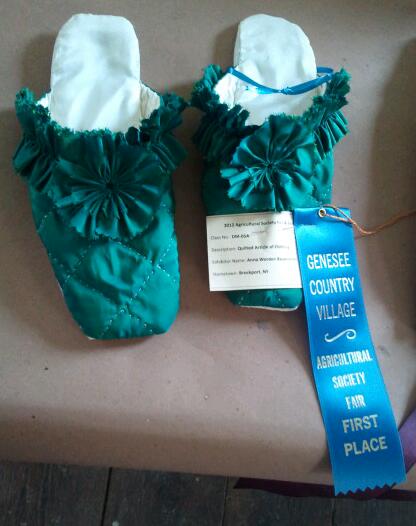
Here are some of the wonderful pieces entered this year….

image

image

image

image

image

image

image

image

image

image

image

image

Published in: on October 7, 2012 at 6:44 pm  Leave a Comment  

Ag. Fair 2012

As we head home a bit soaked and with sore feet, I want to share photos of my mom’s, little sister’s & my fair entries.
Here are Lily’s entries….

image

image

image

Here are some of Mom’s…

image

image

image

image

image

And here are mine….

image

image

image

image

I’ll add some photos of my favorite entries by other people asap.

Published in: on October 7, 2012 at 3:40 pm  Leave a Comment  

Ag. Fair 2012

As we head home a bit soaked and with sore feet, I want to share photos of my mom’s, little sister’s & my fair entries.
Here are Lily’s entries….

image

image

image

Here are some of Mom’s…

image

image

image

image

image

And here are mine….

image

image

image

image

I’ll add some photos of my favorite entries by other people asap.

Published in: on October 7, 2012 at 3:39 pm  Leave a Comment  

Thread Winders – A Great Source

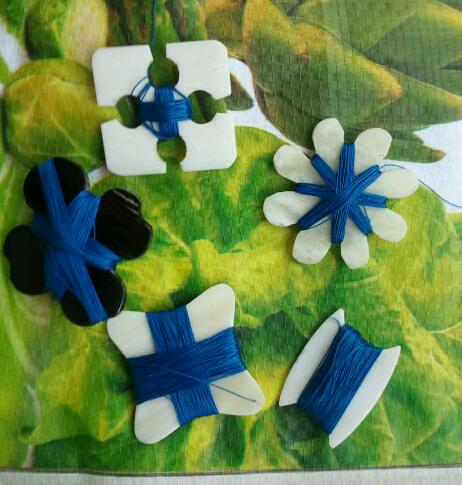
With my fancy for sewing cases and needle-books, of course I am always looking the sewing accoutrement to go inside. For some odd, unknown reason I am particularly fascinated by two of them – bodkins and thread winders. I’ll touch on the bodkins sometime in the future. Today I want to talk about a great source for thread winders. I found Scarlets Scarab’s  website sometime back. There was something about the warmness and color of the materials they choose and the lines in the work that greatly appealed to me.  I finally put in a sampling order last Friday.

They arrived this week.

I couldn’t be more pleased.

image

As I said, I ordered an assortment of thread winders. This included both bone and horn in their flower, square, wheel, crab-babies, smu, and fancy thread winders. Kim, the proprietor, also included one of their fish and large thread winders. Can I say I just love the fish? It is beyond adorable. One of the things I like about the thread winders themselves is they are handmade. You can see this in how the symmetry isn’t quite perfect. I rather like that. I also like the smooth texture and fine shaping. I greatly prefer the thinner profiles of these over other bone or horn thread winders I’ve seen. They are easily half to a third the width with a smooth edge. Visually, I prefer the shape of the crab-babies, the smu and the flowers. Once I wind some thread on them, I’ll share my thoughts on which seem to be the most practical. (Hopefully, that will be in the next couple days.)
There are several more items on the site I would love to order including their awls, the bone thimble ornaments and, the long horn hair pin. I also think Dan might have to get some dice for Christmas. I wonder if he would like the compass.

Addition:
I’ve been playing with the thread winders & have a few thoughts. For a larger amount of thread such as you would have in a full sewing basket, I think the square and flower thread winders are the way to go. See how on the square I have thread started at the small crossing? I think this thread winder will hold a good amount of thread in those notchs nicely. On the flower, the winding starts at the crossing but then can also use the dip in the petals. For sewing cases, I think the petite crab-babies are an excellent choice. They hold a nice amount of thread and will tuck into a case easily. The smu has the notch which is helpful for holding the end of the thread.
image

Published in: on October 4, 2012 at 6:11 pm  Leave a Comment  
Tags:

Parasol

We decided to “Apple-umpkin” today thinking fresh air would be good for us. It was. This parasol had to come home with me. It was getting played with by a child.

image

Published in: on September 30, 2012 at 12:29 pm  Comments (2)  

Fanciful Utility Arrives

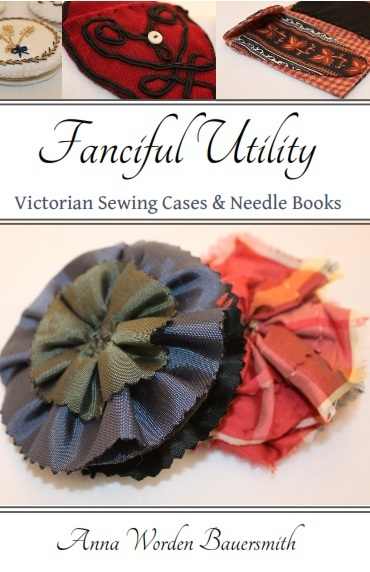
As the first copies of Fanciful Utility arrive this week in people’s mailboxes, I am eager to hear first thoughts.

image

Please share them if you like.

Published in: on September 20, 2012 at 6:16 pm  Comments (3)  
Tags:

Slipper progress

Both slippers are together. When I started working with the leather soles, I decided the leather just wasn’t going to work. I think a big part was that it was too thick. So, these have canvas soles with soft wool inside. (The leather will get used for a Christmas gift for hubby.) Up next is the ruching, which commence once I locate the pinking scissors. Hopefully, the ruching will add some dimension.

image

Published in: on September 19, 2012 at 3:48 pm  Comments (1)