Ribbon Hairnets

New Thumbnails hairnetsThere has been lots of discussion lately about how to make ribbon hairnets. Here is a set of directions I posted on the Sewing Academy back in 2007.

Please be sure to take the time to read To Net or Not to Net and to look at original hairnets before proceeding. This will give you a better idea of appropriate materials, fibers, widths and weight.

Okay, a quick 7 am modern method of making an easy ribbon net….. Let’s see if I can make any sense this morning.

This is for a simple, basic ribbon net with no decorations, made with silk or velvet ribbon cut while woven. There is a way to do it with one long piece of ribbon. I don’t think I am awake enough to describe that clearly. It really is better with pictures.

You are going to want a surface to work on, either something to pin the ribbons to or to hold the ribbon ends. For the first ribbon net I made, I used a large 12 or 14 inch embroidery hoop. A large pillow will work nicely as will a piece of cardboard. Draw a circle 12 to 14 inches in diameter depending on the size of your head and the amount of hair you have when done up. Use a compass or a dinner plate. Now decide how close you want your ribbons to sit. If you have 1/2″ wide ribbon, 1/4″ space is good. If you have 3/4″ ribbon 1/4″ to 1/2″ is good.

Cut two ribbons 2 inches longer than you circle is wide (14″ or 16″). Center them in a + on your circle. Pin each end at the edge of the circle. This marks the center of your net. If you need to mark out a grid for your ribbon placement, just measure your spaces and ribbon width away from center on all 4 sides. Or, you can just eye it. Measure 4 lengths of ribbon for above, below, right and left of the center +. Cut them and lay them down in place, the decided distance from the previous ribbons. Repeat in sets of 4 until you reach the edge of the circle.

Weave the ribbons over & under each other as you would a basket bottom. I like to work from the center out. Adjust your ribbons so they are set your chosen distance apart. Pin each end on the circle. With a matching thread, tack each + point with thread. When all the + points are stitched, work on the edges. Unpin one ribbon end. Turn the end under creating a half inch loop. Stitch the loop securely. Repeat this for every ribbon end.

When all the ends are looped, take a length of ribbon or plain elastic and run it through all of the loops. The elastic will need to be roughly 3 times the diameter (less than the real circle’s circumference) to bring the sides of the net in once the elastic is tied. The ribbon can be 3 to 4 times the width depending on how much ribbon you want to tie the net with.

Chandra M shared photos in the SA thread of her hairnet using these directions with brown velvet. Take a look.

A couple years later, but not much more awake (it has been a long, cold week), I have this idea in my head that one of those round knitting thingies may work nicely as well. It may even make the single strand of ribbon version easily doable. You could weave the ribbon across one direction, then back across weaving, using the little tabs. Sew. Then slide the ends off.

Published in: on February 13, 2015 at 10:49 pm  Leave a Comment  

Where Do I Find….?

Fanciful Utility: Victorian Sewing Cases and Needle-books is available directly from the publisher, ESC Publishing.

Straw Millinery, Drawn Millinery and Winter Millinery are all available in my Etsy Store.

Handmade Sewing Cases and Needle-books are available in my Etsy Store.

From Field to Fashion and my Quilted Hood Pattern are currently out of print. When they are back in print, they will be available in my Etsy Story.

Published in: on February 11, 2015 at 6:00 am  Leave a Comment  

FanU Readers

I noticed Fanciful Utility only has one rater with only 4 stars on Good Reads. Okay, so, I pouted a little over only one rater.

Please, take a moment to rate Fanciful Utility.

Published in: on February 9, 2015 at 4:00 pm  Comments (3)  

Fanchons for 1865

There are only two Fanchon bonnets left in my Etsy store.

Here are a few finishing ideas.

image

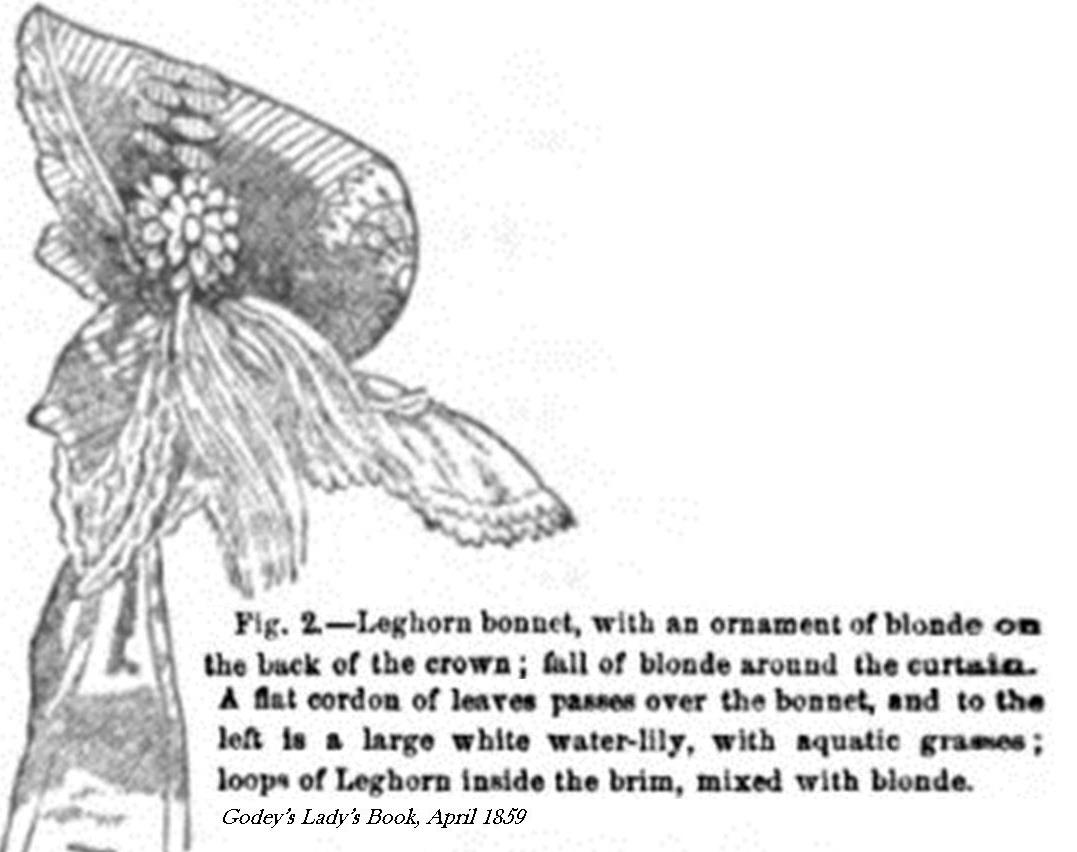
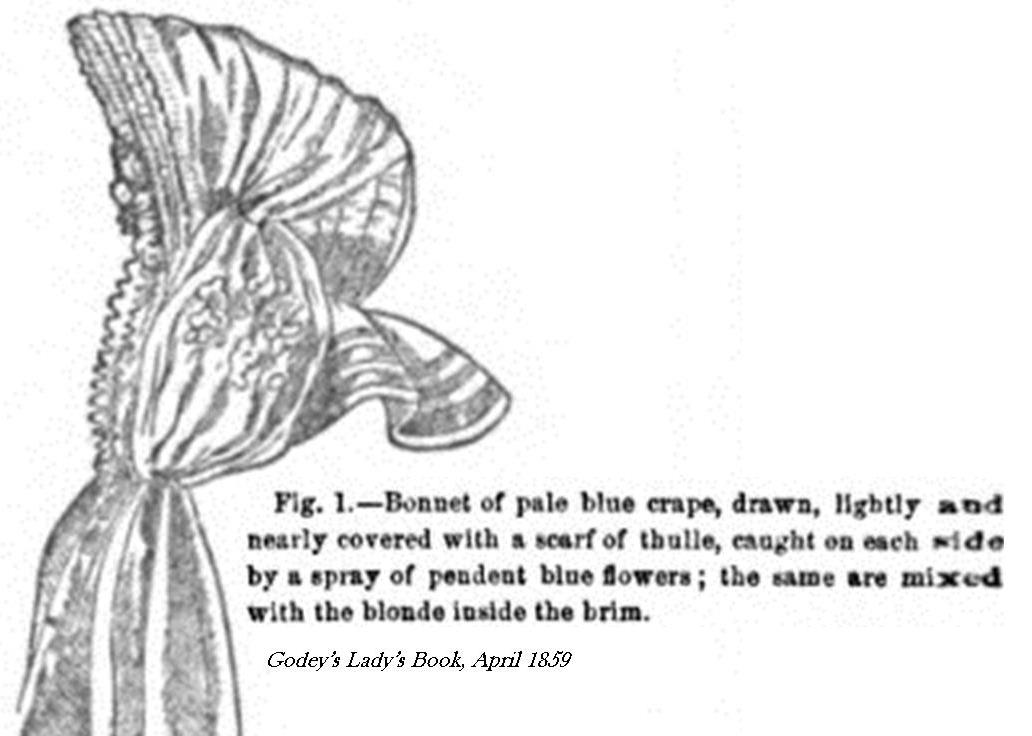
Bonnets of April 1859

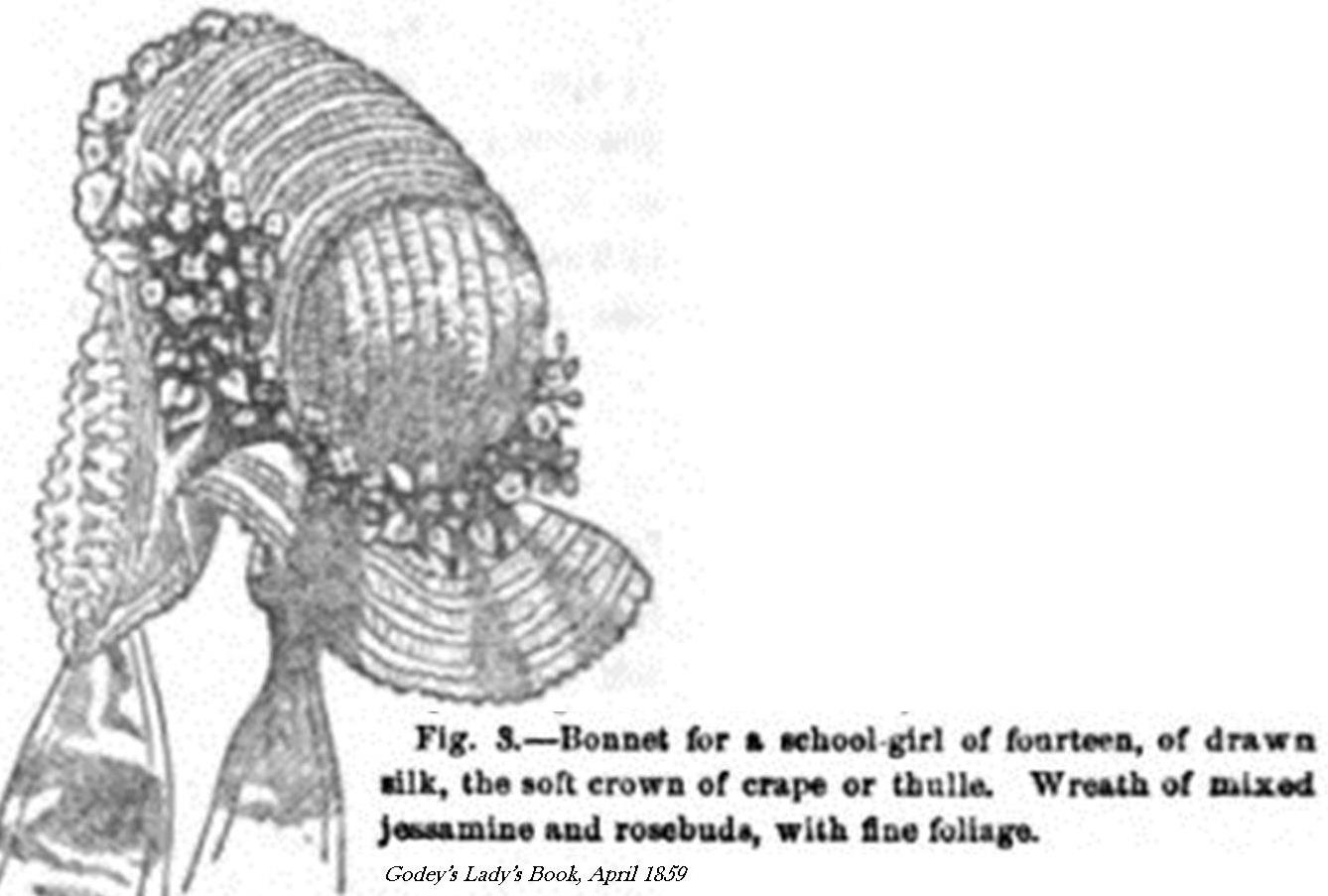
“In bonnets, chip, crinoline, crape, and straw are used singly and in combination. On the street, Leghorn and the plainer straws have made their appearance. The Leghorns are exquisitely fine, and trimmed in a variety of ways. Ribbons approaching the straw color are much used, mixed with blue corn-flowers, to give the desired contrast; sprays of grass, black and maize-colored wheatears, laburnum, acacia, etc etc. For young ladies, wreaths of a single flower, as roses, the daisy, the violet, are used upon chip, crinoline, and all the purer straws. A violet crape bonnet with wreaths of purple azalias—a bonnet of chip, with a soft crown of blonde and thulle, and cordons of Chinese Westeria—bonnet of white crape and blonde, with blue marabouts, twisted towards the curtain; plaiting or torsades of blue crape, lightened with marabouts inside the brim; strings of blue ribbon and thulle lappets. We give one or two styles that will illustrate the trimmings referred to.” (Godey’s Lady’s Book, April 1859)

d e f

Published in: on February 9, 2015 at 6:00 am  Leave a Comment  

My First Regency Bonnet

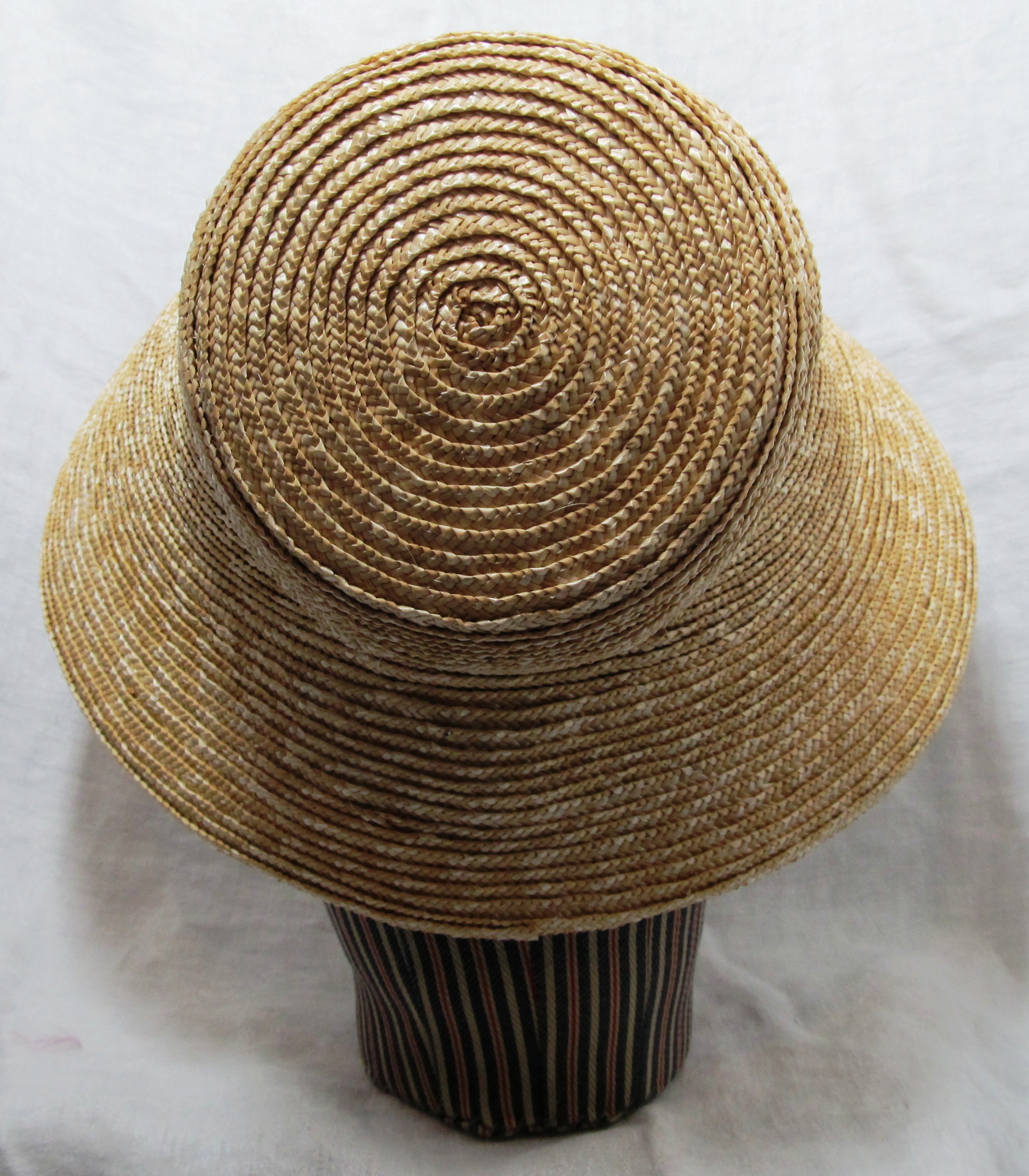
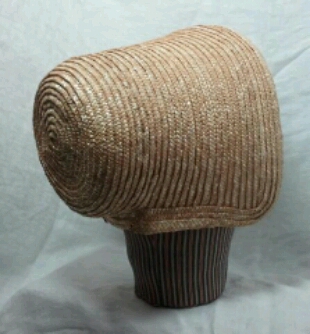
imageOkay, technically, my first all straw Regency bonnet. I did make a silk & straw about a decade ago. Skills have improved since then.

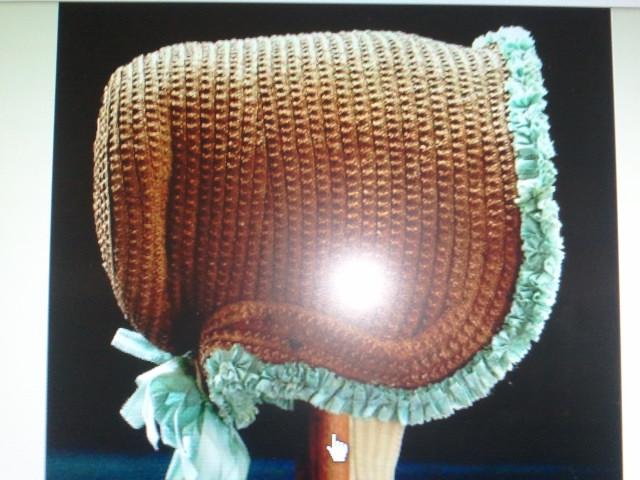
imageWhen I started this piece, I had another bonnet in mind. But, the straw quickly told me it wanted to be this bonnet I had seen just before. I complied.

Then, as I worked, I became very worried I was going to run out of straw. This is indeed the very, very last of this hank of plait.

image

image

image

imageOriginal bonnet 1, 2 and original site.

Published in: on February 8, 2015 at 11:56 am  Leave a Comment  

Soft Winter Bonnets

1 2 3

Published in: on February 8, 2015 at 9:00 am  Leave a Comment  

How to wear a shawl


On the shoulders, draped open or held with the hands

This woman, dressed in evening attire, wears a lace shawl on the edge of her shoulders

This woman wears her shawl high on the shoulders, rather close to the neck. It drapes down the front of her.

This woman wears her lace shawl on her shoulders while holds her dog with the shawl draped through the arms.

This lace shawl is held on the shoulders, fully covering the arms.

This lace shawl is held closed with arms.

This image is harder to see. It appears to me the shawl is held on the shoulders.

This shawl is draped off the back of the shoulders. I believe this is a posed wearing.

These women wear their shawls on their shoulders tucked high under their arms.

Painting, 1860 another painting


On the shoulders, held closed with pin or other item

This lace shawl is held closed at the neck.

This woman is seated, wearing an open neckline dress. The striped silk shawl drapes around her shoulders and is closed at the front.

This lace shawl is worn high on the shoulders to the neck where it appears to be pinned.

This paisley family shawl is folded square and pinned at the neck. It is unusual to see a shawl folded this way.

Just off the shoulders

This woman wears a loosely knit shawl just off her shoulders. She holds it closed with her hands. She appears to be in her 30s or 40s.

The woman on the right wears her shawl just off her shoulders and holds it closed low as she poses.

This shawl appears to be pinned in place. The woman is Cornelia Van Ness Roosevelt, taken in 1857.  I believe this is a posed wearing.

This woman wears her shawl with a paisley border just off her shoulder with a significant amount draped over her arms.

This shawl is worn just off the edge of the shoulders and held fully with the arms.

This is likely a later 40s or early 50s image based on the dress and bonnet. The shawl is one that could possibly have been made at home.

Woman wearing a knit shawl

Draped on mid-upper-arm

Lace shawl worn by a woman in her 40s or 50s, draped over her upper arms as she is seated.

 This lace shawl is worn on the upper arms. It is possibly a later 60s image based on the neckline.

On the arms/elbows

, draped low on the back, held at the elbows. Woman 20s or 30s.Solid shawl with possible border

This painting shows a woman, likely from the 1840s, in an open neckline day wear dress with her shawl draped around her arms loosely at the elbows.

Published in: on February 7, 2015 at 6:00 am  Leave a Comment  

Make-Do Furniture

In the January, 1859 edition of Godey’s Lady’s Book there is a story “The Unexpected Guest” in which athe family has a room yet no furniture for their coming guest. The devise several nifty make-do pieces of furniture that are worth looking at. Now, I’m not saying everyone needs to run out and make each of these for their camp area. That would just look silly and create yet another over representation. I am saying it would be worth thinking through what they might have done for their make-dos when make-dos are appropriate.

To read the full story click here.

b

c

Published in: on February 6, 2015 at 6:00 am  Leave a Comment  

That Which Has Been on My To-Do List… for at least 10 years

Or some variation there-of….

a

Published in: on February 4, 2015 at 1:00 pm  Leave a Comment