Walnuts in the Sewing Basket

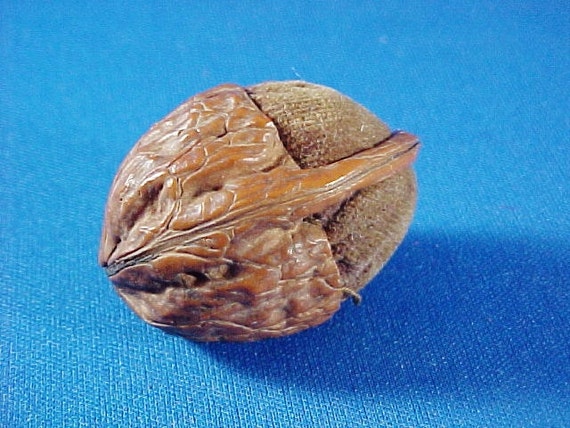
I had a couple people ask me why I have walnut shells in my sewing basket. I eventually want to make one of the many cool walnut sewing goodies.

w1This walnut bag was one that came up on my Pinterest feed. It appears it was an Ebay listing (If this is your piece or was your listing, and would like me to remove it, please let me know and I will do so.) This is just the kind of little piece that screams ”make me” to me.

With all the walnuts in the yard, I am tempted to try to make something like this pincushion that looks like a basket. (By the way, this Etsy seller has some incredible original pincushions in you are in the market.)

Published in: on April 11, 2015 at 6:00 am  Leave a Comment  

Ask the Milliner

Where do my ties and ribbons go? 

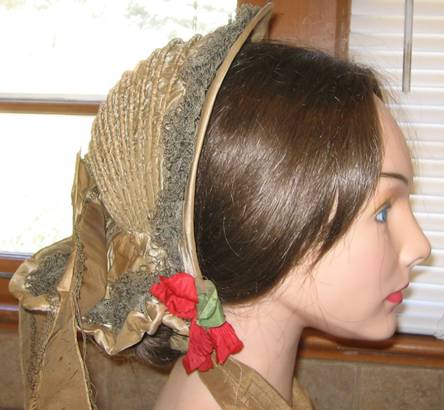
There are a few different placements of utility ties and fashion ribbons. For bonnets of the later 40s through mid 60s, most commonly we see:

  • Utility ties on the inside of the cheektab with the decorative ribbons on the outside.
  • Utility ties on the very end of the outside of the cheektab with decorative ribbon over it.
  • Utility ties on the very end of the inside of the cheektab with the decorative ribbon above it.

This 1840s/1850s example shows the utility ties on the inside cheek tab with the decorative ribbon on the outside. In this arrangement, the utility ties position varies along the cheektab. This example has the utility ties placed higher inside the cheektab. The wider decorative ribbon is neatly folded and attached further down on the outside of the cheektab. Please click on the thumbnail to link to the original posting and additional photos.

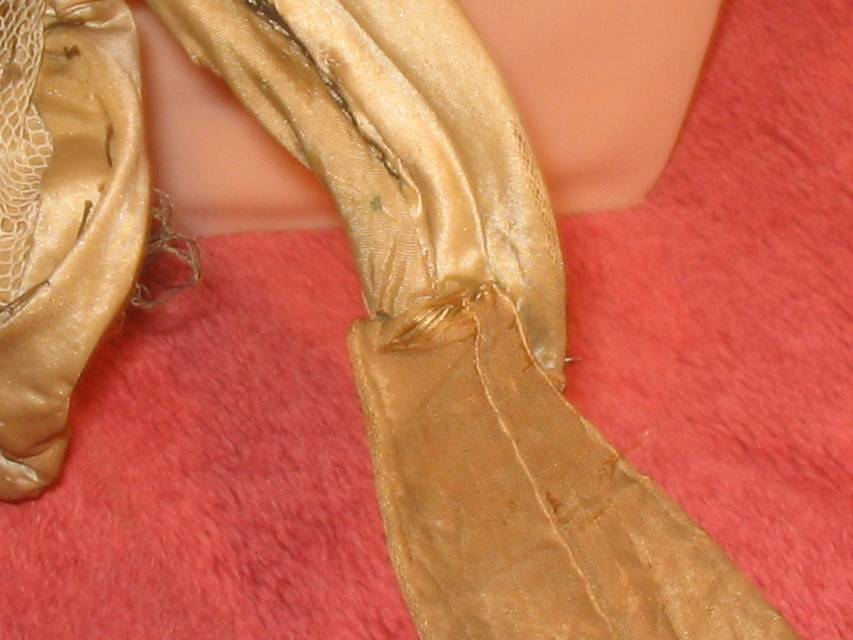
This example from the Henry Ford Museum shows the utility tie on the very end of the cheektab on the outside with the decorative ribbon over it. Please click on the image thumbnail to link to the Henry Ford Museum and additional photos. Zoom in on the right cheektab to see the remnants of the original utility tie.

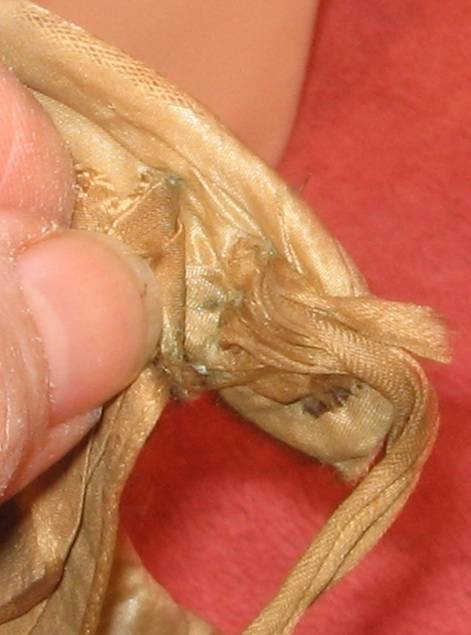
This example of Pam Robles shows the utility tie on the very end of the cheektab with the decorative ribbon over it. The remains of the utility tie can be seen at the very end of the tip on the inside with the decorative ribbon folded and attached over top of it. This would put the stress of holding the bonnet on the utility ties while minimizing the wear on the decorative ribbon.

Courtesy of Pam Robles

Courtesy of Pam Robles

Courtesy of Pam Robles

Courtesy of Pam Robles

Courtesy of Pam Robles

Courtesy of Pam Robles

 Visit my Etsy Store:

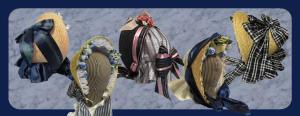
Spring straw bonnet banner 2015

Published in: on April 10, 2015 at 4:45 pm  Leave a Comment  

Fanciful Utility Blue Swap

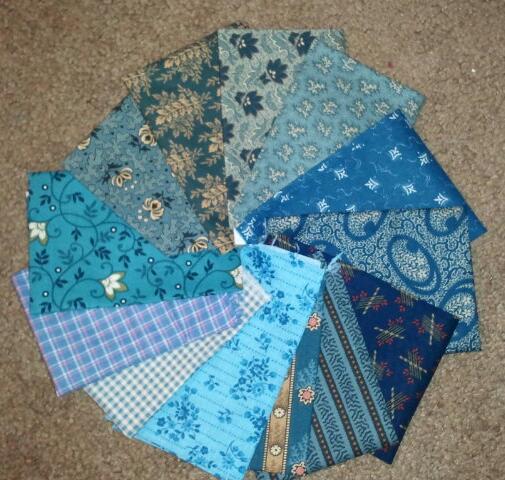
wpid-2015-04-09-16.37.19-1.jpg.jpegHere are our fabrics from our Fanciful Utility Blue Swap.

I suspect the post ate one of the fabrics. I keep counting 13 rather than 14. If someone wants to share a photo of the one I am missing, please do.

These blues show just how many blues there are. Now that I have the photo of them together, the tone on the top half remind me the quilt Grandma gave me. It is something about the feel of the blues.

Decisions, Decisions….

The Blue Swap was our 15th swap. We’ve swapped red, green and blue fabrics, silks and cottons, mini-prints, stripes, themes of leaves and paisley, fabrics for the Romantic era, even a special holiday swap. With an average of two groups of eight fabrics being swapped, we have swapped around 240 fabrics. That is pretty impressive.

I’m sure you are thinking “what is she getting at?”

The bad news is, I’ve decided I need to take a little swapping break.

The good news is, I am going to spend more time on developing new Fanciful Utility project templates and patterns as well as some additional workshops. Those further away, don’t worry I’ll have some goodies for you too. As I get details together for the workshops (locations, dates and costs) I will share them.

I will probably start missing the swaps over the summer. So, they are not gone forever.

Published in: on April 9, 2015 at 6:21 pm  Comments (3)  

Bonnet Baskets

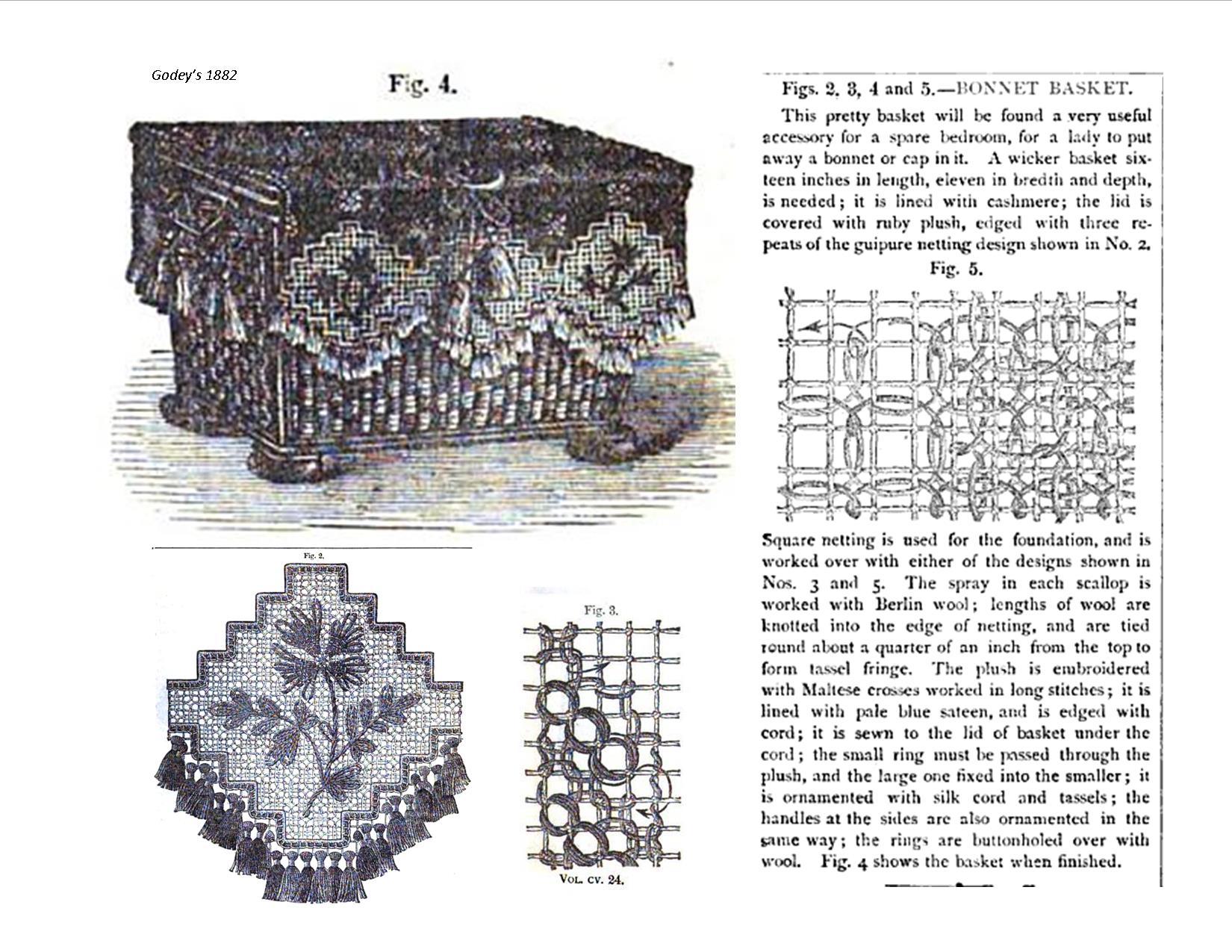
Today I want to share something a bit later in the 19th century than I normally cover. We often talk about band boxes or pasteboard boxes for storing, housing, carrying our bonnets. Most of us have seen the nifty cloth and cane bonnet bag at the MFA. Baskets it appears were used in the later half of the century.

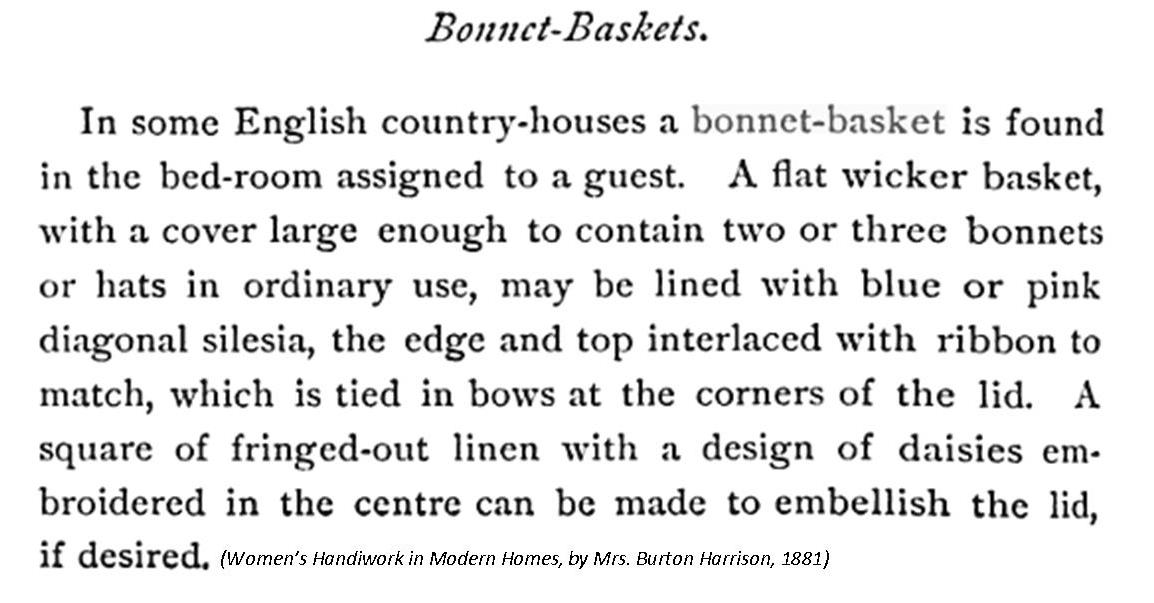
I am unsure how frequently they were used or in what situations. I did see an 1868 mention of a bonnet basket being given to a bird (aka being used as a bird cage I suppose) in Notes on Birds.To me, this suggests they were somewhat common. This passage from an 1880s guide book suggests the use for guests:

eKeep in mind, by the 1880s bonnets were far smaller than they were in the first half of the century. So, a basket large enough to hold two or three bonnets would not actually be very large.

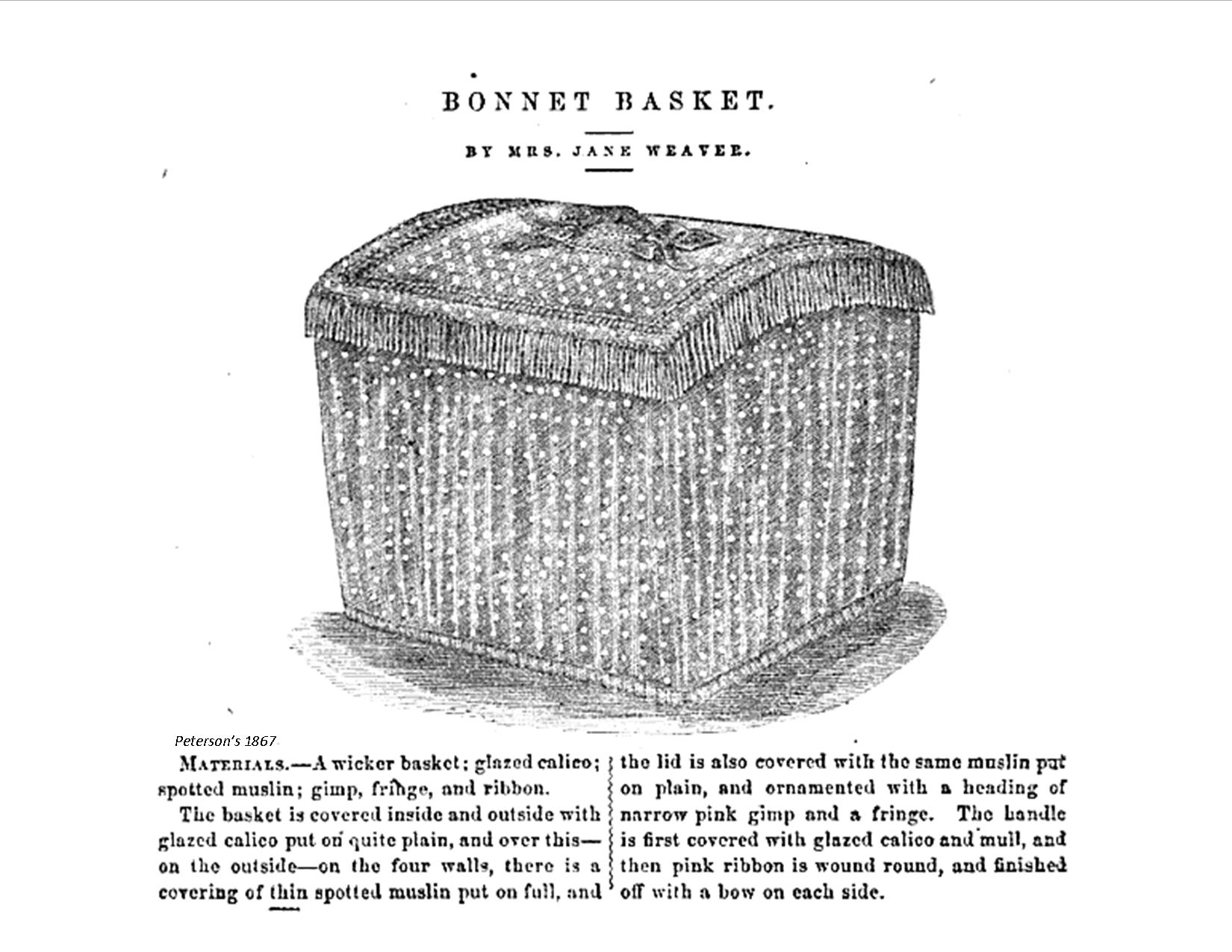
So far, this is the earliest mention of using a bonnet basket, 1867:

a

This next example, with directions comes years later:

c

Published in: on April 8, 2015 at 4:00 pm  Leave a Comment  

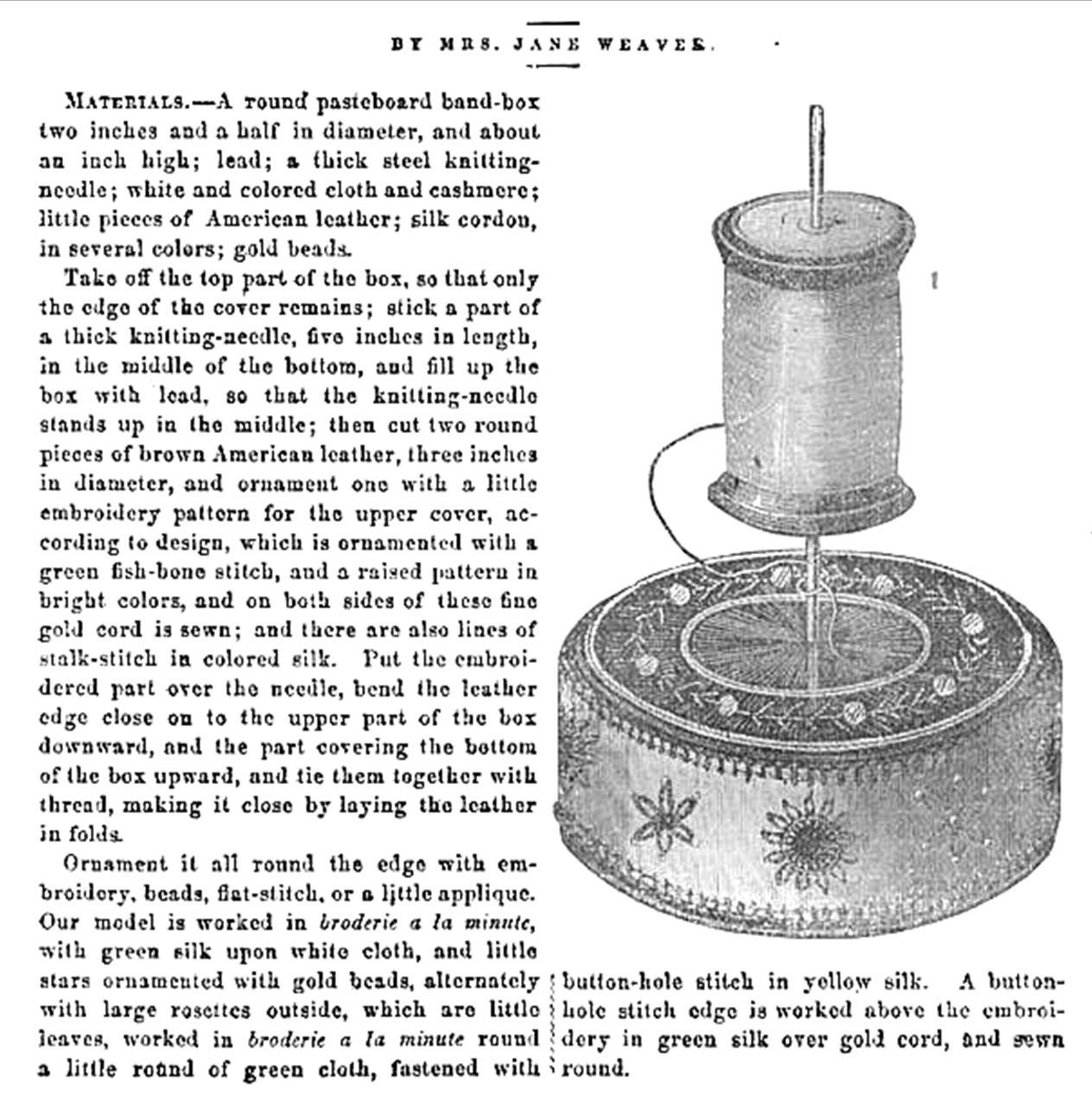
Spool Stand

Peterson's 1867Nifty something that just has to get made. (Peterson‘s 1867)

Published in: on April 7, 2015 at 4:00 pm  Comments (2)  

Ask the Milliner #3

“When do you sew?” 

I rather like this question. Part of the answer is ‘when ever I can’.

The reality is I try to squeeze an hour or two in each night after work and before making dinners and lunches. If I can get in two hours, this often means skipping the, um, cleaning of the house stuff. (Thank you to a friend who said “I can do one thing really well.” as this idea has kept me sane.) During February recess, Spring break and Thanksgiving, I try to sew as much as I can. I adopt a different sleeping schedule (often I feel better with this 9 am to midnight or 1 am schedule than I do with the 6 am to 9 pm schedule.) Summer is when I do the bulk of my sewing. I used to have an incredible summer history camp program that I miss a lot. Sadly, that is gone. Bad for kids. Good for clients. Now, I sew. If I do summer school, I drive into suburbia for the mornings, then sew from 1 or 2 pm until I fall asleep. I would like to spend more time sewing in the historic village this year.  I’ve found 10 or 12 hours is my wall.

“Why did you start making these to sell?” MaryAnne

I think this was something Dad urged me to do. I started with the research that became From Field to Fashion first. I made some bonnets for myself. Then we did a local workshop. I think it just tumbleweeded from there. When I look at photos from early on (we are talking the late 90s and early 2000), I think they were a decent start but…. (see next question)

“If you could go back to when you started and give yourself one piece of advice as you started millinery, what would it be?” MaryAnne

The first thing that came to mind was “spend more time with Dad”.

In terms of practical construction, I would say:

  • Start with smaller plait.
  • Save the fancy plaits because it is really hard to find more.
  • Learn to wire flowers early on. (sadly, in the first few bonnets I used glue on real flowers.)

“I am curious to how you would prefer your customers store and care for them?” Georgiana

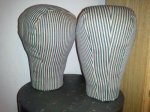
I would love everyone to have enough space for each bonnet to have its own cloth head and box to go over it. Oh, wait, I would love me to have enough room for each bonnet to have its own cloth head and a box to go over it. wpid-2013-03-06-18.33.05.jpg

The reality is we all have space and budget issues. For at home storage, I would suggest a spacious tote/box with a support inside to hold the bonnet. There is a Sterilite tote currently made that nicely fits 2 bonnets standing up on cloth heads or hat stands. They can also fit 3 bonnets nested together if you have to. I suggest the head forms or stands because bavolets tend to crush and wrinkle horribly over time. Stands will help prevent that. Give these a try. Now that I think more about it, if I had more heads I would try to secure them to the bottom of the tote so they would shift when moved.

Published in: on April 2, 2015 at 3:18 pm  Leave a Comment  

Ask the Milliner #2

For the second “Ask the Milliner”, I’ll answer some questions on shape.

How do you look at an original bonnet and know what you need to do to get the brim shape and height, the correct crown shape, etc? Betsy 

I would love to have a precise scientific answer to this. But, I don’t. When going from an original to a repro, so much of it is trial and error; talking with the straw, trying to get it to do what you want. Vague, huh?

To be a little less vague, I have to look at the bonnet as a whole and as parts. These parts are not always the same parts I’m going to talk about below. I have a sort-of mental categorization for bonnets and hats as to how they are generally built. Each segment constructed and contributing to the whole. When looking at each segment, I can think about what it takes to make that part. Looking at each part, it has its own shape, angles, curves and size. I know tight tension can keep one area flat, while loose tension can add loft; or playing with the tension on each side of the plait can create a flare. Then the pieces go back together in my mind. Sometimes I will mentally construct a new pieces over and over in my head, often as I fall asleep.

Now, when it comes to making a shape for a particular person, I find it so much easier if I know the person, if I’ve seen their face, how they move, their coloring and personality as well as what their impression or impressions will be. This is why I prefer not to do many commissions. Something has to catch me about someone or their request. For me, making a bonnet for someone is as much art reflecting a person as historical reproduction.

What are some quick tips for getting the right shape/interpreting the original bonnet’s shape? Betsy

Regardless of era, I think it is essential to look at lots and lots and lots of originals. Look at the years you are focusing on. Then look at those bonnets just before and just after. Break the shapes down into the components – the tip, the crown, the brim, the cheektabs. What shapes do they have? Where to the sit on the head? Where do they sit compared to the rest of the bonnet? How does the shape work with the hair of the time? What makes sense? What doesn’t make sense?

If you are overwhelmed, print a few dozen out in small card size prints. Make a little game for yourself. Sort the images by similarities in shape. You will likely see some patterns arise. You will likely see that no single shape matches a year. Instead, you will likely see that a couple different shapes are fashionable, maybe even competing with each other, while some other shapes are still worn.

Where do you think modern reenactors go wrong with bonnets, and how to correct it. Simple tips to “fix up” your millinery. Clarinda Ann

I think we a prey to shapes that are easy to make and sell cheap when we start out. Often for the mid-century and Civil War era, these tend to have low brims, shapeless crowns and short, fat cheektabs.

Brim – For the mid-century, the bonnet’s brim should frame the face, high-lighting it. It should not trap the face inside. (there are very few, specific exceptions to this.) If you’ve unknowingly bought a bonnet that traps your face, see if it will fit a younger girl. With a little steaming and reshaping, this may be an expense rescue.
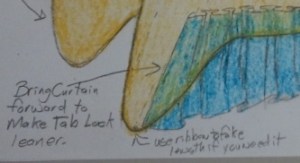
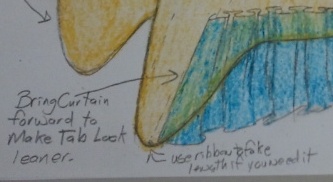
???????????????????Cheektabs – The cheektabs of the late 1850s and early 1860s are generally lean and long, coming down the sides of the face and under the chin. In the 50s, they appear to curve backwards. In the 60s, the curve is more a twist inward. Remember you want to frame the face. When I say lean, I mean at the very most 2″ wide at the top narrowing greatly. If you unknowingly bought a bonnet frame with wider tabs, you can try to fool the eye into seeing narrower tabs with how you place your bavolet. Here is a little sketch I did for someone else needing to do this.

Next time, tbd. 

Published in: on April 1, 2015 at 6:00 am  Leave a Comment  

Spring Break Bonnets

I’ve been busy sewing away this “spring break”. (Spring break in quotes because it does not seem spring like out side and does not seem break like inside.)

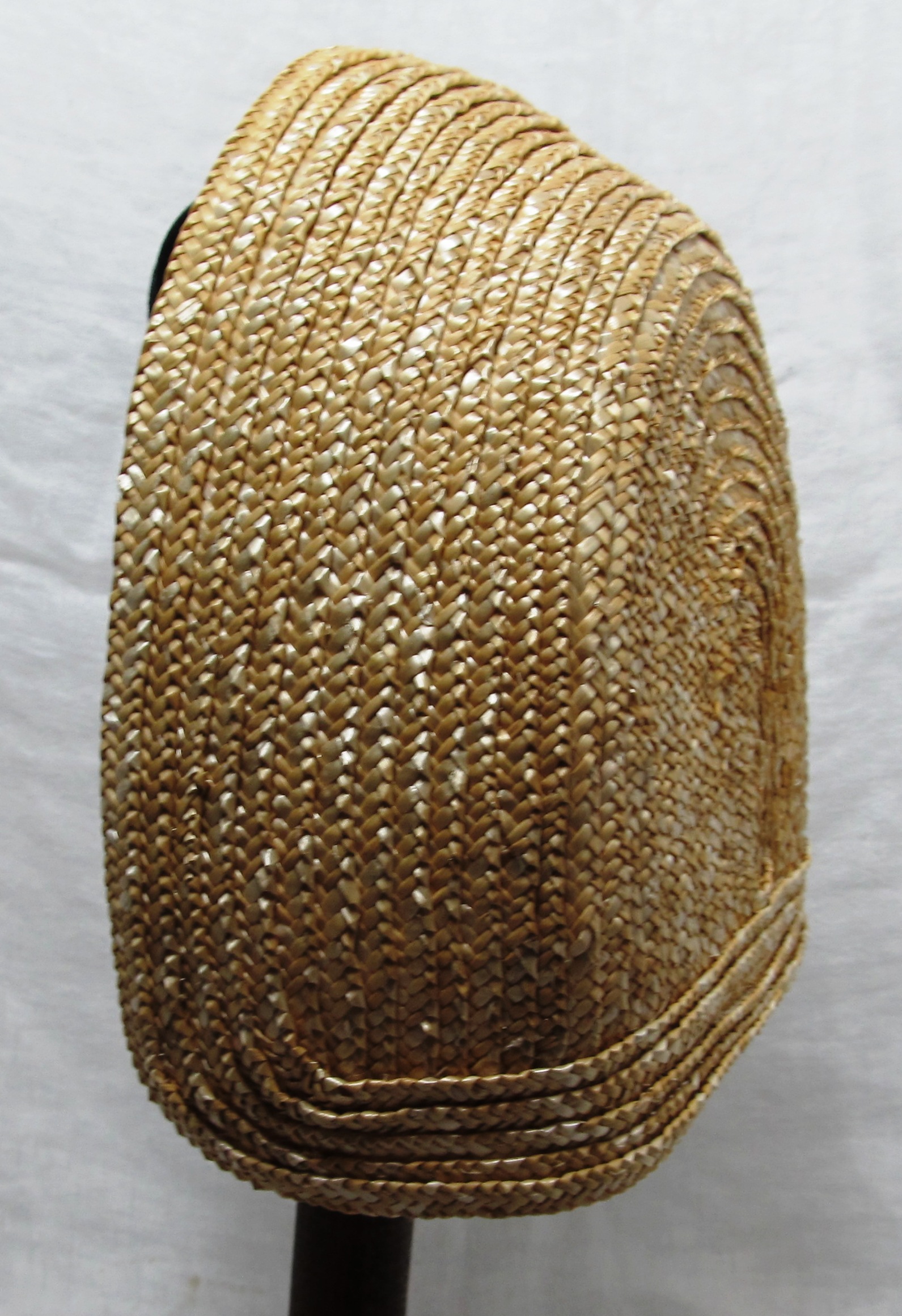
The first of the week found a new home over the weekend. It is a soft blonde straw made up with a low brim and gently rising crown.??????????????????????????????? ???????????????????????????????

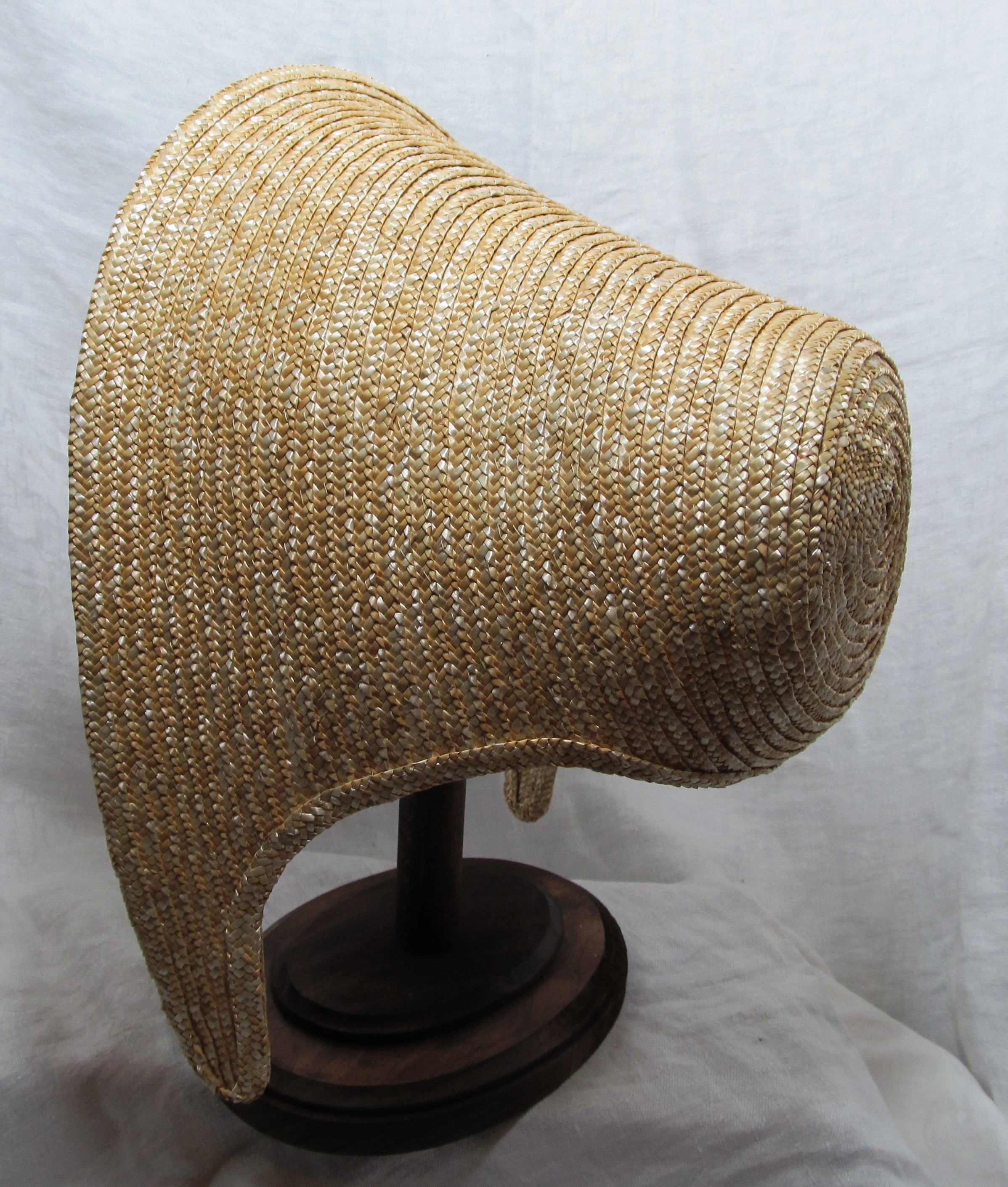
??????????????????????????????? This natural straw plait form wraps up the 1850s with a round brim and cheektabs that curve backward. The crown rises gently from a flat tip. Available on Etsy:??????????????????????????????? ???????????????????????????????
This one isn’t quite dry yet. It is right on that turn into 1860 with a low, round brim and cheektabs that curve in rather than back. Available on Etsy:

??????????????????????????????????????????????????????????????

???????????????????????????????

Lastly, well lastly for now, is this later Victorian shape that has been stuck in my head for several nights. Available on Etsy:

???????????????????????????????

???????????????????????????????

Published in: on March 31, 2015 at 3:01 pm  Comments (3)  

Ask the Milliner #1

For a while now I’ve been toying with the idea of an “Ask the Milliner” post. I hestitated because I though it would seem silly or self-centered. Then, this past week, a friend asked a question that told me this “Ask the Milliner” idea was something I should go ahead with. I mentioned the idea on Facebook thinking I would get a couple easy questions I could put together in a cute post. Well, the questions are so good, it looks like I will be doing several “Ask the Milliner” posts.

Let’s start with that persuading question:

“Do you sew all this by hand, or can you do this on a machine?” Babette

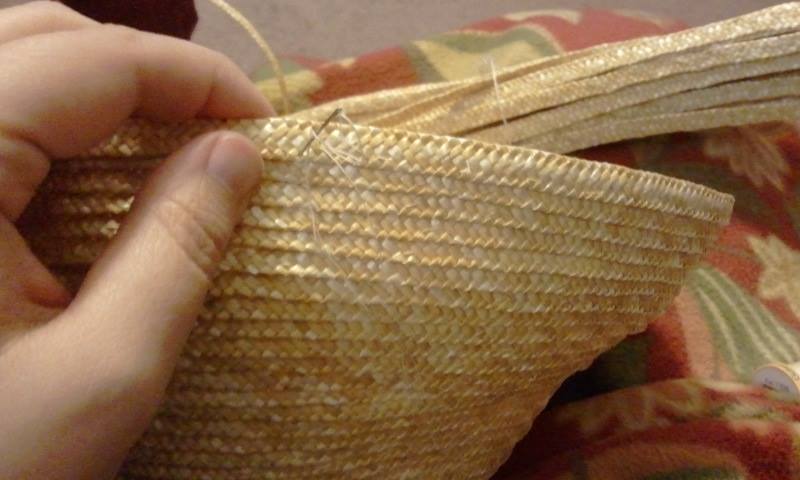
11053063_10153772832307846_4973229385807063098_nEvery inch is by hand. Or, I should say every half inch, as that is the stitch length. I love the smell of straw. I find it very calming. Sometimes, it is so calming I lull myself to sleep mid-stitch.

The tip and the wiring are the parts that take the most hand strength. The tip, being a continuous coil takes a lot of control. This tires the left hand. Wiring is my least favorite part. I’ve wacked myself in the face a few times. Binding is where I tend to stab myself and break needles.The crown and brim are easier on the hands unless there is a tension control for shape. I used to be really obsessive about hiding the stitches in the plait itself. I still have to tell myself they didn’t worry about it and I shouldn’t worry about it.

When I decorate, sometimes I will machine sew one seam on the bavolet so I can get a crisp line. Otherwise, that is all by hand too.

“Do you use a thimble? Or a sailor’s palm? What sort of thread do you use? What sort of needle?” Babette

I kept these together since they really do go together.

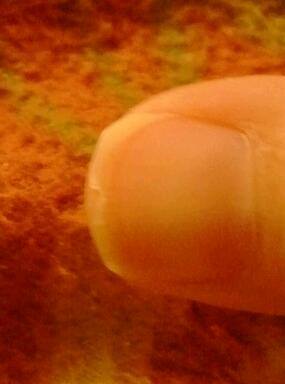
10408573_10153774091377846_5114040626592264257_nI don’t actually use a thimble. Some straw plait is really tight. Some straw is dense. This means the needle can get stuck in the straw. It takes a bit of strength and grip to get the needle out. That is a big part of it. Another is that I’ve found I’m not an ‘end pusher’. I push the needle from the sides as I grip it. There is very little finger injury from that. The finger and hand injury I do get is more from running the thread along my nails or bending my nails from holding the needle. The side tips of my fingers get tender and my nails split from that. The actual snags and pokes from needles happen when I am tired, distracted or holding something funny.

I prefer straw millinery needles. These have flat heads, strong length and are very sharp. I am a needle bender when I sew. I am learning to catch them before a snap them.

I’ve been using Gutermann’s 100% cotton thread the last couple years. I found a shade that nearly disappears into the natural straw. I find it has decent strength (I am a tense sewer that pulls tightly) while not tangling too bad. When it hasn’t disappeared into the depths of the couch, bees wax is helpful.

Next, I’ll do a few questions on shape. 

Published in: on March 31, 2015 at 1:31 pm  Leave a Comment  

Rural Papers

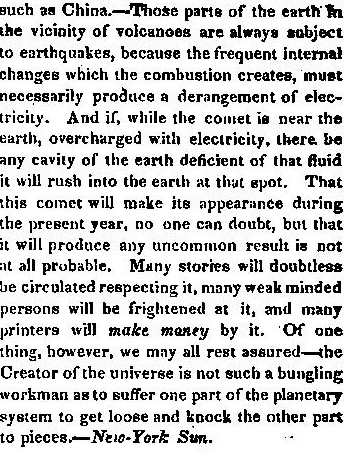
snip 1snip 1aI rather enjoy reading rural papers. When reading those from my area of New York, I feel more of a connection to what I am reading. I can only imagine others feel a similar connection to those papers from their area as well. Many, though not all, have a domestic section and/or a ladies’ department or section. These are packed full of useful tidbits, from local residents’ thoughts on clothing, to household tips, to receipts. While some parts are taken from other publications, much of the contents are local and current. The example to the right is that of a comet’s expected passing and the concerns over what it will bring. I love this sort of context and perspective.

Here is a short list of those I am aware of currently.

Moore’s Rural New Yorker – Out of Rochester, NY. Links to 1861-1865 – Also, 1859  and 1854.

The Rural Repository – 1830 publication out of Hudson, NY

The Genesee Farmer – approx 1837-1863

Pennsylvania Farm Journal – 1851-2, 1854

These are different, being annual publications, but very interesting, okay fascinating in some areas: The Illustrated Annual Register of Rural Affairs.

Please, add your local publications in the comments below. I know there are many others, ie the Massachusetts Ploughman…

Btw, Other additions to the reading list:

Published in: on March 25, 2015 at 9:07 am  Leave a Comment