March Update

This month’s update may get a bit long….

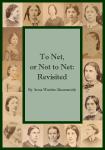
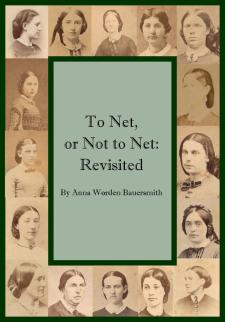
To Net or Not To Net Revisited COVEROf course, I have to mention how I kicked off the month: I released my new book To Net, or Not to Net: Revisited. I am excited to make this deeper look at hair nets available. I filled it with photos and illustrations. Okay, maybe I went a little over-board.

_20180314_164202I finally started working on straw for the season with this two tone Civil War era hat. It is nice to start sewing straw again. It is quite relaxing for me with the focus and the rhythm. (It would be nice to solve the straw on the rug problem though. Tis the season of the over-worked vacuum.) I really like the shape of this new hat block. I still need to give it a name.

I have Galaxy out, the 1840s block, so I can make a couple 1840s bonnets in honor of the coming exhibit at the Wehle Gallery: Victoria’s Closet. Look for those soon.


The Coming In April

  • April 13th – Opening day of the Victoria’s Closet exhibit at the Wehle Gallery at the Genesee Country Village and Museum, during their Antique Show and Sale.
  • April 28th – I’ll be talking about Millinery in Situ during the 140th’s Civilian Seminar.
  • I am still working out some details on special projects this year. Hopefully, I’ll be able to share those soon.

Dress Projects

I have two dress projects I am pondering for myself. The first being an 1850s or 1860s dress from my birthday fabric. I pictured a larger scale when I saw the image online. I tend to get scale off when looking at a screen. I wanted a fabric that would be a fun challenge to work with. The bold red stripe over the subtler, smaller stripes fit the bill.

Leave it to me to buy an 1850s-60s fabric for my birthday and moments later decide it would be good to make an 1840s dress to go with the Victoria’s Closet exhibit. Yup. Go me.
1840s….. dropped waist that is allusively small, bias galor, gathers from the shoulders across the bust, sleeves more full on the bottom… pretty fabrics…

For me, I have a couple hurdles – I don’t exactly have a small firm waist and will have some trouble with the appropriate corset for that. Second, my short arms are upside down for the ideal, rather fluffy on top and smaller on bottom. Both hurdles will need to be worked with and around.

Here is one possibility. I am picturing this is a bold semi-sheer that I think I have at home. I think. I like the asymmetric opening and gathering, as well as the control over the pleats. I think a semi-sheer will gather or pleat in with much less bulk. Those sleeves just aren’t going to cut it though. Sure, fitted bias at the top. But from just above the elbow down, it needs some fullness. Oh, and maybe not that white extension from the collar.


Published in: on March 18, 2018 at 3:40 pm  Leave a Comment  

Did You Know?

Did you know you can have OfficeMax or Staples print your paper copy of To Net, or Not to Net or Paisley, Plaid, and Purled or From Field to Fashion? Not only printed, but printed and bound.

You simply upload the file that you downloaded from Etsy,  select the printing, paper and binding. Then pick your printed copy up from the store. Piece of cake.

For To Net, or Not to Net and Paisley, Plaid, and Purled, I would suggest color printing and one of the spiral, coil or comb bindings. For From Field to Fashion, the booklet format in black and white may suit better.

A couple tips:  – Be sure to check if either store has a discount available.  – Check to see if you have a local print or computer shop that offers this service as well.

Published in: on March 9, 2018 at 7:07 am  Leave a Comment  

Lovely

This is a beautiful hat.

https://www.ebay.com/itm/Antique-Hat-1870-Tall-Crown-Straw-Ribbon-and-Feather-Trim/202251371300?hash=item2f171f0324:g:cFsAAOSw6T9anunX

Published in: on March 7, 2018 at 2:25 pm  Leave a Comment  

Real Women, Real Hair

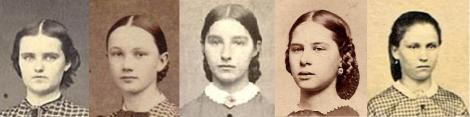
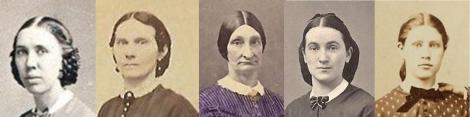
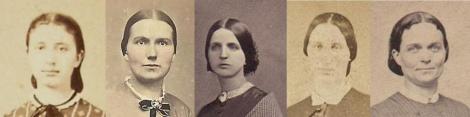
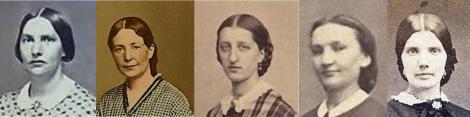
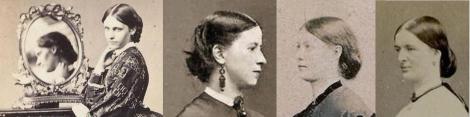
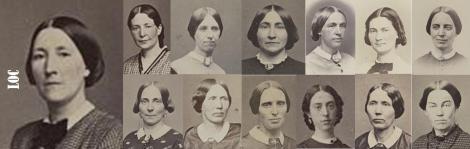
Some younger. Some older. Some earlier. Some later. Mostly their real hair. Maybe a rat here and there.

Hair 1Hair 2Hair 3Hair 4Hair 5LOC

Published in: on March 7, 2018 at 7:16 am  Comments (1)  

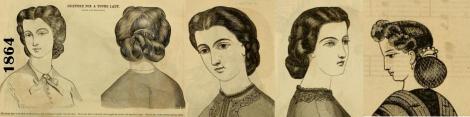
Coiffures

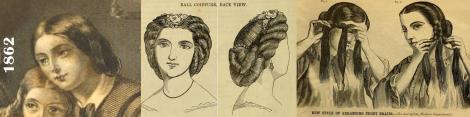
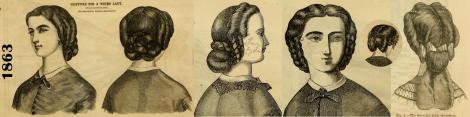
G62aG62bG63aG63bG63cG64aG64bG64c

Published in: on March 6, 2018 at 7:00 am  Comments (1)  

Belated February Update 

February flew buy more so than any other month. Before I knew it, I completely missed my monthly update. 

Let’s see, February. I didn’t get started on straw season as planned. We didn’t go on our birthday & anniversary get away as planned. Both due to a stressful domestic twist. But, I did get my wool rug finished and I did finish To Net, or Not to Net: Revisited. 

March is off to a good start. It is what, the 4th? So far…. I’ve launched the new book and been asked to serve on the district Superintendent interview committee. This weekend has been filled with a great day judging for National History Day followed by sewing a bunch of walnut thimble holders, lots of Clara cuddling, making Milli and Marie a pair of belts with vintage buckles and….. many will be happy to hear, today I sewing straw for a special project. This isn’t quite millinery for the shop. But it is straw and it is millinery. 

Here are some of the walnuts: 


I was planning to get some writing done for a mini-book project. But, I was distracted by a couple boxes of family photos. Look I was young once:

I really do like the photos Dad took of me more than “formal” ones like this. Yawn. 

I can’t share photos of the special straw project, but I can share the cuteness of Clara… 

Published in: on March 4, 2018 at 1:23 pm  Comments (1)  

Announcing: To Net, or Not to Net: Revisited

To Net, or Not to Net: Revisited is an in depth look at the hair nets worn from 1855 through 1865. The 103 page e-book contains over 30 CDVs, numerous fashion illustrations, and directions for making hair nets right from Godey’s, Peterson’s and more. Available exclusively in my Etsy shop as a e-book March 1st!To Net or Not To Net Revisited COVER

“A new style of net has been introduced, which is rather original; it is made of hair of the exact shade of the wearer’s. The fashion is to cut off a tress of hair and to give it to the hairdresser, who will get it made into a net, which, when worn upon the head, may be truly called “invisible.” They are netted over a fine mesh, and are exceedingly durable. As the hair is worn so low and full at the back, it is almost impossible to keep it neat with-out a net, which sustains the hair, and so prevents the dress and collar from being easily soiled.”
(Peterson’s Magazine, 1863)

Contents

  1. Research – Then and Now
  2. In a Word (Definitions)
  3. How was a Hair Net Worn? 
  4. How Were Hair Nets Constructed? 
  5. How were Hair Nets Trimmed
  6. When & Where Were Hair Nets Worn? 
  7. A Little on Age
  • Bibliography
  • Appendix
    • Directions for Making Hair Nets
    • Fashion Descriptions
    • CDVs in Full

Etsy Sell

A note on pricing: I struggled with pricing this e-book for quite some time. I want to making my books affordable, but at the same time I need to cover what I spend. This newest book took hundreds of hours of research and purchases of Godey’s 1860, 61, 62, 63, & 64 and  35 CDVs for image rights, as well as registration fees. 

Published in: on March 1, 2018 at 6:31 am  Comments (3)  

The Shape of the CW Era Straw Bonnet

As spring approaches, many are thinking of new bonnets for the season. There are many options out there, but not all are accurately shaped or made. These annotated illustrations will help you learn about the shape of fashionable straw bonnets for the Civil War Era.

Each of these points are general for fashionable bonnets made of straw, primarily straw plait, from approx 1858 through 1863. Finer points adjust with each season’s prevailing fashion.

General Construction – Straw bonnets were sewn by hand in the round. Plaits ranged from 1/8″ split straw to wider whole straw and fancy plaits. Woven straw was also used.

Anatomy 1

Tip – The back section of the crown in the tip. On a straw bonnet this can either be domed, flattened at the back curving to the side of the crown. It should not have a sharp angular transition from the back to the sides.

Crown – The crown of a straw bonnet should create a smooth transition from the crown to the brim. Much of the shaping in the bonnet will be created in this transition area.

Brim – The brim of a straw bonnet will vary according to fashion. The brim’s edge should be a single or double row of straw plait. It should not have raw edges needing to be bound.

Cheek-tabs – The cheek-tabs should have a gentle curve coming from the neck edge of the crown along the side of the bonnet dropping down to roughly your jaw line meeting the brim edge. This is a graceful line, not a straight edge or angular transition. There is a variation in the twist of the cheek-tab from the fifties into the sixties. The cheek-tab is part of what helps hold a bonnet in place.

Binding – The binding on a straw bonnet should be straw plait. Raw edges were covered on the exterior and sometimes the interior along the back of the cheektabs, sides and tip. Multiple rows were used as well.

Lining – A lining is a functional layer of light weight, open-weave cotton covering most of the interior of the bonnet. It aids in keeping the straw from snagging the hair while worn. The lining can not be seen when the bonnet is worn.

Frill/Cap/Ruche –This decorative layer of gathered cotton or silk  covers fills the inside of the brim. This is very fine most often net, lace or organza. The full frill aides in holding the bonnet in place.

Facing – Some bonnets have a facing of silk from the edge of the brim through the first couple inches of the interior brim.

Bavolet/Curtain – The bavolet is attached to the binding edge on a straw bonnet along the sides and crown. This silk piece should be lined with net to give it more body. The bavolet may be a single piece of fabric, most often on the bias and occasionally on the grain, or pieced from bias cuts of ribbon. The bavolet may also be decorated.

Functional Ties – The functional ties are attached to the interior of the cheek-tabs or under the decorative ties. These are narrower ribbon to hold the bonnet in place.

Decorative Ties – Decorative ribbons are wide, 3″-8″ based on a wide survey I did years ago. They are on the grain, not bias. Tied, they do not take the support of the bonnet.

Interior Decoration – Interior decoration also helps hold the bonnet in place.

Anatomy 2

Published in: on February 27, 2018 at 7:30 am  Comments (2)  

The Wide Brim Hat

The question of the the wide brim hat usually comes up each year as spring approaches. The wide brim is desirable to modern sensibilities with our awareness of skin care and eye sensitivity to the sun. I get it. I am pale skinned, burn easily, and get unpleasant responses to being in the sun.

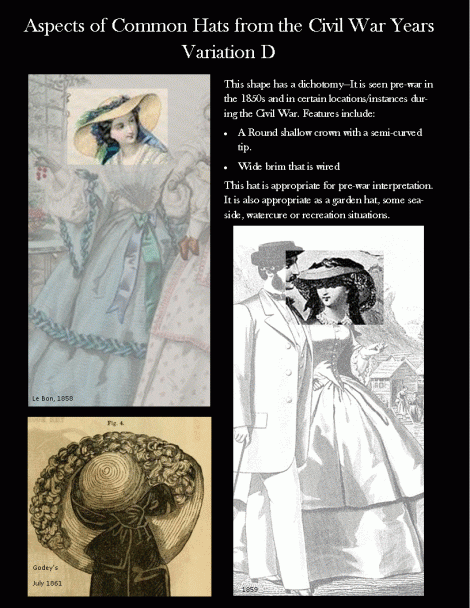
The wide brim hat, that with a brim nearly as wide as the diameter of the crown, has a very practical place in the 1850s and 1860s. I previously addressed this in my visual guide to common hats of the Civil War Years.

common 4

Prior to the war, the wide brim hat was a fashionable hat suited for morning promenade and other casual, social situations. But, we must recognize that even before the war, even as a fashionable hat, the wide brim hat was first and foremost recognized as a garden hat. Here in the Godey’s 1858 “Novelties for July” we see the first two hats being called garden hats. The third hat is called a riding-hat. (Though, I theorize this is not a riding hat as we typically think, a hat for riding a horse, but for riding leisurely in a carriage. This hat departs from all period sensibilities for wearing while riding a horse, including being dangerous in terms of eyesight.)

1858 Godeys July Garden Hats

“Figs. 3 and 4—Garden hats for the morning promenade. Fig. 3, white split straw, with narrow blonde fall, and wreath of daisies around the crown. Fig. 4, tea-colored Leghorn with white plume.  Fig. 5. Riding-hat, small crown and brim, tea-colored Dunstable straw; flowing white plume.”

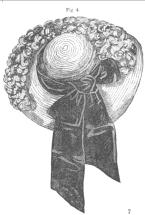
July 1861 Garden hatWide wide brim hats all but disappear from fashion columns after the start of the Civil War.  A single appearance in the 1861 Godey’s occurs in July with this “Brown Leghorn hat, trimmed with a very full brown feather of black velvet ribbon.” In this case, the brim still is not as wide as the previous decade’s wide brims.

1863 Godeys April Garden hatI don’t want you get to excited about the idea of wearing a late 1850’s wide brim hat as a fashionable garden hat though. The fashionable garden hats in the 1861-64 Godey’s  are not as wide as their predecessors. The “April Novelties”  in 1863 shows us “A garden hat, made of muslin, or barege and ribbons.” This brim is not very wide, despite its layers of fluffy ruffles. This is far from a laboring garden hat. At best, it is a “strolling as I clip a few buds” garden hat.

In photographs, we see wide brim hats worn or held in very specific situations:

  • Gardens
  • Sea side (please click through to see examples)
  • Watercure resorts
  • Occasionally picnics

The key to note about these situations: They are each recreational in nature.

Wide brim hats are not seen frequently enough in photographs depicting shopping, town, visiting, or church situations to justify their wear in these situations. Interestingly enough, sunbonnets are seen more frequently, far more frequently in these situations than a wide brim hat.

There is a particular CDV that people like to send me pleading for her wide brim hat. Well, I’ve got a thing about this image. Sure the hat is lovely with it straw that is photographing as a color, not natural. But, something just isn’t right about it for me. It is the hair that just isn’t working for me. I would really like to see the back of the image to see who this is and if she is a performer or such. (Btw, I found something rather interesting about this photo.)

Still need something to wear and protect yourself from the sun? The sunbonnet is the easiest and usually most cost effective direction to go. Personally, I prefer a corded sunbonnet in an open weave or light weight fabric. There are still fashionable hats with moderate brims that can provide some sun protection. The Chapeau Cloche is an excellent example with its moderately wide brim that curves down. I have clients who love wearing this hat. I also find veils to be helpful for eyes sensitive to the sun, though not for UV protection. Check out my veil comparison.

*** Do keep in mind if you choose a garden hat that these brims also had shape. Take a look: The Shape of the Straw Fashion Bonnet.

 ADDED:

 I would define a fashionable garden hat as on you would were for leisure, strolling through the garden, sitting in the garden, snipping a few rose buds. 

A gardening hat would be a utility garment. Looking at photos of those labouring outside, this frequently was a sunbonnet. 

Previous posts discussing hats in context:

Published in: on February 24, 2018 at 3:53 pm  Comments (2)  

THANK YOU

Readers, please pardon this personal post.

_20180216_074301This Valentine’s Day I went to bed with a truly warmed heart. When I took Clara to the vet earlier that day, I thought we were going to be treating hairballs. She was throwing up and had a little diarrhea. I did not expect the next few hours to unfold as they did. Her wonderful Doctor Dan showed me her xray, explaining her intestines were not in the right place, loosely filling the abdominal area. Instead, they were all balled up in one area, sound together with some areas swollen with gas. He explained what we were seeing often means an eaten thread* caused the intestines to draw up on themselves. Knowing just how much thread and other fibers are in the house, hit me in the gut.

After calling Dan to let him know and a few tears with Clara humming Grandpa’s song, her calming, sweet nurse, who’s name I can’t remember, took her back to immediately prep for surgery.

What happened next still has me in aww. The care for our Clara flooded in on FB and in my messages. Clara received gifts from a few people I have never met. I listed a few things I could find quickly on Etsy (the batwing bonnet, my bandeau, lace, gloves, some sewing things.) They were all gone overnight. My shop was empty and my heart full.

By the time I was able to pick her up, I had just the right amount to cover her surgery bill. It was such a blessed feeling to be able to say “yes” and be able to giver Clara what she needs.

We want to give a heartfelt thank you to those who helped these last few days, either financially or emotionally. I appreciate you more than I can say.

As we were leaving, I had the most humbling moment. I think I opened the door with a squee of “home!” I began to walk by a woman was standing at the counter with a toweled bundle wrapped in her arms. She had tears running down her face. My heart caught in my throat. I turned around and hugged her. This was such a heart breaking reminder that this could have easily gone the other way. If we hadn’t called the vet and brought her in, if it hadn’t been caught, if we couldn’t do the surgery. Oh, how I felt for that woman and her toweled bundle.

Now, as you’ve been reading and waiting. How is Clara?

Clara is home now. She is recovering with lots of sleeping and snuggling. She is eating little bits of baby food. This will be her diet for a few days after which we will add in soft canned food. We are going to keep her on a higher moisture diet. (she had been eating dry food in the mornings, wet in the evenings.)  We will be going back today to get her IV catheter out. It stayed just in case. After that, a couple other follow-ups.

There wasn’t anything in her intestines – no string, no wool. Her intestines and omentum were balled/wound up in a ball up in one section of her abdomen. They should be loose, filling her whole abdominal area. The doctor does not know why this happened. Gummy, stickiness is usually from dehydration. She was not dehydrated. So, Clara has yet another mystery. xraysClara is resting and sleeping a lot, as she should for her recovery. Last night she did not leave me at all. She was okay with being next to me, but preferred to be on my shoulder, chest, or neck. I don’t think she likes that I am getting ready for work. I’ll be putting her cone on just in case.


Q&A

We do not know what caused this or if it can reoccur. Obviously, we hope not.

Published in: on February 16, 2018 at 6:45 am  Comments (3)