In a previous post, I mentioned the embroidered shawl I have been planning. Originally, I wasn’t going to write anything about this project until the fall thinking I would enter it in the fair. But, I’ve decided it is far more fun to share.
Right now I’m still in the planning & prep stage. I have an assortment of original embroidered shawls to pull from as well as emboidery designs. Once I decide on the design, this what I have in mind…
Step 1 – Wash the wool as it has soiling from sitting in the store I picked it up from. Hang dry.
Step 2 – Square & fringe.
Step 3 – Block out the border placement & corner motif.
Step 4 – Bite the bullet & chalk/mark in the design. I’ll either use a cut template or trace if the wool is transparent enough.
Step 5 – Embroidering, lots of embroidering
Embroidered Shawl Project – p1

Quilted Hood Pattern Update
Thank you for the wonderful response to the release of my Quilted Hood Pattern. I have been floored, completely floored, by the level of interest. I didn’t expect the stock to run out so quickly, then run out again in days over Thanksgiving. You are all amazing.
As of this morning, I’ve asked my printer for a larger run which he will have available Friday. I put the Etsy listing back up so people won’t get nervous or think they are completely gone. Check here to order.
Quilted Hood Pattern – Ready for Pre-Orders
Pardon the break in the “12 Homemade Gifts of Christmas” Series.
My Quilted Hood Pattern is finally ready for pre-order. Please see my Etsy store to order your pattern.
Special 0ffer – Pre-orders made by November 1st will be signed.
12 Homemade Gifts of Christmas – Day 1
For the First homemade gift of Christmas we have a heart shaped pincushion which will also make an adorable ornament. 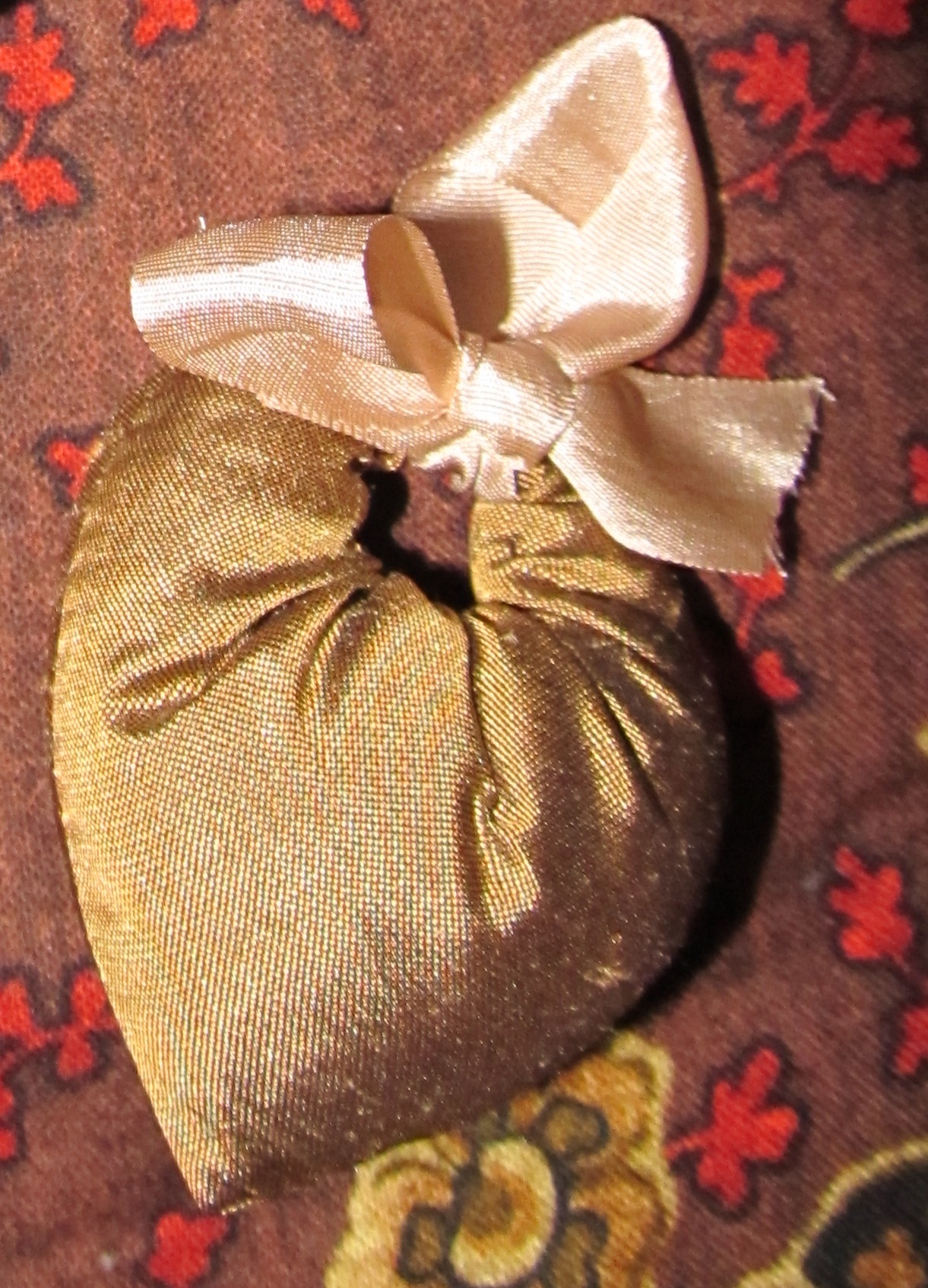
From Eliza Leslie’s American Girl’s Book, this heart pincushion is made from two pieces of triangular fabric, ribbon and batting for the inside.
- Use 12 day Christmas Heart Ornamentwith the longest side twice the length of the two legs.
- Sew right sides together along all three sides leaving enough space to turn the triangle right side out.
- Stuff with batting or emery and sew closed
- Gather along the longest side
- Pull tight forming a heart, securing the points together
- Add a ribbon to hang the heart from or a bow and hanging loop
Update on the Hood Pattern
2 New Updates!
I have just a bit more left to do with the images. Then I’ll be ready to take the pattern to the printer. Availability could be as early as next week. Look for a Pre-Order Announcement.
I also have the printer estimates which means a price estimate. Based on the printing costs it looks like the pattern will be $12.60 plus shipping. This price may adjust that again once the printer has the materials.
——
Thank you to the many of you who voiced an interest in having my hood pattern available.
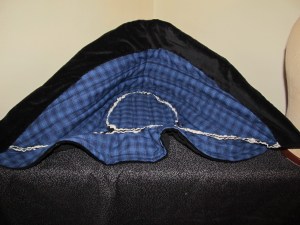
I am focusing this week on getting the text, illustrations and pattern pieces in a publishable state. My goal is to have it available for those who will want to make a hood for this winter. Fingers crossed there since this is both a matter of preparation and funds for publication.
I would also like to pull together the hood workshop some of us discussed.
For the published pattern, here is what I have in mind:
- Pattern pieces for an adult hood in two depths (I was going to include the child’s hood but am having difficulty fitting that.)
- Directions that are short and easy to understand using a combination of illustations and photos, including information on quilting.
- An explanation of this type of quilted hood along with observations of extant hoods.
- Tips on a successful hood in terms of materials and techniques.
- Passages from Godey’s, Peterson’s, etc regarding quilted hoods and bonnets.
- Ideas for how to trim your hood based on originals and extant hoods.
- I’m hoping for a price point between $10 and $15, which will be based on what my print shop can do for me. (they are great.)

If there is a video at the end of this post, it is an advertisement. My apologies for the inconvenience.
Agricultural Society Fair
I still have my ribbons from when I was younger and entered work in th Genesee Country Village’s Agricultural Society Fair. I remember going through their box, making sure each one was perfectly neat inside. I also remember Grandma Kramer making a point to get her one last hooked rug finished before she passed away so it could be in the fair. I would have rather her had a chance to do the other border around it with the birds at each corner. So, needless to say it was important to me to get to enter a few things in this year’s fair. Next year I’ll get a rug in.
The ribbon count between myself and family came to something like 7 blue ribbons, 4 red and 4 white. Mom, Lily and Joni each entered work as well.
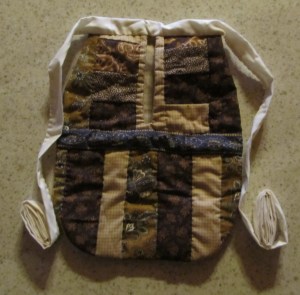
This is my quilted pocket. It is pieced from cotton prints some of which have been used for needle-books others from Dan’s quilt or my cloths. There are two freehand curves at the top. The rest is stitched in the ditch. The quilted front gives this pocket nice body. It will be nice to see how well it holds its contents when worn.
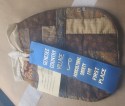
Here are my brown silk purse and pair of rolled sewing cases, blue and red ribbons in the 19th century sewn article of clothing and 19th sewn household item categories respectfully. I love this type of purse. It is so cute and fun to make. The pair of sewing cases are some of my favorite out of those I’ve made.
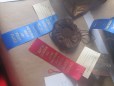
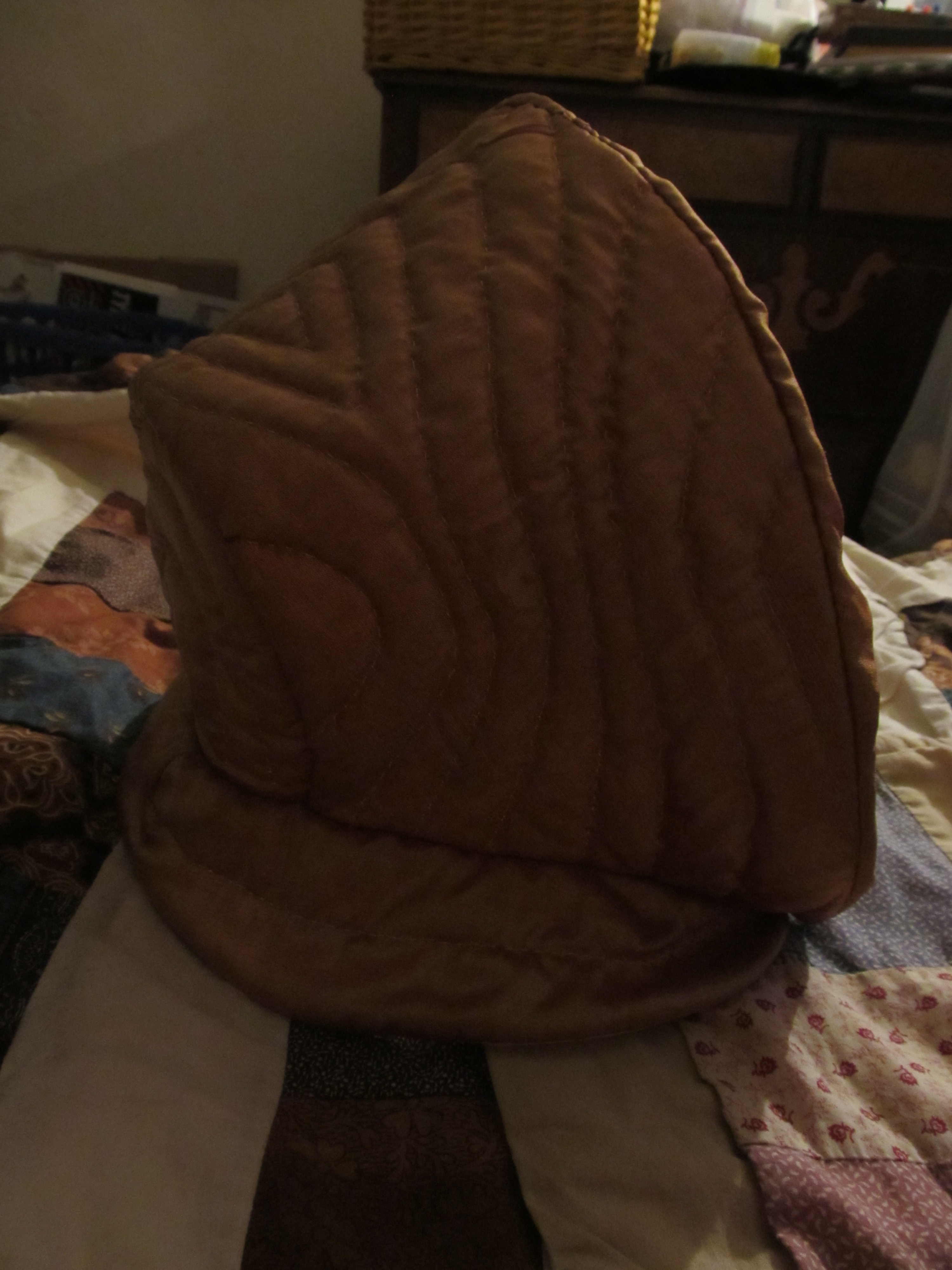
This is the sunset silk quilted hood. It won a blue ribbon in the 19th century quilted article of clothing class. 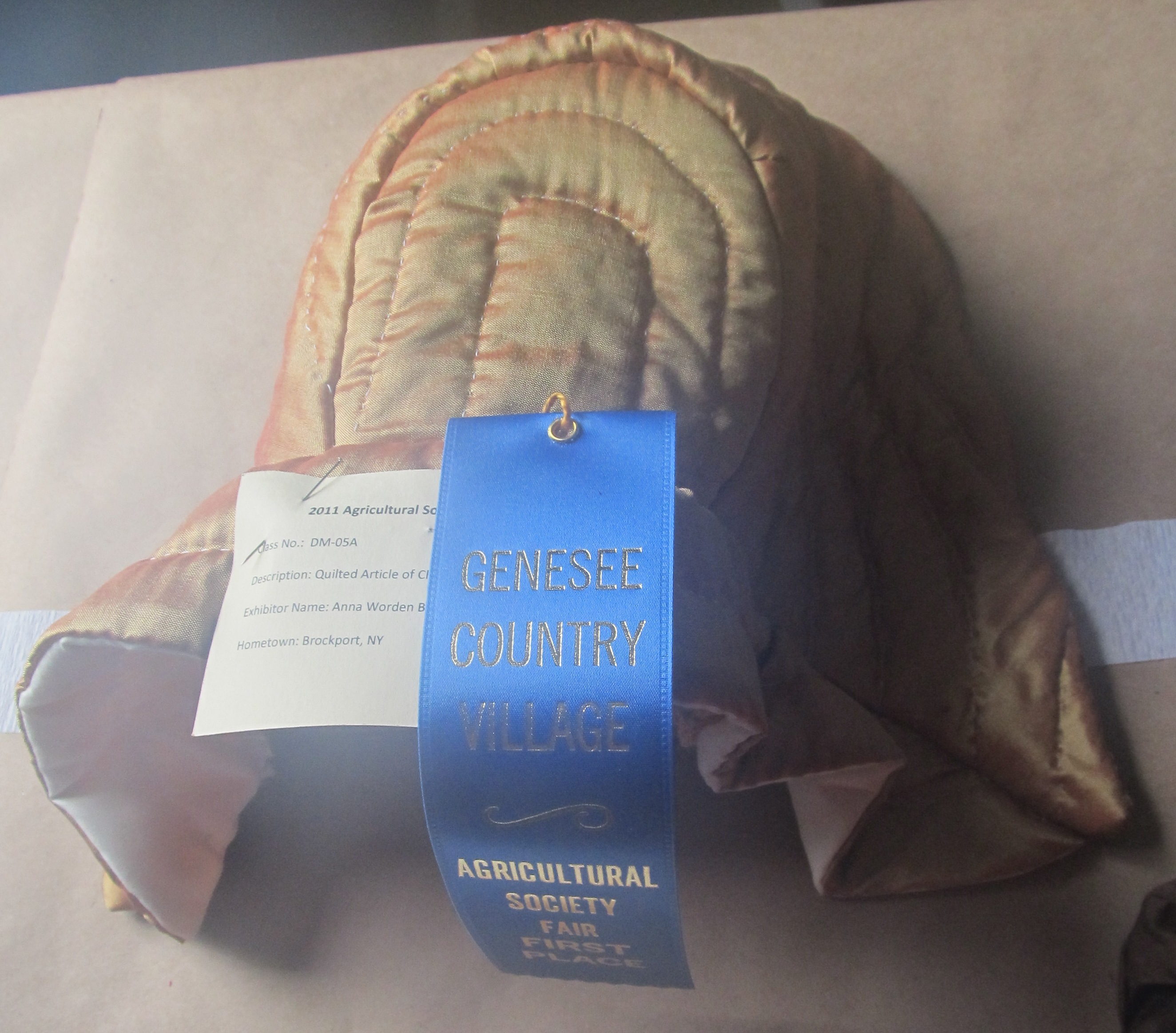
This is my only 21st century class entry, the black velvet hood. It won a blue ribbon. Now, if only the blue ribbon would tell what to do with the lint the hood collects.
This is one of my little sister’s two entries. This is her corn bread which was entered in the 21st century children’s class for corn bread. This is her first blue ribbon.

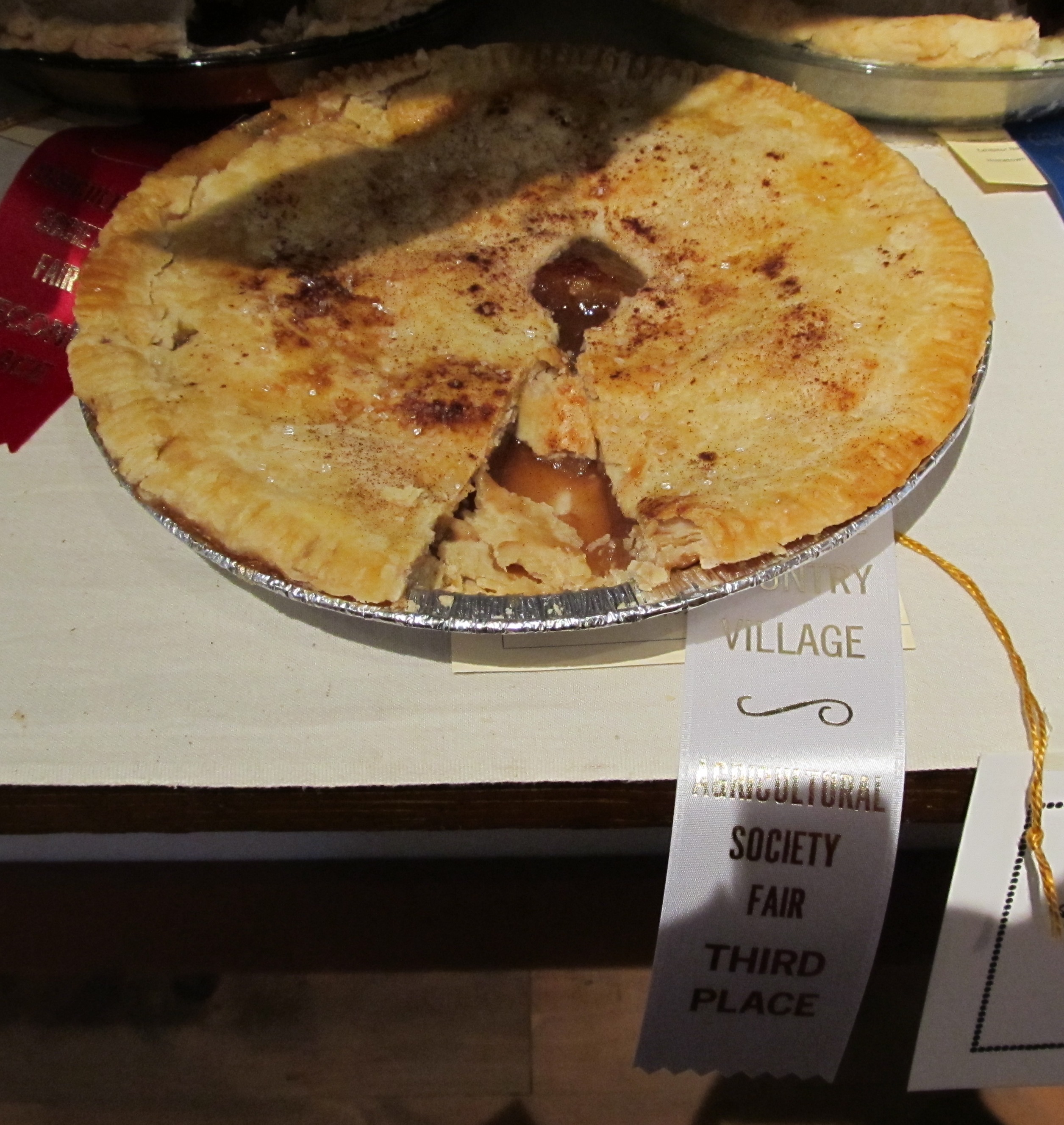
This is my little sister’s apple pie entry. I have several ideas for her to work on for next year’s fair.
This is mom’s bread. She was trying to explain to me what it looked like. Now I know what she was talking about when she said it had a thing on the side. It looks like it tasted good.

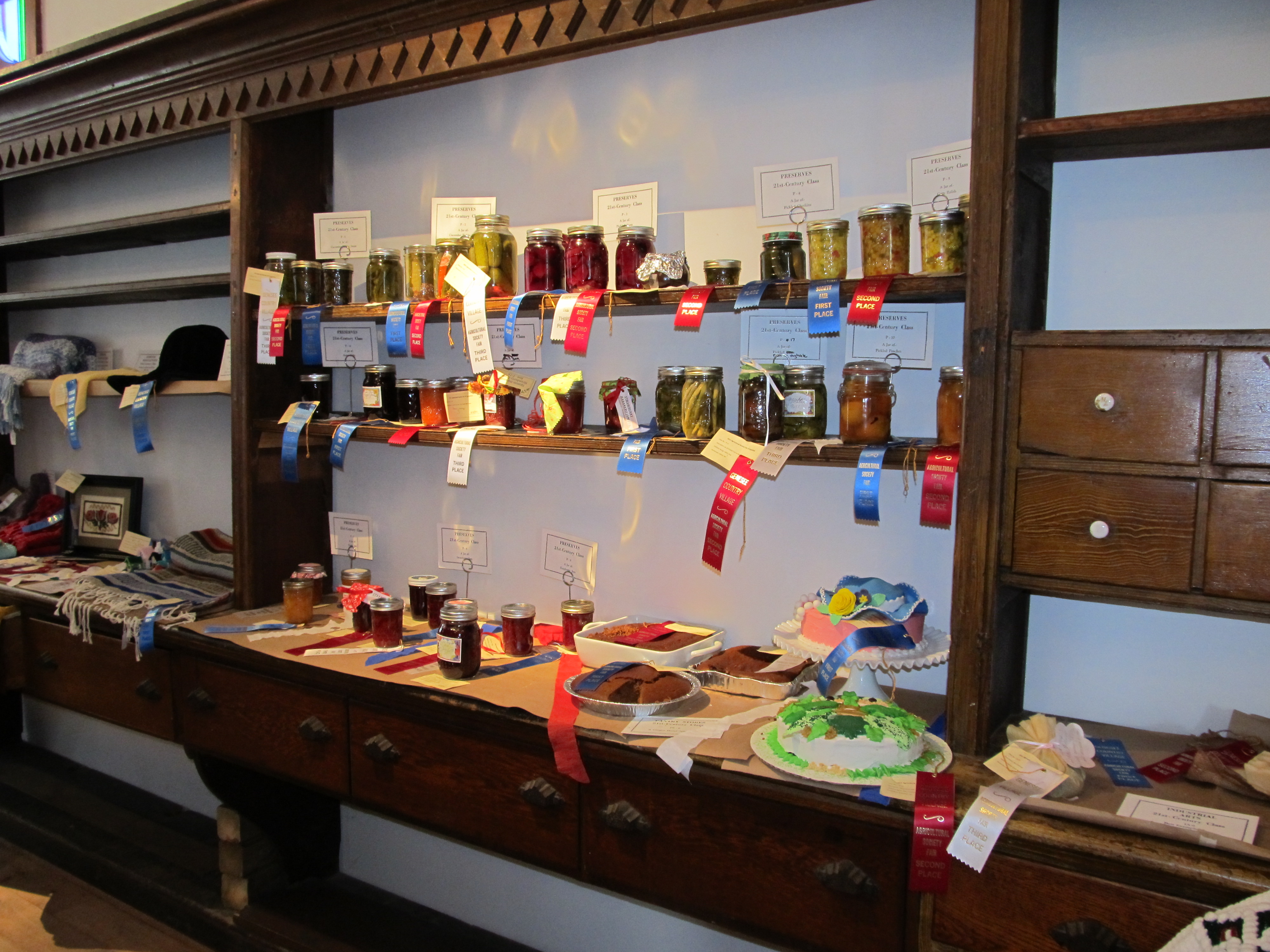
This is one of I think 9 canned foods mom entered. She got ribbons for a few jams, sweet pickles and beets. (I hope I got that right. I was a bit too short to see the labels on the top shelf.) The photo below shows the display of 21st century canning entries.

I think mom was pretty excited about this one, her ginger bread entry. I hope we’ll get a chance to taste this one in the future.

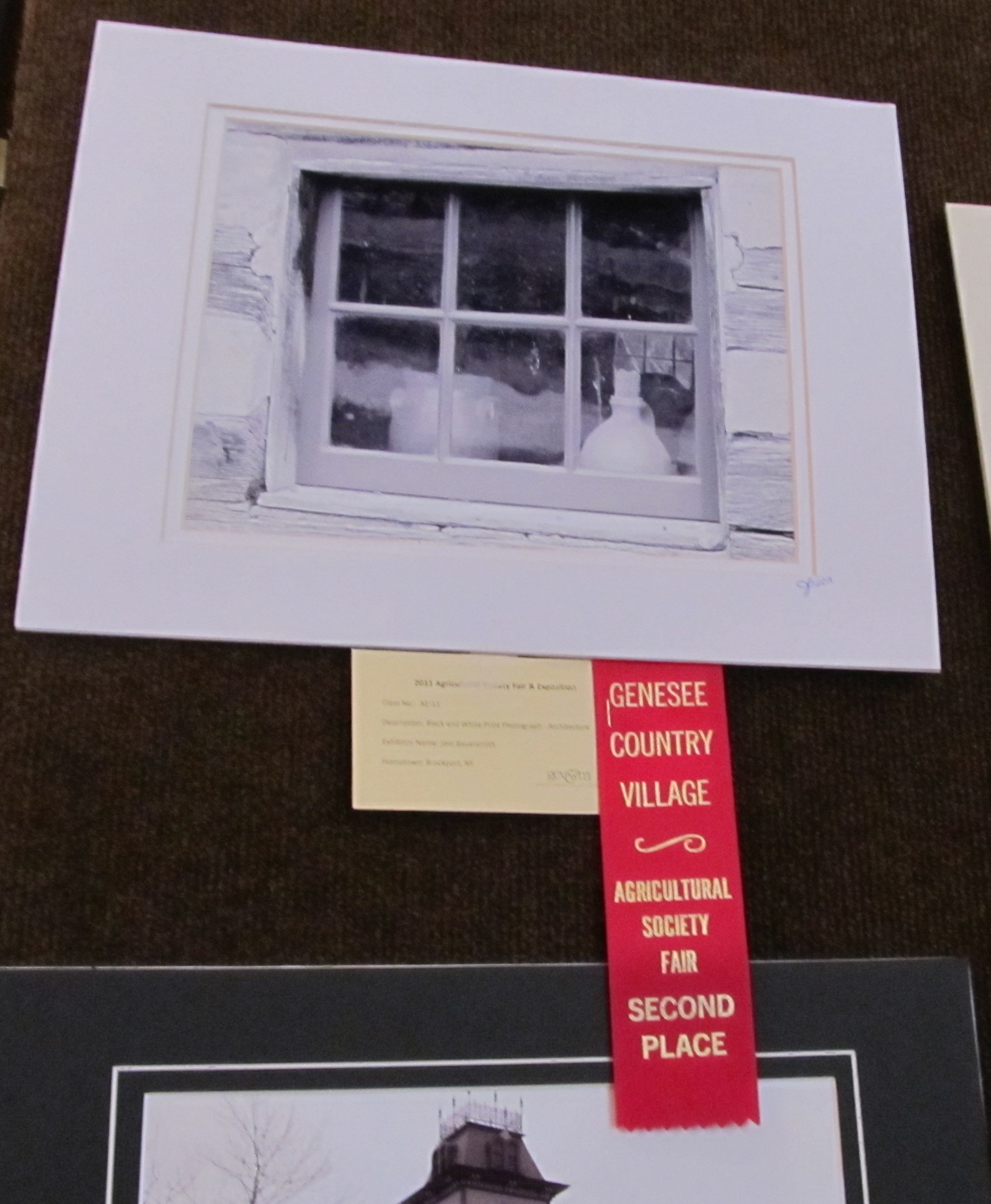
I was able to talk Joni into entering this year too. She got a red and white ribbon for two of her photographs. The red ribbon is a neat look through a village window while the white ribbon is a shot of the cannons at the Civil War event.

Update on the Hood Pattern
Thank you to the many of you who voiced an interest in having my hood pattern available.
I am focusing this week on getting the text, illustrations and pattern pieces in a publishable state. My goal is to have it available for those who will want to make a hood for this winter. Fingers crossed there since this is both a matter of preparation and funds for publication.
I would also like to pull together the hood workshop some of us discussed.
For the published pattern, here is what I have in mind:
- Pattern pieces for an adult hood in two depths (I was going to include the child’s hood but am having difficulty fitting that.)
- Directions that are short and easy to understand using a combination of illustations and photos, including information on quilting.
- An explanation of this type of quilted hood along with observations of extant hoods.
- Tips on a successful hood in terms of materials and techniques.
- Passages from Godey’s, Peterson’s, etc regarding quilted hoods and bonnets.
- Ideas for how to trim your hood based on originals and extant hoods.
- I’m hoping for a price point between $10 and $15, which will be based on what my print shop can do for me. (they are great.)
Muddle Thoughts – Weekend Event Reflection
I have such a mix of thoughts on this past weekend that they really are a muddle of thoughts. This weekend was Hull Family House’s candle-light tours and living history. It also combined into the mix the final of my 1830s travel at GCVM.
Before I get into all those muddled up thoughts, I do want to say I absolutely loved how the weekend was for Dan and I. I really enjoyed my husband and our time together this weekend. It was so very nice. We didn’t have any spats over any of the things we normally do like packing, setting up, arranging. We relaxed, spent time together, chatted with friends old and new. Somehow this may be a favorite time for me. 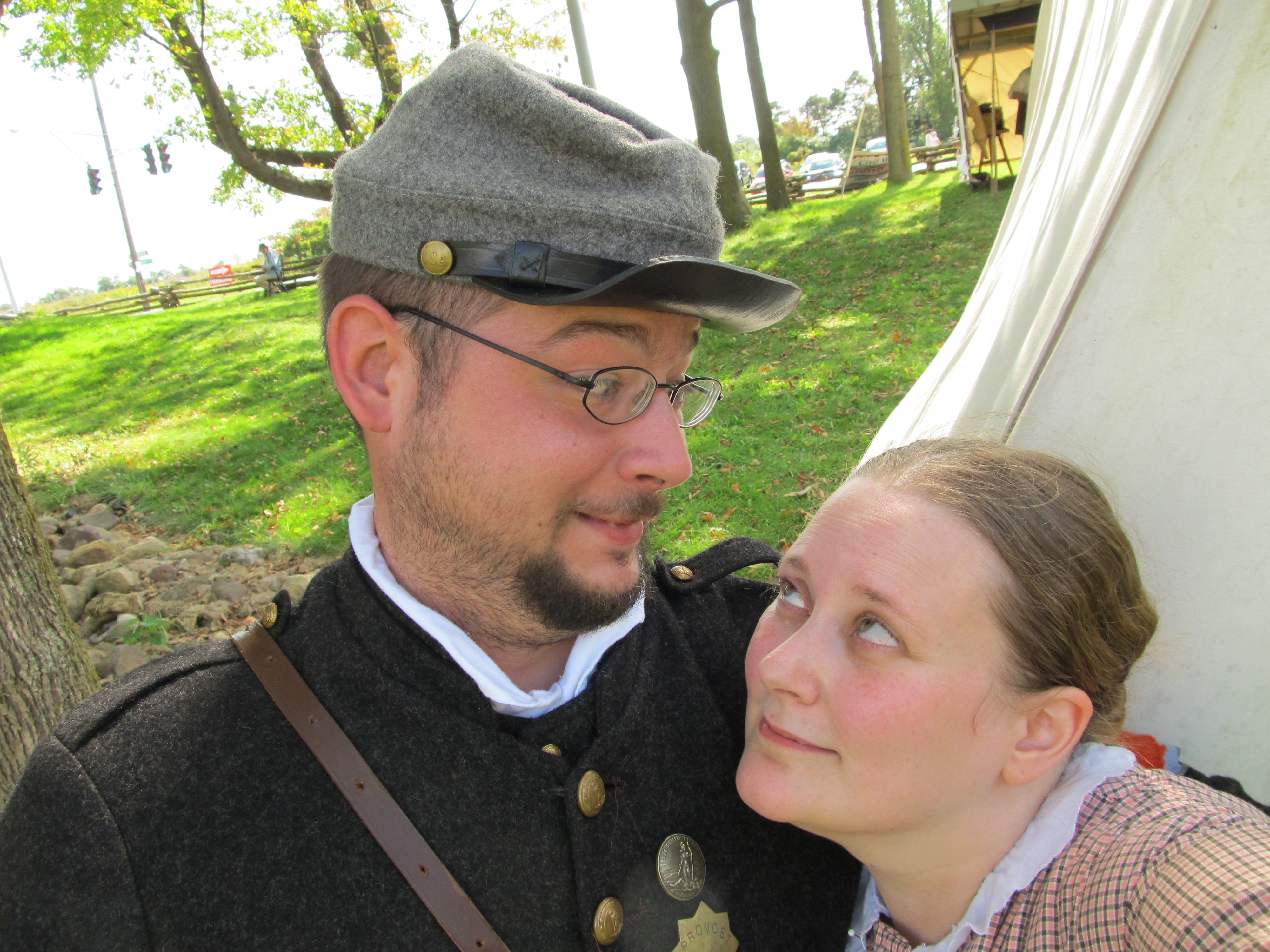
One of the prevailing mixes of thought is while I’m doing something I love, I’m tired of feeling lousy. This whole season I’ve had problems with being able to sleep and feeling utterly miserable by early afternoon. I get this feeling like every bit of energy has been drained out of me along with either a headache or inability to focus. This weekend did me in for both the sleep and the feeling awful. I wasn’t able to sleep at all Saturday night despite my husband being in the same tent as me. For the life of me I couldn’t get comfortable on my cot where I used to sleep oh-so soundly. Without my ticking and being on an incline I slid down to the point where my back was right on the seam across the cot where it was repaired. Oh, does my back still hurt from that. The drainedness was accompanied by down right nausea through most of the day. There were points where I think the only reason I stayed upright was because my corset held me up. This whole thing is so disconcerting to me. I don’t know how much is me health wise and how much is the way of doing an event is so very different for me this year. In years past, I was ready for an event well in advance right down to the food heavy with vitamins and water. During an event I had a comfortable home base that was mine or mine and Jackie’s either at a home or under Jackie’s fly with our tents attached. We watched out for each other food, drink and activity wise. She often had to play mom to make sure I didn’t drop because I don’t always know when to stop or when my face gets too red. This season I haven’t had the right water pitchers and glass out; I haven’t had my tins and crocks with pre-planned food; I haven’t had that deep night’s sleep; I haven’t taken my infamous battle-time nap; I haven’t know every minute of the day what activity I am going to be doing; I also haven’t had that much of a purpose. So, obviously I have to get myself back on track.
One would think having the weather turn out to be simply beautiful, warm and sunny, rather than the cold rainy weather predicted would be a good thing, right? I know, it should be. It helps with attendance. But, I have to be honest I was counting on cold weather because cold weather would prompt people to buy warm clothing like hoods. I had three hoods up on Etsy over the weekend and two in Pat’s tent in hopes that they would sell so we can pay for storage due and Sprint due this week. With the sunny warm weather, no one needed a nice warm comfy hood.
This one might make a few people upset. Leaving the museum, I drove as quickly as I could to Hull House thinking I would be doing a guide roll. Not the case. This isn’t a big deal on a personal level; I was fine with not having to be a guide. I do think there were some major communication problems. To be honest, I don’t think it was on the side of the Hull House. They had this great system down. I was very impressed watching and listening to the women and men doing the great many things they pulled off. (Yes, even when I’m a physical wreck with myself completely tuned out I still can’t help observing these things.) They volunteers of Hull House went above and beyond making reenactors comfortable for this weekend. I really feel sorry for the organizers on that end because I got the sense information on the tours was not given to them in a timely fashion either. Seeing what the HH volunteers do for the reenactors makes me want to be able to bend over backwards for them including giving them an outstanding level of pre-planning.
As I said this weekend was also my last travel program for GCVM. I’ve enjoyed talking with Bevin and Matt about the visitor experience in such a focused way. I’ve definitely determined I prefer an interactive program to a presentation mode program. It is very beneficial knowing the diversity in audience/visitor preferences. With my own muddle of thoughts, I can only imagine what Matt has to sort through. In between performances I was able to finish up the set of carpet bags, getting their handles on. They really do look nice with the handles on, finally looking like bags. As nice as they look, as functional as they will be, I don’t think I will ever make bags out of real carpet again. (I hope to do a post about my thoughts on carpet from this experience.)
I guess that completes my muddling of thoughts, or at least the ones I can put together enough to communicate. This week I’m planning to get a good chunk of the hood pattern together. There seems to be a good deal of desire for that based on the FB responses I received. I have a few other things to do as well that I’m hoping will be doable if I get enough gas money together.
A Bit of Velvet
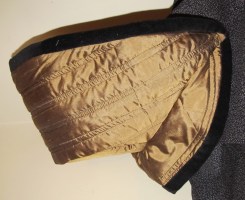
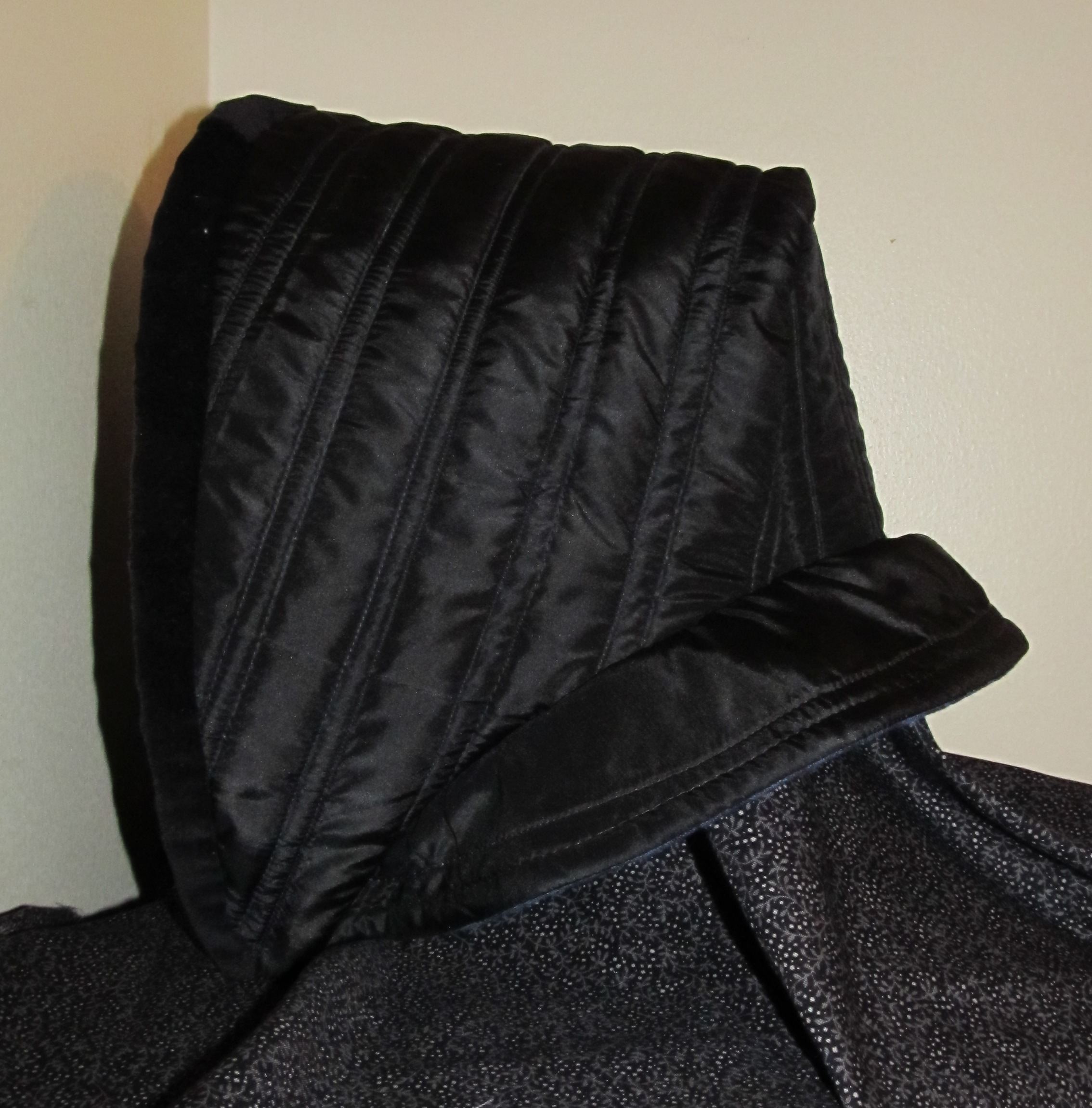
This weekend’s hoods each got trimmed with some black velvet. Several period magazines suggest velvet trim for quilted hoods and bonnets in their fashion columns. This velvet seems to add a nice warming touch.
Agricultural Society Fair Entries
I still have all the ribbons I won at the Genesee Country Village and Museum’s Agricultural Society Fair. Believe it or not I actually won a blue ribbon for my handwriting. Go figure.
This year I’m entering a variety of sewn goodies.
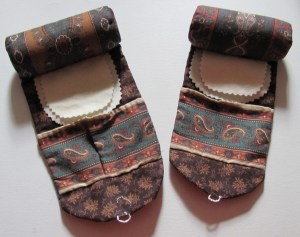
First is my pair of sewing cases, also called housewifes. I do like this little pair. They will be entered under the sewn items category.
Under the “Quilted Projects” category, I’ll have a pieced article of clothing and a quilted article of clothing. For a pieced item, I’ll be entering my quilted pocket.
The quilted article of clothing entry will be the quilted hood I am working on.
For my sewn article of clothing I keep changing my mind between one of my little purses or the capote hood I teeter-totter from liking to disliking.








