Carrot juice? Specks and Spots? To Scald the cream or the churn? Warm space or Cool?
While looking for something else in the 1860 New England Farmer, this discussion about making good winter butter caught my attention. I couldn’t help but follow it. Yes, I am easily distractible. Just ask my husband.
It turns out this discussion began a full year earlier in the February of 1859 edition.
“To Make Good Winter Butter – At the annual meeting of the Jefferson County Agricultural Society, at Watertown, on the 14th of January, a tub of superior winter-made butter was exhibited by Mr. Daniel Parker, of that town, for which a premium was awarded by the discretionary committee. “The Butter,” says the Northern Journal, “was quite as yellow as much of the fall-made sent to market, and the flavor so fine that we obtained of Mr. Parker the mode of manufacture. He states that as soon as he has finished milking, the pails of milk are set into kettles of boiling water, where they are allowed to remain thirty minutes, then the milk is strained into pans and allowed to stand until the cream is ready to be taken off, which will depend upon the temperature of the room in which it is set. Before churning, the cream must be kept in a warm room at least twelve hours; then it will require churning less than an hour. He washed his butter immediately after taking it out of the churn, and at the same time salts it. His cows had been fed on clover hay, without grain or roots, for six weeks previous to the time of making this sample. Butter made in this way is perfectly sweet, of a good color, and will bring from two to four cents per pound more in market, then that manufactured in the ordinary way. It is worthy of attention of farmers.”
“BUTTER IN WINTER I often see directions how to make good butter in your valuable journal. In making butter I find many obstacles; my cow has been fed carrots for several weeks; since that time have churned several hours (with the cream at 62) without making the butter come. Do suppose the carrots have a tendency to it? If so is there any way to avoid it? Can cream be churned again by any process? Jan 11 1859 A SUSCRIBER
REMARKS We believe the carrots would a tendency to produce good butter, and not retard in any way its coming. If you have churned a day or two on your cream, you had better appropriate it to some other purpose than making of butter. The first thing essential in making good butter in winter, is to get good milk, and then if milk is set in some place, cellar or closet, where the temperature will remain at 60* Fahrenheit, cream will rise abundantly, and the butter come in ten minutes after commencing the cream. Some persons scald the milk it comes to the house – but that is not so essential as an even temperature at 60* for the milk to stand in. We are making 20 Ibs per without the slightest difficulty.” (March, p122)
“MAKING BUTTER IN WINTER. Having noticed an article by a subscriber under date Jan. 11, 1859, in regard to making winter butter, I would say in reply, that the reason why butter does not come quick in winter, is that the milk is set in a cold place where it attains to nearly or quite a freezing point. To remedy this, the only way that I know of is to take the cream when it is found it will not come, and scald it, and set it away till cool, when it will be found that the cream part of it will rise, which skim off and churn in the usual way, and you will find no difficulty in fetching your butter. Middlebury, Vt., Jan., 1859. ” w. D. H. Remarks.—If milk can be set where the temperature is 55° to 60° the cream will rise readily, and if kept in that temperature, may be churned into butter in less than fifteen minutes.(March, p151)
The discussion continues into 1860 (which is where I found it)…. I believe I need to find a missing passage because the 59 passages I have found do not mention Mr. Leonard and a loss of use of his cows.
BUTTER MAKING IN THE WINTER – Mr. Brown – I will merely mention my experience in making butter in winter, hoping it may be an advantage to Mr. Leonard, for I should like to think it would be a real trouble to lose, or about lose, the use of his cows. I set my milk, after being strained through a cloth strainer into a kettle of hot water, occasionally stirring it in order that the cream or scum shall not rise until it is nearly scalding hot. Then it is set in a cupboard in the room where we live, which proves about the right temperature, and the cream will rise in about thirty-six hours. It is then taken off and set in a cold room, and so repeated until enough is gathered for churning. The cream is then set in a warming room until it is the right temperature to churn. I only churn from five to fifteen minutes, and never have lost but one churning in ten years’ experience. Two years ago I made in the same manner one hundred pounds, which sold in our village at the highest prices. Carron juice is an advantage to both taste and looks. Reading, Vt, 1859 A Subscriber (February, 1860)
BUTTER IN WINTER – In my reply to “New Bedford correspondent,” I, last week, gave some views on this subject, and promised soon to render other information. This I could not acquire until I saw the result of this morning’s churning. Here, the churning is done once a week, and from cream obtained by feeding “meadow hay” only. Better feed, sure, ought to give better cream! The milk of night and morning, during winter months, (as before said,) is thoroughly scalded immediately after milking, and straining. The past week, during sudden changes of weather, the pans accidentally became frozen solid. The cream however, (partially at least,) had risen. But it was so solidly frozen it had to be scraped off with a spoon, and in such state, was placed away, thinking it worthless. This morning, however, it was thawed out by putting the cans holding it into hot water. This was the condition of all the cream churned this day. The result was, most excellent butter in thirty minutes churning, and the “butter-milk” remaining could not be distinguished from new milk from the cow. I would also say, the cream from milk that is scalded never has a bitter taste, as is generally the case with cream from milk not scalded. This, sure, is a gain. Let, therefore, no on object to the little “pains-taking” in scalding of milk, as it surely saves so much labor in churning, and ofttimes saves the whole week’s product of cream from being lost. Now, Messrs, Editors, for all this rendering can any one give me any information as to the churn advertised with you the past summer, that would produce good butter from “butter-milk” in five or ten minutes of churning? As the Scripture says “Come over and help us.” Oak Hill Dec. 23, 1859. (February, 1860)
WINTER BUTTER – In answer to friend Leonard’s inquiry how to make butter in cold weather, I will tell him how I practice. I heat my milk by putting it into a strainer pail, and set it into a kettle of hot water; heat until nearly scalding hot; set it in a cupboard with a cloth hung in front, in a room where there is a fire kept through the day; it will keep from two to three days. I am careful to skim it before it sours; keep the cram in the same room, and as near summer heat as I can. I never heat the cream before churning, but scald the churn before putting cream into it. I add a little carrot juice to the cream when I churn it. It will puzzle the best judges to tell the butter that I am making this winter from that made in September. Dec. 22, 1859 Butter Maker (February, 1860)
MAKING BUTTER IN WINTER – I have found no difficulty in making butter in winter; my process is simply this: keep the butter in a cool place; if it freezes it will not injure it; collect the cream about ten days, then place the pot of cream near a fire, stirring it occasionally, till it becomes nearly milk-warm. Then scald the churn, and the butter will come in about half an hour, a good quality, fit for any man’s table. The great difficulty is in not having the cream of a right temperature before churning. If Mr. Leonard will try this method, I think he will have no difficulty in future. Please inform me what kind of churn is best. Derry, N.H. 1860. Dairywoman
REMARKS – We cannot tell which of all the churns is the best. Out of some five or six kinds which we have tried, we prefer and use the Fyler churn. A correspondent in Auburn, N.H., stats the by setting the milk on the stove as soon as it is strained and bringing it to a scalding hear, and by keeping the cream in the warm kitchen, the butter will come in twenty-five to thirty minutes. M.P. Knowles, of Rangely, ME., scalds the milk as above, and warms but does not heat the cream. To give the butter a good color, he says, I scrape a carrot and warm it in about three pints of cream, and strain it into the churn. (February, 1860)
BUTTER IN WINTER- This is headed an inquiry in your valued journal, Messrs. Editors, over date of November 27, from a correspondent in New Bedford. Allow me to aid him all in my power. From a most notable housewife in this vicinity, I obtain this teaching. After milking and straining, at once place the milk obtained in a clean kettle, and scald it well over the fire. Do not bring it to a boil, but simple scald it gradually, but well. Place it away for skimming in a room of moderate temperature. When ready to churn, warm it by setting the vessel that holds it, (if earthen,) in hot water. Otherwise, bring the cream to a point that holds not chill. Rinse the churn in boiling water before using. Drain out, and then “up and at it.” In a short time the result will be reached. I must remark this process never has failed me, from milkings not very heavily oppressed with cream, the food of the cows being ordinary meadow hay, with no other change whatsoever. To obtain a bright or golden color (so difficult to be had in winter with any feed,) take a few orange carrots, scrape them fine, immerse and soak in blood-warm water till the color be fully extracted. A portion of this, according to color desired, may be put in the cream when churning. It is wholly harmless in character, and not so repulsive to many, as “annotto,” an article doubtless well known. This process in winter, will secure the coming butter, in less (at least not over) 30 minutes’ churning in a warm room, and if coloring be used as designated, it will give it a pure June tint. Oak Hill (March, 1860)
COLORING MATTER FOR BUTTER – In your paper of Jan. 14, I perceive that Mr. Everett, of Princeton, Mass., speaks of using the juice of carrots in making butter; I presume this is done to improve the color of the butter. I have known other coloring materials to be used for the same purpose. I cannot believe the use of any such material to be desirable. When the cows are in good condition, generously fed, their butter will be yellow enough, without such coloring ingredients. I am surprised that any one who feels competent enough to instruct others in the making of butter, should think it necessary to use the juice of carrots to color it. My mother, who made as nice butter as I ever saw, some seventy pounds per week through the months of June, July and August, never used such extra material to color the butter. South Danvers. Jan. 1860 (March, 1860)
WINTER BUTTER -I.R. Havins, Foxboro, scalds the milk, sets it where it will not freeze; sprinkles on a little salt each time cream is added. Gets good sweet butter. (March, 1860)
WINTER BUTTER AGAIN – Mr. Editor: – To ascertain the best mode of making winter butter is a good deal of importance, for there are many tons made in the State every winter. You must have patience with ups as we correspond with each other to find the best “modus operandi” of its manufacture. In the Farmer of January 28, your “South Danvers” correspondent, in allusion to my article, stating my method of butter-making in winter, expresses surprised that any one who feels competent to instruct others in this matter, should think it necessary to use the juice of carrots to color it. Let “South Danvers” try it, and he will lose his surprise. He is not the only one that has been surprised in lessons of improvement. Worchester county is not behind any other, to say the least, in butter-making, and I know that some of the best dairy-women in this town and county use the carrot in butter some six or eight months in the year. Let me surprise “South Danvers” again by telling him that one of the best dairies in Princeton, and othe that taken more premiums with-in the last fifteen years than any other in Worchester county, and probably in the State, never makes a single pound of butter after September, till the next summer, without carrots. Yes, more high premiums have been given to WILX ROPER, of Princeton (and justly awarded, too, I doubt not,) at county shows in Worchester and Barre, then to any man in the county, and those premiums were awarded by the best judges of butter that could be selected. Further, Mr. Roper took the first premium at the State show (in 1858, I think,) on tub butter, and would have taken the first also on lump butter have the laws of the society permitted both to be given to the same dairy. Mr. Roper has often told me that he never makes butter in fall or winter without carrots. I know it will surprise “South Danvers” greatly to know that the best premium butter in Worchester county, of the old Bay State, is colored with carrot juice. But it is a fact, and facts are stubborn things. Let “South Danvers,” or any one else that doubts this improvement, try it, and he will be suprised to find that his stock of wisdom, in making winter butter, may still be improved. Yours still for improvement, J.T. Everett. Princeton, Feb. 13, 1860. (April, 1860)
CARROT JUICE IN BUTTER – Mr. Editor: – In the last Farmer, Mr. Everett states that carrot juice put into butter is an improvement, in proof of which he cites the long time it has been practiced, by nearly all the butter-makers in the Bay State. It reminds me of the woman in New York city whose milkman wishing to be honest, carried her good milk, but the woman denounced it, saying she did not link the dirty yellow scum on it, but preferred the sky-blue article. Now if carrot juice really improves the quality of butter, I am surprised, as well as the South Danvers correspondent. I thought the coloring of butter merely a deception, practiced by those who were preparing the article for the market, the same as stuffing the soles of shoes with wood, galvanizing brass and passing it off for gold, and thousands of other vile deceptions to gull the unsophisticated. But when such a practice is published for an improvement, it is time for us to pause and consider. If there is any improvement in butter by the use of carrot juice, let it be given to the cows. I contend that cows fed on corn meal will color butter sufficiently through the winter, and increase the quantity and quality. I hope some of the farmers of the old Bay State will try it, and give us the result. Derry, Feb 1860 Dairywoman.
Along with this winter conversation was one regarding specs in butter connected with artichokes:
“EXTRACTS AND ARTICHOKES FOR COWS WHITE SPECKS IN BUTTER Will you be so kind as to inform me through the columns of your paper, whether or not artichokes are useful to give cows. I have, for years, occasionally noticed white specks in butter, and have made inquiry for the cause, but no one can tell. If you rinse the butter, many of those white particles will float on the top of the water, but it is impossible to get them all out. If you can tell me the cause or preventive, you will favor one who is interested in your journal.[signed] T Felchville, Vt 1859
REMARKS Artichokes are good for cows given in proper quantities. In churning as soon as the butter begins to come, all the particles of cream that have been thrown to the top, or any other part of the churn should be carefully scraped down. If they are left, they will, more or less of them, mingle with the butter and make white spots. Sometimes, however butter will have white streaks through it. This may be occasioned by collecting the cream at many different times, so that in churning some of it is quite fresh and does not “come” go readily as the rest. The cream while being collected should be salted a little and carefully stirred every day.” (March)
WHITE SPECKS IN BUTTER MR EDITOR I noticed in the N.E. Farmer last week, your theory about churning to prevent white specks in butter. Having devoted my whole time, for the last five years in the manufacture and sale of the Fyler churn, and spent much time among the dairies of Vermont and northern New York, I venture to differ with you in theory on that subject. You say as soon as the butter be gins to come, scrape carefully down all the cream is thrown to any part of the churn, and has escaped its share of churning. I say never scrape the cream down into the churn after it begins to come; if scraped at all, scrape it into the cream pot and save it for a new churning, and not into the churn to form those very specks you wish to avoid. Those white specks are usually caused by uneven churning. The true principle of churning is to have the dasher of the churn so adapted to the inside of the cylinder as to act on all the cream alike, if so adapted and the cream has been cared for, and you churn quite slow till it is perfectly mixed, and then faster, till the sacks containing the butter begin to break, and then scrape what is on the lid into the cream pot, will not be troubled about those white specks that spoil one half the butter made in this country. To carry out your theory, suppose you try experiment; churn say nine quarts of cream my principle, and see how much butter then the same quantity and churn till it begins come, or until you have churned one half time required now put in another quart cream and I will be bound you will either plenty of white specks, or your buttermilk be enriched with about the value of one of butter HENRY HOLMES Proprietor of 0. R. Idler’s Butter Working Churn Grafton VT., May 30, 1859
WHITE SPECKS IN BUTTER I would say in answer to T of Felchville Vt that white specks in butter are caused by getting sour milk in with the cream when skimming which becomes hard like cheese to prevent white specks in butter stir the cream thoroughly after skimming and should there be specks then rinse in cold water Ludlow Vt 1859 MRS L. E. H.
For the New England Farmer WHITE SPECKS IN BTJTTEB MR EDITOR Your correspondent “T” asks” What makes the white specks in butter?” I answer they are occasioned by the milk being “set” where there is a current of air, as from an open window, or by the milk room being too warm, so that the surface of the cream in the pans before skimming becomes dry, and in the process of churning does not mingle with the rest of the cream, but remains in the butter and butter-milk in the form of specks.
In your “Remarks” appended to” T”‘s inquiry, you say that the white streaks in butter may be occasioned by some of the cream being more recently taken off, and not come so readily as that does that has been taken off longer. My theory is that they are caused by the salt being imperfectly worked in at the time of salting the white streaks are not so salt as the rest of the butter.
Since writing the above I have read the communication of Henry Holmes. He says, “if you scrape what cream there is on the lid of the churn into the cream pot you will not be troubled with those white specks.” The cream on the lid, or in the corners of the churn had nothing to do with the specks or streaks in butter, and had Mr Holmes spent the last five years in person churning, working and putting down butter for market or so much of the time as would have been requisite to taking care of a good dairy, instead of “manufacturing and selling churns” would have learned that fact H BLAKE Hardwick Vt June 1859
[And now, my eyes are tired…. I will see if there is more soon….]


 I was thrilled to see a surviving double square in a red check available. (a double square is a shawl that is twice as long as it is wide, usually 60″ by 120″, also called a plaid regardless of design.) What stuck in my mind as this shawl found its new owner, was the tendency of reenactors and interpreters to play it safe, buying what they see or are comfortable with, whether accurate or not. How does this related to this shawl? The check. When it comes to buying or making an everyday wool shawl, it seems we most often go with a symmetrical plaid or a solid (see the close-up of her other shawl below.) I don’t see a check like this worn often at all. Why? I have a couple thoughts. The first is we wear what we see and what we are comfortable with. Second, extant documentation under represents what I believe was actually available. Going huh? Basically, there are fewer surviving examples of small check shawls then women actually had. In general, there are fewer everyday, working class shawls remaining then the nicer paisleys, lace and higher end silks. A few things may have happened to cause this. The everyday shawls could have been worn out in their day. These shawls could have been deemed by the owner not worth saving. Or, at some point between the mid-19th century and now, the shawls were deemed not as important and worth conserving as other items. Either way, we have fewer examples of everyday shawls to look at and even fewer small checks. Does this mean they didn’t exist as much? Of course not. When looking at original images, we see small check shawls represented. This post-war image shows a small check with a border design. (Sorry, only one on hand until I find the right disk with more images.)
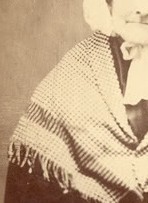 Small check wools are an acceptable choice for a shawl when purchasing a shawl or fabric for a shawl.
 This chair from the New York State Museum, is circa 1866. This walnut chair was made in NYC by B.J. Harrison And Company. The museum’s descriptions is as follows “32 1/2 x 16 x 17 in. Curved crest rail above two side rails ending in molded rear seat rail. Beneath this are two dowels fitted to another molded rail. Oriental-type rug seat (not original).” The seat folds up with a side X pivot while the back folds down. A similar chair construction can be seen in this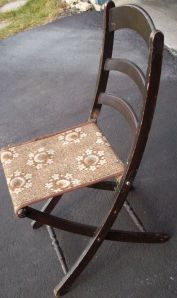
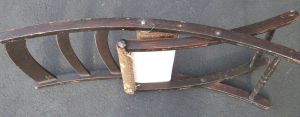 This circa 1860-70 chair is Marta Vincent’s. It has been repaired and recovered from the naked state in which it was found with the finish was completely worn off and the carpet seat was in tatters. The back splint has been replaced. The seat is now a piece of ingrain wool carpet supported by canvas.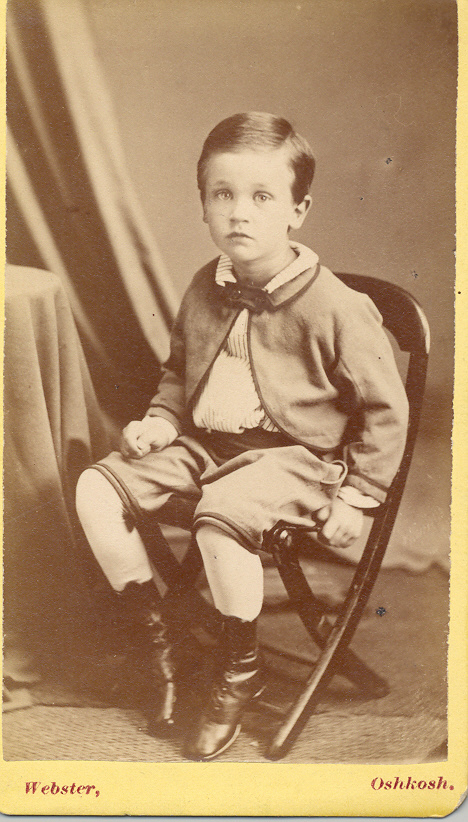
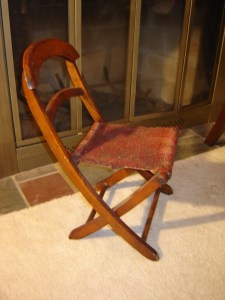
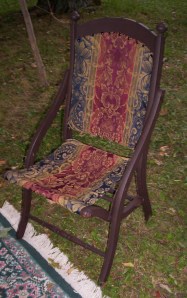
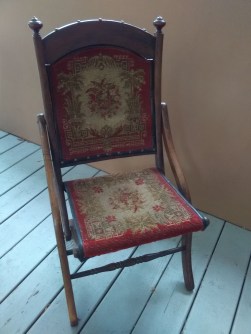
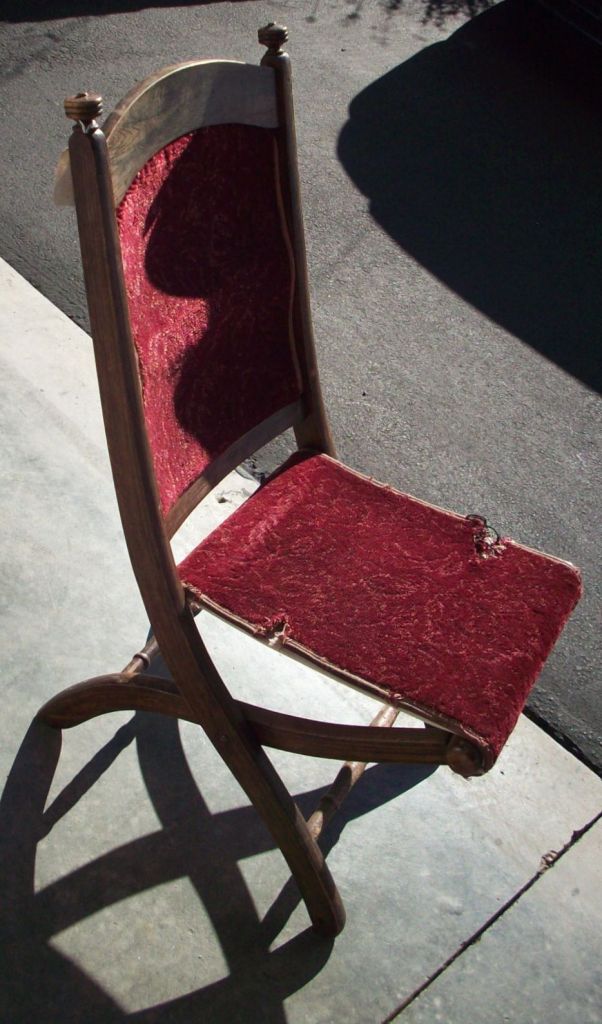
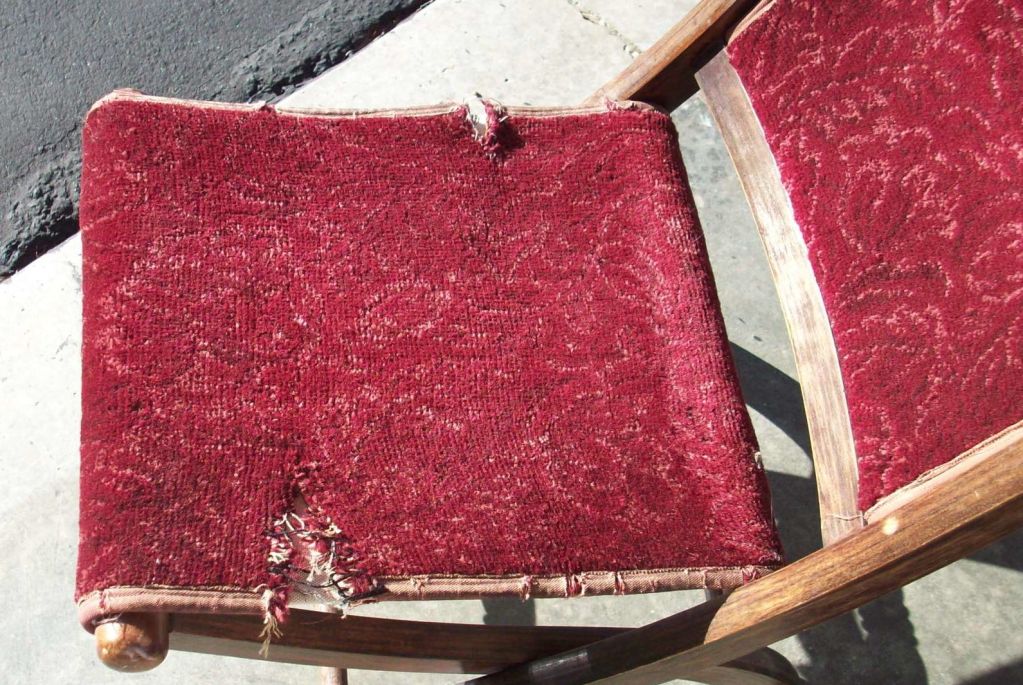
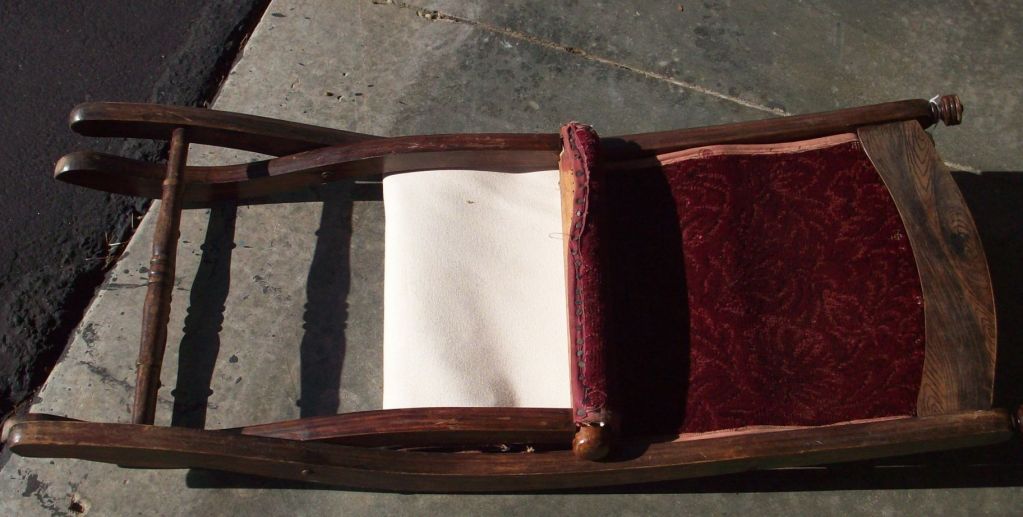
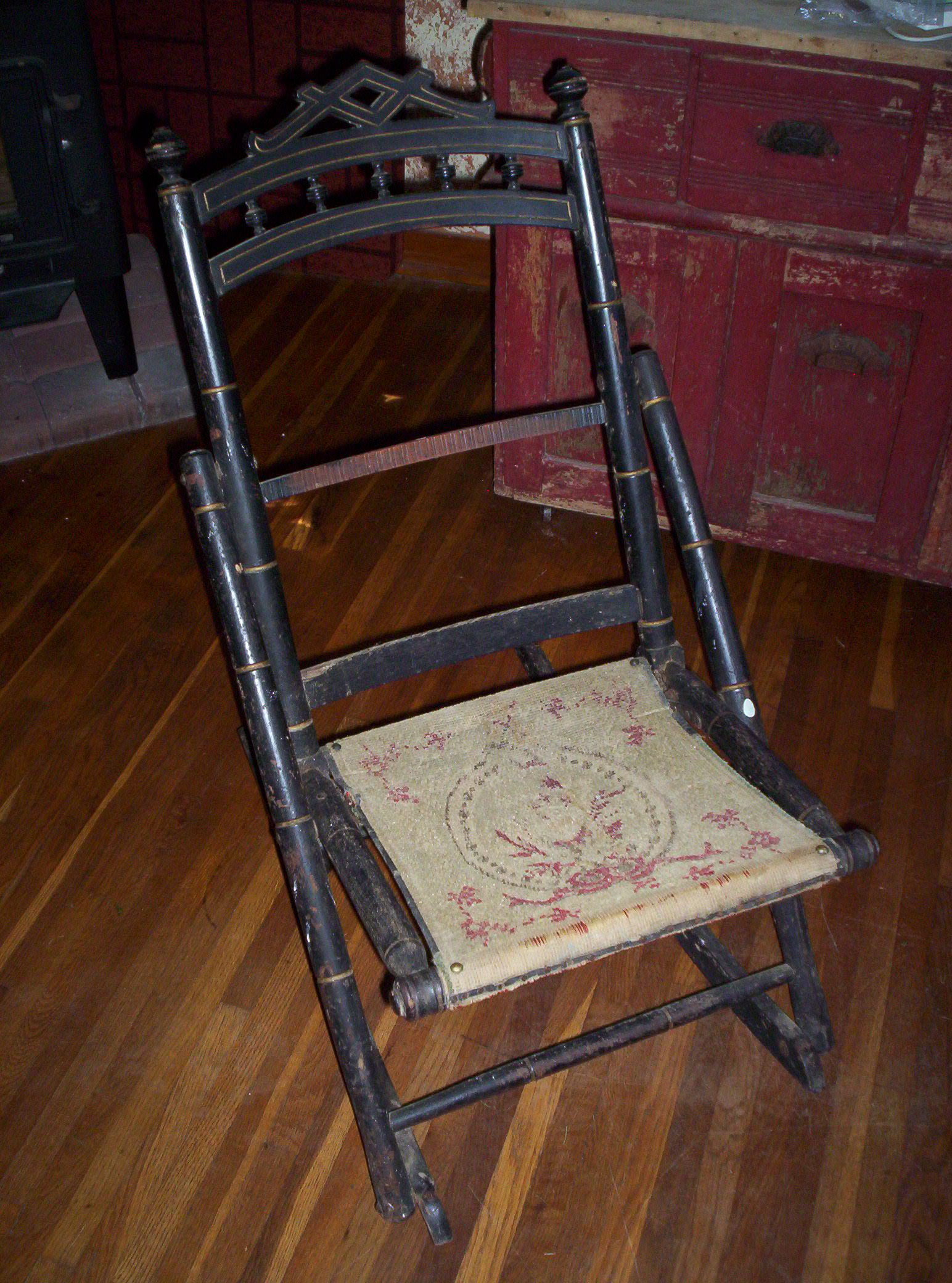
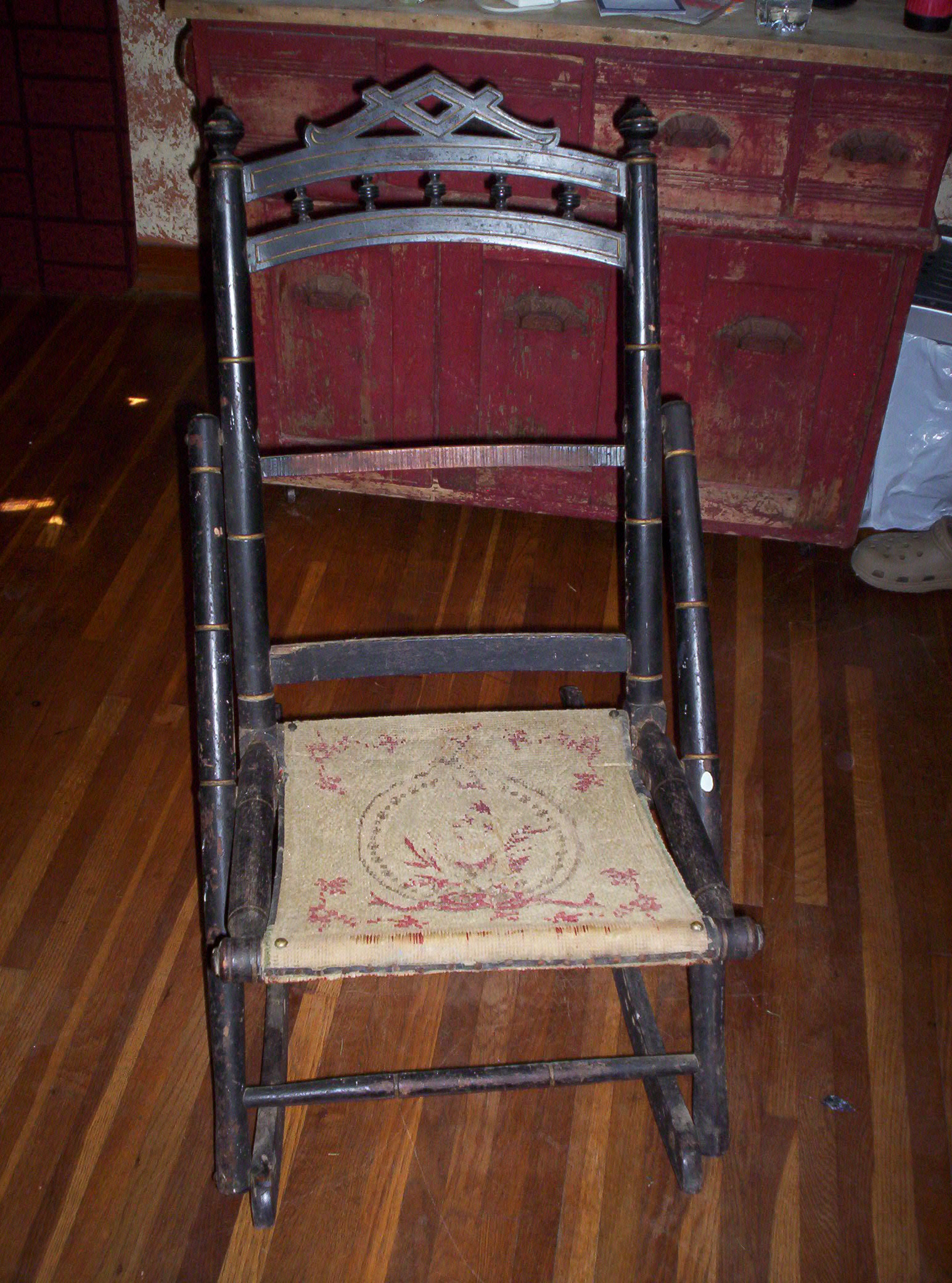
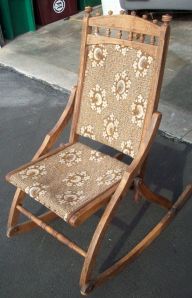

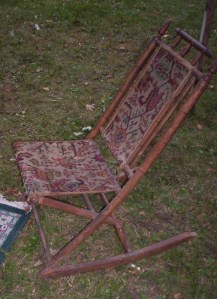 This chair is as it was found. Though nicely intact, the seat and back may not be original. The turning and finials on this chair are quite different then the other chairs seen here. The closest patent I’ve found for dating is this
 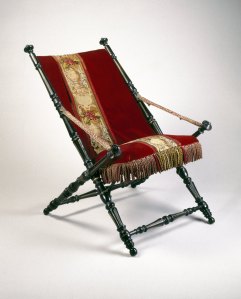 This Chair is held by the Brooklyn Museum. It is attributed to P. J. Hardy as the maker while Hunzinger was likely the designer based on the style and the metal tag Hunzinger label. The Museum’s description is “Folding chair. Ebonized wood with gilt incised decoration, metal hardware, and original upholstery. Turned gilt incised members that terminate in small ball pads intersect at mid-point on sides, secured by small metal rods on which they pivot and allow folding action. Identical turned and gilt incised stretchers connect lower front and back legs. Dark red plush upholstery with central vertical machined floral tapestry panel. Multi-colored fringe to front and sides of seat secured with domed metal tacks. Slung narrow woven textile strips with red key pattern on white ground form arms attached to front and rear stiles with metal attachments; the attachment on back stile has pressed head of putti. Movable black metal members hinged to underside of seat at sides and attached to upper front legs below seat to secure chair when open for seating. CONDITION – Original upholstery faded and distressed, but intact.” For more on Hunzinger’s furniture, please visit this
 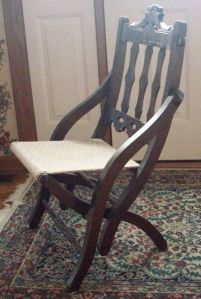 Late 19th century folding chair with an Eastlake feel.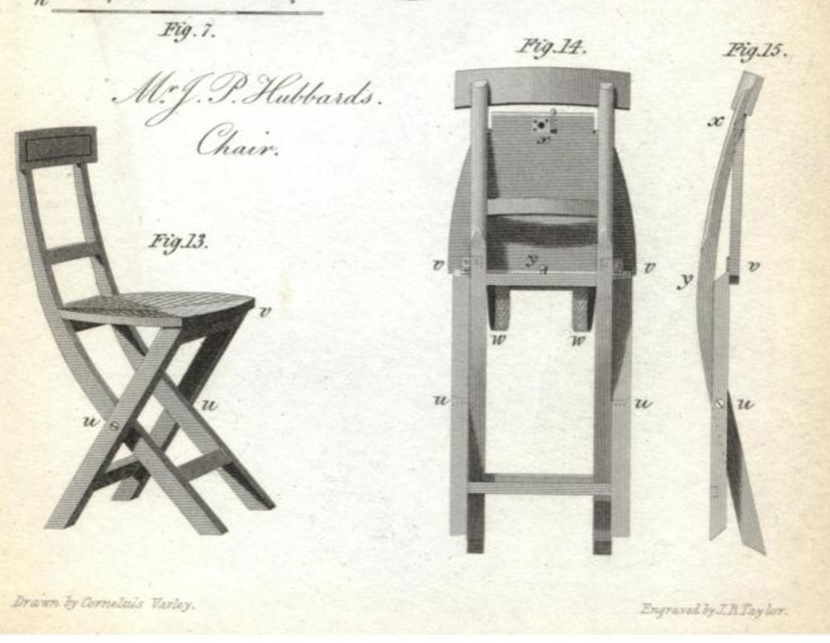







 If I Had My Own Blue Box: