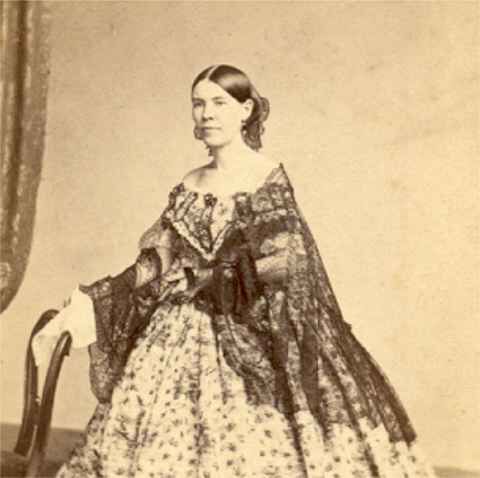
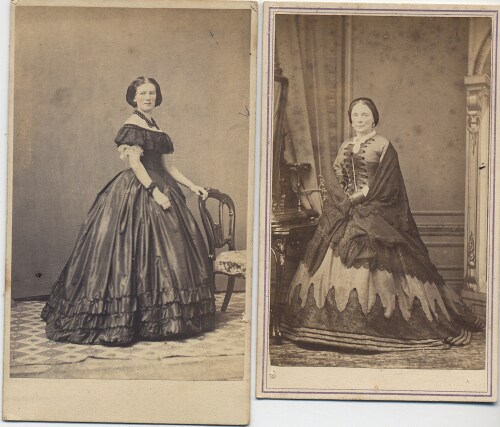
According to The Dictionary of Fashion, the Empire bonnet was “a small, close-fitting, outdoor bonnet in the shape of a baby’s bonnet.”
We see bonnets called the Empire earlier in the war, but by the end of the war they have changed:
“The Empire bonnet (in its greatly modified form) seems to become popular, it is now made of velvet as well as straw, and is found not only comfortable but in a general way becoming. Bandelettes quite flat to the head and formed of velvet are much worn in place of bonnet-caps. Occasionally a butterfly, humming-bird, jet ornament, a bow of ribbon, or turf of flowers, is posed in the centre, and takes off the rather severe effect of the flat bandelette. Sometimes the band is formed entirely of feathers.” (The Ladies’ Companion, 1865 (Also The Illustrated London Magazine))
In 1865, mentions of the Empire bonnet are in fashion descriptions with a line or two regarding an ensemble rather than commentary on the style itself.
 We see the Empire bonnet made of straw as well as buckram and frequently of velvet. The decorations recommended vary. We see recommendations of tulle, velvet, rose buds, flowers, lace and leaves as well as the appearance of gold chains, straw sequins.
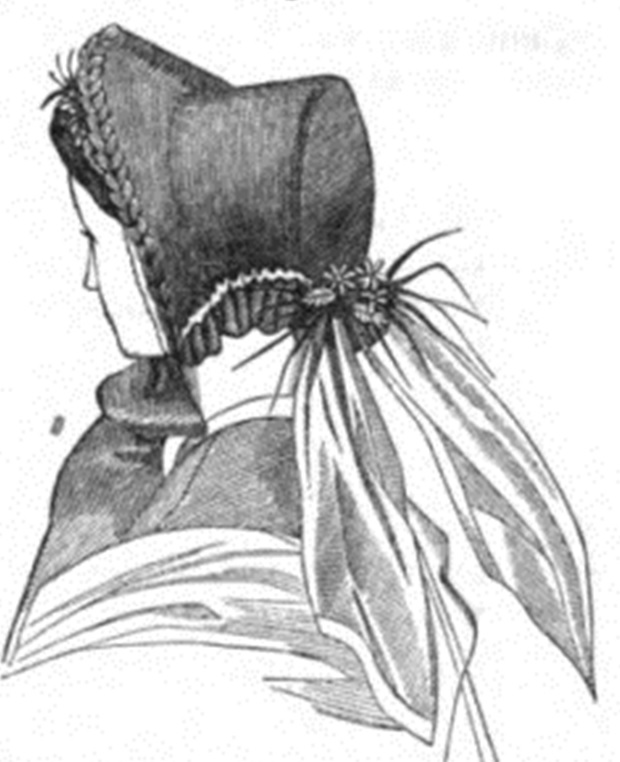
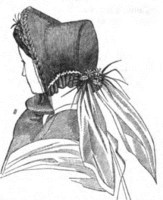 “We give our readers the promised Empire bonnet. It is of green silk covered with crepe, and edged with a plait of green velvet. The small cape is finished at the back by streamers of tulle and a tuft of white flowers. The inside trimming consists of a puffing of tulle and white daisies.” (Godey’s Lady’s Book, October 1865)
 “Empire bonnet (front and back view). It is of rice straw, trimmed with a large turf of pink roses mixed with black feathers. The bonnet is edged with a pearl fringe, and strings are of black ribbon” (Godey’s Lady’s Book, November 1865)
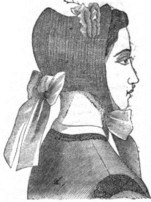
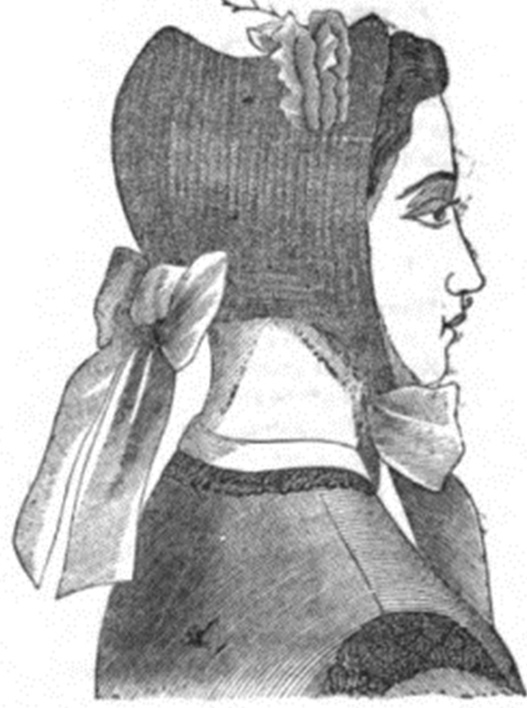
“Empire bonnet of the Auvergnat style. It is of straw, trimmed with ruching of scarlet velvet and wheat-ears, the latter arranged on the left side of the bonnet.” (Godey’s Lady’s Book, November 1865)
We see much more on the Empire bonnet in 1866 than we do in 1865. Here is one description of what makes an Empire bonnet in 1866:
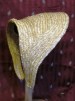
“The genuine Empire bonnet we think can only be found at this establishment. It is so very peculiar in shape, that only a tall, stylish-looking person could wear it to advantage. Imagine a flat, square crown, with small front and long gypsy ears tying behind underneath the waterfall. A band of ribbon fastened on top passes down and ties under the chin, pressing the bonnet so closely to the face, that side trimmings are entirely suppressed. Gilt chains on velvet, a rich ornament, of a few flowers are placed over the forehead. In the hand these bonnets are decidedly ugly, but when “well worn,” they are quite distinque. Some very elegant specimens have just been received of choice shades of velvets, such as rose, violet, silver, gray, and blue, trimmed with gold chains and beads hidden in a light cloud of marabout. Others, for street wear, are of garnet or black velvet, or else gray felt, trimmed with plumes to match, and gilt ornaments. It is, however, not incumbent upon every one to wear these exaggerated styles, as there are several very pretty modifications of the Empire bonnet. All are exceedingly small, with raised, soft crowns, or else a perfectly flat crown and a small, tightly covered cape, or band set up rather high on the crown.”(Godey’s Lady’s Book, January 1866)
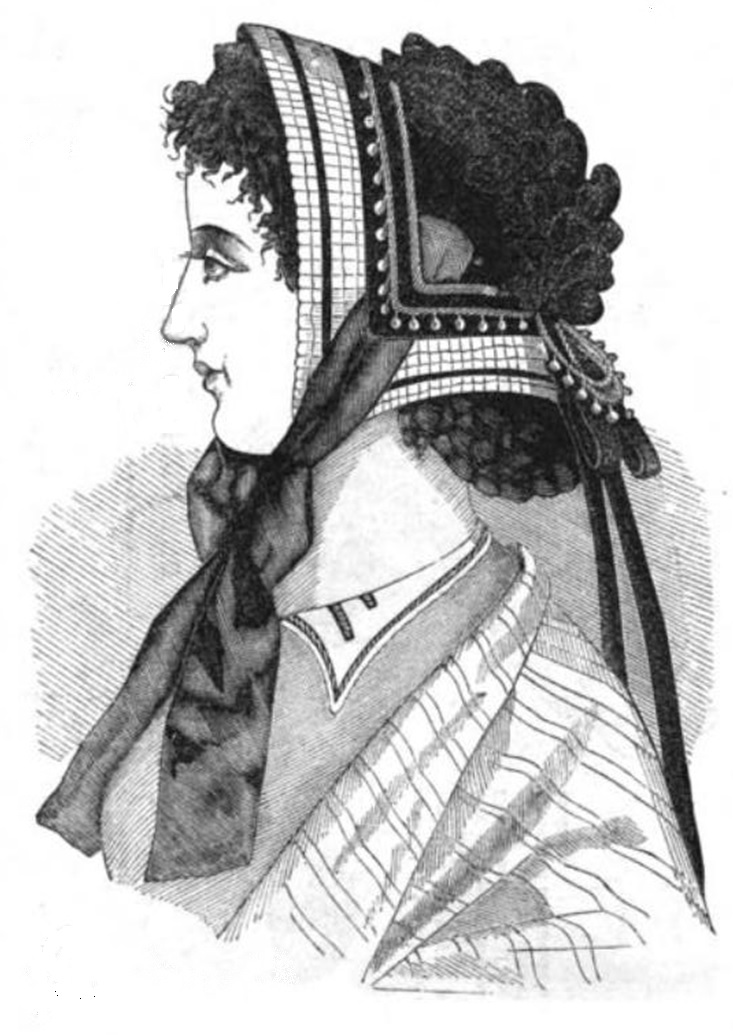
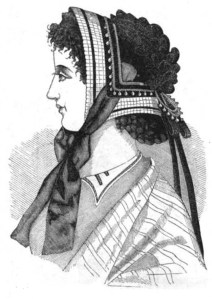 Godey’s Lady’s Book, 1866 “Empire Bonnet. Intended for a half mourning toilet. The border in front and the curtain consist of white chip, the crown is formed of black thulle puffings, the puffings being separated by rows of black ribbon velvet, worked with white chalk beads. Black velvet ribbon, with a row of white beads on the centre, separates the front from the crown. The bow at the back consists of black velvet and beads; the strings are black velvet. In the inside is a black velvet bandelet, worked with white beads. If this bonnet is preferred in colors, blue silk and crystal beads might be substituted for the black thulle and chalk beads. Mauve silk, with straw drops, would likewise have a good effect.
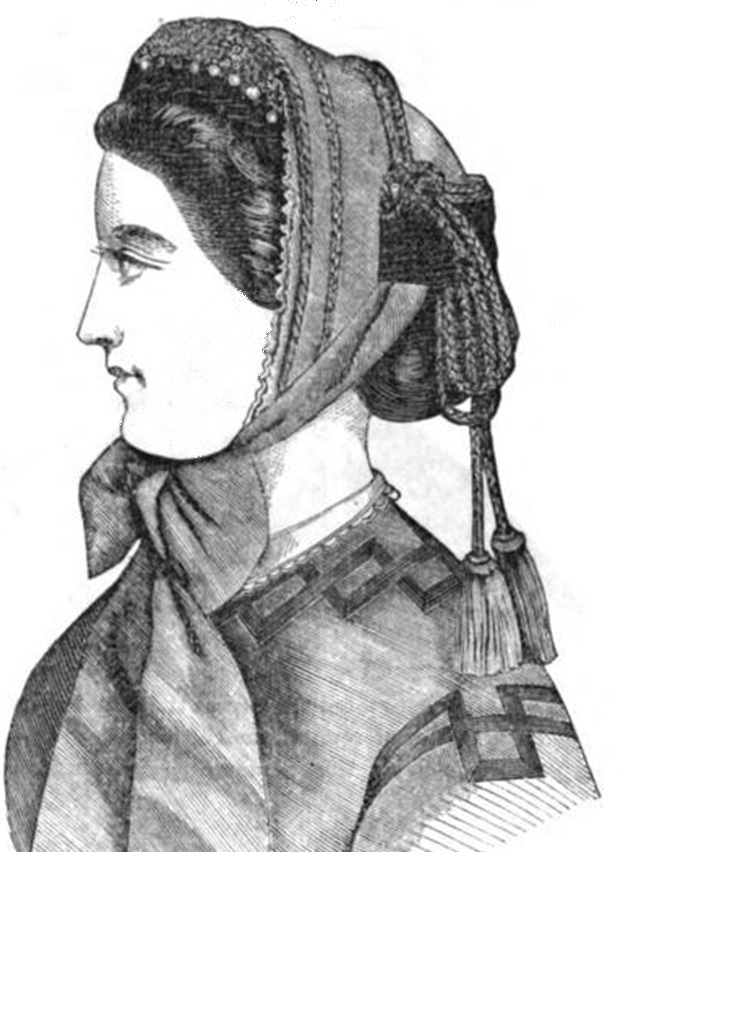
 Godey’s Lady’s Book, November 1866.”Empire bonnet. This bonnet is suitable for a middle-aged lady, and is made of gray velvet, the curtain being scarlet velvet. A bandeau of scarlet velvet is sewn inside the edge of the front. The bonnet is trimmed with handsome gray silk cord and tassles. A crystal drop fringe is added round the edge of the bonnet. Grey silk strings, with narrow scarlet velvet ones at the top of them.”


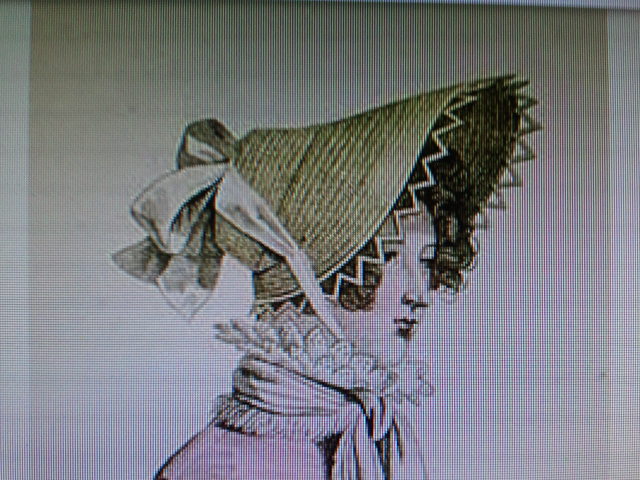
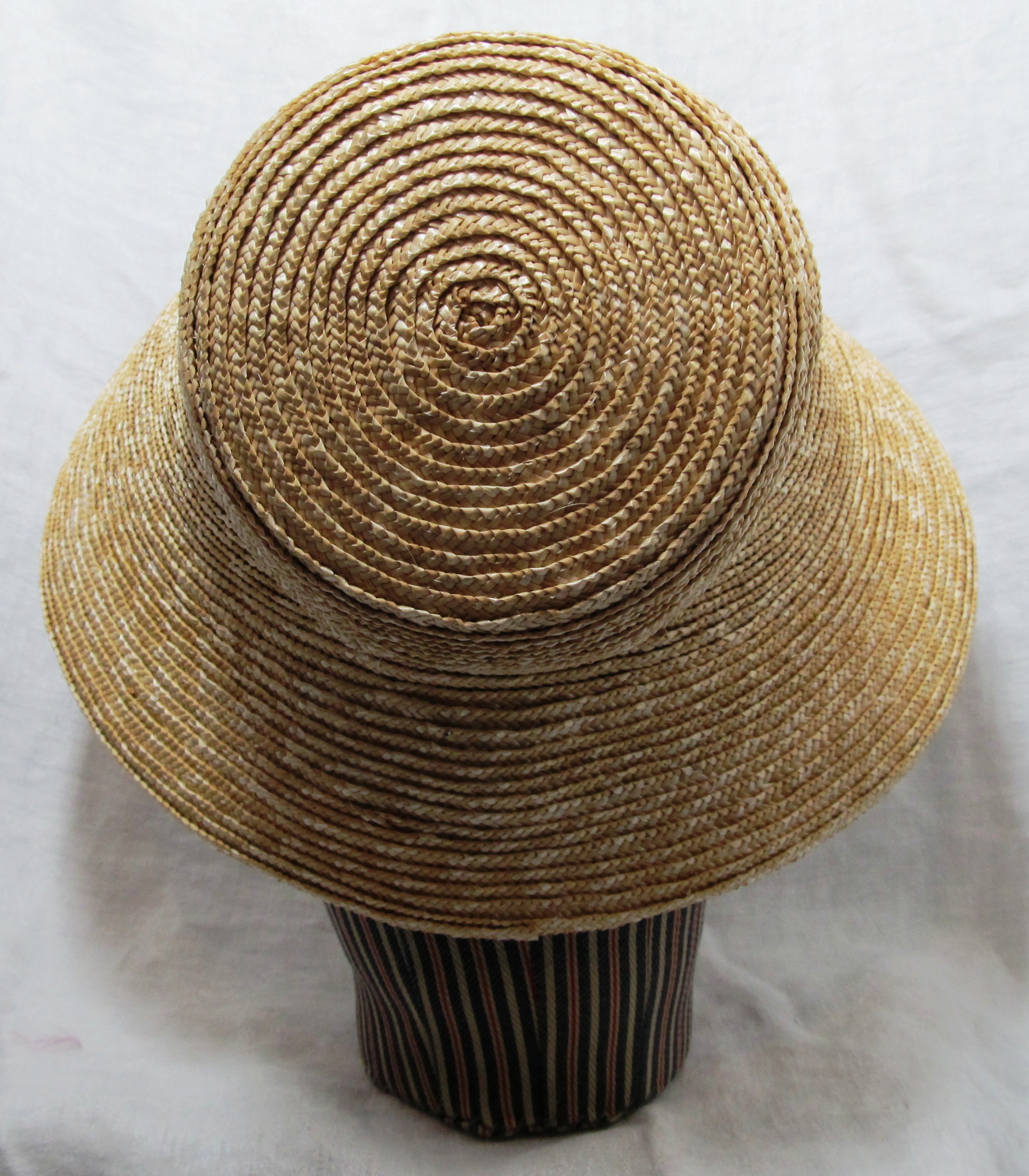


 I think this is a
  This might be my favorite “not a…” yet.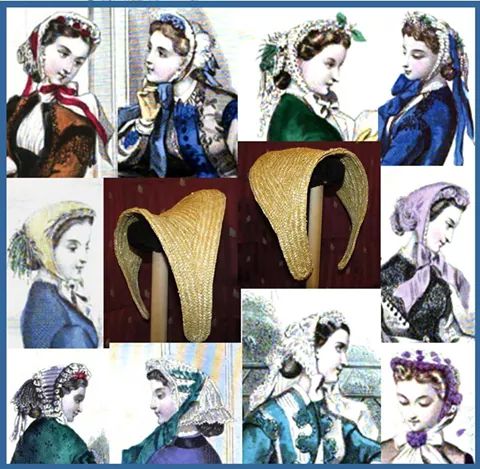
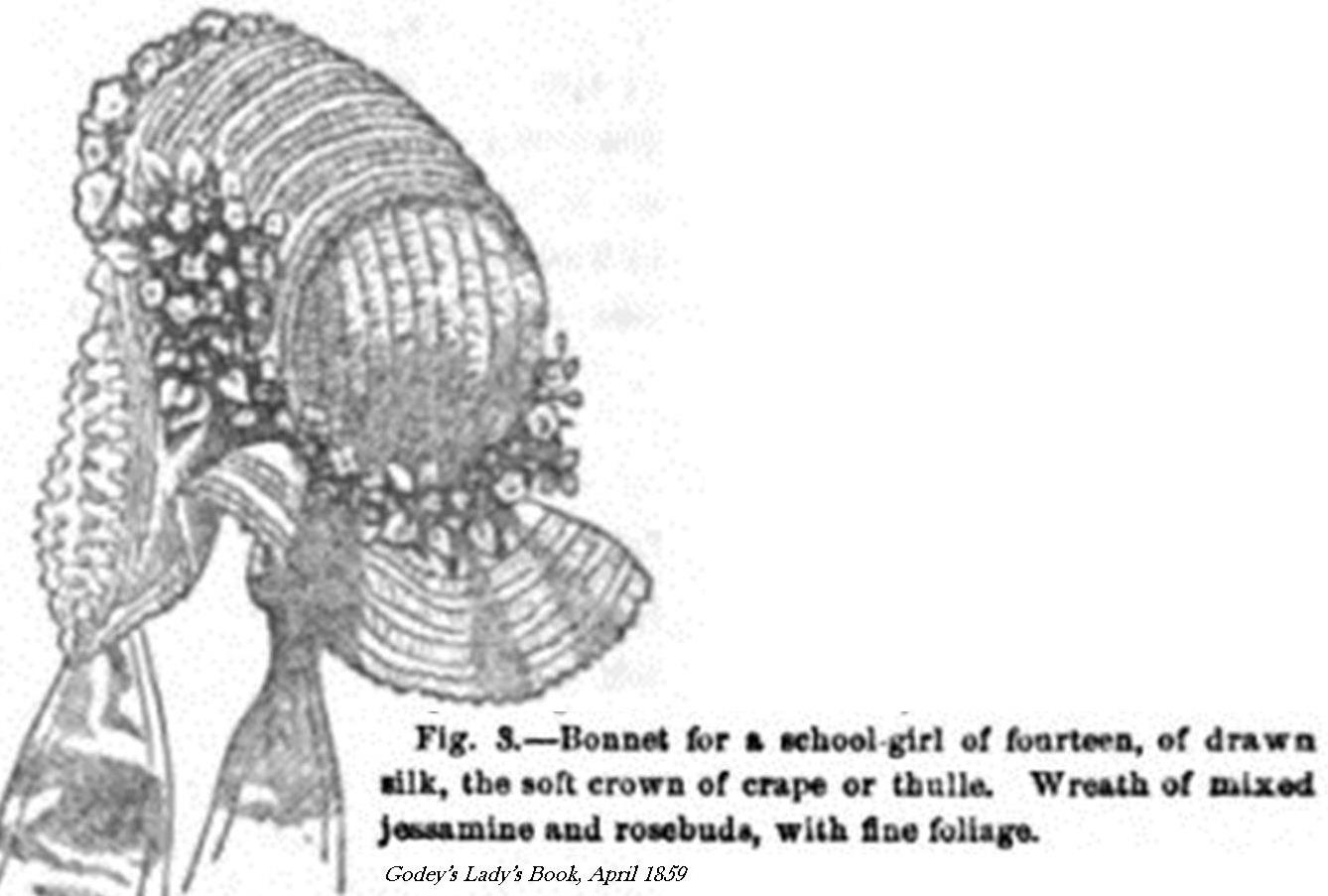
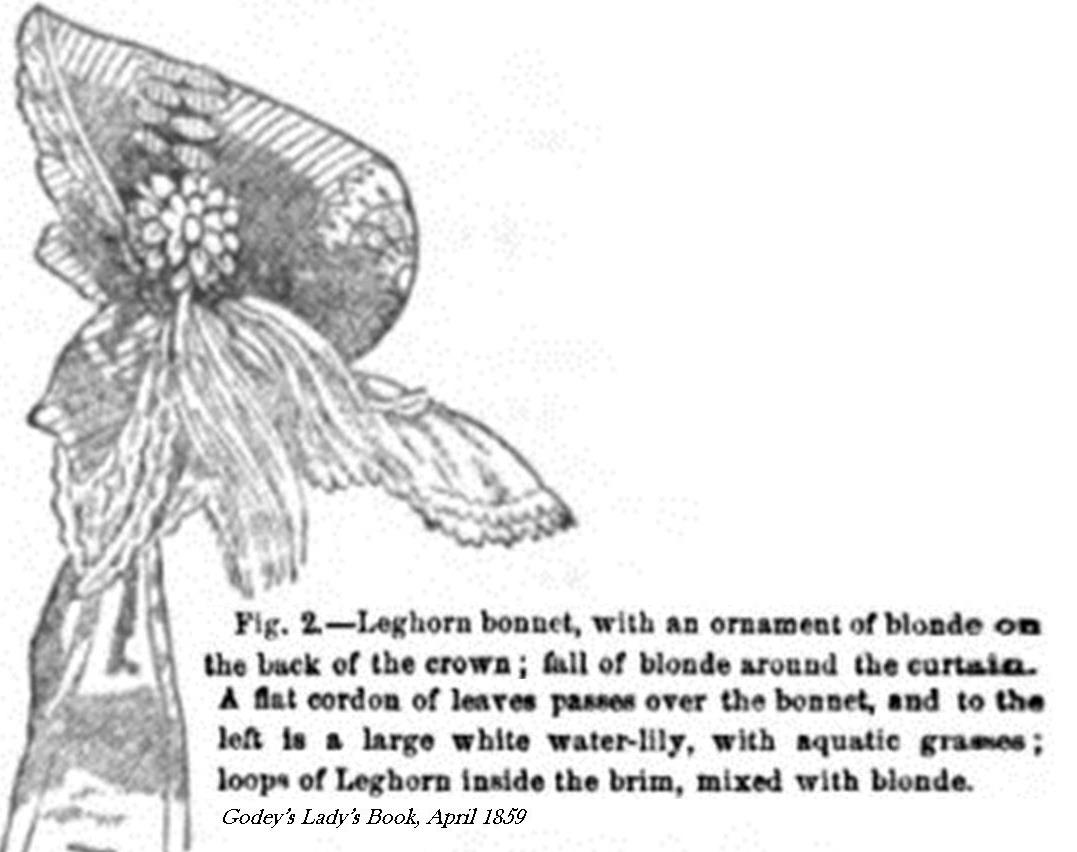
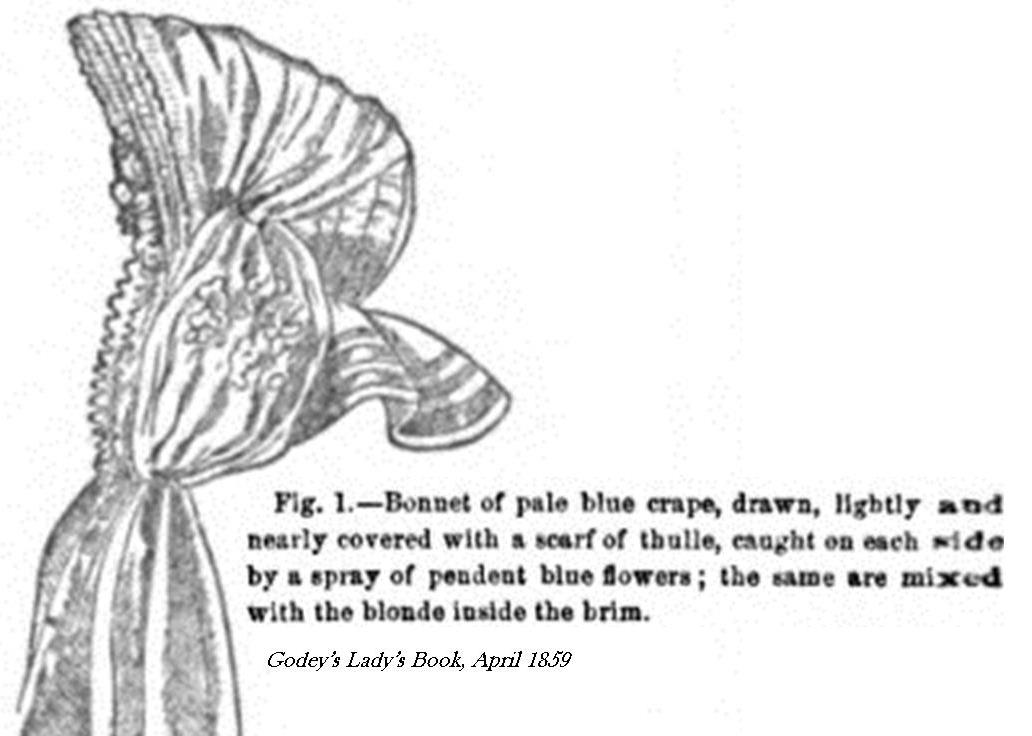

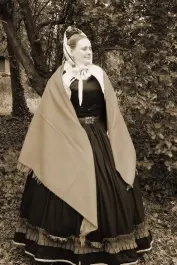
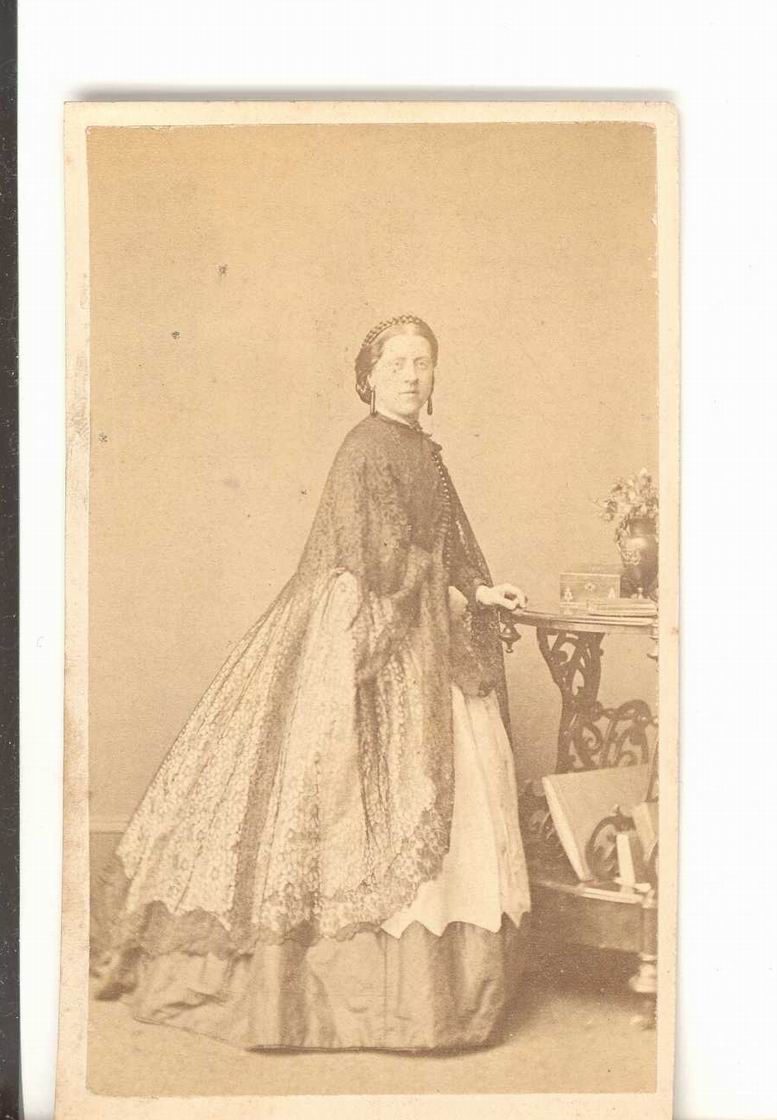 This lace shawl is held closed at the neck.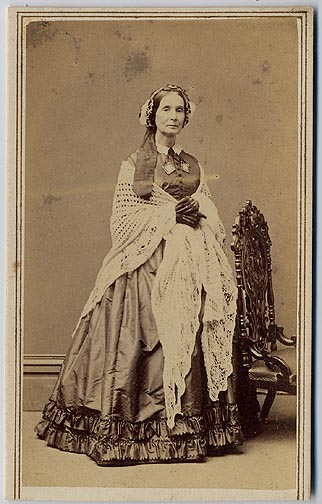
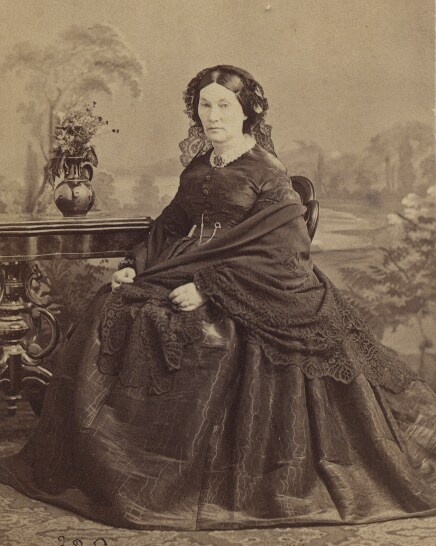

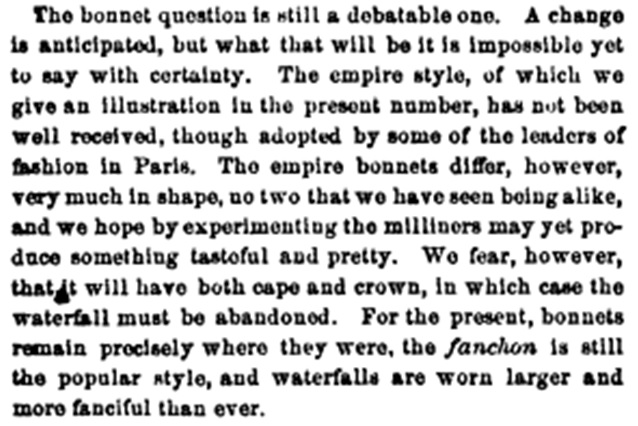

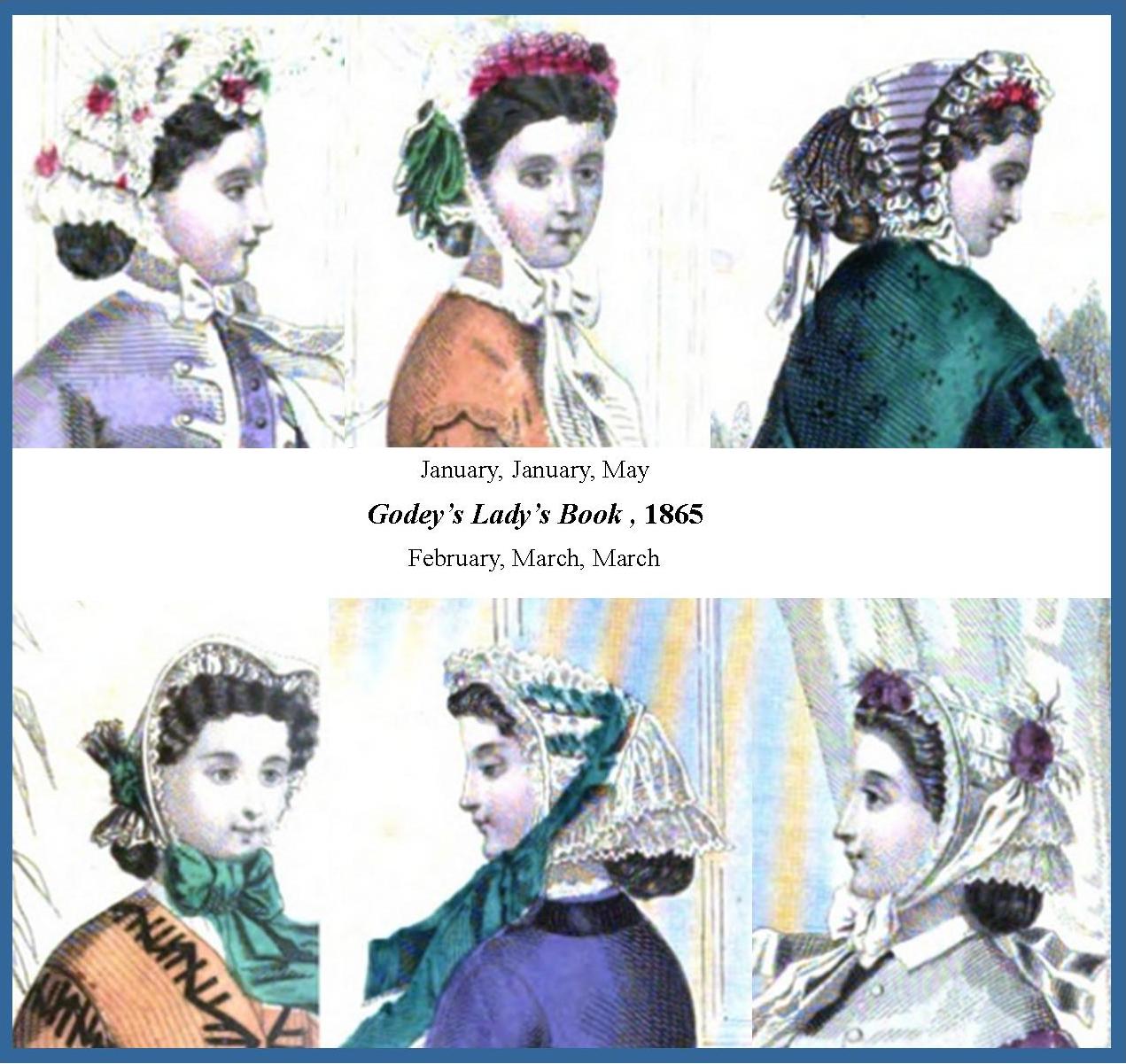
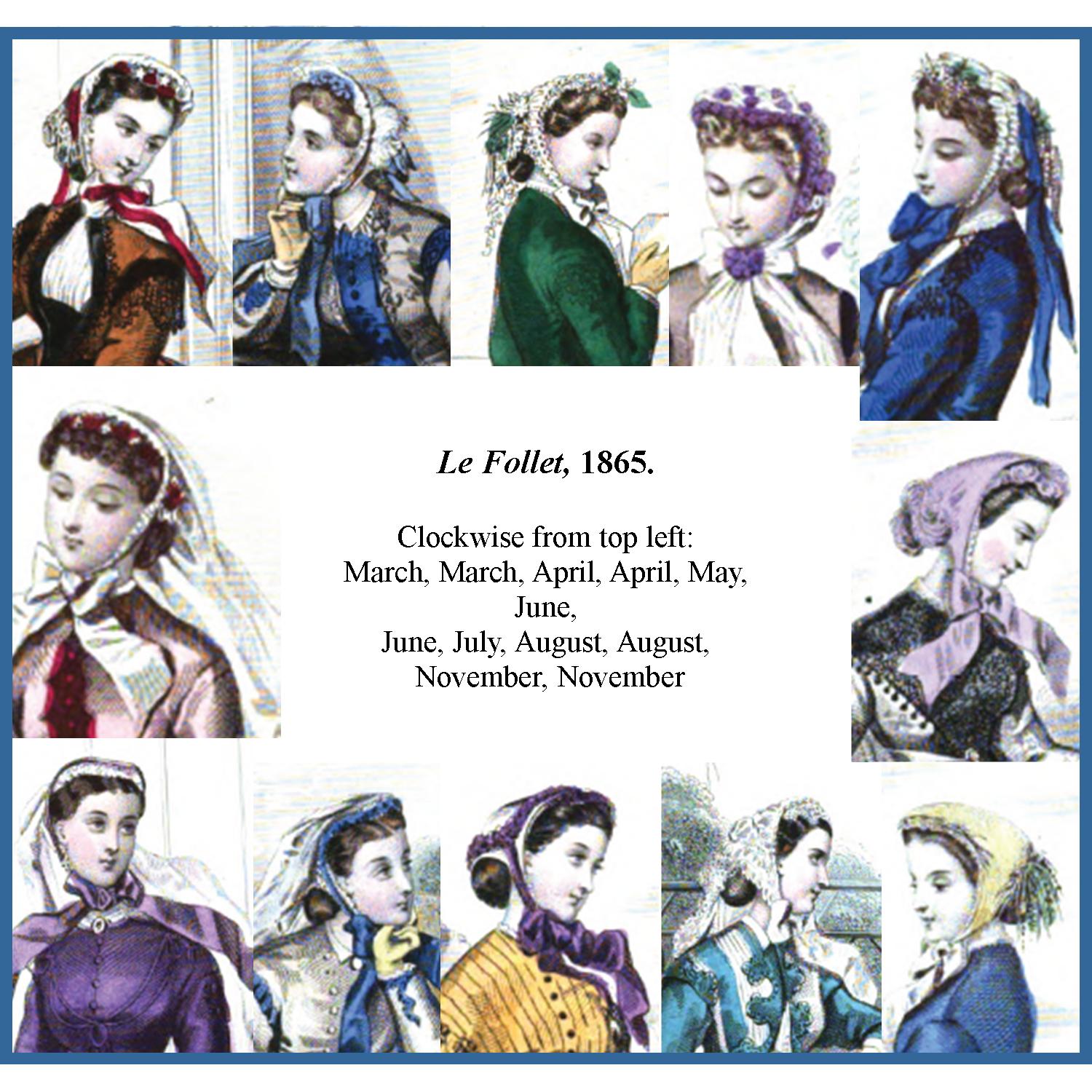

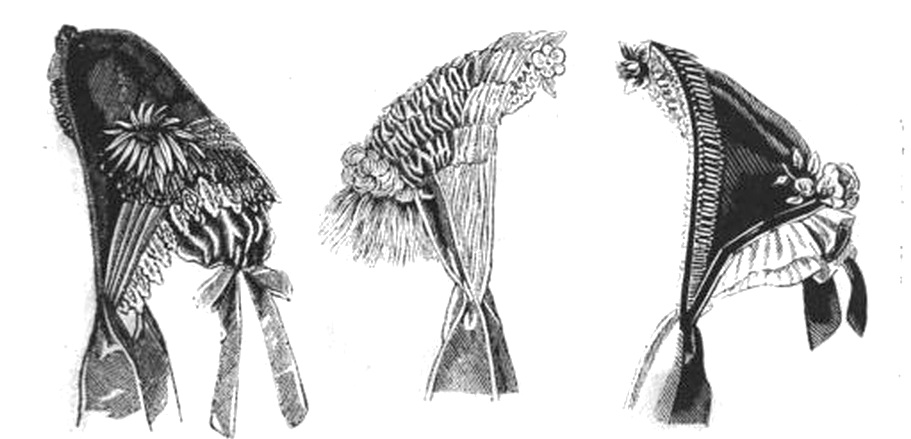
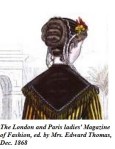 Really, I just don’t get it. What were they thinking? Going from beautifully shaped bonnets through the 50s into the 60s… then…”hmm, let’s just make wonky triangles to stick on our heads.”
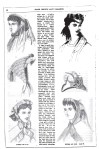 “The Fanchon, or half-Handkerchief style of bonnet which now prevails universally, is found by many to be “too common” – it is so easy to make at home, everybody wears a bonnet d la fanchon; and what everybody wears is not always acceptable, so the Empire shape, which is more difficult to improvise, is eulogized as “distinguished,” and adopted by a very small minority.” (The Australian Journal, 1866)
 The Fanchon was accompanied by the “la tarte”, the “Lamballe” and the Manderin. All on the smaller side. Not everyone of the time were impressed by this phase in millinery fashion. “At present the bonnet is not a bonnet…. It strikes our uninstructed minds as a misnomer to call a bason of crape a bonnet, and yet it is a bonnet according to Le Follet, and belongs to the genus of “Fanchon”…. Paying for a bonnet should be a pleasure, and we have no doubt it is; we trust, though, that the “Mandarin,” the “Lamballe,” and “La Tarte” are only temporary, and that a bonnet will not become so diminutive as to puzzle a very Owen of millinery, who might be asked to construct one from a future “Fanchon”.” (Every Saturday, 1866)
 We quickly see the Empire bonnet come to counter the Fanchon. This is a direct response to the dislike for the ‘commonness’ of the Fanchon both by milliners and fashionable customers. “None but those who take the lead in fashion wear exclusively the Empire bonnets. These have been a good deal modified in shape from what they were when they first appeared.”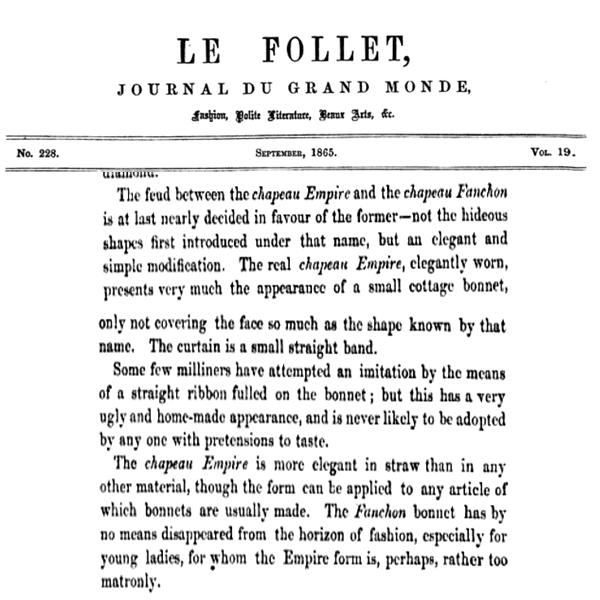






 If I Had My Own Blue Box: