Late War Bonnet

Karen 3This is my first late war straw bonnet. It is a special request for the spring of 1865. We wanted a respectful look in an appropriate shape and style while suiting the wearer in shape and color. I am happy with how this came together.

Overall, the bonnet is smaller than the early war bonnets. This one has a gentle rise to the brim retaining the flattering spoon shape. The drop from the back sides to the cheektabs is more angular and abrupt. It is hard to see the shape of the sides and back with the ribbon wrapping around. Underneath that ribbon is a raised tip which is a semi-circle. The neckline transitions in a flat line from the tip to the sides rather than with the curve we see earlier in the war years. This was the hardest area for me to wrap my mind around because I like those gentle curves.

Karen 4

The straw is the black plait from England I like. The ribbon is a 5″ wide antique moire. This ribbon has some pleasing characteristics. It is rather flat in terms of light reflection, which means it would suit a mourning bonnet if need be, or in this case looks lovely while being respectful. When held up to the light, it shows itself to be semi-sheer. Because it is so fine, I was really worried about it wrinkling and holding the wrinkles. But, it bounces back nicely. (I did suggest the new owner to stuff the puffs in the back with tissue paper for storage. I sent it along to her with those packing airbags tucked inside each.)

Karen 6

The frill is silk organza, a double layer in box pleats. I do like how this can show the nice ripples or be fluffed for fullness. The flowers include petite white roses, blue roses, buds of each and little red berries. Karen 7

Published in: on August 7, 2014 at 12:20 pm  Leave a Comment  
Tags:

A Year in Millinery Fashion – 1864

This commences our series for the fall months, and it is made in silk or light cloth, as the season requires. The piquancy and convenience of the style renders its fashion one that is widely popular. The passamenteries vary greatly, so that the tastes and pecuniary considerations of all may be accommodated. The above was drawn from a rich Manganese brown summer cloth, adorned with an exceedingly neat gimp and pendent button ornaments

For the present “heated term” of course the various shapes and styles of laces are the mode. The great mass, however, of our friends having already made up their summer toilets, are looking for the approaching autumn fashions. We, therefore, prefer giving the above. (Godey’s, August, 1864)

 2

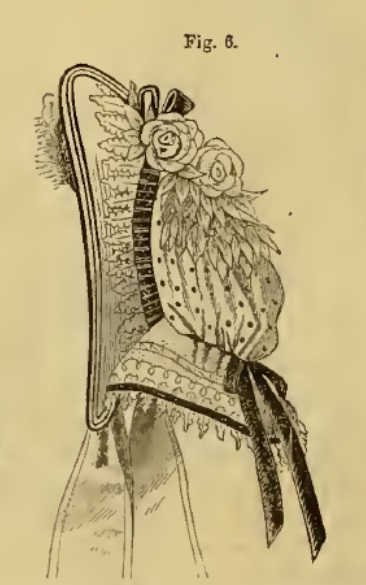
                         Fig. 6 is an elegant bonnet of white chip, with loose crown of spotted net; the crown is separated from the front of bonnet by a black velvet, edged with black lace; at the top of this is a small bow of black and velvet, with a group of roses and rose-buds, the front edge is bound with black velvet. The strings are white, and has a bow and long ends of black at the back. Cap of blond, trimmed with roses and buds. (Godey’s, August, 1864)


Bonnets have suddenly shrunk to the tiniest proportions, and, if they contract no more, will prove very becoming. They are so small that, sometimes, the ear is left entirely exposed, displaying the large, unbecoming ear-rings, which are again coming into fashion.

Some of the simplest and prettiest bonnets are those made after the style of fifteen years ago, viz: a very transparent white muslin, lined with some pretty, delicate shade of silk.

Hats are of a variety of shapes. The high-crowned, narrow-brimmed hat is still worn, byt it usually has a scarf of black lace, or net, tied in a bow behind. The front can be trimmed with either bows of ribbon, flowers, or plumes. Then the little round hat, known, in England, as the “pork-pie,” which is- youthful and pretty, but utterly useless for shade; and the casquette, with the rim covered with velvet, and turned-up in front, but sloping off at the sides and into a point behind. (Peterson’s, August, 1864)

Announcing the 2014 Fall FanU Fabric Swaps!!!

Sewing Box FilledAlthough the weather is till warm, it is time to start thinking about fall and the 2014 Fall FanU Swaps. Whether you are already a FanU Fabric Swapper or want to join anew, you are invited to participate in the 2014 Fall FanU Fabric Swaps!

This fall, we will have another trio of swaps and a bonus swap. This season’s swaps will include:

  • “Fallen Leaves” – Period fabrics with a leaf motif
  • “All Lined Up in a Row” – Just like a garden, we’ll swap fabrics with motifs all lined up in a row.
  • “I Couldn’t Live Without It!” – We’ve all done it. We just had to have that fabric, it just had to come home with us. And, there it sat. Now, is the chance to swap that fabric. (Or, if somehow you don’t have that piece (or just can’t part with it), pick the “it is just too fabulous!” fabric from your fabric shop to swap.
  • Bonus Swap – The Greene Swap – For those of us with Susan Greene’s book, Wearable Prints, we will be swapping fabrics similar to those in the pages of her book. You do not have to own the book to participate. You can borrow from a friend or the library. There may also be a few helpful hints online.

What is a Swap?

This is a chance for to exchange fabric with a small group of people. Each group will have 8 people exchanging pieces of fabric. All you need is a half yard of fabric and envelopes along with your copy of Fanciful Utility.

To Participate:

1: Sign Up Day!
On sign-up day, groups will be assigned on a first-in basis; the first eight will be the first swap group, second eight in the second group, etc. **Please be certain you will be able to fully participate by mailing your fabrics on the Mail-Out Date.**

“Fallen Leaves” Swap Sign-Up Day: September 1st
“All Lined Up in a Row” Swap Sign-Up Day: October 1st
“I Couldn’t Live Without It!” Sign-Up Day: November 1st

Bonus The Greene Swap Sign-Up Day: November 15th

2: Mail-Out Day:
Place a 9×9″ piece of fabric suited to the mid-19th century in envelopes for each of the 7 other people in your swap group, stamp them (be sure to double check at the post office, but the small 9×9″ pieces should mail in a regular envelope with a normal stamp), and send them off no later than the Mail-Out Day.

“Fallen Leaves” Swap Sign-Up Day: September 10th
“All Lined Up in a Row” Swap Sign-Up Day: October 10th
“I Couldn’t Live Without It!” Sign-Up Day: November 10th

Bonus The Greene Swap Sign-Up Day: December 1st

3: Get Fanciful!
Use your Fanciful Utility templates and techniques to make a project from the book, or copy your own from 19th century sources. We’ll all look forward to seeing your projects! You don’t have to sew right away, but don’t keep us waiting forever to see all the fun things!

(If you need a copy of Fanciful Utility, you can purchase them from the publisher at www.thesewingacademy.com

Fabric Guidelines:

  1. For the cotton and silk categories, your fabric should be early to mid-nineteenth century appropriate. (If there is a want for an earlier or later group, we can do that.) Prints and motifs should reflect those available in the 1840s, 50s and 60s. Cotton should be 100% cotton. Silk should be 100% silk.
  2. To keep the swap and sewing possibilities interesting, please avoid solids as best we can.
  3. Fabrics that do not work well for sewing cases should not be swapped. These include sheers, gauzes, heavy, thick, easy-to-fray, slippery and stretch fabrics.
  4. For the “crazy swap” category, think crazy quilt in a sewing case. This could include satins, velvets, textured fabrics. Quality synthetic fabrics are invited.

Swapper Guidelines:

  1. Please be certain you can fully participate in the swap before you sign-up.
  2. If something arises after you sign-up that will effect the date you are mailing your fabrics, please email your group so everyone is aware.
  3. If you fail to fully participate in a swap, you will not be able to sign-up for future swaps. (We do understand medical and family emergencies. I need to be able to ensure swappers will receive fabrics when they send fabrics out.)

Q&A

Yes, you can participate in 1, 2 or 3 of the swaps.

Yes, if we end up with multiple groups, you can participate in more than one group to swap more fabric. If you participate in 2 groups, you should swap 2 fabrics.

Yes, you can swap large and small scale prints.

Yes, you can swap now and sew later.

Yes, we would love to see what you’ve made with the swapped fabric.

Yes, you can use your own fabric in your swapped project.

Published in: on August 1, 2014 at 6:00 am  Comments (2)  
Tags:

Brown Stripes Drawn

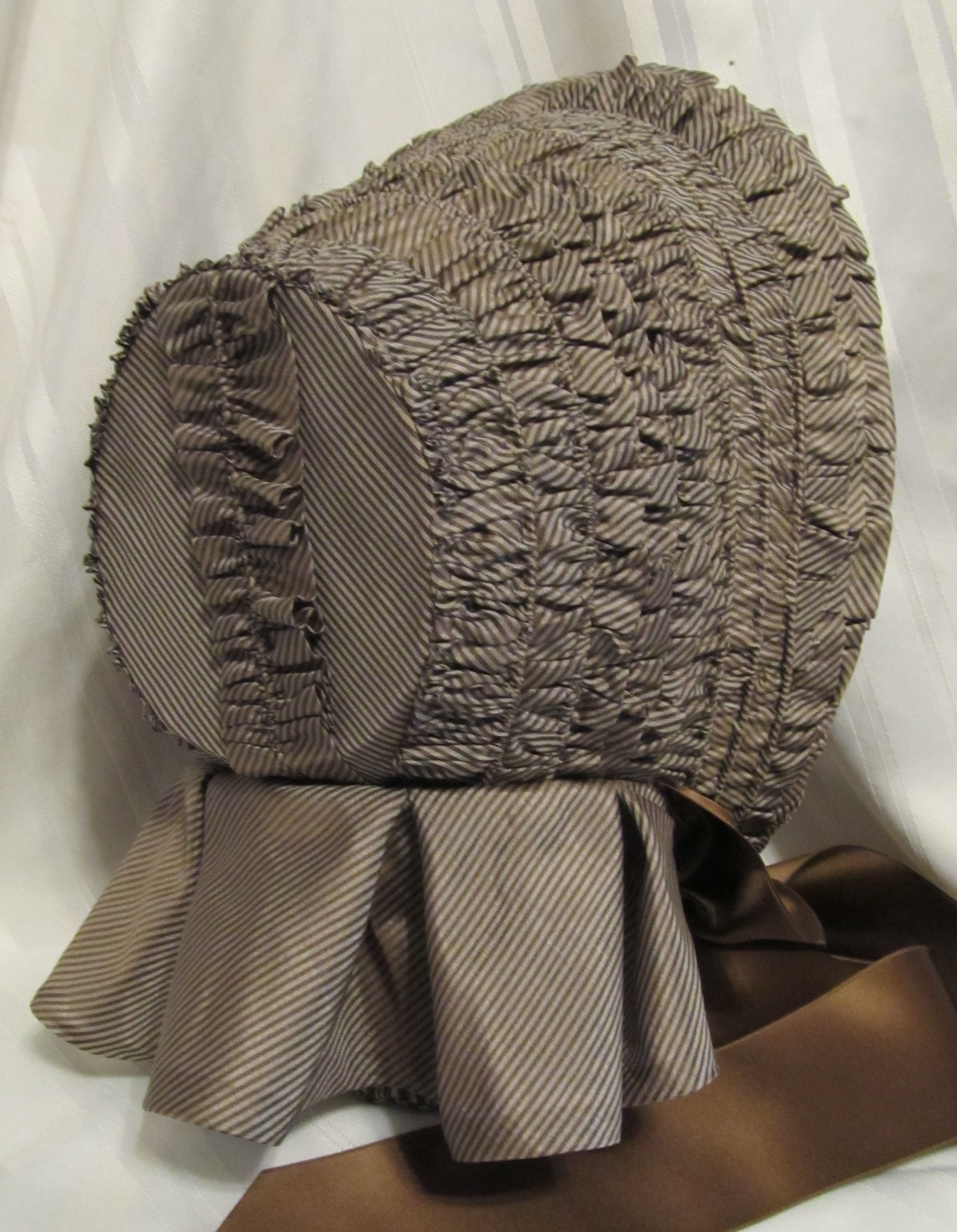
This is a bonnet that I really wanted to keep. I actually pouted as taped its box closed. I just love how the little ruffles and drawn canes worked together with the little stripe. It is the texture, the color, the technique.

???????????????????????????????

The new owner will be adding her own flowers and decoration.

??????????????????????????????? ??????????????????????????????? ???????????????????????????????

Published in: on July 30, 2014 at 4:26 pm  Comments (1)  
Tags:

Straw with a Most Incredible Ribbon

This straw bonnet with beautiful blue and green ribbons is a special request for a client.

When I opened the box and bag that had this dark blue satin ribbon inside, I swooned the ribbon felt so nice. I knew it just had to have something special done with it.


IMG_4529

I highlighted the blue with a beautiful green to make this large ribbon placed asymmetrically on the bonnet’s crown. The bavolet is made of bias cuts of the ribbon. ???????????????????????????????

The interior flowers were also set asymmetrically to emphasize the bow placement. The full organza frill balances the large bow the ribbon makes. ???????????????????????????????

Published in: on July 29, 2014 at 8:58 pm  Comments (3)  
Tags:

A Year in Millinery Fashion – 1864

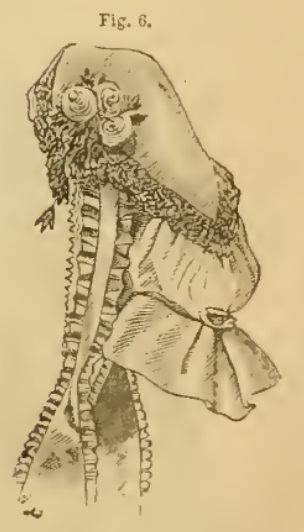
Fig. 6 is a bonnet of Marie Stuart form. The top of the bonnet is formed of a half diamond shaped piece of Ophelia crepe, edged round with black lace; at the left side of this are three white roses and a few fuchsias of black velvet. The loose crown is of white spotted muslin, and the curtain is of Ophelia crepe. The strings, instead of starting only from the ears, pass along the front edge of bonnet; they are of white satin edged with quillings of Ophelia crepe. (Godey’s, July, 1864)

                      1   

Fig. 8 is a bonnet of green crepe; at the top of crown is a group of lilac flowers. All round the front edge is a narrow garland of lilac, covered by fullings of tulle; the space between the garland and the crown is covered by narrow fullings of tulle. The curtain is partly covered by a deep white lace flounce, and the strings are of green ribbon. (Godey’s, July, 1864)

2

Yellow Silk Soft Crown Bonnet

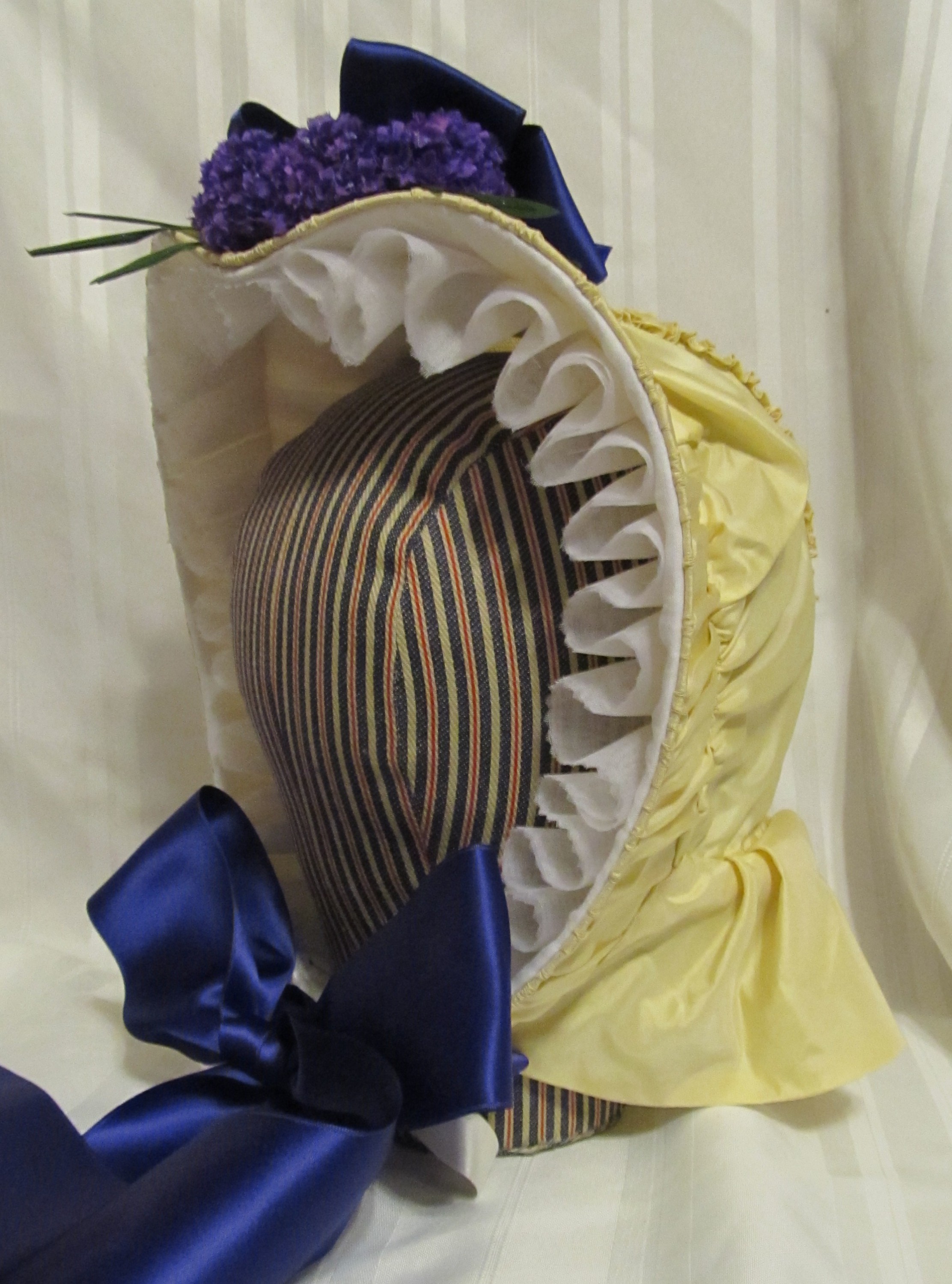
???????????????????????????????When this silk arrived, it really wanted to be made up … It didn’t want to wait. So, I obliged.  This pale shade of yellow reminds me of the soft yellow of some blossoms, very light and delicate. ???????????????????????????????The brim is drawn on cane over buckram in the fashionable Marie Stuart shape, while the crown is soft draped over net with the center drawn on canes vertically. Inside the brim is a full organza frill that can be fluffed out as desired.  The decorative ties are wide regal blue satin while the functional ties are a white silk taffeta. ??????????????????????????????? Atop the brim, in the Marie Stuart dip is a cluster of purple flowers and a bow of the same ribbon as the ties, just in a narrower width. ??????????????????????????????? This bonnet had a new home even before it was finished. I understand it will meet the world at a special occasion.

Published in: on July 21, 2014 at 5:45 pm  Leave a Comment  
Tags:

GCV’s Civil War Event – Late War Millinery

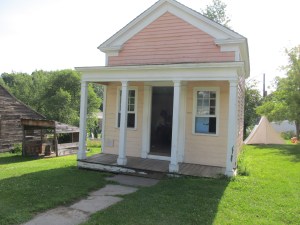
IMG_4587This was my second year in the Dressmaker’s Shop at the Genesee Country Village for their Civil War Encampment. As you can see Saturday morning was pleasant and sunny. You can also see the soldiers struck camp right up to my back door. While I was thinking this might make for some fun interaction, after-all I was prepared to say all my firewood was stollen as well as my wooden head forms. But, in the end, they kept to themselves. Well, except for eating all the beautiful black raspberries I was eyeing the night before.
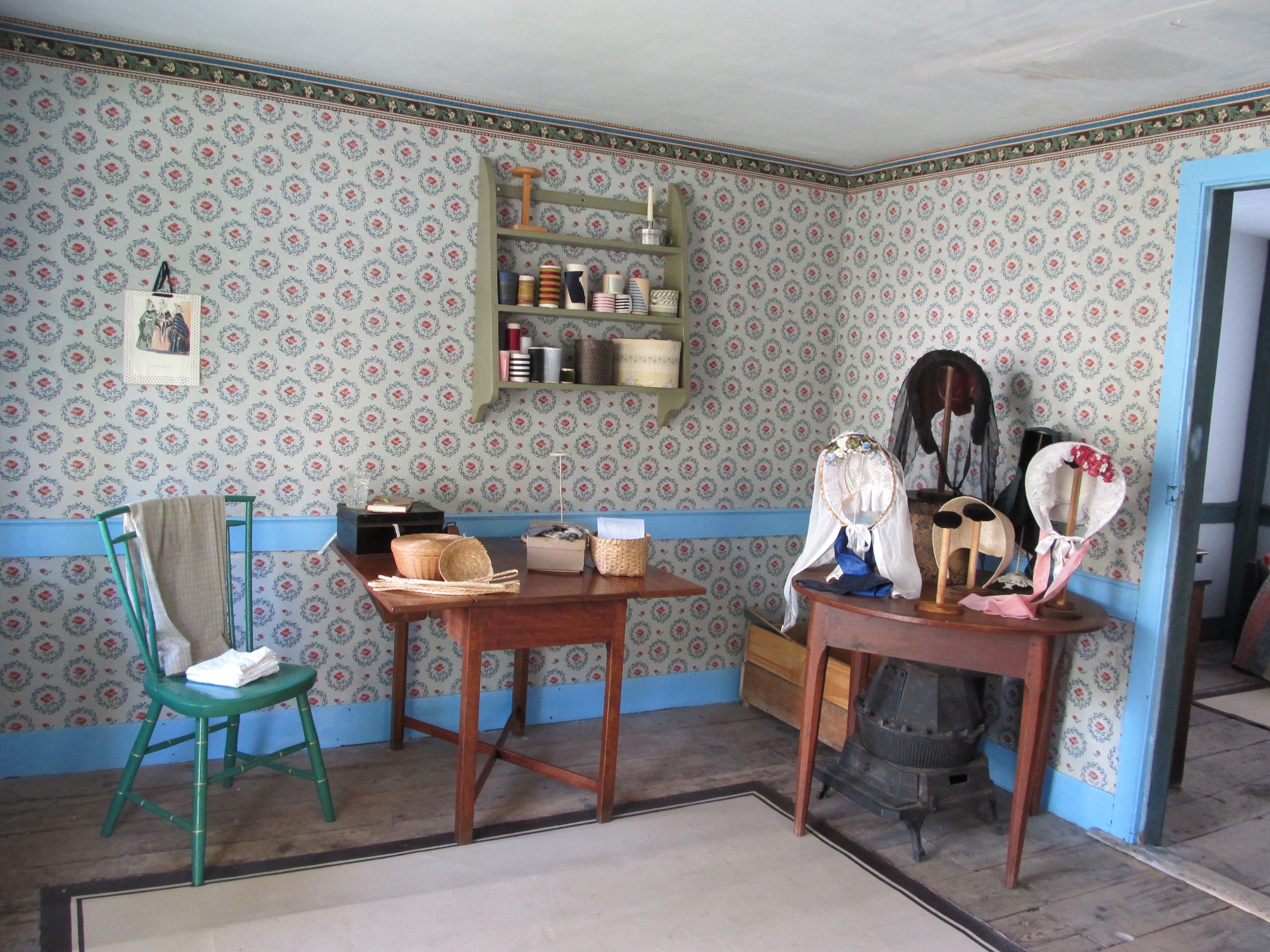
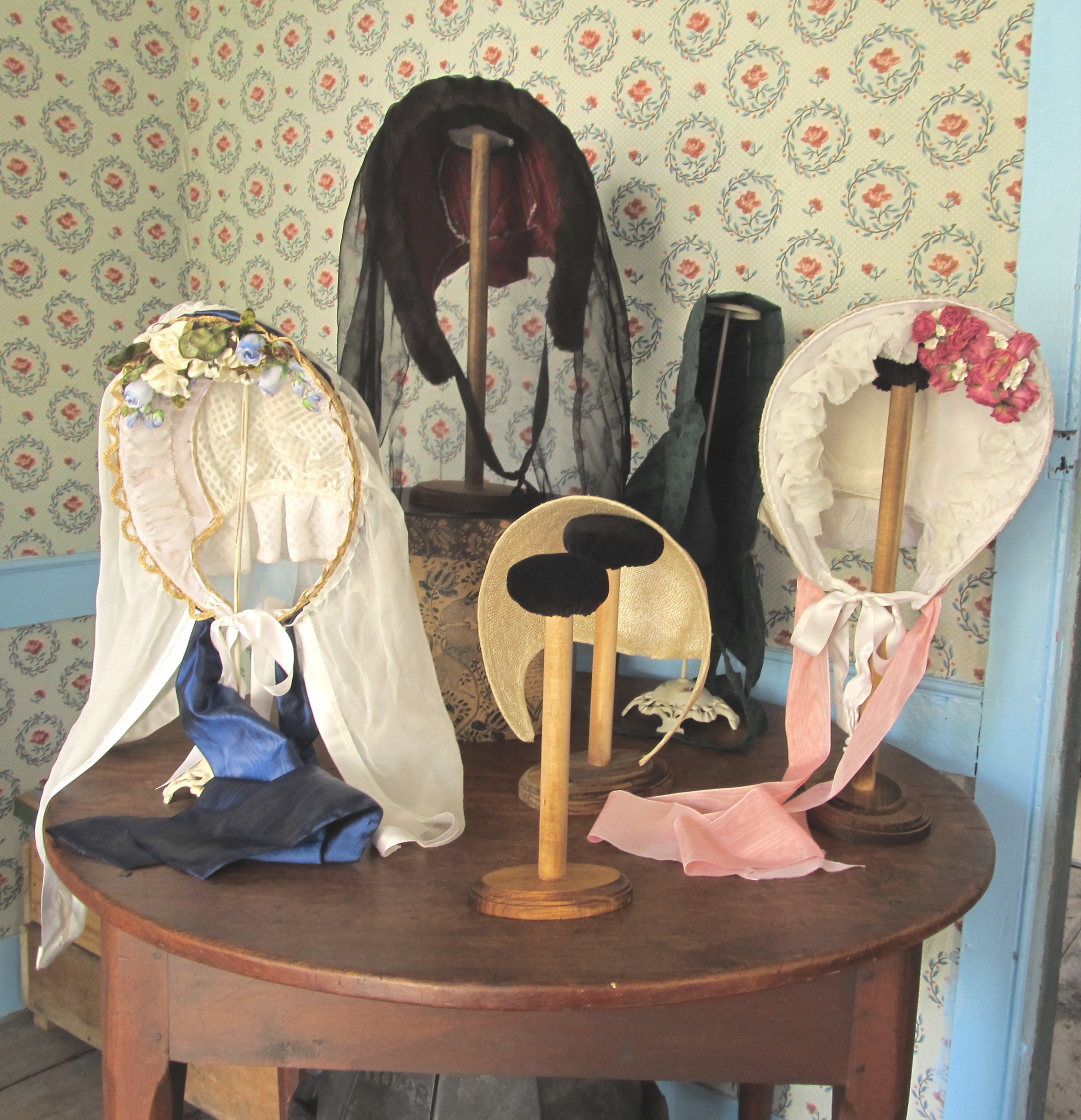
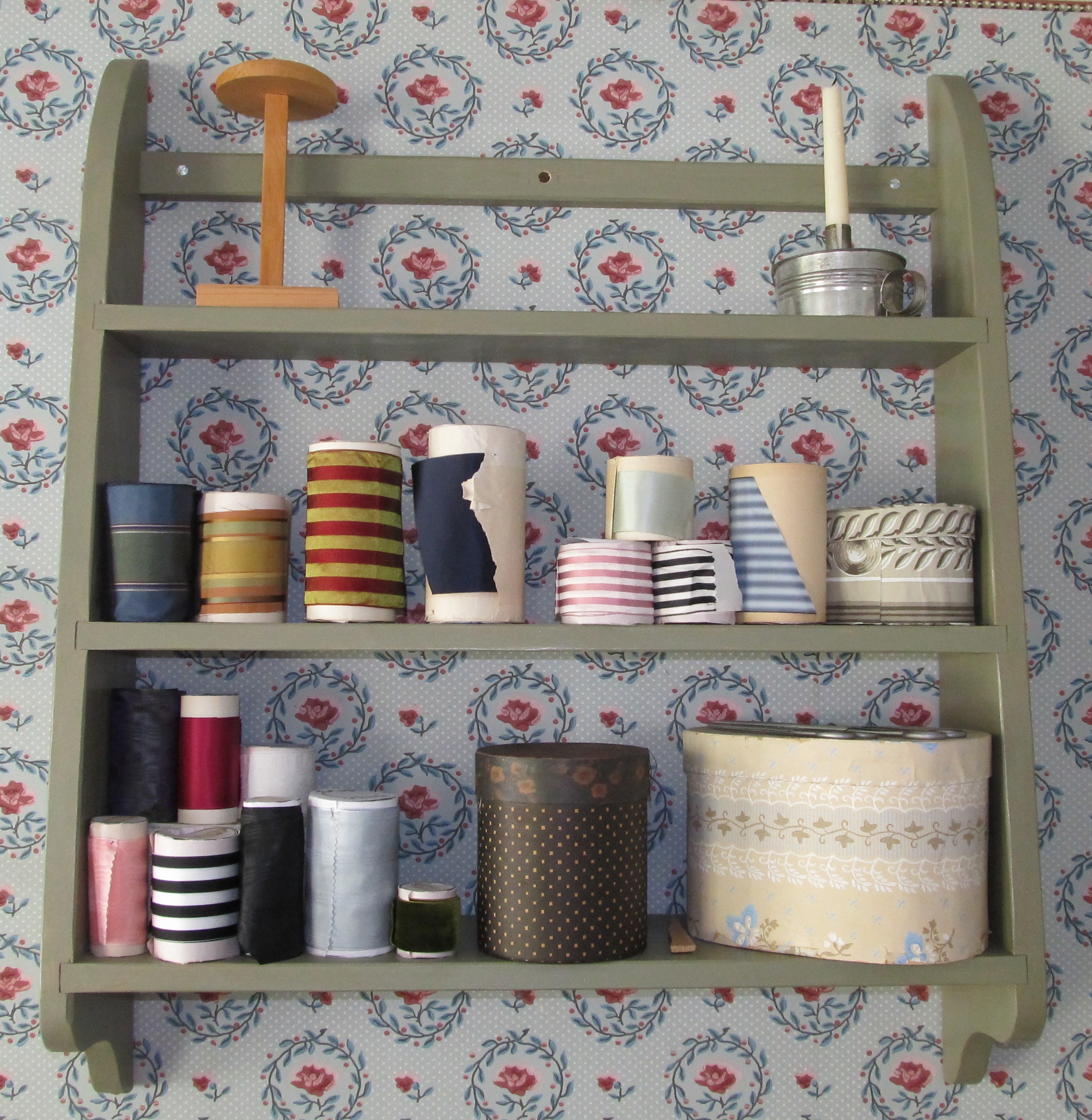
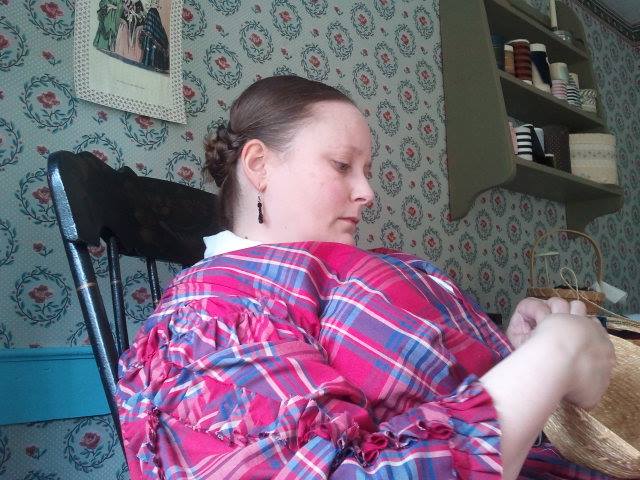
Rather than interpreting the pretty pink building as a dressmaker’s shop, I dressed it as a Millinery. The blue and rose print interior makes for such a pleasant place to work in. You can see the working table and display table. (Yes, we did put it right over the stove. No firewood, no need for a stove.)


IMG_4577

I wanted to bring a basic sampling of bonnets to show visitors. As I was working on a straw plait form, I would compare that to the woven straw in the middle, Vivian Murphy’s work. Then I would discuss the two finished fashion bonnets, left and right. We would also talk about the winter bonnet in the back and the sun bonnet just below. Many people asked about the veils. This was a good teaching point to explain the differences in the mourning veils and every day veils. (An interesting set-up/interpretation note – There was notably more touching this year than with with last year’s set up. This is good to know for determining what display pieces to bring and place where. The pink and grey was the most touched followed by Lily’s green when it sat on the empty stand.) Oh. Those wooden stands are the ones I made on Wed/Thursday last week. I’m rather pleased.

???????????????????????????????

Here are the faux spools of ribbon I have been working on. I was excited to see them on the shelf. They aren’t quiet where I want them look-wise. I need to come up with a better way of doing the ends with the labels. That is why they are all up on end. Each roll is faked by using only a short piece of ribbon, usually 5-6″ but as short as a 3″ trapezoid, around a roll of original or mocked paper. I’m also planning to take my original ribbons, reproduced on white silk ribbon via the printer and make faux rolls out of those. In the works as well are sample cards. I started a set, but was not happy with the look… at all. So, back to the drawing board on those.
Faux Rolls of Ribbon

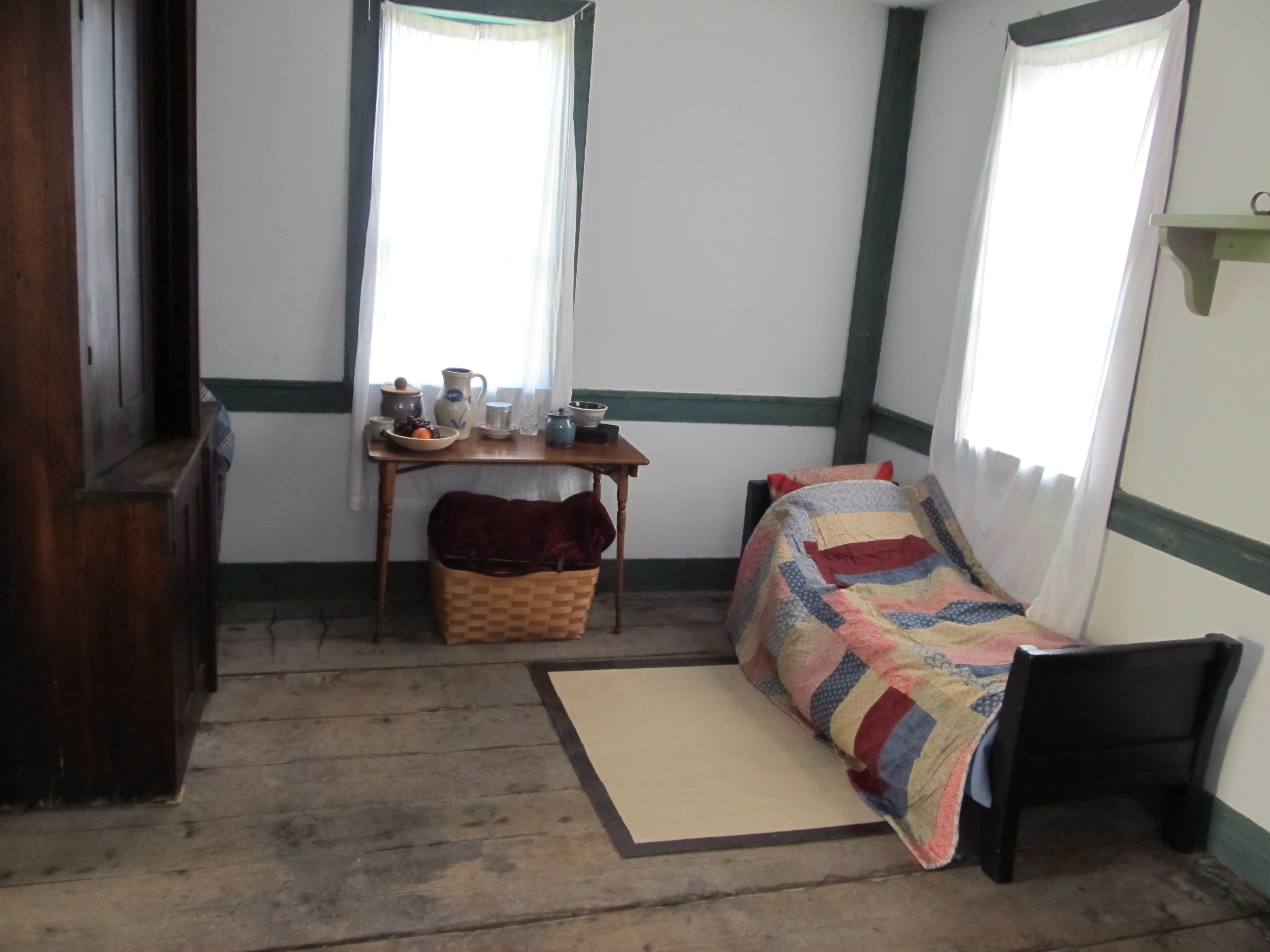
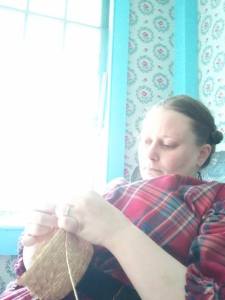
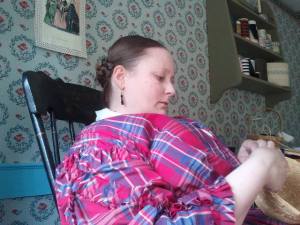
This was the “home” area for the weekend. The little day bed is napping suitable. The large cabinet is truly ideal. It reminds me a lot of the cabinet Dad had stripped for me when I was little. Those cabinets hold everything. It made storing food, supplies, etc very easy. It was okay if visitors opened the top because everything was period containers. We really didn’t need to have food out on the table at all. It did help as a reminder to actually eat though. IMG_4581I am utterly lacking in actual impression photos, worse than usual. All I have of myself are these “selfies” I played around with while it was raining in the morning. The bonnet is a coarse straw, meant to represent those made cheaply, worn by poorer women or those institutionalized. This can also be the “last remnants” straw of late war.

10489660_10153049758302846_2229377948184184845_n10540635_10153049758642846_4402057427875164636_n

A Year in Millinery Fashion – 1864

Fig. 5 is an elegant bonnet of white silk edged with blue silk, and having a curtain and strings of the same. At the top, rather towards the left side, is a cockade of blue satin, with a mother of pearl centre and a few short white feathers. Blonde cap, having at the top a few bows of blue ribbon, with a rose and some buds. (Godey’s, July, 1864)

2

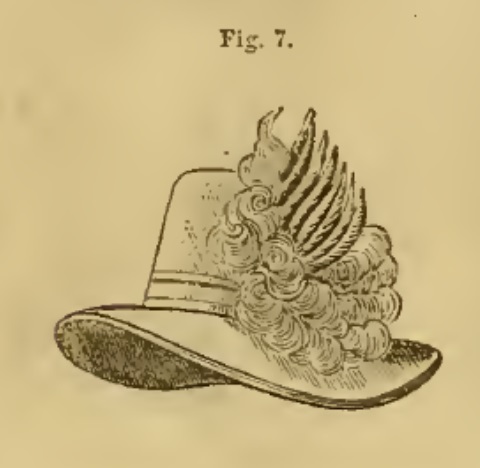
 Fig. 7 is a Mousquetaire hat drab straw, trimmed by two narrow bands of scarlet velvet, and having in front a plume of black and red feathers, and one large ostrich feather. (Godey’s, July, 1864)

1

A Year in Millinery Fashion – 1864

Buff and salmon are very much used for the trimming of both bonnets and hats. On many of the bonnets a single flower is arranged on the outside. For instance, a water-lily, the leaves glistening with dew-drops. Or the bright tinted tulip. Of the latter flower we have seen many elegant specimens. Feathery, silvery, pearl, and silk grasses enter largely into the composition of moutures for bonents and headdresses. Upon examining the elegant, wavering grasses, we found the hundreds of little spikelets to be formed of mother-of-pearl and steel; but so tiny and delicate, that the least breath would set them in motion; and the various lights thrown on them caused them to glitter almost like jewels.

Large, fancy wheat ears in salmon or buff crepe, with long silky beards, form a very stylish trimming for a black horse-hair bonnet.

Much artistic skill is displayed in the arrangement of headdresses, though there is but little change in the style; nor will there be, until there is a decided change in the arrangement of the hair.

Sprays of pink coral, scarcely to be detected from the real article, arranged with grasses and shells, form a charming coiffure. Marie Antoinette tufts of the rarest flowers, and of the most graceful coloring, are to be found at Mme. Tilman’s. Of the tufts and half wreaths of which we have spoken in a previous article, we shall shortly give illustrations. Many other beautiful fantasies we could mention; but we must also speak of children’s hats.

For information we visited Mr. Genin’s establishment, 513 Broadway, New York. Among the newest and most becoming styles, are Arion, Casquet, and Armenia. The former has the crown tapering in front, and rounding at the back. The brim is narrow in front, runs to a point behind, and the edges are curled. The Casquet resembles the Arion, only that the brim is narrower and not curled. The Armenia has a high straight crown, narrow brim, which forms a curve both front and back, the sides being perfectly straight. In some of the models, the brim at the side consists merely of a tiny of velvet.

Besides the above mentioned styles there are many others; but the three we have named seem to be the favorites, and are to be had in all sizes from ladies to infants.

Some of the dress hats have a brim entirely covered with velvet. The principal timmings for ladies and misses are feathers and velvet. All kinds of feathers are brought to requisition – peacock’s, heron, king fisher’s, cock’s, and even eagle plumes.

For children, silk flowers, shells, wheat ears, and ribbons, are the accepted trimmings. Straw ribbons and tassels arranged with high colored velvets, are very dressy.

For school hats, the different shades of gray or cuir, and the mixed straws, are the most suitable both for misses and boys. The turban and Scotch styles, though old, are very much adopted, and with the mask veil and the hair arranged en Grecque, present quite a jaunty and pretty appearance. They are suitable, however, only for misses.

Where ribbon is used, it generally terminates in long streamers at the back. Frequently, however, narrow ribbon velvet is laid in deep points round the crown fastening underneath, a tuft of feathers or flowers in front.

A drawn rosette of salmon-colored crepe lisse, with a scarf of the same, edged with a delicate straw fringe, forms a very light and pretty trimming for a hat.

For little boys, there are numerous; some have a round crown, with rolled brim. These are generally of a plain colored straw, trimmed with a band of blue or brown ribbon, fastened at the side with a pearl clasp. More fanciful shapes are trimmed with an aigrette, consisting of a small rosette of peacock’s feathers, from which spring three straight feathers or a wing. The sailor-shaped hat is also fashionable.

Infants’ hats are generally of white straw, bound with velvet, either a bright blue, lilac, or cherry. Narrow bands of the same encircle the crown, and, in front, a short white plume is caught with a bow of white ribbon. For a boy the plume passes over the crown, for a girl it falls at the side. (Godey’s, July, 1864)