This humorous article is far less about milliners or millinery than it is about the follies of the ‘reporter.’ It is such a level of ridiculousness, I do hope you enjoy it. (I also have other suspicions)
Among the Milliners.
Beau Hackett as a fashion reporter. I was fowling in the marches of Calumet when I received your note. I was preying remorselessly upon the feathered tribe generally, with a double-barreled shot gun. My ammunition was about exhausted. I had startled with a quarter bottle full of powder in my breast pocket, but tha tall was gone except a ‘snit.’ My shot pouch was almost empty, too, but I did not care for that. A man can hunt well enough without shot if only he has plenty of powder – the kind that flies to the head.
Your message arrived in good time to be heeded. I had just got a splendid duck – by falling off a log into a stream of muddy water. I felt so much elated by my success that I was ready to quit. Only a few hours previous to that I had slain a dozen of the plumpest ducks I ever saw. Before I had time to collect them together the owner appeared upon the field of carnage, and informed me that they were his ducks, and were not wild, and had never been. The owner’s name was Drake. – You can image how I felt when I learned that my ducks were all Drake’s. I gave them up, like a reasonable man, and charged him nothing for killing them. I can be generous whenever I want to.
After so many repeated successes it is not strange that I felt ready to leave the field. I read the cabalistic line of your message, ‘come up and do the openings.’ I wanted to come bad enough, but I had no idea what the missive meant. There were so many openings in the world, so many things that can be opened. There are letters, for instance; letter that belong to you and letters that don’t; and there is champagne that can be opened; and so can ink bottles, so can a bank, so can oysters (can oysters). When I arrived at oysters I stopped a while, and it occurred to me that I had caught your idea. Somebody was going to open a can of oysters (the first of the season, may be), and you wanted me to report the affair. Accordingly I came to the city in great haste, my speed being accelerated by knowledge of the fact that my powder was all gone, and there is no good powder outside of Chicago I was disappointed, not disagreeably, however, when I was informed that the grand season of opening millinery and straw goods had arrived, and that I was wanted to make a tour of Lake street and make an article on the fall fashions.
I felt complimented when I was told that I was the man for the position, because I had a more intimate acquaintance with milliners, and could get information from the fair sex better than anybody else. I am susceptible of flattery, a little, and I felt complimented, but I mistrusted my ability. I have not had much experience in reporting. I wrote local items for three days on a country newspaper six years ago, and some of them are going the rounds of the press yet. I ought to have had them copyrighted for they are never credited to me. I will give one of them – the first I ever wrote – and which is reproduced in the papers every month or two. It is pretty good, and will give you an inkling of my style:
“ACCIDENT – Yesterday a team attached to a wagon rushed madly down one of our principal streets a distance of a mile or two, and were only prevented from running away by gentleman who, at the hazard of his life, seized them by the reins and stopped them. We are fearfully and wonderfully made.”
If you hear of anybody that wants to engage a man to write that sort of items all the time, I wish you would let me know it.
I commenced at the foot of Lake street to do the fashions. I went through the great union depot from one end to the other, and up stairs and down, but I could find no millinery store there. I then struck out boldly up Lake street, and came to a large house nearly opposite a large house on the opposite side of the street. I am thus precise in giving localities that the public may know where the millinery store is to be found. A reliable gentleman, to whom truth is a greater stranger that fiction, told me that the second story of the large house on the opposite side of the street was a bonnet and straw goods establishment. That was the information I was looking for, and I bounded up stairs.
‘Like a wild gazelle,”
If I may be allowed to institute a comparison. At this time I was absorbed in deep meditation, thinking how I should begin my article, and whether I should puff anybody. I was abstracted, I think, and I sailed up the stairway with my body bent forward about nineteen degrees from the perpendicular, a pencil under my arm and a reporter’s book over my right ear. I reached the head of the stairs suddenly, inasmuch as I was going very rapidly, and as a consequence of my abstractedness, or something else, I drove my head plump into a bonnet that the proprietress was showing to a customer, and tried to stammer an apology, but it was a no go.
The proprietress looked reaping machines at me. I threw my pencil down and begged pardon for smoking in her presence, thinking it was a cigar. Told her I hoped I hadn’t smashed anything, and she smiled a little and said I hadn’t. Then I felt a little better, and told her I was a reporter. Then she looked milder than ever, and said, “Oh, indeed!” and immediately afterward she became insufferably inquisitive, asked me a volley of incomprehensible questions, and stared at me all the time as though she was counting the plaits in my shirt ruffles or the links in my watch chain, or the brilliants in my breastpin, or anything else you like.
“Are you long hand or short hand?” she asked.
“Neither,” said I, “I am a new hand, and I rather dislike the business, as far as I’ve got”
The proprietress conducted me through a long hall into a large room occupied by about twenty bonnets and sixty milliners, saleswomen, etc. I did not look at the bonnets for the first half hour, but devoted myself exclusively to taking an inventory of the young ladies.
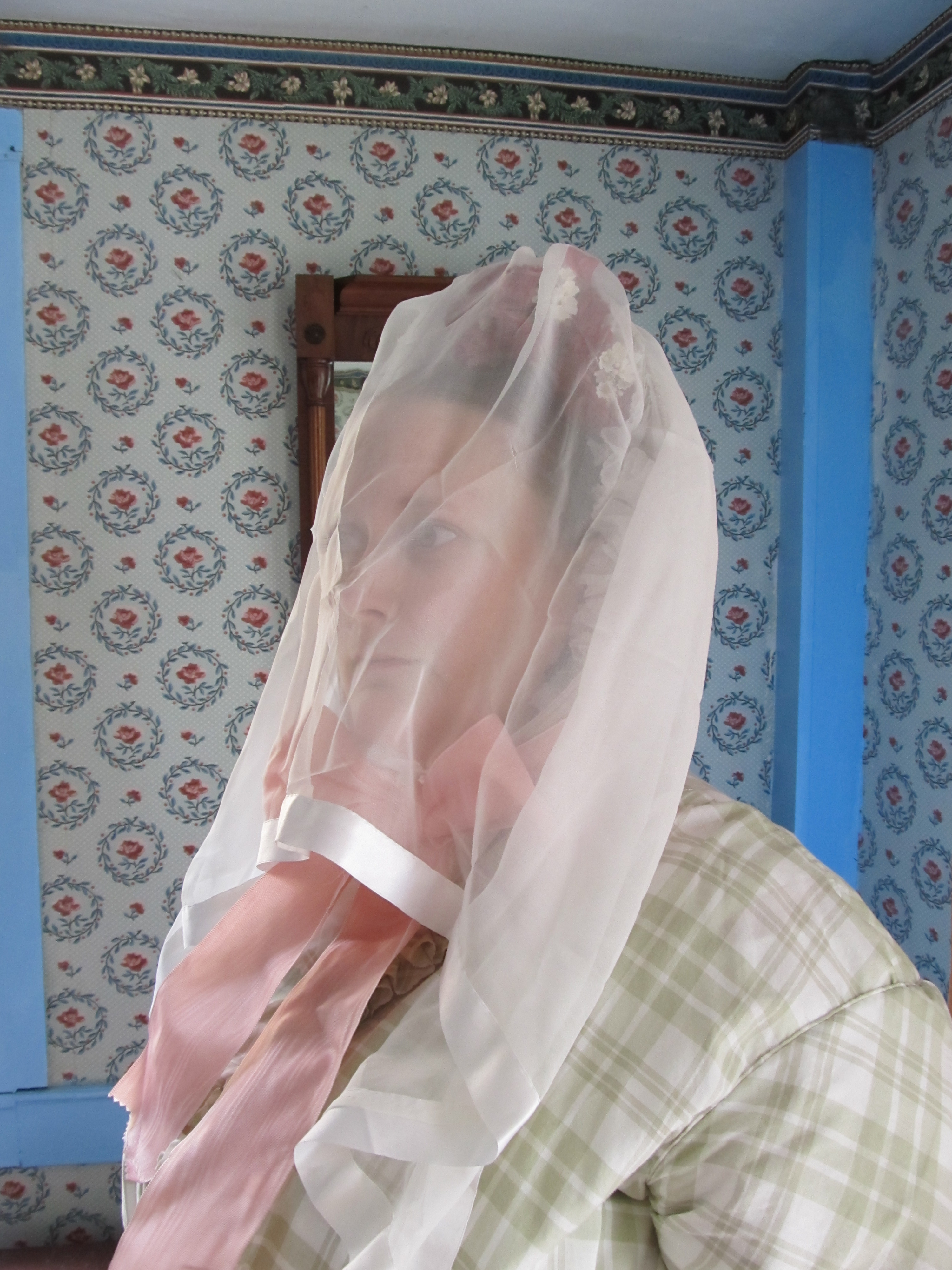
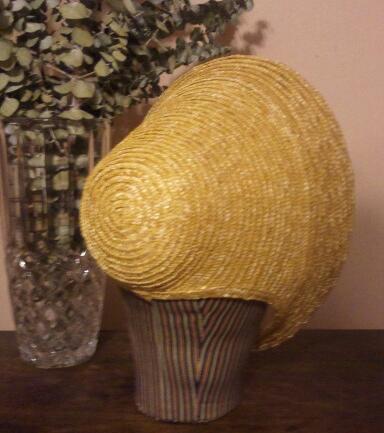
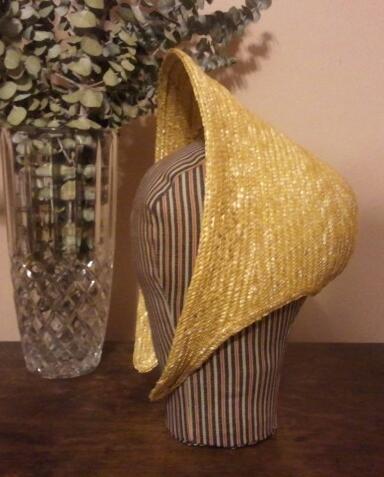
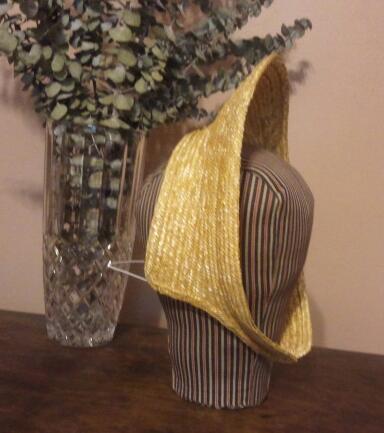
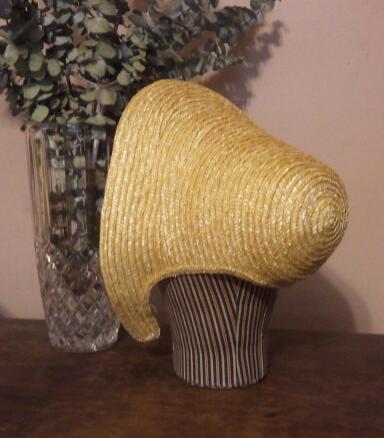
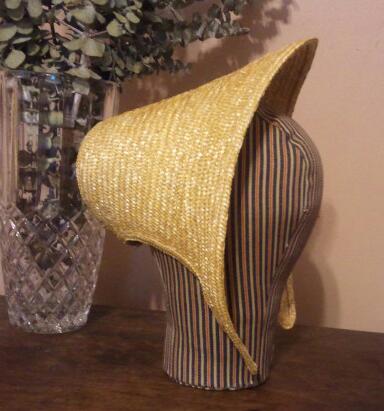
“This is a charming bonnet – golden dun – Marie Stuart front,” said the lady-in-chief.
“Yes, she is,” I replied, “but her hair is a little too red.”
I discovered my mistake when it was too late to correct it. That’s my luck.
As soon as the divine little milliners learned who I was, they gathered around me in a circle, and all were anxious to see who could say the most and best things. One was descanting upon the beauties of a chip bonnet, and another handed me a bunch of grapes to examine. I bit one of the grapes, my mouth was full of broken glass. Then I thought I would rather report a camp meeting than a millinery store; then I thought I wouldn’t, and I mustered my courage and made another note in my note-book, (grapes, not sour, but sharp.) my tongue bled fearfully, and I spoiled my best embroidered handkerchief wiping it away the blood. The circle diminished, and the crowd (perhaps I should say bevy) came closer. I began to want fresh air severely. Too many females in a close room render the atmosphere oppressive.
“This is beautiful,” said a charming creature with pearly eyes and black teeth, “this is a dear duck of a bonnet.”
“Is it a wild duck?” said I, “I’ve had enough of wild ducks, especially if they belong to a man by the name of Drake.”
“Price, seventy-five dollars,” she continued, paying about as little attention to me as a man of my qualifications could expect.
I asked her if she would sell it in small lots, and how much one of the straws would come to, but before I had finished the question she was showing me something else.
The ladies became less timid as they became more acquainted, and approached so near me when they wanted to give me a bonnet to look at, that my ruffles were in danger of being crushed. They piled bonnets upon me till I had both arms full and the tops ones began to fall off, and every time I stooped to pick up one I dropped two. It required some skillful engineering to keep from being engulphed in the ocean of crinoline that surrounded me; and in making a desperate effort to escape from one billow that came fearfully near me, I plunged both feet into a magnificent French chip bonnet (that was the name of it,) with a Marie Stuart or Louisa Jane Susan Smith front, I forget which. There was another crash of glass artificial, a bunch of wheat was crushed to flour, and a fine blush rose blushed for the last time.
The milliners all screamed – the circle was broken; some rushed one way and some another, and some rushed in an opposite direction. I rushed to a window and measured the distance to the ground with my mathematical eye. I had not made up my mind exactly when a ten-year-old whom I had not seen before (I think she was an apprentice) sung out in a shrill voice “Ma says if you don’t pay her for the last shirt she made for you she’ll prosecute you in the court-house.”
I should have been proud to know that I had an acquaintance there if I had not been in a hurry. I threw myself out upon the sidewalk without breaking a bone, and – I still live. When next I go to report a millinery affair I shall go in a full suit of armor.
I am, feelingly, Beau Hackett. (Lancaster Intelligencer. November 10, 1863. Reprinted from the Chicago Post. http://digitalnewspapers.libraries.psu.edu)



















 If I Had My Own Blue Box: