Fanciful Utility (for new followers)

I’ve had a surge of new followers in the last few weeks. First,  thank you!

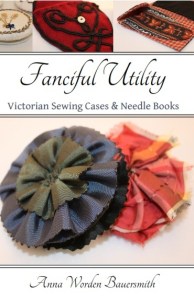
FanU-Cover-SnapSecond, a little self promotion. I want to make sure you know about

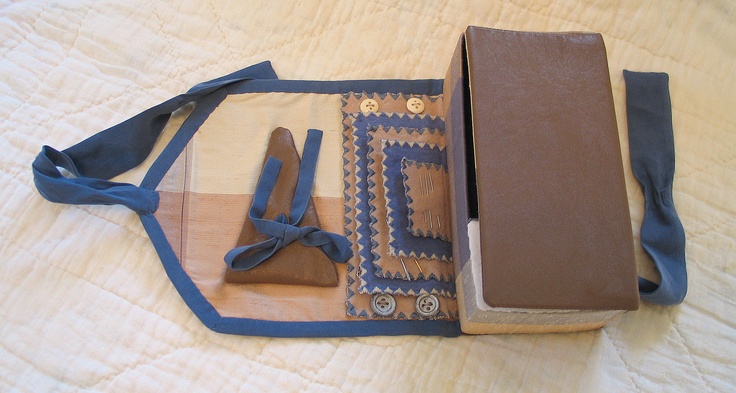
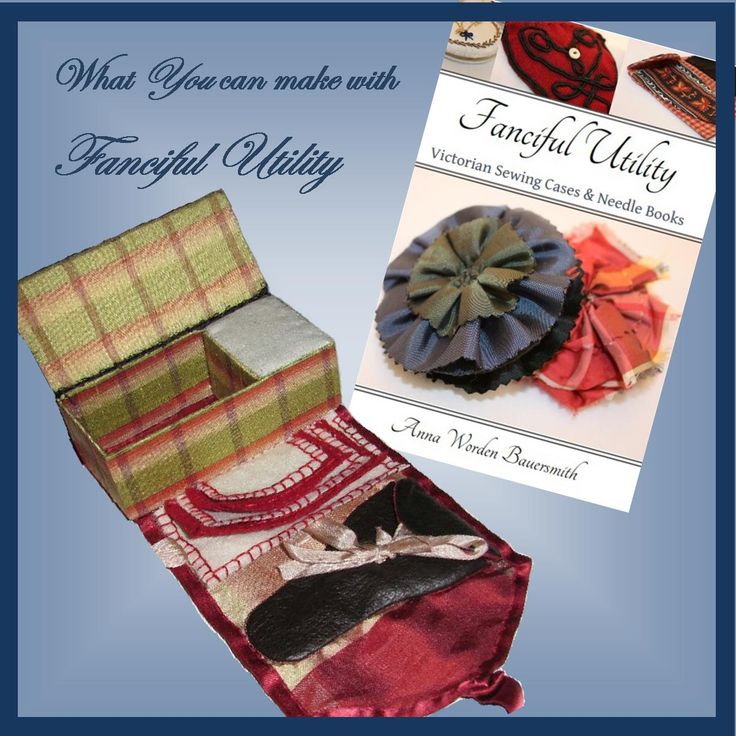
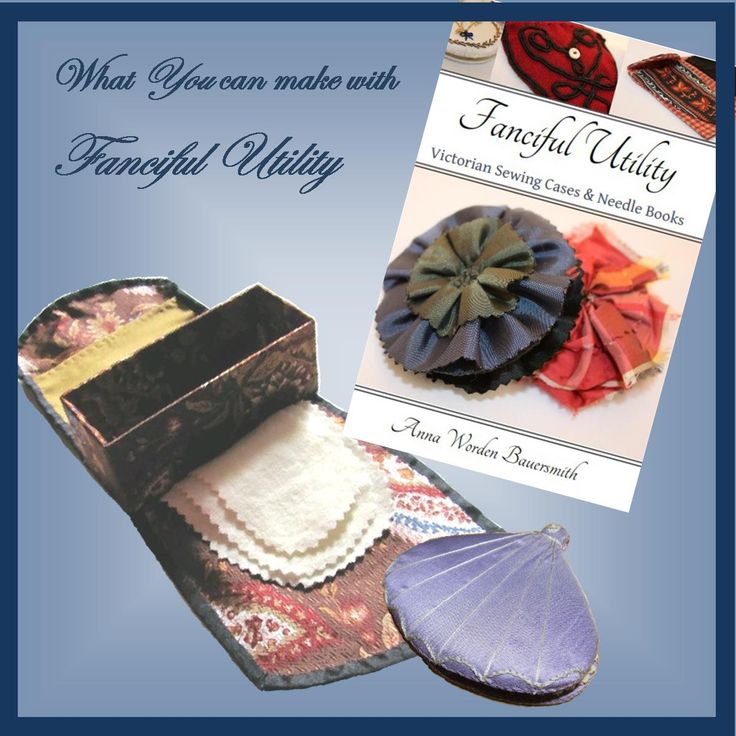
Fanciful Utility: Victorian Sewing Case and Needle-books.


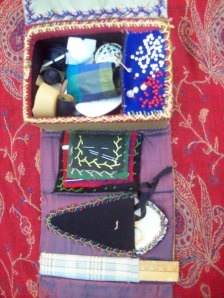
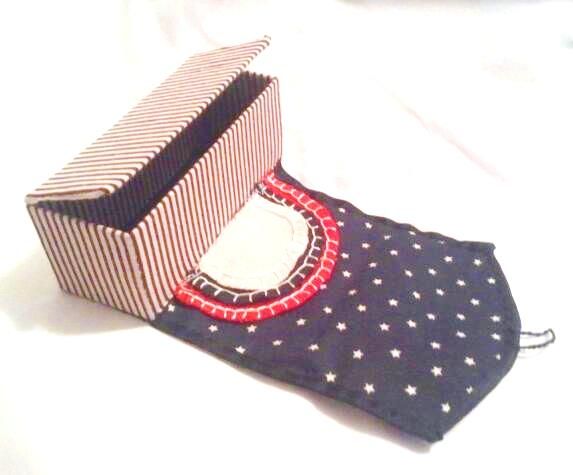
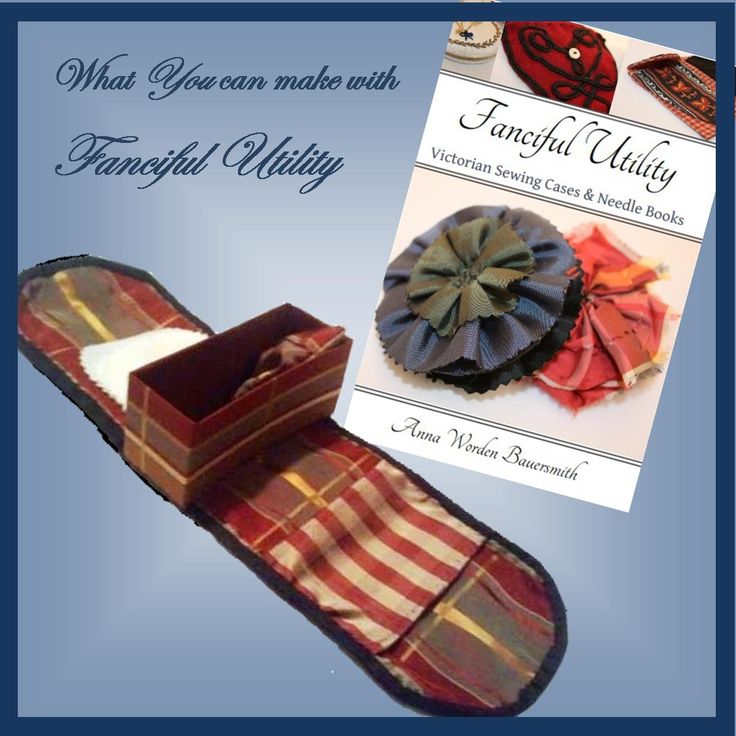
This book is packed full of directions and templates for making housewives, work pockets, rolled sewing cases, structured sewing cases and needle-books.

Fanciful Utility, or FanU as we abbreviate it in blog posts, can be ordered from ESC Publishing.


Here are just a few of the projects you can make with Fanciful Utility: Video

Maggie S

Bevin L

e

a b  c d


As added fun, I host a FanU Fabric Swaps and I periodically release special templates that go along with Fanciful Utility. These have included a boot needle-book, seashell needle-book and a balloon bag (aka button keep).


Published in: on June 12, 2014 at 4:00 pm  Leave a Comment  

A Must Read on Poison Green

I remember when I first heard of “Poison Green” dresses. I found it fascinating. This post helps clear up the realities of dangerous arsenic. I highly recommend reading it:
Drop Dead Gorgeous: A TL;DR Tale of Arsenic in Victorian Life

After you have read the article, hop over to the Fashion Victims: The Pleasures and Perils of Dress in the 19th Century  exhibit at the Bata Shoe Museum.

Published in: on June 12, 2014 at 8:52 am  Leave a Comment  

Readings for Rural Life

From Moore’s Rural New-Yorker in Rochester, NY

June 11th, 1864

The American Young Lady Talking

I said that all the young ladies can talk. A flow of sharp, shrewd, intelligent talk, is the shinning attainment of all American ladies, and from the school-girl upward. All the school-girls themselves talk with an ease and volubility that would astonish the superintendents of the ladies’ colleges at home. There is no blushing, no stammering, no twiddleing of the fingers, no plucking at boquets, or nervous unhemming of handkerchiefs. The vapid inanities that pass between partners at the English ball would be scouted. To be shy is to be unpatriotic. The American young lady goes straight to the point. How is your health? How long have you been in the country? Do you like it? Have you had a good time? What do you think of the actions in the present struggle? Are you not stuck with admiration at the deeds of valor performed by the nation’s armies? Have you read Longfellow’s Wayside Inn? When is Tennyson’s Boadicea to appear? Was not England convulsed with enthusiasm at the appearance of Rev. Ward. Beecher? Don’t you think the room wants oxygen? Are not the monitors triumphs of mechanical construction? Have you been to Niagara? These are a few of the queries she rattles out. You are the first delighted, then amazed, and at last puzzled; for the intelligent and well dressed young lady continutally addresses you as “sir,” and every now and then she asks you a question so naïve, so artlessly ignorant, that you pause to inquire of yourself whether she can be more than six years old. Salo.


Published in: on June 11, 2014 at 6:00 am  Leave a Comment  
Tags:

How They Wore Their Bonnets

A few days ago we looked at how some original women wore their bonnets perched on the backs of their heads as well as how we can also do so. If you missed it, the post was called Got Perch?

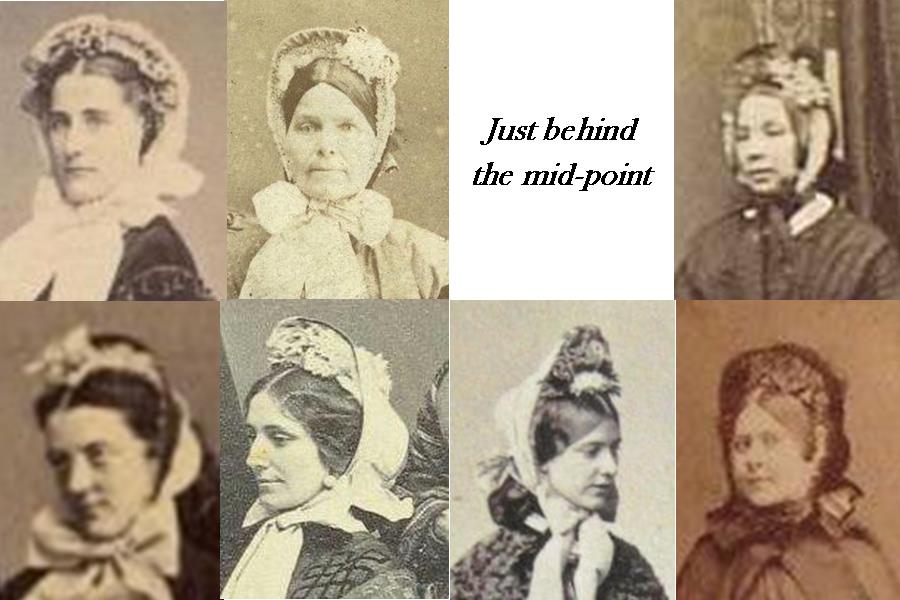
This was only one of several ways women wore their bonnets. Today, I would like to look further at how mid-century women wore their bonnets. Let us start with more examples of the bonnet being worn behind the mid-point of the head.

How did they close ups backYou will notice some variation in how far back the bonnet is worn. The two women on the lower left appear to have their bonnet furthest back among the group. These two also happen to have their bonnets angled more than the others. From the views/positions we have, the third woman from the left on the bottom row appears to have a nearly vertical position to the brim and tip. We can not say for certain with the other women; though I suspect the top left may also be nearly vertical. We can also see that most of these women have their flowers reaching further forward than the brim edge of the bonnet. The position of these flowers may help hold the bonnet in place. In the lower right, the flowers can be seen cupping the top of her head. Take a particularly close look at the woman on the lower left. There is a piece photographing white sitting below the flowers/decoration. This may or may not be a stay.

This next group of women are wearing their bonnets at or just forward of their mid-point.

How did they close ups mid forward 2

We see greater variety in the angle of which these bonnets are worn, seeing them worn nearly vertical, angled slightly forward and angled slightly backward. The bottom right and bottom left images show the further forward reach of the spoon bonnet while displaying noticeable difference in the depth, angle and shaping of the crown and tip. In the top left and top right images, we can see how the frill aids in holding the bonnet on.  Again, the flowers are aiding in securing the bonnet to the head. In the bottom row, third from the left, you can see the woman’s flowers reaching down over the hair line. (The lower right image could be considered as wearing her bonnet quite forward.)

In this next group, we see the bonnet worn quite forward of the mid-point.

How did they close ups full forward

Many will notice these women each look more mature. I do not know if this is a coincidence or if there is truly a connection between age and mode yet. I will look further into this. While these bonnets are worn further forward and a couple are rounder, the fashionable spoon shape is present. The bonnet with the daisies, second on the bottom row, demonstrates well how the flowers can hug the top of the head. In several cases, the flowers sit forward enough to reach to or even beyond the hair line. If there is a connection between age and this mode of wearing, there could be further speculation that this positioning of flowers could conceal a thinning part.

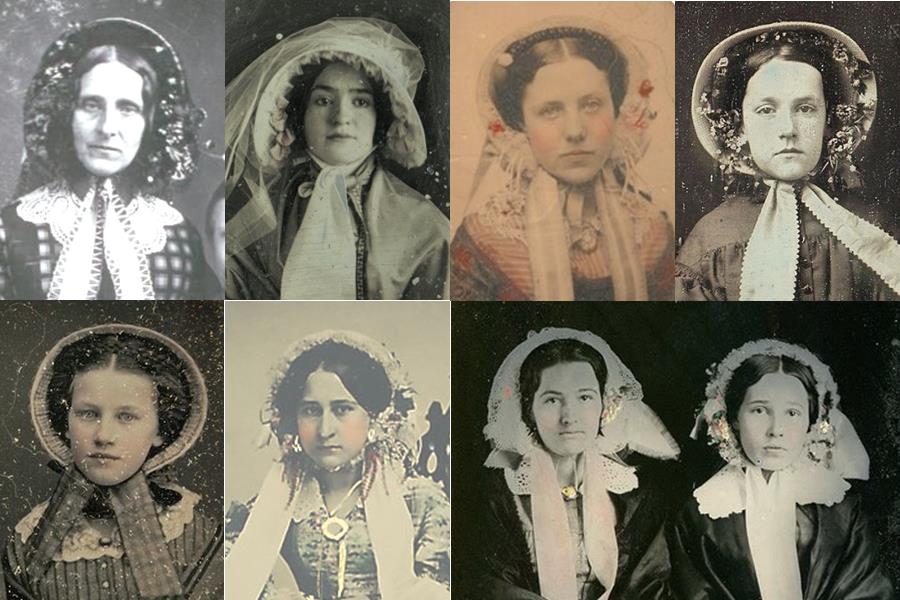
The following group was collected as I was looking at untied or partially tied bonnets. These are late 1840s through early 1850s examples. Each either has the ribbons simply looped over each other without a bow or completely untied. Many, if not most, of the women above would have worn their bonnets in this style ten to twenty years previous.

How did they close ups 40 50 not tied

Published in: on June 11, 2014 at 6:00 am  Comments (4)  

A Year in Millinery Fashion – 1864

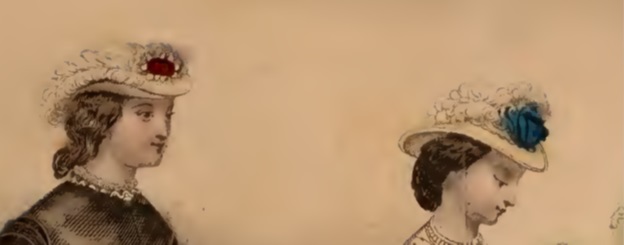
Straw hat, with a brim lined and turned up with mauve velvet. The trimming consists of a long white plume, scarlet flowers and a short mauve plume. (Godey’s, June 1864)

1

Got Perch?

Okay, cheesey title. I claim multi-day migraine defense.
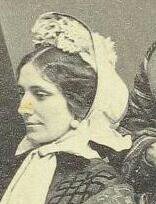
A CDV recently appeared that brought up how women wore their bonnets perched on the backs of their heads from 58ish to 63/4ish. (I want said cdv & will be bidding. Fingers crossed.) Here is a close-up:
image

See how the bonnet sit further back on her head? Her interior flowers land almost at her mid-line.
The question I am hearing is “how did they do that?’
There as a few aspects that help:
– A bonnet stay. This is a ribbon, strip or even wire inside the bonnet, positioned to act like a headband holding the bonnet in place. (These need to be fitted to the wearer.)
– The frill and interior decoration. The placement and fullness of these act like a catch or a band to help hold the bonnet.
– Balance. The front to back balance of the bonnet needs to put more weight in the brim and forward crown area of the bonnet rather than the back.
The placement of the hair can also be a contributing factor.

This is my first straw bonnet, years & years ago. While it has some early issues, it shows what a stay can do. These photos were taken after a parade marching into 40 mph winds that ended in a hail storm. During this walk, the force of the winds actually snapped a bone in my cage. But, the bonnet stayed put.
image

image

Here is Lily in the same bonnet. It sits further back on her. But, stays pretty well. (It finally got to retire after this.)
image

This next bonnet is a different shape, drawn. Instead of a stay, it holds put thanks to the frill and flowers. The frill is gathered like ruching in this one. The back edge sorta stands fluffed, holding against my hair.
image

image

This is my bonnet from last year. (How awful is my facial expression?) I think you can see the position of this one. This stays with the work of the frill and my hair.
image
image
Here is how I often wear my hair:
image
Now, Lily’s bonnet from last year does need a stay as she does have some issue with I staying put. Granted, se is also showing kids how o play with games including stilts much of the time. She also has far better posture than I do. Now that I think about it more, she has less hair in the back too.
image

Here is a photo of both of us from last month with the same two bonnets. (different ribbon on mine) This shows the fullness of the frill pretty well.
image

Tomorrow, I’ll be wearing my new soft crown. It has the ruched frill but no stay. Of course, the weight will be at the top. I will likely be wearing my veil turned back over the bonnet most of the day. I will report back on how well it stays.

Betsy Connolly sent me some beautiful photos showing excellent perch. (The photos are so pretty, I’m not going to crop them.) She says some have stays, some do not. She agrees that staying put is about balance.
image
image
image

Here is Lisa Springstube Lindsey in a mourning bonnet with the full frill helping hold it and a Marie Stuart:
image
image

Here is Beth Chamberlain with two good examples:
image
image

If you have a good ‘perch’ photo & would like to share it, please let me know (I think if you link it in the comments, I can grab it. Otherwise, email or message me.)

Published in: on June 6, 2014 at 10:25 pm  Leave a Comment  

Post-War Transitional in White

I’ve been having so much fun sharing the millinery pieces from this spring with you, I decided to share this little bonnet. This really has been a forgotten about bonnet. It made it as far as some so-so photos for Etsy, then got tucked away to the back of the display table.

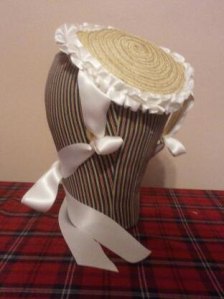
white 2In the middle of the 1860s we see a transition from the fashionable spoon and cottage bonnet shapes to the hat and smaller bonnet shapes. There were a speckling of styles that show the transition from one millinery era to the next. My bonnet pulls mostly from this first example. The crown drastically shrinks, flattening out, while the cheektabs try various positions framing the sides of the face rather than coming down to the jaw line.

From the National Trust Collection

From Augusta Auctions

Still tracking down the originAs you can see, the decorations and ribbon tend to encircle the crown and fall down along the remains of the cheektab.

white 3white 1I used the last of my hemp plait for this bonnet over the winter. The box pleating encircling the crown is a silk ribbon slightly narrower than the silk ribbon used for the ties. Just under the brim is a frill of fine net.

white 4

Readings for Rural Life

From Moore’s Rural New-Yorker in Rochester, NY

June 4th, 1864

Woolen Under Clothing Best for our Variable Climate.

I was much pleased to see those articles in the Rural on wearing woolen under clothes, copied form Dr. Ball’s excellent periodical, the Journal of Health. Cotton goods had been so cheap among us for many years previous to the two last, that they had gradually displaced much woolen.

If the latter were more universally adopted by both sexes, colds, fevers, rheumatism and consumption, and all diseases superinduced by them, would be greatly lessened throughout our country. I have not a doubt that the average of life thereby would be extended fully five years, and the average of deathe lessened in early life at least one-fifth.

Our climate is an extreamly variable one, and requires to be closely watched and guarded against, a particularly by females and children. Nothing will do this more effectually than wearing woolen under clothers summer as well as winter. Moreover, by so doing, we greatly benefit our flock masters and manufacturers, and adopt a truly patriotic course.

If Cottton be King, let Wool be President. The latter si the more appropriate style of ruler for our Republican Government and variable climate. A.B. Allen. New York, May, 1864


Woman’s Wages

Why is it that women are so poorly recommended for their labor? If a man hires for a week with a farmer, at the very lowest rates, he will receive six dollars and board for that length of time. But if a frial woman hirse to work in his kitchen, she must be content with one dollar or consider herself well paid if she receives one dollar and a quarter! She is not expected to complain if the fatigueing task of milking, churning, baking, washing, ironing, scrubbig, and “cooking for hands” is almost too much for her strength less than the man? Or, has she a greater amount of strength than he, so that less effort is necessary on her part? If not, why this difference? Why is it that she must rise earlier, and work later, than he? As a general thing the man is not required to be at work before six o’clock in the morngin and is allowed to quit at six in the evening, with an interval of an hour for dinner.

Now we repeat, why is this? You may say “she does not do as hard work as a man.” It is just as hard for her. The man does not work as long as she does; he has the hours from six in the evening, ‘till time for him to retire to rest; also a time for repose in the mornign, which she is denied. Her work begins with the day, and lasts until it is high time she should be resting her tired limbs on a comfortable bed.

If the man is so minded, he can spend these hours in mental improvement, with a view to bettering his condition in life; or, he may spend them with aged and infirm parents, comforting them with his presence; and, they in turn encouraging him with kind words of hope-cheer; or, if he has a family he can spend them with it. He can be free from other people’s work, long enough for his mind and body, both, to rest; she is expected to take the care as well as the labor. He can support a parent, a delicat sister, or both if required, and still have enough to supply her with nexassary clothing. “Hardly,” did we say? it is positively not enough; besides, if she is taken sick, what is to become of her? Few, if any, of her employers would nurse her and pay a doctor’s bill for her; but, as is too ofthen the case, she might find a home among some poor, but kind friends; and when health returned she might deny herself some necessary articls of clothing, in order to pay her doctor’s bill. And thus she must toil week after week, with no hope of ever bettering her condition by her own exertions!

How often, too, does she support a feeble parent, brother, or sister, by her labor and kind self-denial, and toil on ‘till the end of the week, hoping to go to them and spend the Sabbath – the poor man’s gift from God – with them; but in this too she is too often disappointed; for, “she can’t be spared – going to have company home from church and go right into work.” And thus the poor girl is cheated our of what God has given to every one alike; for does he not say, “Thou, nor thy man servant, nor thy maid servant,” &c? Who ever heard of a white man having to work on a Sabbath as hard, and sometimes harder, than any other day? and yet white girls do it, often, very often. You may talk of slavery, but what is this? May Godd speed the day when woman shall be rewarded as she deserves for her labor, and no one dare to point thr finger of scorn at her because she dares to work for her living, and to “earn her bread by the sweat of her brow.” May the ablest pens of our land agitate this subject and show forth the world the wrong that is perpetuated on woman. Libbie Linwood. Cadiz Branch, 1864.
 

Published in: on June 4, 2014 at 5:59 am  Leave a Comment  
Tags:

My Blue Scallops

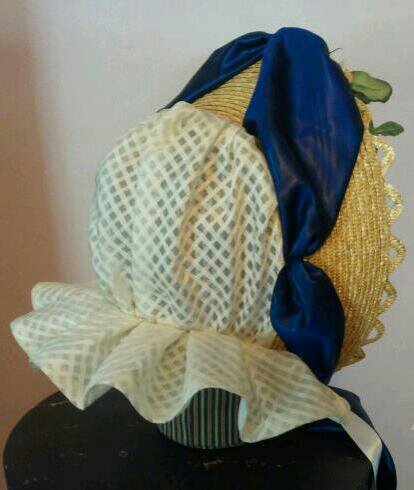
I finally finished my scallop brim straw bonnet. I’m rather pleased with how it came out.

image

The straw is the French straw plait with that beautiful golden straw. This is the first scallop edge I did. There have been several since then with a more refined, smooth connection. The shaped and scalloped straw edges from the 1850s and 60s are quite decorative, often with very fine straw. This is the simplest of scallop. I look forward to creating more.

image

The soft crown is a white and ivory windowpane check silk organza (This is the left overs from the drawn organza I share a week ago. This gives you an idea of how long I was working on each of these.) The bavolet is lined with cotton English net.

image

The ribbon is a dark blue German moire.

image

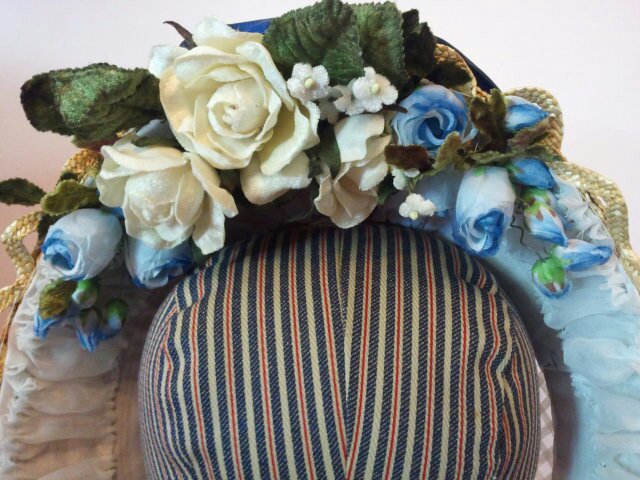
The flowers are ivory velvet roses and smaller, light blue fabric roses. I rather like the little rosebuds because they dangle nicely.

image

image

Published in: on June 3, 2014 at 6:00 am  Leave a Comment  
Tags:

A Year in Millinery Fashion – 1864

(Wedding reception attire)
Bonnet of white crepe, trimmed with very light feathers and point lace. A fall
of the latter drops over the brim in the Marie Stuart style. The inside
trimming is of tulle and cerise flowers.

1