The kid in me, who watched the original Little House on the Prairie on the days I was home sick from school, wants to call her “Ma.” Grown me, who sees the sweet, romantic scenes in promotional images and video, knows she is Caroline, more that just “Ma.” So, I will be calling this hat “Caroline’s Hat.”
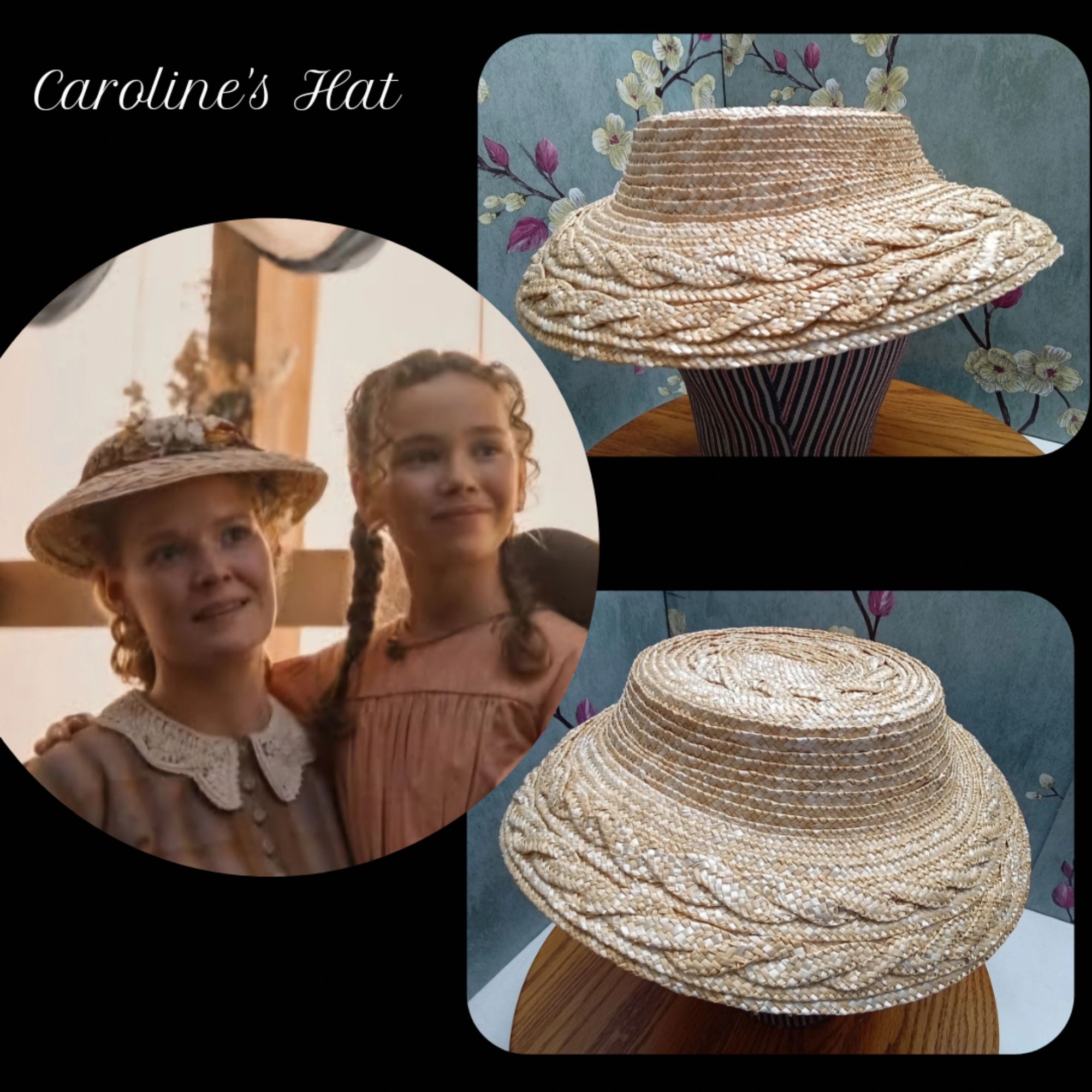
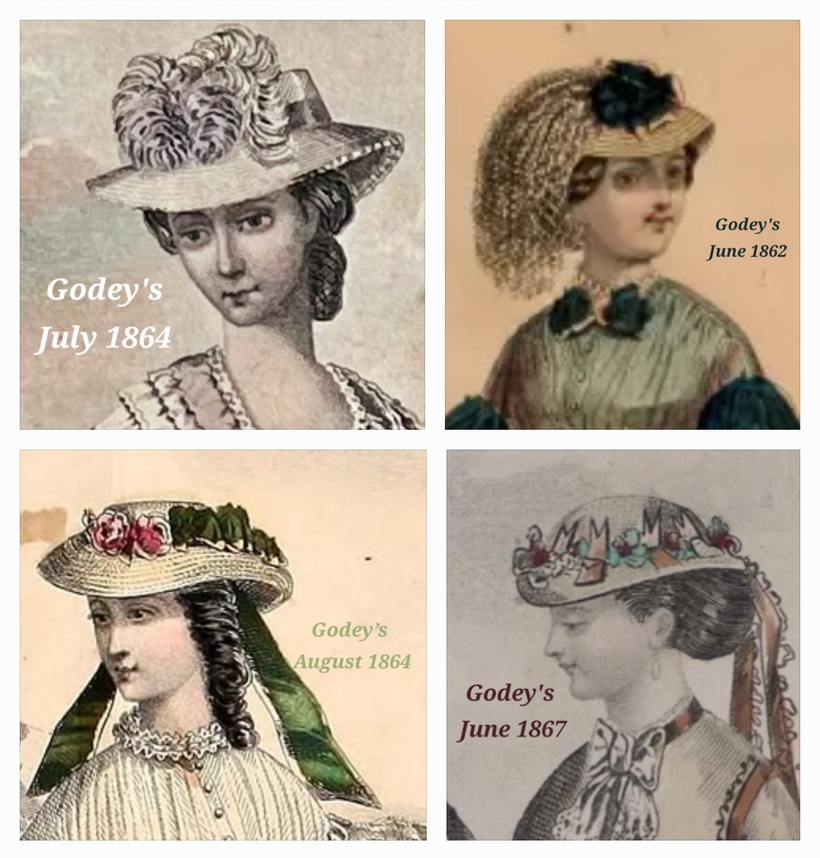
Caroline ’s hat is an 1860’s fashionable hat with a shallow, tapered crown and shaped brim curving down all around while dipping in the front and back. This style hat is seen in fashion illustrations of the 1860s and in carte de vistas of the era.
Caroline’s hat is made special with bands of vining straw wrapping around the crown top and brim. This vining straw is hand shaped by curving two lengths of plait as it is sewn in place while building the crown and brim. This vining moves the eye around her hat while adding texture for the camera to capture.
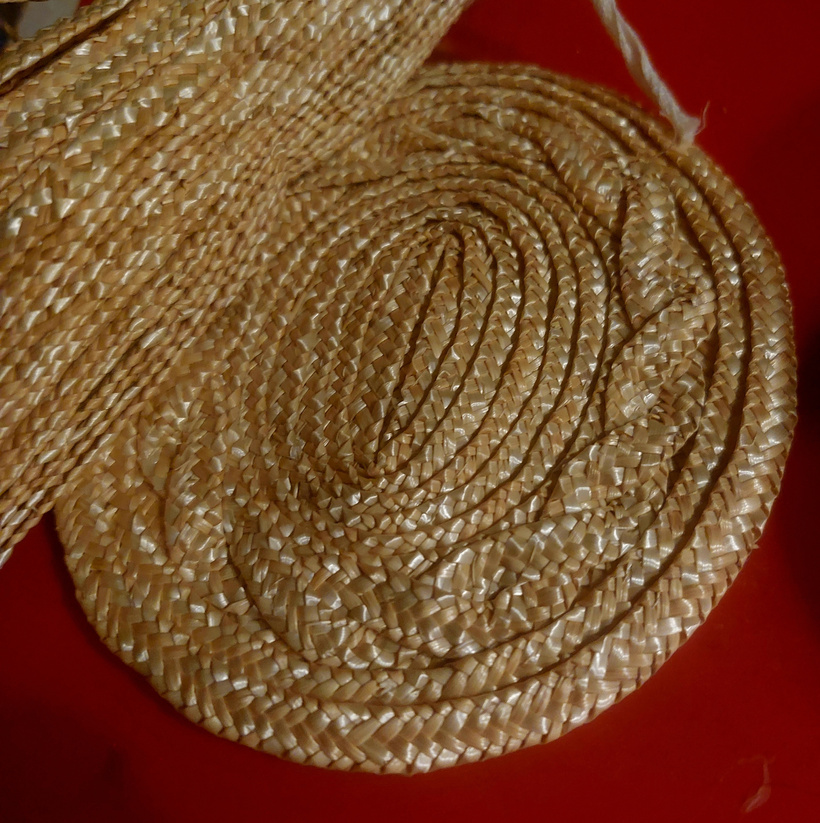
Her hat was created in much the same way as I create any 1860s straw hat. I soften the straw plait with warm water until the straw is supple and able to bend without breaking. A short straight of straw becomes the center of the crown tip/top. I coax the straw plait into curves, sewing as I go, creating an oval. Short stitches on the outside. Long stitches on the inside. For the vining, I add a second soft length of plait and curve both plaits back and forth against each other. As I work, I check the size against an antique millinery block. When the oval is the correct size, I manipulate the plait to curve against the turn of the crown, following the shape of the block. I continue to sew rows around the crown, checking it against the block, until it is the right depth. I generally let the straw of the crown dry overnight on the block so the shape can set it. This gives a firmer foundation for building the brim the next day.
The next day, I turn the straw from the crown to the brim. I work from the center out again, hand sewing. The whole length of the brim needs to have the straw plait coaxed into the right curve. A flatter brim needs a tighter curve. A soft domed brim like Caroline’s needs a gentler curve. As with the crown, the vining is created by adding a second length of plait. This time the vining needs to be created while maintaining the curved shaping of the brim. It can be a challenge to get the brim to the right curve as some straw has a distinct mind of its own. When the entire brim is sewn, some brims are shaped or blocked on a brim block. Caroline’s hat is shaped by hand while the whole hat is coated in a layer of sizing that makes the hat stiffer and helps hold the shape in place.
After the hat has dried, I hand sew a millinery wire to the undecided of the brim. Many to most original bonnets and hats leave the wire visible. I cover the wire with a row of plait for both aesthetic and safety reasons. I don’t want the wire to distract from the overall look of the hat or to come loose is snagged on something.
To me, it is important that a hat brings out the best in the person wearing it. A hat shouldn’t fight the wearer for attention or overshadow the wearer. I think this was well achieved by the Little House on the Prairie costuming department as they decorated Caroline’s hat. I am very pleased with the finishing they chose. The simple ribbon band around the crown appears to have a lighter wavy stripe that picks up the vining bands in the hat. A simple arrangement of white and green flowers adorn the front. This balances Caroline well without overwhelming her, allowing her to be seen before the hat.