It isn’t very often I have three different examples of something from the same fabric at the same time.

It isn’t very often I have three different examples of something from the same fabric at the same time.
This week is a casual Hat Q&A talking about the questions I am asked most often. The focus is on American Civil War hats. I will talk about bonnets in a future video.
How do I wear my hat?
Which is the front?
How do I measure my head?
Where do I put the flowers and ribbon?
How do I keep my hat on my head?
If you have more questions about straw hats or bonnets in the nineteenth century, put them in the comments below. I will do more millinery Q&As in the future.
More details on measuring and fit.
This is where to find me:
Consider Patreon for special content: http://www.patreon.com/AMillinersWhimsy
A Milliner’s Whimsy – If I Had My Own Blue Box (History Blog):www.amillinerswhimsy.com
Don’t Paint the Cat (Crafty Blog): https://dontpaintthecat.wordpress.com
Instagram for If I Had My Own Blue Box: http://www.instagram.com/if.i.had.my.own.blue.box
Instagram for Don’t Paint the Cat: http://www.instagram.com/dont.paint.the.cat
It has been a busy morning. Well, I guess it isn’t morning any longer. I have an unboxing video for you…. and a new workbags!

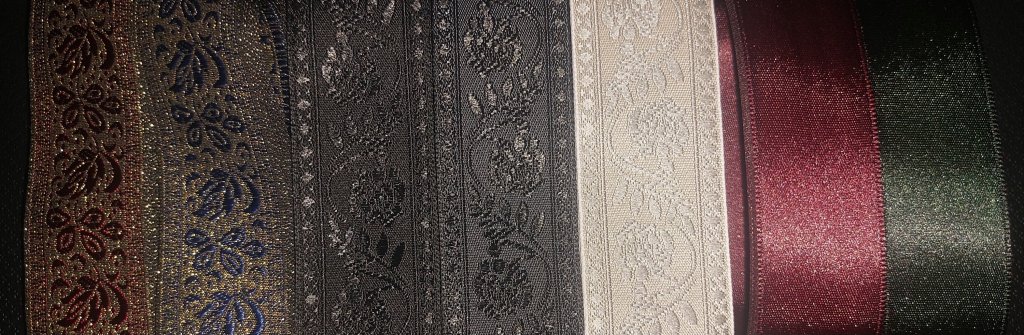
I am very pleased with the ribbons from Bias Bespoke. I am glad I decided to order a sampling of some. Note: I am using the word sampling to mean I ordered a short length of several styles. They do not have “sample” listings. I already have a new wish list of their ribbons.
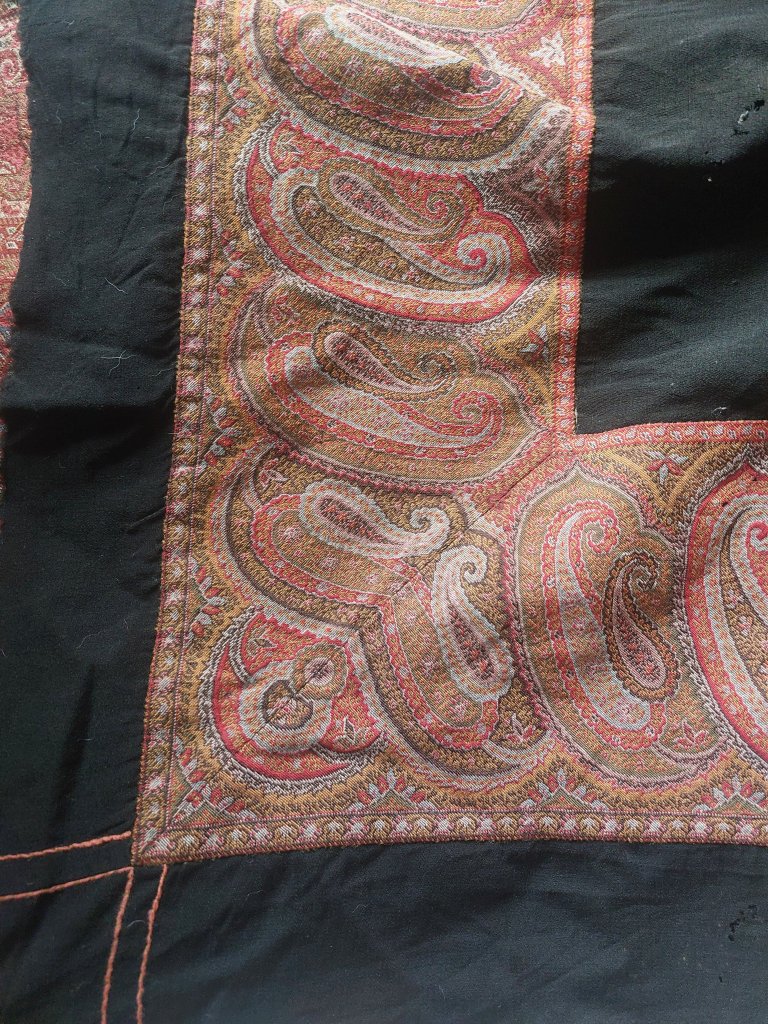
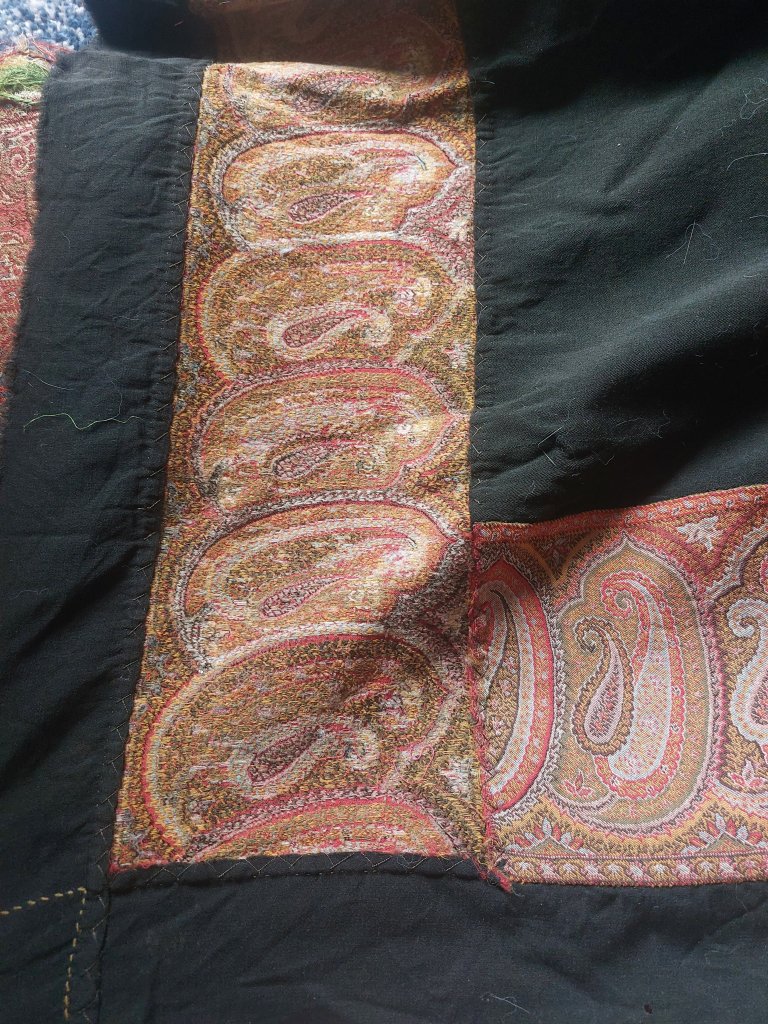
The shawls…. You likely noticed I was talking in circles in the video. This is because I was so surprised by what I opened and had to mentally derail to find a new course. As I said in the video, I just can’t see turning these into pendants.
The shawl with the borders will join my collection. It is an example of borders being used and a turn-over shawl with the opposite corners. It definitely has a lot of damage. But, as an example of borders being used and this technique, I feel I need to keep it.


The two cut pieces need further thought.

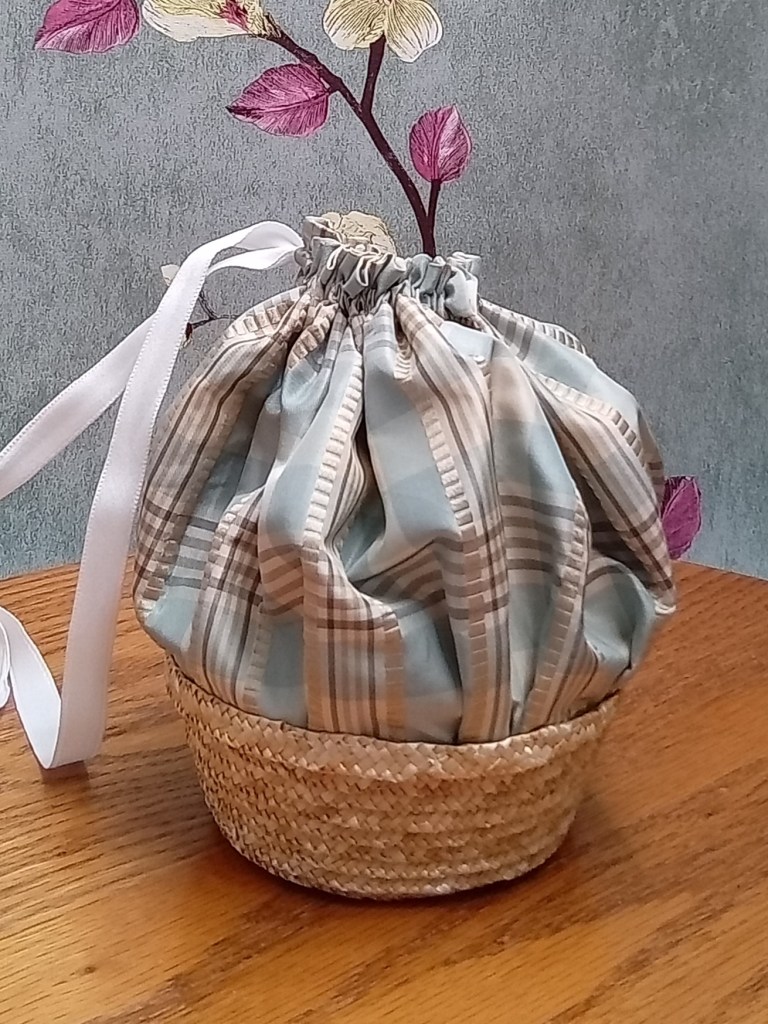
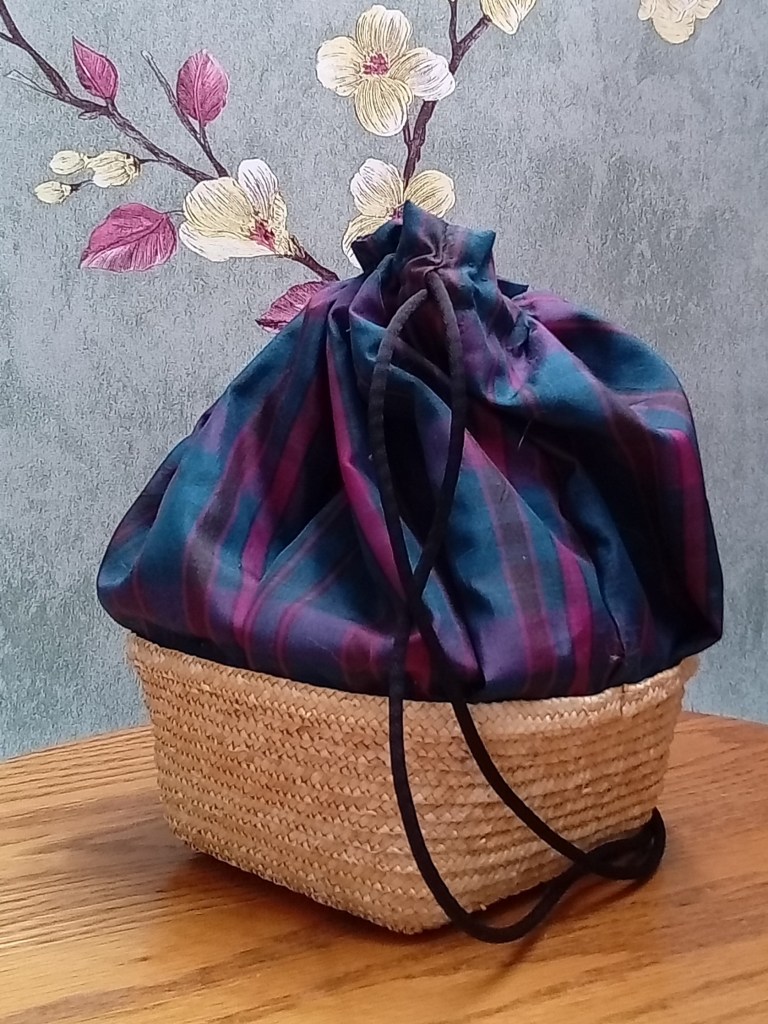
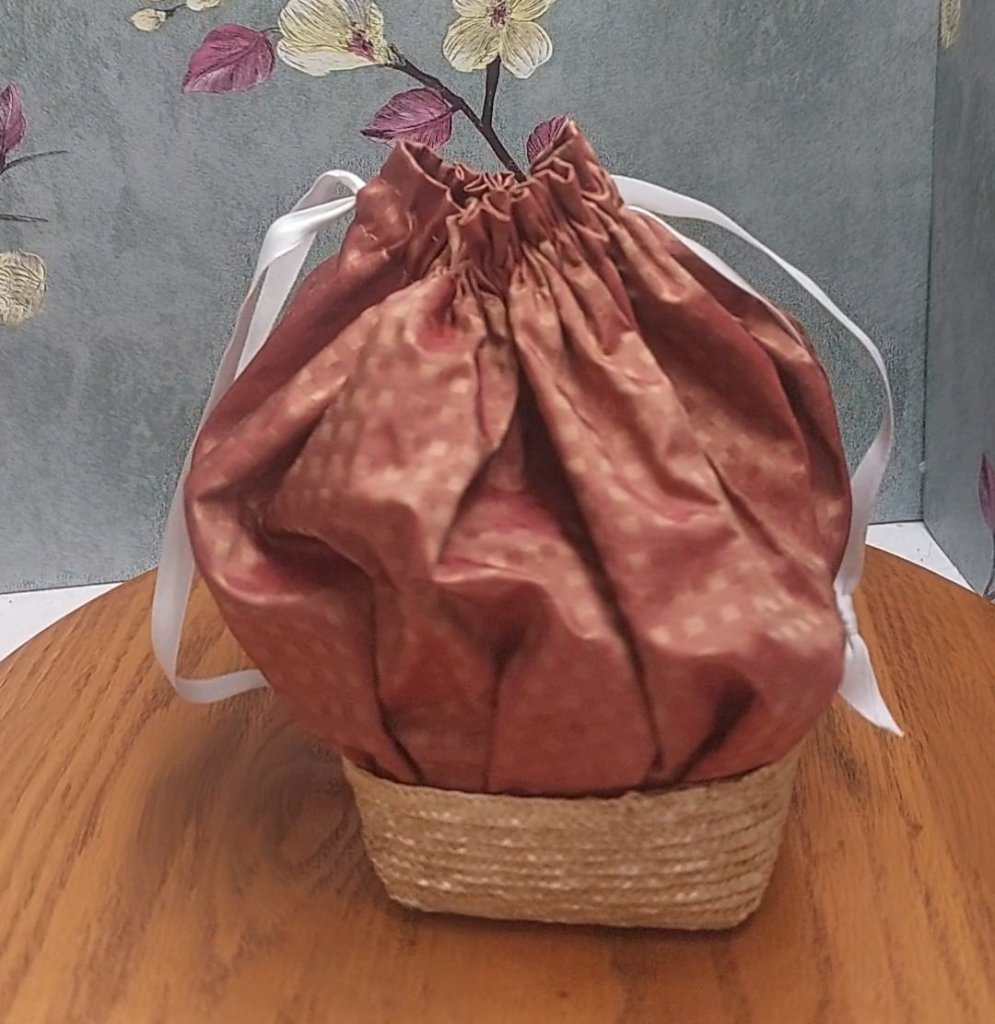
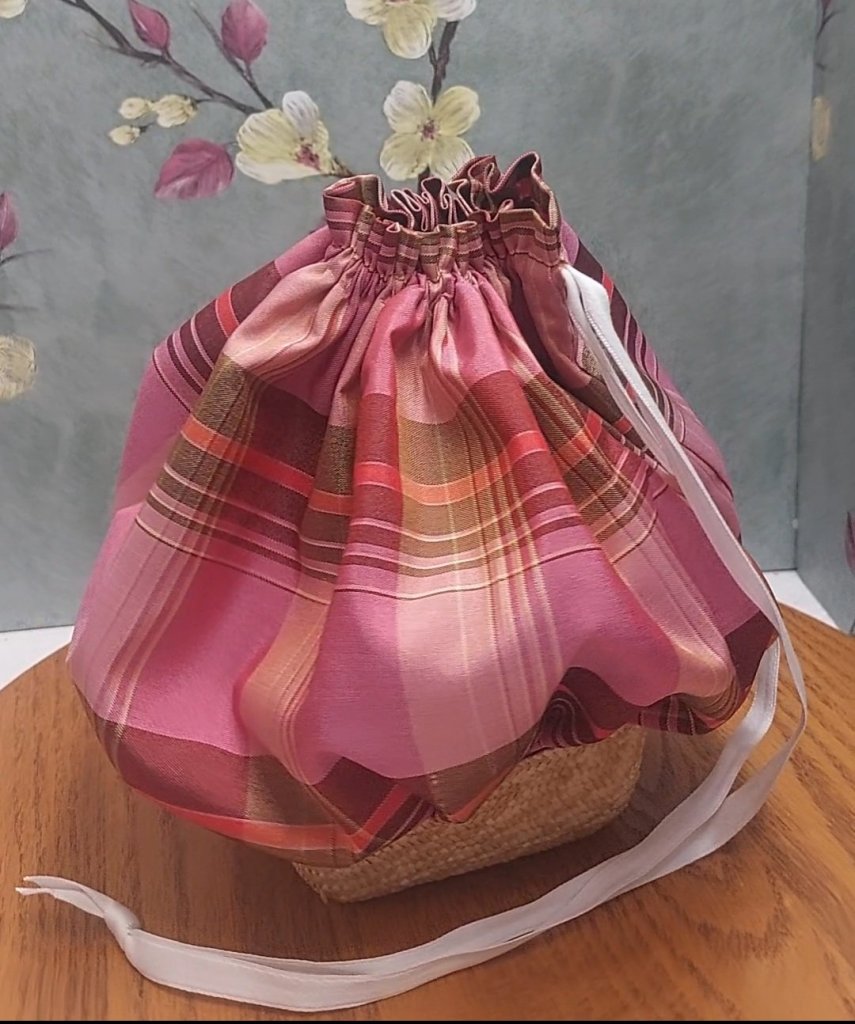
I have several workbags now available in my shop. I had a row of them waiting for drawstrings after I ran out of my preferred cotton sateen. I was being picky looking for the just-right option. What I really envisioned was a silk and cotton blend heavier ribbon that would glide smoothly. I finally settled on a utilitarian cord that came in the first package from the video.
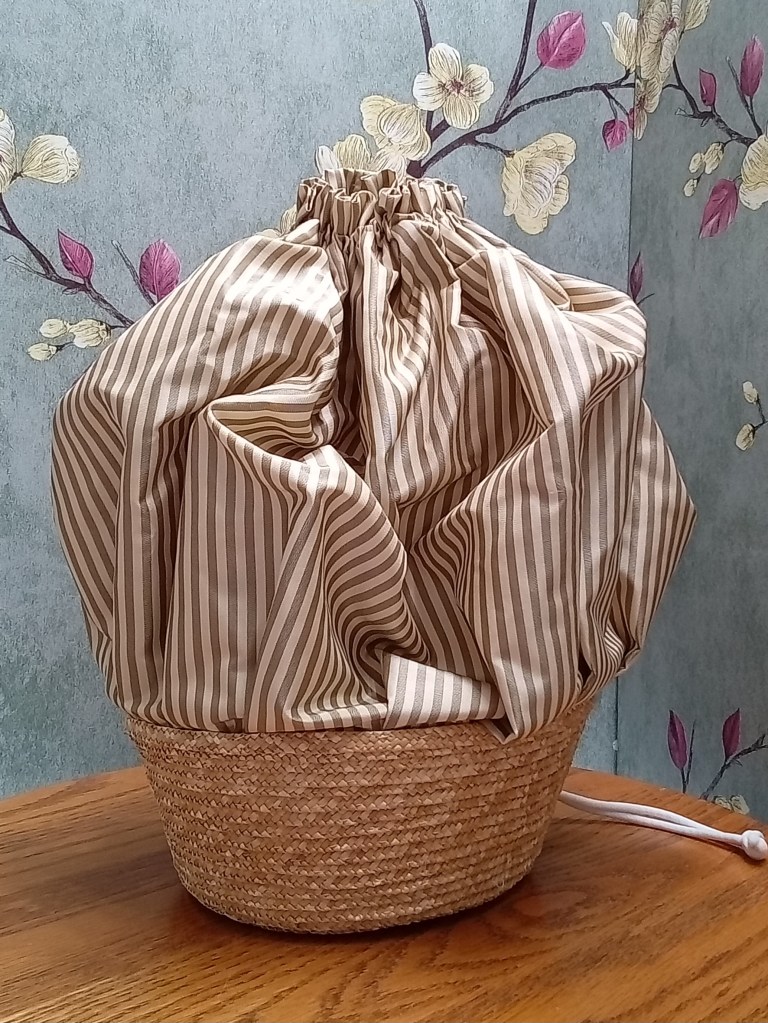
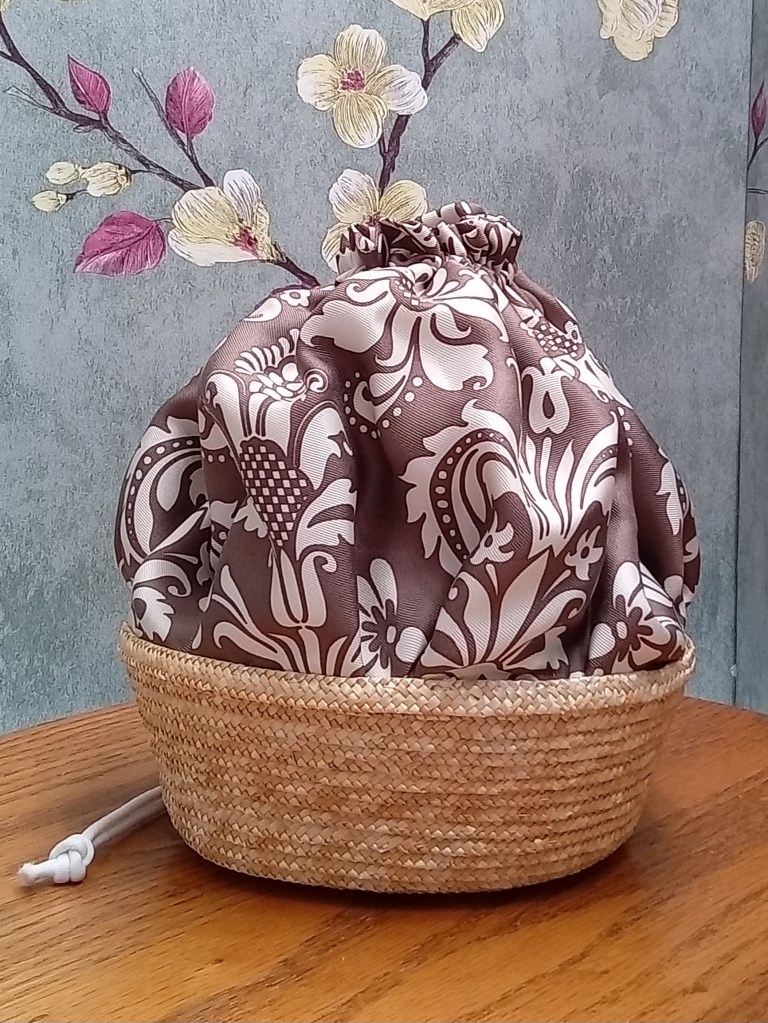
In the batch is a smaller size in a very pretty blue. This one will make a nice reticle to carry for Regency impressions. There is a stripe silk that is larger in that the silk portion is taller and fuller. There is a softer twill with a brown jacquard design.


Clara is now demanding my attention…..
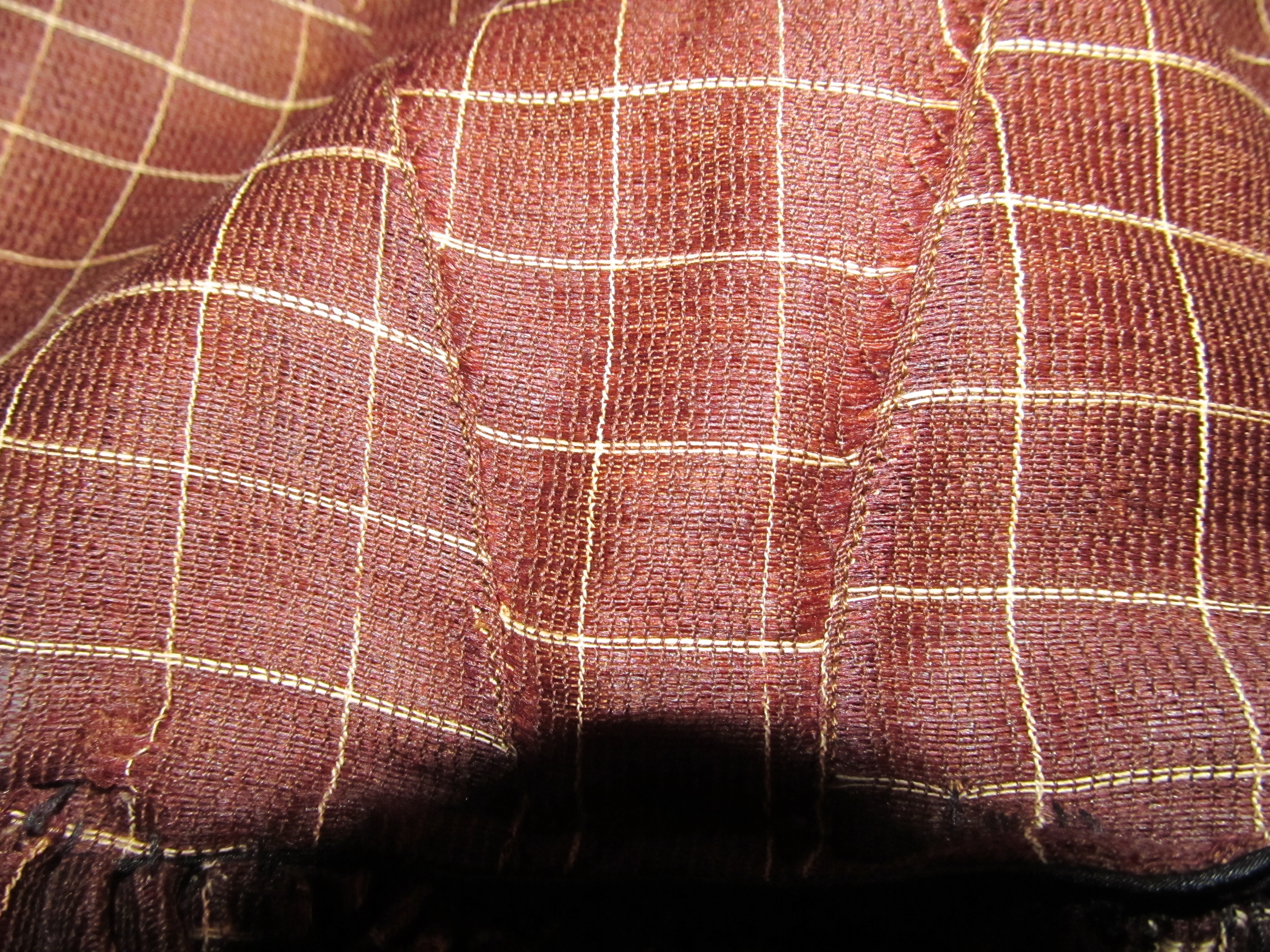
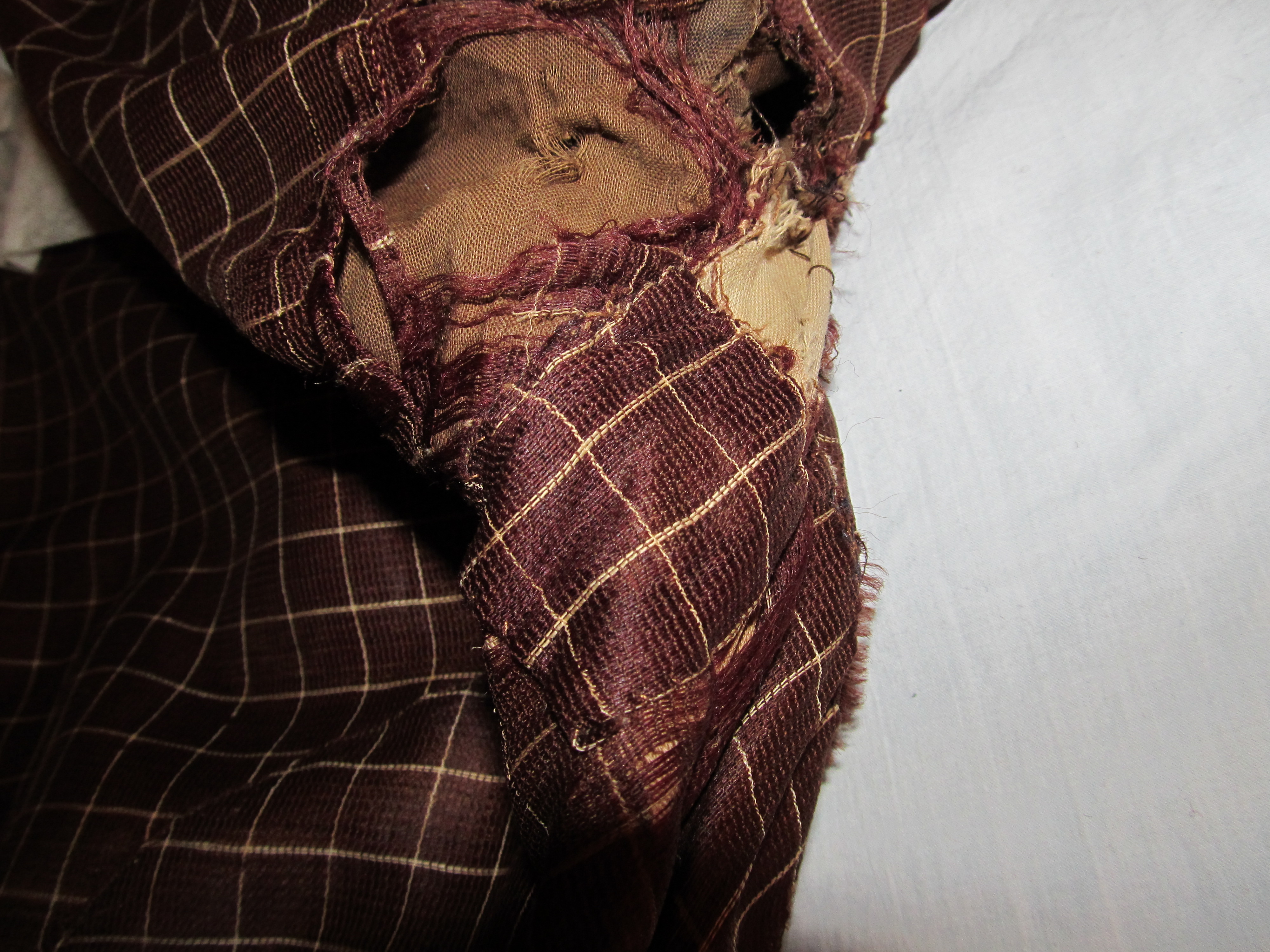
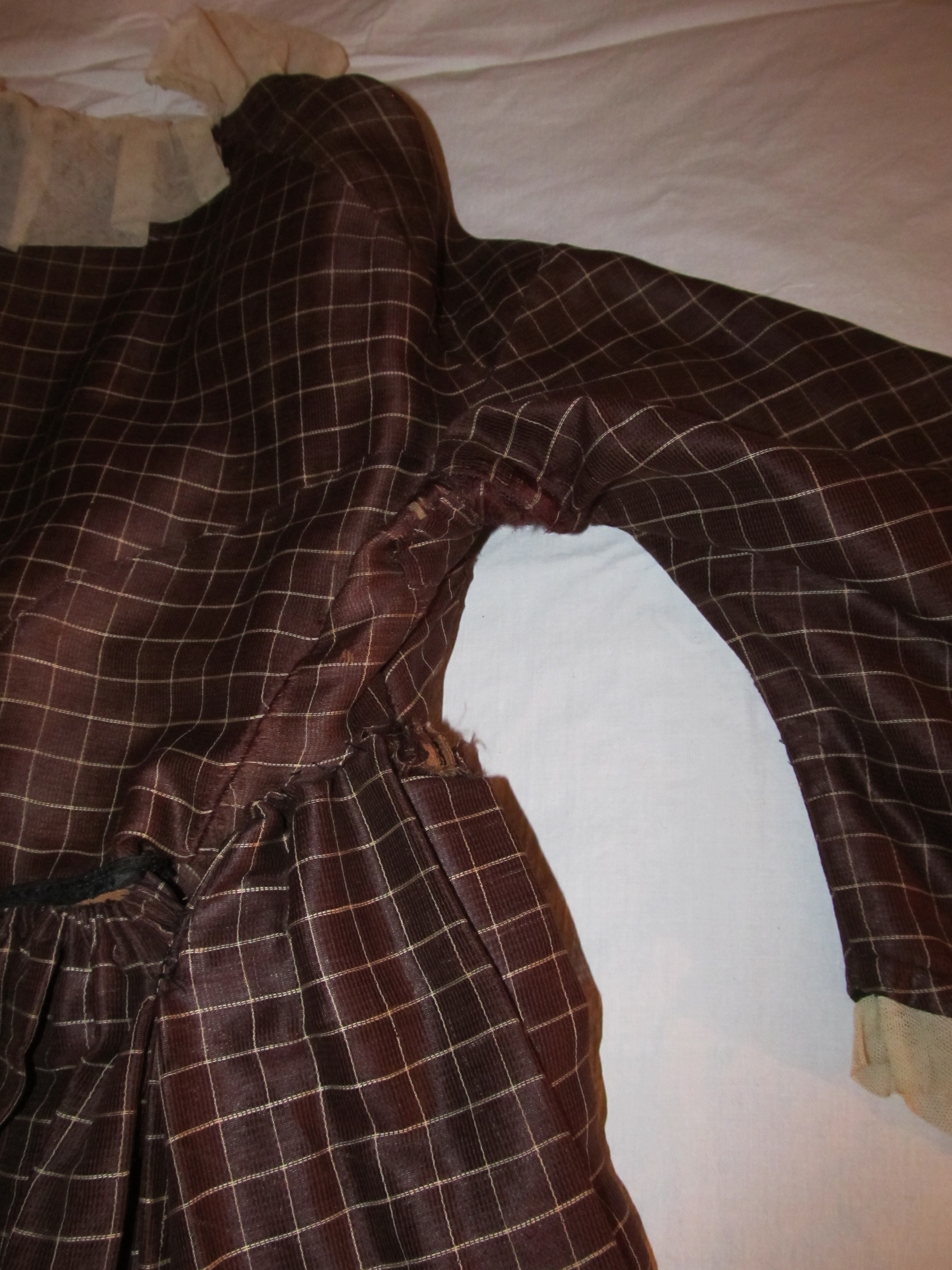
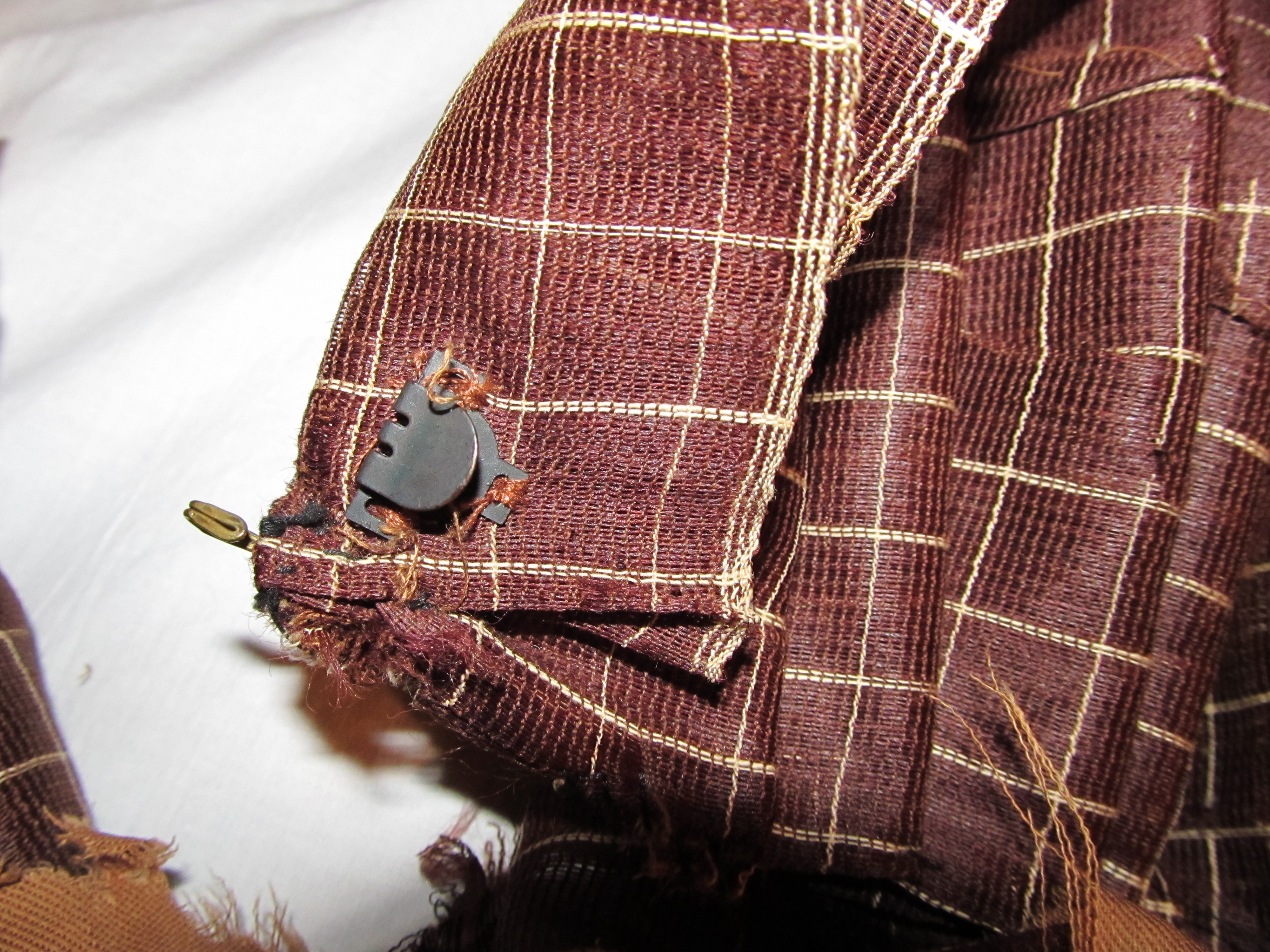
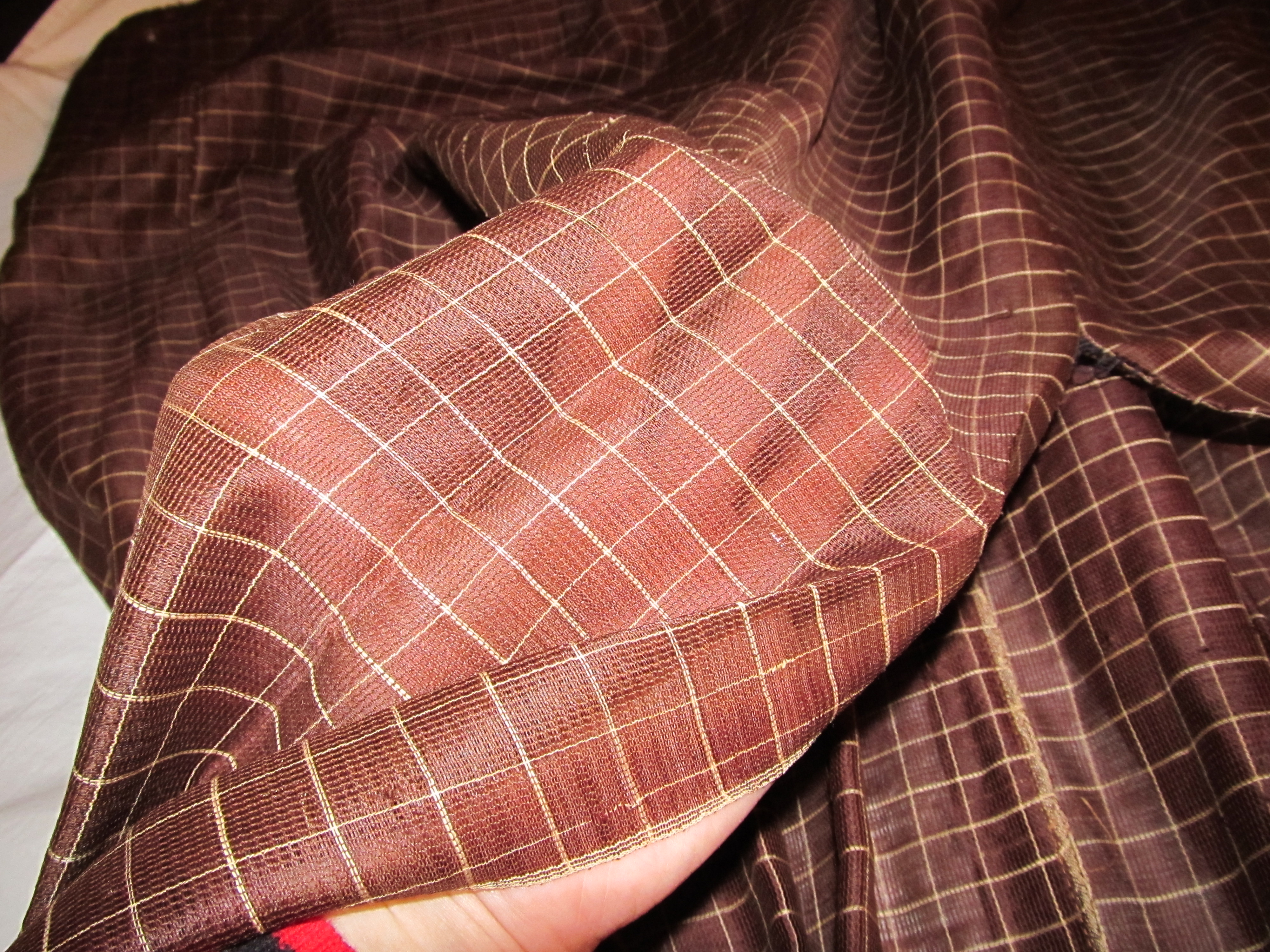
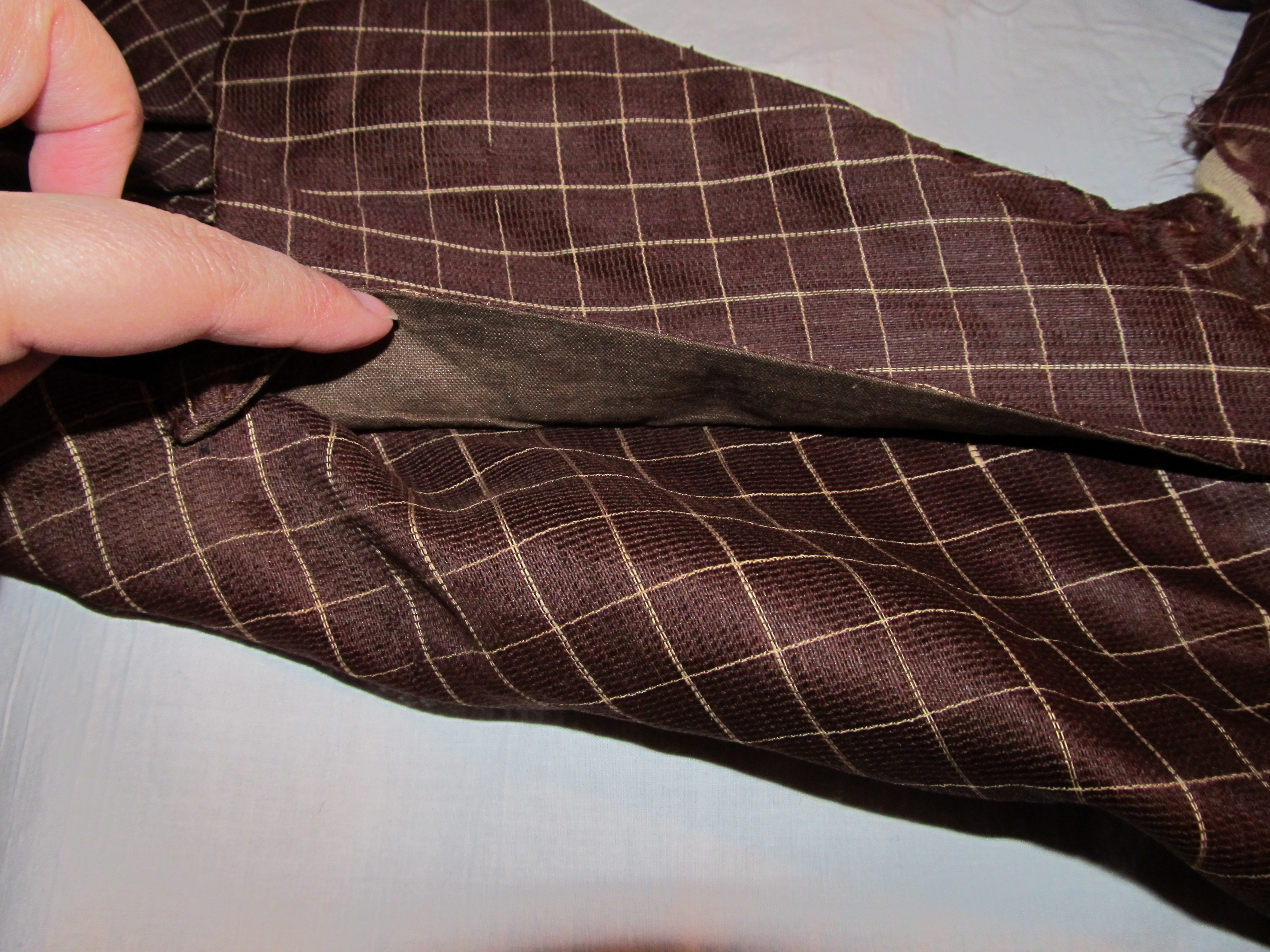
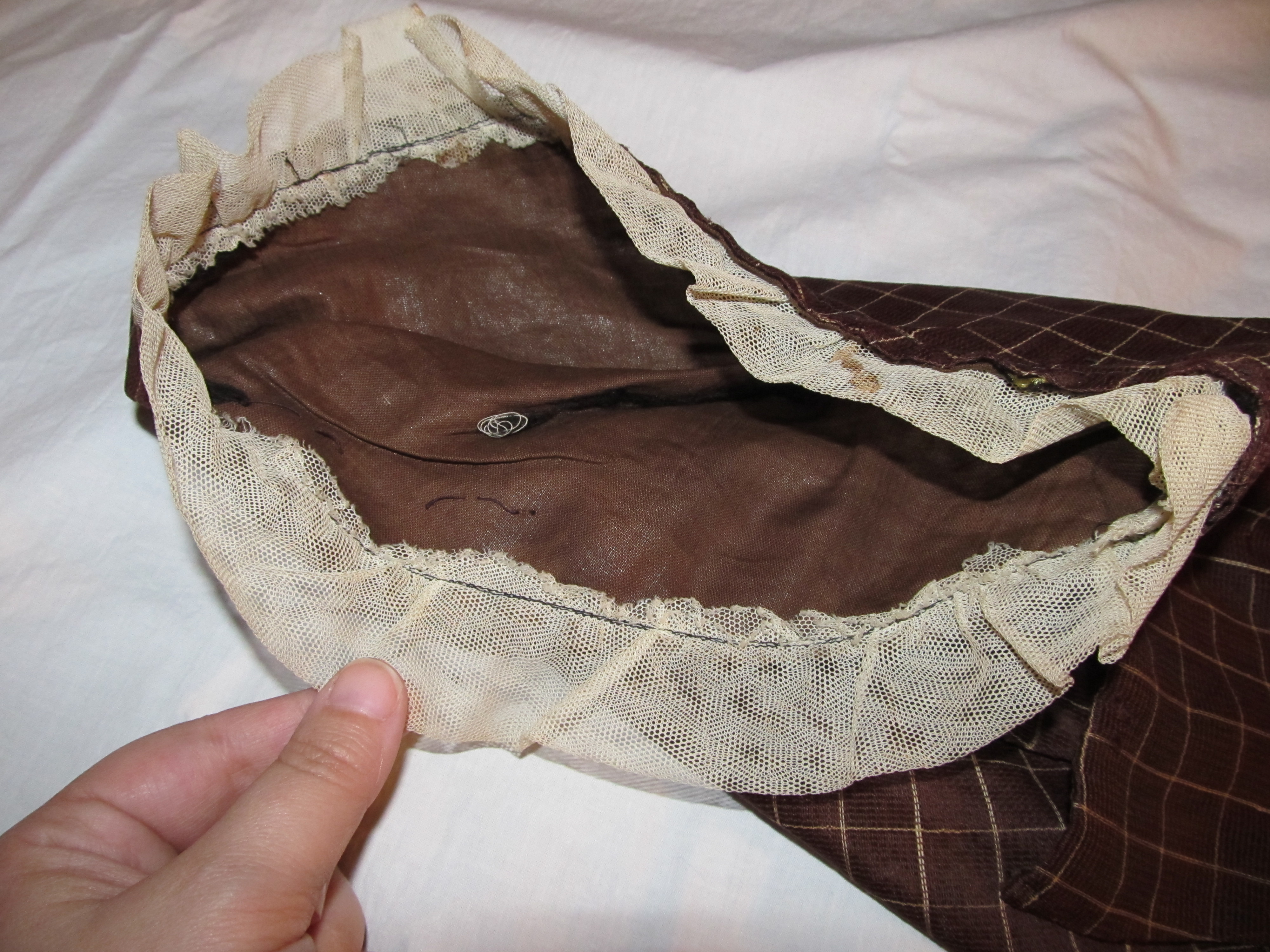
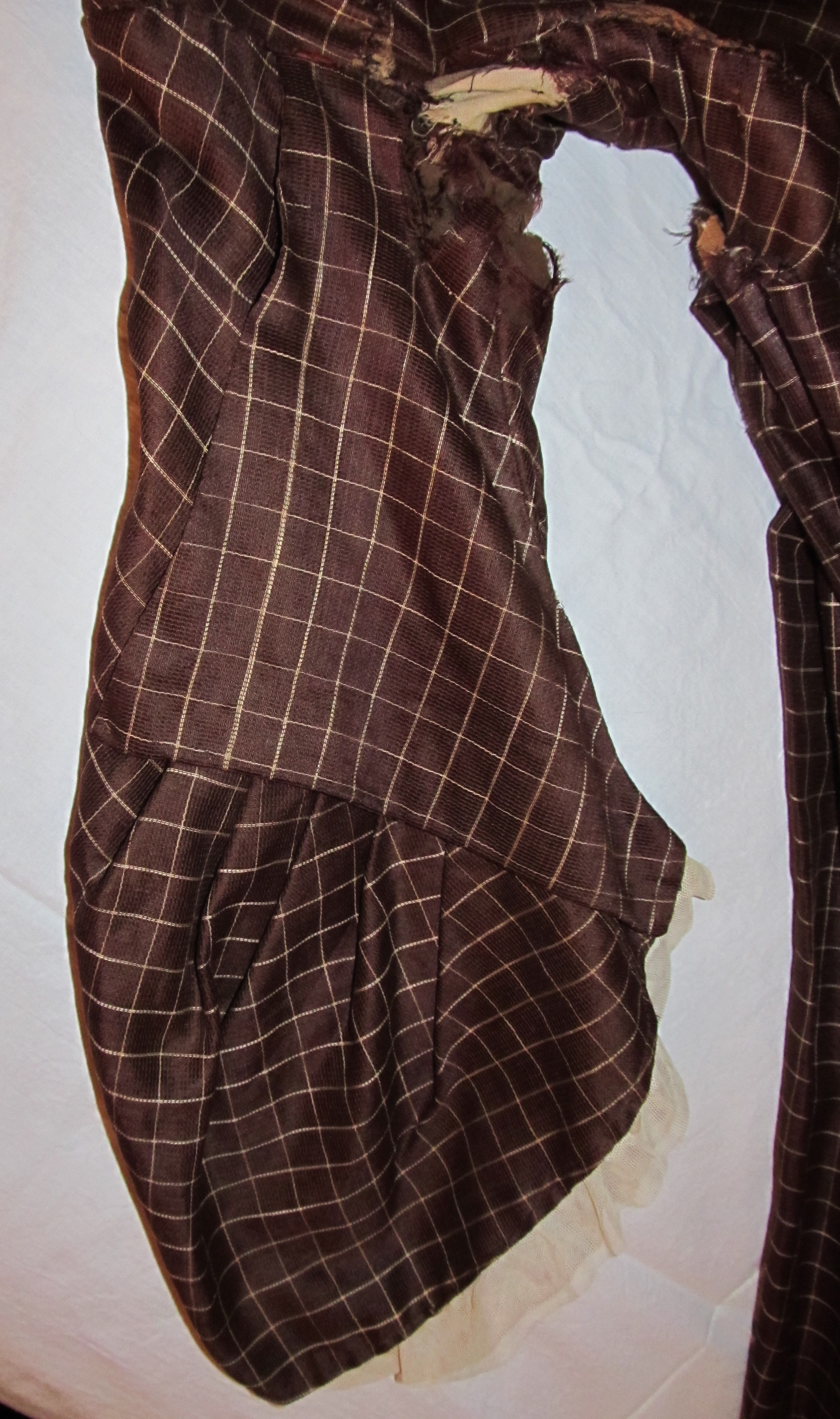
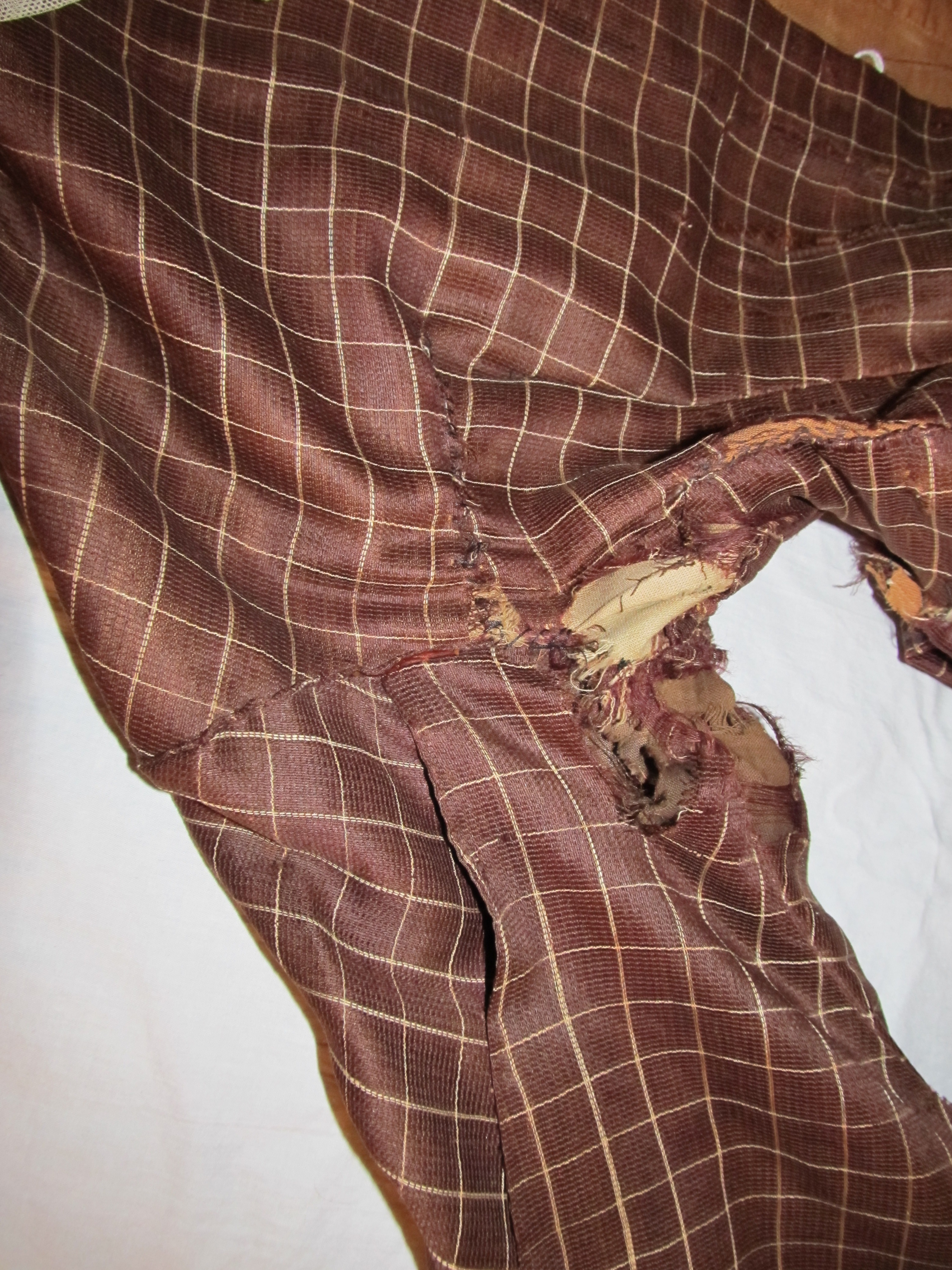
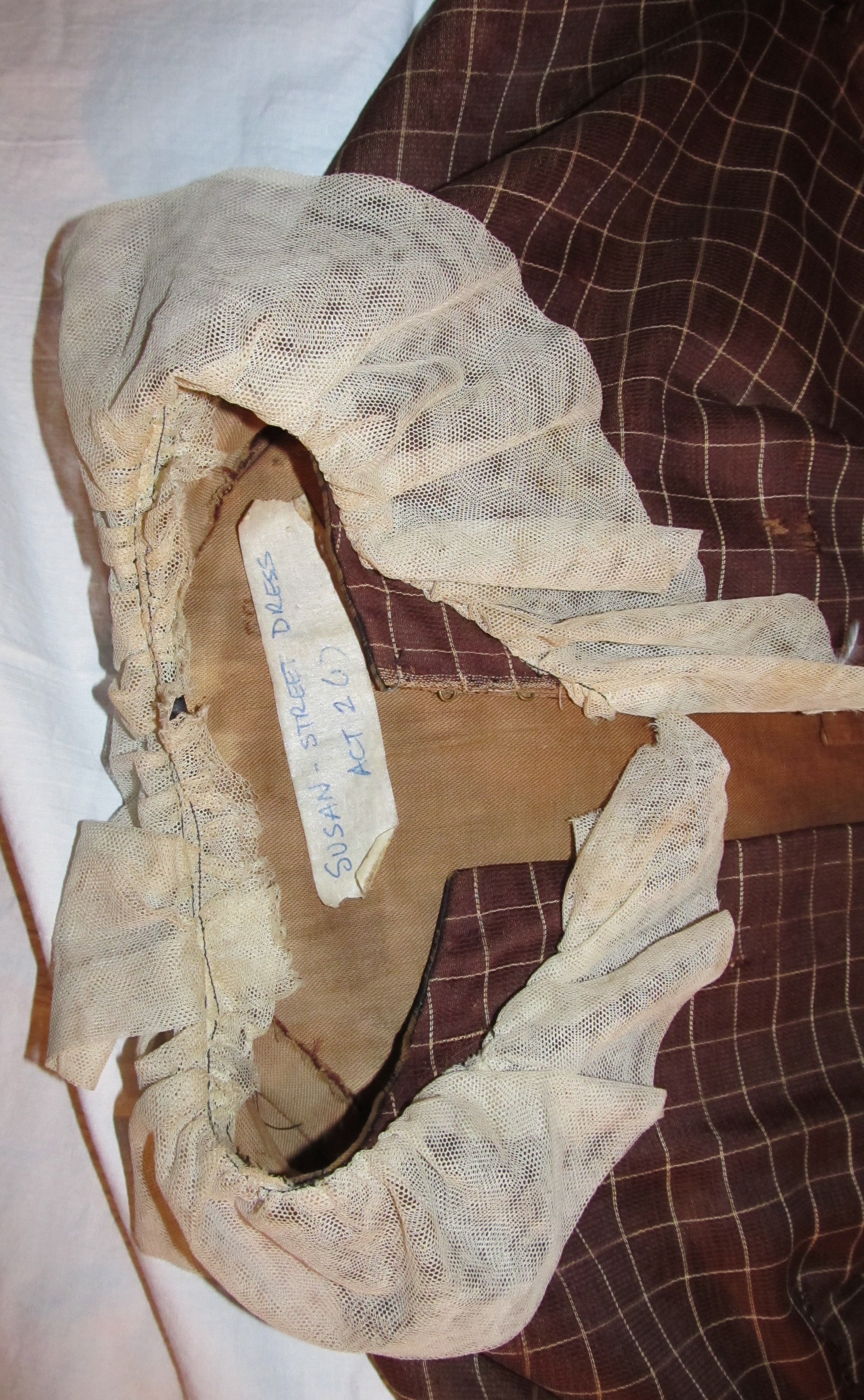
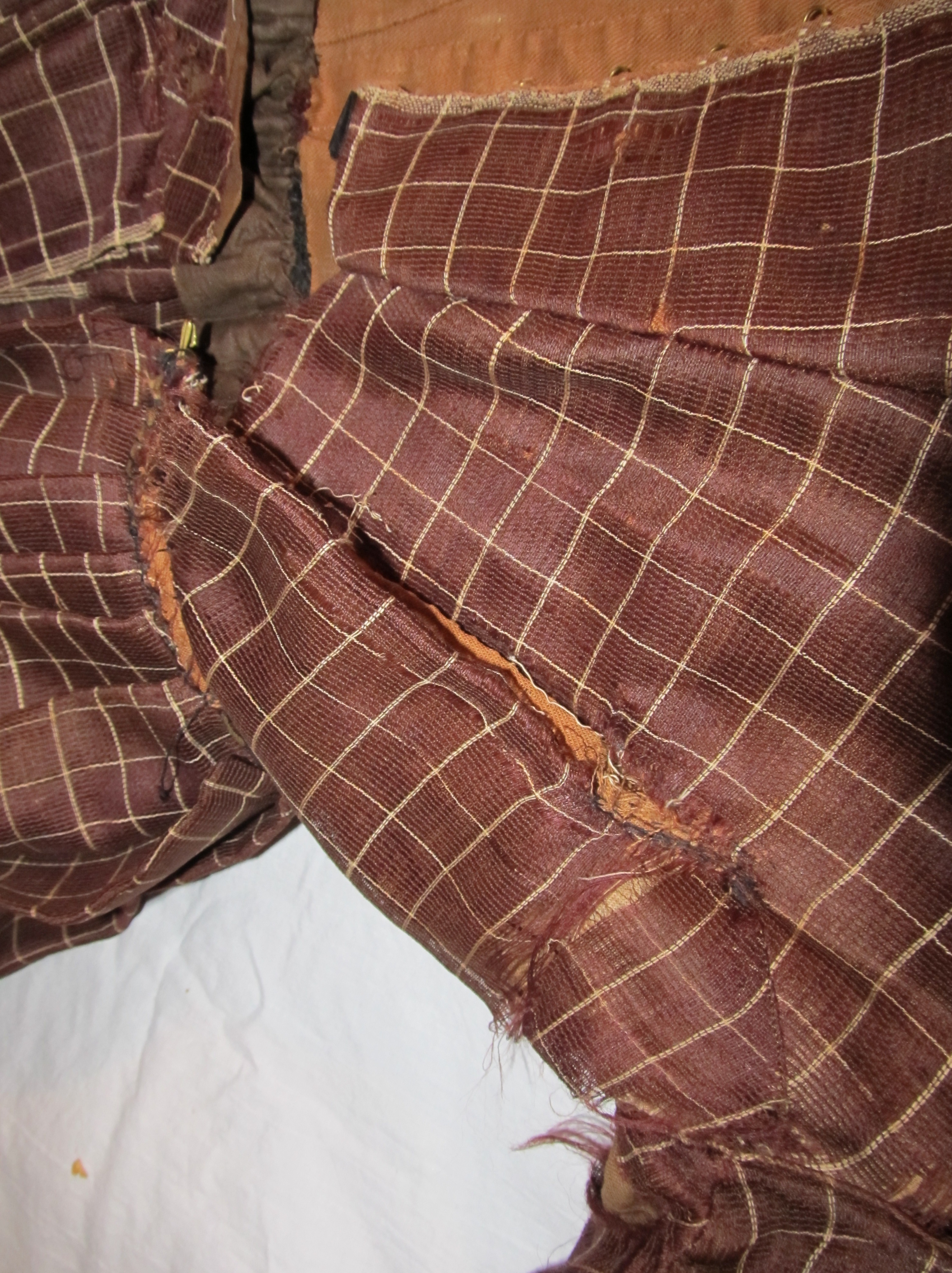
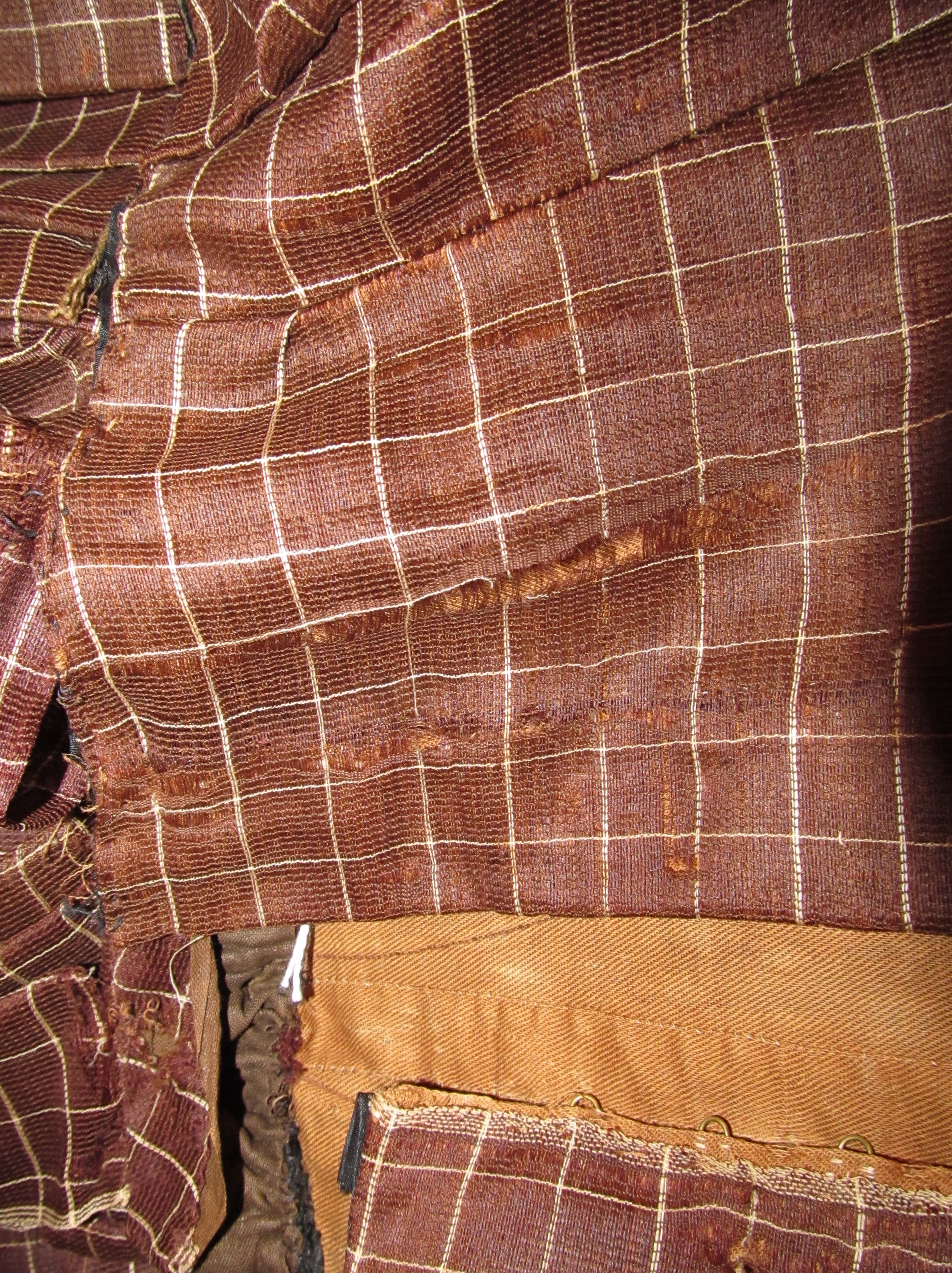
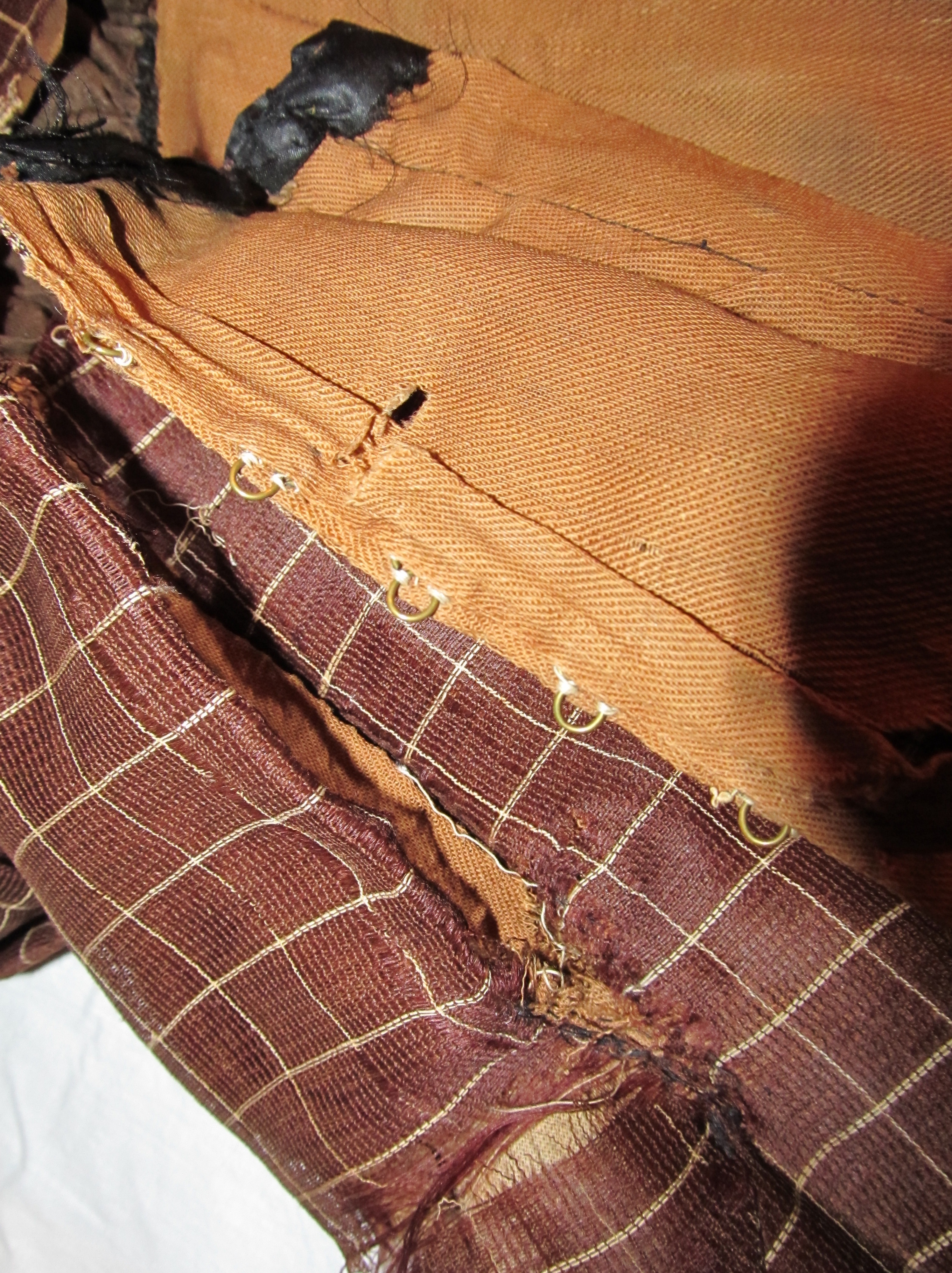
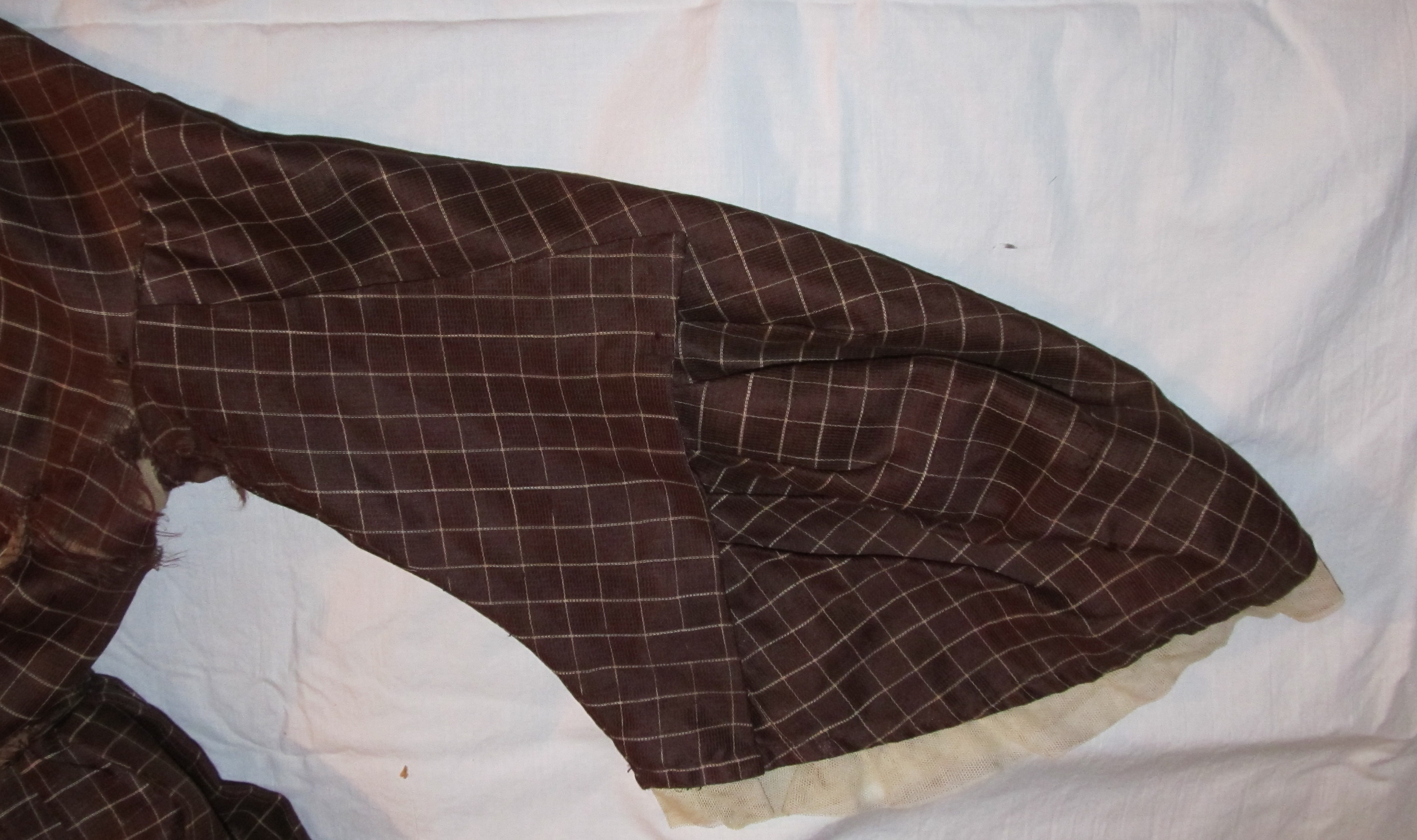
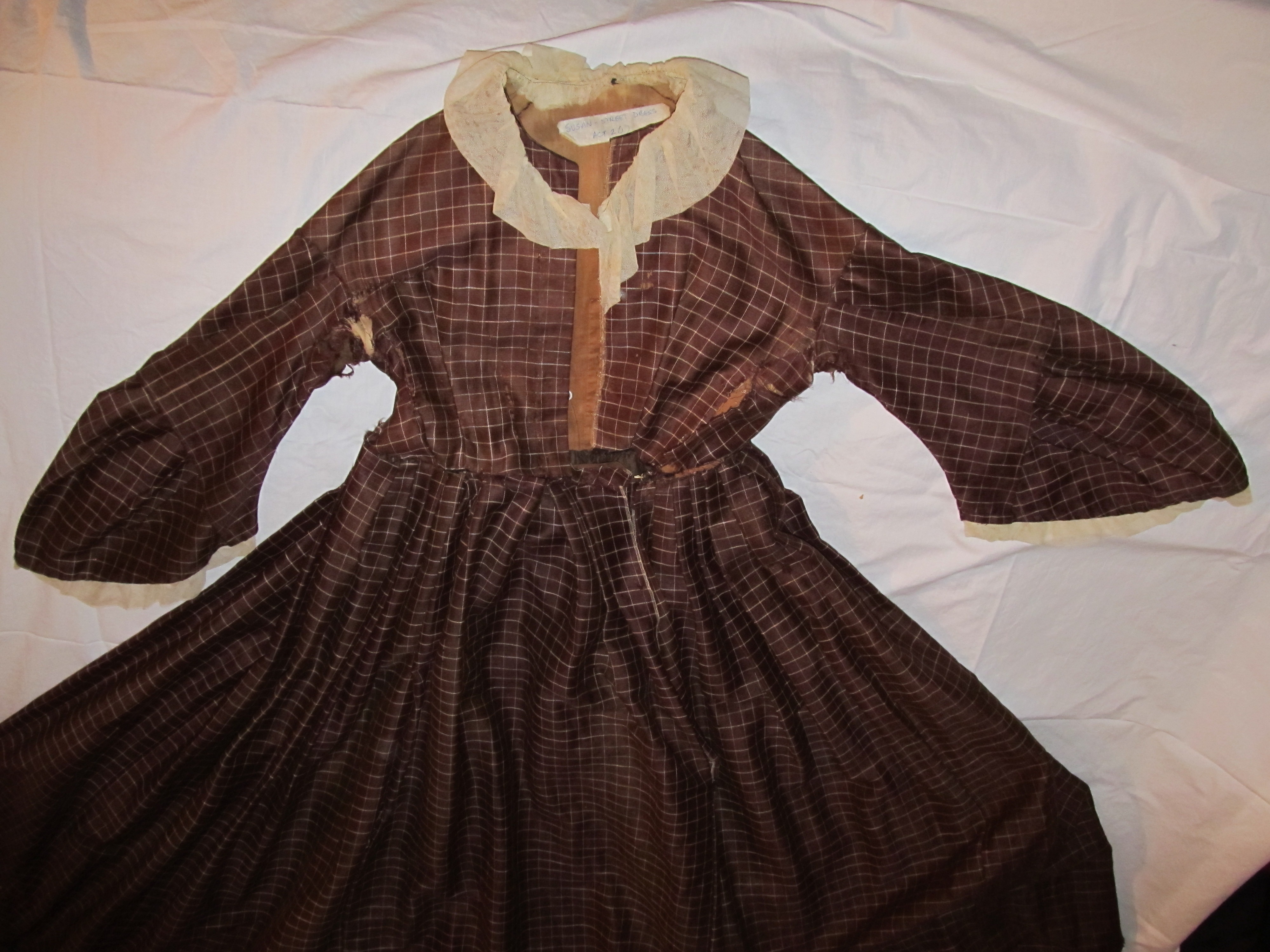
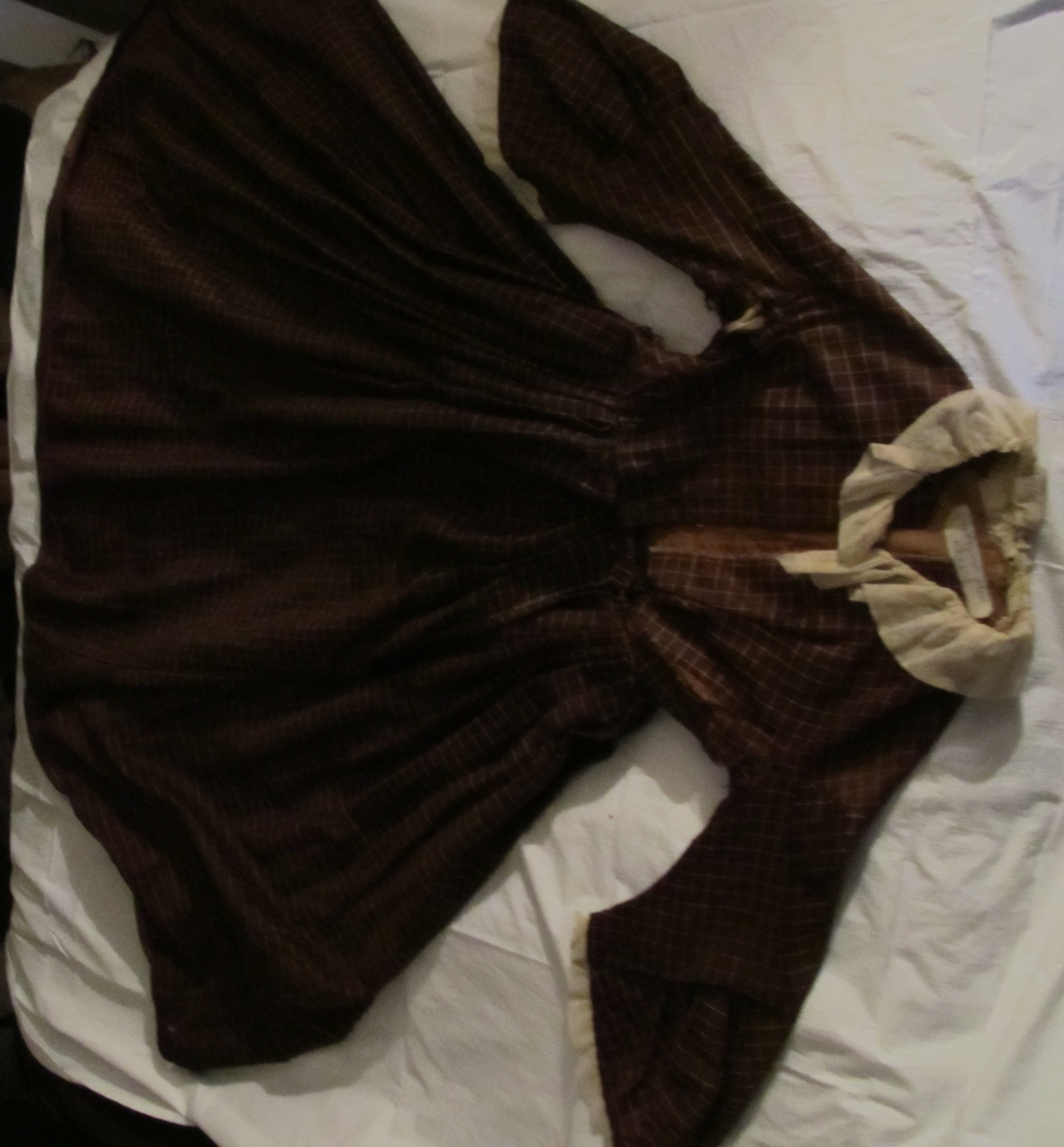
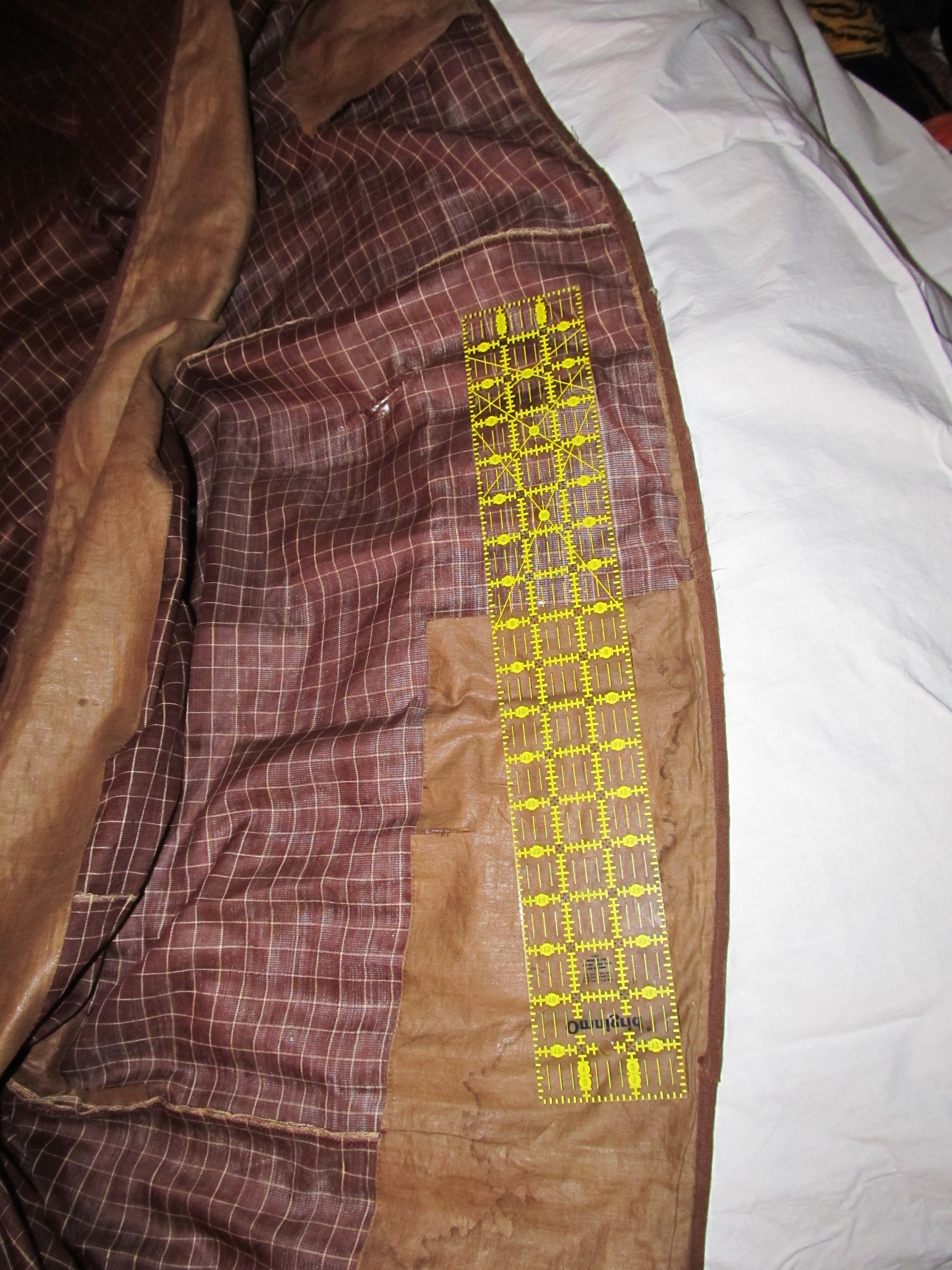
These photos are from 2012 of one of two dresses we found at a theatrical sale. I am bringing them forward because a dress of a possibly similar fabric was recently posted elsewhere. These are not the best photos as they were taken on an air mattress in low light. On my far too long to-do list is to get out the few dresses I own, photograph them, and box them better.


I started a new series on Patreon this summer – Pocket of the Month.
Each month, I am sharing a pocket design with Patreon Patrons. Initially, I planned to do this through the end of the year allowing me to decide whether to continue come January. Since then, I have already started designing pockets for spring.
These designs are as I would create them for myself, maybe a little neater. This means some are hand drawn and some are digitally created. Most will use original source material such as published fancy work manuals, lady’s periodicals, original drawings, and original fancy work. Each will be saved as a printable PDF.
Current Pockets include:
Want to become a Patreon Patron?

Wearing nineteenth century clothes, we find they fit differently than our modern clothes. The waist is in a different spot. The bust sits differently. Seams are used to accent or de-accent parts of the body. The fit feels different and moving in the clothes is different. The same is true for hats and bonnets. In previous posts I’ve talked about bonnets and perch. Here, we are going to look at how a hat was worn and how it “fits”.
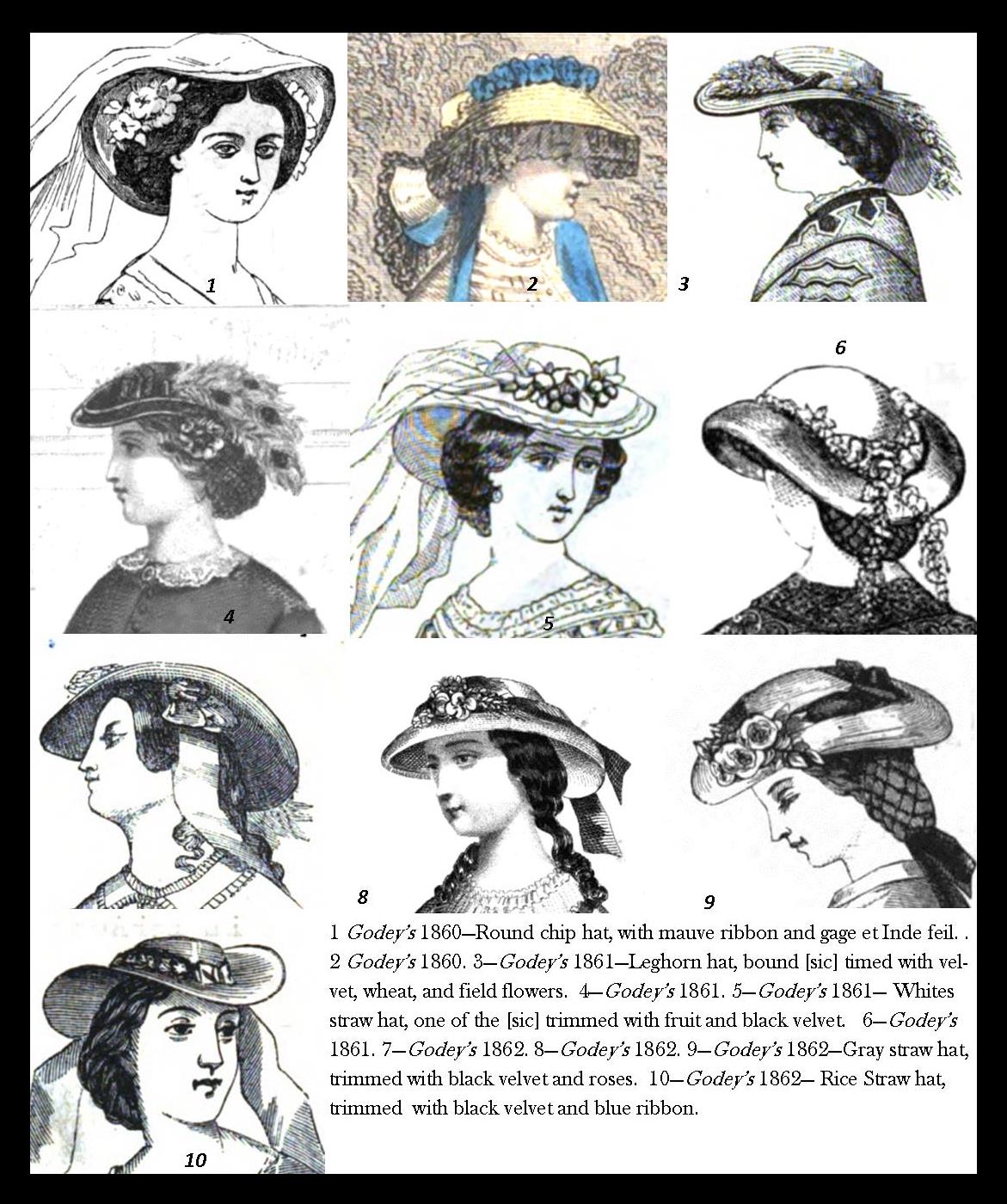
In the 1850s and 1860s, hats were worn much higher on the head than we are accustom to in the twenty-first century. Think about when you wear your modern beach or garden hat. You know that line across your forehead where it sits after a long hot day? You do Not want that. A mid-nineteenth century hat sat higher, at the top of your forehead, at your hair line, or even higher. Take a look at these fashion illustrations from 1860-1862. Notice where each hat sit. In a few illustrations, the front hairline is obviously below the crown line. In others, the crown sits just at this line. The hat sits atop the head, not encompassing it. The curve of the brim is what dips to the eye line, not the hat itself.

What does this mean for you when picking a size?
There are two factors for finding a comfortable fit: Size and shape.
The difference in wear or placement means we measure for a mid-nineteenth century had differently than we do for a twentieth or twenty-first century hat. The modern hat is measured just above the eyebrow. (This is also where many of us measure for bonnets. We want to keep you on your toes.) For mid-nineteenth century, we measure higher, at the hair line. In this illustration, we can see the difference between where the two measurements would be.
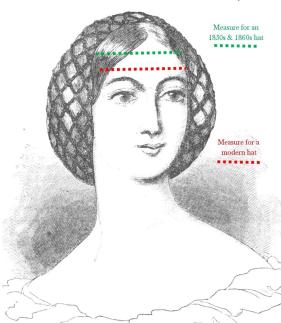
These higher, hairline measurements are often smaller than those taken at the eyebrow. A hat worn at this point can be slightly smaller to slightly larger for comfort. So, add and subtract an inch to your hairline measure.
For example: I am 22.5″ around at my eyebrows and 21.5″ at my hairline. The vast land of the internet tells me that the average woman’s head measures 22.5″ to 22 5/8″ around at the modern measuring point. So, I am about average. I comfortably wear a mid-nineteenth century hat that is 19.5″ to 21.5″
General guidelines I use:
Just like every head measures a bit differently, they are each shaped a bit differently.

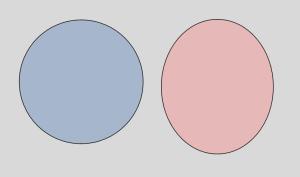
When looking from above, some people have rounder heads while other have more oval heads. Both of these shapes to the right can have a circumference of 22.5″. Yet, the same hat would fit each head differently.
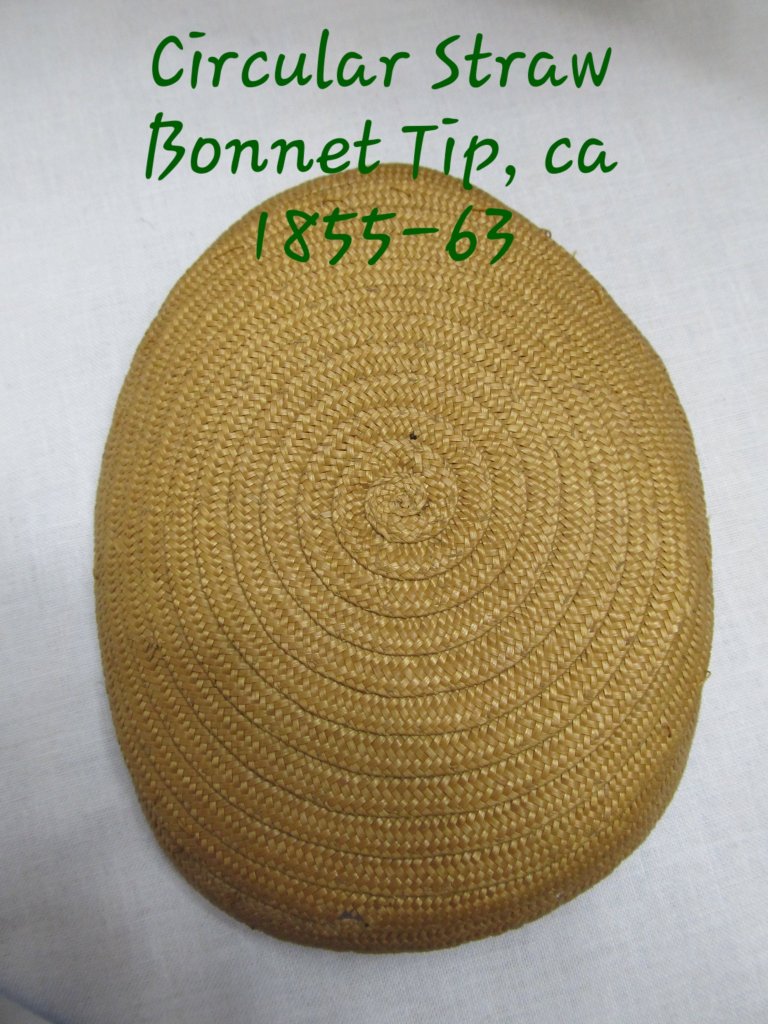
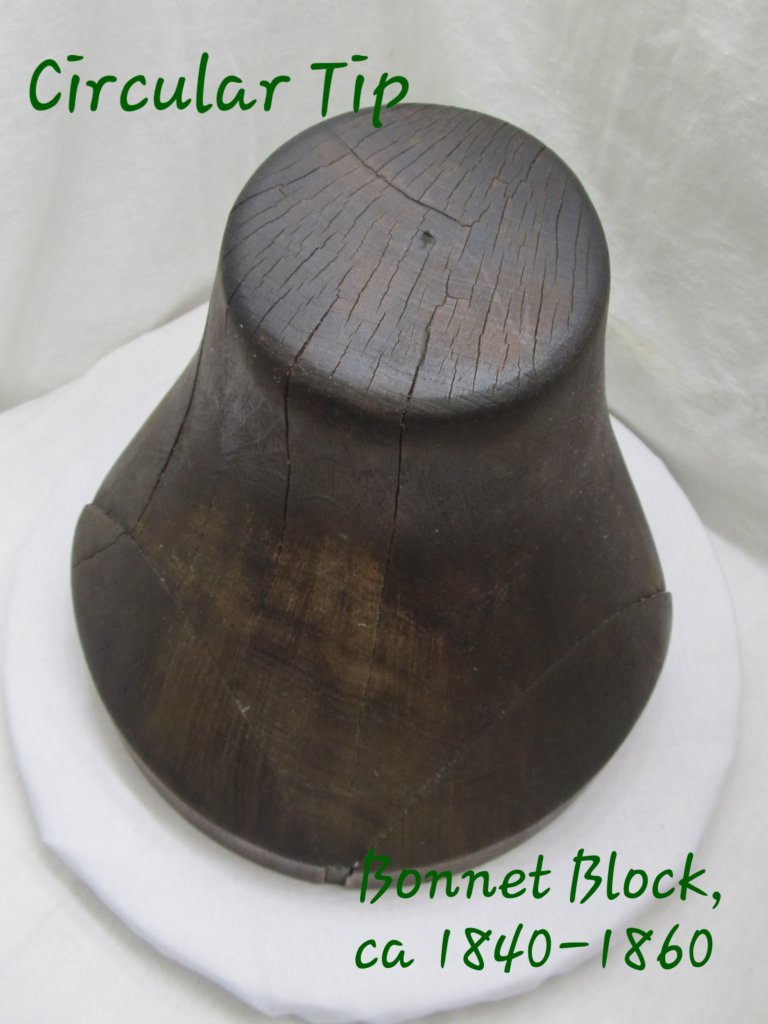
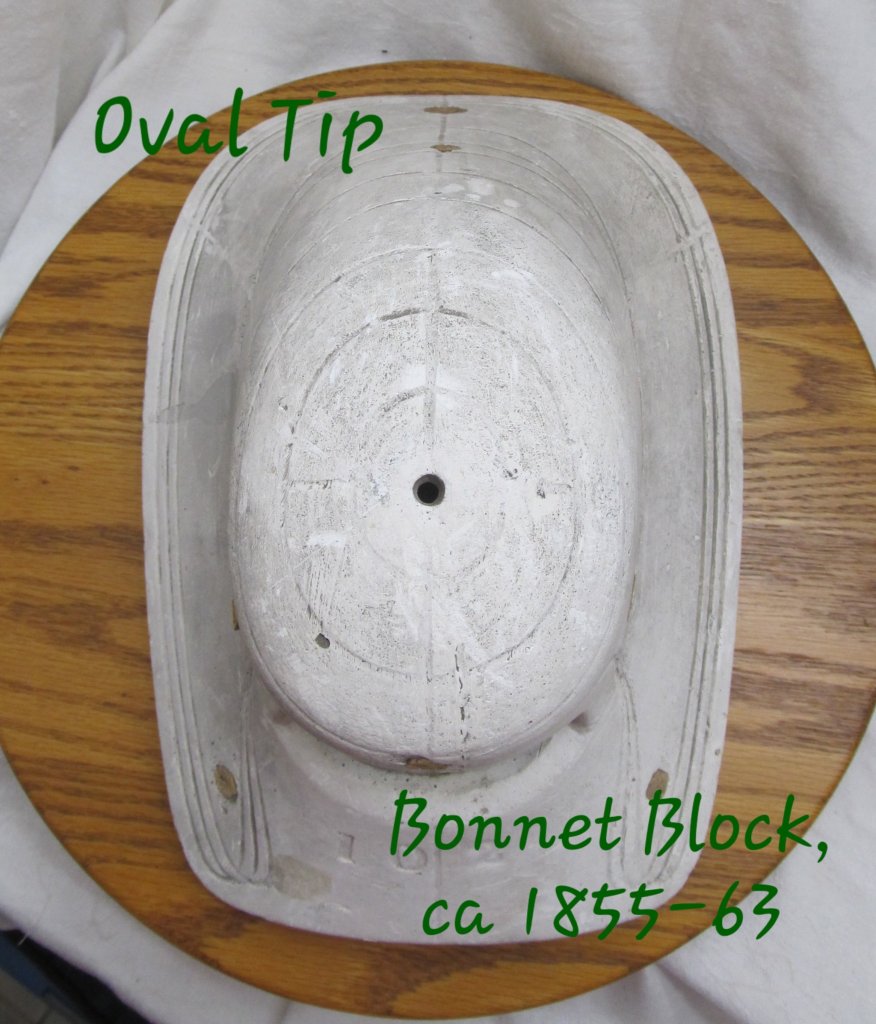
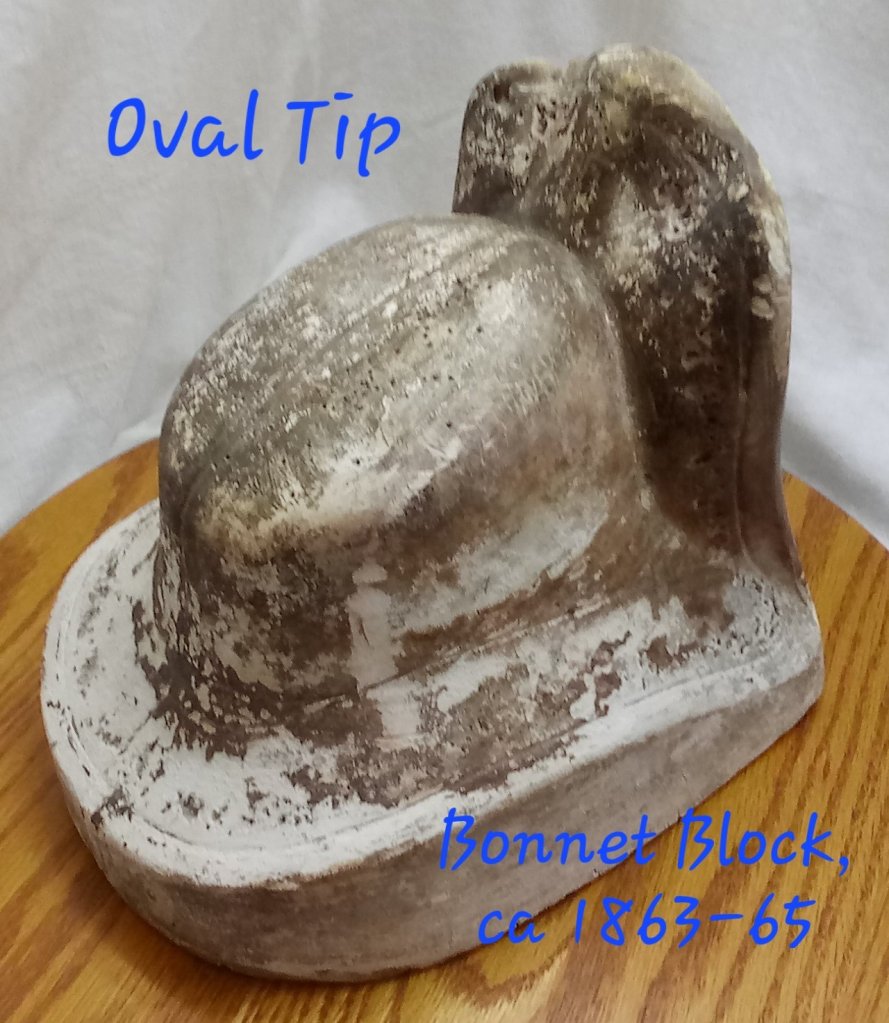
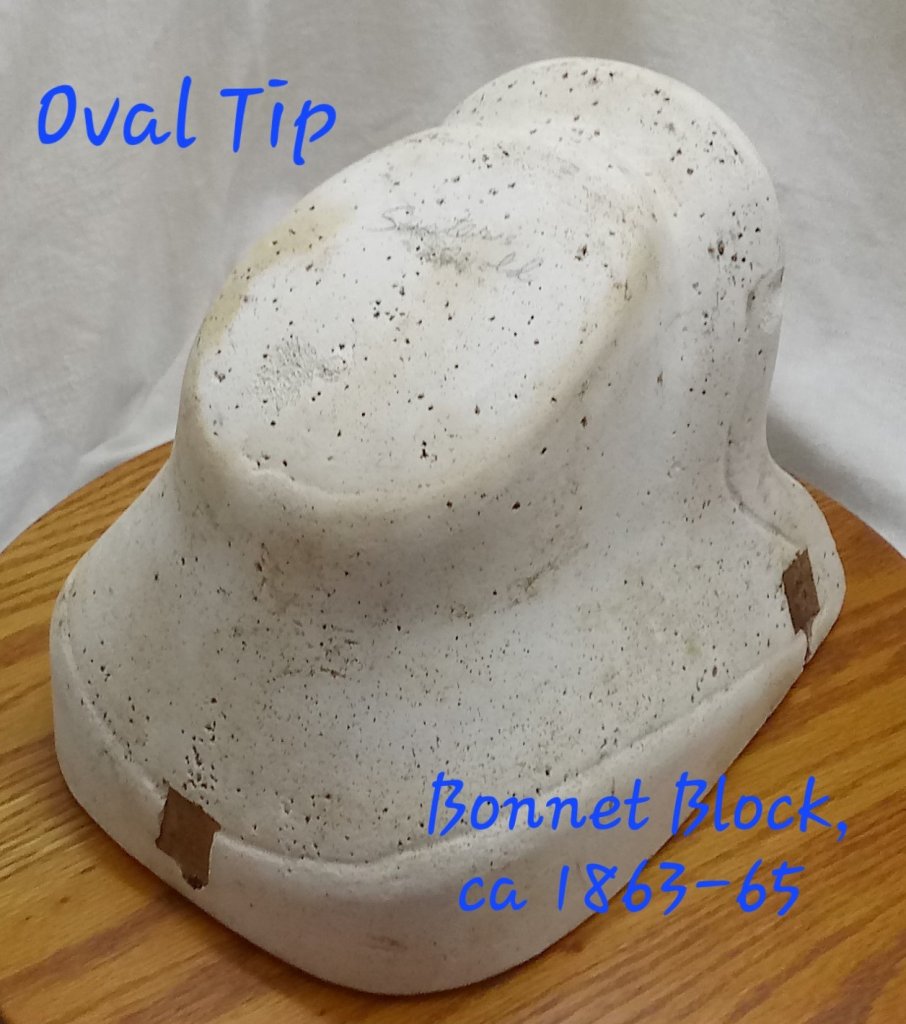
I will try to indicate which hats have rounder crowns or more oval crowns. I am in the process of naming the crowns. Hopefully, that will help.
Actually, the question is usually “Only single women could be milliners. Right?” or “Could milliners be married?”
Many of us were taught married women didn’t work outside of the home or couldn’t work outside of the home for much of the nineteenth century. This is a misconception.
Looking at advertisements, Miss. and Mrs. are used with women’s names. Of course, this could be for public relations purposes.
Looking at census records, milliners have statuses of married and widowed. In 1855 Livingston, New York 47 women’s occupations were recorded as milliner. Of the 47, 7 were married, 5 were widowed, 6 were head of household. 12 were living at home with a parent (listed as daughter to the head of household.) 13 women were living in homes other than their biological family, listed as milliner, assistant, boarder, servant, laborer, and maid.
In New York, prior to March of 1860 a married woman’s wages were legally her husband’s money. In March of that year, a bill went through the legislature and was signed into law giving married women the right to the wages they earned.
A married woman may bargain, sell, assign, and transfer her separate personal property, and carry on any trade or business, and perform any labor or services on her sole and separate
account, and the earnings of any married woman from her trade, business, labor, or services shall be her sole and separate property, and may be used of invested by her in her own name.
The 1860 Act also required a married women to get her husband’s written consent to sell real property but gave ways to do so when a husband was unable to do so. (In New York, married women also retained ownership of businesses owned prior to marriage after the Married Woman’s Property Act or 1848.)
Do you enjoy reading my blog? Do you find it helpful? Please consider supporting through Patreon or Sending a Tip.

Today, I did something a little different: An activity focused activity.
Rather than just demonstrate and discuss making straw hats and bonnets, I gave visitors the opportunity to braid straw themselves. Well. Raffia.
I chose raffia instead of wheat or rye straw because it would be easier to work with. It was also more affordable.

Despite a background in working with young children and developing a wide variety of camp and craft activities, I was a little unsure of myself going into this one. Bridging from interpretating straw millinery as an aspect of women’s history to straw as a hands-on experience was a leap for me. When I was brainstorming around the idea, I knew I wanted to focus on the “this become this,” or the “fiber to function” if you will. In my mind, it would have been great to show off more than wheat & rye to plait/braid to hat: flax to linen, cotton to cloth, corn to broom, bark to basket, etc.. But, in reality and two weeks, one component was it.
I learned a few things during this activity today:


I hope you have enjoyed Shawl Week. Please let me know if you did and if you would like to see a 2024 Shawl Week.
If you enjoy seeing this type of content, please consider supporting my work by joining my Patreon.
In case you missed any of this week’s posts, here they are:
Of course, I would be delighted if you purchased my e-book Paisley, Plaid, & Purled to learn more.
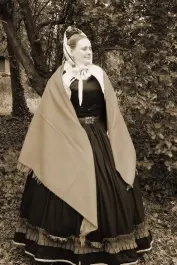
As I start this article, I find I have the mental picture of how not to wear a shawl stuck in my head. It is of a poor shawl draped loosely, falling low on the back and being dragged across the ground behind. I can not tell you how many times I’ve seen a shawl worn this way. One may argue that shawls are show falling low on the back or draped about the skirt in photos such as those to the right. But, these are posed photos meant to show off the form and garment. If this young woman were to walk around with that lovely sheer silk shawl draped like that, it would be a sure way to ruin the shawl. And note, many shawls were costly, sometimes very expensive.
How were shawls worn? Yes, we still need to look to photographic examples, keeping in mind the purpose of the photo. These ladies, left, are shown in a real situation rather than posing for a portrait. Notice how their shawls are worn up on their shoulders, close to their necks. In the front, the shawls may be draped over their forearms or closed in front with a pin.
To achieve this look with a square shawl, fold the shawl in half diagonally from corner to corner. This creates a triangle. The fold of the triangle can then be adjusted allowing the upper half of the shawl triangle to be shorter than the lower.
For a rectangular double square or long shawl, start by folding the shawl in half creating a square first. then fold the square in half diagonally creating a triangle. The first fold should be worn on the under most side allowing the corners of the shawl to be on display in the V draping the back.
Continuing with stereoview images similar placement can be seen in this detail. This woman wears a paisley type shawl draped over her shoulders, high but not crowding her neck. The ends of the triangle are caught over the inner bend of her elbow.
On the opposite side of the same stereoview, a flower seller also wears a shawl. Her simpler, likely wool shawl is draped over her shoulders, worn closer to the neck. As it falls over the shoulders, it is pinned at the center chest as is evident by the curves of the draping. This allows her to hold her tray of flowers.
For more in-depth information, please read Paisley, Plaid, & Purled: Shawls of the Mid-Nineteenth Century.