Winter (head)Wear Week – The Pumpkin Hood aka Wadded Winter Hood

What is a Pumpkin Hood?

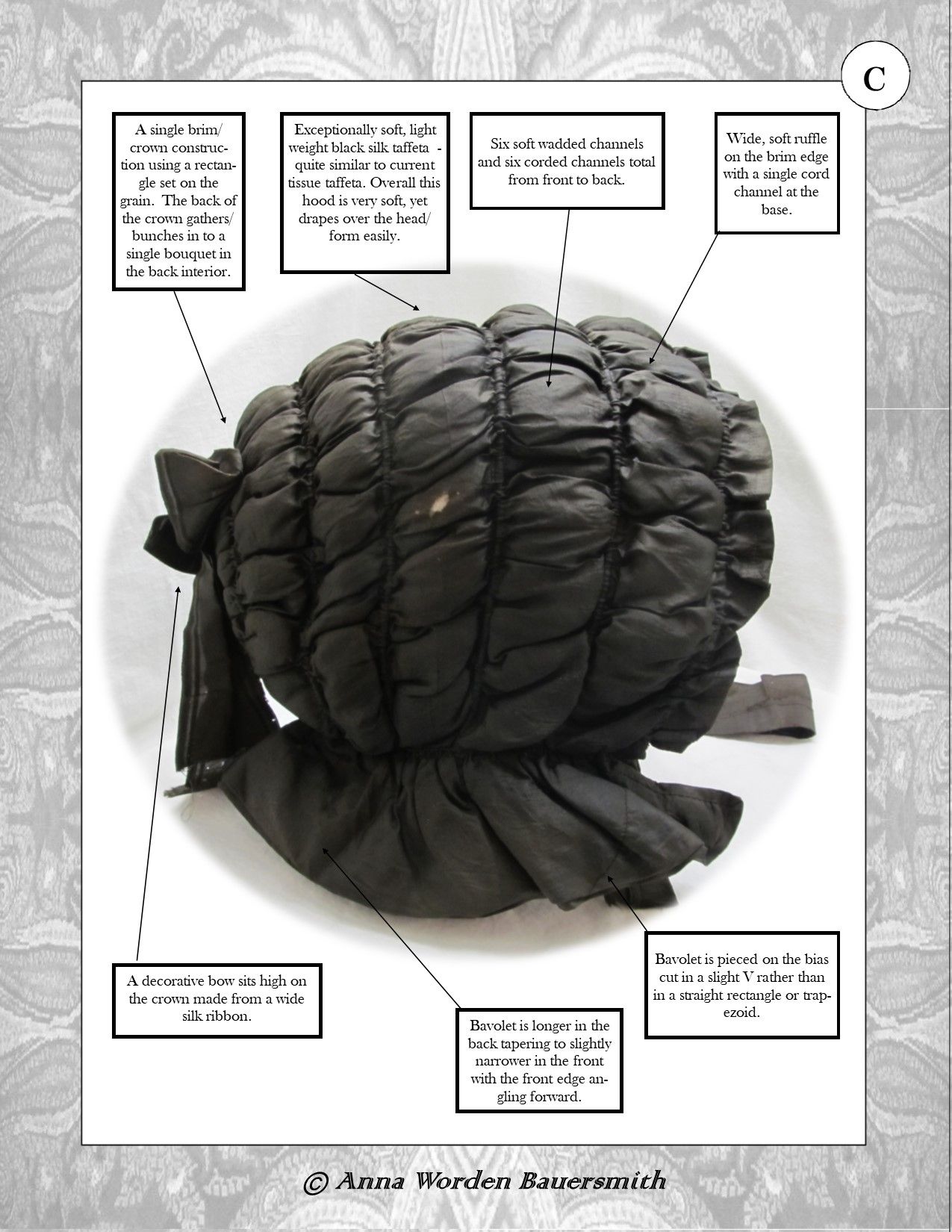
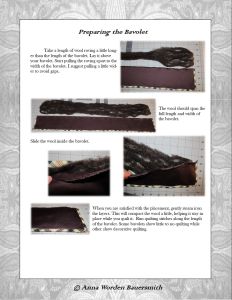
A “Pumpkin” hood or bonnet is a wadded bonnet, most commonly made of silk on the exterior and polished cotton, cotton or silk on the interior. Wide, full channels are filled to a full loft with wool batting either lightly or densely. The channels are separated by smaller channels, single or multiple, that are drawn in by cord or ribbon. The front brim may or may not have a decorative ruffle, attached or tucked from the base exterior fabric. These usually have a petite to moderate bavolet either lightly filled with batting or without batting.

Some other terms that seem to apply: Wadded bonnet/hood, “Ugly”, a “Kiss-me-quick”.

How early were these worn?

Most museums seem to start their dating of wadded, pumpkin style hoods in the second quarter of the century. Some do push earlier, as far as the late 1700s/early 1800s, such as this example from the Boston Museum of Fine Arts.

As domestically made winter hoods were a utilitarian garment rather than a fashionable one, their appearances in fashion literature is limited. I see one set of passages referencing a wadded hood or bonnet, drawn in, worn close to the face that may help us give wadded hoods drawn close to the latter 1830s:

In the Ladies Pocket Magazine, of 1838, London, we see a mention of wadded bonnets as a fashionable item. Of English fashions – “Wadded bonnets which before were very much in vogue, are now almost the only ones adopted in promenade dress, and it must be confessed nothing could be better calculated for the season, particularly when they are worn, as in often the case, over a blond morning cap of the demi-cornette form.” (In this passage, wadded pelisses and wadded mantles are also mentioned.) Of Paris fashions “Winter has set in with all its rigour, but that is of little consequence to our elegantes, who, occupied with the grand dinners, balls, and fetes that are always given in the commencement of winter, have deserted the promenades. Novelty in out-door costume is consequently out of the question, velvet or satin mantles, which are trimmed and sometimes lined in fur, that their busts are defended by a large fur palatine, their hands doubly shielded by fur cuffs, and a muff, and their pretty faces guarded by a large wadded bonnet, which completely meets under the chin, we have said all that can be said of out-door dress.” The year prior, the same publication tells us: “We may cite with confidence, among the new bonnets will be very fashionable, the capotes a conlisse ouatees, or wadded drawn bonnets; the are a most comfortable head-dress, composed of satin or pou de soie, lightly wadded, and simply trimmed with ribbon. They differ a little in shape from the other bonnets, sitting closer round the face.” This may or may not be the beginning point of the wadded, pumpkin style bonnet. Neither publication includes an illustration of this practical winter wear in the midst of the popular large bonnets of the era.

In that same time period, we see wadded and quilted hoods/bonnets constructed for children in The Workwoman’s Guide. The illustrations suggest the quilted versions have larger crowns that are volumous in some cases. It is important to note the difference between this shape and the Pumpkin shape. I believe this is the construction that evolves through the rest of the century as the quilted bonnet.

Blackwood‘s suggested I should look at “quilted wadded capotes” as well as “bonnets” and “hoods”. Though, this February and March 1843 Peterson‘s suggest capotes were quilted, rather than wadded with loft.

One of only photographs clearly depicting a wadded “pumpkin” style bonnet/hood is a bit of tease. While taken in 1897, the photograph does not show contemporary/current wear, rather historical costume wear. This photograph is held by Deerfield.

Were they worn during the Civil War?

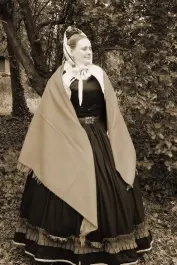
Yes, evidence suggest wadded hoods were worn in the 1860s. The 1860 painting, School Girls, by George Augustus Baker, shows the girl on the left in what could be a red silk wadded pumpkin bonnet. The artist did several studies for this painting, including Little Girl in a Red Bonnet, which is undated.
Examples:

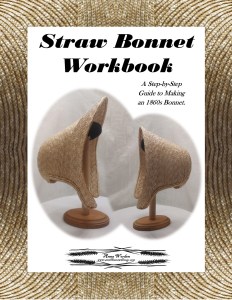
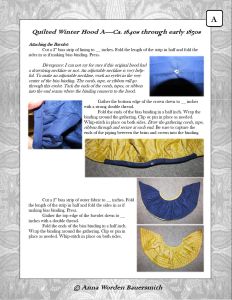
Learn more about Wadded Hoods and How to Make Your Own in my New Wadded Hood Workbook.

Museum examples:

Published in: on November 8, 2023 at 2:05 am  Comments (1)  

Winter (head)Wear Week – Selecting a Winter Hood for Your Mid-19th Century Impression

With winter coming, many are thinking about how to keep warm in their nineteenth century attire, including how to keep their head warm.

The great news is there were several styles of winter hoods worn in the nineteenth century.

The challenging news is there were several styles of winter hoods worn in the nineteenth century.

With the many styles available, how do you pick the one right for your impression or interpretation?

I have this ongoing love (obsession) with sewn winter hoods. I am fascinated by how each is put together, what
the commonalities are, what the uniquenesses are, and which suits which situations best.

This overview looks at sewn winter hoods focusing on the mid-19th century. It does not include the many knit
styles that were made.

Let’s start with some basics.

Sewn winter hoods generally fall into two catagories: quilted and wadded, with some draped hoods which do not have interior guts. Winter hoods were most frequently made with a silk exterior and a silk or cotton interior. They could also be made from wool. The breakdown lands somewhere around ⅔ silk with ⅓ wool. The silk used is most frequently a tight weave taffeta, with the occasional fraille or tight jacquard weave. The tight weave and smooth texture is important for resisting water. Think about how an umbrella resists water. If rain or wet snow fall onto a silk hood, you want the moisture to roll off. If dry, fluffy snow falls onto a silk hood, you want it to slide off. The same principle applies. Similarly, when wool is used, it too needs to be a tight, smooth weave. A tight weave will minimize absorption. A smooth weave will encourage snow to slide off. A fuzzy wool will act almost like velcro, grabbing and holding onto snow. In terms of weight, the vast majority of original wool hoods I’ve examined have been light weight with some slightly medium weight wools.

Turning to the interior, silk and cotton are commonly found. Silk is often a solid color, either a taffeta or tissue taffeta. Cottons is more often a polished cotton in a solid color or a sateen, with the occasional smaller print. Often, the interiors include multiple fabrics of the same fiber. The color selection can be a dark neutral, black or brown, or a bright, vivid color such as pink or yellow.

Pink silk interior of a quilted winter hood.

Now, let’s talk situations and styles.
I break this down environmentally.

If you are doing an event that is likely to be windy and/or stormy, you will want a hood that can protect your face. For this situation, I recommend a hood that comes forward, protecting the face. A lappet style hood is a good choice for this. The brim extends forward of the face with the lappets hanging below. This was the style I had on when a sudden heavy, icey burst of rain hit. I found while walking through the village, my face was fully protected and dry. A capote style hood, one with minimal structure and a deep brim, would work well for a stormy situation as well.

Lappet style winter hood in silk.

If you are doing an event that will be very cold, while you need to be active, you will want a warm hood that stays in place while giving you a good line of sight. For this, I recommend a wadded hood. A wadded hood is likely the warmest of the hoods as it is filled full with wool wadding or down. A well fit wadded hood will snug the head, keeping out drafts, and stay put while you actively work. The edge of the brim frames the face giving you full range of peripheral vision, which is important for working with livestock or visitors.

Wadded winter hood in plaid silk

If you are doing an event where visitors need to see your face while giving you protection from the cold weather, I recommend a quilted hood with a brim that can be turned back or is shaped with wire. This style hood can be made with lighter or cotton batting for subtle warmth or with heavier or wool batting for more warmth. A channel can be added to the inside of brim so the hood can be drawn in to hold in place if it is windy or the interpretation role is an active one.

Quilted winter hood in black silk. Note bonnet shape.

While some winter hoods are trimmed, the majority of the everyday/common hoods I have studied are not trimmed. Simple trims can include ruched ribbon or pinked silk along the brim edge or simple bows on the crown or along the center top of the brim.

Published in: on November 7, 2023 at 2:05 am  Comments (1)  

Measuring Your Head for Mid-19th Century Hats – Picking the Hat that Fits

There are two factors for finding a comfortable fit: Size and shape.

Size

The difference in wear or placement means we measure for a mid-nineteenth century had differently than we do for a twentieth or twenty-first century hat. The modern hat is measured just above the eyebrow. (This is also where many of us measure for bonnets. We want to keep you on your toes.) For mid-nineteenth century, we measure higher, at the hair line. In this illustration, we can see the difference between where the two measurements would be.

measure

These higher, hairline measurements are often smaller than those taken at the eyebrow. A hat worn at this point can be slightly smaller to slightly larger for comfort. So, add and subtract an inch to your hairline measure.

For example: I am 22.5″ around at my eyebrows and 21.5″ at my hairline. The vast land of the internet tells me that the average woman’s head measures 22.5″ to 22 5/8″ around at the modern measuring point. So, I am about average. I comfortably wear a mid-nineteenth century hat that is 19.5″ to 21.5″

Here is my head with the tape showing where to measure. This is where I wear most CW era hats. This is the circumference of my head. My measurement is 21 1/2″. (Note: this is a full inch smaller than the modern measurement take lower.)

General guidelines I use:

  • Small = Less than 21″ at the hairline (crown less than 20″)
  • Average = 21″-22.5″ at the hairline (crown 20-21.5″)
  • Large = Greater than 22.5″ at the hairline (crown greater than 22″)

Shape

It is helpful to know whether your head is more round or more oval.When looking from above, some people have rounder heads while other have more oval heads. I have an average oval head. Very round hats don’t work for me without adding to the lining.

round oval

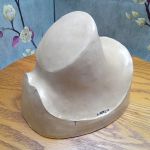
Hat blocks can be more round or more oval with the same circumference. To illustrate: Both of these shapes to the right can have a circumference of 22.5″. Yet, the same hat would fit each head differently.

My straw hats and bonnets are available in my Etsy shop as I finish them: https://www.etsy.com/shop/AnnaWordenBauersmith

Are you one of the many readers enjoying my millinery blog posts?
Consider becoming a Patreon patron. Doing so helps support my work and helps me write more useful articles.
https://www.patreon.com/AMillinersWhimsy
Published in: on November 1, 2023 at 12:05 am  Leave a Comment  

October’s Patreon Pocket of the Month

For October, I have not one but two pocket designs for you!

One is a quilted spiderweb.

One is an embroidered fallen leaves design.

If you are a Patreon member, hop over to Patreon to download this month’s pocket designs. If not, you are welcome to join!

Published in: on October 10, 2023 at 6:51 am  Leave a Comment  

A Story of Fashion Symposium

I spent the day at the Fashion History & Sustainability Symposium hosted by the Cayuga Museum of History and Art with Anneliese of the Sewphisticate. The program, presented in the Carriage House Theater, progressed from the history of hidden, deadly risks in fashion through the shift to ready-to-wear and fashion consumerism to the impact of fast fashion. I was delighted with the cohesive arch that carried through the presentation from history in the morning to present and future in the afternoon.

Speakers (l to r) Nellie Ludemann, Megan Gillen, Denise Nicole Green, Alyssa Hardy.

The opening presentation by Nellie Ludemann, of the Seneca Fall Historical Society, looked at the Silent Killers of the Past. She covered chemicals found in fashion, such as arsenic and mercury, as well as flammable aspects. I did not know celluloid could explode at a temperature close to that at which it becomes malleable.

The following presentation by Megan Gillan, guest Curator for the Cayuga Museum of History and Art, walked us From Dressmaker to Department Store. With a general overview of the transition from made-to-order clothing to standardized, mass-produced clothing and the advent of the department store. This included highlighting local to Auburn makers, merchants, and department stores I was not familiar with.

After lunch, the program shifted to the present exploring ways for Fashioning the Future and Breaking Barriers in the Clothing Industry with Denise Nicole Green, PhD, from Cornell University.

Keynote Allysa Hardy brought the discussion back around to the laborers behind fashion presently and the people behind the fashions. Of course, this was of the most interest to me as it parallels my work with the people of the millinery industry. Her presentation brought real names and faces to the story. Accompanying Hardy’s presentation was a copy of her book, Worn Out: How Our Clothes Cover Up Fashion’s Sins. I look forward to reading her work.

As the program wrapped, it did not wind down. Rather, it built a churning desire to know more and do more.

Following the program, we explored the Museum’s exhibits. The first floor featured Fabrication: Telling Stories Through Clothing.

The exhibit had many beautiful pieces that told stories beyond the garments themselves.

Upstairs included a quilt exhibit that was eye candy for textile geeks. This is the image that is also homework because I am pretty sure both main prints are in Susan Greene’s book and possibly a third.

One last photo, which is proof I am bad at selfies. I will be putting in my Loops (ear plugs) as the neighbors are having a party and I am very sleepy.

Published in: on October 7, 2023 at 9:48 pm  Comments (1)  

The Working in a Corset and Cage Post

The question of whether one can or should weather a corset and/or cage while doing farm labor, or other manual work comes up. A particular post from many years ago comes to mind each time this question comes up. These images show it is not only possible to do work in a corset and cage, but it can be safer.

Wearing a corset provides support and protection for my torso and back. This is important when lifting fence rails, carrying rocks, and pushing a wagon full of corn.

A cage keeps petticoats and skirts from tangling around my legs. At a proper mid-calf length, a cages is not near my feet for triping over.

I was notably younger and in better shape in these photos from a decade and a half ago. But, I still stand my my claim that a corset and small cage made this kind of work easier.

Are there activities I would not recommend a cage for? Yes, of course. Activities involving fire are on that list, especially if the wearer is not very well versed in both cage wearing and fire safety.

Did some women choose adjust their attire for working around the home or farm? Yes. Moore’s Rural New-Yorker shows us shortened skirts and even the addition of trousers were discussed for the sake of efficiency and safety.

Published in: on October 3, 2023 at 1:34 pm  Leave a Comment  

Ag Fair 2023 part 2

Moments after I hit upload on this video I realized something else I wanted to say:

Why Ag Fair?

Why do those of us who enter do so year after year?

Some of us have been entering Ag Fair since we were little, some since we started working or volunteering at the museum. For me, my first entry was when I was five. I still remember gathering wild flowers with my dad and carefully writing out the first lines of the Gettysburg Address. I remember looking for my penmanship entry among all the other entries and how excited I was when I saw the ribbon.

As an adult, entering the Blue Ribbon contest each year is a way for me to hold on to some of those childhood memories. More so, it is a way to hold on to my connection with my grandmother, as well as many of the other amazing people I’ve been honored to know over the years of Museum.

Ag Fair is a chance to catch up with Museum friends that you might not see throughout the year. We may come and go, missing each other as the season rolls on, but it is almost guaranteed that we will see each other Fair weekend. For those of us who are artisans or who are crafty, the fair affords us the opportunity to see each other’s work. We may hear stories or see the occasional photo here and there. But it’s nice to be able to see pieces in person as they are displayed.

The Blue Ribbon contest part of Ag Fair is a way to reflect on the work that I’ve done over the year. It gives me a chance to look at each of the projects I’ve done. It also gives me a chance to push myself to learn something new, to explore it different technique or an art that I haven’t tried before. At times, like last year, it gives me they opportunity to share completed work with visitors who see me working on pieces throughout

Published in: on October 1, 2023 at 6:56 pm  Leave a Comment  

Ag Fair 2023

When I dropped off my Ag Fair entries on Friday, Mary asked me if I had a theme this year. At first, my answer was no. I hadn’t intentionally stuck to a theme this year. Later, I realized many of the pieces I entered were originally made with an interpretation/presentation idea I had been working on but didn’t get a chance to do. The idea was to loom at different types of sewing cases, work bags, and work boxes used in the nineteenth century with recreated examples of each.

I entered a sampling of sewing cases for the Sewn Household Articles category. This included: A leather and silk sewing case, which is based on the box cases found in my book Fanciful Utility. A Shaker style box which I sewed the two tier trays and lining for. A pair of covered bandboxes with pun cushions.

During the summer, the sampling of sewing cases melded with exploring items that were made with straw. Marna, of Wicked Step-Mothers, and Joyce, of the Time Traveler’s Rabbit Hole, kept teasing me with illustrations and descriptions of straw baskets, boxes, and workbags pulled fancy work columns in magazines and manuals.

For the Hand Sewn Fancy Work category, I submitted a sampling of the straw workbags I made during the summer.

One of my favorite items I made this summer was a doll size basket that mimicked one that showed up on social media from a French Ebay listing.

The final straw basket entry was a last-minute addition, which went under Clara’s name. This was inspired by an article Joyce found. It was meant to become a workbag. But, once I got the basket done, I kept procrastinating adding the bag because I like the basket itself so much. It gets to remain its basket self.

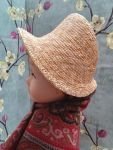
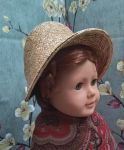
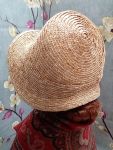
This year, I finally made an 1850s straw hat for myself. This became my non-corded clothing category entry. The daisies and violets are personal tributes to my Grandmothers. The flowers also have symbolic meaning.

The longest project I entered would be the white on white quilted table mat in that I started it last year. This was meant to be a practice round for a much bigger sentimental project I am now giving myself permission to let go of. For several years I have wanted to do a multi-generational quilt for an Ag Fair entry. The base or center for the wall quilt would have been one of Grandma’s unfinished quilt blocks. Around it, I envisioned blocks quilted by my mother, sister, niece, and self. That would have spanned 4 familial generations or 5 age generations.

Part of me wanted to enter a whole bunch of pockets, reflecting the Pockets of the Month I’ve been designing for Patreon. Since I entered a bunch last year, I decided to only allow myself to enter September’s Pocket, an embroidered grape design. I plan to color in the design with ink or pastels after the event.

As has become a newer tradition for me, Clara entered a piece of Feline Fancy Work. This is Patches, the patchwork cat. Patches is silk with embroidery. This past year, I learned that what I think of as “crazy quilt” was actually called “patchwork” in the second half of the 19th-century. The embroidery is noted in publications as being “for patchwork.”

Patches sparked a new-found joy for this technique for me. This resulted in one of my last two entries, an embroidered pin cushion. The cushion is embellished with a sun and moon design. I find I really enjoy the processed of putting the scrap bits together and embellishing them.

When I filled out my entry form, I found I hadn’t finished several categories/items I originally planned. From the hallway, exploding bags of wool kept calling to me to be made into something. A handful of the wool suiting endcuts I picked up at the fleamarket last spring became a wool table rug. Mine is far, far more rustic than the other braided rug entries. The others were beautifully folded before they were braided. The makers also planned their designs. I really liked that by chance, there were four braided rugs entered this year.

Overall, I was pretty sad there were so few entries in several categories. You can see from these photos many of the categories I entered had only my entry. As much as I like ribbons, I love seeing other people get ribbons. I also love seeing the work of others in the categories I enter. I like to see how they interpret a category. That doesn’t happen when only one person enters in each. The Agricultural Society Fair has such a strong sense of nostalgia for me. I get more excited about it than I do for Christmas now.

Published in: on September 30, 2023 at 4:30 pm  Comments (2)  

A Glance at Fall

I just wanted to do a quick post about current projects and what too look for in the coming months.

  • Today is drop off day for Ag Fair entries. Expect a post or two this weekend (or Monday)
  • Winter (head)Wear Week is coming the week of November 6th. I will focus blog posts, Reels, and videos on winter headwear. I am really going to try to have the new Quilted Hood Workbook completed by then. The stacks of archival boxes have taken over all functionality in my millinery room and photo area.
  • For the coming Holidays season, I will offer Mystery Boxes. I am in the planning and compiling stage for these. There will be a very limited number. I will select and announce an exact launch day for those. I anticipate it will be Thanksgiving week.
  • October’s Patreon Pocket of the Month is ready. There will be two! I am working on November’s design.
  • I am behind on my straw sewing. I will get back in the routine.
  • Progress on The Forgotten will get posted when there is progress. As mentioned above, boxes have slowed progress.

Published in: on September 29, 2023 at 7:38 am  Leave a Comment  

YouTube Shorts

I moved a few of my information Instagram Reels to YouTube as Shorts. Hopefully, this will make for easy viewing.

Published in: on September 27, 2023 at 4:00 pm  Leave a Comment