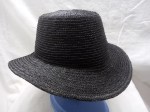
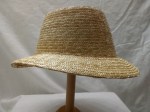
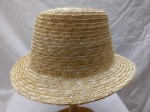
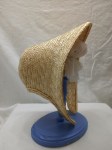
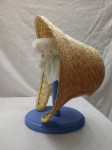
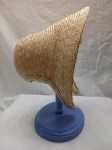
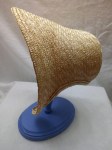
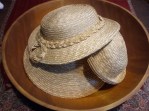
Straw Sewing Demonstration

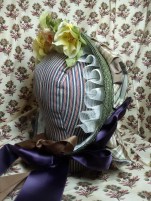
Join me next Saturday, April 13th, for a sneak peek of Victoria’s Closet: Fashions of the 1850s, during GCV&M’s Antique Show and Sale!

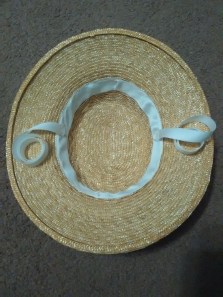
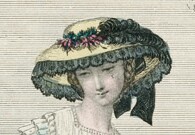
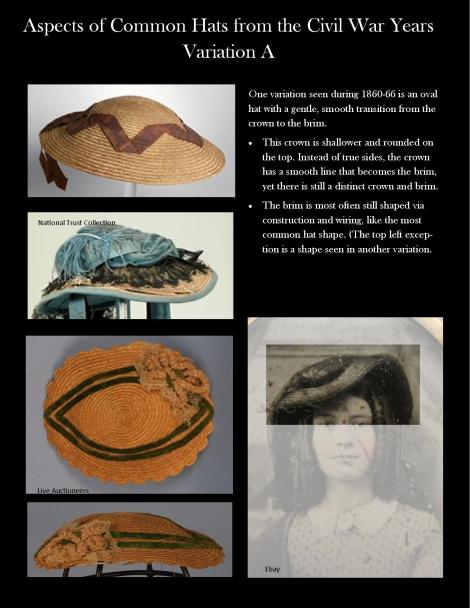
Find me in the Wehle Gallery demonstrating sewing straw millinery.

(The question of the moment…. Can I link a FB video directly into WP? ….. Yes, I can!)

Published in: on April 3, 2019 at 10:50 am  Leave a Comment  

A Lesson in a Card

20190401_113850.jpg

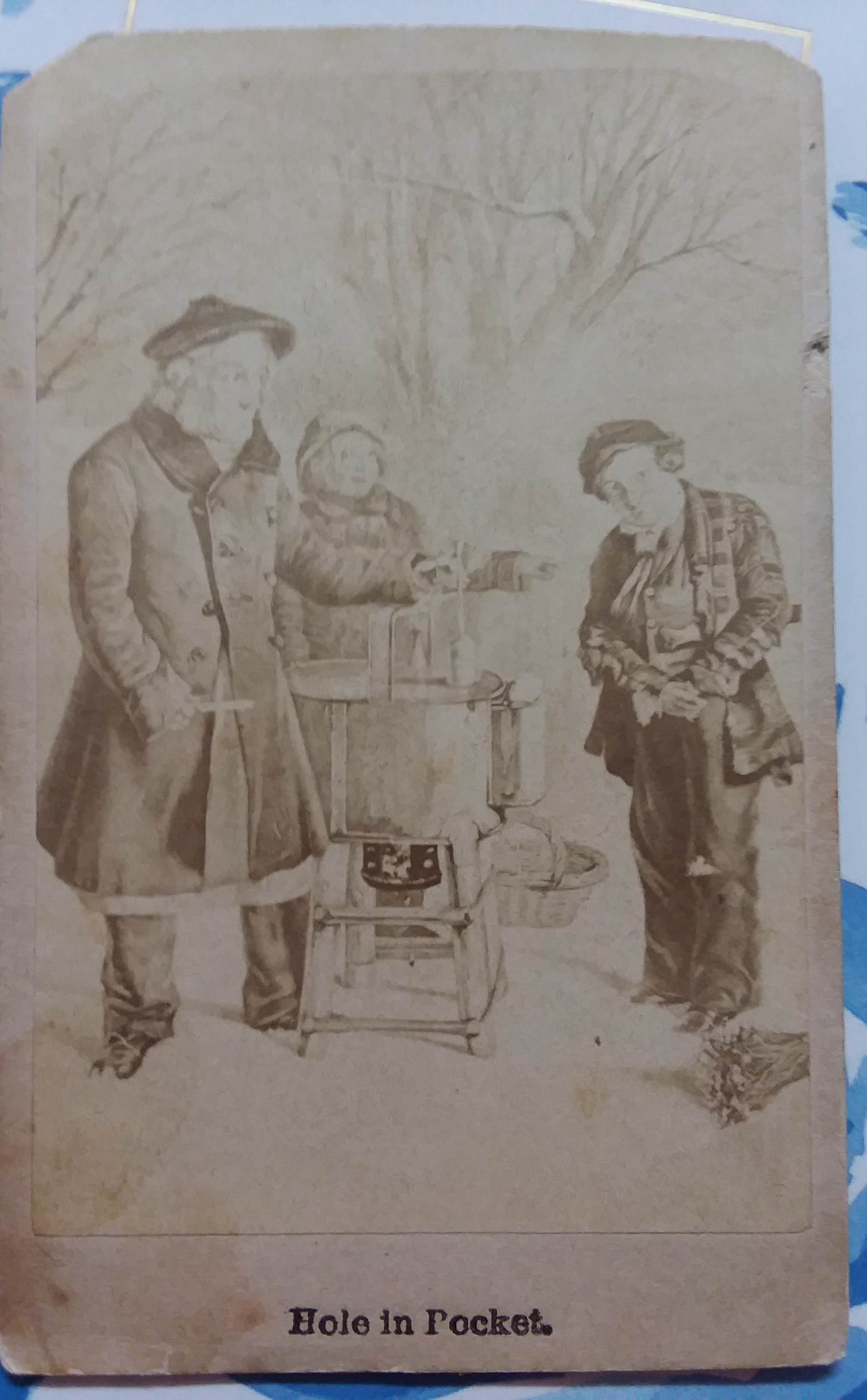
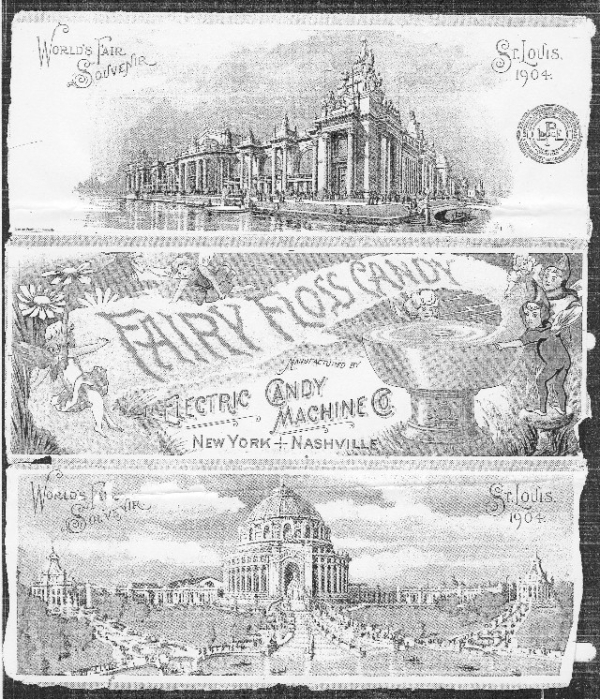
Flipping through a stack of CDVs for sale, I am usually looking for straw bonnets, straw hats, shawls, hairnets; I am not usually interested in filler cards, even though some are pretty cute. This one caught my attention and peeked my curiosity though. I wasn’t sure what was going on in the somewhat faded image. Sure, the boy seemed to be short on coin, that may have slipped through the hole in his pocket, as suggested by the title/caption. But, what is it he was wanting to buy? Cotton candy came to mind, because that certainly is what that machine looks like. But, the timing just wasn’t working in my head. Okay, I am still struggling with what I think the timing of the image looks like and the timing I am learning about cotton candy.
I have learned a few things looking for an explanation of this card:

  • Cotton candy was also called “Candy Floss” and “Fairy Floss” at first, early in the 20th century. A type of yarn for knitting was also called “Fairy Floss” during the mid-19th century.
  • Cotton candy needs electricity (duh me) and is as much about science as it is about candy.
  • It’s predecessor was spun sugar. (Desert of Spun Sugar) (1836 directions for the Spinning of Sugar) (1850 directions for Spinning Sugar)
  • The Saint Louis World’s Fair was properly know as the Louisianna Purchase Exposition. It lasted for 7 months, not the 3 to 14 days we are used to now. (more) I surmise the wooden “fairy floss” boxes may exist somewhere.
  • Cotton candy or Candy floss machines were marketed all over the place from about 1905-1915. (more)

My doubts… It may be that it is cold out still, but I think it is cold there, they are dressed for the cold, and cold is not conducive to the wanting of cotton candy. Okay, I am not really a fan of cotton candy in any weather. The machine simply does not look like the machines the early advertisements. I don’t know if this card is showing something other than a cotton candy machine, or if the earliest versions were different than what is being advertised. This is an early mention of Fairy Floss at the fair. The illustration is minimal, not showing enough. This image seems to combine a treadle machine base with the table-top candy machine. I just can’t imagine getting up the speed needed by foot. I want an index of filler cards. I am sure there is one out there, but I am just not finding it. (My tablet just wants me to go to pinterest or buy things. Um, not the goal here.)

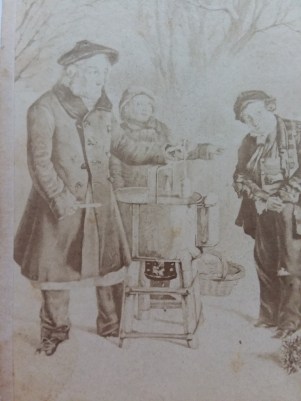
Closer view

20190330_150000.jpg

The back – I find this amusing: “for Willy from Willy”20190330_150008.jpg

———————————————-

ADDITIONS:

Per comment below, here are some 1905 images of chestnut roasting by street vendors.

Published in: on April 2, 2019 at 6:00 am  Comments (4)  

Hairnet CDV

Saturday I found myself headed east along what had been the turnpike throughout the 1800s, in search of the illusive gutted writing slope*. While I did not find the needed special box, I did find a few other goodies, several of which were from 50% off and 75% off booths.

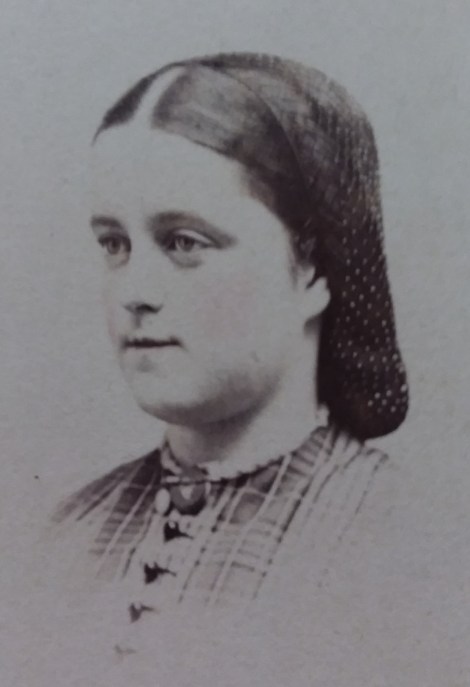
Of course, this CDV jumped out of the “sale” pile into the “mine” with that hairnet!

20190330_151120.jpg

This hairnet is so easy to see, it is a beautiful teaching tool. There are several things to notice: ~ The net is fine, very fine. It is likely made of silk. The beads appear to sit at the cross points of the net. Some appear to have a bit of shine to them. The net sits at or just forward of the halfway point of her head, going from ear to ear. She has opted to wear the net over her ears. I suspect this is because she dressed her hair to sit over her ears as well. Her hair is dressed inside the net, with braids starting above/behind the ears and draping very low on the nape of the neck.

Do you want to know more about hairnets? To Net, or Not to Net: Revisited takes a close look at hairnets, how they were worn, and how they were made, with images like this throughout the book.

*1 – The quest for a gutted writing slope is for a particular project with an all too closely looming deadline. What is a writing slope? Here is a video of an absolutely stunning one. I want one that is plain on the outside and empty on the inside.

Published in: on April 1, 2019 at 4:39 pm  Comments (1)  

Hairnet CDV

Saturday I found myself headed east along what had been the turnpike throughout the 1800s, in search of the illusive gutted writing slope*. While I did not find the needed special box, I did find a few other goodies, several of which were from 50% off and 75% off booths.

Of course, this CDV jumped out of the “sale” pile into the “mine” with that hairnet!

20190330_151120.jpg

This hairnet is so easy to see, it is a beautiful teaching tool. There are several things to notice: ~ The net is fine, very fine. It is likely made of silk. The beads appear to sit at the cross points of the net. Some appear to have a bit of shine to them. The net sits at or just forward of the halfway point of her head, going from ear to ear. She has opted to wear the net over her ears. I suspect this is because she dressed her hair to sit over her ears as well. Her hair is dressed inside the net, with braids starting above/behind the ears and draping very low on the nape of the neck.

Do you want to know more about hairnets? To Net, or Not to Net: Revisited takes a close look at hairnets, how they were worn, and how they were made, with images like this throughout the book.

*1 – The quest for a gutted writing slope is for a particular project with an all too closely looming deadline. What is a writing slope? Here is a video of an absolutely stunning one. I want one that is plain on the outside and empty on the inside.

Published in: on April 1, 2019 at 6:00 am  Leave a Comment  

March Reflections

March has been quite the roller coaster of weather. Here, we tossed and turned from winter to spring and back again more times then I can count. The wind certainly tossed us about. It does look like we may have finally made the shift to spring though. There was light as I drove into work this morning. It was kinda neat to notice how the sky reflects on the random pond by the mailbox. I do want to recognize that Mother Nature was not so kind to the mid-west with the landmark flooding. I hope my readers from that area are safe. I can only imagine the personal devastation and heartache.

I really have no idea where March went. I feel like I was just figuring out February stuff last week. I started trying to work out some of the blog’s technical stuff, aka space management, by moving videos over to YouTube. The [current] plan is to use YouTube as a storage spot with WordPress still being home-base, not to use YouTube as a separate viewing platform. So, don’t worry, you shouldn’t have to go anywhere else or worry about missing anything. I am going to try to do more videos though. I did have the writing urge hit a few times this month. Be sure you don’t miss:

Millinery….

My planned theme for this month was Mousquetaire March. I enjoy this fun, fashionable shape.

What was even better was seeing the photos client sent back. Holly brightened my day when her hat arrived and it looks absolutely perfect on her.

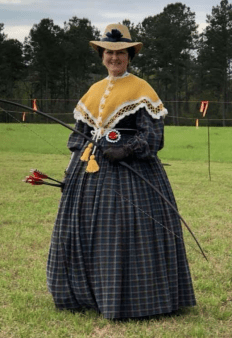
Then a hat got to be part of a perfect ensemble. Check out how great Lizzie looks in her archery ensemble:
Bonnets made it into the millinery works as well. Each of these bonnets sold very quickly, less than an hour. Remember, subscribe to this blog to get the quickest look. I will post pieces here right after I post them on Etsy.

Other Works in Progress…..

Time for a little project accountability…. You know that coat I started for an event in January? The one without the sleeve attached?  I put it away for now. It was all too quickly becoming a fuzzy gray coat rather than a black wool coat thanks to far too much attention from Clara.

I did start off the month working on an extra special Fanciful Utility related project. It was nice to do a piece like that again. Sorry no photos. This is one of those really cool things you just can’t share fully.

I will be doing a straw millinery demonstration coming up soon. This particular venue gives me different opportunities than the historic village.  I got this idea stuck in my head for a display of straw bits and pieces. Well, the idea is stuck tight but I can’t seem to find the base piece for it. As you know, when an idea is strongly stuck in your head, any substitution just isn’t going to cut it. So, eventually, I will find what I am looking for and make my display piece. It may not be in time for this demonstration.

I finally tried on the red plaid dress I was working on last summer before everything went arry. Let me tell you what a difference mirrors make! How did I make any garment without a decent mirror or duct-tape dummy for the last 7 years??? Medicine cabinet mirrors are not adequate for seeing what I look like.  Seriously, this dress has hip wings! The hip wings will be removed and the waistline re-fitted asap.

My corset will also be getting a tweak or two. The dress try-on let me know I can now lace to a correct back spring without causing pressure or pain in my surgical area. This is very exciting for me. I will be replacing my hip gussets as that is where my extra fluff resides currently. Since I will be replacing them, I am going to quilt them because I miss the soft quilted hip gussets of my old corset. I will also be adding light quilting to the bust gussets/cups to add more support for changing/aging flesh density. (Goodness, I wonder how much spam this paragraph will attract.)

I bought the prettiest pink plaid silk. It will be a dress by summer… I hope.

I think that about sums up March.

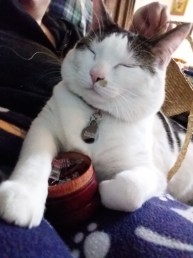
Hello from my feline helper…
20190310_120432.jpg


Published in: on March 29, 2019 at 6:01 am  Leave a Comment  

Challenge: Unlikely to Ever be Found

Some pieces of history will never be found. These are pieces that were used up, loved to threads, unwanted, situation-ally unlikely to survive, deemed unimportant…. then lost to time.

Every so often I think about these pieces from time to time, wondering if there is a single example out there, what we are missing because we haven’t held it in our sight line or hand…

Here is my challenge to you readers……

Find a textual description of an item that is Unlikely to Ever be Found… And share it here in the comments below.

Here I offer one such example:

The below clip is from The Englishwoman’s Domestic Magazine, 1862. In the “Book of the Month” column, the author is reviewing Female Life in Prison, by a Prison Matron. The passage describes dolls, “prison dolls”, roughly created by inmates. Such a doll is unlikely to have survived many days within the prison walls and less likely to leave the prison. As described, I can not imagine one, if it did escape, being saved long unless tucked deep inside a sentimental trunk. 20190320_130815-1.jpg20190320_130827-1.jpg

Published in: on March 20, 2019 at 1:38 pm  Comments (3)  

My Top “Must Read” List

I really am writing this post with a friend, who wants to get back into reenacting, in mind. But, I also figured some others may benefit from these links and thoughts as well.  It has been a while since I wrote a post that was reenacting focused….

Do you want to get into CW reenacting? Returning to reenacting after a long absence? Here are my top posts I would like you to read…… (many of these are mine. I am working on adding others.)

The Basics

  • It is helpful to know where you are, what kind of event you are at: Watcha Doing can help with that.
  • This is an older (2011) but still sound post about the basics: The Basics.
  • It is helpful to know the terminology for the dress(es) you will be wearing. Anatomy of a Dress should help with that.
  • Here are a pair of posts that look at the parts of a bonnet: Anatomy of a Straw Bonnet and Anatomy of a Drawn Bonnet. Of coarse, there are other bonnets.
  • Why this is GoodThis post has a PowerPoint and PDF with photographs of well dressed historical interpreters, with bullet points as to why what they are wearing is good.
  • Once you know what clothes (and pieces of material culture) you need, you should take a moment to read Know Your Maker.
  • I’ve been told The Shopping Itch, a small pocket reference, has been a great help in the moment.
  • Pizza, and the Piggy BankThis is my philosophical take on spending for the hobby.


Paying Attention to the Details

  • The Sewing Academy has been kind enough to offer several patterns for essential garments for Free! Please make use of these:
    • Chemise (Plan to have 3)
    • Drawers (Plan to have 3)
    • Petticoats (Plan to have 1 for under the cage, 2 for over the cage)
    • Sunbonnet (Start with 1. Eventually have a working one and a nice one)
    • Apron (Depending on your impression)
  • If you have a straw bonnet or hat that needs to be finished, please read these: How to Finish a Straw Bonnet and Guidelines to Finishing a Straw Hat
  • Cold weather events require layers to keep you warm. Read Are You Ready for Winter?


On the Book Shelf

These are the books that should be on your bookshelf. For some, you may want to get 2 – one to write notes in and one to keep clean.

Pause….

I suppose this is a good moment to pause and say I no longer consider myself a reenactor. I do not “reenact” a particular event. I also do not focus on a particular military era, which is most often connected with the concept of “reenacting.” I find I am no longer interested many aspects of “the hobby” as a military, social entity.

My (current) focus has shifted to visitor education and skill refinement. My participation is as a historical interpreter and takes place at historic sites. My primary research and interpretive focus is on women’s employment, specifically the spectrum of straw millinery. On occasion I will take on other roles as specifically needed for programming.

So, with that in mind…

Who do I Read?


Published in: on March 14, 2019 at 6:00 am  Leave a Comment  

Guidelines for Finishing a Straw Hat

20190210_174812.jpg

I am calling this post “Guidelines” because there was a good bit of variation in how straw hats were finished and trimmed. Because of this variety, it is difficult to say “do this” because there are options. I am going to try to address the questions I get most often:

IMG_20170502_155836

How do I keep a hat on my head?

There were a few ways original hats were kept on the head – narrow ribbon, wider ribbon, or narrow elastic. In each case, the ribbon or elastic was attached to the inside, side-walls of the crown. Placement is just above the ears. This could be tied under the hair in the back or under the chin. In photos showing wider ribbon as ties, the ribbon seems to match the ribbon used for decoration.

Le Follet, August 1861

Where can I put the ribbon?

Ribbons can be found in a wide variety of placements – The most common being around the base of the crown. They are also found as bows in the back, arrangements in the front, occasionally arrangements on the side, and as a binding around the brim edge. There are a few other placements seen in originals and photos such as “tabs” running from the crown to brim.

Magasin des Demoiselles, September, 1861

Where do I put my flowers or feathers?

Most flower or feather arrangements are center front with an attempt at balance if not symmetry. This is most, not all. Some hats have asymmetrical arrangements running from the front along to one side. The trick here is to visually move they eye while physically maintaining the weighted balance of the hat. Heavy flowers can cause a hat to be difficult to wear.

Magasin des Demoiselles, July, 1861

Can I wear a veil?

Yes. There were veils particularly made for hats. They would tie and pin to the hat. Another option is to have a deep lace circle the hat brim draping over the edge. Note: you want a natural fiber lace for either a veil or lace fall. These will allow you to breathe. Synthetic laces can make it difficult to breathe, especially in the heat.

Things to Avoid:

I generally don’t like to list things of what not to do. But, in this case, because there is so much leeway that could lead to foggy temptations, I think this may be helpful:

  • Nylon net (this is a heat and fire danger as well as an inaccuracy)
  • Obviously synthetic lace (if you have any doubt, skip it.)
  • Flowers with plastic (there are just better options)
  • Overly dyed feathers (On an overly humid or foggy day, the dye will come off and stain your hat, possibly your clothes.)
  • Wired ribbon

37bb9a9f1c4c748a99fa71044bc40f04(0)

Magazin des Demoiselles, June 1861

The Queen, July 1862

Le Follet, October 1861

common 1

common 2

common 3

Published in: on March 12, 2019 at 9:28 am  Comments (1)  

Finishing a Straw Bonnet

20180723_092546.jpgWe are entering the time of year when people are thinking spring and about decorating their bonnets. Straw bonnets have a great appeal because they are cooler to wear in the heat as the straw allows the head to breathe, and the embellishments can be changed fairly easily without leaving as obvious thread holes.
Just as with most other garments and material culture pieces, millinery is an investment. You want to finish your straw bonnet as accurately as possible. This will include several factors:

  • A lining to protect the straw from your hair products and to protect your hair from snagging on the straw. While not every extant bonnet has a lining or evidence or a lining, a lining can extend the life of your bonnet
  • A frill or cap for the inside of the bonnet’s brim. This frill simultaneously frames the face and helps hold the bonnet in place. You may also want to add a facing to the front couple inches of the inside of the brim. This is found in many originals.
  • The bavolet will need a cotton net lining to give it the proper fullness. I believe this net also physically supports the materials of the bavolet. The silk, whether from fabric or ribbon, is most frequently seen on the bias in original bonnets. The net will help the bias cut hold its shape, especially if addition elements such as straw, lace, or bead-work is added. Consider reading “Understanding the Ribbon Bavolet” for additional information.
  • A bonnet will need 2 sets of ties – A functional set of narrow ties which will hold the bonnet on, and a decorative set of wider ribbons.
  • You may want to add a stay to assist in holding the bonnet to your head. The easiest to add is a simple strip of velvet. More information with images can be found in the post “Bonnet Stays
  • Then, of course, you need your decorations – flowers, feathers, ribbons, lace, etc.
  • I will add – A storage box and stand – While this is not an immediate need, a stand and box will help your bonnet last by protecting it from being mis-shappened, and from dust.

Recommended Shopping List:

  • I highly recommend Danielle’s book from Timely Tresses: Finishing a Straw Bonnet Form
  • Cotton net to line your bavolet
  • Fine cotton or silk net (bobbinette), or silk organza or lace for your frill/cap
  • Fine cotton voile or silk taffeta to line your brim
  • 3 yards minimum of wide (silk or quality rayon) ribbon (2 yards for ties, 1 yard for bavolet, additional for decoration/bows) (silk taffeta is also an option for the bavolet.)
  • 1 yard of 3/4″-1″ wide silk or cotton sateen ribbon for ties.
  • Ribbon and laces of choice for decoration
  • Flowers and feathers of choice for decoration
  • 1/2″-3/4″ wide velvet for optional stay

20180730_175702.jpg

Recommended Reading List:

20180730_175123.jpg

Godey’s, November 1856

Straw Bonnets.—Straw bonnets generally require some sort of lining, crape, muslin, or a thin silk. Very few are now worn with a plain lining. It requires just the same quantity to make a little fullness, which is more becoming. I will explain to you how to make a plain lining or a plain bonnet will take just the same quantity; or, if any difference, the plain requires more than the full. I think I hear my readers say this if very strange. You are aware that, in cutting out a plain bonnet or lining, there are several small pieces cut out to the shape. The piece make the fullness, for the material is used on the straight when put in the easy and on cross-way when plain, which compels you to cut pieces off , which on the straight and put in full, is not required. A head lining of silk or muslin should be put in after the lining to make all neat and clean when the bonnet is worn. Straw curtains are worn; but a great many ladies prefer a silk curtain made of the ribbon to match the trimming. The curtain is best cross-way with a narrow straw on the edge. The curtain will not quite take a yard of ribbon; three and a quarter or three and a half are sufficient to trim a bonnet. Plain colors on a straw are neater than mixed, such as primrose, light or dark blue. Sarcenet ribbon is better than satin. It is a good plan to sew narrow strings on the bonnet at the same time you sew the wide tie; the narrow first: it keep the bonnet more firm on the head. When I say narrow ribbon, I mean an inch and a half wide. An old fancy straw bonnet will make up again very weill by putting some silk between each row of straw. You must have a wire frame, and unpick the bonnet; cut some pieces of silk on the cross for puffings, and now lay your straw alternately with the silk. Unless the straw is a very good color, mix colored silk with it. This bonnet will require a lining.

Published in: on March 12, 2019 at 6:00 am  Leave a Comment  

Hairnets – The Basics and More Indepth

There are several resources available to learn more about hairnets…..

Are you confused about the word “Snood”? Read Getting Snoody by Elizabeth Stewart Clark.

Do you want to know what basic hairnet to buy and have in your hair kit? Watch this video: Invisible Hairnets.

Want to know the basic ins and outs of hair nets? Read To Net, or Not to Net an article by Anna Worden.

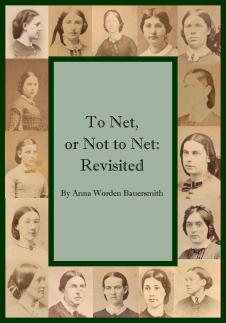
Want to know the details of hairnets, who wore what kinds and when with lots of photos and illustrations? Read the full-length e-book To Net, or Not to Net: Revisited, by Anna Worden Bauersmith.

to-net-or-not-to-net-revisited-cover

Published in: on March 11, 2019 at 9:47 am  Leave a Comment