Taking a Closer Look – Skirt drop and hems

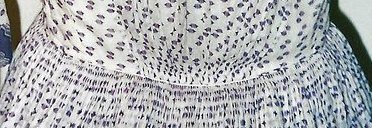
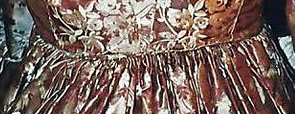
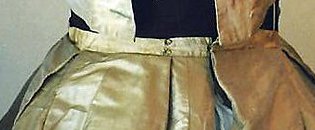
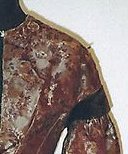
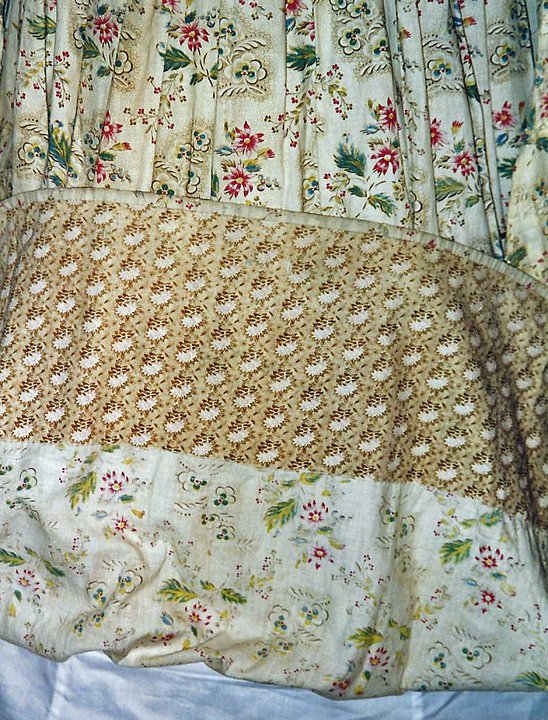
These two originals from Martin’s Mercantile are displayed with a nice bell shape. The skirts drape nicely over the support of a cage and petticoats creating the nice, soft bell that comes out and drops from about the lower calf down.
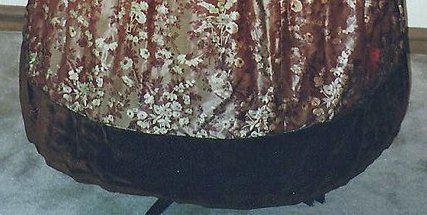
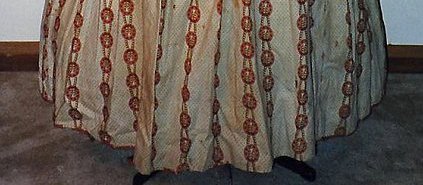
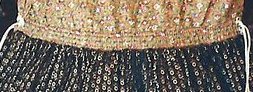
This is technically a 30s dress but it shows how the skirt backing construction process was well in place.
Published in: on January 25, 2012 at 1:13 am  Comments (1)  

Taking a Closer Look – Skirt drop and hems

After looking at the top of the skirt last week, let us look at the bottom this week. This includes both the shape and the construction.

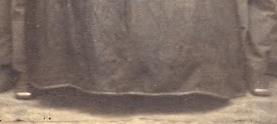
This skirt, which is a 3/4 turn view meaning she is slightly turned to the side, shows the bell shape through the bottom of the skirt. In the front, left, you can see a hint of what might be the hem tape.

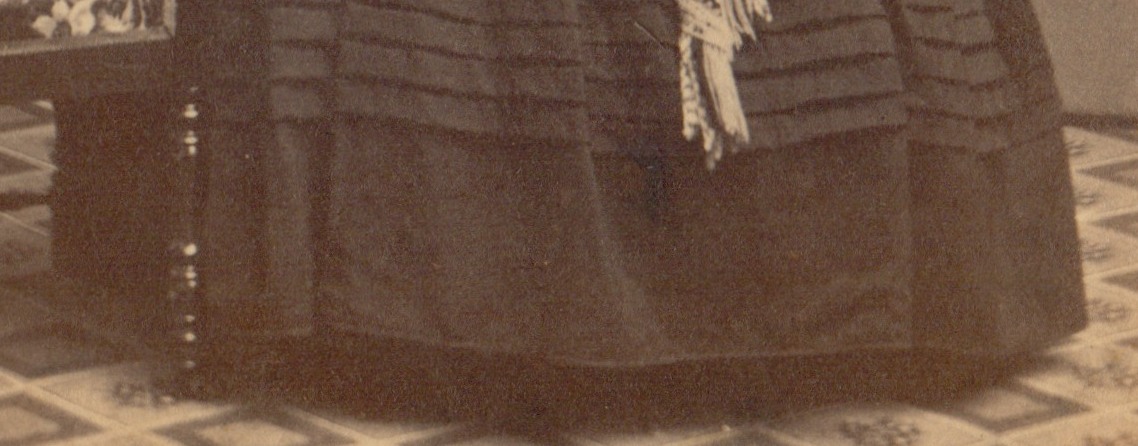
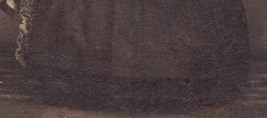
This working class mom (those are the feet of her sons on either side of her) has a solid color skirt, likely wool, which shows the hem tape nicely. This well tucked wool skirt shows the hem tape. The bell shape is nicely defined. See how the skirt’s bell shapes from about her lower calf down?This skirt shows more of the bell on the left hand side than the right. But, what I find interesting (in addition to the panel seams) is the wear evident at the bottom. This image is harder to see due the the coloring and scan. The skirt does have a nice bell shape.

Published in: on January 23, 2012 at 1:31 am  Comments (1)  

Taking a Closer Look – the waist

On the Fridays of this series we look at how seamstresses and reenactors recreate the look of the area we are discussing. Today comes an additional observation. While looking through my images for those to show the waist area, I discovered we must be standing differently in our modern photos because I couldn’t find as many clear shots of the waist as I wanted. In most photos, our arms are covering the area. When pulling CDVs, it wasn’t difficult at all to find clear views of the waist. That is something to think about.

Here is Colleen who has a nice transition off her bodice into her skirts. The poof is developed from her skirt construction and the layering/positioning of her petticoats underneath. Here is Samantha in her sheer dress which transitions fully off of her waistband with less poof developed from a solid petticoat foundation and the gauging in the sheer fabric.

Published in: on January 20, 2012 at 1:01 am  Leave a Comment  

Taking a Closer Look – the waist

This week we are looking at the waist, the transition from the bodice to the skirt. The look of this area is created with both the skirt/dress construction and the layering of petticoats underneath.

Today, take a look at all of these originals (from Martin’s mercantile) looking at how the different skirt treatments (knife pleats, box pleats, gauging) effect the volume coming off the waistband or bodice.
Published in: on January 18, 2012 at 1:01 am  Leave a Comment  

Taking a Closer Look – Waist to Skirt

The transition from the waist to the skirt is an area that facinates me. I know it is a rather odd part of the dress to be particular about. I like looking at the shape of the transition. Sometimes it is subtle while other times it has a great poof to it aided by a combination of skirt support, petticoats and skirt construction.
Published in: on January 16, 2012 at 1:25 am  Leave a Comment  

Taking A Closer Look – Achieving the shoulder

Now, let us look at how others have achieved the right look in the shoulders. Thank you to all those who offered to share thier images in “Why this is good” 


Samantha Bullat

Colleen Formby 58 59 cotton wool lawn

Published in: on January 13, 2012 at 1:06 am  Comments (1)  

Taking A Closer Look – Dropped Shoulders

After looking at shoulders in CDVs on Monday, today we will look at the shoulders of original dresses. Thank you to Martin’s Mercantile for the use of their original clothing images.

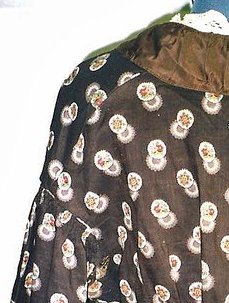
This bodice shows the length of the shoulder in the bodice extending beyond the natural shoulder and dropping below the natural shoulder. Notice how we don’t see the shoulder seam itself from the front. The armscye is diagonal while the trim of the sleeve cap is nearly horizontal. This shoulder also extends beyond the natural shoulder. Again, we do not see the seam from the front. The top of the trim sits along the armscye seam creating a nearly horizontal seam along the bottom edge. This wrapper bodice, viewed from the back, shows the placement of the shoulder seam behind the natural shoulder line.

Published in: on January 11, 2012 at 1:29 am  Leave a Comment  

Taking a Closer Look – Shoulder seams

When I started reenacting mid-century and Civil War I heard the phrase ‘dropped shoulders’ at event fashion shows. It was a while later before I realized this actually refers to two seams not one. The armscye seam is dropped off the shoulder and the shoulder seam is dropped behind the natural shoulder. By dropping the shoulder seam back, usually from just beyond the ear line at the neck to a half inch to an inch and a half at the outer shoulder, this eliminates the visual seam line from view from the front. By extending the length of the shoulder beyond the natural shoulder and placing the armscye/sleeve lower, the illusion of wider shoulders is created.

Taking a look at these images of women, we can see a few additional tricks to they eye created in the shoulder area.

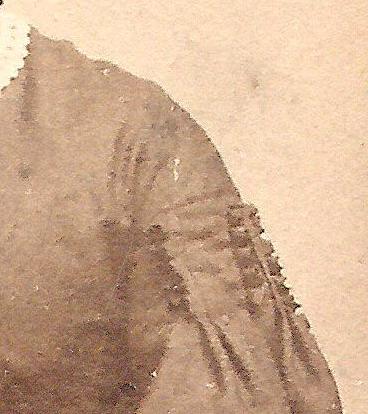
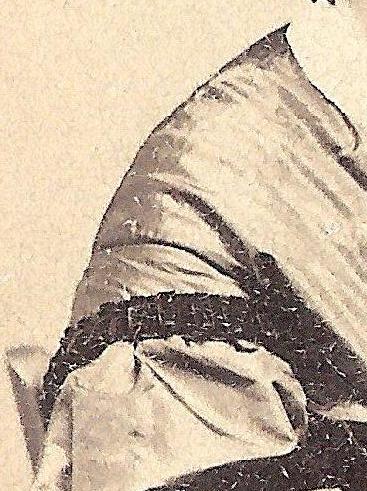
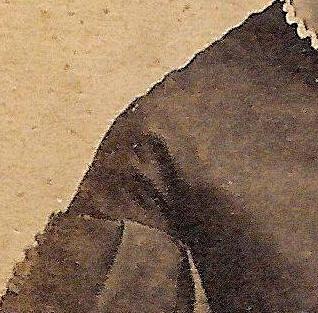
This image lets us see where the natural shoulder is as well as the the placement of the sleeve to bodice seam is. Notice the top of the sleeve also has some stitching which brings the eye down further in the sleeve.

This image shows how horizontal stripes can look with the shoulder seam going beyond the natural shoulder. Notice how the stripes in the fabric bring the eye out and down. The trim, possibly cap placement, also brings the eye out. This woman’s bodice has a shoulder line that extends well beyond the shoulder creating that horizontal line. Further below is a sleeve trim.

The check pattern in this fabric shows how a vertical print can appear with the dropped shoulder. The eye is again brought out through the shoulder. The trim coming just below the shoulder/arcmscye seam brings the eye further down.

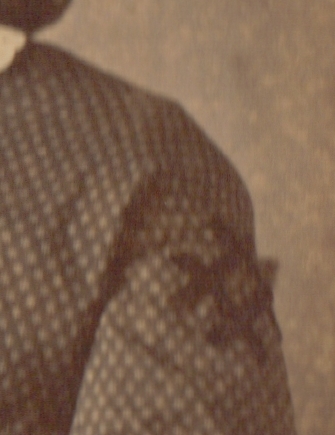
The sleeve treatment on this working class woman’s wool dress controls the fullness of the top of the sleeve while continuing the line down from the shoulder. This basic dropped, horizontal armscye is accented by the trim over the seam itself, down into the sleeve. The fullness at the top of this sleeve helps with the illusion of width at the shoulders. The sleeve treatment from the armscye seam down creates a horizontal bandAlmost horizontal seam with horizontal trim.Distinctly horizontal sleeve/armscye.

Published in: on January 9, 2012 at 1:19 am  Leave a Comment  

Taking A Closer Look – Introduction

This month the blog will focus on taking a closer look at four areas of a dress, one each week. (It will also be an adventure in posting from my new phone. So please pardon any odd text and spellings until I get used to the new keypad.) We will be looking at shoulder & armsyces, the transition from bodice to waist, lower shirt and hem shape, and collars.
Each week, we will look at close-ups of the area discussed in cdvs on Monday. Then proceed to look at how this area’s look is achieved through garment construction, layering, etc. We will also look at how those in the previous “Why This is Good” piece achieve the look in their attire.
I hope readers actively comment and add their observations. If this is a success, we can repeat with other garments and/or pieces of material culture in the future.

Published in: on January 5, 2012 at 7:22 am  Leave a Comment  

Looking at the Amount of Jewelry Worn

On my drive home this evening I was thinking about the amount of jewelry a woman wore during the mid-19th century. There would be a number of factors ranging from socio-economic status to personal preference.

I will be using a spreadsheet to go through my CDV images surveying the jewelry worn. I invite my readers to download this Jewelry CDV Survey Template in Word or this Jewelry CDV Survey Template in Excell  to survey their own images as well. If you could email it back to me when you are finished, we can put together a good amount of data. If you are unable to open the above files, here is Jewelry CDV Survey Template as a PDF.

Some guidelines:

  • Please include the images owned by you.
  • The more information you include in each column the better.
  • The better you can focus on what you see the better.
  • The closer you can look at your image the better. (I love to scan mine on a high dpi so I can zoom in.)
  • For image name – I find it easier to do my file names with a code. Please use a code you understand. If you have an image you want to share with others, please put your own name in the file name.
  • For Location – Please identify whether the location is the studio of the photographer or a hand-written location.
  • For “Sitter” – Please use the name of the sitter if known. Also include factors such as age or marital status as possible.
  • For “Dating” –  Please include an exact year/date only if it is documented (ie handwritten or tax stamp) otherwise please identify the image to the half decade (early or late) as 1840e, 1840l, 1850e, 1850l, 1860e, 1860l
  • For Socio-Economic identifiers – Please note observations about the woman’s status such as attire (fabric, elaborateness of dress.)
  • For each column of  Jewelry Worn – If nothing is worn, please write “none”. If this area can not be seen, please write “Unknown”. If an item can be identified, please write as much as you can see. If an item is there but not clear, please write “unclear”
  • For additional notes – please include other information you feel is important.
  • Please include any annotations about the collection you keep and are surveying within the Word or Excell file, such as at the bottom of the chart or the next page, so the notes are kept together. This might include what images you tend to focus on. For example, I focus on shawl images; others may focus on working images or those from a particular area. My hope is with a large sample size any collection biases will be minimalized.

Published in: on November 18, 2011 at 9:51 pm  Comments (2)