Taking a Closer Look – the waist

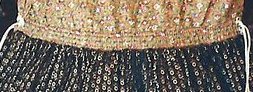
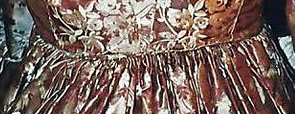
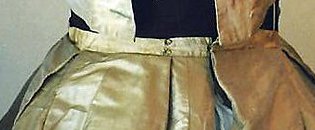
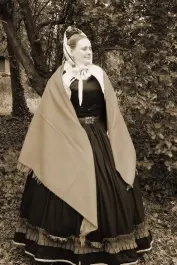
This week we are looking at the waist, the transition from the bodice to the skirt. The look of this area is created with both the skirt/dress construction and the layering of petticoats underneath.

Today, take a look at all of these originals (from Martin’s mercantile) looking at how the different skirt treatments (knife pleats, box pleats, gauging) effect the volume coming off the waistband or bodice.

Published in: on January 18, 2012 at 1:01 am  Leave a Comment  

Taking a Closer Look – Waist to Skirt

The transition from the waist to the skirt is an area that facinates me. I know it is a rather odd part of the dress to be particular about. I like looking at the shape of the transition. Sometimes it is subtle while other times it has a great poof to it aided by a combination of skirt support, petticoats and skirt construction.

Published in: on January 16, 2012 at 1:25 am  Leave a Comment  

Taking A Closer Look – Achieving the shoulder

Now, let us look at how others have achieved the right look in the shoulders. Thank you to all those who offered to share thier images in “Why this is good” 


Samantha Bullat

Colleen Formby 58 59 cotton wool lawn

Published in: on January 13, 2012 at 1:06 am  Comments (1)  

Taking A Closer Look – Dropped Shoulders

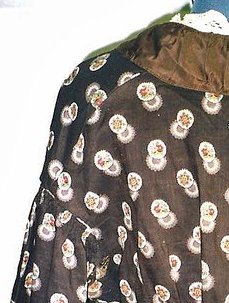
After looking at shoulders in CDVs on Monday, today we will look at the shoulders of original dresses. Thank you to Martin’s Mercantile for the use of their original clothing images.

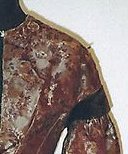
This bodice shows the length of the shoulder in the bodice extending beyond the natural shoulder and dropping below the natural shoulder. Notice how we don’t see the shoulder seam itself from the front. The armscye is diagonal while the trim of the sleeve cap is nearly horizontal. This shoulder also extends beyond the natural shoulder. Again, we do not see the seam from the front. The top of the trim sits along the armscye seam creating a nearly horizontal seam along the bottom edge. This wrapper bodice, viewed from the back, shows the placement of the shoulder seam behind the natural shoulder line.

Published in: on January 11, 2012 at 1:29 am  Leave a Comment  

Taking a Closer Look – Shoulder seams

When I started reenacting mid-century and Civil War I heard the phrase ‘dropped shoulders’ at event fashion shows. It was a while later before I realized this actually refers to two seams not one. The armscye seam is dropped off the shoulder and the shoulder seam is dropped behind the natural shoulder. By dropping the shoulder seam back, usually from just beyond the ear line at the neck to a half inch to an inch and a half at the outer shoulder, this eliminates the visual seam line from view from the front. By extending the length of the shoulder beyond the natural shoulder and placing the armscye/sleeve lower, the illusion of wider shoulders is created.

Taking a look at these images of women, we can see a few additional tricks to they eye created in the shoulder area.

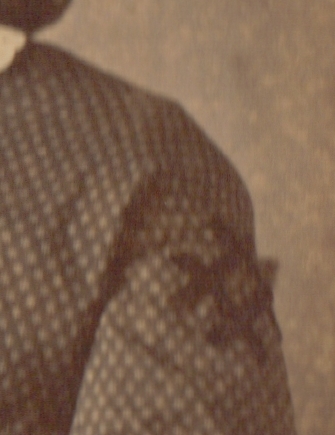
This image lets us see where the natural shoulder is as well as the the placement of the sleeve to bodice seam is. Notice the top of the sleeve also has some stitching which brings the eye down further in the sleeve.

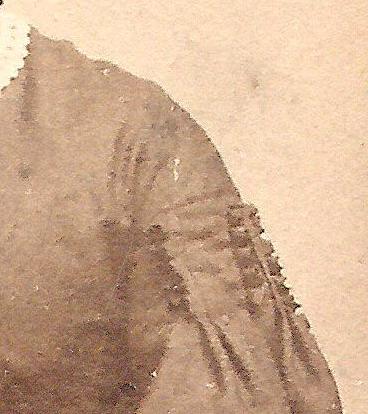
This image shows how horizontal stripes can look with the shoulder seam going beyond the natural shoulder. Notice how the stripes in the fabric bring the eye out and down. The trim, possibly cap placement, also brings the eye out. This woman’s bodice has a shoulder line that extends well beyond the shoulder creating that horizontal line. Further below is a sleeve trim.

The check pattern in this fabric shows how a vertical print can appear with the dropped shoulder. The eye is again brought out through the shoulder. The trim coming just below the shoulder/arcmscye seam brings the eye further down.

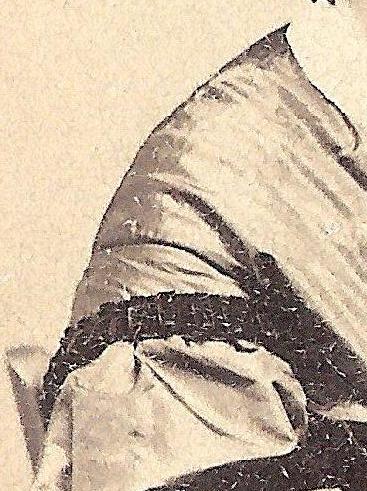
The sleeve treatment on this working class woman’s wool dress controls the fullness of the top of the sleeve while continuing the line down from the shoulder. This basic dropped, horizontal armscye is accented by the trim over the seam itself, down into the sleeve. The fullness at the top of this sleeve helps with the illusion of width at the shoulders. The sleeve treatment from the armscye seam down creates a horizontal bandAlmost horizontal seam with horizontal trim.Distinctly horizontal sleeve/armscye.

Published in: on January 9, 2012 at 1:19 am  Leave a Comment  

Taking A Closer Look – Introduction

This month the blog will focus on taking a closer look at four areas of a dress, one each week. (It will also be an adventure in posting from my new phone. So please pardon any odd text and spellings until I get used to the new keypad.) We will be looking at shoulder & armsyces, the transition from bodice to waist, lower shirt and hem shape, and collars.
Each week, we will look at close-ups of the area discussed in cdvs on Monday. Then proceed to look at how this area’s look is achieved through garment construction, layering, etc. We will also look at how those in the previous “Why This is Good” piece achieve the look in their attire.
I hope readers actively comment and add their observations. If this is a success, we can repeat with other garments and/or pieces of material culture in the future.

Published in: on January 5, 2012 at 7:22 am  Leave a Comment  

Happy 2012!!!

Happy New Year everyone. I want to say thank you to all my readers from the past year. I was continuously amazed by the readership stats.

As we move into 2012, I anticipate having less writing time then I did in 2011. With this in mind,  want to make the most out of the writing time I do have. This means I need to know what you want to read about in the coming year.

I welcome each of you to comment below with what you would like to see included this year. Would you like to see more on certain topics (shawls, sewing cases, hoods, cfolding furniture, ribbons, trunks, etc)? Commentary? Advice? Transcriptions from original sources? How-to articles? Posts on current projects? What to expect on Etsy or in publications? Guest posts? Something I’m forgetting or haven’t thought of?

I’m hoping to start putting together the”closer look” series for January, which comes out of the “why this is good” piece. Beyond that…. I am open ears.

Warm Regards,

Anna

PS – Hopefully you’ll start seeing more of the paisley theme (aka branding) this year.

Published in: on December 31, 2011 at 12:11 am  Comments (5)  

Merry Christmas!!!

Published in: on December 24, 2011 at 9:37 am  Comments (1)  
Tags:

Christmas Images

Peterson’s 1861

Carrying Home the Christmas Turkey

Published in: on December 22, 2011 at 1:11 am  Leave a Comment  
Tags:

Christmas is Coming.

I stumbled across this book Jennie Juneiana: Talks on Women’s Topics by Jennie June (Boston: Lee and Shepard, 1864) while looking up something else. I hope you enjoy a selection of transcriptions over the next few weeks….

Christmas is Coming.

“At Christmas play, and make good cheer,

For Christmas comes but once a year.”

Christmas is coming! Good news for the children, who know that with it comes the jolly, merry Santa Claus, his panniers piled high with toys and confectionery, skates and sleds; who topples down the chimney in such an extraordinary way, and mysteriously fills little socks and the larger stockings with just what the busy little owners most wished to see! Yes, Christmas is coming, that pleasant time when the good christkindlein plants lovely trees in the dwellings of his favorites, brilliantly illuminates them with myriads of lights, and then hangs from each branch and twig all that is prettiest and rarest for those who have pleased him, by showing kindness and love to each other during the year that is past. An emblem of the Providence which always rewards the good, and punishes the bad, it the beautiful Christmas tree, and an object of sacred mystery to the crowd of delighted little ones, who look, at first awe-struck at the shining wonder, which seems to have dropped right down from the stars.

Christmas is coming! not only in America, but all along the shores of Old and still “Merrie England.” At this moment thousands of mothers, and thousands of little ones, are anticipating with eagerness the approach of the grand national plum-pudding day; and even dignified fathers of families will not object to carry home, after nightfall, the boxes of raisins, and pounds of suet, which are necessary to the composition of the celebrated dish, for which even the most super-human mortals have a tender weakness.

            Christmas is coming! Pile up the wood, bring out your nuts, and cider, and apples, and prepare to enjoy the genial influences of the season; but do not forget the poor.  You will not miss a piece of beef, or pork, a pair of chickens, a basket of wood, a cabbage, and perhaps a little meal of flour. Tell your wife what you are doing before it is quite packed up; and trust a woman, but she will find “something good” – a pie, some cookies for the children, and perhaps a blanket of comforter to throw over all, and which she will tell you (bless her womanly heart!) that you “needn’t bring back.” Try it once, if you never did before, and you will experience a keener sense of enjoyment in your own comforts that a mean and selfish absorption could ever dream or think of. 

Thank the Lofd, reverently, that Christmas is coming, – the time when Christ was born, who brought peace on earth, and good will to men. Pray that he may be born again in every human heart, and that the old anthems may be again sung which echoed over the hills of Judea when the Saviour saw the light on the first Christmas morning in the manger at Bethleham.

Published in: on December 21, 2011 at 1:04 am  Leave a Comment  
Tags: