Finds For Mae

With today being a rare Friday off, we headed over to a favorite craft shop in hopes of finding some flowers for millinery and other needed things. While the initial list was a flop, I did find a pair of goodies.
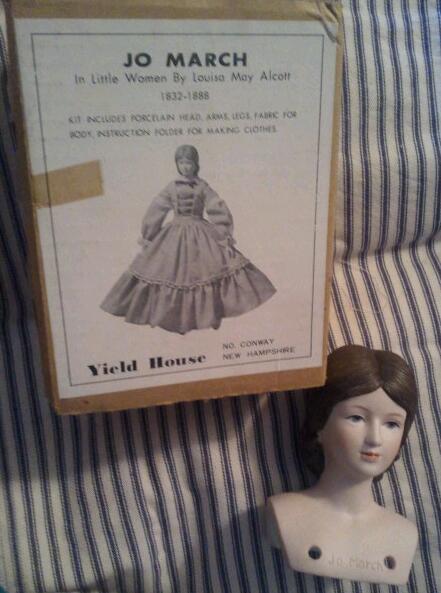
This Jo Marc doll kit will become a nice new friend for Mae.

image

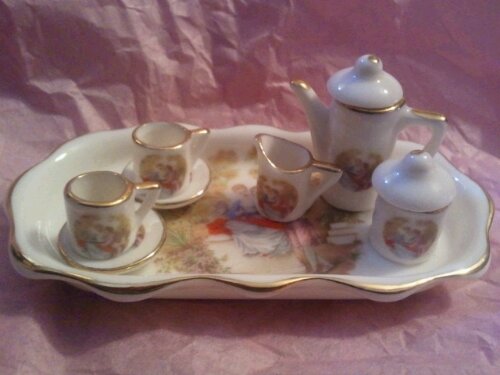
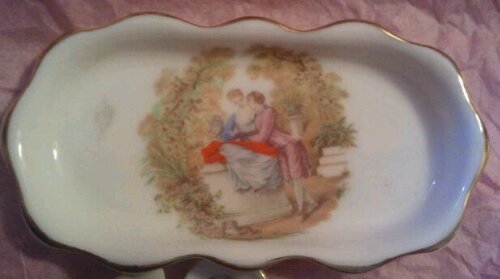
Then, the two of them can have tea together with this pretty little tea set.

image

image

Published in: on March 29, 2013 at 7:48 pm  Leave a Comment  

NB Sewing Journal – Tonight’s Reading

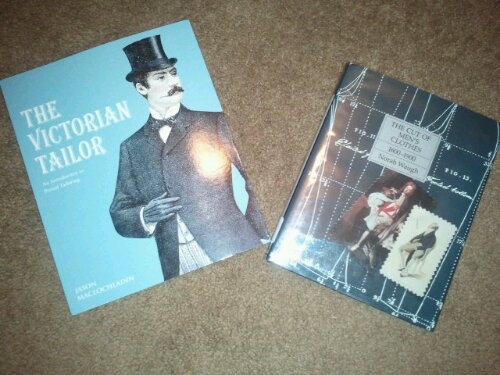
Two books arrived to aide in the planning & sewing of Dan’s clothing. On the left, Jason Maclochlainn’s The Victorian Tailor arrived via the postal man. On the right, Norah Waugh’s The Cut of Men’s Clothes arrived via interlibrary loan.

image

The latter seems to be a nice summary of three centuries. It looks like it will give me an over view of the progression/evolution of men’s clothing. I see one diagram of a dress coat from the 1820s that may or may not b of use. The other diagrams are later.
The first book at first look, looks to be a pleasing purchase. Flipping through though, this is definitally an “Oh, wow!” Book. I am so glad I bought it. If it isn’t the strongest choice for this project, it will be very helpful alongside DeVeer’s for a mid-century civilian outfit for Dan. (I’m picturing a linen sacque or frock.) I don’t know if I’m more excited by his decade by decade breakdown of garments or the explaination of the stitches of a tailor and contruction. I am going to Love this book!

Published in: on March 11, 2013 at 3:45 pm  Leave a Comment  
Tags:

Update & Plan

Based on my emails and messages on Facebook, there are some people wondering what we are up to with this cross-country move. Let us just say April has been absolutely crazy with a short notice move out of NM, my leaving my job, a cross-country drive and an on-going search for a new job and place to live. So, for everyone wondering…..

The general plan is to look for jobs here in New York (the Genesee Valley area not NYC), find a place to live and get some family time that we’ve both been missing.

In terms of living history activities, once I get my head on straight I will be ready to get back into period clothes. I have a new series of workshops and presentations ready to go once I get the necessary business paperwork taken care of. Those programs can be found here with descriptions and a brochure.

Published in: on May 6, 2011 at 10:19 am  Comments (2)  

The Winner Is……

Brooke Whitaker!!!

Brooke  will recieve a free copy for From Field to Fashion.

Thank you everyone for participating in my July give-away. Keep watching for future publications, give-aways and new articles as always.

Published in: on July 16, 2010 at 1:13 am  Comments (1)  

Judith Peeble’s “Jump Start Your Event Season”

If you haven’t already, do check out Mrs. Peeble’s post on the WCC.

http://www.westcoastcampaigner.com/forums/showthread.php?t=1432

She discusses everything from mending and caring for clothes to planting an herb garden to tent, furniture and china care. She has many wonderful tips to share.

Published in: on February 3, 2009 at 12:54 pm  Leave a Comment  

Groundhog’s Day…. how long until Spring???

I don’t know how many of you are as anxious for spring as I am. While I think snow can create the most beautiful landscapes, I find driving in it quite tiresome. I also find, on mornings like this morning, sliding on ice a bit nerve racking. (I’m so glad I’ve been exercising because I would have landed right on the ground otherwise.) Given that today is Groundhogs Day, I feel a little better that spring will actually be here eventually.

            The earliest reference to Groundhog’s Day that shows up on Google Books is in 1893. Other days landing in the February 2nd vicinity show up more often including Candlemas, Imbolc, and Purification Day. In the 1832 and 1841 almanac The Year Book of Daily Recreation and Information by William Hone describes the February 2nd holiday:

“February 2. Candlemas Day. This day is so called, because it the papal church a mass was celebrated, and candles were consecrated, for the church processions. To denote the custom and the day, a hand holding a torch was marked on the old Danish calendars.”

In John Timbs’ 1861 Something For Everybody :

Candlemas.

The Pagan Romans celebrated their Juno Februata on the day which is the vigil of Candlemas, Feb. 1st; and hence the name of the month February is unquestionably derived. In some of the ancient illuminated calendars, a woman holding a taper in each hand is represented in the month of February.

Candlemas is evidently traceable to the ancient custom of lighting up churches and chapels with candles and lamps, and carrying them in procession. The practice of lighting the churches has been discontinued in England since the second year of Edward VI.; in the Romish Church, the original name, and all its attendant ceremonies, are still retained. Herbert, in his Country Parson, refers to a relic of this practice in the custom of saying “when light is brought in, God sends us the light of Heaven,—and the parson likes this very well. Light is a great blessing, and as great as food, for which we give thanks; and those that think this superstitious, neither know superstition nor themselves.”

The candles for this festival were made in great quantities in Roman Catholic times; the Wax Chandlers’ Company was incorporated as early as 1483; the chandler of old lent out wax-tapers for hire ; and wax was .brought to him to be made into “torches, torchettes, prykettes, or perchers, chaundelle or tapers for women ayenst Candlemas.”

Notwithstanding the Popish character of Candlemas, and its hallowing and conjuring of candles, in 1628 we find a Bishop of Durham, climbing ladders to light up his cathedral with 220 candles and 16 torches; and in 1790, the collegiate church of Ripon, Yorkshire, was, on the Sunday before Candlemas Day, ” one continued blaze of light all the afternoon by an immense number of candles.”

Ray, in his Proverbs, has: “On Candlemas Day, throw candle and candlestick away;” and “Sow or set beans on Candlemas waddle,” i.e., wane of the moon.

Another reason was that the use of lighted tapers, which was observed all winter at vespers and litanies, was then wont to cease till the next Allhallow Mass. Women used to carry candles when they were churched; in the north of England, this is called Wives’ Feast Day. Christmas evergreens were removed, and box substituted in their place, as Herrick thus enjoins, in his Hesperides:—

Down with the Rosemary and Baycs,

Down with the Misleto;
Instead of Holly, now up-raise

The greener Box (for snow).


The Holly Hitherto did sway,

Let Box now domineere

Until the dancing Easter Day

On Easter’s Eve appear.


Then youthful Box, which now hath grace,

Your houses to renew;

Grown old, surrender must his place

Unto the crisped Yew.


When Yew is out, then Birch comes in,

And many flowers beside,

Both of a fresh and fragrant kinne,

To honour Whitsuntide.


Green Rushes, then, and sweetest Bents,

With cooler Oaken boughs,

Come in for comely ornaments,

The re-adorn the house.


Thus times do shift; each thing his turne do’s hold;

New things succeed as former things grow old. “


There are many other descriptions and histories of the available on GB.


We are likely most familiar with the weather forcasting method of watching the groundhog reacting to his or her shadow. These are some of the other predictions that were made at this time of year: (From Something for Everybody mostly relevant to the climate in England I suspect.)


            When the wind’s in the east on Candlemas Day,

            There it will stick till the second of May.


            When Candlemas Day is fine and clear,

            A shepherd would rather see his wife on the bier.


            After Candlemas Day, the frost will be more keen,

            If the sun then shines bright, then before it has been.


            You should on Candlemas Day

            Throw candle and candlestick away.


            On Candlemas Day, if the thorns hang a-drop,

            Then you are sure of a good pea-crop.


In The Borderer’s Table Book published in London, 18__, this look how well winter will hold can be found a set of predictions that make me think I’ll have a long winter in this area (the weather was nice yesterday and is again today.)

On Candlemas-day, throw candle and candlestick away.

                        A windy Christmas and calm Candlemas are signs of a good year.

                        If Candlemas-day be fine, it portends a hard season to come.

            If Candlemas-day be cloudy and lowering, a mild and gentle season.

                        That hind had as life see his wife on the bier,

            As that Candlemas-day be pleasant and clear.

                        If Candlemas-day be fair and bright,

            Winter will have another flight.

                        If Candlemas-day be clouds and rain,

            Winter is gone, and will not come again.

                        When Candlemas-day is come and gone

            The snow lies on a hot stone.

                        February fill dike, be it black or be it white,

            But if it be white, it’s the better to like.

                        Of all the months in the year, curse a fair February.

                        If Candlemas-day be dry and fair,

            The half of winter’s to come and mair.

                        If Candlemas-day be wet and foul,

            The half of winter’s gone at Yule.

                        It Candlemas-day is fair and clear,

            There’ll be two winters in the year

.

For more seasonal proverbs, also see Proverbs of All Nations, London, 1861.
Published in: on February 2, 2009 at 10:54 am  Leave a Comment  

Brrrrrrr….. Cold!

With most of the country reaching the depths of the winter in a way we haven’t seen in a few years, I thought it would be nice to look at the winter weather of the mid-nineteenth century.
“Yesterday was a very cold day. The thermometer at sunrise was 4 degrees below zero, and throughout the day it ranged from 8 to 20 above. The wind blew fresh all day from the northwest. The mean temperature of the last fifteen days has been unusually low, being 19 deg, at sunrise, and 24 deg. At 8 P.M. We seldom have so long a continuance of consecutive cold. Excepting only on the 3d inst., the thermometer has not risen above the freezing point once during that time, even at the warmest part of the day.” New York Times, January 10, 1856)

“The weather is much colder, The mercury at sunrise yesterday indicated 29o; at 11 o’clock, 33 o; at 6 ½ o’clock, 22 o; at 8 ½ o’clock, 14 o; and at midnight only 4 ½ o above zero. The wind was light from the southwest of the day, but went around towards the northwest in the evening.” Boston Advertiser, 9th inst.”

“The Mercury was lower in Philadelphia, this morning, then it has been for many years. On the 20th of January, 1852, the thermometer was 2 ¼ o below zero. On the 7th of February, 1855, the thermometer was at zero. We well remember that day. It was the only occasion last Winter upon which the mercury got below Zero.” – Philadelphia Bulletin, 9th

“During the present Winter we have not experienced such severe cold as was felt here last night and early this morning. They day promised to be as moderate as could be desired; but late in the afternoon the thermometer fell rapidly, and during the night reached, in one part of the City, 5 o below zero, in another, 9 o, and in another 10 o. If these reports are to be relied upon, last night was even colder than the memorable 7th of February last, which was at the time, said to be the coldest weather felt here since the year 1850.” – Newark Adv.

Carting Snow from the Streets of New York, 1867
http://digitalgallery.nypl.org/nypldigital/dgkeysearchresult.cfm?keyword=809689

Published in: on January 15, 2009 at 10:33 am  Comments (1)  

My Publications

Nineteenth Century Shawls (e-book)          October, 2007

From Field to Fashion (booklet)                  February, 2006


Published in The Citizens’ Companion

“Looking at Looking Glasses”                 April, 2009

“Serving 19th Century Style                      March, 2009

“Keeping Warm This Winter”                 January, 2009

“Carrying Your Impression”                    December, 2009

“Folding Chairs”                                       November, 2008

“Paper Flower from Godey’s Lady’s Book”       August, 2008

“Types of Buttons” 2 parts                       June & July, 2008

“What’s Under Foot” Carpets & Rugs    April, 2008

“Doll and Ball Toy Patterns”                   March, 2008

“Shopping For Millinery”                         January, 2008

“Needle-books, Sewing-Cases and House-wives”          November, 2007

“Straw Hats”                                             August, 2007

“Social Movements Series” 10 parts       February, 2007 thru 2008

“Bonnet Ribbons: A Survey”                   April, 2007

“An Introduction to Introductions”          December, 2006

“A Study of Trunks”                                 December, 2006

“Choosing a Shawl for Your Living History Impression” October, 2006

“Wearing a Hair-Net”                              August, 2006

“Straw Bonnets”                                       June, 2006

“Shawls: An Article of Dress”                  February, 2006

“To Net or Not to Net”                             December, 2005


PDF Resources on the Mite Society Website

            “Anatomy of a Bonnet”

            “Anatomy of a Dress”

            “Books and Paper”

“Creature Comforts” (Those things that make an event more comfortable)

            “Dining and Entertaining”

            “Etiquette & Manners Resources list”

            “Event Prep Cheat Sheet”

            “Fabric Rosettes”

            “Godey’s Scissor’s Case”

            “Guidelines for Civilians”

            “Keeping Your Hands Busy”

            “Introductions to Introductions”

            “Making Ribbons”

            “Packing and Storing”

            “Small Containers”

            “Soldiers’ Aide Acquisition and Distribution”

            “Tents and Camping”

January Reading

January reading…. For the book club, I am reading Women’s Activism and Social Change: Rochester, NY 1822-1872 by Nancy Hewitt and The Other Civil War: American Women in the Nineteenth Century,  by Catherine Clinton. I’ll add thoughts as we work through the books. I can’t recall what audio book I just picked up at the library. It is something Kathy thinks I will like.

Update January 13th –

Having finished Clinton’s book, I find that some of her wording sparked some presentation ideas and I find her content to be more basic than I was expecting. I chose her book for the book club as a non-geographically specific alternative to the Hewitt book. While I knew Clinton’s book is one of the earlier books looking at the social dynamics of women’s history, I didn’t expect to find myself going through the book thinking ‘knew that, knew that, knew that…” Please don’t think I thought this was a poor book. I don’t. I just hope it wasn’t all old information for the BC readers.

I’ve brought the Hewitt book with me the past few days hoping I would have a chance to read. I’ve only made it through the preface and introduction. Even with just these few pages, I’m enjoying the direction of the book. I’ve started a chart of the three tiers of women in Rochester participating in social reform.


Published in: on January 5, 2009 at 12:24 pm  Leave a Comment  

Happy 2009! My Tentative Event Schedule.

The book club will continue throughout the year.

February 8th – Lincoln’s Day Ceremony

February 14/15th – Snow Fest ?

February 21st – Cage Workshop (closed)

March 15th – Local meeting (closed)

March 21st – Workshop – cuffs, collars and undersleeves.

May 8 – Volunteer Day at GCVM (closed)

April 25th – a fundraising tea for the Mills Mansion in Mt. Morris. (Vacation week)

May 2-3 – Spring Camp of Instruction (closed)

May 23rd – Memorial Day Weekend at Genesee Country Village & Museum. (closed)

May 30th – Candle-light Tours at Genesee Country Village & Museum (closed)

June –  Hopefully have a picnic or two.

June – day trip to Elmira.

July is the start of Pioneer Days for the Landmark Society of Western New York.

July 17-19th– “Mumford” event at Genesee Country Village and Museum

August is a bit up in the air depending on where dates land and travel timing.

Tinker Homestead

Arcade and Attica Railroad

Erie Canal Village in Rome

Hale Farm

September 18th &19th– Zoar Village in Ohio

September (11&12th?) – Hull House Or LH in Gettysburg

Fall will include another possible workshop on winter hoods.

October 17th – Fall campout (closed)

October – Ended of the year banquet (closed)

November – Veterans Day Ceremonies tbd.

Published in: on January 5, 2009 at 11:36 am  Leave a Comment