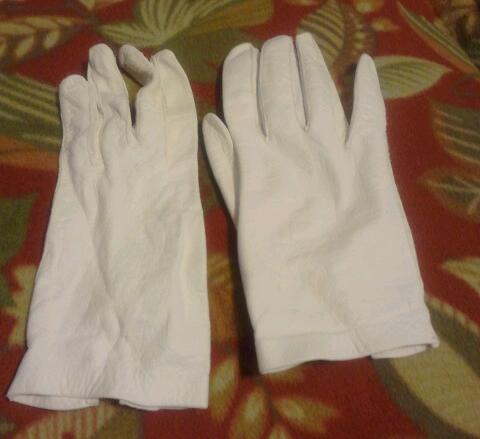
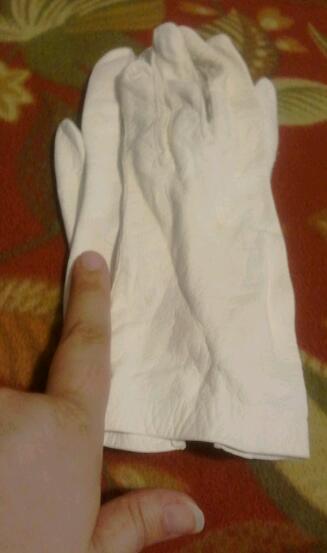
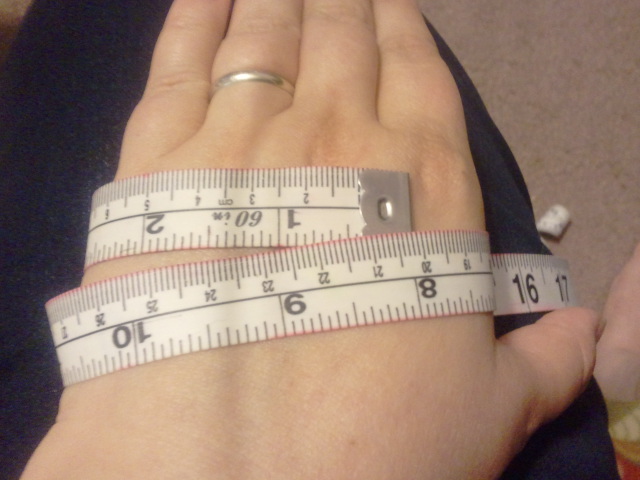
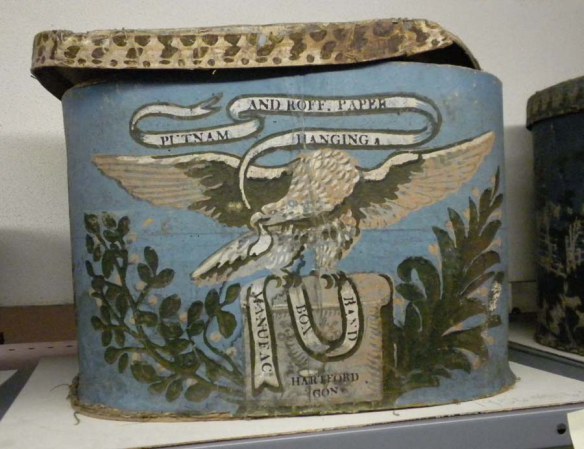
I was digging through my files and found this. I thought it might be of interest:
Dress Under Difficulties; or, Passages from the Blockade Experience of a Rebel Woman, by Elzey Hay of Georgia
Godey’s Lady’s Book, July 1866
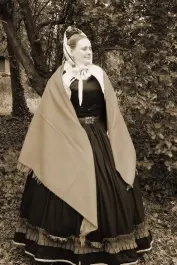
I HAVE somewhere seen an account of the inmates of the Millbank prison, in England, and, among other things, it was noted how women’s instinctive love of dress clung to them through all the difficulties of their situation. Some of them displayed wonderful ingenuity in the arrangement of their prison dresses , making them appear as graceful and becoming—or, rather, as little ungraceful and unbecoming—as possible, and gave the keepers much trouble by their continual efforts to alter the prescribed uniform into something like a faint shadow of prevailing fashions. One would electrify the little community by some cunning device for a hoop-skirt; another drove it wild with the discovery of a way to make corsets out of bed-ticking; while a third raised an excitement which might rival that produced by the introduction of the waterfall , when she rouged her cheeks with red threads, cunningly drawn from some cloth on which she was sewing. The matrons, and other officials, whose business it was to prevent these little infringements of prison regulations, were baffled and outwitted in spite of their most rigid discipline. Although shut out from the world, with none to note or care how they were dressed, these poor reprobates took the same pleasure in exciting the envy and admiration of each other, that any city belle feels in outshining a rival. They would slyly twist their wiry locks into fanciful coiffures, purloin tallow candles for pomade, and a bit of looking-glass was more precious in their sight than gold. The struggles of these humble worshippers of fashion are a faint representation, on a small scale, of what we southern women went through with during the blockade. Let those who have never experienced it set their imaginations to work, and conceive, if they possibly can, what must have been the condition of ladies in society—and very gay society, too—cut off for four years from their supplies of new dresses , shoes, gloves, linen, buttons, pins, and needles, ribbons, trimmings, and laces, not to mention the more urgent necessities of new bonnets, hoop-skirts, and fashion-plates! How we patched, and pieced, and ripped, and altered; how we cut, and turned, and twisted; how we made one new dress out of two old ones; how we squeezed new waists out of single breadths taken from skirts which could ill spare a single fold; how we worked and strained to find out new fashions, and then worked and strained still harder to adopt them—all these things form chapters in the lives of most of us, which will not be easily forgotten. Those who wish to learn economy in perfection, as well as those who interest themselves in curious inventions, will do well to study the experience of a blockaded devotee of fashion. We managed pretty well during the first year of the war, for although we were too “patriotic,” as we called it, to buy any “new Yankee goods,” most of us had on hand a large supply of clothing. Planters were rich men in those days; and their wives and daughters always had more clothes than they could wear out. As soon as we became tired of any article, we would give it to some of our servants, and often, towards the close of the war, have I seen my “mammy” or my maid in cast-off dresses that I fairly grudged them, wondering how I could ever have been so foolish as to give away anything so little worn. Before the blockade was raised, we all learned to wear every garment to the very last rag that would hang on our backs. In the first burst of our “patriotic” enthusiasm, we started a fashion which it would have been wise to keep up. We were going to encourage home manufacture—we would develop our own resources, so we bought homespun dresses , had them fashionably made, and wore them instead of “outlandish finery.” The soldiers praised our spirit, and vowed that we looked prettier in homespun than other women in silk and velvet. A word from them was enough to seal the triumph of homespun gowns. Every device was resorted to for beautifying a material, in itself coarse and ugly. Our homemade dyes, of barks and roots, gave poor, dingy colors, that would have made a pitiful show among the dazzling hues in Northern bazaars, but the blockade effectually shut off all the fine things that might have put our “ patriotism ” out of countenance. One old lady made a really brilliant dye by dipping wool in pokberry juice, and then inclosing it for several days where Peter put his wife—in a pumpkin shell. The color obtained was a brilliant red, but this process was too tedious for anything that had to be dyed in large quantities. Various shades of brown and drab, with some very ugly blue, were the chief colors used by us in our homespun dresses . Before things came to be very bad, we used to buy Turkey red, and have our homespuns striped with it. Some had the patience to ravel out scraps of red flannel, which was respun and used for striping dress goods. It is almost incredible, the number and variety of patterns that could be manufactured by an old woman with a hand-loom. Homespun travelling dresses , of modest color and make, were really very pretty and appropriate, but some had the bad taste to try to make them fine with red cards, flounces, velvet buttons, etc., which was a very unsuitable and incongruous way of trimming them. Some enthusiastic country ladies spun and wove, with their own hands, full suits of clothing for themselves; and a famous present for soldiers was a pair of gloves, or socks, made, from beginning to end, by the fair hands of the donor. Such gifts pleased the soldiers, and led us to believe that we were following in the footsteps of our revolutionary ancestresses, who, we had been told, were mighty at the spinning-wheel and knitting-needle. Those of us who were not inclined to industry, testified our “patriotism” with much outward show and parade. We had ball-dresses of white factory cloth, such as our negroes used to wear for under-clothing. By candlelight, it had very much the effect of white merino, and worn with necklace and bracelets of strung corn, and coiffure cotton balls, constituted an eminently Southern dress , which would make its wearer the star of any ball-room. All this was well enough while the novelty lasted, but that wore off in a season, and when summer came, we found our homespuns insufferably hot. Still, the blockade did not pinch us very hard: there were a few dry-goods left in the shops, and we pounced upon these with greedy fingers. There began to be, however, a marked change in our style of dress . Instead of kid gloves, we wore silk, or lace mits; we had no fresh, new ribbons; our summer dresses were no longer trimmed with rich Valenciennes lace, and our hats and bonnets were those of the last season “done over.” In a word, we began to grow seedy , and we felt it; but our southern soldiers still swore that we looked prettier and dressed better than they had ever seen us, so we were consoled—while their dazzling uniforms gave that brilliancy to our ball-rooms which our apparel failed to supply. In time, however, things began to grow desperate. There were no goods in the shops, save a few old-fashioned robes à lé , double-skirts, and other marvellous prints, in huge patterns, which the skill of the best modistes could not render presentable. Buttons, needles, and pins began to fail. Imagine a dearth of pins in a lady’s toilet box! Think of it, my fair reader, the next time you dress for a ball, and know what we southern women endured! Laces, ribbons, flowers, and trimmings were out of the question. We could not even freshen an old dress with a new bow or a cambric ruffle, and everybody knows how much such little trappings assist and brighten the most indifferent toilet. We had to patch up something out of nothing—to make bricks without straw. Happily, Fashion favored us, where Providence did not—that is, such fashions as came to us. We knew very little of the modes in the outer world. Now and then a Godey or a “Bon Ton” would find its way through the blockade, and create a greater sensation than the last battle. If it was rumored that Annie or Julia had a book of fashions, there would be an instant rush of all womankind for miles around, to see it. I remember walking three miles once to see a number of the Lady’s Book, only six months old; then learned that it had been lent out, and, after chasing it all over town, found it at last, so bethumbed and crumpled that one could scarcely tell a fashion-plate from a model cottage. However, the vague rumors that reached us were all favorable to patching. The blessed Garibaldi came in, which must have been invented expressly for poor blockaded mortals, whose skirts had outlasted their natural bodies. Havoc was made of old merino shawls, sacks, silk aprons, scarfs, etc., and then we all appeared in waists of every conceivable shade and color, with skirts of every other conceivable shade and color. The same fashion was continued through the summer in white spencers, which we wore with faded old skirts, whose bodies had gone the way of all human productions. There was great scarcity of material for making them, but we found an ingenious method for increasing the supply. Faded, worn-out muslins, which were too far gone to be worthy of a place, even in our dilapidated wardrobes, were boiled in lye or acid so as to remove all the color, and then they were ready to be manufactured into white spencers. It is true, this material was very flimsy and rotten, but we had learned to take tender care of our clothing, and to make the frailest fabrics last. I have seen an organdy muslin dress worn five summers without washing, and crêpe bonnets last three seasons. The introduction of tight sleeves also favored us greatly, for it was very easy to cut our old ones down; but the greatest blessing of all was the fashion of trimming dress skirts round the bottom. It was so convenient to hide rags, or increase the length of a skirt, by putting a puff or flounce round it. This style of trimming was very highly appreciated, for we could use one old dress to puff and flounce another. Some of our ladies would have presented a grotesque appearance on Broadway or Chestnut Street, in a tri-colored or tri-patched costume, with perhaps a crimson merino Garibaldi waist, a blue alpaca skirt, and black silk flounces. But, fortunately, we had no fashionable rivals to make our shabbiness worse by comparison, and although painfully conscious that we were very, very rusty, we really did not know the full extent of our own seediness. All were in the same condition, patched and pieced alike. Sometimes a blockade runner or a rich speculator would give his daughter a pair of gloves, a piece of ribbon, a dress , or, perchance, even a bonnet, of some of the dazzling new colors, which would drive the rest of us to frenzy for a little while, but such cases were too rare to give tone to the prevailing fashions. Piecing, and patching, and squeezing was the general rule, so that we who could not emulate those who caught glimpses beyond the blockade, consoled ourselves with the sight of each other, and with the comforting assurances of our soldiers, who stood it out manfully that they could not desire to see us better dressed. I suppose the men really thought us very fine, for, in order to hide stains, and rents, and patches, we piled on trimmings to such a degree as to make our clothing extremely gay, and practice made us so skilful at patching, that we often did it very gracefully. If we wished to lengthen a skirt, instead of putting the trimming on in a straight row at the bottom, we would cut it in waves or festoons, slip the lower part down an inch or two, and put the trimming on so as to produce an effect, which was pretty enough, when we saw nothing better. But to my dying day, no matter what the fashion may be, I can never look upon a skirt of one color and waist of another, or see the latter decorated with any solid trimming, without instantly suspecting a patch or a make-shift, and I believe most southern ladies have the same prejudice. We feel so guilty of such practices, that the most beautiful little jacket, or the most elegant lace flounces, even when worn by the daughter of a New York or Philadelphia merchant, who surely ought to be above suspicion of patching, only remind us of the scant patterns and covered flaws, of “Confederate times.” Occasionally, when very hard pushed, we would have two old dresses , of hopelessly incongruous colors, dyed black, and piece them together into a new one. Sometimes the same dress was dyed two or three times, the hue being darkened as stains deepened, and it was not uncommon to see skirts that had been turned inside out, upside down, and hind part before. I well remember one faithful old jacconet, which, after submitting to various alterations as dress and petticoat, was finally, when too much worn for either, cut up and hemmed for pocket-handkerchiefs. All old linen served the same purpose, while our fine handkerchiefs were made of Swiss or mull muslin—the sleeves of worn-out spencers, or best parts of old petticoats trimmed with footing ruffles and transferred work. When the ruffles were fluted or crimped, they made a very pretty edging. The prettiest trimming gotten up during these times for a dress skirt, was made of transfer work cut from a piece of coarse, black Chantilly lace, and sewed on in medallions, with steel beads. The skirt was cut in scallops at the bottom to get rid of certain little snags and dingy places, with a medallion in each scallop. It was really beautiful, and did not appear to disadvantage among the novelties introduced at the end of the war. Black silk was the favorite material for piecing out our old clothes, because it suited everything. Dresses of all colors and textures were eked out with flounces, puffs, cords, quillings, folds and ruches of black silk, and when that failed, as it very soon did, alpaca and merino took its place. We had many things dyed black for the purpose of using them as trimmings. I wonder if there be a woman in the South who has not owned two or three dresses with streaks of black round the bottom. An old black silk skirt with nine flounces was a treasure in our family for nearly two years, and when that store was exhausted, we fell back upon the cover of a worn-out silk umbrella. The finest travelling dress I had during the war, was a brown alpaca turned wrong side out, upside down, and trimmed with quillings made of that same umbrella cover. I will venture to say that no umbrella ever served so many purposes or ever was so thoroughly used up before. The whalebones served to stiffen corsets and the waist of a homespun dress , and the handle was given to a wounded soldier for a walking-stick. The waists of our dresses were no less patched up than the skirts. I have seen a tight sleeve pieced in sixteen places, and so ingeniously that one could not detect a single seam. It was done by means of puffs and quilling put on in points from the armhole to the elbow, so that the foundation of the sleeve could be cut out of very small pieces, the trimming hiding seams and covering deficiencies. I also remember a cavalry jacket that was pieced in thirty-six places with equal skill. Cavalry jackets were in high favor with us, for two reasons: first, because they answered the same purpose as the Garibaldi in helping out bodiless skirts, and secondly, because they were so military. We ladies were perfectly daft about gold lace and brass buttons, and would all but break our necks to get a jacket trimmed with them, thinking, I suppose, that they would be as bewitching on us as they were on the men. Sometimes a generous officer would despoil his sleeve of the admired Hungarian knot in order to gratify the whim of some fair one, and many a little brother has pouted all day over a Sunday jacket robbed of its brass buttons to decorate the waist of a sister. Gold lace was so scarce, so dear, and so highly prized, that we would rip it from old, battle-worn uniforms, and rub it with soda, vinegar, alcohol (when we could get it), chalk, and ashes, in order to brighten it for further use, and sometimes its tarnished lustre would faintly revive. Elaborate decorations were used on waists for the same purpose as on skirts, which has prejudiced me against much trimming as giving ground for a suspicion of patches. Strange to say, none of us were ashamed of the shams we practised, for we had what Caleb Balderstone so ardently coveted—a good excuse. It was a blessed thing, having everybody in the same situation. We used to laugh together at our own devices, and give one another the benefit of our experience. She who was most skilfully patched up was admired for her ingenuity. The only things that really mortified us, in spite of excuses and plenty of company in our misfortunes, were the horrible shoes and stockings we had to wear—stiff, shapeless, clumsy things, so different from the beautiful little French boots and sea island thread stockings to which we had been accustomed. Some women contracted an awkward, uneasy manner of walking from the constant effort to hide their lower extremities. All kinds of fancy stitches were invented, and Southern women became expert knitters, but the more fancifully they were made, the more vulgar did our coarse stockings look, as coarse finery always will. No Balmoral petticoats and looped-up dresses for us! If the mud were ankle deep, we dared not lift our skirts an inch for fear of revealing those frightful shoes and stockings. We all felt like peacocks who, it is said, are so ashamed of their ugly feet that if they happen to catch a glimpse of them, even when most proudly flaunting their gay feathers, will instantly drop all, and assume a humiliated, mortified air. We had no fine feathers to flaunt, but, such as they were, our ill-shod feet and gloveless hands were too bad for them. No lady feels herself wholly lost to good taste with neat shoes, gloves, and collar, nor well dressed without them. In fact, these little things are the real test of whether a lady knows how to dress . We managed very well for collars, as small ones were worn, and linen lasts a long time, but the introduction of large cuffs staggered us for a while. We could not afford so much linen. Necessity, however, was the mother of invention in this case as in many others. We learned to make cuffs of white cotton shirting, which looked very well as long as no one else had linen to put them out of countenance. Our heads fared little better than our feet. As bonnets grew larger they were pieced with ribbon or silk borders round the front, as our skirts were lengthened with puffs and flounces. We were ignorant of the reign of waterfalls till the blockade was raised, and went on increasing our sky scrapers with great labor and difficulty. Ribbons soon gave out, and all kinds of villainous substitutes appeared. Artificial flowers made of goose feathers became very fashionable, and were sold at enormous prices. They were not so ugly as one might suppose, especially when they did not have to stand a comparison with French flowers. Bonnets at last became almost an utter impossibility. I have known fashionable milliners pay one hundred and fifty dollars for an old velvet bonnet which was renovated and sold for five hundred. During the last year of the war, $1000 (Confederate money) was not considered an unreasonable price. Hats made of palmetto straw were very much worn, and were in as high favor as homespun dresses , because they were entirely southern make. Veils, even of the coarsest barège , were very scarce and dear; seventy-five dollars was the price of a very ordinary one. Of course, many inventions were started by ladies desirous of preserving their complexions. I have seen veils made of the remains of a pink tarletane evening dress , dyed brown with walnut hulls, and they were a pretty good imitation of grenadine. An old barège dress was a treasure, and its inevitable fate was to be cut up for veils. But it was in underclothing that we suffered most. When our linen wore out, as the best of linen will sometimes do, there was nothing to replace it but the coarse factory cloth manufactured at the South, which had heretofore been used only for clothing the negroes. What Georgia girl has not a feeling recollection of Macon Mills? In vain we corded, stitched, and trimmed with white ruffles, it was coarse and yellow still. No matter what there was outside, we could not help feeling ill dressed in those coarse underclothes. If any one had a nice dress , she felt like a whited sepulchre—very fair without, but yellow homespun and cotton yarn within. Evening dresses were unheard of towards the close of the war: even brides, unless they were the daughters of quartermasters or blockade-runners, never aspired higher than Suisse muslin, and many contented themselves with humbler fabrics. I saw the waist to one wedding dress made out of the flounces of an old tarletane skirt. They were sewed together and drawn at the seams, so as to make one of the pretty puffed waists so much in fashion two or three years ago. Any kind of simple muslin dress , and even thick, dark skirts with white muslin spencers, figured in elegant ball-rooms without seeming out of place. As many things may pass muster by candle-light which cannot stand the glare of day, it was comparatively easy to dress for evening. I have seen ladies look very well in old silk petticoats trimmed with black lace or white tarletane ruches. Of course all things are by comparison, and what looked very fine in those days would be intolerable now. Our style of dressing degenerated so gradually that we could scarcely perceive the change from one season to another, and did not fully appreciate our own destitution till the blockade was raised, and we compared ourselves with the rest of the world. The pretty fashion of frizzing the hair was introduced at the beginning of the war, and many of us adopted it, both on account of its beauty, and because hair-pins and braids were not to be bought. It was impossible to obtain false curls, so we cropped off our own hair, and made free use of curl-papers and irons. Imagine our consternation, fair reader, when rats, and mice, and waterfalls, came in, and caught us with short hair. The war did not trouble us much as to evening head-dresses , for our land teems with myriads of beautiful flowers, fairer than any ever displayed in the shop windows of Demorest or Olympe, and it was not in the power of man to blockade Nature. Neither was it possible entirely to blockade Fashion. Godey, Madame Demorest , and Frank Leslie would find their way to places where the most daring raider would never venture. Whenever a bold soldier “crossed the lines,” he was sure to bring back a book of fashions as the most acceptable present to his lady. We toiled, we struggled, we contrived, and generally managed to come in at the fag-end of every new fashion. I have heard more than one pater familias , when importuned for a piece of ribbon or a yard of muslin, costing from sixty to one hundred dollars, groan out: “Oh, if the Yankees would only blockade the fashions, I’d forgive them everything else!” But women will dress so long as there is a particle of woman’s nature left in them. I verily believe that when our mother Eve first pinned the fig-leaves around her, she took pleasure festooning them as gracefully as possible, and that she hailed the coat of skins as the advent of a new fashion. We southern women labored under peculiar difficulties during the war, for, strange as it may seem, never did we need dress more. Every little town was a military post, crowded with strangers—refugees, exiles, and fascinating officers—what man in brass buttons is not fascinating to woman’s eyes? There was no end of balls, parties, picnics, fêtes of every description. I once heard a young belle, fresh from a circle of dazzling beaux, express pity for the poor girls who lived in stupid, peaceful countries, away from the “pomp and circumstance of war,” and I think a good many of us held the same opinion, but that was before the horrors and devastations of war had fallen upon our own homes. Think, then, of the temptation we were under to dress , while the power was denied us. We were compelled, by necessity, to spend so much time in plotting and planning and scheming for something to wear, that we had little time to think of anything else. A lady who had run the blockade was stared at as a natural curiosity, and her wardrobe made the subject of conversation for weeks afterward. The simple fact that new things were so much noticed, made us all desirous to have them. This much experience has taught me—that the way to make a woman devote her whole soul to dress , is not to give her everything she needs, but to make it necessary for her to plan, and think, and study what to wear; how to “Gar auld claes amaist as weel’s the new.” And this we had to do for four long years. We never thought as much about dress in all the rest of our lives put together, as while the blockade was upon us, and I am sure none of us ever dressed so little. For my part, I spent three days and nights in meditating how to trim the only new dress I had, and a much longer time in thinking how to patch and alter old ones. At last the struggle ended; the blockade was raised, and goods flowed in. Our eyes were dazzled with brilliant new colors, in comparison with which all we had ever seen before seemed faded and dull. Fabrics of marvellous texture, trimmings and ornaments of flashing brilliancy put to shame our poor old make-shifts. The rest of the world had taken a long stride during the four years that we had been going backwards. Were articles of woman’s attire really more beautiful than they had ever been before, or did they only seem so to our starved Confederate eyes? Certainly, new goods and new fashions never had appeared so exquisite to us, nor our old rags so forlorn. We looked as if our clothes had been bought before the days of Noah. One might have mistaken us for fossil women, so faded and mouldy were we. Northern ladies came out a-blaze with finery, and some few of our own people, who had escaped the general shipwreck, arrayed themselves in “blue, and purple, and scarlet,” but the rest of us could only look, long, and wonder. Our riches had taken to themselves legs and walked away; our pockets were as empty as our wardrobes, so we had to turn from feasting our eyes in the shops, to rack our brains with thoughts of how to make ourselves presentable at home. But cheap substitutes and contrivances will never be permissible again as they were during the blockade. I suppose the only resource left us is to live in sublime poverty, like the Faubourg St. Germain, and turn up our noses at everything rich or fine as parvenu .