Today I am looking at the most common tools found in a sewing case. (Most of these tools are available in the Anniversary kits on Etsy)
Whether called work-boxes, sewing cases or work chests, these beloved boxes house both essential practicality and heart-felt love.
Lucy took the heavy parcel in her own hands, and began to open the folds of brown paper, and at last she exclaimed, ‘Oh, how nice! how pretty! How glad I am to have a real large work-box of my own! Thank you, dear mamma. Such a beautiful red box, and a lock and key to it! and Lucy proceeded to examine the contents
There were rows of reels of cotton, scissors, thimble, bodkin, a yard measure that would wind and unwind in a pretty ivory case, needle-case, and pin-cushion.” (“Lucy’s Winter Birth-day” by Mrs. Russell Gray from An Irish Story, Archie Mason ed. Edinburgh, 1869.)
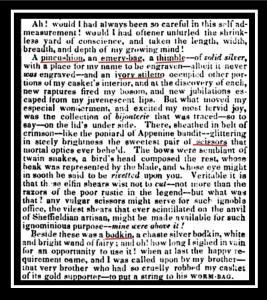
From “The Last Essay of Celia: The Old Work-box” Foreign Quarterly Review, 1833.
Bodkin
Bodkins are found in many materials including wood, bone and metals. These are used to run ribbons or cords through channels of garments. They resemble a blunt needle with a large eye or eyes in the end. The end must be dull, not sharp, to protect the fabric and not snag.
You will require several bodkins of different sizes. The smoother they are, the better they run through the cases. Always get them with a knob at the end. Steel bodkins are more serviceable than those of gold or silver; but in buying steel ones, take care that they are not pewter; this you may ascertain by trying if they will bend. (Miss Leslie’s Lady’s House-book; A Manual of Domestic Economy, Eliza Leslie. Philadelphia, 1850.)
Stiletto (and Awl)
Stilettos are used pierce holes in fabric for eyelets and needlework such as white work. Stilettos can be bone or of several metals. Early century dictionaries define stilettos as a small, unedged dagger with a sharp point.

The Boy’s Book of Trades
Awls seem to be more task oriented also for piercing holes in textiles as well as leather, some with wooden handles.
Scissors
Most of us know what scissors are. I find I prefer to have a small and medium size pair of scissors at events and an assortment of large scissors at home.
You will find it necessary to have three pair of scissors; a large pair for cutting out things that are thick and heavy; a smaller pair for common use, and a very small pair for work that is nice and delicate. They should all be sharp-pointed. When your scissors begin to grow dull, have them ground at once. The cost will not exceed six cents for each pair, (even if ground at a surgical instrument shop.) and haggling with dull scissors is very uncomfortable work. (Miss Leslie’s Lady’s House-book; A Manual of Domestic Economy, Eliza Leslie. Philadelphia, 1850.)
Thimble
Thimbles protect your finger(s) while you sew. Different thimbles aid in different ways depending on how you use them. Seamstresses tended to use the full cup thimbles most of us know, while tailors tended to use open end thimbles.
It is well to have always two thimbles, in case one chancing to be mislaid. When you find that a hole is worn in your thimble, give up the use of it; as it will catch the eyes of your needles and snap them off. (Miss Leslie’s Lady’s House-book; A Manual of Domestic Economy, Eliza Leslie. Philadelphia, 1850.)
Needles
You will want an assortment of needles in your sewing box suited to your work. I prefer having several sharps, several fine quilting needles that are good for silk, a couple embroidery needles and some strong just in case needles on hand in my box.
“In providing needles, short ones will generally be found most convenient, and their eyes should be rather large. Many of the needles that are put up in sorted quarters of a hundred are so small as to be of now possible use to anyone. Therefore, in buying needles, it is best to select for yourself. Have always some that are very large, for coarse strong purposes. When a needle breaks of bends, put it at once into the fire; for if thrown on the floor or out of the window, it may chance to run into the foot of someone.” (Miss Leslie’s Lady’s House-book; A Manual of Domestic Economy, Eliza Leslie. Philadelphia, 1850.)

The Illustrated Girl’s Own Treasury.
Spools
“It is well to get at least a dozen cotton spools at a time, that you may have always at hand the different gradations of coarse to fine. The fine spools of coloured cottons are far better for many purposes than bad sewing silk; but coloured sewing cottons should only be used for things that are never to be washed, as it always fades after being in water. Mourning chintz should on no account be sewed with black cotton as it will run when wet, and stain the seams. …. Keep always brown thread in the house; also hanks of gray, white, and black worsted, for darning winter stockings; and slack twisted cotton, and strong floss silk, for repairing other stockings.” (Miss Leslie’s Lady’s House-book; A Manual of Domestic Economy, Eliza Leslie. Philadelphia, 1850.)

Thread winders
Thread winders are small, flat objects used for carrying smaller amounts of thread. They came/come in mother of pearl, wood, bone, silver, pasteboard, horn and other materials. The most common are circles with notches or plus signs, but they have come in a very wide variety of shapes including fish and animals.
Pincushions
Pincushions came in a very wide variety suited to the user’s needs and preference. I’ll be talking more about pincushions in a few days.
Measures & Flat rule
Two measures you will find most helpful in your sewing box will be a short measuring stick and a tape measure. When I am doing millinery, I have an 8 1/2″ rule. While I am working on smaller sewing, a shorter rule is nice.
Tapes can be simple hand inked tapes or more decorative pieces that roll into wooden or horn holders.
Wax
A piece of white wax, for rubbing on a needleful of sewing silk to strengthen it, is a most useful little article; (Miss Leslie’s Lady’s House-book; A Manual of Domestic Economy, Eliza Leslie. Philadelphia, 1850.)
Other tools:
Pencil & Small Notebook – A simple pencil for marking or taking notes is always helpful.
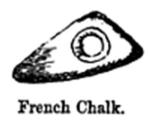
The Boy’s Book of Trades
Chalk “a small box of prepared chalk, to dip the fingers in when the weather is warm and the hands damp” (Miss Leslie’s Lady’s House-book.)
Emory bag – “Those that are made for sale have generally so little emery in them, that they are soon found to be useless. It is best to make your own emery-bags; buying the emery yourself at a druggist’s, or at an hardware store.” (Miss Leslie’s Lady’s House-book.)
Sewing Brick – “We highly recommend a brick pincushion, as an important article of convenience when sewing long seams, running breadths, or hemming ruffles. It is too heavy to overset, and far superior to a screw pincushion.” (Miss Leslie’s Lady’s House-book.)
Weights – Also a weighted pincushion. “A smaller pincushion [than the above sewing brick] may be made in a similar manner, substituting a square block of wood.”(Miss Leslie’s Lady’s House-book.)
Find all the quotes from Miss Leslie above and more in this printable pdf booklet.
For further information:
The Lady’s Dictionary of Needlework, 1856
Treasures in Needlework, 1855
The Ladies’ Complete Guide…., 1854
The Hand-book of Needlework, 1842
“A Period Workbox” by Christian de Holacombe and Michaela de Neuville
“What is in Your Sewing Box?”
Looking for your own copy of Fanciful Utility?
Click HERE to go ESC Publishing.
Remember to check out the special Anniversary kits on Etsy
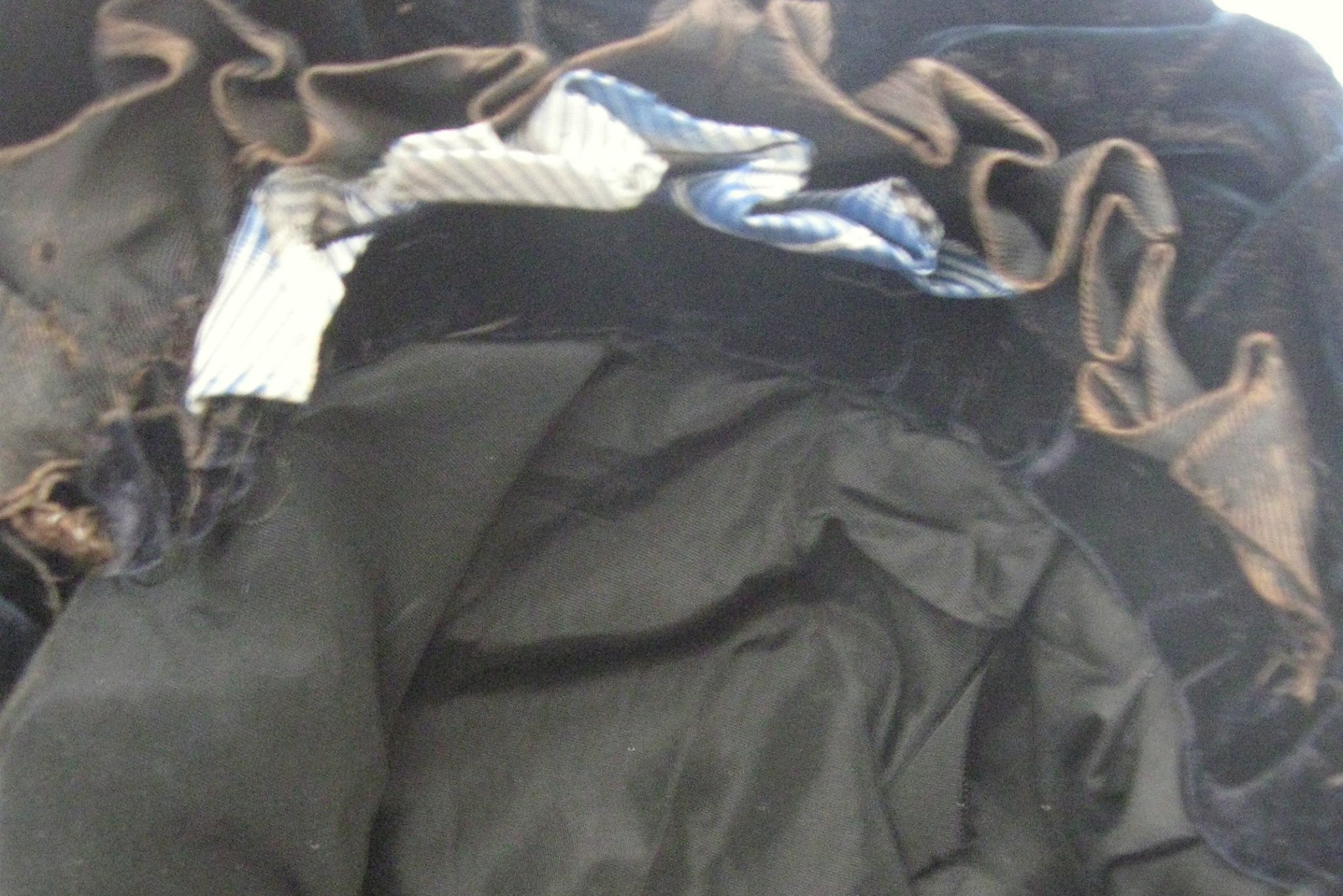
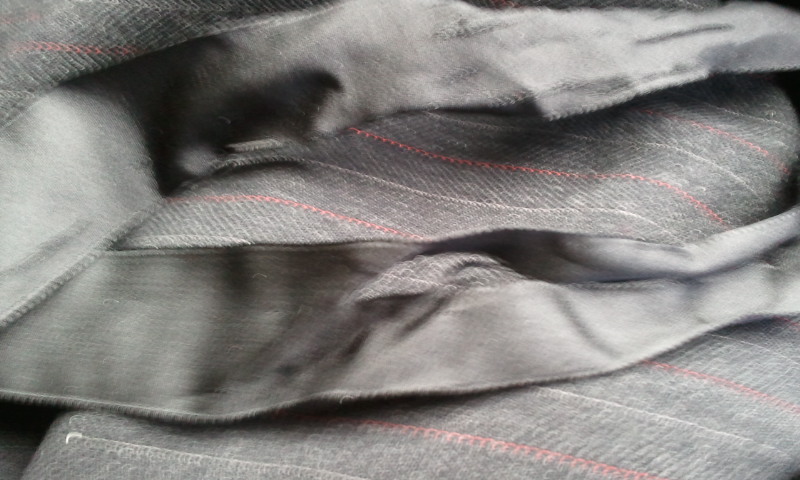 Antique and vintage silk ribbons can be fragile. Even if they appear to be in strong shape, they can still be easily damaged. This black ribbon to the right is an example of this. This is 1″ ribbon on one of my personal winter bonnets. This is after the first wearing. The ribbon was tied in the morning when I left the house. It was not untied/retied at all through the day. This is how it looked when I took it off in the afternoon. This ribbon was part of an order of several black ribbons when I was out of my regular silk ribbon and my ribbon supplier was also out of ribbon. The ribbon appeared strong, being soft and supple. Obviously, this was not the case.
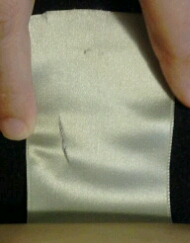
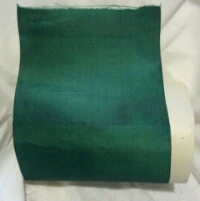 Here is another example I picked up at an estate sale for the ribbon collection. It is a brilliant green silk in a five inch width. This ribbon appears to be in nice shape on the roll. But, just the pressure of a finger nail can break the fibers like a razor blade. Notice how this break is across the ribbon. This means I am breaking the warp threads, which should be the stronger fibers.
 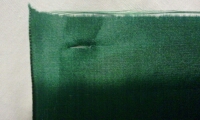 This ribbon, assuming it survived being attached to the bonnet (which I doubt it would) would shatter in the wearer’s hands.


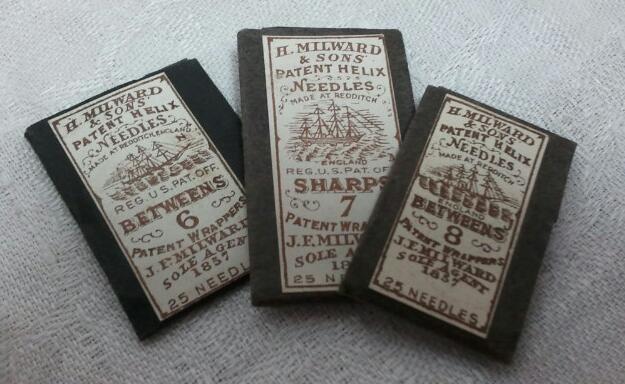

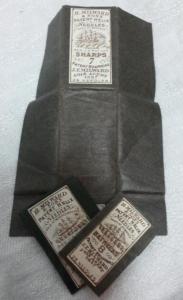 Each of these packets can be made of black paper slightly lighter than writing paper and the label printed on white paper.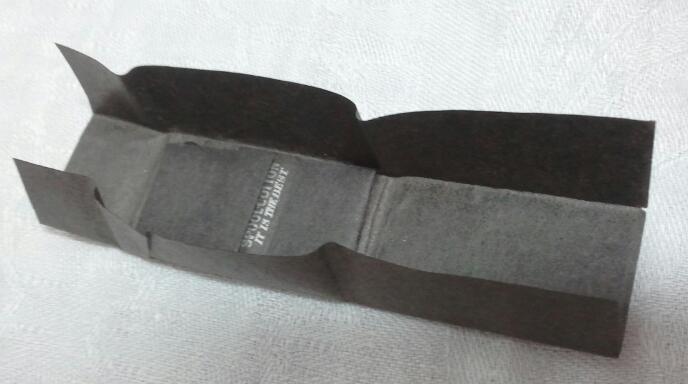



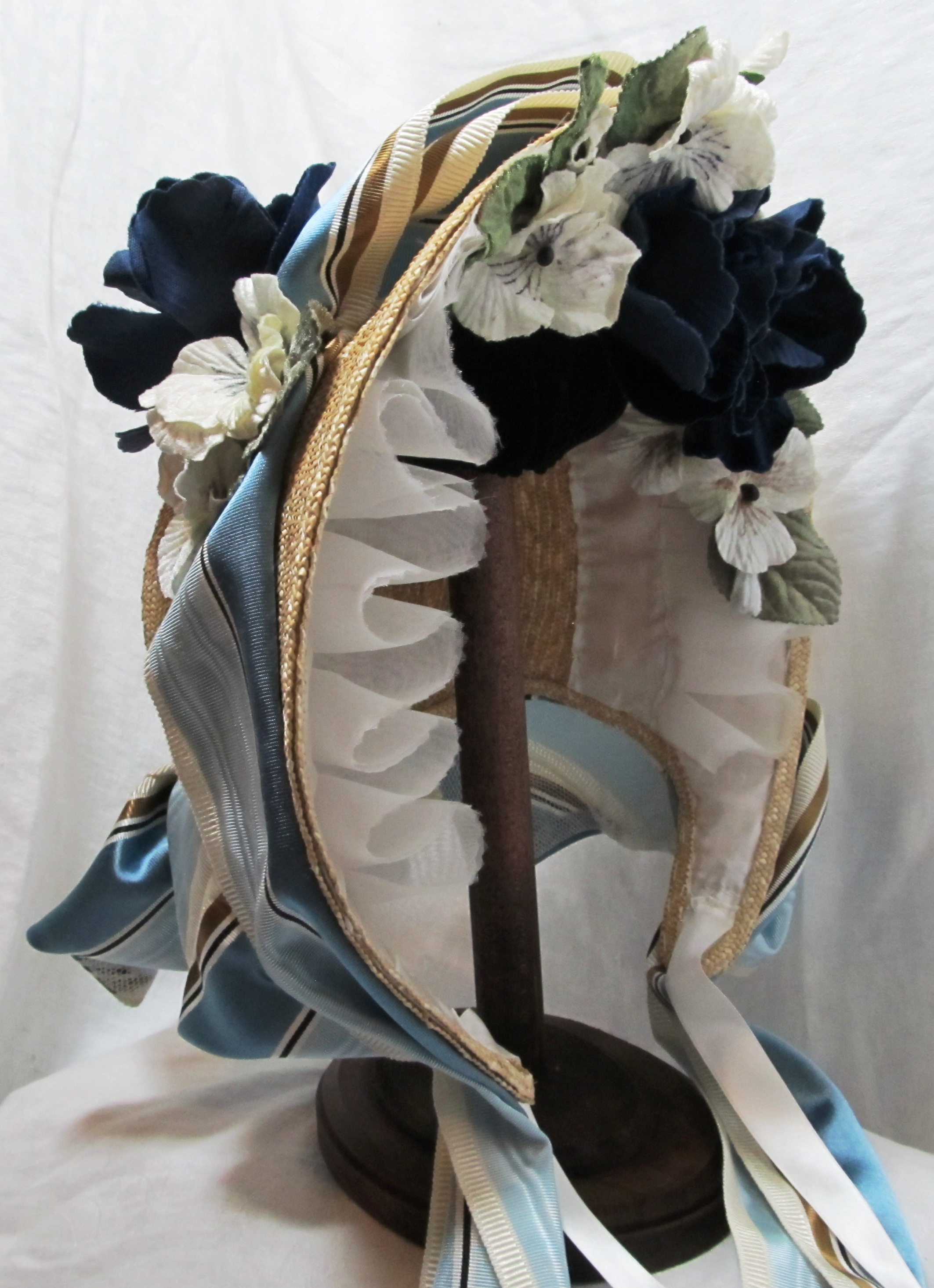
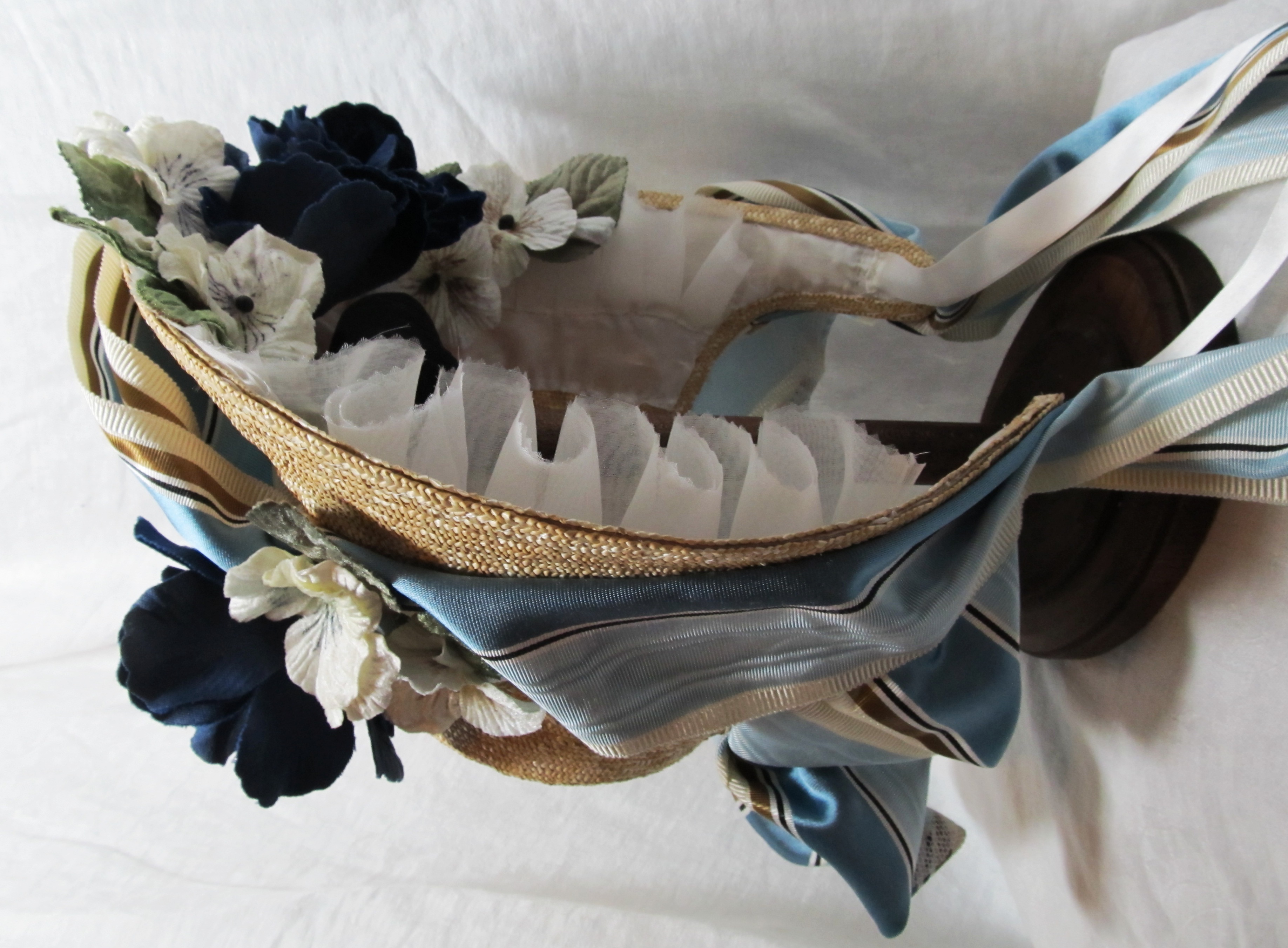
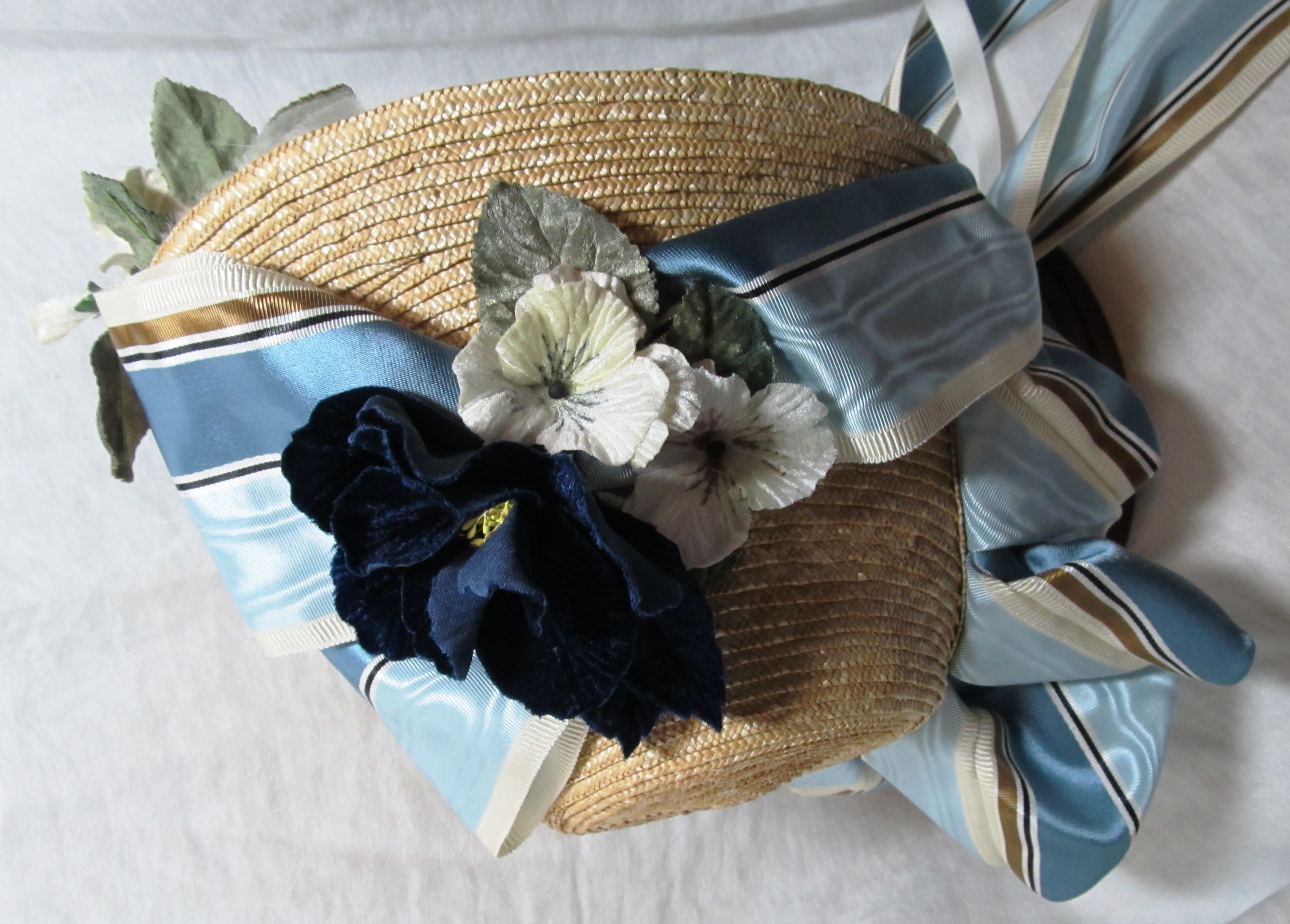

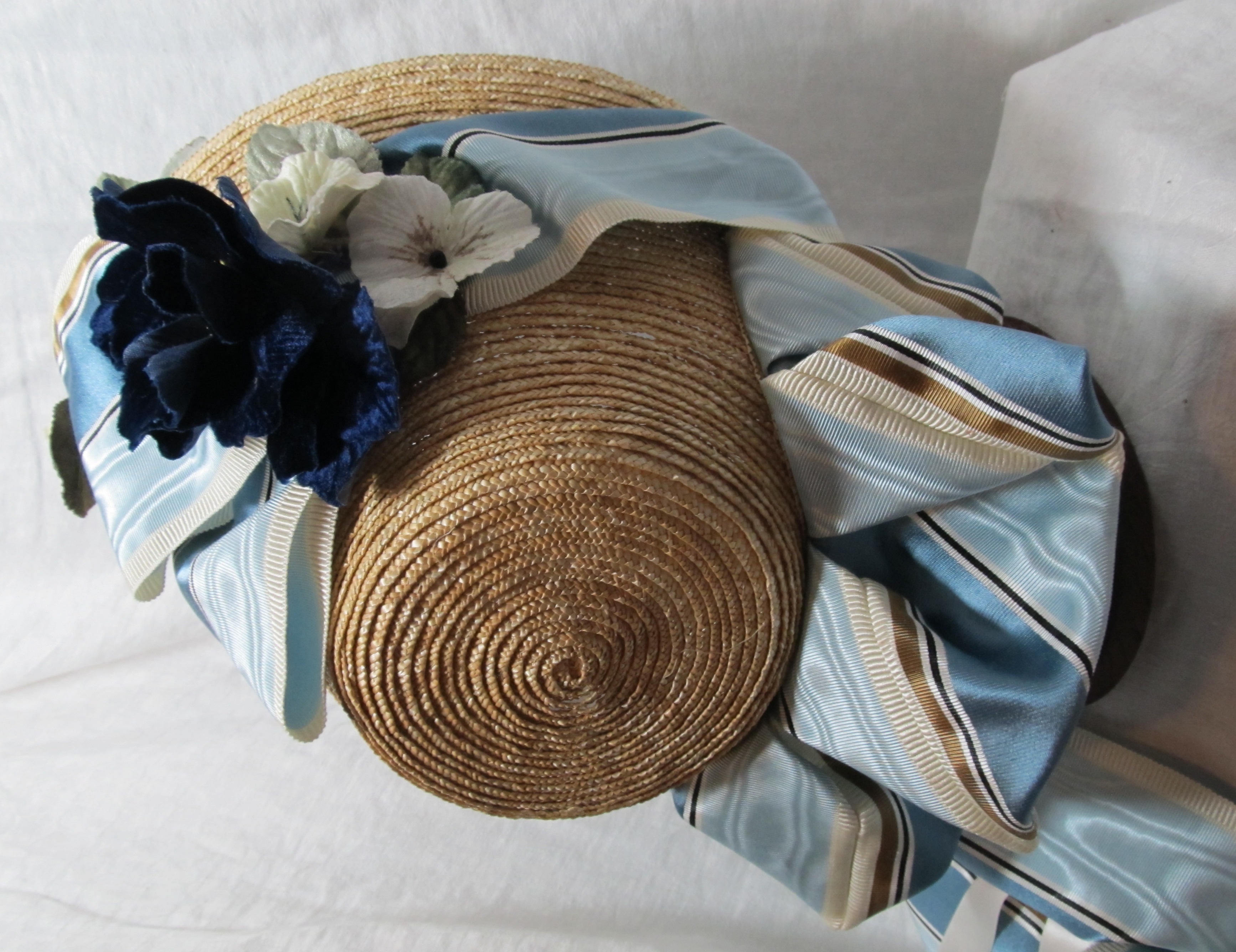


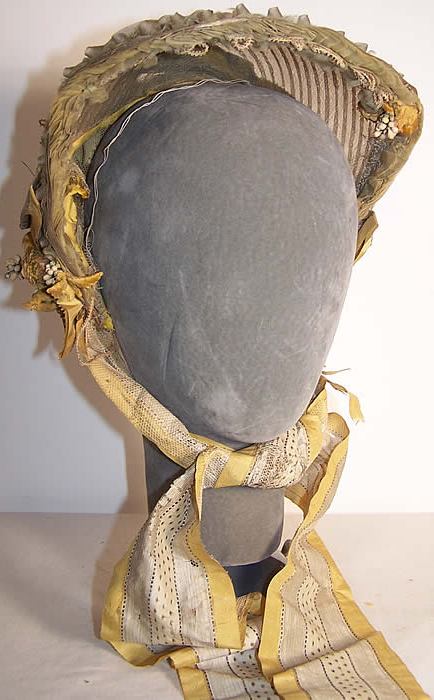
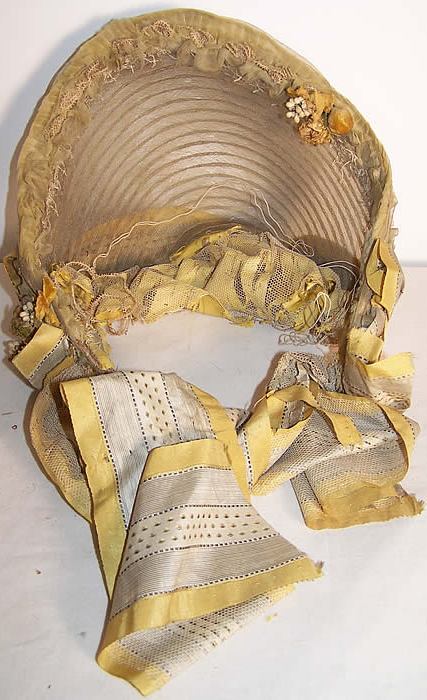
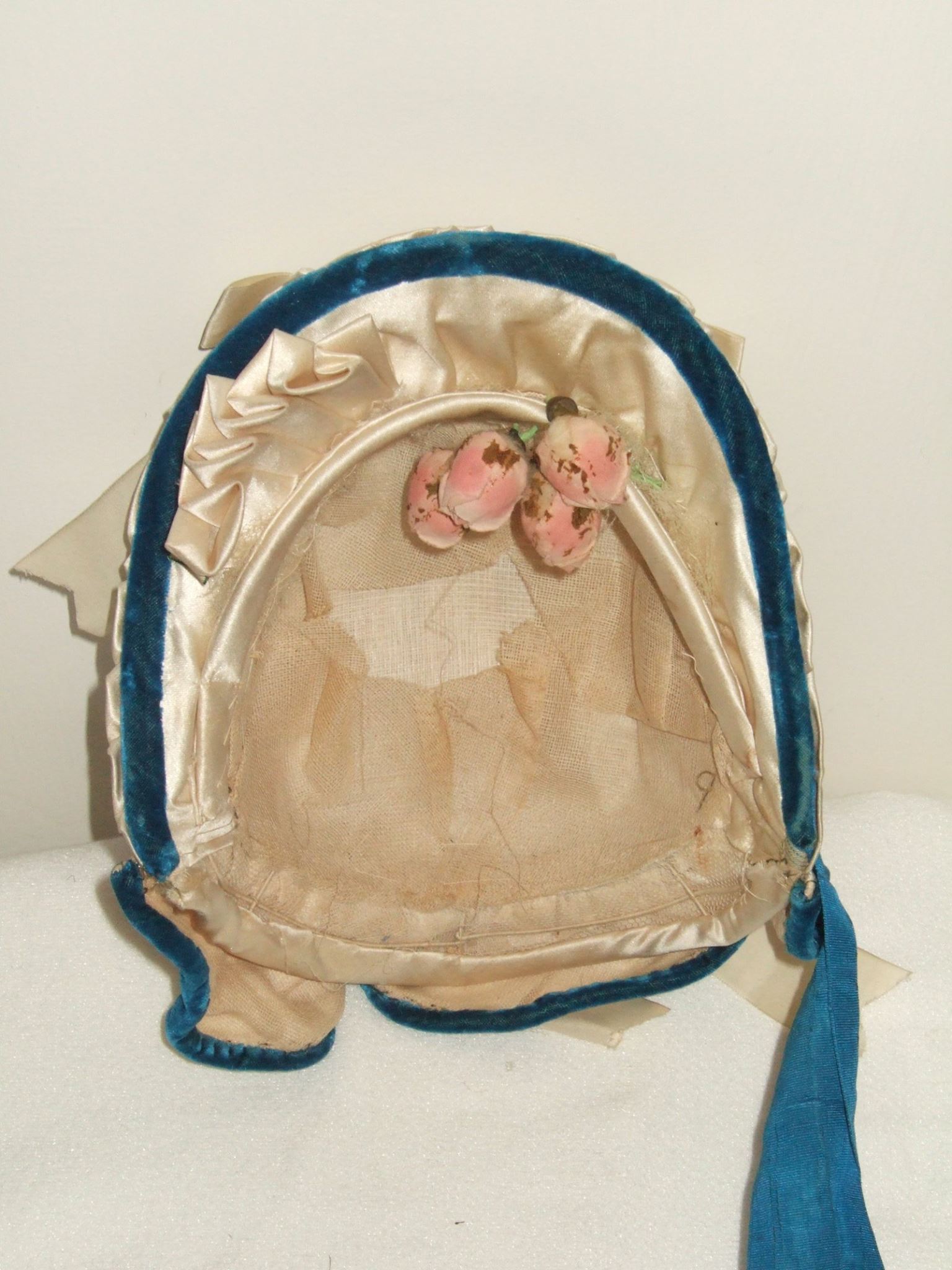
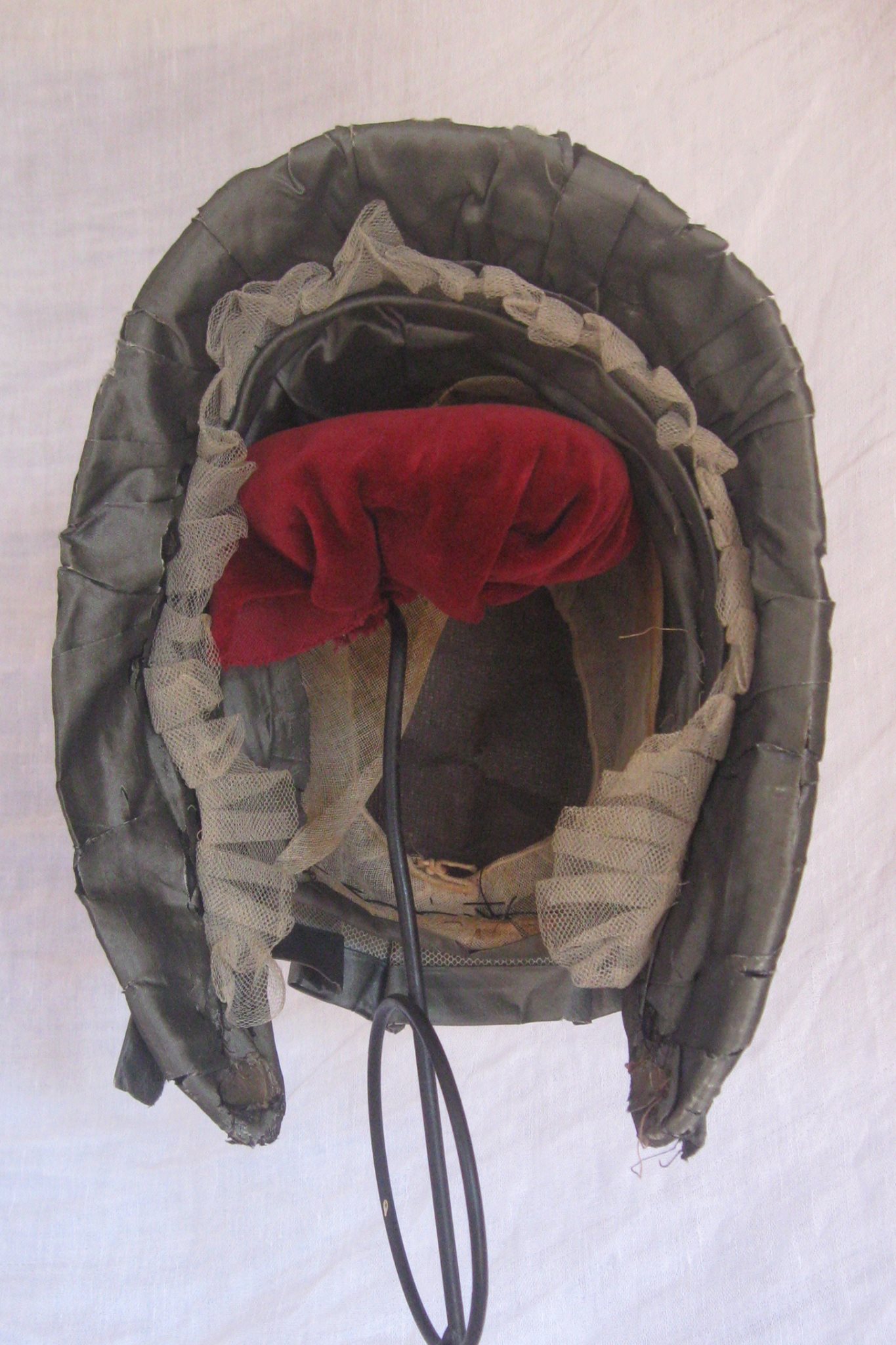








 If I Had My Own Blue Box:
Avoiding Millinery Mishaps
There were a few questions that came up when I asked for questions for the milliner that had to do with what not to do. I generally prefer to approach things from the positive. But then I saw this post “The Most Common Mistakes in Historical Costuming/Re-enactment- and how to avoid them“, which was written quite well and from a very helpful standpoint. So, I’m sorta stealing her format to look at the mishaps and mistakes that can happen with millinery.
The wrong shape or size for your face.
A great hat/bonnet in the wrong era.
While there are some pieces of millinery from one era that are very similar to that of another era, pieces that distinctly belong in another time period stand out when they are misplaced. I do understand how it can be so tempting to pick up a beautiful Georgian piece and wear it to a Victorian event, it simply does not work 98% of the time.
Wearing the wrong millinery for your social class or situation.
We tend to talk about bonnets in two categories: fashion and sun, which may accidentally cause us to compartmentalize fashion into an upper class garment and sun into a lower class garment. This is not the case. What we often call ‘fashion’ bonnets, those structurally made of wire & buckram/willow/net or those of straw, spanned up and down social strata. (We really need to figure out what they would have called their bonnets.) The same span also existed for sun bonnets.
Clunky materials.
There is something about clunky materials that stand out even more than synthetic materials to me. Now, I’m not approving of a poly-taffeta for your bonnet either. I’m saying clunky cotton or poly cotton laces scream at me, as do thickly spun or loosely woven silks. These are not the materials of the vast majority of 19th century millinery. Fabrics, laces and net were fine and light. Even the bonnets that were made from velvets or corded materials were still made with versions often lighter than those we commonly see today.
Trims that will bleed.
To great dismay, and often tears, ladies have found that some beautiful flowers or feathers are not color-fast. While most of us fear the rain when we have a pricey bonnet on, it is at times the slightest sprinkle or even heavy humidity that can cause the dye to run. The biggest culprits are brightly dyed feathers and paper flowers.
Bad advice.
I sorta feel like a jerk as a blog writer saying “don’t listen to that blog writer”. But, I am. There are several quick and cheap millinery advice posts out there. I plead with you – Do not follow them!
Do not make a bonnet out of a cereal box. Do not use duct tape on a bonnet. Do not use quilters templates nor plastic cross-stitch canvas to make a bonnet. Some of these may be okay for a Halloween costume or middle-school play. They are not correct for a historical site, nor are they healthy when you consider how much heat some of these materials can trap against your head.
- Favorite Topics - Millinery/Bonnets/Ribbons
on May 20, 2015 at 7:00 pm Leave a CommentTags: Millinery Commentary