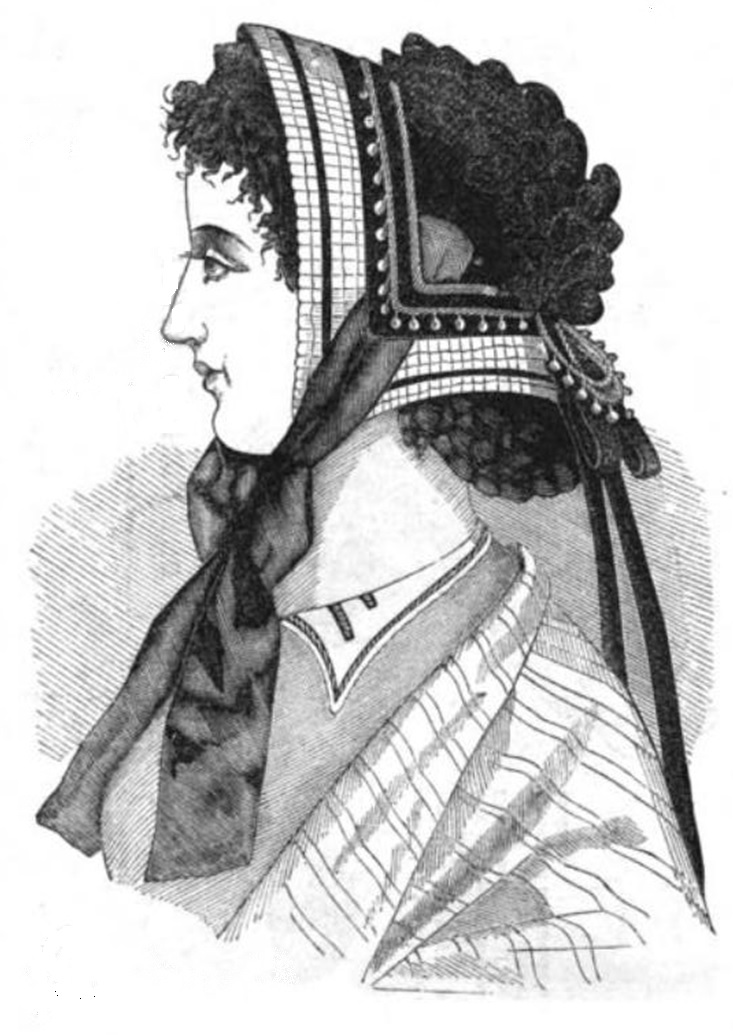
“I do so wish Sallie Curtis would not wear that old bonnet!” exclaimed a lady, as she entered the parlor of a fashionable boarding-house, which some half dozen families miscalled “home” – that sweet word, which the heart can only apply to the place that shelters our own household band!
“Why does Miss Curtis’ bonnet trouble you? Asked her husband, laughingly.
“Trouble me? indeed it does – indeed it does – it takes away all my comfort in church! It looked badly enough in the early part of the season, but now that all the ladies in the pews around them have such elegant new hats, Sallie and her mother do look most forlorn in their old straws!?
“Is her mother’s as bad as hers?”
“Yes; and a hundred times worse. IT is shameful for ladies in their position to dress so meanly! I beg your pardon, Mrs. T—-, I did not see you,” said the last speaker, with a blush.
“Oh, you need not apologize to ma, she sees Cousin Sallie’s hat in the same light in which you do, and aunt’s too!” spoke up a young lady, at the side of the person addressed.
“Yes, indeed; and I am not surprised at their being the subject of remark. I told them it would be so, when I saw them fixing up their bonnets, (for they trimmed them themselves with ribbon they had in the house;) but I hoped then they would be worn for a few weeks, until cold weather set in; but they are bent on making them do service during the entire winter! Such a foolish notion as my sister-in-law has in her head; because this is a hard winter, and business men are cramped for money, she is determined to save a dime wherever she can, without causing actual suffering to herself and family! I am lecturing her continually on the absurdity of her course, but I cannot mover her. I told her that Sallie could not possibly do without a new bonnet this winter, even if she did. A married lady, you know, may occasionally enjoy the privilege of being careless about her own dress; people take it for granted that in her anxiety about her family, she has forgotten herself; but it is absolutely necessary for a young lady to be always well dressed, and I am sure I am ashamed of Sallie, this winter! My Julia wouldn’t wear her best hat, even for ‘a hack bonnet’”
“No, that I would not!” said the young lady. “I should be afraid of losing caste, if I did so!”
“But I thought Mr. Curtis was a man of wealth!” said an intimate friend to Mrs. T— , in a lower tone.
“He is considered so; but now even the wealthiest men are embarrassed, you know. My husband says that one dollar, this winter, is worth more than two were last year!” she said laughing.
“But you are not obliged to economize?” and the speaker glance at the rich velvet, costly furs, and the “lovely hat,” in which Mrs. T— was arrayed.
“Me! oh, I can’t do it; and if I could, where would be the use of worrying and slaving myself to asve a little here, and a little there? What would it all amount to, in the end? A few hundred dollars, which, if my husband is going to fail, could not prevent him, and which I may as well enjoy while I can! My sister-in-law says that if her husband becomes involved, it shall not be through any extravagance of hers; and that she is resolved
to make no unnecessary purchases this winter. I represented to her that with all her efforts, she could not save more than a trifle, and that she had better give up the struggle and take things as they come; but her earnest answer was – ‘No, Elizabeth, although the sum may be ever so trifling, I am resolved to exercise self denial, in order that I may have the satisfaction of feeling that I have done what I could!” It has really become quite a mania with her, and Sallie just like her mother. Whenever I tell her of anything she needs, her reply invariably is – ‘I can do without it at present, for we wish to economize,’ or, ‘we are trying to retrench.’
“What a pity! She is such a fine-looking girl, when well-dressed!”
“I know it; and I am so glad you alluded to her dress, for I meant to tell her it has been remarked upon, and I shall do my best to prevent her face being again seen under that old bonnet!”
The ladies who carried on the above conversation, and a listener, of whom they little dreamed. Mr. R—, a wealthy and elegant gentleman, who had spent several years in Europe, and had lately returned home, with nothing to do but to seek enjoyment and a wife, lay on a sofa in the adjoining parlor trying to reed, but unconsciously taking in all that the ladies said.
“So Miss T— would be afraid of losing caste, if she wore a bonnet as her cousin’s, would she?” he repeated to himself sneeringly. “How finely her position in society must be established, if so a slight a thing as a straw hat could hurl her from her place! When will our women have that noble independence which should be their birthright?” and as the voices died away, he lay musing for some time upon the old straw bonnet, and its wearer.
Despite the eloquent way in which Mrs. T—- reported to her niece the remarks that had been made upon her old bonnet, Sallie’s pretty face was still seen under it at church, and on the street.
“You foolish child!” the aunt persisted, “what are ten or fifteen dollars to your father, in his business, when he has thousands of dollars to pay out almost every day?”
“Very little, I know; but then the consciousness that I am trying to lighten his cares, is a great deal to me; and mother says that the feeling of independence, which we call forth by our self-denial, will be lasting benefit to me.”
“Pshaw! you don’t know the disadvantage it may prove to you! Just in an age when the appearance you make will have a great influence on your future destiny; it is all –important that you should look as well as possible; and what girl can appear in an old bonnet?”
“Mother, just think of it,” exclaimed Julia T—, a few days after. “Sallie fancies she can go to that party in the with dress that she has worn, I don’t know how many times!”
“You don’t mean to say that she had not made a new dress for this occasion?”
“So she says.”
“Well, then she had better stay at home, that’s all!”
“So I told her myself. I wouldn’t go into society in an old dress, if I never went at all, for I should not expect to receive the least attention! But let me tell you the funniest thing you ever heard, Ma!” continued the young lady, laughing immoderately, as if she just recalled something excessively ludicrous. “She thinks she can’t even afford a new pair of gloves for the party, and so what do you suppose she has done? Taken soap and milk and cleaned the pair she wore to Mrs. C—-‘s; I laughed ready to kill myself, when she showed them to me with the assurance that they were ‘just as good as new!”
“How did they look?”
“I couldn’t see for laughing’ and just think mother, they have dismissed the seamstress, and Sallie is going to do the family-sewing, until times are easier, she says!”
“Why, is there anything especially wrong in her father’s affairs?”
“Oh, no; only the old story of, ‘he is embarrassed, and I wish to do what I can!”
It is said “stone walls have ears;” I do not know how true it is, but somehow or other, Mr. R—- overheard this conversation, as distinctly as he had the one about the old bonnet.
One word respecting that gentleman. Young ladies said he was about thirty; certainly spinsters and affirmed that he was “all of thirty-five,” while he laughingly owned to thirty-three; but he was so lively and interesting in conversation, that even very young girls forgot his age.
After the above revelations respecting the economy of Miss Curtis’ toilet, he certainly expected her to present a shabby appearance at the party; and he began to dread seeing her pass through the trying ordeal of feeling herself the most illy-dressed person in the room; and enduring the slights consequent upon that circumstance, she did not appear until quite late, and as he looked around upon the rich satins and gorgeous silks, in which many of the guests were arrayed, he found himself hoping that she might not come at all.
“There is one young lady here, dressed in such pure artistic taste, can you tell me who she is?” inquired a friend at his elbow. “There talking to that tall man with the light hair!”
Mr. R—- looked, and recognized Sallie. But he sought in vain for evidence of her dress being old, or unfit to grace a scene like that. Its snowy folds were a positive relief to the eye, dazzled by so much splendor, while her dark hair – which formed so fine a contrast to her alabaster skin and white dress – was most tastefully arranged, and ornamented with a few white rose-buds. The effect of that simple toilet was perfect, but he remembered what had been said of the gloves, and looked eagerly at her hands.
“If they are the same, she was right in pronouncing them as good as new,” he said to himself; and so absorbed was he by these profound reflections, that he almost forgot to reply to his friend.
The crisis that business men had apprehended came, and those whose credit had stood highest, were the first to fail. Among them was Mr. Curtis.
“So it seems that with all your worrying and economy, you were not able to keep your father from failing!” said Mrs. T— to her niece.
“No, aunt, we did not expect to be able to do that.”
“Then your wisest course would have been to enjoy life while you could. Here you have been denying yourselves all winter to no purpose!”
“But, as mother says, we have the satisfaction of feeling that since father has been pressed for money, we have not cause him one needless expenditure!” and she looked radiantly happy.
“Will you permit me, Miss T—, to ask you a direct question?” Inquired Mr. R—, , of that young lady, as they found themselves left alone in one of the parlors.
“Certainly,” was the gracious reply, “ask me any question you like, since I can use the privilege of replying to it or not, just as I happen to be in the vein!”
“But I hope you will deign to answer this one in which I am greatly interested – is Miss Curtis much depressed at her father’s failure?”
The question was different from what Julia had anticipated, but she replied with a laugh –
“Depressed! you should see her! Were I in her place, I confess that I should be plunged into the depths of woe, at the thought of the retrenchments, and the changes that must be made in their style of living; but Sallie is as light-hearted as a bird!”
“Perhaps she does not realize it yet!”
“Oh yes she does; and she has her plans all laid out as clearly as we had to note down the various revolutions on our historical charts at school, and she talks about their moving into a small house, and keeping only one servant, as gayly as if she were planning a pleasure trip! And that is not all, she says she has been reviewing her studies with a view of teaching, so that they can thus continue her little sisters at the expensive schools they are attending. Just think of her stooping to become a teacher, isn’t it absurd?”
“I confess, I should prefer seeing her occupy a different position,” said Mr. R—-, with emphasis.
As long as her father lives he ought to be able to support her, and I told her that if I were in her place, I would reserve that degradation for some greater emergency; but she said she would rather prepare herself, by her own exertions, for any emergency.”
“I suppose they see no company now?”
“Oh yes, just the same as usual.”
Mr. R—- called on Sallie that evening, and to his delight found her alone. He was really relieved at seeing no cloud on her young face but instead, such a joyous expression as only springs from a happy heart.
In a manner not to be misunderstood he told her how glad he felt at seeing her thus, and she answered frankly –
“Why should I not be happy? My father is reduced, but he can never be dishonored! Perfect integrity and uprightness have characterized all his dealings, and if he has been unfortunate, the way in which he bears up under it makes me more proud of him than ever!” and tears filled her eyes as she spoke. “I don’t know much about business,” she added with a smile, “but I am told that all my father’s liabilities are to be met, so that no one else is to suffer through his failure.”
“But do you not shrink from the changes that must take place?”
Sallie wondered to herself why it was that she felt so perfectly free with Mr. R—, it seemed as if they had known each other all their lives as she answered -,
“Oh no, there is nothing very hard in that! Cousin Julia has been trying to convince me that I ought to be very wretched, but she did not succeed in her mission.”
There was a pause, and then the conversation renewed by Mr. R—-, but we are not going to tell the reader what he first said, though all the light that he can get upon the subject from the remarks that follow, he is welcome to. Mr. R—- spoke for about ten minutes in an earnest tone. Sallie, at first, looked down, and then raised her eyes to his face with an inquiring glance. At length she said —
“Had you spoken so, to me, half an hour ago, I should have supposed you ignorant of the change in our circumstances; but you know all.”
“I do!” was the answer, and he went on to tell Sallie of the effect that knowledge had produced upon him, and again the conversation was too earnest and tool low for our ears. At last he seemed to be urging her to reply, and if we give her answer, just as it fell from her cherry lips, we shall have to record the very trite words, “ask father!”
“Are you aware , sir, of my failure!” inquired Mr. Curtis, in answer to something Mr. R—- said to him next morning in his counting-room. “My daughter is now penniless!”
“I know all that,” was the reply; “but she is a fortune in herself!”
“That is most true; and, since you can appreciate her, take her, and may God bless you in proportion as you make her happy!”
“Thank you for the precious gift!” said Mr. R—–, much affected; “and now, sir, may I talk a little about business?”
The merchant bowed.
“I have lately received, from a relative, an overlooked-for gift of thirty thousand dollars, upon condition that I will go into some kind of business. I have been puzzled to know how to invest it, for, of business matters, I am sorry to say, I am most profoundly ignorant. You have experience and patience to bear with my want of knowledge; now, are you willing to consider my ready cash equal to your practical information, and so take me as a partner?”
The business arrangement being satisfactorily concluded, Mr. R— was urgent to have the wedding take place as soon as possible.
“Why didn’t you offer him the use of your money before, it might have saved his failure?” ask a friend of Mr. R—.
“I did long to do so, but was afraid to have the girl I loved feel that she was under obligations to me! I never could have hoped to win her affections then!”
“Pshaw! that would have been the very way to get her!”
When Mrs. T— and other friends were offering their congratulations to the blushing Sallie, her husband said —
“By the way, aunt, did I ever tell you what caused me to fall in love with your niece?”
“Her own loveliness, of course, drew our your love!”
“No such thing! it was her old straw bonnet!”
“Why, aunt, you told me, I don’t know how many times, that my old bonnet would prevent my ever marrying!”
“How had that fright of a hat anything to do with your admiration?”
“Why, you see, I wanted a companion in a wife; not a mere doll to please my fancy by her pretty face and costly dress; so I said to myself, ‘a girl who can reason thus correctly about economy, and who has independence enough to carry out that reasoning by wearing an old bonnet, has a mind above the ordinary herd, and powers of which any man might be proud?’”
 The Prize: Making its debut this weekend… GCV is releasing its Centuries of Fashions Cards–!!! Each set includes 12 high quality photos of fashion from 1790 to 1912 worn by the museum’s models. The winner will receive one of these very first sets. Future sets will include pieces from the Greene Collection! (Image created by Tantalo Studio, Rochester, NY)
 First, Show Me Your Millinery! Take a photo of you wearing a piece of millinery I made and Share it on Facebook, Twitter or in the Comments below. Be sure link it back to this give-away and to tag me so I see it. (Don’t own a piece of my millinery yet? If you have a friend who will let you enter with her bonnet or hat, you can enter that way too.)
  Second, Inspire Me! I love the inspiration the world around me offers. The color, the texture, the beauty of the natural world provides a palette of inspiration for when I sit down to work. Take a photo of something you think will inspire a beautiful bonnet or hat. Share it on Facebook, Twitter or in the Comments below. Be sure link it back to this give-away and to tag me so I see it.
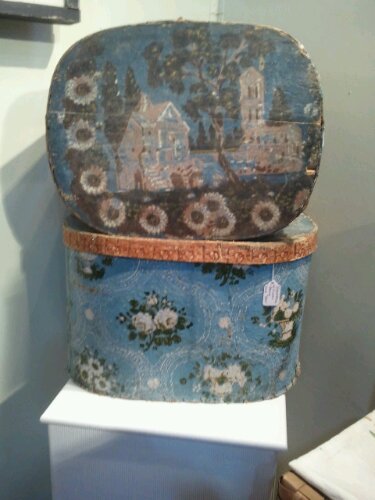


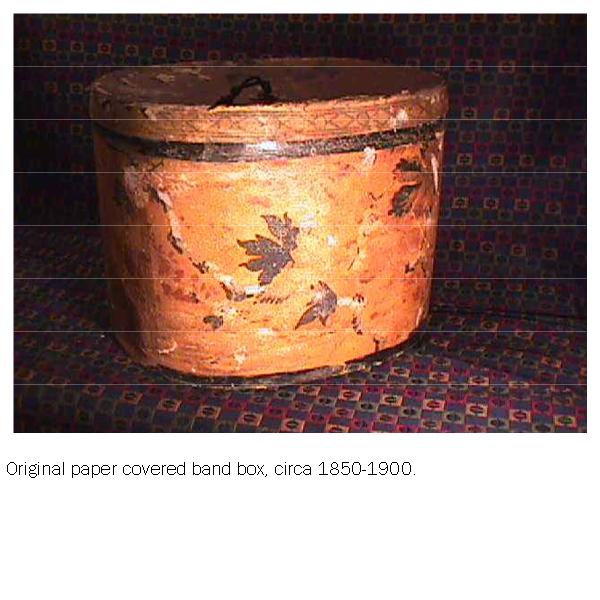
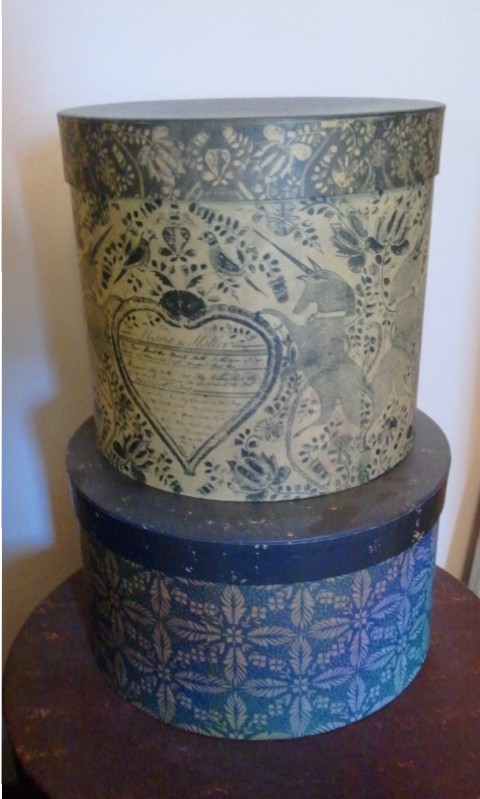
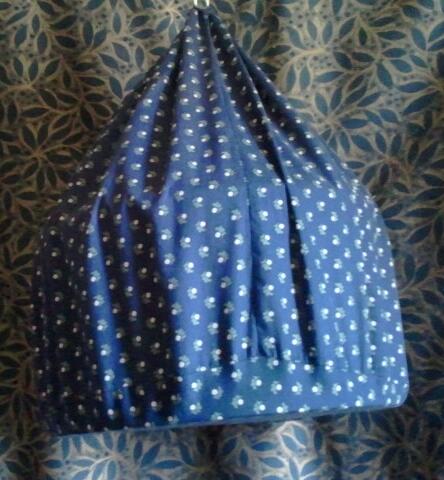







 I think this is a
  This might be my favorite “not a…” yet.





 If I Had My Own Blue Box: