A Year in Millinery Fashion – 1864

“It is said that, as regards to invention, one milliner does more in a month than the world architects in a score of years”

Each Monday in 2014 will be focused on the millinery fashion of 1864. Drawing from fashion descriptions and illustrations, we will look at how the bonnet evolves during the year, the materials used to trim them and the popular colors and combinations. The year starts out light as the magazines did as well. As late spring and summer approaches, the posts will contain multiple illustrations and descriptions.

I hope these posts will prompt some discussion of the finer points of millinery during 1864. This is a year where bonnets significantly change.

Published in: on January 6, 2014 at 1:01 am  Comments (1)  
Tags:

Announcing the 2014 Winter FanU Fabric Swaps!!!

Love Fanciful Utility?

sewing group

Whether you are already a FanU Fabric Swapper or want to join anew, you are invited to participate in the 2014 Winter FanU Fabric Swaps!

For this trio of swaps we will do three exchanges of calico fabrics with a bonus special swap as the winter gives way to spring. This season’s swaps will include:

1) A Romantic Swap – Swap reproduction cotton prints from the Romantic Era, 1820s through 1840s. This era is full of fun, wild even, colorful prints.
2) A Paisley Swap – Swap early to mid 19th century appropriate cotton prints with a paisley motif. Remember, these motifs tended to be organized whether covering the fabric or part of a stripe motif.
3) A Mini-Print Swap – Swap small scale cotton prints from the early to mid 19th century. These can be tiny florals, geomtrics, stripes, plaids, etc.
Bonus) A Patriotic Swap – For those who want to do a patriotic sewing case for the coming Independence Day or a Memorial project, this swap will exchange 19th century correct prints in red, white and blue as well as reproduced period patriotic prints.

What is a Swap?

This is a chance for to exchange fabric with a small group of people. Each group will have 8 people exchanging pieces of fabric. All you need is a half yard of fabric and envelopes along with your copy of Fanciful Utility.

To Participate:

1: Sign Up Day!
On sign-up day, groups will be assigned on a first-in basis; the first eight will be the first swap group, second eight in the second group, etc. **Please be certain you will be able to fully participate by mailing your fabrics on the Mail-Out Date.**

Romantic Swap Sign-Up Day: January 13th
Paisley Swap Sign-Up Day: February10th
Mini-Print Sign-Up Day: March 10th

Bonus Patriotic Swap Sign-Up Day: April 14th

2: Mail-Out Day:
Place a 9×9″ piece of fabric suited to the mid-19th century in envelopes for each of the 7 other people in your swap group, stamp them (be sure to double check at the post office, but the small 9×9″ pieces should mail in a regular envelope with a normal stamp), and send them off no later than the Mail-Out Day.

Romantic Swap Sign-Up Day: January 31st
Paisley Swap Sign-Up Day: February28th
Mini-Print Sign-Up Day: March 31st

Bonus Patriotic Swap Sign-Up Day: April 30th

3: Get Fanciful!
Use your Fanciful Utility templates and techniques to make a project from the book, or copy your own from 19th century sources. We’ll all look forward to seeing your projects! You don’t have to sew right away, but don’t keep us waiting forever to see all the fun things!

(If you need a copy of Fanciful Utility, you can purchase them from the publisher at www.thesewingacademy.com

Fabric Guidelines:

  1. For the cotton and silk categories, your fabric should be early to mid-nineteenth century appropriate. (If there is a want for an earlier or later group, we can do that.) Prints and motifs should reflect those available in the 1840s, 50s and 60s. Cotton should be 100% cotton. Silk should be 100% silk.
  2. To keep the swap and sewing possibilities interesting, please avoid solids as best we can.
  3. Fabrics that do not work well for sewing cases should not be swapped. These include sheers, gauzes, heavy, thick, easy-to-fray, slippery and stretch fabrics.
  4. For the “crazy swap” category, think crazy quilt in a sewing case. This could include satins, velvets, textured fabrics. Quality synthetic fabrics are invited.

Swapper Guidelines:

  1. Please be certain you can fully participate in the swap before you sign-up.
  2. If something arises after you sign-up that will effect the date you are mailing your fabrics, please email your group so everyone is aware.
  3. If you fail to fully participate in a swap, you will not be able to sign-up for future swaps. (We do understand medical and family emergencies. I need to be able to ensure swappers will receive fabrics when they send fabrics out.)

Q&A

Yes, you can participate in 1, 2 or 3 of the swaps.

Yes, if we end up with multiple groups, you can participate in more than one group to swap more fabric. If you participate in 2 groups, you should swap 2 fabrics.

Yes, you can swap large and small scale prints.

Yes, you can swap now and sew later.

Yes, we would love to see what you’ve made with the swapped fabric.

Yes, you can use your own fabric in your swapped project.

Published in: on January 3, 2014 at 1:01 am  Comments (7)  
Tags:

Welcome 2014!

Happy New Year!!!!

This is the time of year a great many people make New Year’s Resolutions and those of us with historic sewing obsessions put in writing the projects we hope to accomplish in the coming year. While I don’t have the standard list of garments, I have some projects and a small wish list.

In hopes of starting off on the right foot, I have pre-arranged a new Tuesday Millinery Fashion series. I actually have posts for the whole year prepared already. This Tuesday there will be a brief introduction to the series. Then, each week I’ll share some  millinery fashion information from 1864.

I have previously mentioned the Commemorative & Memorial project This year I want to see the research turn into a strong collaborative presentation display filled with recreated examples of what the wives, mothers, daughters and friends  created in memory of those who fought in the Civil War.

In the land of millinery, I plan to get ahead on straw millinery this winter so there will be plenty available when people are looking come spring. I will be making a few fashionable 1864 forms for those who want to be on point fashionably this year as well as favorite late 50s and early 60s shapes. I also have some post-war hat shapes I will do because they are just fun. There will be more doll millinery available as well in both straw, buckram and soft styles.

Fanciful Utility fans have a new round of FanU Fabric Swaps to look forward to. Those will be announced soon. I would like to do at least one social or educational gathering this year such as a book signing or workshop. I still need to work on that.

With Lily’s increasing interest in interpreting history, this year must result in a whole new wardrobe from the skin out. For my sanity, I hope this will include some weekend sewing sessions where she will be learning the skills to make her own clothes as well. This to-do list includes:

2+ drawers
2+ chemises
2-3 petticoats
Corset
remaking her cage
Altering her current dress for summer cooking
New plaid dress *see below
New tbd dress
Coat
 

A fun project for both Lily and I is a set of matching dresses. Well, sort of matching. We have a blue and red plaid semi-sheer. The plan is do up the dresses to show how dresses of the same fabric can be made differently including age differences.

At the top of my short need and want list this year is a new cage. The cages I use are now well over 10 and 15 years old. It is really time for a new one. I also have a particular necklace I want to recreate. I would just buy the original, but it is too small. Beyond that, this will be a year of creating what I am in the mood for.  I do have a stack of fabrics that are waiting to become the assigned garments including several dress lengths, my travel ensemble and a bolt of off cream wool/silk that could become coats for all three of us. I also have a length of carpet that is waiting to become carpet bags.  

I have absolutely no idea what Dan needs for this year.

I have a few non-sewing projects I want to work on. First is the chair I started working on over the summer. This will come back out when the weather turns warm again. Working on the porch just doesn’t work in the cold and snow. I want to try some wood carving for a couple small items.

I am still in search of the right replacement trunk and a commode.

Oh, I almost forgot. We need to at the very least get a large fly that can be set up in multiple ways including a sleeping area. The A frame tent I have just isn’t large enough for two or three of us. (It also needs repairs.)

Published in: on January 1, 2014 at 1:01 am  Leave a Comment  

Merry Christmas

Merry Christmas 2013

Published in: on December 25, 2013 at 1:01 am  Comments (1)  

Fringe Friday! 1847 plaid taffeta dress with fringe and tassels! #cw150 #costume

Oh, how I love 40s clothing. How I wish I could wear this color.

civilianwartime

Second-day dress, blue and amber plaid taffeta trimmed with fringe and silk covered buttons with tassels.  Worn by Laura Battle Phillips in Chapel Hill, Orange County, North Carolina after her marriage to Charles Phillips in Chapel Hill, December 8, 1847.  Made in Philadelphia.

Source: Collections of the NC Museum of History, accession number 1923.5.5.  Search our collections here.

View original post

Published in: on December 20, 2013 at 2:51 pm  Leave a Comment  

Made Pinck a housewife, a small one & fixed some needles, thread & buttons in it for him. #cw150

One of today’s posts includes mention of a sewing case. Love that. If you don’t already follow this blog, it is a great one to read.

civilianwartime

 Monday 14th [December 1863]

I done but little today. Made Pinck a housewife, a small one & fixed some needles, thread & buttons in it for him. He is delighted with it. They will start sometime this week. No news from Mr. Henry. All quiet along the lines. My little ones all well & I am thankful of it. Five soldiers stay here tonight. They are from Texas. Aunt Patsey warped the cloth for the boy’s pants.

Tuesday 15th [December 1863]

Harrie went to Asheville this morning & brought me a letter from Mr. Henry. He is at Paint Rock & well. Betsy & Aunt Patsey put in the cloth & began it. Aunt Patsey went home this evening. Jinnie scoured my room & the dining room today. I have been fixing up Pinck’s things & done nothing of importance.

Source: Diary of Cornelia Henry in Fear in…

View original post 25 more words

Published in: on December 15, 2013 at 6:32 pm  Leave a Comment  

Christmas Gifts to Make

This post is a bit delayed. My apologies. I like to offer an assortment of gifts to make each year. Here we have excerpts from “Christmas Gifts for Women” by Frances E. Lanigan, 1896. Each of these can be made with these directions. Some you will find easier to make if you have Fanciful Utility to consult for techniques. If you missed previous years’ gifts, please visit Homemade Christmas Gifts from 2012 and 12 Gifts of Christmas from 2011.

A useful darning-case is made by covering and lining two pieces of stiff pasteboard, six by four inches in size, with silk or linen of contrasting colors. This can be best done by covering only one side of four pieces of board, uniting the uncovered sides of these with glue just before completion. Then make cross straps of baby ribbon on the lining sides of the inner boards; on one place a card of white darning cotton, and in the other a card of black. In the centre of the other place a loop of ribbon to hold the pair of scissors, and at one end tie the handle in place with a bow of ribbon. Place a needle-case of flannel on the other end and then unite the two boards with ribbon.
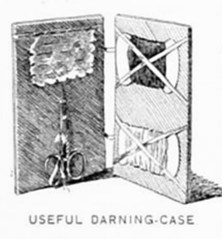
 Darining case                      

A particularly pretty needle-book may be made by cutting two square pieces of pasteboard. Cover one side of each, the side intended for the outer cover, with white linen or silk, on each embroider tiny holly berries. Line the reverse side with red surah silk and bind with a red or white silk cord. Sew securely together after inserting small leaves of white flannel to contain needles of varying sizes. Cover this join with narrow red ribbon, ending in the centre with a bow having long ends and loops, and use ribbons of the same color to tie it together.

Holly NB

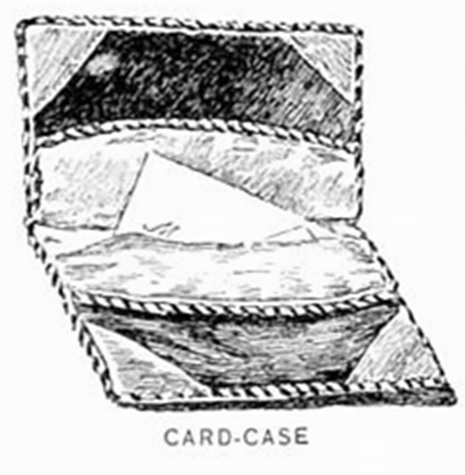
The latest fad in card cases is to have them made to match the calling costume. A charming one made of black and white satin was recently seen. A strip of black satin, seven inches long and five inches wide was used. To its four corners were stitched triangular-shaped corners of white satin, one and a quarter by two inches in size. A layer of cotton matting sprinkled with orrisroot, was tacked to the reverse side, and a lining of white surah silk added. Two other strips of black satin, five by three inches, were next taken, and two corners put upon each along one broad side. These pieces were similarly lined. Two flaps of white satin, also lined, were added to the ends of these pieces, making two apparent envelopes having satin corners and satin flaps. These were laid, lining side within, upon each end of the lined large piece and securely over-sewed all the way around. This made the card-case in the form of two pockets. A white and black satin cord was then sewed on all the edges, cording also the two flaps, the whole forming a most useful and dainty card case.
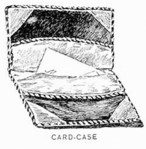
Card Case

A useful case for holding shoe-buttons, thread, etc, is made by taking two strips of ribbon, seven inches in length by three inches in width. Make an inch-and-a-quarter hem at one end of each strip, and in this hem, an inch from the top, run a row of stitching, so as to admit a drawing-string. Midway between the ends sew the strips together, uniting them on each side as far as the casing, thus making a small bag. Half an inch below the foot of the bag make a second row of stitching, closing up one side of division. Take a piece of stiff pasteboard, a trifle smaller than this opening in width and three inches in length, cover with flannel and then with ribbon, sewing a tiny ribbon loop to one end. In this place several needles of various sizes, suitable both for darning purposes and for sewing on the shoe-buttons which the bag end of the case should contain. At the two open ends of the ribbon make hems in which strips of whalebone should be placed so as to secure elasticity and firmness. Then sew the edges together, leaving an opening at the end, to hold the darning cotton.
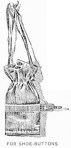
shoe buttons

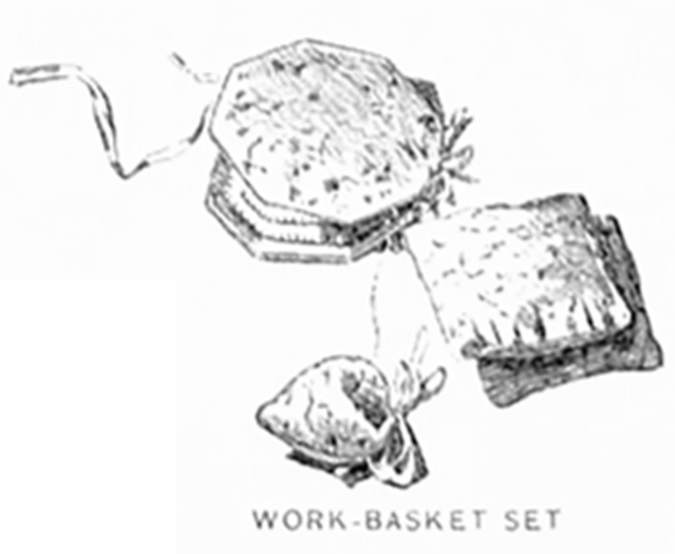
A dainty little addition to the work-basket is a set of three pieces, emery-bag, pincushion and needle-case. They should be made of flowered silk, ornamented with narrow ribbon and bound with silk cord of a prettily contrasting shade. The needle-case may be either circular, square or octagonal in shape. The inner leaves of white flannel should be prettily button holed or pinked about the edges. It should have ribbon ties. The cushion, which may be either circular or square, has no ornamentation other than the dainty binding of cord. The emery bag may be either heart or strawberry in shape, and finished with a tiny bow of ribbon. The three pieced should be connected by a narrow ribbon.
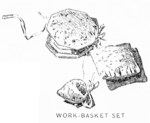
Work basket set

A pretty gift is a clasp-pin holder, which is made by taking a strip of white flannel twenty inches in length and two in width. Pink the edges evenly. Then take a strip of satin ribbon the same length but a little wider. Midway between each of the ribbon and flannel cut a slit large enough to admit the head of a tiny bisque doll. Gather both materials tightly at the waist, and tie a sash of narrow satin ribbon ending in bow and streamers about the waist. A similar bit of ribbon should then be tied about the neck, and loop made at the back from which to suspend the holder. Clasp-pins of various sizes should be placed evenly in the flannel.
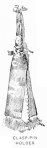
Clasp Pin Holder


Published in: on December 10, 2013 at 4:56 pm  Comments (1)  

The Winner Is!

A special thank you to K and E for assisting me in drawing the winner of the Fanciful Utility Thank You Give-Away.
The winner is…..
Duchess!!!
image

Thank you all for entering my very first give-away. I will get Duchess’s Stash Enhancer packaged up for the post.

I hope everyone has enjoyed a safe Thanksgiving!

Published in: on November 28, 2013 at 9:59 pm  Comments (2)  

What Fits in a Sewing Case?

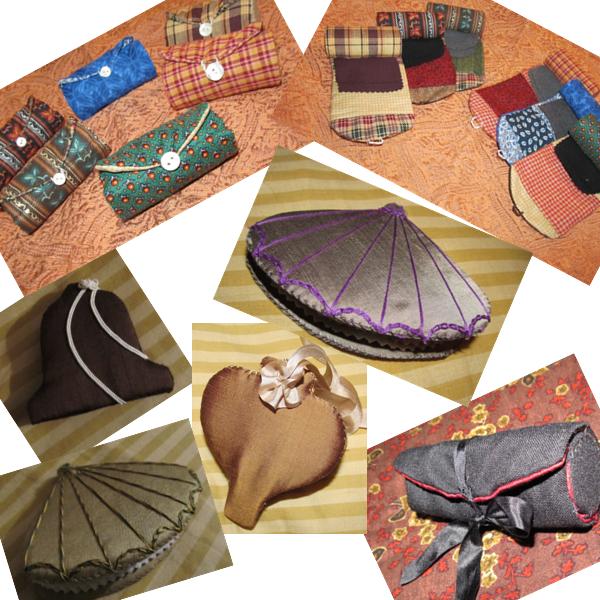
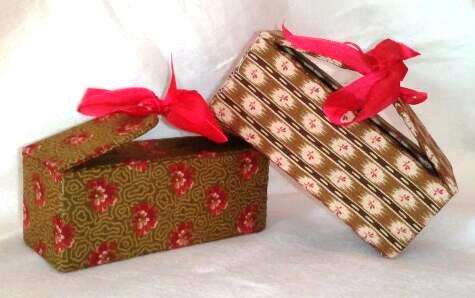
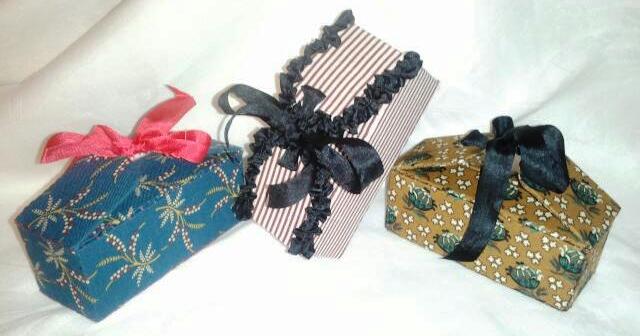
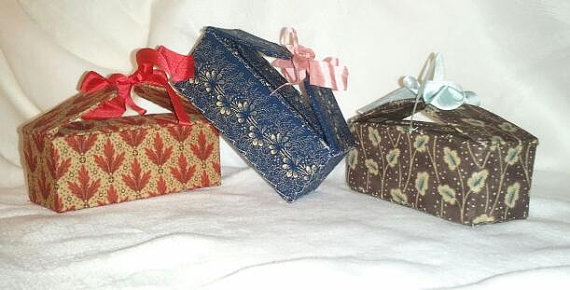
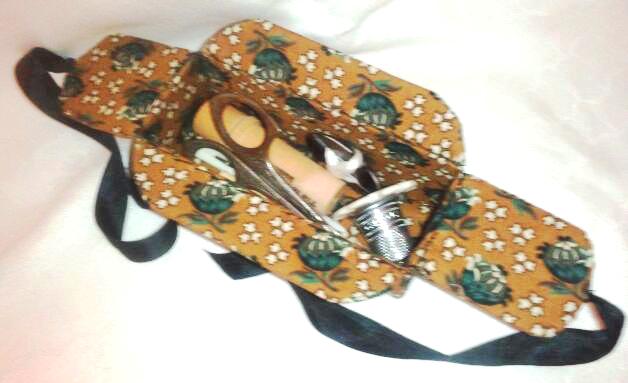
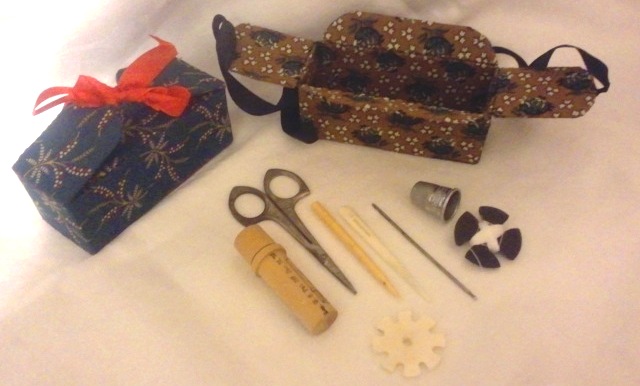
2013-11-24 09.11.43-1During the past week I’ve been enjoying making these cute sewing boxes. They are based on an original French sewing box that was about twice the size. My boxes are 4″ long and 1 1/2″ deep.

With the exception of the red stripe, each box is made from one of the fabrics in my Fanciful Utility Give-Away.  If you haven’t had a chance to enter, be sure to do so. The drawing is tomorrow.

Each case can be made from a 6″ by 20″ piece of fabric. This means you can get two out of a 6″ cut of yardage or three out of a fat quarter. They are constructed over pasteboard using the same techniques  in FanU. The ribbon at the top is a half inch silk. They close with a double set of lids that fold in. The one in the top photo on the right has a little pocket. I’ve been listing them on Etsy, where they disappear very quickly.

Sewing Boxes 1 Sewing Boxes 2

I’m sure you are wondering about the post title. Well, you know how sometimes you have an idea but need a nudge to actually get it done? This is one of those ideas – Showing what actually fits in these sewing boxes or cases. The case I’ve been making is the same size as the center box in the two structured sewing cases in Fanciful Utility. You can fit quite a bit inside these cases. Take a look:

Sewing Box Filled

In this box a pair of scissors, two thread winders, a thimble, needle-case and  bodkins easily fit. There is plenty of room for wax, a pincushion, pencil, ruler, etc.

2013-11-25 18.14.47-1 ???????????????????

Published in: on November 27, 2013 at 2:11 pm  Comments (5)  

Dressing For Winter – A Visual pt 2

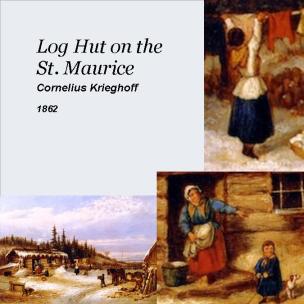
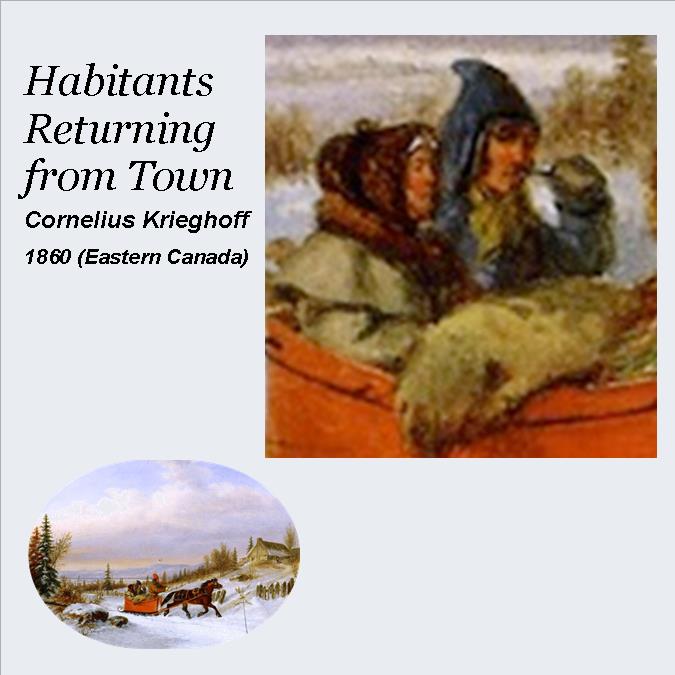
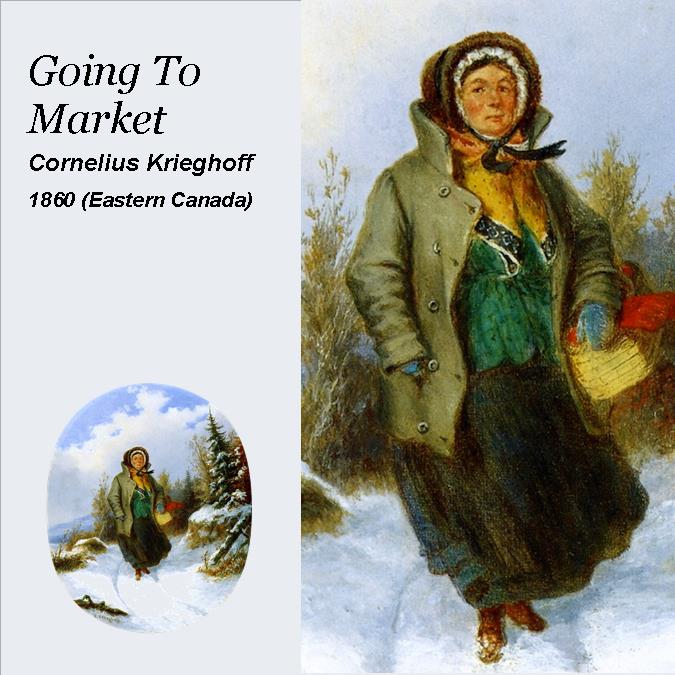
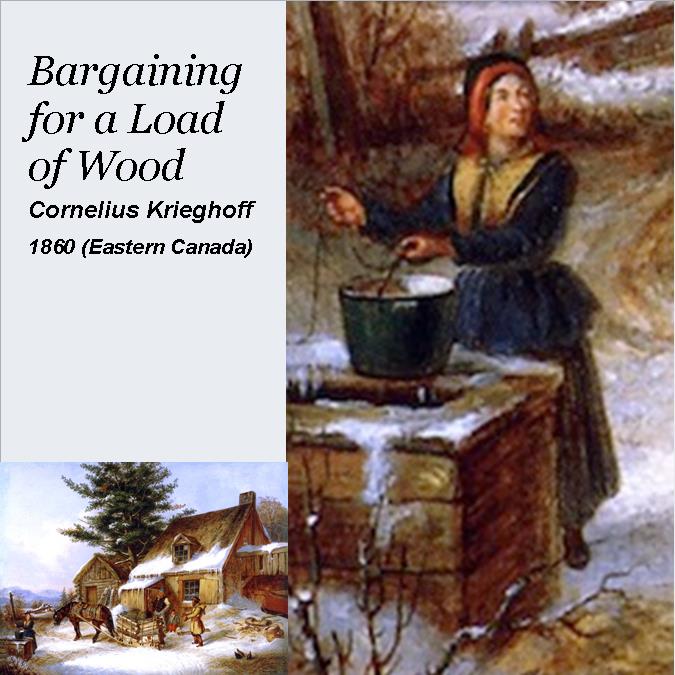
More examples to expand on yesterday. This set includes several from Canada. Keep that in mind.

Winter 08

This is a painting I don’t have the title for worth looking at: Painting by Mari ten Kate

A German painting: Painting by Johannes (Hans) Gabriel Jentzsch

Be sure to see this blog as well.

Here is some information on the artist that follows: Blog page: Life in snowy North America

Winter 06 Winter 09 Winter 10 Winter 11

Published in: on November 22, 2013 at 6:00 am  Comments (2)