Here is a nearly round, larger crown fashionable Civil War era hat.


I added two coarse straw bonnets to the shop today. These are pieces I had on display this summer.
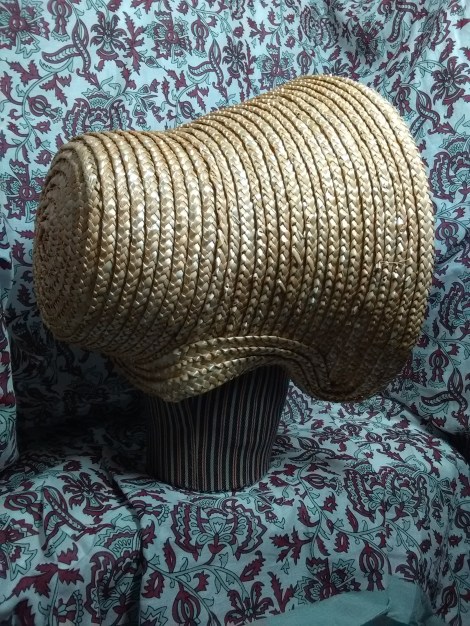
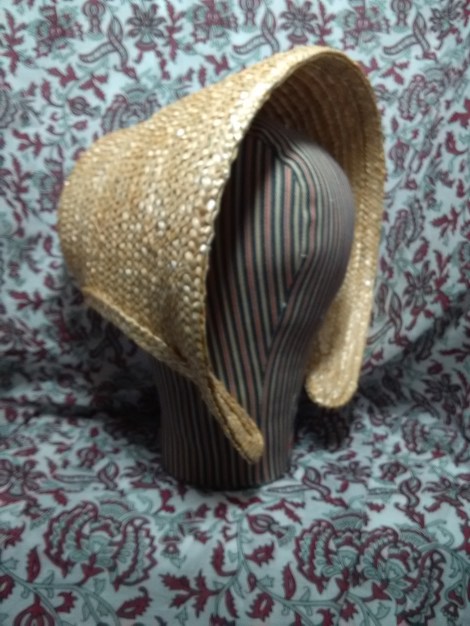
First is this Romantic Era cottage style bonnet, that could be called a poke bonnet. I do like this shape. I should make another in fine plait.



Okay, another chair. Chairs are a rather cumbersome thing to collect, especially when you don’t let anyone sit on them. I have been trying to behave and not randomly add to the collection. But, when I was flipping through the quasi-local yard and estate sales this morning, I saw a folding chair inline with many others.
I was quite certain that by the time I got there it would either be gone, picked up by the early morning antique dealers, or so over priced I could not consider it.
I was wrong on both accounts.

It was there and Very affordable. (Once again, if I had a workshop, I would have come home with some easy projects for very low prices.)
There are many things to talk about with this chair. But, let’s jump ahead to what many are wondering. The dating.
This is a Vaill chair from the 1870s. So, on answer to the question: This is a chair marketed to the public for civilian use in the parlor after the Civil War. This chair has its green label still intact:

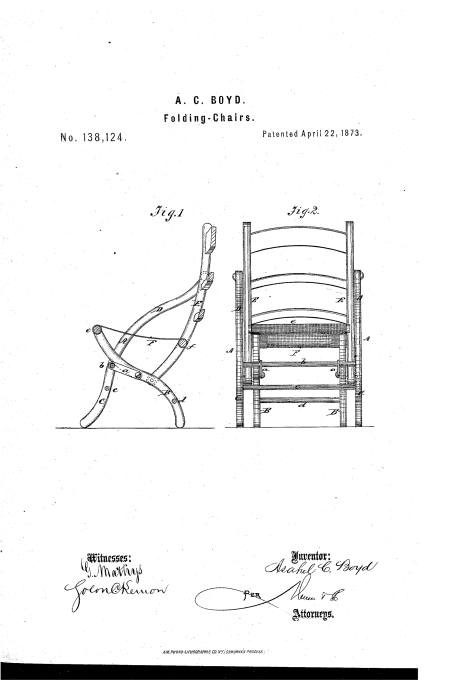
Vaill’s initial patent:
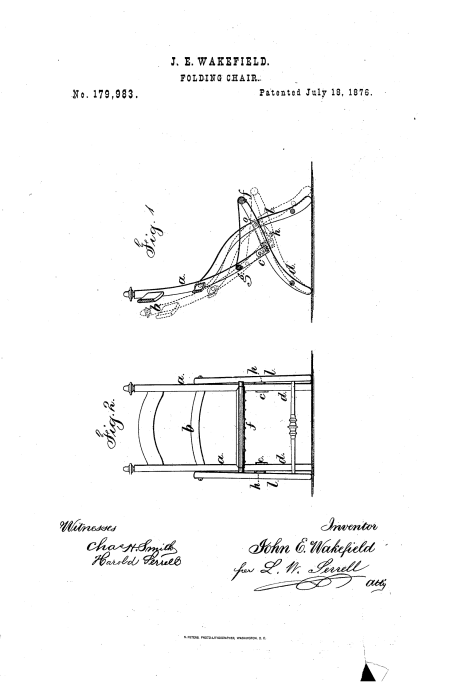
Followed by a few changes three years later:
The next thing I think people may be thinking is “original seat!” Yes?
Well, yes and no. Yes, this is a seat made just for patent folding chairs. No, this is not the seat and back this chair originally had. But, it is still pretty cool. The original seat would have wrapped around the whole front rail and further wrapped around the back rail. Looking at this seat, we see it wraps just to the underside of the front rail. The leather binding is machine stitched with two rows of stitches on either side with raw, untidy ends. This just isn’t the way the leather was treated. It also doesn’t have same feel as original binding leather. I suspect this is an early twentieth century replacement seat and back. These were made specifically to replace the worn, fifty years old seats and backs. I first learned of these when I found a chair where the replacement back was melted, being made of a synthetic blend. (I will add a link to those images if I can find them again) I do not see a spot that will allow me to fiber test the materials.


I also do not think this is the second replacement seat. Look at the label again. I see holes where another seat was attached at some point.
Now, let’s look at condition.
At some point, someone added this back piece. While some chairs were upholstered front and back, I do not think this chair was. I need too peek closer to see if I will be removing this. The factors will be whether it is protecting or damaging the wood, and if the center bar needs care.
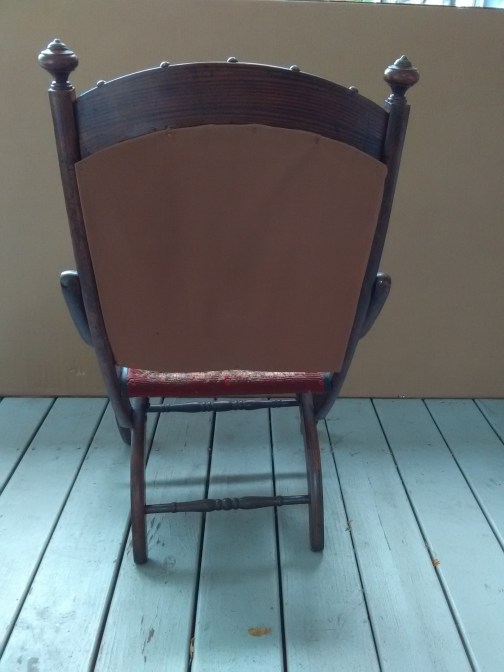
This chair also has one of the most common wear or damage points I see. The upper corners of where the textiles are attached seem to get more pressure either from sitting or being moved. This is also a small area where repeated nailing causes the wood to splinter.


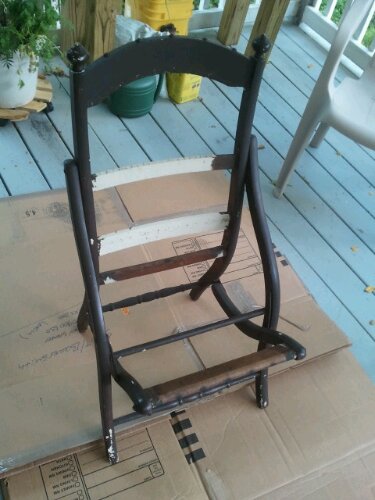
One of the things that makes me happy to find this chair is that it is much like the chair I have been trying to strip the last few years. This has been an ongoing project, now in wait of a better space and tools.
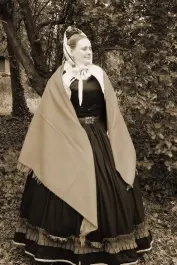
I went further back in time. The 1500s actually. I’ve had a few people ask me about doing earlier, 1400-1600s, millinery. In looking at images, I was lucky enough to stumble upon a blog, “Morgan Donner, where the author clipped apart 1550-1575 paintings from Antwerp, and thematically pieced them back together. The shape I created came from this image. At first, I thought there was no way that little crown was going to work. But, it really does. This hat is pretty comfy on my head.

I decided not to wire this hat. I need to research more to determine if earlier straw would have been wired and at what socio-economic levels.
This hat is now available in my Etsy shop.
Tonight, I have finished a larger crown hat with a wide brim blocked on an antique block. The brim dips all around, and also curves down in the front.
This wider brim is seen in recreational situations, as well as water cure and dress reform images.
Let’s talk numbers. This crown is 21.75″ around the inside, 6.25″ side to side and 7.5″ front to back. Worn properly high on the head, this will fit a larger head. (It is way too big for my head that measures 21.5″ at the hairline and 22″at the forehead. The crown is 2″ deep. The brim is 13″ wide and 13.5″ front to back curved, 3.5″ deep. This took a lot of straw.


Tonight I offer a bonnet de paille with a flared brim. (Short description because it has been a long day.) As usual, find it in my Etsy shop.


1804 fashion plate at the Museum of London
Don’t miss this narrow brim chapeaux.
I haven’t decided if I am selling this one. I love the shape and the color. I fear I put too much sizing on the $40 of plait causing it to lay flat almost decoupaged like. It is still pretty damp thanks to the incredible humidity.


I shall see what happens when it is completely dry.
I took the crown from my hat that several people have asked for and added a narrow, slightly shaped brim. The brim is narrower in the back and gently dips all around. Find it on my shop.


I have two Regency millinery pieces to share tonight.
First.
I made this Regency era straw bonnet working directly from original fashion illustrations. I wanted to be sure to be true to the original lines for straw in this shape. I recommend seeing my full length commentary on my blog as it includes the sources I used.
The hand sewn plait is a supple Milan straw. The brim is fully wired. I blocked the tip and crown on an original bonnet block. Available in my shop.


Second.
When I saw this fashion illustration
of a large crown hat with a little turned up brim trimmed in blue, I knew I had to make it. This hat is going to be so much fun to decorate.
The hand sewn plait is a supple Milan straw. The brim is wired inside the crown. Note, it can be seen from above. Also, find it in my shop.


This Civil War era soft crown bonnet reminds me of a late summer walk in the woods.
Soft crown bonnets are appealing because they are light and comfortable. This one has a fashionable spoon brim in a beautiful copper straw with an elegant champagne color silk taffeta crown. It is trimmed in vintage flowers and a lush forest green ribbon.






 If I Had My Own Blue Box: