Labor

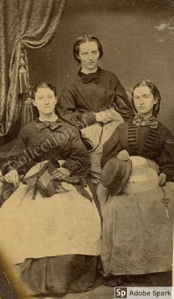
For this twelfth day of #historyinherhands , I offer this carte de viste of milliners with their work in hand. While milliners get most of the attention in the bonnet and hat making trade, we must not forget the many assistants, straw plaiters, straw sewers, flower makers, lace makers, and more who’s labor made the beautiful confections possible.

Published in: on March 12, 2022 at 6:05 am  Leave a Comment  

Invention

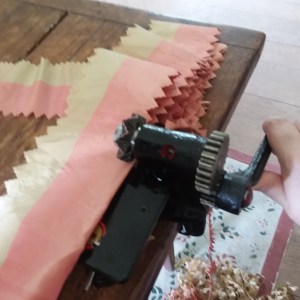
For this eleventh day of #historyinherhands , I offer a pinking machine. Pinking machines replaced pinking dies or pinking irons in the second half of the nineteenth century. No longer did a dressmaker or milliner need to cut scallops an inch or so at a time. Lengths of silk could be quickly run through a pinker with the turn of a crank. This meant yards and yards of decorative trim could be created in a fraction of time with a fraction of effort. As the twentieth century progressed pinking machines were replaced with pinking scissors and pinked fabric transitioned from decoration to utility hidden inside garments.

Published in: on March 11, 2022 at 6:05 am  Leave a Comment  

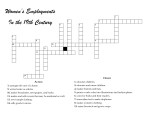
Women’s Employments Crossword

I made a fun little crossword. You can do it online here:

https://crosswordlabs.com/view/womens-employments-in-the-19th-century

Or print this pdf version:

Published in: on March 10, 2022 at 9:24 am  Leave a Comment  

Footwear

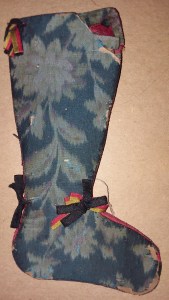
For this tenth day of #historyinherhands , I offer this stocking shaped needle-book. Footwear, including boots, shoes, and stockings, were popular shapes for making needle-books and pin cushions. These appear throughout women’s monthly publications and books of fancy work with recommendations of making them for gifts or fairs.

Published in: on March 10, 2022 at 6:05 am  Leave a Comment  

Fashion

On this nineth day of #historyinherhands , for Women’s History Month, I offer accessible fashion in the form of these combs, one a vulcanite, one a gutta percha. Often the pages of Godey’s Lady’s book were filled with fashions not affordable to the every day woman, or practical. The use of gutta percha, mirroring the look of more costly jet and bog oak, made fashion more accessible to working class women.

Published in: on March 9, 2022 at 6:05 am  Leave a Comment  

What’s Happenin’?

On a whimsy, I picked up a friend’s challenge for Women’s History Month. You likely have noticed daily morning posts with the hashtag #historyinherhands. Each of these posts features an item, or items, from my collection connected with a theme word looking at women’s history on a personal level. I hope you enjoy these.

At the same time, you will be seeing posts on Mondays through at least March and April focusing on millinery from an interpretive perspective. Each year similar questions are asked about when, where, and how to wear hats and bonnets. Usually these questions start in April or May. This year questions are in the air. This tells me people are eager for spring and to get to events and sites. With this in mind, I am bringing forward the most useful blog posts addressing these common and important questions.
Published in: on March 8, 2022 at 6:39 pm  Leave a Comment  

Fire

For this eighth day of #historyinherhands , I offer this soapstone. Soap stones could be placed near the fire, either in the hearth or upon the stove, to warm. Then placed in the bed while wrapped in cloth.

This was a challenging theme word of the day. I can tell you from experience soapstones such as this work nicely. I used to keep on in the oven to warm by the pilot light. It would warm my bed enough to keep me comfortable until morning.

Published in: on March 8, 2022 at 6:05 am  Leave a Comment  

Concealed

For this seventh day of #historyinherhands , I offer a curiosity. The note at the bottom of this bill suggests purchases of a hat, lace, and ruche two and three years prior may have been concealed or otherwise forgotten. The note reads: “This bill is one we presume you do not know of, but have taken the liberty to send to you as it has been on our books some time.”

Published in: on March 7, 2022 at 6:05 am  Comments (1)  

Straw Hat FAQ

This week is a casual Hat Q&A talking about the questions I am asked most often. The focus is on American Civil War hats. I will talk about bonnets in a future video.
How do I wear my hat?
Which is the front?
How do I measure my head?
Where do I put the flowers and ribbon?
How do I keep my hat on my head?

If you have more questions about straw hats or bonnets in the nineteenth century, put them in the comments below. I will do more millinery Q&As in the future.

More details on measuring and fit.

This is where to find me:
Consider Patreon for special content: http://www.patreon.com/AMillinersWhimsy
A Milliner’s Whimsy – If I Had My Own Blue Box (History Blog):www.amillinerswhimsy.com
Don’t Paint the Cat (Crafty Blog): https://dontpaintthecat.wordpress.com
Instagram for If I Had My Own Blue Box: http://www.instagram.com/if.i.had.my.own.blue.box
Instagram for Don’t Paint the Cat: http://www.instagram.com/dont.paint.the.cat

Published in: on March 7, 2022 at 5:05 am  Comments (3)  

Rememberance

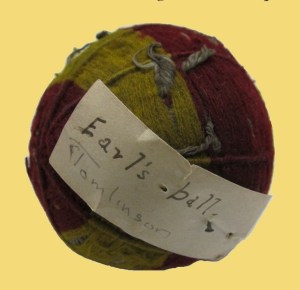
At times an item is saved in rememberance of another. Such is the case on this sixth day of #historyinherhands . This corded ball is accompanied by a note saying “Earl’s ball”. We do not know for certain the context in which this ball was Earl’s, when it was Earl’s, or even who Earl was. We do know someone kept this ball in rememberance of Earl.

Published in: on March 6, 2022 at 6:05 am  Comments (2)