Who are you? Who am I? OR Greetings on the Church Steps

Who are you? Who am I? OR Greetings on the Church Steps

By Anna Worden Bauersmith

            A few years ago, in An Introductions to Introductions, I discussed the guidelines for introducing individuals to each other. An essential part of introductions or greeting each other is how a person should be addressed.

In the twenty-first century, our modes of address are significantly more casual than the formal, public addresses of the nineteenth century. In our living history activities we need to be aware of the differences between how we great each other today and the prescribed way of greeting each other in the mid-nineteenth century. All to often we attempt to formalize our greetings but fall short by fully understanding the rules.

Before we proceed, let us review the order of introductions so we can consider them as we look at forms of address:

1st – Gentlemen are always introduced to Ladies. A woman is never introduced to a man.

2nd – Younger people are introduced to older people.

3rd – A person of lower social status is introduced to a person of higher social status.

Now, on to forms of verbal address to use when we meet each other in the nineteenth century. The proper verbal address of a person included his or her title and their proper name. A person’s proper name was the name he or she was given at birth or at marriage. For use in introductions this includes the last name or the combination of first and last name.

            In the United States, a person’s title was due them either by nature, occupation or election. In European countries titles among the gentry and peerage were due by heredity, marriage or bestowment as well as election and position within the Church . In these countries, a detailed system of ranking determined the social hierarchy for these titled individuals. Back in the United States, the most common titles for women included Miss, Mrs. or Mistress. At times, in the case of a visiting European woman the title Lady would be used. For men titles included Mister, Reverend, Doctor, Professor, Senator, Governor and military rank in some situations.

            The use of titles for men is fairly simple because a man maintains the title of mister unless he has achieved one of the other titles through occupation or election. If you were greeting your neighbor, Joseph Alexander, at the entry to Church, you would address him as “Mister Alexander.” If Nathan Masters, a new local doctor of medicine, joined you on the steps you would greet him as “Doctor Masters.” Lets assume that these two men have not yet been introduced. Your neighbor is in his forties, while the new doctor is rather young. Since a young person is introduced to an older person, regardless of social or economical standing, you could say “Mister Alexander, may I introduce Doctor Nathan Masters, our new physician.” The method of use of the title Doctor would apply to the titles of Reverend, Doctor, Professor, Senator and Governor as well. It appears, looking at period literature, that military titles of rank were not used as frequently in civilian situations frequently until considering higher officer rankings.

            Minor boys would also be addressed as Mister. For example, Mr. Alexander has a son, William. He would be addressed as “Mister Alexander” or “Mister William Alexander” denoting his youth. The title master is sometimes mentioned in period literature with minor boys. Back at Church, your son, Sam, and William Alexander have just arrived. William too has yet to meet the new doctor. As Sam is a minor, he does not have the social position to make the introduction in this situation. Either Mr. Alexander or you should make the introduction. As Mr. Alexander knows his son’s clumsiness and likelihood of being a frequent visitor to the new physician’s office, he takes the opportunity to make the introduction – “Doctor Masters, may I introduce my son, Mister William Alexander.”

            Titles for women change more frequently then for men. A women’s title depends on her marital status and her order of birth. The title Mrs. is for a married women. It is used in conjunction with her married last name. For example, your neighbor’s wife, Charlotte, is “Mrs. Alexander”. The title Miss is used for unmarried women regardless of age. The title Miss is used in conjunction with a woman’s last name or first and last name depending on her order of birth. The oldest unmarried daughter is title Miss followed by her last name. For example, the 20 year old eldest daughter of Mr. And Mrs. Alexander is Elizabeth Alexander. She would be addressed as “Miss Alexander”. This title of address would be due her until she is married. Younger daughters would be addressed with the title Miss followed by their first and last name. In the case of the Alexander family, their younger daughters, Isabelle (19) and Mary (17) would be addressed as “Miss Isabelle Alexander” and “Miss Mary Alexander”. The title Miss should not be used with the first name along. (The exception to this is occasionally the instance of a governess.)

            If you met any of your neighbors, who you are acquainted with rather well, in public you would address them as:

            Mister Alexander

            Mrs. Alexander

            Miss Alexander

            Miss Isabelle Alexander

Mister William Alexander

            And Miss Mary Alexander

            Recall how I said women’s titles change more frequently then men’s? Let us suppose Elizabeth has a fiancé James Augustus. James would call Elizabeth “Miss Alexander” in public. Elizabeth would call James “Mister Augustus”. Depending on the family and local proprieties, these individuals may still call each other by their proper addresses in family situations rather then use their first names. In the spring, Elizabeth and James marry. Elizabeth is no longer “Miss Alexander”; she becomes “Mrs. Augustus.” That is the easy part. But, Elizabeth’s change in title also effects her sister, Isabelle’s title. Isabelle has become the oldest unmarried daughter. As such, her address becomes “Miss Alexander.” Mary will keep her title the same until either she or Isabelle marry.

            To review, let us suppose it is a year later and we are again on the steps of the Church. Nathan Masters’ cousin Jacob Masters, has come to visit. Doctor Masters wishes to introduce his many friends in town. As they arrive James and William are chatting on the steps. In the past year, James was elected Alderman for the town. As an introduction, keeping in mind James socio-economic ranking, Nathan says “Alderman Augustus and Mr. William Alexander, may I introduce my cousin Mister Masters.” As our group of gentlemen discuss Jacob’s travels, Elizabeth and Mary approach. Since men are introduced to women, Nathan proceeds with the introduction “Mrs. Augustus, Miss Alexander, I would like to introduce my visiting cousin Mister Masters.” Upon this introduction, Jacob smiles and Mary’s heart flutters. It appears the titles of the Alexander family may change in another year’s time.

Published in: on January 7, 2011 at 11:00 pm  Leave a Comment  

An Introduction to Introductions

Originally published in the Citizen’s Companion

An Introduction to Introductions

By Anna Worden

I am frequently asked questions regarding proper introductions. Most questions make the subject seem more difficult than it actually is. This misconception can be attributed to a lack of information or overwhelming information. Some form of discussion regarding introductions can be found in most period etiquette guides. Magazines also carried the advise sporadically. With all this information, proper introductions can seem challenging or even confusing. But, I assure you it is not that difficult. There are two basic components to introductions, the proper way to address a person and the proper order of introductions. After these two components, all the little rules fall into place.


TWO BASIC COMPONENTS

The first step is to learn how to address a person. In addressing a person during an introduction, use a person’s title and proper name. Each person has a title either by nature, occupation or election. For women, this is most frequently Miss, Mrs., Mistress or Lady. For men, this can include Mister, Reverend, Doctor, Professor, Senator, Governor and military rank in some situations. A person’s proper name is their full last name, such as “Mr. Alexander” or “Mrs. Alexander”. Married couples are addressed by their titles followed by their last name, such as Mr. and Mrs. Curtis.  Eldest sons and unmarried daughters are addressed by Miss or Mr. and the family last name. Younger daughters are addressed as Miss, their first name and their last name, such as Miss Elizabeth Williams. You would address only your closest family and friends with a familiar first name or abbreviated name. In an introduction, this would not be used.

There are three basic rules to the order of introduction in the nineteenth century. Each rule is based on the idea that the lesser is always introduced to the greater.

1st – Gentlemen are always introduced to Ladies. A woman is never introduced to a man.

2nd – Younger people are introduced to older people.

3rd – A person of lower social status is introduced to a person of higher social status.

The first rule is clear cut and not to be broken or bent. Gender out ranks age and social status. The second and third rules can blur somewhat. Age out ranks social status except where the difference of age is minimal or the difference in social status is significant. For example: If a farmer’s daughter and a governor’s daughter, who are both in their 20’s, are introduced, the farmer’s daughter would be introduced to the governor’s daughter. Apply these three rules to any introduction and you will be assured propriety in your actions.

THE INTRODUCTION

First obtain permission from the parties to be introduced for the introduction.

After obtaining permission for the introduction, speak first to the introducee:

            “Miss —–, allow me to introduce Mr. —–”

Then turn to the introduced:

            “Mr. —–, Miss —–”

ADDITIONAL RULES


Obtain permission for the introduction prior to making the introduction. A woman has the right to refuse an introduction.

Children and teenagers do not have the social authority to make introductions. They also do not have the authority to agree to an introduction. Permission must be obtained from a child’s parent or guardian to make an introduction.

When introducing a group, say each person’s name only once.

When strangers to an area are introduced, it is appropriate to include their place of residence or in the case of a recent traveler, where they have come from. Some examples include:

            Miss —-, of Gloucester, or

            Mr. —–, recently of Paris, or

            Mrs. —–, recently returned from London.

This practice gives those being introduced a topic of conversation if one lacks.

An introduction at a public social or ball is for the duration of the social or ball only. The individuals introduced are not required to acknowledge each other afterwards. It is in the power of the lady to acknowledge the introduction later. (The socials at the majority of events would be considered public.) An introduction at a private ball is considered unnecessary since all attendees are considered respectable enough to attend.

There appears to be mixed advice on the bow verses the hand-shake. The earlier books lean towards only a bow, reserving a handshake for closer acquaintances. Some books forbid it for unmarried ladies.

Final thought – Remember, when you make an introduction you are speaking for the character of those you are introducing. Be wise in the introductions you are making.

Published in: on January 7, 2011 at 10:58 pm  Leave a Comment  

Christmas fabric

Dan gave me a length of the fabric I saw a while back. Now the fabric and I are in discussion over what it wants to be. Current options are…..

  • A mid-century to 60s wash dress for if/when I’ll get around to doing work in a dress again. I’m not sure how likely this is. Though it may be smart to have a wash dress since I currently don’t have one anymore.
  • The yoke style dress I thought I should have when I realized I don’t have one. Again 50s or 60s
  • A dress more from the 1830s to experiment with the style. I’m not sure I would have enough occasions to wear this decade though.
  • An 18-teens dress since there is likely more times to wear it and I’ve been really wanting to make Regency era dresses. I’m not sure this fabric wants to be that era though.

 Here are some new photos… The ground is a rich brown with the deep, almost turkey red flowers and creamy leaves/stems with a hint of gold. From a distance it reads brown with a hint of red. I think the distance photo below really is more washed out then it really looks. I took these with the phone rather than the camera.

In thinking about the yoke dress idea, I would need some shaping to it. Kinda like this one below. (Though, that collar thing will not be making it.)  I’m concerned I will not look so great in this type dress between my larger bust, fluffiness and short shoulders. Not sure. (opted to play with photo so she isn’t so skinny.)


ADDING…..

Gail suggested this type of early 1850s dress. (this is a facebook link) In actuality, my instinct was to lean towards something later 40s or 50s. But, I have a few dresses for those years, so didn’t include it. I’m just drawn to the styles from then so much more then the early 60s. The V shaped sheering could look nice with this fabric.

Published in: on January 2, 2011 at 12:51 pm  Comments (1)  

Quilted Pettis

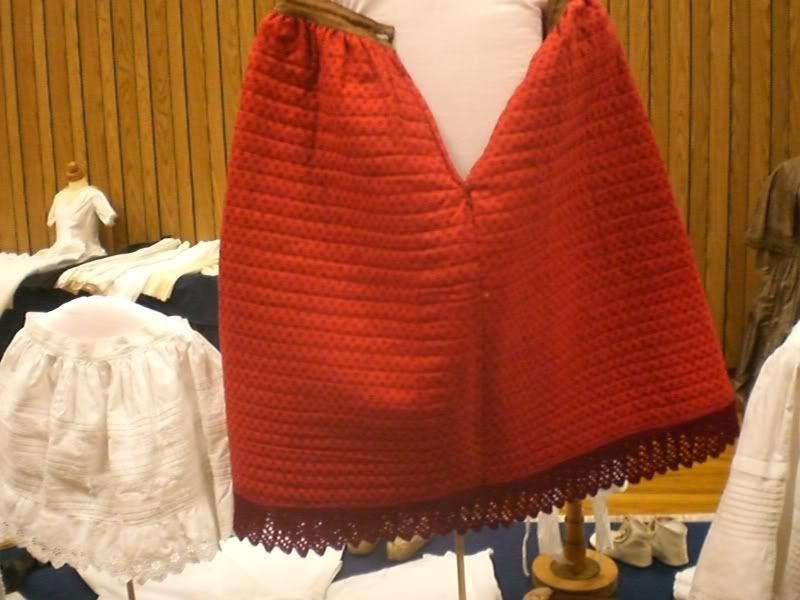
One of my favorite garments became one of my favorite garments a few winters back. Oddly enough, this 19th century garment became a favorite in a 21st century way. I already had a couple red wool pettis, which I loved. It was time to make a quilted petti. So, I did using wool batting and a favorite fabric selvaged from a less than fabulous dress,  that reminded me of Grandpa because it had wheat in the stripes. Being a teacher in NY, I often was up and on my way to work well before the snow plows were to far into their routes and in less than wonderful temperatures. Now, add to that my creaky, achy knees and you can imagine the drive in was not so great. One particularly cold morning, when several other school districts were closed due to the cold, I opted for my 19th century coat, hood and new quilted petticoat. It was wonderful. I was toasty warm despite the frigid temperatures. That quilted petti was worn many times over after that.

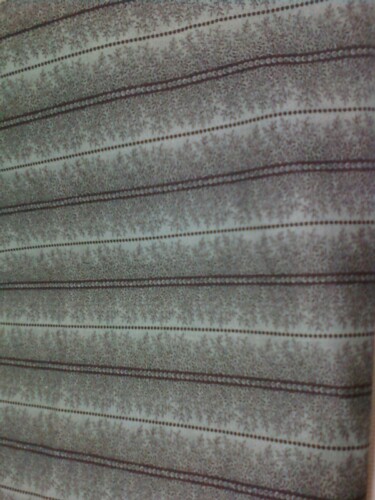
Fast forward to New Mexico. I didn’t think I would end up missing a warm quilted petticoat of all things. But, there is something about the snuggly softness as well as the warmth it could provide on evening drives after the temperature drops and my husband doesn’t like a warm car. Since I have this black print fabric with a green tone that just kept saying it wanted to be a quilted petti, it is time to make one. Here is the fabric.

The inside is a nice white muslin which is a tad thicker and softer then most muslins we see. The petti is two 44″ panels, 36″ long with 30″ of quilting. So far the quilting design is 4″ scalloping along the bottom with a 1″ quilt from the bottom edge for now. This might change as I go because I think the very bottom below the scalloping wants something. The top is a chain of 2.5″ wide () shapes, which I can’t think of the name of right now. The field in-between will be vertical stripes of a yet to be determined distance. I may do double sets with two very close together. I’m a little tempted to add some batting in small circles, called Trapunto, under the scallops. But, I don’t think that is common for this era.

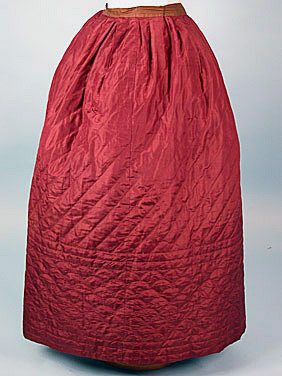
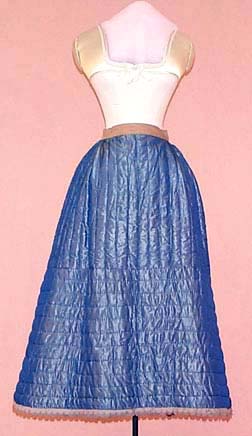
Now, of course I can’t post about quilted pettis without some background or originals. I thought I remembered a passage from The Workwoman’s Guide, but I can’t seem to find it, just the flannel pettis. So, here are originals instead:

This is a green silk one from the 40s.

1850s wool petti with a 167″ hem listed

Green wool petti which I don’t think is reversible as they say. It has a 74″ hem.

Quilted cotton petti with narrow strip quilting on the bottom and diamonds on top. 107″ hem

This petti is post war, but a must see for the fabric and shaping. This one is also post war, 1865, but shows nice wide wadding sections.

A child quilted petti.

Here is the outside and inside of one on the Graceful Lady Site –

Another one from Anna Allen’s Graceful Lady site –

A close-up for Corsets and Crinolines

The Musee McCord Museum has this photo which shows what looks like a quilted petti underneith.

This is a blog post from the FIDM Museum with a great, colorful petti

Published in: on December 22, 2010 at 3:16 pm  Comments (3)  

2011 Workshops and Conferences….

I’ve been invited to speak at several workshops and conferences over the past months. While I would absolutely Love to, I can’t commit to any until we are relocated and have everything settled down. Since I can’t go, the very least I could do is share the 2011 workshops and conferences I am aware of.

January

 Corset making workshop at Genesee Country Village and Museum (Western NY) – January 8th and 9th. The cost is $50. For more information contact Bevin Lynn (link to come)

Mid-Western Civil War Civilian Conference – Friday, January 28, 2011 at 8:00am – Sunday, January 30, 2011 at 12:00pm. For registration and information contact Marta Vincent  or visit www.midwestcwcivilian.com.

Caps – Plain to Fancy with Marta Vincent-  January 8/9 – Hampshire, IL

February

Bonnets – With Marta Vincent  – February 25/26 – Hampshire, IL –

March

 Ladies and Gentlemen of the 1860s Conference (Harrisburg, PA) –  March 3-6

Frontier Women’s Living History Association Conference – (In Texas) Please see thier blog for more information http://frontierwomen.blogspot.com/

Ball Gown Bodice & Berthes – With Marta Vincent – March 26/27

April

May

June

July

August

September

October

November

December


Published in: on November 30, 2010 at 9:02 pm  Leave a Comment  

Masquerade Dress

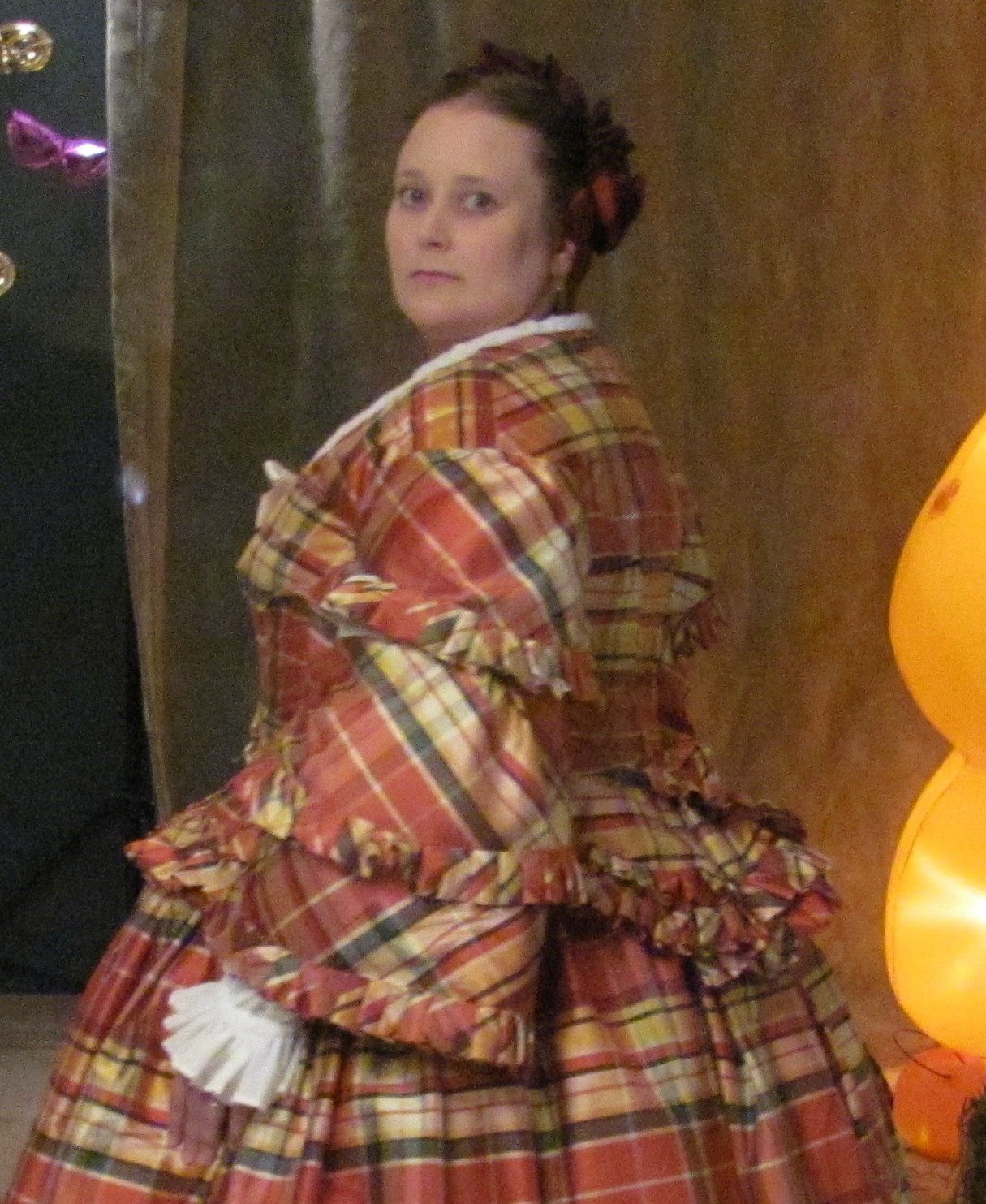
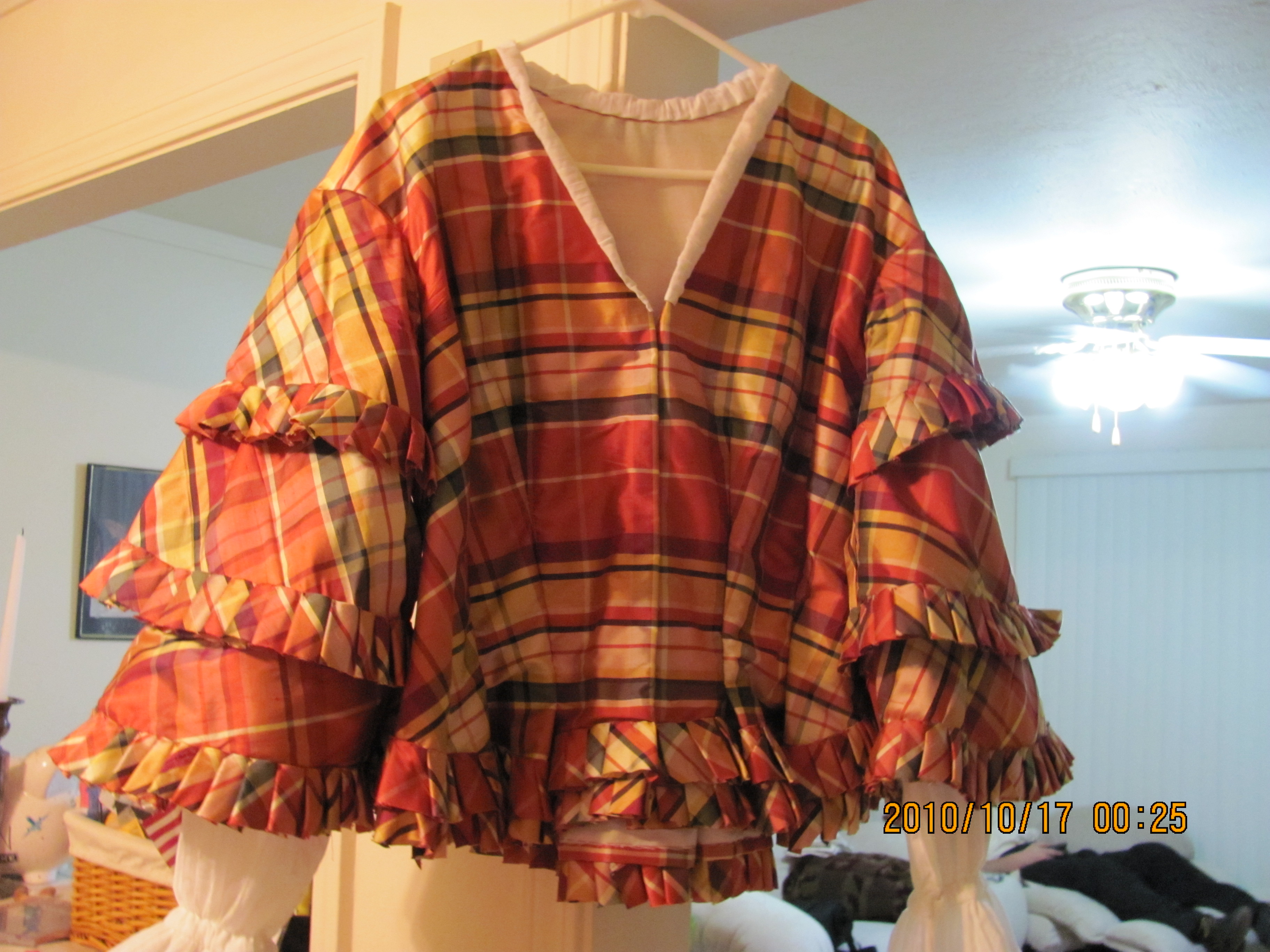
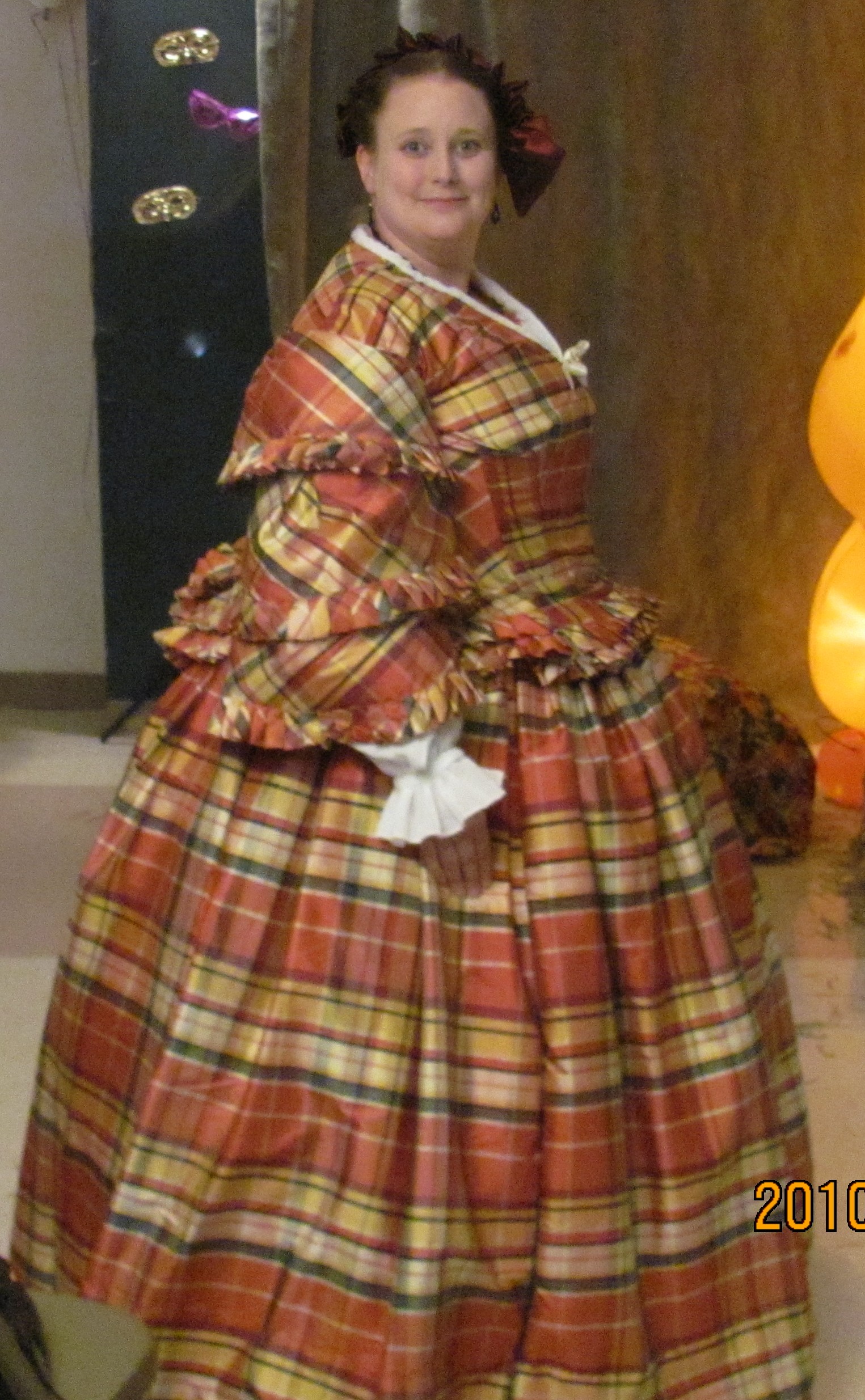
Now that the Masquerade has past, I can share photos of the dress I was working on. I don’t have any “in-process” photos though. I’m horrible about that. Here is the dress:

And here is my husband and I:

The fabric is one I’ve had for at least a few years. We’ve been calling it my sunset plaid. It is a taffeta weave with thicker threads and moderately tight weave. It is a bit more red then it seems to appear in the photos.

The bodice is just a basic basque bodice with the  basque cut as part of the bodice rather than as an added piece. I generally like this approach. The challenge is getting the lower part of the darts right. I’ve decided to shorten the darts to get a better front flair. I think the front is too flat. I am also going to change the outside dart because that has some pulling. The neckline is actually a jewel neckline just turned down into the V neckline. I couldn’t make up my mind. So, I did it that way. The back is a two piece back. I tried to line up the plaid horizontally. I think I did fairly well given how the pieces curve. The pepulum is shaped with two box pleats underneath the pleating. The trim was actually an after-thought when I had some left.
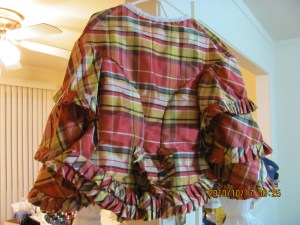
 

The sleeves started as a funnel sleeve even though you can’t really tell with the tiers. The base is just muslin. Under the top tier there is some extra tucked out so I can change the sleeve to have the bottom two tiers detachable. For the silk, I took the base pattern & cut it into 3 pieces adding an extra inch to the top of the bottom two for overlap. Each silk piece is cut on the bias. An important thing to know if you want to do this – While three pieces will fit on the straight grain, all three pieces will Not fit in one row on the bias of 60″ fabric. It is most economical to cut each piece open separately where they fit. The undersleeves are a temporary make-do from a semi-sheer fabric I had. They are just tacked inside.

The trim is bias strips pleated with the top edge turned down. There is approx. 10 yards of finished trim for the bodice – two rows around the basque and one row on the sleeves. The 30ish yards of bias came from about 1 yard of fabric.

One last note – Yes, there is a balance thing going on with the skirt. I made the skirt first. Then I didn’t try it on until the night of the event. Oooos. It was a good 4+ inches to big. I did a couple quick tucks in the back to get it to stay up. But, there was still some sagging in the front. So, the horizontal lines dip in the front. I’ll be fixing that.

Published in: on October 18, 2010 at 8:17 pm  Comments (1)  

Projects list….

Some how I’ve developed a project list once again…..

  • Ongoing sewing cases
  • Yoked bodice dress – I don’t have one, therefore I have to have one
  • 19th Century coat – Because I miss mine
  • 21st Century coat – May just be the same one as above (I want a 19th c. one in a different color but for cost effectiveness this may be an all purpost black coat.
  • Dan’s British Rifleman’s Uniform
  • Dan’s muslin shirt
  • Dan’s white shirt
  • Dan’s civilian pants (may purchase those.)
  • Dan’s tbd civilian coat
  • Dan’s tbd civilian vest
  • Medium size leather bag
  • Tiny white silk Regency era bag
  • Regency corset, bodiced petticoat and dress
  • Sunbonnet tbd (since all headwear is in NY)
  • Some ribbony stuff possibly to sell (hairnets and neckbows.)
  • Because I saw the coolest padded bustle made out of a paisley fabric yesterday, I may have to breakdown and make an 1870s or 80s outfit.
  • Then there is at least one surprise project I can’t list online
Published in: on August 22, 2010 at 12:16 pm  Leave a Comment  

Bag Pattern

Here is the pattern/illustration for the bag below inspired two at the MET.

Silk Leather (p1MET bag (p2)

Published in: on August 16, 2010 at 3:06 pm  Comments (2)  

Bags

Since my previous post about wanting a new bag, I’ve decided it would be silly to make what I already have. It is much more fun to make something new.

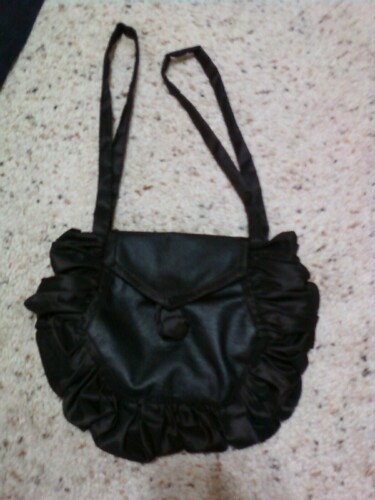
This first bag is inspired by two bags at the MET. Bag 1 and Bag 2. The originals appear to have the leather center bound. Then the silk whipped to the binding. I opted to work off of a base lining because I think that would make a stronger bag. First I made two muslin circles with one side chopped off. These were sewn together with the straight side turned down to the outside. On the outside I traced the shape of the center piece on both sides. Next I gathered strips of the dark chocolate taffetta I already had cut. Since these were already cut 2.5″ wide, I sewed two together to make them wider. They needed to be wide enough to to cover easily the widest part. (In hindsight, it may have been easier to sew the silk strips together at the end.) I gathered the outer edge of the silk.
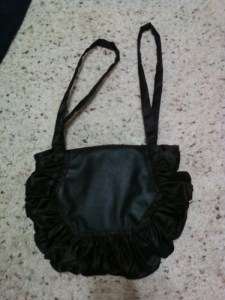
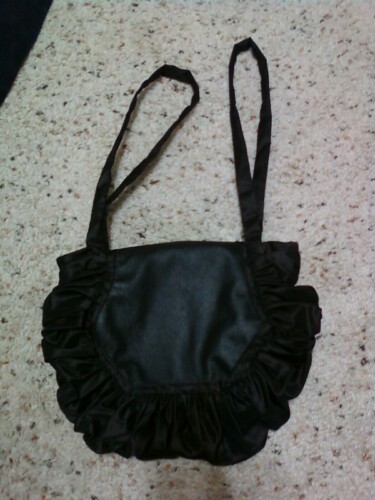
If I was going to whip the silk to the binding, I would have turned then end over and gauged like I would a skirt. The gathered silk was basted to the lining along the traced line. I turn the ends to cover the edge of the muslin on each side. (I thought about either using a draw string or elastic to hold the ends closed. I have not done that yet, waiting to see how it works with the open pieces.) I bound the edge of the leather with bias strips of the silk. Since I couldn’t find my needle for the leather, I used the maching. I don’ t like how that looks right now. I may cover that seam with beads. The bound leather was then stitched down over the gathered silk. I ran the needle through just the edge of the silk binding. The straps are on grain cut strips of silk over strips of muslin, folded in so each strap is 4 layers each of cotton and silk. These are whip stitched. The button is a cloth button with the silk gathered over muslin scraps. The button loop is a narrow flat strip of folded over silk. Rolling it would have been better.


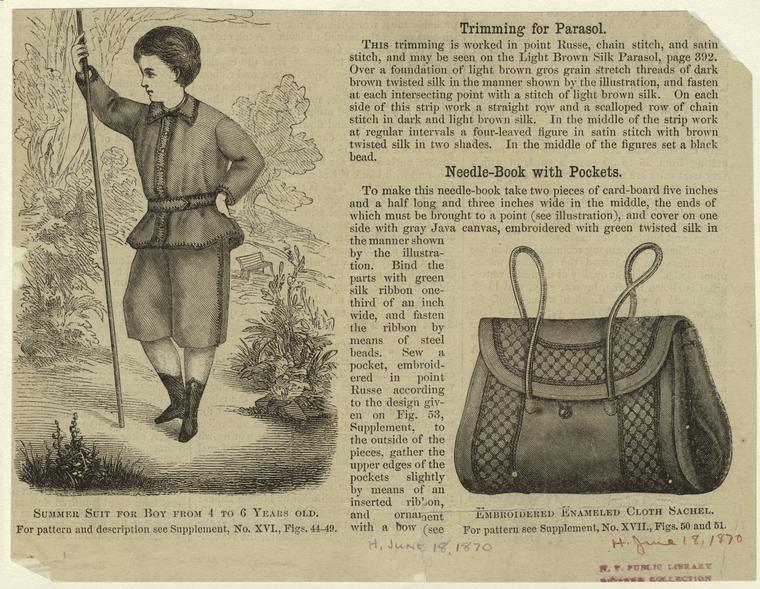
The next bag I am looking at making is similar to this 1870s bag found in the NYPL digital archives.

The illustration calls for embroidered enameled cloth, but I have this beautiful piece of blue leather Dan picked up.

The math for the piece will make a bag 12″ wide, 10″ tall and 5″ deep. I think this should make a decent size bag for carrying items through the day when we don’t have a home-base as we are accustom. I haven’t completely decided on the straps. These small straps are nice for the bag above which will carry light stuff. But, I am not sure for a bag that might carry heavier stuff. I’m worried a shoulder strap will look to much like a modern day purse. I want this to be more like a travel bag. So, maybe wider straps.

Published in: on August 12, 2010 at 8:20 am  Leave a Comment  

Bodice Workshop

I have the wonderful oppertunity to do a bodice draping for the local ladies. Now, when I say local, I actually mean from three different states. It was nice to get to meet some of the local reenacting ladies, each of whom were delightful. (I also got to meet several wonderful kitties.) Ann Dixon writes the Frontier Women’s Living History Assoc. blog. She posted some very kind words.

Published in: on August 11, 2010 at 12:31 am  Leave a Comment