Readings for Rural Life

From Moore’s Rural New-Yorker in Rochester, NY

Oct 29th, 1864

Cream Cheese

An inquiry in the London Field for a recipe making cream cheese was replied to as follows by three correspondents:

“We put a quart of cream into a clean jug, with half a teaspoonful of salt stirred in, and let it stand a day or two, till thickish. Then we fold an ordinary grass cloth about six or eight times and sprinkle it with salt, then lay it in a sieve about eight inches in diameter. The sides of the cloth should come up well over the sides. Then pour in the cream and sprinkle a little salt on it. Change the cloth as often as it becomes moist, and as the cheese dries press it with the cloth and sieve. In about a week or nine days it will be prime and fit to eat. The air alone suffices to turn the cream into cheese.”

“Take about a half pint of cream, tie it up in a piece of thin muslin and suspend it  in a cool place. After five or six days take it out of the muslin and put it between two plates, with a small weight on the upper one. This will make it a good shape for the table, and also help to ripen the cheese, which will be fit to use in about eight days from the commencement of the making”

“Take a quart of cream, either fresh or sour, mix about a saltspoonful of salt, and the same quantity of sugar. Put it in a cloth and with a net outside, hang it up and change the cloth every other day; in about ten days it will be fit for use.”


Published in: on October 29, 2014 at 6:00 am  Comments (2)  
Tags:

Readings for Rural Life

From Moore’s Rural New-Yorker in Rochester, NY

Oct 22nd, 1864

The Expression of Dress – Women are more like flowers than we think. In their dress and adornment they express their nature, as the flower do in their petals and colors.  Some women are like the modest daisies and violets, they never look or feel better than when dressed in a morning wrapper. Others are not themselves unless they can flame out in gorgeous dyes, like the tulip of bush rose. Who has not seen women just like white lilies? We know several double marigolds and poppies. There are women fit only for  velvets, like the dahlias; others are graceful and airy, like the azaleas. Now and then you see hollyhocks and sunflowers. Then women are free to dress as they like, uncontrolled by others, and not limited by their circumstances, they do not fail to express their true characters, and dress becomes a form of expression very genuine and useful. – Meredith.


Published in: on October 22, 2014 at 6:00 am  Leave a Comment  
Tags:

Readings for Rural Life

From Moore’s Rural New-Yorker in Rochester, NY

Oct 15th, 1864

Wine Versus Temperance

Physicians often recommend poisons for the cure of certain diseases. It is probably on the same principle that wine is said to be an antidote for intemperance. As fatal disorders in the physical system require harsh methods for relief, so, we are told, the great panacea for this malady of the social body is pure juice of the grape!

There are those who urge that a plentiful supply of unadulterated grape wine would have a tendency to throw out of use the poor whisky with which the market is flooded. This may be so, but it seems to us that the temperance cause will not be very materially advanced by the change. We cannot see why a man who drink to excess would not be just as wiling to get drunk upon pure sweet wine, as upon the poisonous product of the still, provided he could get one as easily and cheaply as the other. We cannot but think that those who recommend the extensive manufacture of wine are advocating an experiment that is fraught with the greatest danger.

Just at this time, when the temperance reform is again attracting attention, and the pledge of total abstinence being circulated, it seems somewhat startling to hear prominent members of horticultural societies say that they cannot recommend any grape for general cultivation unless it will make a good wine.

Fermented grape juice is admitted to be alcoholic, if alcoholic then it is intoxicating, and if it is intoxicating and becomes plenty and cheap, then it is dangerous. No true friend of the temperance movement can refure to take the pledge of total abstinence. If he does that, he excludes from the list of his indulgences, wine. The whole fraternity, then, of temperance men is committed against this beverage. This being the case it seems a strange anomaly that persons of influence and distinction, persist in advocating the extensive manufacture of wine, and urge as their strongest plea that it will be a death-blow to intemperance! They tell us that among the vine-clad hills of Italy, and upon the vineyard-skirted banks of the Rhine, where wine is almost as free and plenty as water, intemperance is nearly unknown. This may be true and yet not destroy our position. American character and society are essentially different from either Italian, German or French. What is a blessing there, might prove to be a curse to us.

The ancient wise man, when he said “strong drink is raging,” did not refer to whisky or beer. They are products of a later age than his. Distilleries were not among the institutions of the ancient Jews. His words of condemnation were uttered against wine, sparkling, innocent wine! Let us have grapes, simple and fresh, and be satisfied with them. Let them be as plenty and cheap as we can make them. Let the people eat and be contented. Grapes are healthy, “Wine is a mocker.” W.S.F. Verona, Oneida Co., N.Y., 1864


Published in: on October 15, 2014 at 6:06 am  Leave a Comment  
Tags:

Readings for Rural Life

From Moore’s Rural New-Yorker in Rochester, NY

October 8th, 1864

Household Conveniences

I have a slate hanging in my pantry with a pencil attached, upon which we are accustomed to write down such domestic concerns as need attention. For instance, upon one side of it is now written, “Send for corn-meal, starch and lamp chimney.” “Examine butter firkin.” “Engage onions of Mr. Allen to-morrow.” These are for my own attention, while upon the other side the girl is reminded to “Brown coffee; gather beans for drying.” “Scald the bread box.” “Wash cellar shelves.” Whenever I find any little item that needs attention either from myself of the girl, I trust it to my slate, and find it much safer than to run the risk of remembering it at the right time. You often hear housekeepers exclaiming “There, I forgot entirely to send for such a thing – or do such a thing, and now it is too late.” Try the slate.

Another – Beside the slate hangs a small blank book, also furnished with a pencil, in which I keep an account of my household expenses. The pages are variously headed “Flour,” “Sugar,” “Meat,” “Butter,” &c., with an extra page, above, I put the amount which I have decided by careful estimate is all we can afford to spend monthly, or yearly, (I have tired both ways) for the article designated. Then I enter every purchase made under its appropriate head, giving date, quantity, price and amount. At the close of each month it is easy to see whether we live within our income or not. You farmer’s wives may think this neither possible nor useful for you, but I assure you if you would once try it you would find a satisfaction from it that would abundantly repay the trouble. I recommend it most earnestly, however, for the wives of salaried men, and mechanics whose income is fixed, and who purchased the staples for their family consumption.  E.H.M.


Published in: on October 8, 2014 at 6:05 am  Leave a Comment  
Tags:

Readings for Rural Life

From Moore’s Rural New-Yorker in Rochester, NY

October 1st, 1864

How to Tell a Lady

Two women shall get into an omnibus, and though we never saw one of them before, we shall select you the true lady. She does not titler when a gentleman, handing up her fare, knocks off his hat, or pitches it awry over his nose; nor does she receive her “change,” after this (to him) inconvenient act of gallantry, in grim silence. She wears no flowered brocade to be trodden under foot, not ball-room jewelry, nor rose-tinted gloves; but the lace frill around her face is scrupulously fresh, and the strings under her chin have evidently been handled only by dainty finger. She makes no parade of a watch if she wears one; nor does she draw off her dark, neatly –fitting glove, to display ostentatious rings. Still we notice, nestling in the straw beneath us, such a trim little book, not paper-soled, but of an anti-consumption thickness; the bonnet upon her head is of plain straw, simply trimmed – for your true lading never wears a “dress hat” in an omnibus. She is quite as civil to the poorest as to the richest person who sits besides her – and equally regardful of their rights. If she attracts attention, it is by the unconscious [sic]ace of her person and manner, not by the o[sic]entation of her dress. We are quite sorry when she pulls the strap and disappears; if we were a bachelor we should go home to our solitary den, with a resolution to become a better and a – married man.


Published in: on October 1, 2014 at 6:04 am  Leave a Comment  
Tags:

Readings for Rural Life

From Moore’s Rural New-Yorker in Rochester, NY

Sept 24th, 1861

Fires in the Bedrooms.

Most people, even many intelligent reformers have the idea that to sleep in a cold room is good – essential health. It is an error. It is better to have an open fire in your bed-room. The atmosphere is not only by this means constantly changed, but with the fire you will keep the window open, which will add greatly to the needed ventilation. But more than his, with the fire you will have fewer bedclothes over you, which is a gain, as a large number of blankets not only interferes somewhat with the circulation and respiration, but prevents the escape of those gases which the skin is constantly emitting. Even furnace or stove heat with an open window is better than a close, cold room. Interchange with the external atmosphere depends upon the difference between the temperature of the air within and that without. But let us have the open fire. Let us go without. But let us have the open fire. Let us go without silks, broadcloths, carpets, and finery of all kinds, if necessary, that we may have this beautiful purifier and diffuser of joy in all our houses. In my own house I have ten open grates and find with coal at eleven dollars the expense is frightful, and if it were in any other department of housekeeping I should feel I could not afford it; but in this I do not flinch, so important do I deem the open fire. Dr. Lewis.


Published in: on September 24, 2014 at 6:04 am  Comments (1)  
Tags:

Readings for Rural Life

From Moore’s Rural New-Yorker in Rochester, NY

Sept 10th, 1861

The economy of crinoline is thus discussed by a French writer: – Dresses require, to be worn over hoop s, at least three meters more than would be needed if worn over an ordinary skirt. As no less than twenty millions of ladies’ dresses are made every year in France, the additional quantity of material necessitated by the use of hoops is sixty millions of meters, which, taken at an average price of two francs per meter, makes a sum of one hundred and twenty millions of francs. In addition must be mentioned the extra quantity of material employed in the manufacture of the hooped petticoat itself, and the long, ample underskirt worn between the crinoline and the dress. This extra material can not be counted at less than one hundred and twenty millions more. The average cost of the hoops and the making of the cages can not be taken at less than an average of fifteen and fifty millions to be added to the cost of the woven goods calculated above. These three sums together make up a tribute of three hundred and ninety millions francs, or about one-fifth of the State Budget, paid yearly to a ridiculous and inconvenient fashion.


Published in: on September 10, 2014 at 6:02 am  Leave a Comment  
Tags:

FanU Workshops at the Domestic Skills Symposium

3

I will be teaching two Fanciful Utility workshops at the Genesee Country Village and Museum’s Domestic Skills Symposium. 1

The Symposium takes place on Saturday, November 1st, with Workshops on Friday and Sunday. This is an incredibly affordable program at $75 for Saturdays Symposium with 4 full presentations.

Key lectures include:

  • A survey of printed fabrics from 1760-1860 by Susan Greene, author of Wearable Prints
  • Midwifery from colonial times to the Civil War, by Nancy Webster
  • A history of 19th-century sweets and confections by Patricia Tice
  • Kitchen Gardens and Seasonality by Emily Conable.

Friday and Sunday Workshops cover domestic skills such as:

  • 18th century Pastry Making
  • Wool Spinning
  • Making Your Own Trivet
  • Choosing Appropriate Fabrics for Reproduction Clothing
  • Sit Not in Idleness
  • Make your Own Hand-bound Notebook
  • Custom Draping a Personal Pattern
  • Recreate a Day Cap From the Susan Greene Historic Clothing Collection
  • Making Green Sage Cheese
  • Civil War Cookery
  • Fun will flax
  • Tin Care & Make a Tin Nut Grater
  • The Complete Confectioner
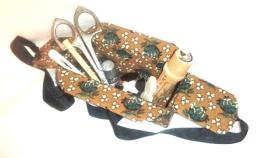
  • Making a Rolled Sewing Case **My Workshop**
  • Making a Mid-19th Century Sewing Box **My Workshop**
  • Make a Cheese Basket

The only bad thing about teaching workshops is missing attending the others. “Sit not in Idleness” sounds like so much fun. I’ve really wanted to get Lily a trivet. I would love to have a hand-bound notebook for when I set up the millinery. Um, Yum, Cheese! And, a basket too?! It would be great to know more about taking care of tin. Plus, I loved the little tin nut grater we had when I was a kid.

I hope to see many of you there. The museum is just outside of Rochester, NY; about an hour from Buffalo/Niagara Falls and 2ish hours from Syracuse. There is a beautiful B&B right down the street. There are several nice hotels in Henrietta too.

The full description of the program along with registration information is on the museum’s site: www.gcv.org


Readings for Rural Life

From Moore’s Rural New-Yorker in Rochester, NY

Aug 27th 1864

Dried Fruits for Soldiers

The following letter from a lady to the New York Tribune, who has been an army nurse needs no endorsement – it needs only to be read.

“I noticed with pleasure to-day your remarks calling attention to those living in the country to a simple way of drying currants, &c., for the use of the soldiers, both sick and well. This matter should receive wide attention – acid fruit being a necessity for those who live on the unvarying “ration” in a warm climate, also counteract the brackish water they are often obliged to drink. Currants, raspberries, blackberries, gooseberries, whortleberries, grapes, plums and pie-plant, cut into pieces and stewed in its own juice, are all equally good saved in this way, and more desired than jellies and preserves, besides being easier made and cheaper now, considering the price of sugar, so that there is every reason why all our good women should take hold of this work.

“When dried, the fruit is saved in strong paper bags, or those made of old muslin. A little of the dried fruit put in his tin cup and hot water poured on, with a trifle more sugar, makes a home-like relish for the hard tack to the weary and worn soldier after hard service in the field of on picket. Would that all “the boys” laying in the trenches before Petersburg could have a supply of what they so much need for health, and which every woman would gladly prepare where the idea suggested to her. In neighborhoods where a profusion of the small fruits can be had for the picking, not a quart of them should be allowed to go to waste while this war lasts. Thousands of valuable lives would be saved could the men have what they so greatly crave, “something sour.”

The good ladies in Orange county also prepare a refreshing drink from currant juice, which is a next to lemons in value. To one quart of currant juice add one pound of sugar, and boil and skim; this keeps all the year in bottles or kegs. Other acid juice, also, could be prepared with little trouble, and raspberry vinegar is eagerly asked for by female nurses for their wounded patients in Southern hospitals.


Published in: on August 27, 2014 at 6:01 am  Leave a Comment  
Tags:

Readings for Rural Life

From Moore’s Rural New-Yorker in Rochester, NY

August 20th, 1864

What Makes a Lady

When Beau Brummel was asked what made the gentleman, his quick reply was, “Starch, starch, my lord!” This may be true; but it takes a great deal more to make a lady; and though it may to some seem singular, I am ready to maintain that no conceivable quantity of muslin, silk or satin, edging, frilling, hooping, flouncing, or furbelowing, can per se, or per dressmaker, constitute a real lady.

Was not Mrs. Abbot Lawrence just as much a lady when attired in twelve-cent calico, in Boston, as when arrayed in full court dress at St. James, London? “As Mrs. Washington was said to be so grand a lady,” says a celebrated English visitor, (Mrs. Troupe,) “we thought we must put our best bibs and bands, so we dressed ourselves in our most elegant ruffles and silks, and were introduced to her ladyship, and don’t you think we found her knitting, and with her check apron on! She received us very graciously and easily, but after compliments were over she resumed her knitting. There we were without a stitch of work and sitting in stat, but, Gen. Washington’s Lady, with her own hands, was knitting stockings for her husband.” Does that not sweet republican simplicity command your admiration?


Published in: on August 20, 2014 at 6:00 am  Leave a Comment  
Tags: