Testing Shutterfly’s Photo Folios

Rather than creating each volume of folio twice, once for on the blog and once to be printed, I am trying to see if I can link the Shutterfly versions. I want it to be smooth and pretty, no hoops for people to jump through.

Millinery Folio Edition 1 (2013-1014)

Click here to view this photo book larger

You’ll love award-winning Shutterfly photo books. Start your own today.

Millinery Folio Edition 2 (2014)

Click here to view this photo book larger

Shutterfly offers exclusive layouts and designs so you can make your book just the way you want.
EDIT: Okay, so not anywhere near what I wanted. I wanted the album to be an image on the blog to click on with the whole thing popping up, easy to see. Scrapping this idea.
Published in: on July 13, 2014 at 8:31 pm  Leave a Comment  

A Year in Millinery Fashion – 1864

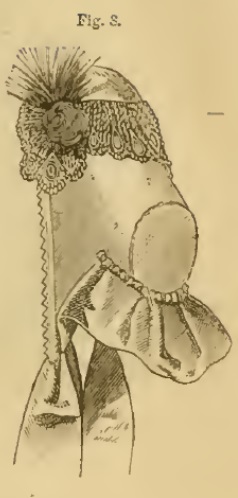
Fig. 3 is a bonnet of white crape, with curtain and strings of green silk. At the top of front is an ornament, composed of a piece of green silk edged with broad black lace, and having on the left side a tuft of black feathers. (Godey’s, July, 1864)

                         1

Fig. 4 is a bonnet composed entirely of fullings of white tulle. The curtain and strings are of violet silk. At the top of front is a group of violet feathers, and in the cap are some bows of violet ribbon and a few violet flowers. (Godey’s, July, 1864)

2

Hats have high crowns, and the feathers are mostly arranged in tufts in front instead of round the border or brim; peacock’s, heron’s, and kingfisher’s, indeed, every variety of feather, is brought into requisition for these hats; but in Paris a decided preference is shown for the eagle’s plume for this purpose. (Peterson’s, July 1864)

The mention of the eagle’s plume makes me wonder how many of the fashionable millinery feathers came from now endangered birds.

Loving Checks!

???????????????????????????????aka New Drawn Bonnets!!!

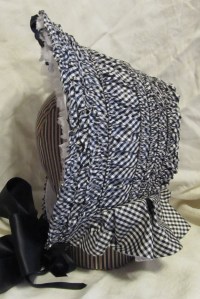
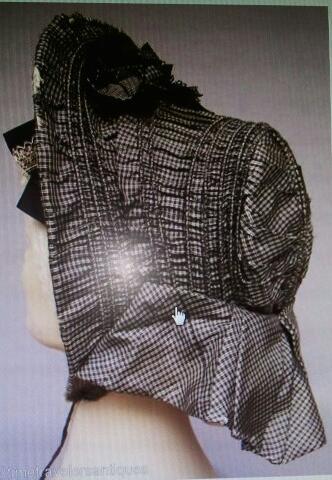
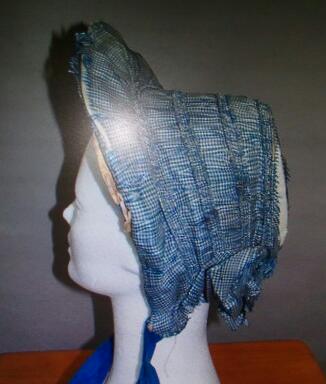
If you read the post a few weeks ago on Drawn Bonnets, you may have noticed a black and white check and a blue and white check. There was just something about these bonnets that screamed “make me!”

wpid-mntsdcardDCIMCamera2014-06-12-14.50.42-1.jpg.jpg wpid-mntsdcardDCIMCamera2014-06-12-14.50.51-1.jpg.jpg


The black and white is a taffeta silk with approx 1/6″ checks. The silk is drawn on cane over a light weight wired buckram. The slightly flared brim is prettily flounced.  The fashion ties are a high quality double faced satin and the functional/utility ties are a silk taffeta.  It is lined in cotton voile. The frill is a silk organza. The interior decoration pulls directly from the inspirational original that was done in ribbon and lace. This one has handmade ribbon petals and delicate white violets set on a wire and tacked into the bonnet. I really was quite giddy when I finished the exterior of this bonnet. I was so please with how it came out.

??????????????????????????????? ???????????????????????????????

???????????????????????????????

Since my silk merchant had a blue check in a shade that nearly matched an original blue check, I just had to make that one as well. This check is a tissue taffeta with a tiny check. It is also drawn on cane over a buckram bonnet, with one drawn section over a wire. The interior is cotton voile lawn with an organza frill. On the inside are blue paper flowers. On the outside is a garland of small velvet blue blossoms. The utility ties are an ivory silk taffeta and the fashion ties are a German moire.

??????????????????????????????? ??????????????????????????????? ???????????????????????????????

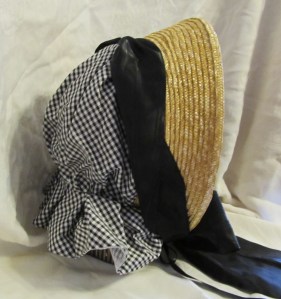
I had just enough of the black check taffeta left. It really wanted to be a soft crown.

This is a straw plait brim with the black and white silk taffeta soft crown. The interior is lined and has an organza frill. The fashion ribbon is a black German moire while the utility/functional ties are a narrow black silk taffeta. I was so very tempted last night to trim this out in peacock feathers and black velvet berries. I wasn’t sure that people would like that, so I held off.

??????????????????????????????? ??????????????????????????????? ???????????????????????????????


Here is a sampling of checked drawn bonnets:

Check thumb 1 Check thumb 2 Check thumb 3 Check thumb 4

A Year in Millinery Fashion – 1864

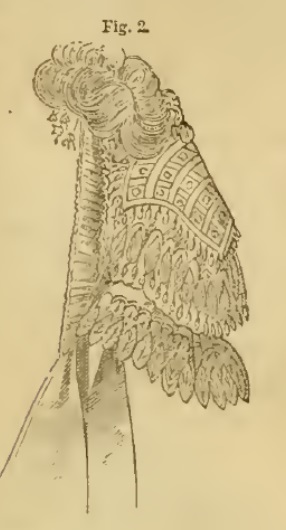
Fig. 2 is a dress bonnet of white tulle; down the front edge is a fulling of tulle, and at the top of the front is a plume of white feathers. The top and crown of the bonnet are covered
by a square of white lace, edged with a small white silk ball fringe; at the top edge of this square is a deep flounce of white lace, edged with ball fringe. The strings are of white silk, and the cap has a few small pink flowers at the top. (Godey’s, July, 1864)

1

A Year in Millinery Fashion – 1864

Fig. 1 is a bonnet of rose-colored crepe, with curtain of the same. Near the front edge is a narrow band of the crepe, edges by a white lace; at the top of front is a group of roses and rose-buds, mixed with fulling of lace or blonde; from beneath the group, a passing down the back of crown, is a fulling of tulle edged with narrow lace; at the back curtain is a small rose-bud with leaves, from under which, falling over the curtain, is a broad lappet of tulle edged with white lace. The strings are of pink silk. (Godey’s, July, 1864)

1

A Year in Millinery Fashion – 1864

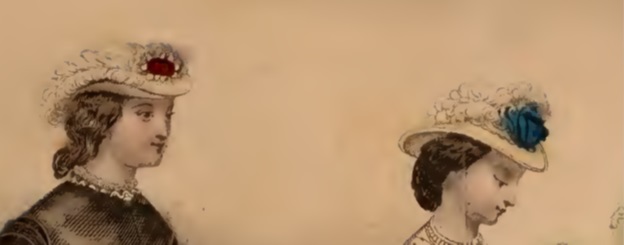
Round hats are now very generally adopted. Some of the prettiest we have seen were in cuir-colored straw trimmed with velvet and feathers to match. Others were of chip, straw, and imitation Leghorn, elaborately trimmed with spun glass, shells, plaid velvet, and feathers. Veils, or rather scarfs, of white or black lace, are frequently looped at the side of the hat, and fall as a streamer at the back. The hats we have seen were not as high and pointed as those of last season. The brim fits rather closely to the face, and the back of the brim droops, and is much longer than the front.

We noticed some very pretty hats trimmed with bands and loops of velvet in front, and a pointed cape of velvet edged with lace covering the brim at the back.

Little girls are wearing half gypsies of straw. These are rather pointed in front, flare much at the sides to display a full cap of lace and ribbons, and at the back turn up like a turban. Cased silk bonnets with inimitable muslin and lace crowns, trimmed with the lightest of feathers, are also among the Spring costumes for little girls. Muslin and lace caps of every description are worn, they are generally of the Marie Stuart shape, with quite deep capes at the back. They are highly trimmed with ribbons, and frequently a tiny bunch of bright flowers is nestled among the soft lace on one side.

Mask veils are altogether worn. That is, the veil is drawn closely over the face, and fastened on top of the bonnet or hat with an insect pin. It is, however, difficult to arrange an ordinary veil in the mask style, on the small turban hats now so much worn by young ladies. We would therefore recommend the veil manufactured for the purpose, and just introduced by G. W. Vogel, of 1016 Chestnut Street, Philadelphia. These veils are a little over a quarter yard wide, perfectly  straight, and just sufficiently long enough to fit round the hat. For the Spanish hat there is another veil, which is decidedly novel. This has a hole in the centre, which passes over the crown of the hat; round this is a beading in which the elastic is run. The veil is pointed in front, and at the back, while the sides are shallow.

(Godey’s, June 1864)

Drawn Bonnets (the less ubber-quick version)

When talking about drawn bonnets, we should start with a little vocabulary and “how it is done”.

Drawn – Drawn is when the fabric, most often but not exclusively silk, is sewn with channels into which cane or wire is inserted. The fabric is then bunched, or drawn, up along the length of the cane/wire to create a gathered effect. The drawn cane/wire is attached to the bonnet form.

Shirred – Shirred is when a fabric, often silk, is gathered without additional structure. This can be flat or with flounces.

A single bonnet can have either drawn or shirred techniques, or it may have both.

Construction can be done with individual strips of fabric or larger pieces with multiple sections of drawing or shirring. These were done on both wire only frames and frames with light foundation. Drawn and shirred sections are seen on the brim, on the brim and crown, evenly spaced, unevenly spaced, edged with a different material and even running front to back in some cases.

Now, let us look at some examples. (My apologies for the flash in the images.)

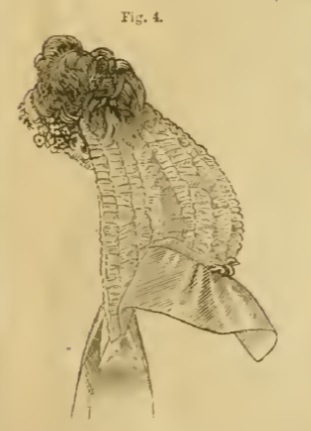
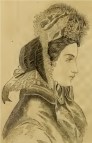
In this fashion illustration and description, the bonnet is directly referred to as “drawn”. This bonnet would have the crepe gathered on cane or wires passing over the bonnet. This bonnet could have been made with two drawn sections, one for the brim and one for the crown.
2

The bonnet of drawn cuir-colored crepe, trimmed on the front with a fanchon of white lace, loops of green ribbon, and Scotch feathers. The inside trimming is of bright flowers, of the
Scotch colors. The cape is covered with a fall of white blonde. (Godey’s, May 1864)

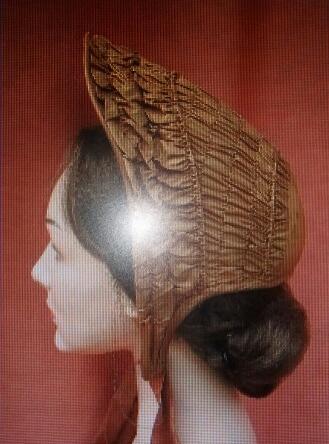
This bonnet, from the MET, has very easy to see canes which the silk is drawn on. 4 canes draw a single piece of silk onto the brim, while a separate piece is set smoothly over the crown and tip. These canes are on the thicker/larger size, being round. (the widest cane channels I’ve seen in an image are on this Henry Ford Museum corduroy bonnet.)
wpid-mntsdcardDCIMCamera2014-06-12-14.52.09.jpg.jpg

This bonnet also has the drawn sections on the brim while the crown is smooth. It appears to differ from the previous bonnet in that the canes are drawn on separately in strips. The very edge of the brim is covered with one strip. Three strips are drawn onto canes. These are applied from the back to front, with the front most strip being drawn onto 2 canes, creating a little flounce just behind the front edge.
wpid-mntsdcardDCIMCamera2014-06-12-14.51.36-1.jpg.jpg

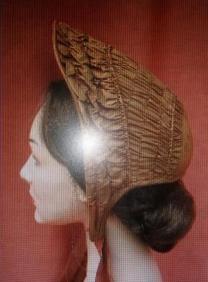
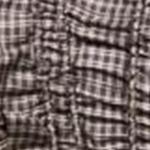
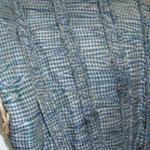
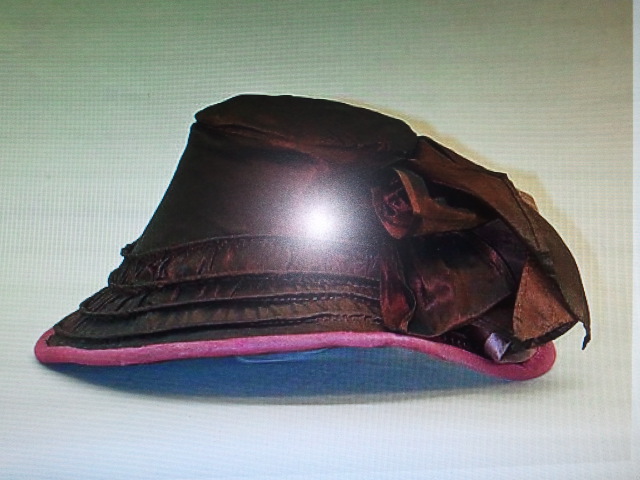
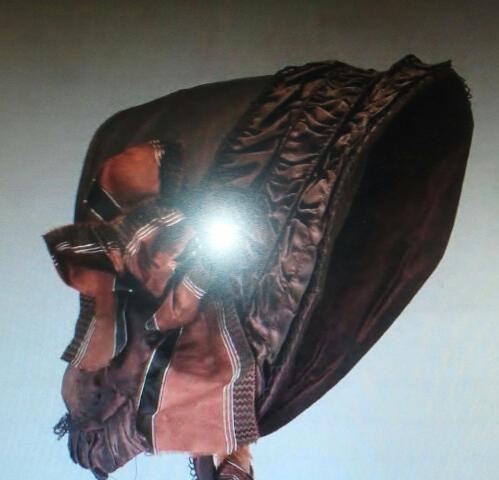
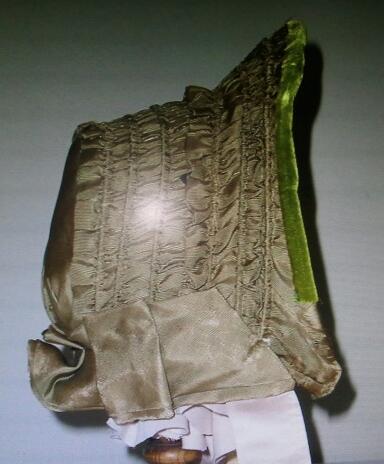
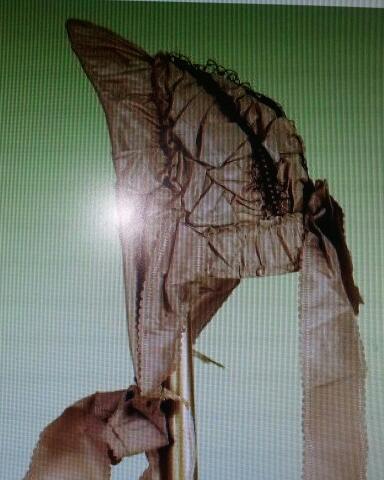
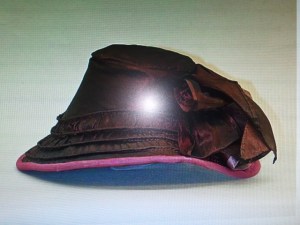
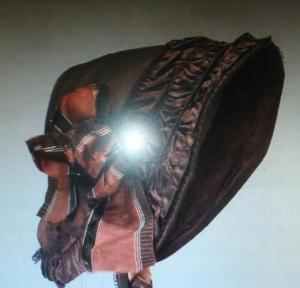
The next several bonnets show drawn silk on the brim and crown. Notice the variety of spacing used. Some are set snuggly, while other are set with quite a bit of space. The green bonnet has fairly evenly spaced drawn canes/wires.  The blue and white pairs the drawn canes together.  Flounces drawn on cane or wire are tucked in as well. The black and white one has a flounce just where the crown meets the brim. The brown bonnet highlights the angles and overlapping that was done on some bonnets. This helps add to the curvy movement to some bonnets.
wpid-mntsdcardDCIMCamera2014-06-12-14.50.42-1.jpg.jpgwpid-mntsdcardDCIMCamera2014-06-12-14.50.51-1.jpg.jpgwpid-mntsdcardDCIMCamera2014-06-12-14.51.48-1.jpg.jpgwpid-mntsdcardDCIMCamera2014-06-12-14.52.35-1.jpg.jpg

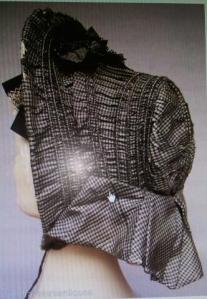
This example shows that gathered sections can be worked vertically, over the back of the tip. This may or may not be drawn. A better example, where the canes can be seen, showing it is truly a drawn bonnet can be seen HERE

wpid-mntsdcardDCIMCamera2014-06-12-14.51.19-1.jpg.jpg

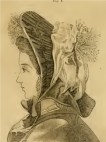
This last illustration show that a drawn brim can be done with a soft crown. (A tempting idea for this summer. Maybe I’ll make one.)
1

This bonnet has a front of drawn green silk. The graceful soft crown is of white silk. The trimming consists of a tuft of meadow grass and field flowers, also loops of white silk placed directly over the crown. The inside trimmings is of white and black lace and field flowers. (Godey’s, May 1864)


This is my pin board of 1840s through 1860s drawn bonnets. (I’m splitting drawn and buckram. Bare with me.)

 

Published in: on June 13, 2014 at 6:00 am  Comments (2)  

How They Wore Their Bonnets

A few days ago we looked at how some original women wore their bonnets perched on the backs of their heads as well as how we can also do so. If you missed it, the post was called Got Perch?

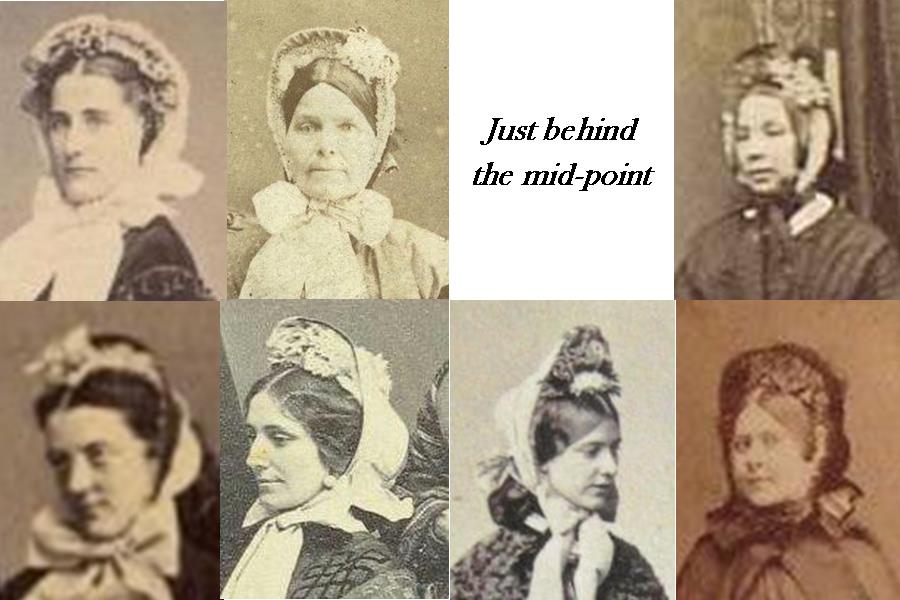
This was only one of several ways women wore their bonnets. Today, I would like to look further at how mid-century women wore their bonnets. Let us start with more examples of the bonnet being worn behind the mid-point of the head.

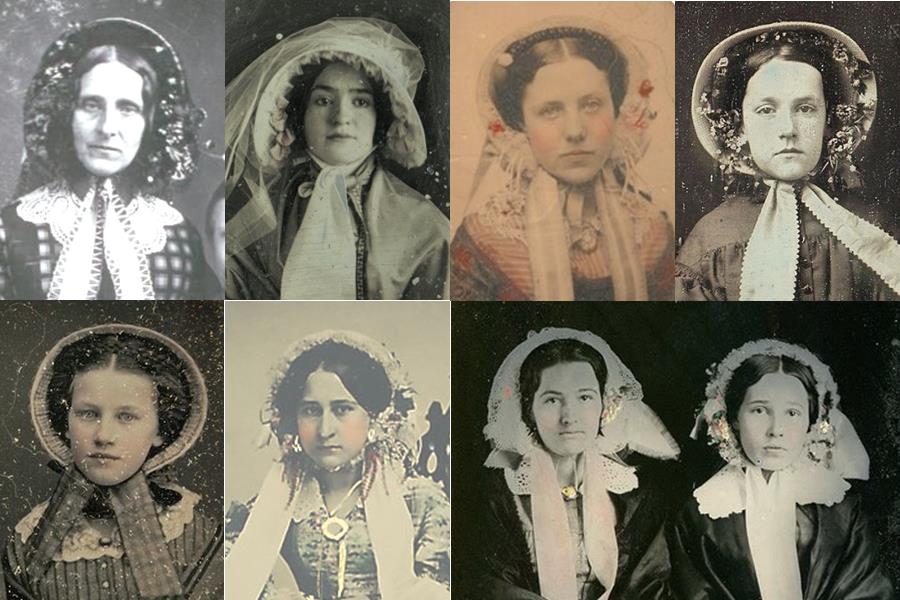
How did they close ups backYou will notice some variation in how far back the bonnet is worn. The two women on the lower left appear to have their bonnet furthest back among the group. These two also happen to have their bonnets angled more than the others. From the views/positions we have, the third woman from the left on the bottom row appears to have a nearly vertical position to the brim and tip. We can not say for certain with the other women; though I suspect the top left may also be nearly vertical. We can also see that most of these women have their flowers reaching further forward than the brim edge of the bonnet. The position of these flowers may help hold the bonnet in place. In the lower right, the flowers can be seen cupping the top of her head. Take a particularly close look at the woman on the lower left. There is a piece photographing white sitting below the flowers/decoration. This may or may not be a stay.

This next group of women are wearing their bonnets at or just forward of their mid-point.

How did they close ups mid forward 2

We see greater variety in the angle of which these bonnets are worn, seeing them worn nearly vertical, angled slightly forward and angled slightly backward. The bottom right and bottom left images show the further forward reach of the spoon bonnet while displaying noticeable difference in the depth, angle and shaping of the crown and tip. In the top left and top right images, we can see how the frill aids in holding the bonnet on.  Again, the flowers are aiding in securing the bonnet to the head. In the bottom row, third from the left, you can see the woman’s flowers reaching down over the hair line. (The lower right image could be considered as wearing her bonnet quite forward.)

In this next group, we see the bonnet worn quite forward of the mid-point.

How did they close ups full forward

Many will notice these women each look more mature. I do not know if this is a coincidence or if there is truly a connection between age and mode yet. I will look further into this. While these bonnets are worn further forward and a couple are rounder, the fashionable spoon shape is present. The bonnet with the daisies, second on the bottom row, demonstrates well how the flowers can hug the top of the head. In several cases, the flowers sit forward enough to reach to or even beyond the hair line. If there is a connection between age and this mode of wearing, there could be further speculation that this positioning of flowers could conceal a thinning part.

The following group was collected as I was looking at untied or partially tied bonnets. These are late 1840s through early 1850s examples. Each either has the ribbons simply looped over each other without a bow or completely untied. Many, if not most, of the women above would have worn their bonnets in this style ten to twenty years previous.

How did they close ups 40 50 not tied

Published in: on June 11, 2014 at 6:00 am  Comments (4)  

A Year in Millinery Fashion – 1864

Straw hat, with a brim lined and turned up with mauve velvet. The trimming consists of a long white plume, scarlet flowers and a short mauve plume. (Godey’s, June 1864)

1

Post-War Transitional in White

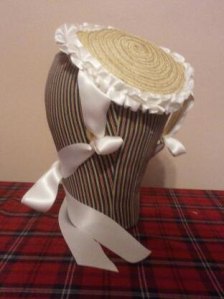
I’ve been having so much fun sharing the millinery pieces from this spring with you, I decided to share this little bonnet. This really has been a forgotten about bonnet. It made it as far as some so-so photos for Etsy, then got tucked away to the back of the display table.

white 2In the middle of the 1860s we see a transition from the fashionable spoon and cottage bonnet shapes to the hat and smaller bonnet shapes. There were a speckling of styles that show the transition from one millinery era to the next. My bonnet pulls mostly from this first example. The crown drastically shrinks, flattening out, while the cheektabs try various positions framing the sides of the face rather than coming down to the jaw line.

From the National Trust Collection

From Augusta Auctions

Still tracking down the originAs you can see, the decorations and ribbon tend to encircle the crown and fall down along the remains of the cheektab.

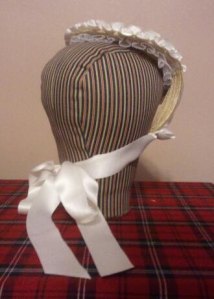
white 3white 1I used the last of my hemp plait for this bonnet over the winter. The box pleating encircling the crown is a silk ribbon slightly narrower than the silk ribbon used for the ties. Just under the brim is a frill of fine net.

white 4