My current wish to-make list. It only seems challenging when it is to be finished by Thanksgiving.

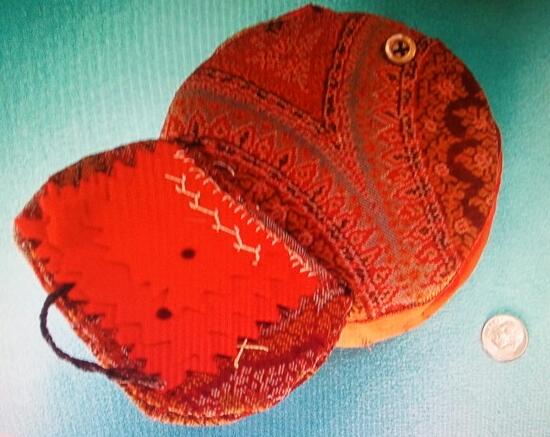


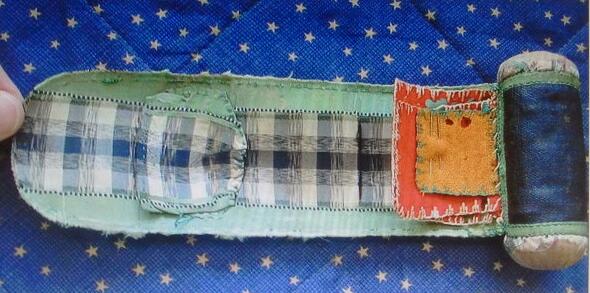

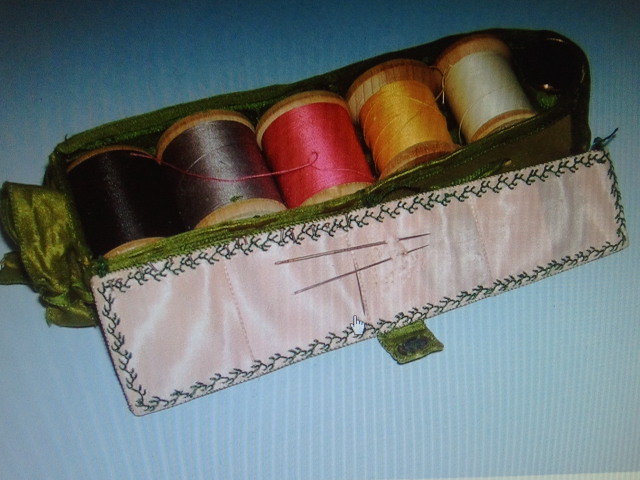
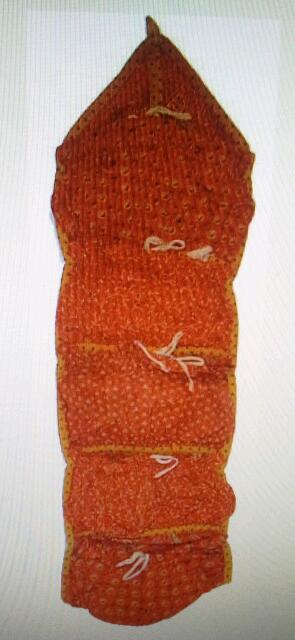


My current wish to-make list. It only seems challenging when it is to be finished by Thanksgiving.

Bonnet suitable for very light mourning. It is of eased black silk, with a full piece of white silk, edged with lace, laid on the bonnet from the crown to the front. A black feather is fastened at the side of the crown with a bow of white ribbon. The cape is of white silk, edged with black lace. This inside trimming is formed of violet and white velvet. (Godey’s, October, 1864)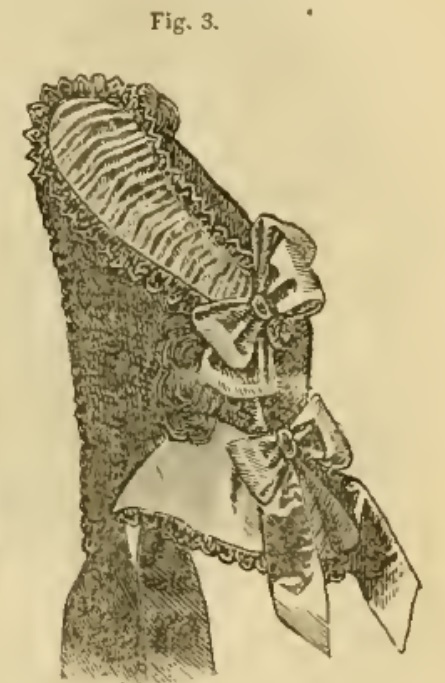
Cuir-colored silk bonnet, with a cape of white crepe covered with rich blonde. The trimming is place on top of the bonnet, and is formed of bands of Solferino velvet and feathers. The inside trimming is tulle and Solferino flowers. (Godey’s, October, 1864) 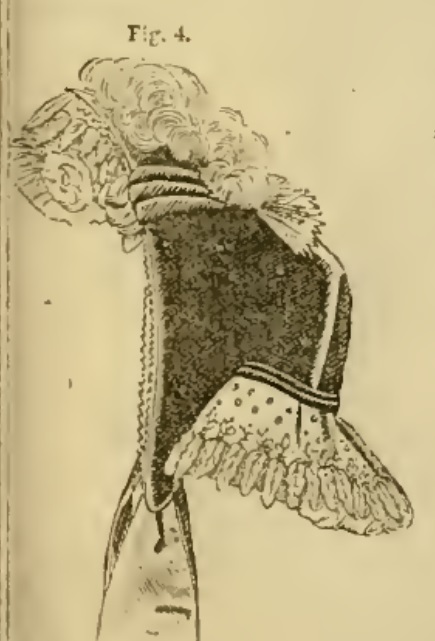
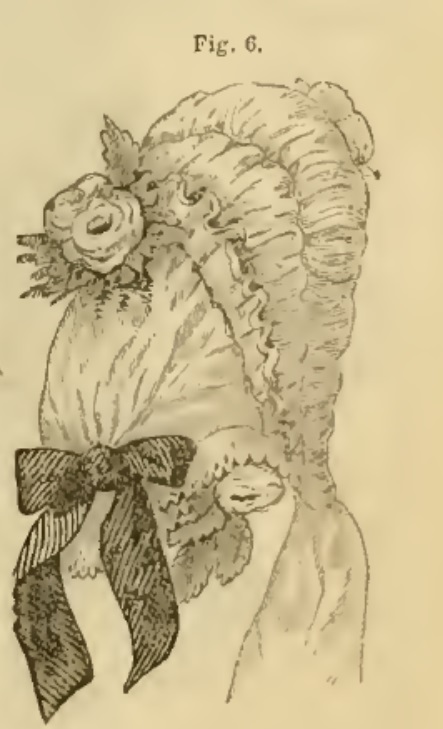
Bonnet of white silk, with
puffed front and cap crown. The cape is very short, and raised on the right
side it display a rose and bud. A bunch of roses with leaves is placed over the
crown. Roses and black velvet with blonde are arranged as an inside trimming. (Godey’s,
October, 1864)
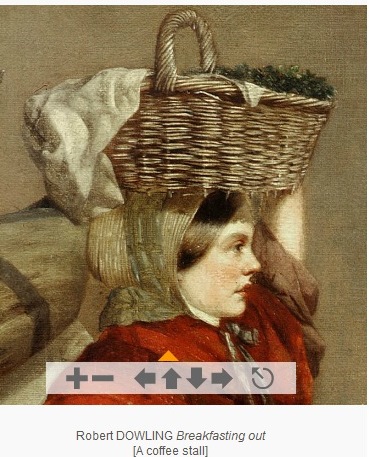
Last night, E.T. shared Robert Dowling’s Breakfasting Out, Britain 1859 in one of the Fb groups discussing the tea drinking. My eyes went to the basket placed on top of a woman’s head, on top of what looked like a fashion bonnet via my little phone’s screen. All I could think is:
“What??? Squash???”
“I must be seeing this wrong.”
So, I had to see this close-up. Thank you National Gallery of Australia.
Not only was I seeing a basket on top of a fashion bonnet, but a straw bonnet. I…um…..???
With previous thoughts, I would have imagined holding a basket on top of a sunbonnet or a soft bonnet such as a hood. But, a structured bonnet? A straw bonnet? What about the straw? the flowers? Squash?
 I must think about this.
Okay, maybe the painting is showing us some damage to the bonnet – the slit on the lower edge of the tip and the maybe spot on the brim. Maybe these are just shadows. Okay, maybe this is a lower brim bonnet. Maybe she doesn’t have any flowers. Yes, it could be an older bonnet. Yes, it could be her form of a working bonnet. Yes, straw held a wide range of qualities.
But? Still?
We have a bonnet treated as a working bonnet with a fashionable curve to the brim. She seems to consider it durable enough to handle the weight of the basket and contents (which appear to be leafy greens and a cloth.)
The rest of her attire: Red plaid shawl wrapped around the shoulders and upper body. Possibly a two piece sacque & skirt combination is suggested by the fabric that falls to the hips over a different color skirt, likely wool. The bodice sleeves are rolled up, revealing a white lining. The skirt and apron appear to be pulled up in front. A hint of horizontal striping is under the lift of the skirt. This may be a work petticoat or a corded petticoat. Her boots are worn, very square in the two, with a low heel and off-center closure that I can’t quite identify as buttoning or lacing. Her stockings are light color, white and a bit slouched.
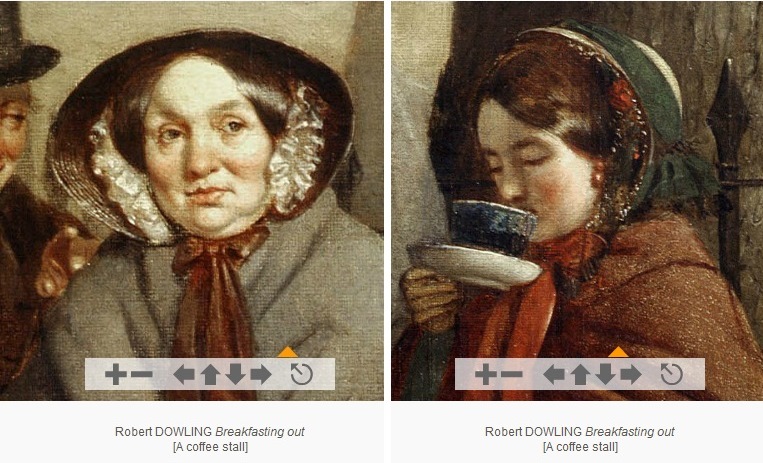
While I’m looking at this, I should also note the other two straw bonnets in the painting. The older woman is wearing a shape/style popular in the 40s with more width than height. The younger woman sipping her coffee has a smaller bonnet is a shape fashionable for the mid 50s with flowers placed primarily along the sides. She appears to either be traveling or shopping to me.
A white silk bonnet, with soft crown of plaid velvet. In the front is a piece of plaid velvet and a tuft of white feathers. Inside is a white tulle cap and scarlet velvet flowers. (Godey’s, October, 1864)
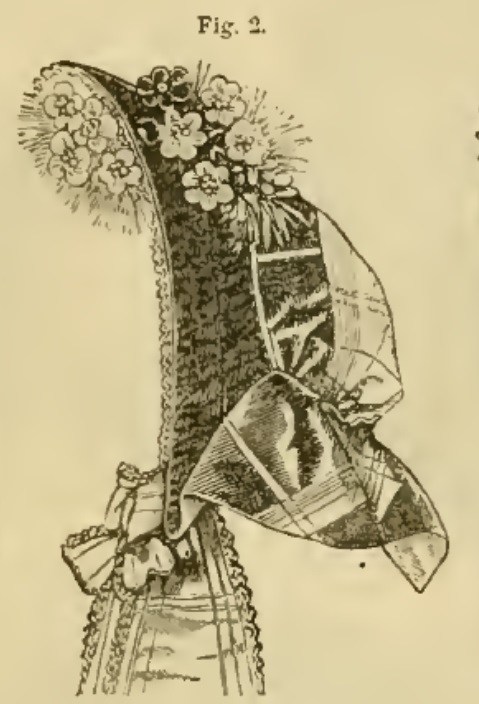
The front is composed of black silk[]ased. The crown is soft, and made of plaid silk, so also is the cape. A bunch of variegated flowers is on the left side the inside is a ruching of white tulle, bright flowers, and grasses. (Godey’s, October, 1864)
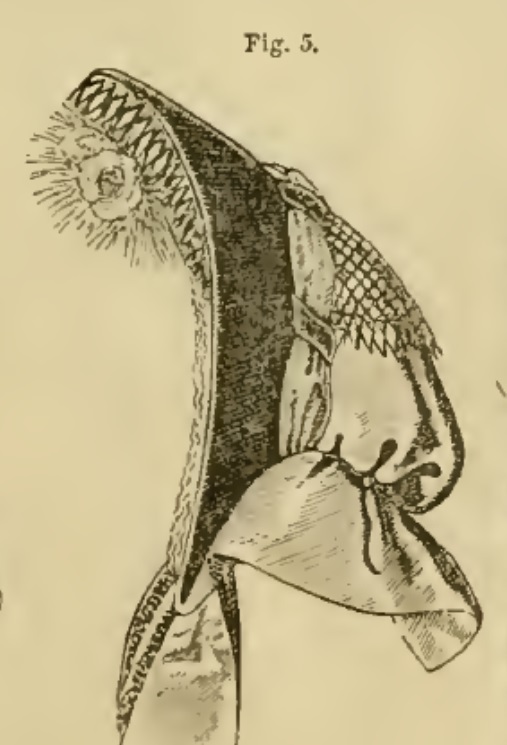
Bonnet for light mourning. The front is of black silk, with a fall of chenille fringe drooping over the front. The crown and cape are of white silk, trimmed with a chenille fanchon. The inside trimming is white roses, black grass, and white tulle. (Godey’s, October, 1864)
White silk bonnet, with a double cape of Eugenie blue silk. The bonnet is bound with blue silk, and the puffings are also of blue silk. Black and white grasses with a few scarlet berries are arranged on the outside of the bonnet, and also form part of the inside trimming. (Godey’s, October, 1864)

A white silk drawn bonnet, edged with black velvet and white drop buttons. The trimming is composed of crimson tulips and white feathers. (Godey’s, October, 1864)
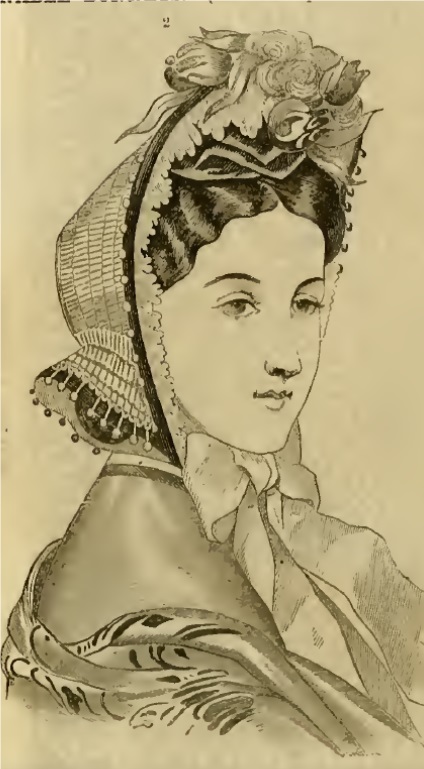
A black Neapolitan bonnet, with a white crepe cape covered with white blonde. The trimming of the bonnet is black lace, black ribbon, and salmon-colored flowers. (Godey’s, October, 1864)

Bonnets still continue very small, with scarcely any curtain at the back. Quantities of tulle are used, and this is a most becoming style. (Peterson’s, October, 1864)
 When I finish bonnets they usually spark an “Oooo” or a “yeah” or some wordy expression. This one, goes on its stand and just gets a smile. I am so pleased with how this came together, I just enjoy looking at it.
This was a custom piece for a client. For many weeks we picked through silk colors, ribbons and flowers to get just the right combination.
 The straw brim is a black plait from England. The soft crown and bavolet are a combination of a pale pink silk taffeta and a beautiful, delicate black antique lace. The soft crown has the stripes of the lace running vertically, while the stripes on the bavolet are running diagonally, bias-esque.
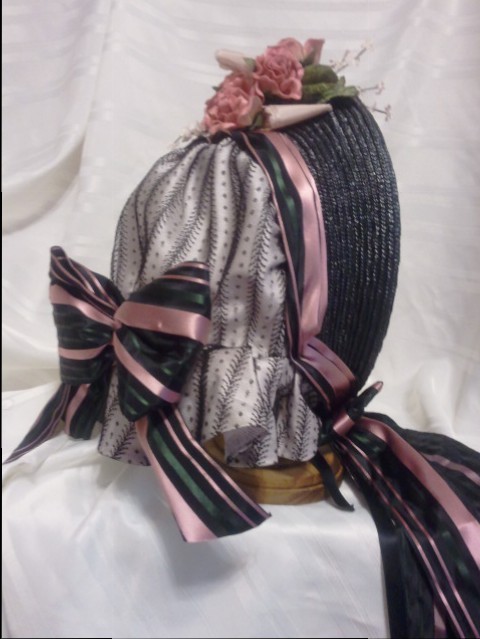 An amazing ribbon drapes over the top of the bonnet along where the brim and crown meet, then down the cheektabs for the ties. This ribbon is a black taffeta with pink and dark green satin stripes. A large bow of this same ribbon sits at the base of the crown, just above the bavolet. Combined with the pink damask ribbon in the flowers, there are nearly 5 yards of ribbon on this bonnet.
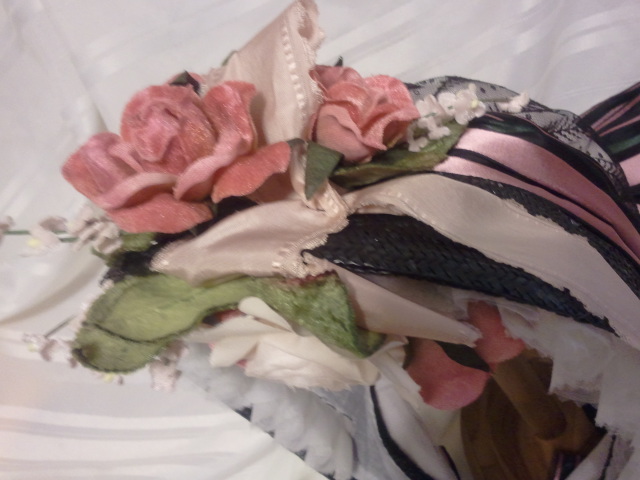 The flowers are a combination of dusty rose and pink velvet roses with a pale pink rose and little pink velvet blossoms. The arrangement inside the brim is connected to the bouquet atop the brim by a soft pink damask ribbon that winds in and out of the flowers.
Getting the right balance was important to me. Too much weight in the back makes a bonnet slide; while too much weight in the front makes a bonnet feel heavy. I think this balances pretty well with the bow and flowers counter weighting each other. So, it is pretty and balanced. Happy me.

Curtianless bonnets are rapidly gaining ground in Paris. Some are but mere caps, almost entirely covered with flowers; others are a half handkerchief, with a small front; and other again have only a fall of lace for the crown. In the next number we will give a very pretty illustration of one of these curtainless bonnets, and the ladies will then be able to decide whether to accept or reject them. (Godey’s, September, 1864)
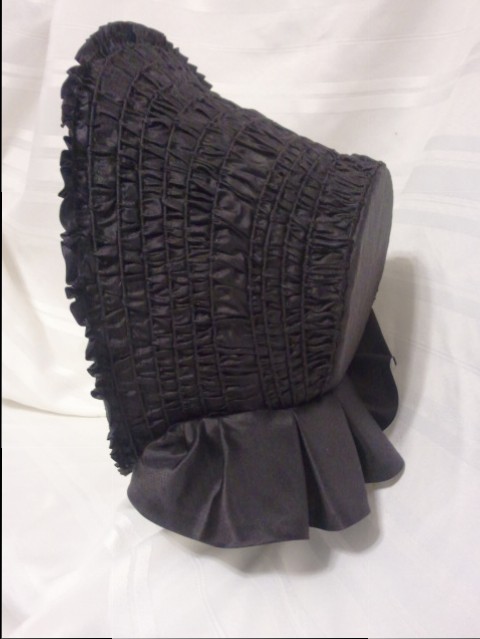 This black silk drawn bonnet was a custom request. The new owner is adding her own flowers and ribbons.
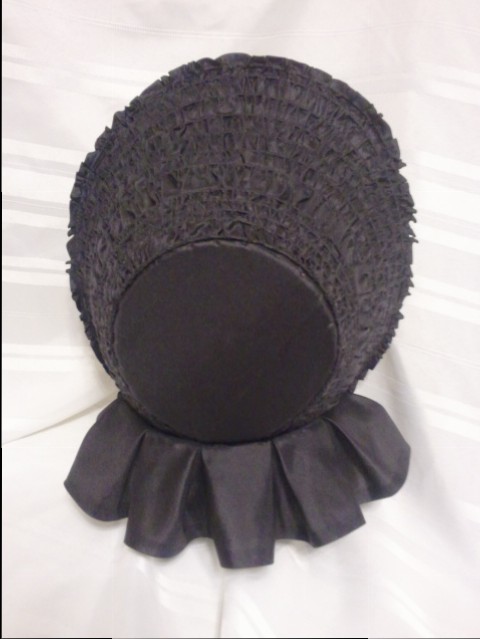 The silk is a flat black tissue taffeta. I like this silk because it is so similar in weight and weave to silks I’ve seen on original bonnets. It draws up nicely on the thinner cane and allows for tight gathers without looking bulky or adding too much weight, while also drawing lightly giving nice waves to the silk.
The buckram form base is shaped to have a nice flaring brim, fashionable yet flattering.
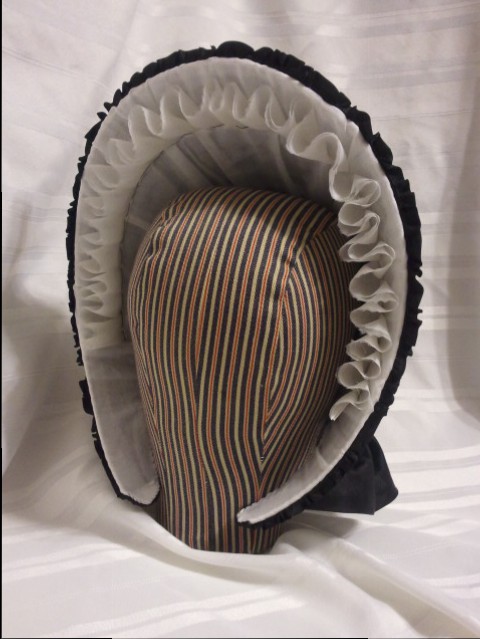
Inside, is a cotton sheer lining and a silk organza frill ready for flowers to be added. The bavolet is lined with white cotton net.
 I’m sure some are wondering if this bonnet could be dressed for mourning. Yes, it could be. One could add matte black ribbons and simply fluff out the frill (I like to ship the frills un-fluffed) for a mourning impression. For later in the mourning period, purple ribbons and simple white flowers could be added.




 If I Had My Own Blue Box: