Mrs. Bright’s and Mrs. Blank’s Journals – February

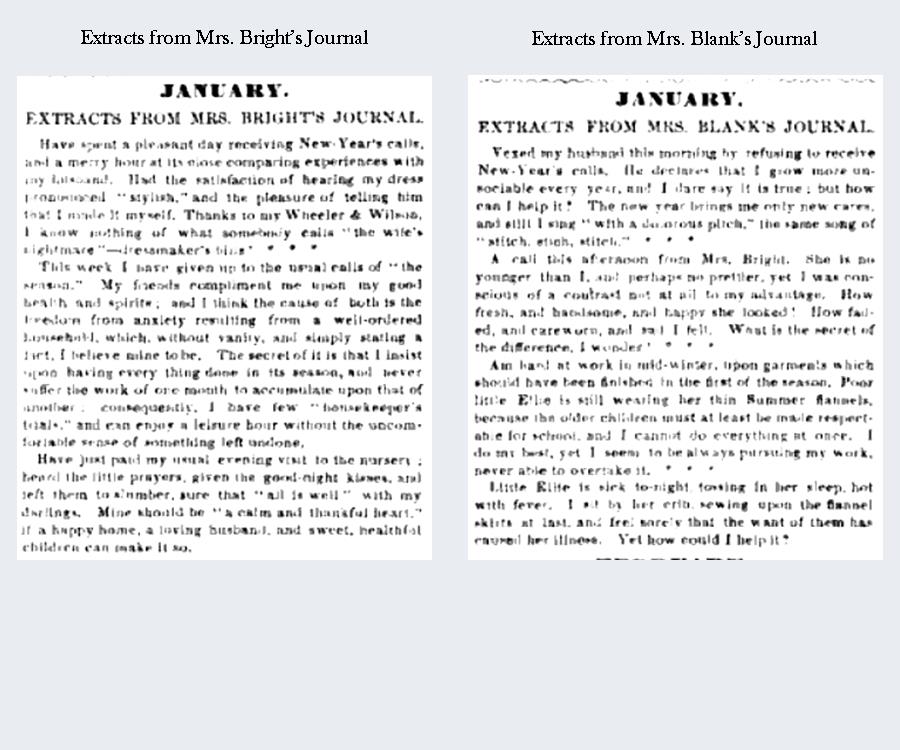
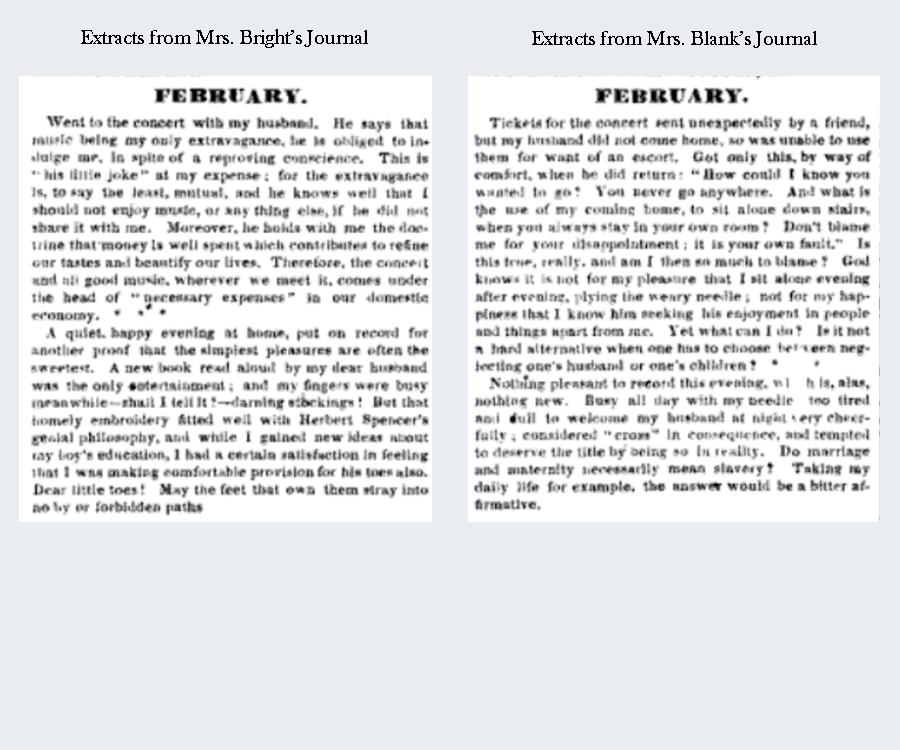
I stumbled across something I found to be a fun read in the 1866 American Agriculturalist. The Ladies Column included a full year through the eyes of two women. I’ll share each month for the next two weeks (ish) side-by-side. (The excerpts are a bit challenging to read.)

February


Spring Millinery Sneak Peeks

It is amazing how our belated spring has come in full force. I, for one, Love it!! It seems like over night the trees are green and blooming in white and pinks. Beautiful.

Inspired by the warmth and color, I dove deep into some new spring millinery. (okay, I finally got the Mother’s Day Fashion Show dresses done at the same time flowers and trims starting coming in.)

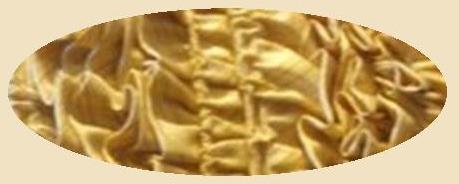
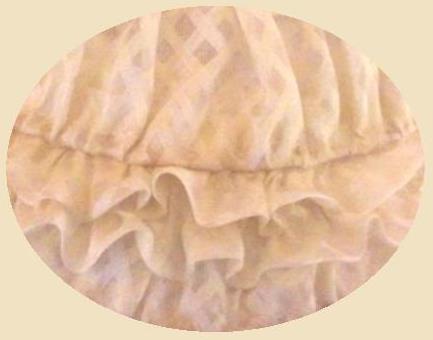
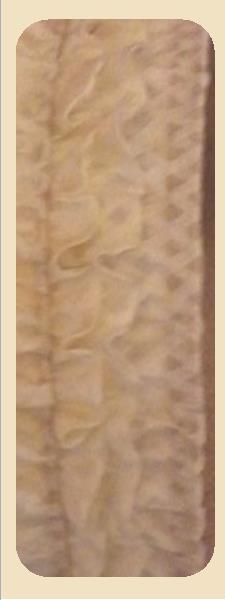
Here are some tiny sneak peeks of the three of the pieces I am currently working on. The only one not spoken for is the organza.

ProgressMR1Picture2Picture6Picture8Picture10Picture12


Published in: on May 19, 2014 at 12:05 pm  Comments (1)  

Mrs. Bright’s and Mrs. Blank’s Journals – January

I stumbled across something I found to be a fun read in the 1866 American Agriculturalist. The Ladies Column included a full year through the eyes of two women. I’ll share each month for the next two weeks (ish) side-by-side. (The excerpts are a bit challenging to read.)

January

A Year in Millinery Fashion – 1864

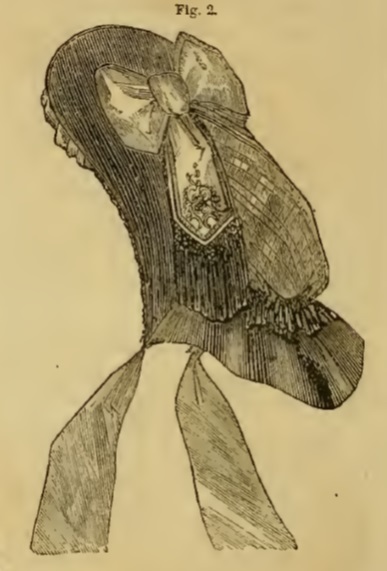
Bonnet for second mourning. The front of the bonnet is of black silk. The crown is of a light lavender silk, covered with a network of black chenille. The bow on the top of the bonnet is of lavender silk, edged with black velvet, and the ends embroidered and trimmed with black chenille. The inside trimmings is composed of white and black lace, and loops of lavender-colored ribbon. (Godey’s, May 1864)

1

“My Day” Challenge!!!

I am currently reading “‘Another Domestic Beast of Burden’: New England Farm Women’s Work and Well-Being in the 19th Century“. The author, Linda Borish, brings together several descriptions of farm women’s daily life and chores. From kindling a fire to laying soot on raspberries to pounding potatoes for the hogs, she gives us a hint of what went into a woman’s day in the first half of the 19th century.

My challenge to each of my friends and readers who are interpreters, reenactors or just want a writing challenge….

From the mindset of a woman you interpret, write, in detail, what your day would have been from the time you wake to the time you sleep again.

I will work on my response and share below. Either add your day in the comments below or give us a link to it.

Published in: on May 15, 2014 at 11:45 am  Leave a Comment  

Readings for Rural Life

From Moore’s Rural New-Yorker in Rochester, NY


May 14th, 1864

Woman’s Dress

Considerable has been said on this subject by your correspondents and exchanges, and I have hitherto been silent, hoping that out of so much argument might come some practical reform.

The equestrian dress was a bold dah, in which it advocates showed their independence; and why may not they and others throw aside Fashion’s demand and make as decisive a move in the right direction, and defend it as persistently? They claimed to have the “silent consent,” if not the direct approval of the other sex, and while I can not believe that fathers, brothers, husbands, or true friends could regard with pleasure, or event indifference, one for whom they cherished either affection or respect, in such a costume and position, they still have an interest in whatever is for our physical or moral benefit, and, where both can be combined, will give us their hearty support without hesitation. If to this any demure, shall we not find their true motives unworthy of our attention and their relations to us such as shall not entitle them our acquiescence?

It seems to be acknowledged by all that our mode of dress is imperfect in two particulars, – its unequal distribution of warmth over the body and limbs, – and its manner of adjustment about the waist.

Men have their feet, legs, and arms well covered; and while high-necked, close-sleeved dresses are an improvement in our clothing, still, the low bands and short sleeves of our undergarments leave a want they do not experience. Loose skirts might, with propriety, it seems to me, be replaced by more comfortable and just as becoming drawers and “knicker-bockers,” beneath dress, balmoral, and if you will, crinoline. Striped balmorals and stockings take the place of so long filled by white; and why not “knickerbockers” be made of “Highland plaid,” or something similar, as well, with our gaiters enough higher to meet them and protect our ankles, and laced in front! India-rubber sides are too cold. Just about the waist, where there should be the least pressure, is the only place our clothing is close, and if anyone objects to looser belts and ladies’ suspenders, because we shall not look quite as trim and tidy, tell them not to say anything until “Garibaldis” are forgotten. Grace Glenn. Michigan, 1864.

About “Cheap” Sewing Machines.

Eds. Rural New-Yorker: – In answer to an inquiry of “A Rural Reader of Fairfield, O.,” in regard to sewing machines, I wish to say that the Union Ten Dollar Sewing Machine has been  (not used) in my house for the last year, and that instead of being a “Union,” it is a Disunion machine from the following facts: – 1st it will not unite cloth firmly together, but will disunite the cloth by friction in passing between the rough cogwheels. 2d, it will disunite the needle, (separating it in two parts,) every half minute; and, finally, the different parts of the this is easily disunited, the shafts upon which the wheels are placed being a round wire and the wheels fitted loosely to it, not being keyed, allows them to slip entirely from the shaft; and the same is true as regards the crank. It is the opinion of those competent to judge, that it is not manufactured for the good of the people but to smouge them out of four dollars each machine, which has been done to a great extent. Now, if your reader of Fairfield wishes to pay a dear price for wit, let him order a half dozen of “[sic] Clark, Dayton, Maine,” but her can get with at my expense much cheaper; for if he wishes I will send him one free, except express charges, and be glad of the chance; for I ordered a half dozen, and can neither sell, lose, or give them away here, though my friends generally take anything that is given to them.

Yours, for the good of the public, D. Allen. Byron, Wis., April 25, 1864.
Published in: on May 14, 2014 at 6:00 am  Leave a Comment  
Tags:

A Year in Millinery Fashion – 1864

1

This bonnet has a front of drawn green silk. The graceful soft crown is of white silk. The trimming consists of a tuft of meadow grass and field flowers, also loops of white silk placed directly over the crown. The inside trimmings is of white and black lace and field flowers. (Godey’s, May 1864)

“Don’t Hack Your Sleeve”

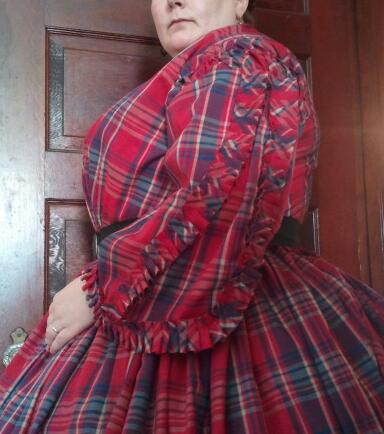
While I patiently wait for the photos of this weekend to come out of my sister’s camera, I’ll share with you the story of the sleeve. While this sleeve did not go well in the making process, I am okay with the end result.

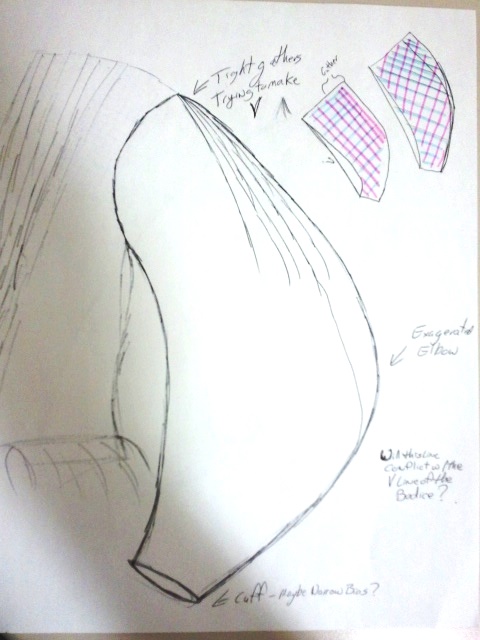
I knew I didn’t want another open sleeve as that is what I used for both green sheer and semi-sheer dresses from last year. I wanted something with shape. Looking at this inspiration sleeve,

ea292e56fb4eff9b388dcf3813c14410

this is what I came up with: ???????????????????

After the sketch, I added a bias cut, double gathered ‘puff’ to the top. I liked the idea of the extra drop before the fullness.

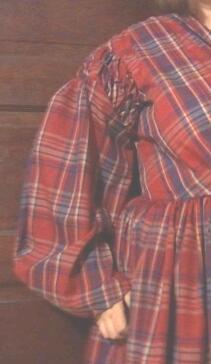
In the drafting, I wanted to make sure I had a good length and a nice curve into the enlarged elbow. I thought this is what I had. It looked pretty good.

2014-04-30 19.27.03-1Well, not so much…

2014-04-30 20.12.50-1

Full, yes. But, way too long. (do ignore the corset-less state.) So, I took off the bottom sleeve. Cut 2 inches off. Re-gathered. Re-attached. Oh, I also rotated the sleeve, moving the gathered fullness towards the back and added some trim.

Two inches should have worked. Right? …… Wrong. It was still too long:

???????????????????

Oddly, it actually looks longer. Doesn’t it?

To make matters worse…. there was this screaming blue horizontal stripe that was driving me crazy. (again, please ignore the corset-less, dress over the clothes state.)

???????????????????

So, what do I do? What any over-tired, over-hungry, cranky person would do…. I got out the scissors and hacked off the lower part of the sleeves. One big crescent shape. Yeap. And the moment I did, I knew I did bad.

I lack photos of the hacking and the hacked state. I decided it  was time to put the dress down and go eat something.

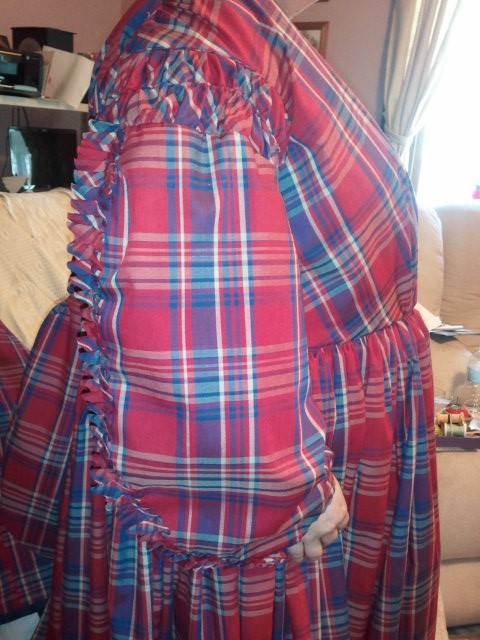
After a few moments away, the sleeves told me they were going to be an open sleeve after all; they were even going to make use of the odd, dipping V in the opening created from the hacking. As such,  I finished off the edges and trimmed away… down the outside of the sleeve and around the new opening. I added a second vertical piece trying to play with the curve and down play that blue line. In the end, I am okay with how it came out.

2014-05-11 09.14.00-1At one point, I thought I would use this sleeve for the show, then make a new one more like the sleeve on Lily’s dress, just longer (these are ‘matching’ adult vs teen dress comparisons). But, after wearing it on Sunday, finding it comfortable, I may just leave it as is. We’ll see what the other photos say.

Published in: on May 11, 2014 at 8:00 pm  Comments (1)  

Readings for Rural Life

From Moore’s Rural New-Yorker in Rochester, NY

May 7th, 1864

Two Kinds of Women

Perhaps the secret of Catherine’s fascination lay in those strange eyes of hers, which seemed to wake in all who came near her a trembling and a stir as of wings, a sudden yearning for forgotten good or for noble aims. Few professed  to lover her, fewer still to admire her; but they came to her when they were perplexed for counsel, when they were sorrowful for comfort. Instead of making love to her, they loved her; instead of talking to her of the idle things of the world, they were silent, and thought of heaven. Such a woman made a man forget that she was woman and he man. He remembered only that souls answereth out the hidden things of the spirit. Such a woman was not likely to have many lovers. The wicked inspire passion more easily than the good. It is they who are the most hotly loved, the most madly suffered for. It is they who make men easy dupes to their deceit, and victims to the perjury. They accept hearts as they would bonbons; they trouble a man’s peace as idly as they would throw a stone into a pool; they stir up a devil within him, and show him the very depths of anguish. Happy for their victims if they, do not leave desolated homes, seething madness, and death in their track. Thrice happy is he who, escaping from the net of such a one, even through great bitterness and suffering, shall shake himself from the bonds like Samson, and recover his strength. It is useless to rage against such a woman. They never understand what they have done, what they are doing, nor what they will yet live to do. Becky Sharp is the type of them all, and she thought herself clever to the end.


Published in: on May 7, 2014 at 6:06 am  Leave a Comment  
Tags:

FanU Patriotic Swap

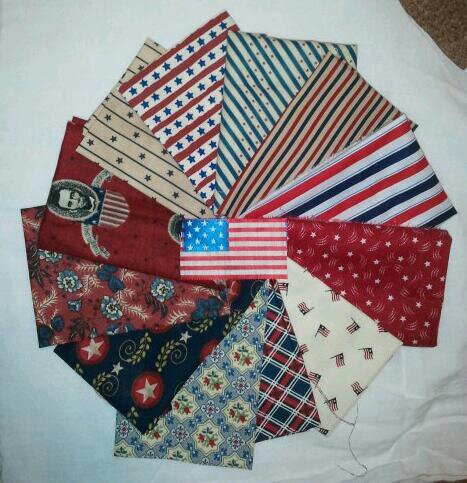
This last swap of the season seemed to fly by. These are the fabrics of the Patriotic Swap, the fun Bonus swap.
image

Don’t these designs look fun?!

Published in: on May 6, 2014 at 4:11 pm  Comments (4)