Serving 19th c. Style – Dinner Parties

Tidbits for Dinner Parties…


Mrs. L. — Will you give me some idea of the best method of setting out and arranging a dinner table, for a party of sixteen, or twenty.
Mrs. B. — Fashion, the great arbiter of every thing connected with social life, varies the nature of the courses, and the quantity of viands which must be placed at one time upon the table; so that the dinner which might be considered as elegant at one time would have an air of vulgarity at another; particular directions, therefore, on this part of your inquiry, can scarcely be given, though by describing a dinner of three courses, for the present time, some idea may be given, which may be modified to any future change of fashion.
Thus, in the middle of the table is generally an epergne, filled with either real or artificial flowers, or it may contain a salad ornamented. A dish offish is placed at each end of the table, one boiled and the other either fried or stewed : the requisite sauces being placed between these dishes and the epergne. Two tureens of soup, one white and the other brown, may be placed on a line with the fish, or on each side of the epergne. This is the usual plan of the first course. The second may consist of roasted and stewed meat, at the top and bottom of the table: —the choice of these must depend upon what happens to be in season. On each side of the epergne, where the soup was placed in the first course, may now be boiled chickens and a tongue, or a small ham, varnished and decorated. Between the top dishes and the epergne two small made dishes, or tureens with sauce, may fill up that space. The four corners must have covered dishes, which may contain either curry, patties, palates, riseaux, fricassee of mutton-chops, stewed rump-steaks, stewed mushrooms, stewed cucumbers, or any similar viands. Other vegetables are on a side-table, to be handed round by the servants. On removing this course, the epergne may be taken away; and, at some fashionable parties, a small table-cloth or napkin, which covers part of the table only, is also withdrawn. A third course generally consists either of two dishes of game, or of some kind of poultry, at each end of the table ; or there may be but one dish of game at the bottom of the table and at the top a large dish of asparagus, sea-kale, or peas; in the centre may be a trifle, or some kind of fancy confectionary. The intermediate spaces, in the length of the table, may be occupied with a dish of prawns, at one end, neatly set up, and at the other by lobster-salad or a prepared crab. On one side of the centre dish may be a light pudding, on the other a tart or macaroni. At the corners, jellies, blancmange, tartlets, creams, or any other fancy confectionary.
The wines are placed upon the table at first, in six decanters, one of each being placed at each corner of the table, and one on each side of the epergne, whilst two bottles of some light French or Rhenish wine, undecanted and corked, and placed in silver or plated vases, fill up a space between the epergne and each end of the table. Small decanters of water, covered with an inverted tumbler, should be placed by every second guest, but malt liquors, cider, soda-water, ginger-beer, or similar beverages, are handed by the attendants when called for. In the interval of each course, champaign, hock, burgundy, or barsac, are handed round to each guest.. Cheese, with a fresh salad, follows the third course, and a glass of port wine is generally offered by the servants to each of the gentlemen.
When, according to the continental fashion, the cloth is allowed to remain on the table; or, according to the more general custom of this country, before it is removed, a silver, or a china or glass dish, containing rose-water, is passed round the table, into which each guest dips the corner of his table- napkin, for the purpose of refreshing his mouth and fingers, prior to the appearance of the dessert.
The dessert necessarily varies with the season: when that will admit of ripe fruits, the most important, such as grapes, pine-apples, peaches, or apricots, must of course occupy the ends of the table; while the inferior fruits, such as strawberries and raspberries, with preserves and dried fruits, fill the corners and sides of the table. A Savoy cake, on an elevated dish, is very proper for the centre; wafers, and any other cakes, may fill up any spaces in the length of the table. In the summer a China pail of ice is generally placed at each end of the table, and served out on glass plates before the wine is circulated. Sometimes Noyeau, Curacoa, Dantzic, Constantia, or some other liquor, is handed to the guests in small glasses, immediately after the ice has been served; the pails and glass plates are removed before the servants leave the room.
The decanted wines placed on the table during dinner are white wines; either madeira, sherry, or bu9ellus; those circulated after dinner are port, madeira, and claret. Claret is generally contained in a decanter with a handle, and of a peculiar form. Directions to the cook should always be closed with strict injunctions to be punctual to time, and to send everything, which is intended to be eaten hot, to table in proper season. Carelessness in these two particulars should not oe passed over without reprimand ; and if the fault be repeated, it might be as well to part with a servant, who has either undertaken a place without possessing for it sufficient qualifications, or who is indifferent to the comfort of her master and mistress, to whom it is a most disagreeable circumstance to be anticipating for a length of time the announcement of dinner, and when announced, to find every thing either chilled or overdone.
The butler, or footman, should be furnished with a plan of the dinner, drawn out in an intelligible manner, so that he may know how to arrange the dishes on the table: for as much of the elegance of effect, which is always desirable on a dinner-table, is produced by this arrangement, it ought not to be trusted to the taste or judgment of a servant. The diagrams I now show you are specimens of the usual manner in which this is done: (SEE PAGE 60 -62 FOR TABLE LAYOUTS) 
The butler and footman should have every thing in the neatest order, at the side-board and on the table; with a sufficient quantity of glasses, knives, forks, spoons, &c. in the room. They should be quiet and rapid in their movements; observant in supplying changes of plates, and in attending to the demands of each guest. The courses should be quickly removed, but without bustle.
It is always proper, if no housekeeper or butler be kept, that the mistress of her family should give very minute directions to the footman, to prepare the plate the day before a dinner-party is to be given. Wax lights should be in readiness, and the lamps, particularly those not in common use, should be cleaned, and trimmed.
The table, which is to be used, must be so proportioned to the size of the party, as neither to inconvenience the guests, by over-crowding them, nor yet to admit of too much space, which has always an uncomfortable appearance. The glasses of every description should look clean and bright; and the water in the decanters should be clear, and without sediment. The wines, when not in charge of a butler, should be given out in good time, to be properly decanted and cooled.
I am afraid you will think that these directions are more minute than is requisite ; but I know that many a young housekeeper has been amazed at the bustle and confusion apparent amongst her servants at the hour of dinner, and has been mortified at the difficulty of procuring what was required, without being aware, that, had she previously enforced regulations like these, she would have brought them into such habits of order and method, as would have enabled them to discharge their duties easily and quietly. When once good habits are formed in our servants, they will seldom require such minute attention; for perceiving the advantages they themselves derive from them, they will generally continue the practice of them. Such servants will, of their own accord, clean and put away into their proper places, all the various articles which belong to their different departments. Confusion and breakage will be thus avoided, and the ordinary business of the following day not much interrupted. (Domestic Duties by William Parkes)

COMPANY SUPPERS.

The ingenuity of the genteel economist is as often taxed to contrive supper things as in arranging dinners, which admit of less temporizing. Economy, good taste, and neatness, can however do much, even with slender means, where the chief organ to be propitiated is the eye ; for the lateness of modern dinner-hours has now, almost universally, changed suppers from a solid meal into a light showy refreshment.

It is said that ladies are the best critics in suppers, while gentlemen are better qualified to decide on the more substantial business of the dinner-table. Ladies are unquestionably more conversant with the things on which the elegance of a supper depends, — namely, the beautiful shapes and arrangement of china, glass, linen, fruits, foliage, flowers, colours, lights, ornamental confectionary, and all the other natural and artificial embellishments of the table. Articles, so beautiful in themselves, cannot fail, if tastefully disposed, to gratify the eye, however slender the repast with which they are intermixed.

When a formal substantial supper is set out, the principal dishes are understood to be roasted game or poultry, cold meats sliced, ham, tongue, collared and potted things, grated beef, Bologna sausage, Dutch herring, kipper, highly- seasoned pies of game, &c. &c. with occasionally soup — an addition to modern suppers which, after the heat and fatigue of a ball-room, or large party, is found peculiarly grateful and restorative. Minced white meats, lobsters, oysters, collared eels, and crawfish dressed in various forms ; sago, rice, the more delicate vegetables, poached eggs, scalloped potatoes, are all suitable articles of the solid kind. To these are added, ices, cakes, tarts, possets, creams, jellies in glasses or shapes, custards, preserved or dried fruits, pancakes, fritters, puffs, tartlets, grated cheese, butter in little shapes, sandwiches ; and the catalogue of the more stimulating dishes, as anchovy toasts, grilled bones, Welsh, English, and Scotch rabbits, roasted onions, salmagundi, smoked sausages sliced, many of the things the French nani£ hors d’oeuvres, and those other preparations which are best adapted to what among ancient bon-viwmts was called the rere-supper, or ” supper next morning.”

A supper table should neither be too much crowded nor too much scattered and broken with minute dishes. Any larder moderately stored will furnish a few substantial articles for supper on an emergency; and a few sweet things readily prepared, or purchased, with patties, shellfish, and fruits, will do the rest, if the effect of contrasted colours, flavours, and forms, be understood ; and that light and graceful disposition of trifles which is the chief art in setting off such entertainments. Where small apartments, and crowded parties introduce the custom of standing suppers, the same cold dishes are suitable, served on high tables, and eaten on one’s knee, or standing.

French wines have become an article of ambitious display at fashionable suppers, even in families of the middle rank. Where they can be afforded in excellence ‘ and variety, nothing can be more appropriate to a light, showy, exhilarating repast (The Cook and Housewife’s Manual By Christian Isobel Johnstone)

Published in: on April 3, 2009 at 1:00 am  Leave a Comment  

Mid-19th C or CW Civilian Article Index

I’ve noticed some people have been trying to find the index I am keeping of mid-nineteenth century civilian related article index. The index included articles from the Citizen’s Companion, The Watchdog, and The Civil War Lady. Some articles from the Civil War Historian  are also included while I wait to fill that in fully. There is a seperate list of online articles as well.  

Sadly, I can not upload Excel files to the blog. I can however post a PDF version of the printed article index. Downside is this is just an alphabetical list that isn’t sortable like the Excel file. If you are interested in the Excel file, email me or leave a comment. (Right now the index is current through January 2009. Updates will follow.)

Serving 19th C. Style – Serving Tea

Tid-bits for serving tea….

proper-way


“In the first place, dust off your table clean, and spread your cloth neatly, observing that the centre crease of your cloth is right in the centre of the table, and that it don’t hang longer at one end than at the other; then proceed to set out your breakfast tray; laying a cup and saucer for each person, with a teaspoon in each saucer, at the right hand side of the cup; then set in the centre of the tray, your sugar pot on the right hand, your cream pot on the left, and your slop bowl in the centre, with your teapot behind them, so as to be right under the tea urn, and that the tap of the urn may reach it, when on the table. As soon as you have this done, set your tray at the end of the table where the lady sits that pours out the tea, then put around your plates, one for each person…… If your breakfast table is rather small you must spread a napkin on a small stand, place it on the left hand side of the lady that makes tea; place on this the tea caddy, and if there is not room on the breakfast try, for all your cups and saucers to be placed uniform, you may put the remainder on the stand.” (Roberts  Guide for Butlers and Household Staff, p43.)
The Suisse. Etiquette requires a round table for the The Suisse, a snow white table-cloth, and in addition to tea, coffee, and bread-and-butter, a great variety of cakes, jellies, and confectionery.


“Tea cannot be so hastily dispatched.
 “After a late dinner it is a matter of minor importance. It is merely handed round with sugar and cream, by the servants in waiting.
“When especial invitations are given by quiet people to a sociable ‘cup of tea,’ it is generally served up, with all the tea equipage, on the drawing-room table. It is presided over by the lady, or the eldest daughter, of the house, and the gentlemen who are invited render themselves useful in replenishing the tea-pot from the shining copper tea-kettle (supposing there is no urn), and in handing about the bread-and- utter, tea-cakes, muffins, and crumpets.
“For a large evening party, it is well to set apart a room for the tea and coffee. Here on of the daughters of the house may preside, and supply the guests with tea, coffee, and biscuits, or bread-and-butter, before they proceed to the reception or drawing-room. “In some families confidential servants preside in the tearooms on the occasion of a large evening party. “Another style of tea, and one at which juvenile as well as grown-up guests are often present, is the tea called the 
“The guests assemble round the table, and the repast is rather a protracted one. Conversation, games, and music follow, but no supper is deemed necessary. (The Hand-Book of Etiquette: Being a Complete Guide to the Usages of Polite Society. London: Cassell, Petter & Galpin, 1860. P25-28.)


“If you prefer a set table, place your waiter at the head, with teapot, coffee-urn, cups, saucers, sugar, cream, etc., and the placing of the remainder of your table equipage will be readily known to an intelligent mistress.
“But allow me to recommend another mode of serving tea, much more agreeable, convenient, and elegant.
“Have the waiter containing your teapot, coffee-urn, etc. placed on a side-table in your parlor, at which seat yourself to serve your guests or family. Then on another table, near by, have another waiter placed, containing other refreshments. If you have quartettes, or small tables, have these placed before your guests; then let one servant hand around the plates, knives, and forks, while the other hands the waiter containing cakes, etc.
“By this arrangement you will the better exercise the impulses of the agreeable entertainer, and promote sociability. You give your gentlemen guests an opportunity of being both gallant and agreeable, and the ladies of displaying both graciousness and grace.
“Never have your tea poured out in another room. It allows to servants an opportunity of loitering, causes them to supply you with cold tea and coffee, besides trying unduly your patience and amiability.” (Mason, Mary. The Young Housewife’s Counselor and Friend: Containing Directions in Every Department of Housekeeping, Including the Duties of Wife and Mother. New York: E.J.Hale & Son, 1875. p 309)


“Green or black tea, to be drunk in perfection,


must be made with boiling water,–boiling at the time of being poured on the tea; and black tea is the better for boiling some ten minutes.

“Do not trust this operation to servants, as it is very common, with most of them, to believe that water

once boiled is boiling water. Although the kettle, on boiling, is removed from the fire so far as entirely to stop the ebullition of the water, it is thought nevertheless boiling water, and tea is made of such, in most cases, if the eye of the mistress is not upon it.

“Of best green tea three teaspoonfuls will be sufficient for six persons, though if you wish tea for one, a spoonful will be needed. For black tea a larger proportion will be necessary, perhaps double.
“If a silver teapot is used, the tea should first be made in an earthen pot, and kept at boiling heat near the fire till about to be served; then the silver pot should be scalded with boiling water, and the tea immediately transferred into it and served.

“Three things it would be well to avoid in tea,–tea of inferior quality, weak tea, and cold tea: unless persons desire iced tea,–then it should be


well iced. Tepid tea is nauseous, especially if weak. (Mason, Mary. The Young Housewife’s Counselor and Friend: Containing Directions in Every Department of Housekeeping, Including the Duties of Wife and Mother. New York: E.J.Hale & Son, 1875. p126. )

“Tea Parties and Evening Company”
“In one respect, fashion has aided to relieve a house-keeper of much care in providing evening entertainments. It is now fashionable to spread a table for evening parties, and not to serve tea and coffee, as was formerly done. As this is the easiest, and most rational way of entertaining evening company, no other method will be so minutely described.
“If a lady designs to invite from forty to sixty friends to pass the evening, of even to have a much larger company invited, the following would be called a plain but genteel arrangement, for company in New York, Philadelphia, or any of our large cities.
“Set a long table in the dining-room, and cover it with a handsome damask cloth. Set some high article containing flowers, or some ornamental article, in the centre. Set Champagne glasses with flowers at each corner. Set loaves of cake at regular distances, and dispose in some regular order about the table, preserves, jellies, lemonade, and any other articles that may be selected from the abundant variety offered in the collection of Receipts for Evening Parties in this book.
“Where a very large company is to be collected, and a larger treat is thought to be required, then a long table is set in the center of the room, as above, and on it are placed cakes, pastry, jellies, and confectionary. Then smaller tables are set each side of a mantle, or in corners, one of which is furnished with sandwiches, oysters, salad, celery, and wine, and the other with coffee, chocolate, and lemonade. Sometimes all are placed on one long table, and in this case, cakes, jellies, and confectionary are put in the centre, coffee and lemonade ate one end, and oysters, sandwiches, celery, and wines at the other. A great deal of taste may be displayed in preparing
and arranging such a table.
“As it is often the case, that the old mode of serving tea and coffee will be resorted to, on modification is proposed, which decreases the labour and anxiety to the housekeeper, and increases the enjoyment of the company. It is this. Set a table in one of the parlors, and cover it with a damask cloth. Let the tea and coffee be served at this table, the lady of the house presiding. Then let the gentlemen wait upon the ladies around the room, and then help themselves. This is particularly convenient when it is difficult to get good waiters.

“Most of the articles used for evening parties (with the exception of rich cakes, wine, and highseasoned chicken salad are not unhealthful, if taken moderately.
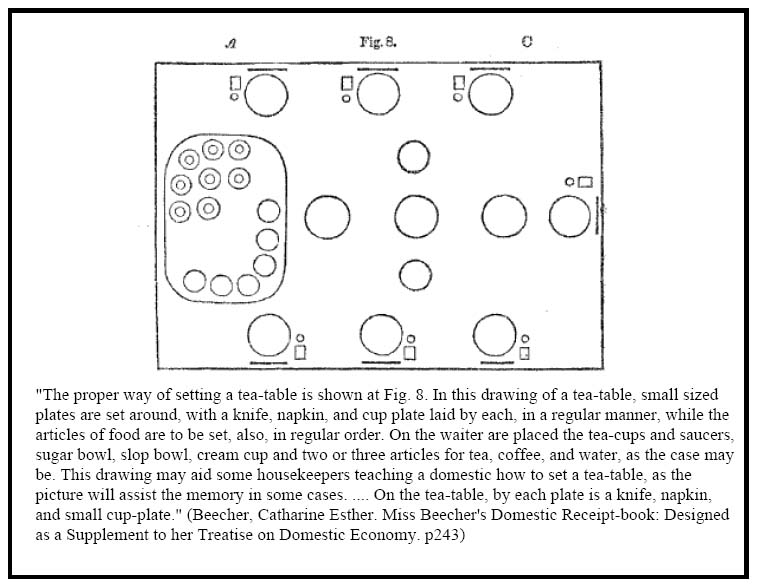
“When these parties break up at seasonable hours, then may prove one of the most rational and harmless modes of securing social enjoyment; but when connected with highly exciting amusements, and late hours, they are sure to wear upon the constitution and health and rational and conscientious persons, for these and other reasons, will avoid them.” (Beecher, Catharine Esther. Miss Beecher’s Domestic Receipt-book: Designed as a Supplement to her Treatise on Domestic Economy. p241-242)


TEAnotes – These are plain notes, no formating, not cross checking.

Published in: on April 1, 2009 at 1:00 am  Leave a Comment  

Serving 19th c. Style – Breakfast

Breakfast tidbits….


“Directions for Setting out the Breakfast Table.
“Now, my young friends, I shall give you some instructions how to set out your breakfast, dinner, and tea tables; but I first will give you instructions for your breakfast table. In the first place, say all your things are clean and in readiness in your pantry, as they should be, and that your family for breakfast consists of six or eight people. In the first place, dust off your table clean, and spread your cloth neatly, observing that the centre crease of your cloth is right in the centre of the table, and that it don’t hang longer at one end than at the other; then proceed to set out your breakfast tray; laying a cup and saucer for each person, with a teaspoon in each saucer, at the right hand side of the cup; then set in the centre of the tray, your sugar pot on the right hand, your cream pot on the left, and your slop bowl in the centre, with your tea pot behind them, so as to be right under the tea urn, and that the tap of the urn may reach it, when on the table. As soon as you have this done, set your tray at the end of the table where the lady sits that pours out the tea, then put around your plates, one for each person, putting them at a proper distance from each other; then your knife and fork to each small plate, the knife on the right hand, the fork on the left, with the end of the handles even with the edge of the table; you must always have salt on the table, as most families have eggs, or some kinds of meat on the table for breakfast.
“In summer, you must put your butter and cream to cool some time before you have set your table. If you have not a proper cooler, take a large bowl, and half fill it with water, then put a small plate in the bottom of the bowl, then put in your butter and cream pot, then a small piece of ice, if you use any. This is a very good method to cool your butter and cream for breakfast. If your breakfast table is rather small you must spread a napkin on a small stand, place it on the left hand side of the lady that makes tea; place on this the tea caddy, and if there is not room on the breakfast tray, for all your cups and saucers to be placed uniform, you may put the remainder on the stand. Remember to put on a knife for your bread and one for the butter, and if any cold meat is put on the table lay a dinner knife and fork to it for carving; and if there are eggs, do not forget the spoons; and if you don’t use egg cups and stands, you must put on wine glasses. If any of your family like mustard with their meat, you must put the cruet stand or casters on the stand. (“Roberts Guide for Butlers and Household Staff.)

A chapter from Davenport Dunn entitled “A Breakfast Table”.

PREPARING THE BREAKFAST-TABLE.
You must now begin to prepare the breakfast-things. First collect the things together and put them upon the tea-board. When you have carried them up into the breakfast-parlour, spread the breakfast-cloth over the coverlet; then place your tea-board rather more on that side of the table which is opposite to the fire, or at that end at which the party who makes the breakfast usually sits. The cups and saucers are not to be placed round the tea-board, but so as to be conveniently filled by the person who makes the tea. The tea-pot, slop-basin, and cream- jug, are placed just behind the saucers,— the tea-pot in the middle, and the cream-jug and slop-basin to the right and left of it in a straight line. The tea- caddy is placed either on the right or left of the person who makes the tea; the sugar-tongs are also placed near the same quarter. If coffee is to be taken, you should arrange the coffee-cups in a line either before or behind the tea cups ; and remember to have a spoon for each cup upon the table, and put them into the saucers. The bread, butter, toast-rack, urn-rug, and salt, are to be set as tastefully as possible. Put a small plate, knife, and fork, for each person, and the butter-knife in its proper place. If you are to prepare eggs, remember to place egg-cups and spoons. Where the family eat meat, &c., for their breakfast, it is generally placed on a side-table or tray set near the breakfast table, with the carving knife and fork, and the cruet stand neatly set, and the cloth equally placed on all sides; then set a sufficient number of chairs round the table. This is the general mode of laying out a breakfast-table ; but as families, according to their extent and incomes, adopt their plans accordingly, you must inquire what are their wishes, and take care to conform to them.
You must now begin to prepare yourself for attending at breakfast, by washing your hands and face and making yourself look neat and cleanly; and, if you have time, get your own breakfast. If you are to make buttered toast, toast the bread as quick as possible, in order that it may be light; but neither make toast, nor prepare muffin? or crumpets, before they are wanted, otherwise they will become soddened and heavy : on the contrary, dry toast should be toasted some time before it is wanted, and it should be cut thin and well crisped. As soon as the parlour bell rings, take up the urn with the water in it, or the tea-kettle, and the toast, as quick as you can. If you have not already placed the bread and butter, take them up with the eggs ; and recollect you carry them upon a tray. If you are to attend at breakfast, and are to hand any thing to any person, always put it upon a waiter; never take it in your hand. When the breakfast-things are to lie taken away,— which your mistress generally gives you to understand by the words ” take away,”—first remove the urn, gather up the loose things into a tray, and take them away; then remove the tea-tray, with the tea-things upon it, at the same time taking the cloth, neatly gathered up, under your arm. Lastly, set the parlor to rights ; sweep up the crumbs and the hearth. If necessary, make up the fire : if it merely wants stirring, put the poker between the second and third bars from the bottom, if the grate has four bars ; but if only three bars, between the first and second. By observing this rule, you may avoid occasioning the small dust at the bottom of the grate from flying about the room, or incurring the chance of deadening the fire. (The Servants’ magazine, or Female domestics’ instructor, 1849)

 A Public breakfast layout 

Published in: on March 31, 2009 at 1:46 am  Leave a Comment  

Other 19th C. Serving items

While the “Serving 19th C. Style” article looks at serving trays, slavers and waiters, there were many other serving dishes and utensils used in the mid-century. This is a partial list of the many dishes used to serve during meals and in the parlor including:

  • Basins
  • Braziers and chaffing dishes
  • Butter dishes
  • Cake baskets
  • Castors
  • Cheese scoops
  • Chocolate pots
  • Coffee pots
  • Fruit baskets
  • Irish dish rings
  • Knife rests
  • Mustard pots
  • Pepper pots
  • Salt Cellars
  • Sauce boats
  • Sauce tureens
  • Soup tureens & ladles
  • Sugar sifters
  • Sugar chests
  • Sugar dishes
  • Strawberry trays
  • Tea pots
  • Vegetable dishes
  • Wassail or Punch Bowls     

             Many of us will find a use for some or many of these items at some point in our reencating. There are a few factors to keep in mind when choosing which pieces to use for a particular occasion. You will want to ask yourself what type of serving pieces the person you are portraying would have chosen. Or in servant’s cases, what types of pieces would the person you work for would have chosen. You will find when looking into the details of some pieces the early and mid-Victorian years were a transition from simpler lines of the early century to ostentatious ornamentation of the last quarter of the century. You will also want to consider your comfortable investment point. Likely, these pieces are ones you will be transporting from site to site for events rather then just from kitchen to dinning room or parlor as originally intended. The regular packing, transporting, and varied use of reenacting could be detrimental to an original piece or a significant investment piece. Besides physical damage, a piece could be misplaced or accidentally left behind. I have managed to loose the lid to a serving dish, one of a pair of large monogrammed silver trays, and two smaller silver trays belonging to a set over the years. Luckily, with this possibility in mind I have limited my purchases to a price I could afford to loose.


                I will add to the following list any notes or tid-bits of information that may be helpful in selecting pieces.


Soup Tureen


Fish and Meat Platters


Vegetable Dishes

Two vegetable dishes should fit on the waiters serving tray.


Sauce Boats


Castors, Salt Cellars, Sugars, and Cream Jugs

[Leslie p 252 “257” Leslie discusses two different castors or cruets, one for dry and one for vinegar. She discusses pepper, cayenne, mustard, vinegar, pickles, salad oil, salt (in cellars), and powdered loaf-sugar (found in some castors) in her section on castors. She also covers separate castors for anchovy, soy, catchup and fish-sauces.


“We see no very reasonable objection to having the castors on the dining table. If there are two sets of castors, place in the middle of the table the salad bowl or the celery glass; unless there is company to dinner, and the centre, perhaps, is occupied by a plateau, an epergne, a vase of flowers, or some other ornament.” (Leslie)


Tea and Coffee pots

Another tea related piece is the hot-water urn. While frequently written about and illustrated in period literature and art, I am not certain how extensively urns are practically used in a living history interpretation setting. Originals, should not be used, while reproductions may or may not exist at an affordable price. Urns kept water hot with a cylinder heated in the fire and placed inside the urn. A more affordable option used in the  era was a tea kettle kept hot on top of a chafing-dish. The chafing dish holds hot coals to keep the water hot.


Cold Drink Containers – Decanters, pitchers, etc. 

“The decanters are to stand neat the corners. It is now usual at many tables to have a smaller water bottle (holding about a pint) placed by the side of every place that each person may pour out water for himself. Nevertheless, there should always be water-pitchers on the side-table, to replenish the bottles when necessary, whether large or small ones are used on the table. In summer, when filling the pitchers, put two or three lumps of ice into each.” (Leslie)


Fruit Dishes

Fruit dishes and sweetmeat dishes can be covered prior to dinner with fine black wire net covers.


Dessert Dishes


Published in: on March 30, 2009 at 1:13 am  Leave a Comment  

Class Resources

For the past couple years, I’ve done part of the CW unit for the HS I work at. Here are the class outline and the basic handout files in Word format.

Published in: on March 28, 2009 at 10:57 am  Leave a Comment  

Spring Workshop – Making Bishop Style Undersleeves

These are the directions for making bishop style undersleeves from the spring workshop.


What type of under sleeves do you want/need?

                                    Under an open pagoda sleeve?

                                    Under a modified pagoda sleeve?

                                    Under an open coat sleeve?


How full do you want your under sleeves?  Very full? Moderately full? Lightly full?


How much poof do you want your sleeves to have?


Original moderately full sleeves tend to be from 8” to just over 9” across the top or 16” to 18” around. Fuller sleeves fall up to 30” around for very fine nets.  I generally find one half of the width of 36” full bodied sheer or semi sheer fabric makes a moderately full under-sleeve. You can make a fuller sleeve of fine sheer cotton but they should not be as wide as those of net. If you add tucks, ruching or other embellishments, you can add to the visual fullness of the sleeve.

In determining the length of the under-sleeve consider the length of your arm as well as the length of your dress sleeve. Original sleeves are as short as 12” and as long as 22”. The longer sleeves have layers of decoration that fall below the wrist. For a bishop under-sleeve, measure from your wrist to two inches above your elbow. Forearm length _________ Add 1” for gathering at bottom and top. If you want more poof to your sleeve add an inch to three inches. Sleeve fabric length __________.

The cuffs of your bishop style under sleeve will need to fit comfortable around your wrist. Measure your wrist _________ add 1 1/2” for closure and comfort ________. Original sleeves show cuffs an inch to about two inches wide. How wide do you want your cuffs? ________ Multiply by 2 and add 1/2” _________.

Do you want the top edge to be gathered to fit your arm or do you want it loose to baste or pin in your dress sleeve? If you want a gathered edge, measure around your arm about an inch above your elbow. _______ Add 1 ½” for comfort and closure. ________ If you want your sleeve to be loose, use the width of your sleeve for the top.


Cut two rectangles of the lawn according to the measurements you have for the width and length of you sleeves. Place a pin along the edge that will be the wrist. Gather along the wrist end to the measurement of your wrist.

Cut two cuff pieces according to the cuff measurements above. Fold each in half lengthwise and press. Fold ¼” seam allowances in and press on all sides.

Cut two upper bindings 2” by the measure for your upper arm or the width of your sleeve. Fold edges in ½” and press. Fold in half and press with raw edges inside.

If you are gathering the top, gather the top edge of the sleeve to the width of the binding.

Sew the length of the sleeve from the top to 2-4” from the bottom. (Enough to comfortably get your hand through) Narrowly turn the remaining raw edge under and hem.

Pin or baste the cuff onto the wrist gathering. Attach the cuff.

Attach the binding at the top. Turn the raw ends under as you do.

Attach a tiny hook and thread loop or button to your cuff for closure.


Examples:

Plain Cotton

Cotton

Embroidered

White Muslin

White Net


Published in: on March 26, 2009 at 10:48 am  Leave a Comment  

Serving 19th C. Style – Miss Beecher’s Rules for Setting a Table

Miss Beecher’s  Treatise On Domestic Economy:

ON THE CARE OF BREAKFAST AND DINING-ROOMS.

An eating-room should have in it a large closet, with drawers and shelves, in which slfbuld be kept all the articles used at meals. This, if possible, should communicate with the kitchen, by a sliding window, or by a door, and have in it a window, and also a small sink. made of marble or lined with zinc, which will be a great convenience for washing nice articles. If there be a dumb-waiter, it is best to have it connected with such a closet. It may be so contrived, that, when it is down, it shall form part of the closet floor.

A table-rug, or crumb-cloth, is useful to save carpets from injury. Bocking, or baize, is best. Always spread the same side up, or the carpet will be soiled by the rug. Table-mats are needful, to prevent injury to the table from the warm dishes. Teacup-mats, or small plates, are useful to save the table-cloths from dripping tea or coffee. Butter-knives, for the butter-plate, and salt-spoons, for salt-dishes, are designed to prevent those disgusting marks which are made, when persons use their own knives, to take salt or butter. A sugar- spoon should be kept in or by the sugar-dish, for the same purpose. Table-napkins, of diaper, are often laid by each person’s plate, for use during the meal, to save the tablecloth and pocket-handkerchief. To preserve the same napkin for the same person, each member of the family has a given number, and the napkins are numbered to correspond, or else are slipped into ivory rings, which are numbered. A stranger has a clean one, at each meal. Tablecloths should be well starched, and ironed on the right side, and always, when taken off, folded in the ironed creases. Doilies are colored napkins, which, when fruit is offered, should always be furnished, to prevent a person from staining a nice handkerchief, or permitting the fruit-juice to dry on the fingers.

Casters and salt-stands should be put in order, every morning, when washing the breakfast things. Always, if possible, provide fine and dry table-salt, as many persons are much disgusted with that which is dark, damp, and coarse. Be careful to keep salad-oil closely corked, or it will grow rancid. Never leave the salt-spoons in the salt, nor the mustard-spoon in the mustard, as they are thereby injured. Wipe them, immediately after the meal.

For table-furniture, French china is deemed the nicest, but it is liable to the objection of having plates, so made, that salt, butter, and similar articles, will not lodge on the edge, but slip into the centre. Select knives and forks, which have weights in the handles, so that, when laid down, they will not touch the table. Those with rivetted handles last longer than any others. Horn handles (except buckhorn) are very poor. The best are cheapest in the end. Knives should be sharpened once a month, unless they are kept sharp by the mode of scouring.

On Setting Tables.

Neat housekeepers observe the manner in which a table is set more than any thing else; and to a person of good taste, few things are more annoying, than to see the table placed askew; the tablecloth soiled, rumpled, and put on awry; the plates, knives, and dishes thrown about, without any order; the pitchers soiled on the outside, and sometimes within ; the tumblers dim ; the caster out of order; the butter pitched on the plate, without any symmetry ; the salt coarse, damp, and dark ; the bread cut in a mixture of junks and slices; the dishes of food set on at random, and without mats; tne knives dark or rusty, and their handles greasy; the tea-furniture all out of order, and every thing in similar style. And yet, many of these negligences will be met with, at the tables of persons who call themselves well bred, and who have wealth enough to make much outside show. One reason for this, is, the great difficulty of finding domestics, who will attend to these things in a proper manner, and who, after they have been repeatedly instructed, will not neglect nor forget what has been said to them. The writer has known cases, where much has been gained by placing the following rules in plain sight, in the place where the articles for setting tables are kept.

Rules for setting a Table.

1. Lay the rug square with the room, and also smooth and even ; then set the table also square with the room, and see that the legs are in the right position to support the leaves.

2. Lay the tablecloth square with the table, right side up, smooth, and even.

3. Put on the teatray (for breakfast or tea) square with the table; set the cups and saucers at the front side of the teatray, and the sugar, slop-bowls, and cream- cup, at the back side. Lay the sugar-spoon or tongs on the sugar-bowl.

4. Lay the plates around the table, at equal intervals, and the knives and forks at regular distances, each in the same particular manner, with a cup-mat, or cup- plate, to each, and a napkin at the right side of each person.

5. If meat be used, set the caster and salt-cellars in the centre of the table; then lay mats for the dishes.

wid place the carving-knife and fork and steel by the master of the house. Set the butter on two plates, one on either side, with a butter-knife by each.

6. Set the tea or coffee-pot on a mat, at the right hand of the teatray, (if there be not room upon it.) Then place the chairs around the table, and call the family.

For Dinner.

1. Place the rug, table, tablecloth, plates, knives and forks, and napkins, as before directed, with a tumbler by each plate. In cold weather, set the plates where they will be warmed.

2. Put the caster in the centre, and the salt-stands at two oblique corners, of the table, the latter between two large spoons crossed. If more spoons be needed, lay them on each side of the caster, crossed. Set the pitcher on a mat, either at a side-table, or, when there is no waiter, on the dining-table. Water looks best in glass decanters.

3. Set the bread on the table, when there is no waiter. Some take a fork, and lay a piece on the napkin or tumbler by each plate. Others keep it in a tray, covered with a white napkin to keep off flies. Bread for dinner is often cut in small junks, and not in slices.

4. Set the principal dish before the master of the house, and the other dishes in a regular manner. Put the carving-knife, fork, and steel, by the principal dish, and also a knife-rest, if one be used.

5. Put a small knife and fork by the pickles, and also by any other dishes which need them. Then place the chairs.

On Waiting at Table.

A domestic, who waits on the table, should be required to keep the hair and hands in neat order, and have on a clean apron. A small tea-tray should be used to carry cups and plates. The waiter should announce the meal /’when ready) to the mistress of the family, then stand by the eating-room door, till all are in, then close the door, and step to the left side of the lady of the house. When all are seated, the waiter should remove the covers, taking care first to invert them, so as not to drop the steam on the tablecloth or guests. In presenting articles, go to the left side of the person. In pouring water never entirely fill the tumbler. The waiter should notice when bread or water is wanting, and hand it without being called. When plates are changed, be careful not to drop knives or forks. Brush off crumbs, with a crumb-brush, into a small waiter. When there is no domestic waiter, a light table should be set at the left side of the mistress of the house, on which the bread, water, and other articles not in immediate use, can be placed.

On Carving and Helping at Table

It is considered an accomplishment for a lady to know how to carve well, at her own table. It is not proper to stand in carving. The carving-knife should be sharp and thin. To carve fowls, (which should always be laid with the breast uppermost,) place the fork in the breast, and take off the wings and legs without turning the fowl; then cut out the merry thought, cut slices from the breast, take out the collar bone, cut off the side pieces, and then cut the carcass in two. Divide the joints in the leg of a turkey.

In helping the guests, when no choice is expressed, give a piece of both the white and dark meat, with some of the stuffing. Inquire whether the guest will be helped to each kind of vegetable, and put the gravy on the plate, and not on any article of food.

In carving a sirloin, cut thin slices from the side next to you, (it must be put on the dish with the tenderloin underneath 😉 then turn it, and cut from the tenderloin. Help the guest to both kinds.

In carving a leg of mutton, or a ham, begin by cutting across the middle, to the bone. Cut a tongue across, and not lengthwise, and help from the middle part.

Carve a forequarter of lamb, by separating the shoulder from the ribs, and then dividing the ribs. To carve a loin of veal, begin at the smaller end and separate the ribs. Help each one to a piece of the kidney and its fat. Carve pork and mutton in the same way.

To carve a fillet of veal, begin at the top, and help to the stuffing with each slice. In a breast of veal, separate the breast and brisket, and then cut them up, asking which part is preferred. In carving a pig, it is customary to divide it, and take off the head, before it comes to the table; as, to many persons, the head is very revolting. Cut off the limbs, and divide the ribs. In carving venison, make a deep incision down to the bone, to let out the juices; then turn the broad end of the haunch towards you, cutting deep, in thin slices. For a saddle of venison, cut from the tail towards the other end, on each side, in thin slices. Warm plates are very necessary, with venison and mutton, and in Winter, are desirable for all meats.

Published in: on March 22, 2009 at 9:05 am  Leave a Comment  

Increasing Spectator & Civilian Interaction


Spectator friendly activities


·        Sewing – Invite spectators to try sewing and handiwork projects. If you are working on a treadle or hand-crank sewing machine, invite them to try the machine. If you are quilting, have an extra needle and thread started for them to try. If need be, you can remove the stitches at the end of the event.

·        Spinning and Weaving – If you are working with fibers, have a drop spindle or small loom on hand for them to try.

·        Knitting – Have an extra ball of yarn and a set of needles for spectators to try.

·        Food – Have them churn butter. (one of the few food relate activities that are allowable.)

·        Laundry – If doing a partial laundry impression without the hot water and caustic chemicals, spectators can participate. Scrubbing wet clothes and hanging them can be a favorite of children.

·        Games – Almost every child and many adults love to play with period games. If your children are playing, invite a visiting spectator family to play as well. This will give the adults plenty of question and answer time as well. Parlor games are fun and often new to adult spectators. Invite them to join your game of conundrums or tableax vivants.


Inviting Spectators to participate


·        It is important to offer an opportunity to try an activity to a spectator. Often they will be interested but to shy to ask.

·         


Potential Spectator Hazards

·        It is generally best not to have spectators handle original items outside of control situations with the proper surface and gloves.

·        Spectators should not be allowed to handle or taste food.

·        Spectators, though very interested, should not be allowed handle sharp or hot objects.

·        Spectators should not be allowed to handle loaded firearms.

·        Spectators should be kept a safe distance from fires.


Working with School Groups & Encouraging Student Interest


·        Younger spectators relate better to the character, personalities, and personal stories of people rather than facts, details and technical concepts.

·        Presenting a concept, event or series of events from the perspective of a character helps a student connect and develops a story-line.

·        Give students the opportunity to think critically and voice their perspectives on issues and events.

·        Link past events with present day experiences kids can relate to. Example – Soldiers’ aide groups gathering supplies for CW soldiers compared to student groups gathering items for care packages for soldiers.

·        Provoke curiosity and creativity.

·        Themes that can work well with students include

o       Choosing between different options, right and wrong

o       Dealing with pressure from peers and superiors

o       Needs, wants and problems solving – ex. How to provide food for your family if there wasn’t any available to purchase? What would a soldier do if he saw a cool stream of water during a hot day of marching?

o        

·         

·         


Tips for Teaching the Civil War

·        http://www.fredericksburg.com/CivilWar/Teaching/index_html

·         http://blog.teachthecivilwar.com/

·        http://www.civilwar.org/historyclassroom/hc_curriculum1.htm

·        Document analysis worksheets http://www.archives.gov/education/lessons/worksheets/

Published in: on March 21, 2009 at 9:02 am  Leave a Comment  
Tags:

A Closer look at Straw Plait

One of the most common mistakes in making a straw bonnet for living history or reenactment, is choosing a plait that is to wide and coarse. I will admit, I too made that mistake in the begining. We are often tempted and occasionally encouraged to use the straw from a craft bonnet for making a straw bonnet. Again, yes in the begining I did this. But, I’ve since learned and would like to advise you learn from my mistakes rather than wasting your time.

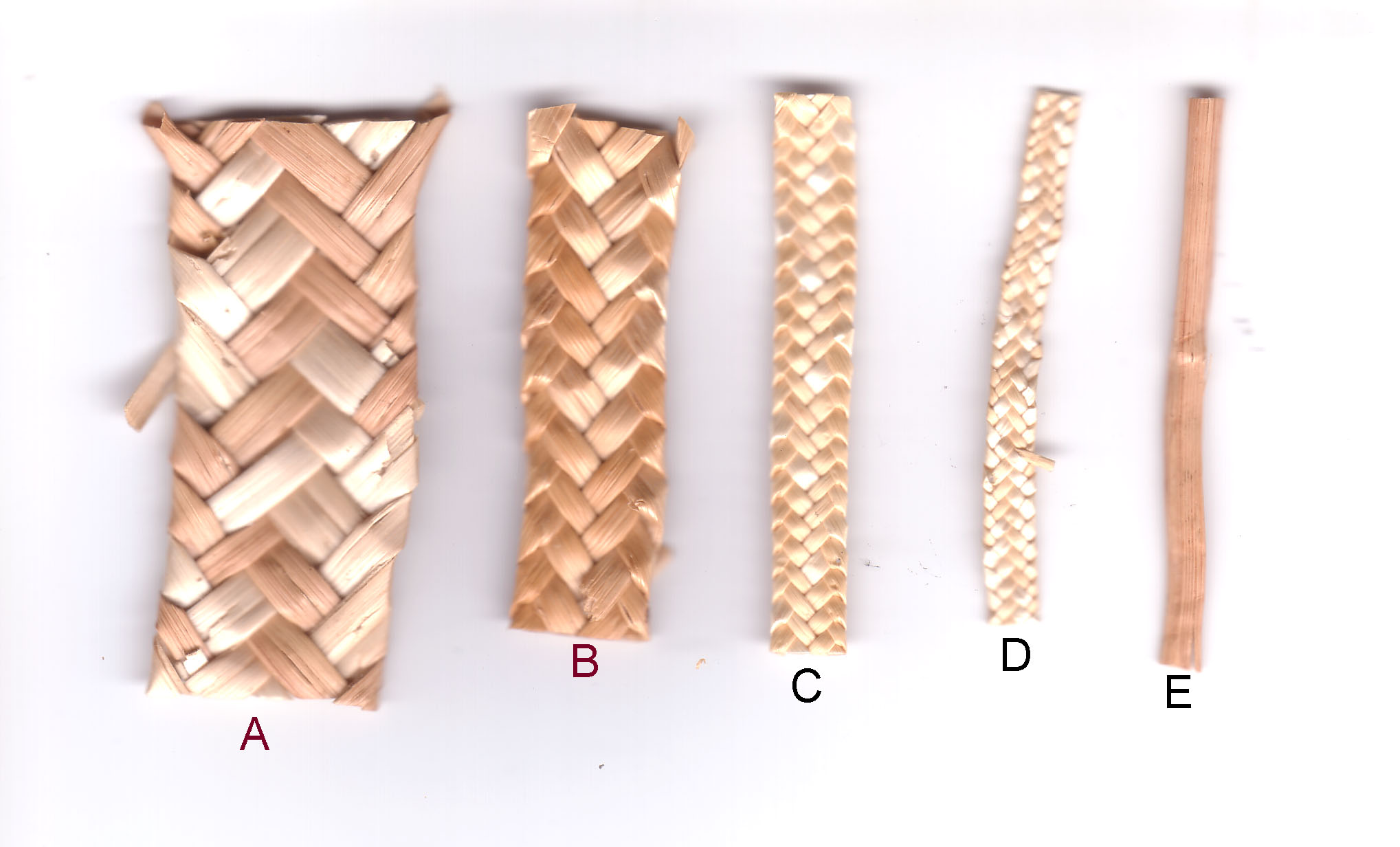
So, what is wrong with the straw from a craft hat from the craft shop? Most of them are to wide and to coarse. Occasionally, you can find narrower craft straw. But, not always. Take a look at the image below. A is a craft straw. It is 3/4″ wide. Some comes as wide as 1″. While there were wide straw strips used during the era for bonnets, these were much more delicate, often woven or crochet. You can see the difference in the quality of the straw itself compared to the other plaits. Plait A is made from whole straw. Whole straw is not bad. It is a method used for making plait throughout the 18th and 19th centuries. You can see how the whole straw E is the width of the straw used in plait A.plait-sample-labled

Plait B is approx 1/2″ made from whole straw. This straw has a nice even color. The straw is in nice shape and is pliable. This is a good straw to begin. This straw comes from Frank’s Cane and Rush Supply.

Plaits C and D are narrower plaits from Judith M’s Millinery, 8mm and 6mm each. These are split plaits. Split plait is made by splitting a single straw into narrow widths before braiding them. To acheive an all matte or all shiny plait two split plaits are layered together. Notice how plait D is the almost the same width as the straw E.

If the straw plait has been dyed, it may require more sizing and wire to hold shape. Some how some dyes weaken the body of the straw.

The below image shows a straw plait along side a hemp plait. You can see the difference between them easily at this magnification. The hemp is a stringier fiber than straw. The hemp needs more sizing and wiring to hold its shape compared to whole or split straw plait.

kit-straw-scan-1

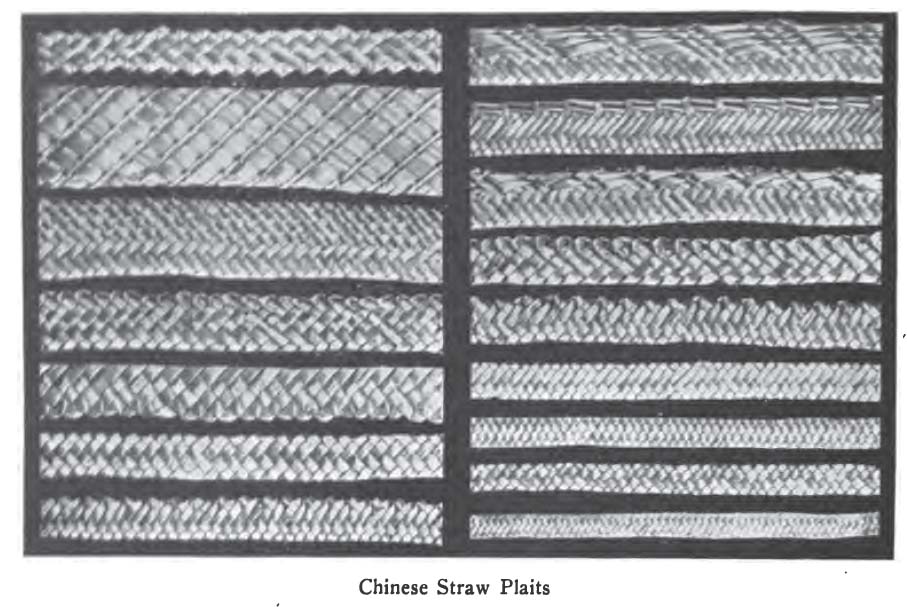
This page from The Millinery Department, 1918, by Aiken, shows straw plaits from the early 20th century.

untitled-11

Just for fun check out….

http://www.learning.luton.gov.uk/l2g/custom/files_uploaded/uploaded_resources/3243/HatGalleryTrail.doc

Published in: on March 20, 2009 at 11:04 am  Comments (3)  
Tags: