Who would be interested in an online Fancy Work Fair?
Please respond in the comments.
For much of my life, I have enjoyed participating in a 19th-century style fair alongside family and friends. I always love seeing what others create, the effort they put into their work, both in craftsmanship and research.
For several years now, I’ve toyed with the idea of an online fair, giving others the opportunity to share their work as well. I have absolutely no idea if others are interested. I acknowledge this could be lots of fun for people, or it could be an utter disaster.
This is what I have in mind:
Something very small to start, focusing on small pieces of Fancy Work. This would be 3 to 6 categories set on either function or materials. (Potential categories based on function: Needle-books, Pen Wipes, Frames. Potential categories based on material: Reclaimed objects, Flora, Leaves, & Twigs.)
Participants would enter by submitting photographs and a description with context & documentation. There would be a minimum & maximum number of photos, including interior and detail photos. I think this would need to be done with either a Google form or a Facebook group.
Images of entries would be shared either on a website or Facebook group (tbd) for all participants to enjoy.
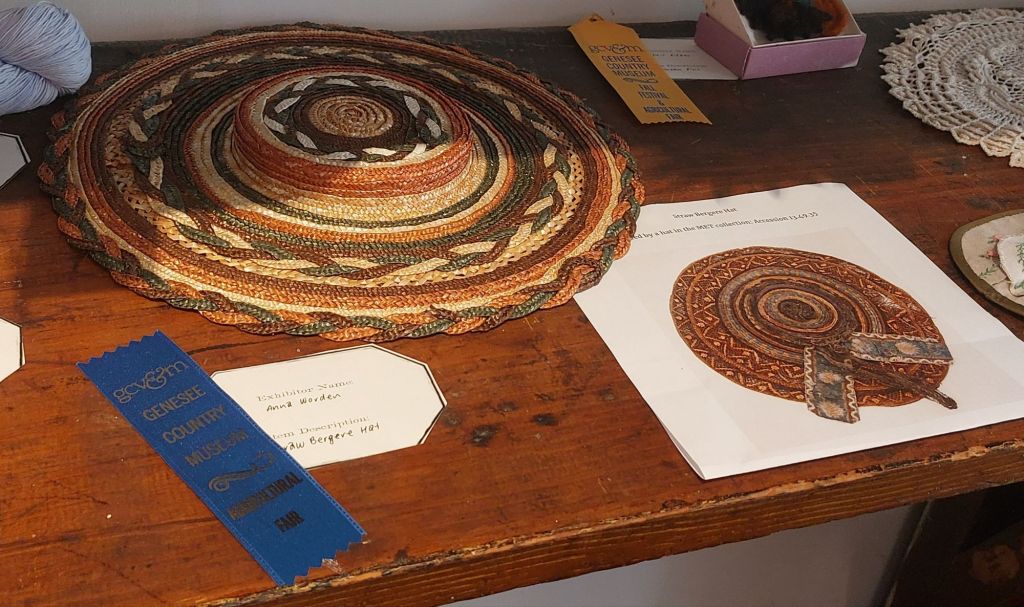
A small group of judges would award virtual ribbons. I would love to be able to award real rosette ribbons if I can afford it.
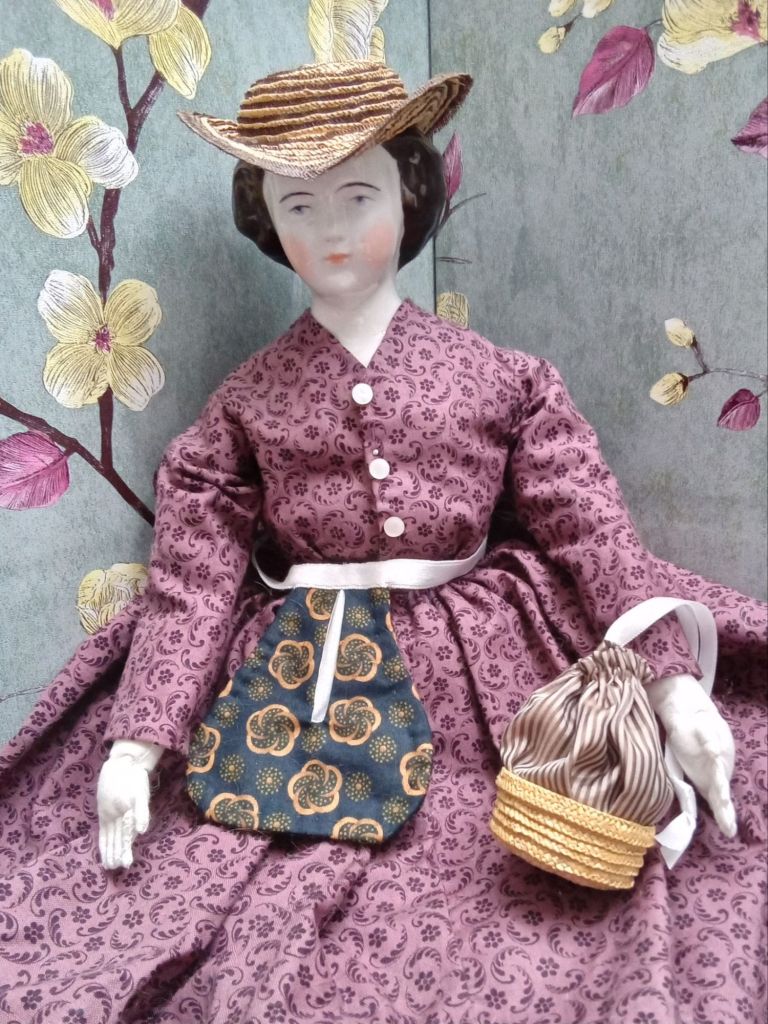
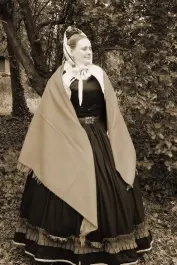
The goal: Make a “recreational dress” reflecting those worn in the Genesee Valley during the 19th century for GCVM’s Great Outdoors Weekend.
Epic Indecision: Local vs Quasi-Local vs General
Aka: What caused the major delay.
With starting this project 3 or 4 months ago, one would have thought I had plenty of time to complete it. One would be wrong. As I collected images of women in recreational situations, I discovered a wide range of clothing. Some, simply had their skirts pulled up with skirt lifters. Others wore shorter, above the ankle length skirts with either loose or fitted bodices. Still others wore attire more like gymnastic ensembles: short above the calf skirts with trousers brought in at the ankle and loose bodices. Narrowing images down to local, meaning the Genesee Valley, and distinctly hiking images, I narrowed my options. The images of what would eventually become Letchworth State Park, mostly stereoviews, showed women wearing shorter skirts, roughly above the ankle, with less skirt support for the 1860s images. Details are difficult to determine because of the scale and frequency of wearing shawls. Some appear to possibly have their skirts pulled up over a presumably durable petticoat. Much clearer images of women hiking at Satatoga Springs, approx 250 miles east, show calf length skirts paired with trousers.
I wanted to do a separate skirt with sacque type bodice or two different skirts to show both versions from images but did not have enough fabric. This meant I remained undecided until the weekend prior to the event I needed for.
Fabric Decision
I determined this ensemble had to be made from my stash because it was not a garment I planned to make and hadn’t planned for. If I had allowed myself to purchase fabric, I would have considered a linen because it was often recommended for travel attire or a tropical wool. Looking through my stash, I settled on a light weightwool/silk blend with a very narrow stripe in tan and white. The material is very smooth, being less likely to snag and durable. The light color has the benefit of not attracting ticks.
Cut and Making
The few textual references I have relate dresses for hiking with travel attire and walking dresses. My previous research found recommendations for cutting armscyes loosely for travel clothing. I opted to do the same for this dress.
The image from Saratoga Springs showed very full bishop sleeves. Following this, I cut full Bishop sleeves with a fitted wrist. While the fullness combined with looser armscyes created a very comfortable sleeve, I found they still pulled when reaching far forward or across the body due to the length. I added 3 inches to each sleeve, figuring full flexibility essential for hiking with a walking stick.
Again, taking from images, I cut the bodice a little fuller and gathered it into the waist. I did a jewel neckline, as shown in images. I feel this neckline is not the most practical or functional for hiking.
In Hindsight – Lingering Questions
This is a dress I wish I would have made in my twenties when I could have tested it, really tested it.
● Why a one-piece dress vs. sacque & petticoat? Rationally, I see an ensemble of a separate sacque and petticoat as sensible. In an urgent situation, the top or bottom could be removed, leaving the other. With a one-piece dress, this isn’t an option. This could be my twenty-something memories creating a picture of “hiking.”
● I lined the entire bodice with quality muslin. In hindsight, I regret this. The cotton combined with the wool makes this bodice far too substantial for comfortable wear in higher summer temperatures. It negates the purpose of the lightweight fabric. I wish I had done a partial lining. As it is, it is more suitable for a fall hike in this area. Though, given the shawls in some of the pre-Letchworth images, the visits to the falls may have been in the fall.
● After finishing the skirt and the majority of the bodice, I printed some of my reference images. This is when I noticed a detail I previously did not see on my phone: The bottom of three of the skirts has a wider band of something. These are not fashionable dresses, indicating this likely isn’t just decorative trim. Is it a wider hem tape? Is it something similar to hem facing but on the outside? My skirt has an interior hem facing and wool hem tape. (The lower right image may also have the same band going up the front of the skirt.)
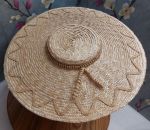
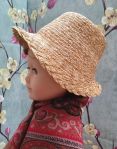
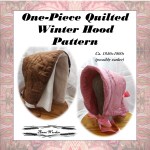
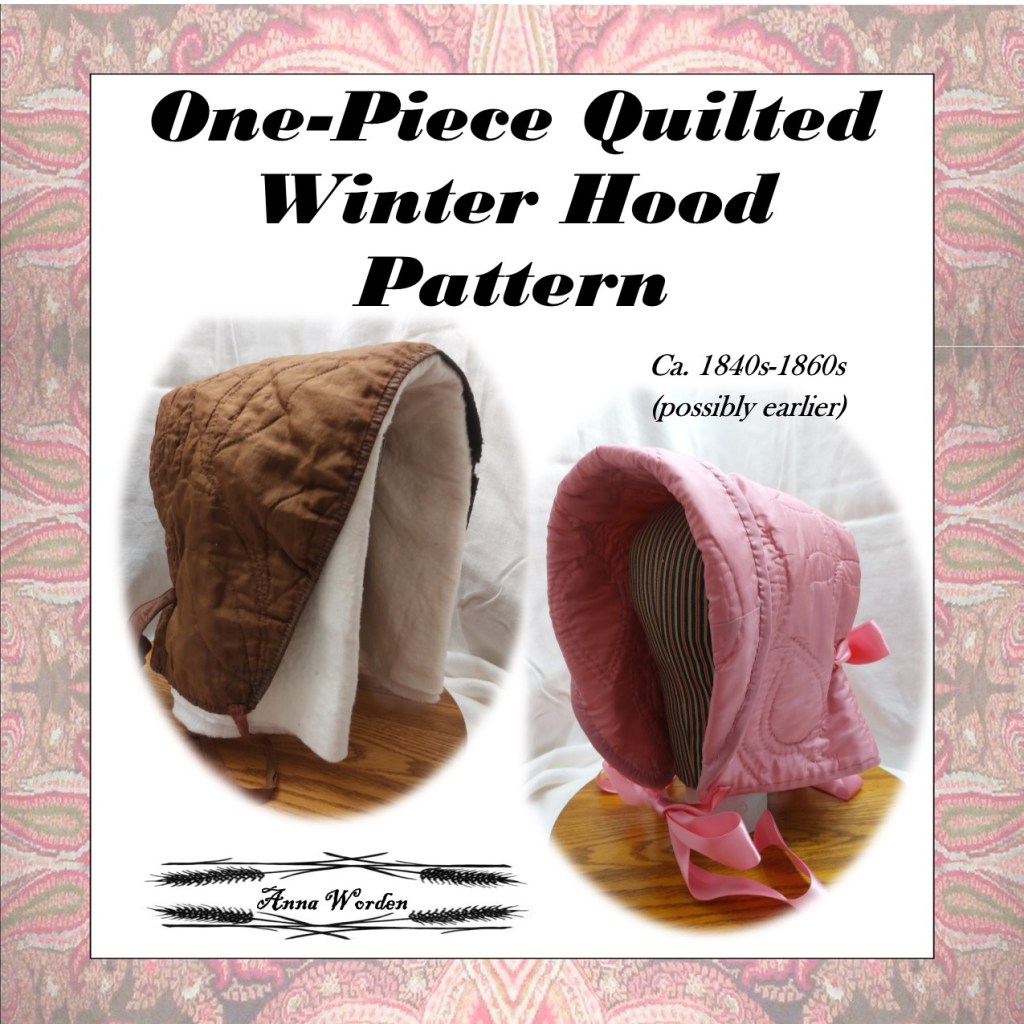
If I do get a chance to wear this hiking, some additional accessories are needed. I have rubber over-shoes that fit my balmorals (which need to be re-soled before hiking in). An appropriate hiking stick is important to me. A straw hat would be an easy and logical option for me. But, I recently became aware of a quilted fabric hat that I am itching to make.
While reading a trio of millinery billheads recently added to my collection, a line stood out:
Assorted Star Spangled Hats
Mr. B. Turk bought 1/2 dozen Assorted Star Spangled Hats, among numerous other items by the dozen from J.T. Davenport, ” importer, manufacturer, and jobber of straw goods, hats, caps, first, umbrellas, & etc..” on May 30th, 1861. Being a visual person, my mind filled with possibilities for what a star spangled hat might look like. Of course, I was delighted by the coincidence of Independence Day approaching.
An inquiry with Hathitrust trust led me to this passage in Vanity Fair, published June 1st, 1861, just two days following the above purchase.
To my delight, the Letter Patent (1861) contains a May 28, 1861 patent by Samual Hawley of New York with an illustration of the Star Spangled Hat. The illustrated clearly show the hat with it ring of stars circling the top of the crown and brim; 13 stars upon the crown, 34 upon the brim.
I will confess a level of selfish disappointment in the Star Spangle Hat being embossed felt rather than straw. One of the visions I had for a Star Spangled Hat was a straw embellished with silver or gold stars.
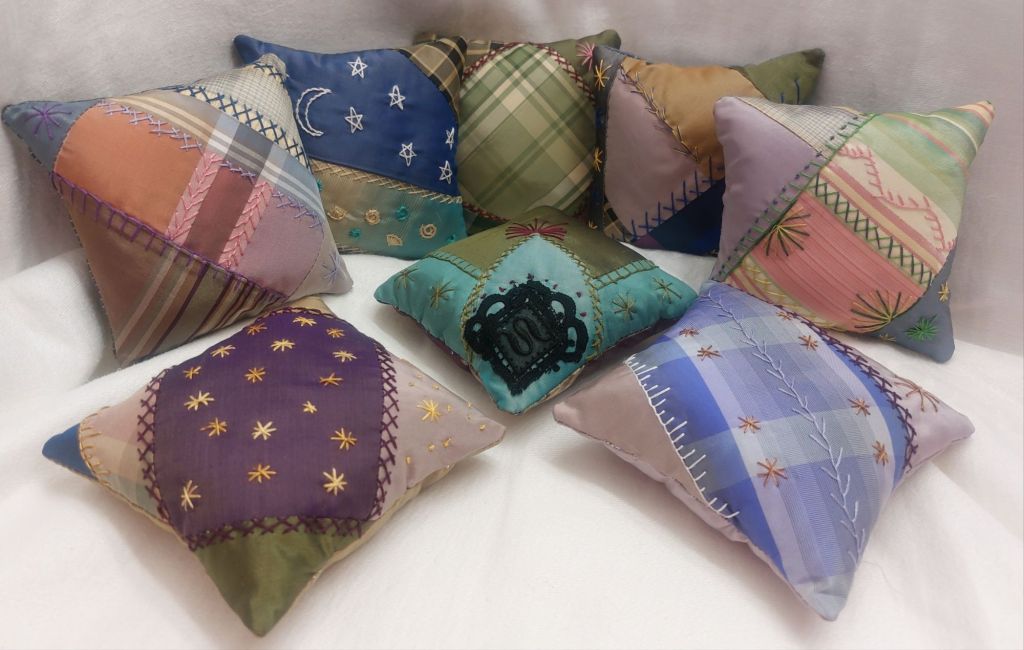
This month’s pocket design is coming up on the 10th. This is a mathematically inspired design. But, don’t let that scare you. You don’t have to do any math. This pocket is a design of scallops that you can embroider, quilt, or even work in patchwork. I picture the scallops being worked in so many ways: a single color, tones of one color, a rainbow of colors, alternating colors….
I also shared a bonus pocket design in celebration of season 3 of Bridgerton. The bonus pocket is a Butterfly design for Penelope. (It was supposed to go live with the release of the second half. But, I pressed the buttons to fast. So, it is live now.)
I love boxes and baskets. If you look around my home, I have decorative bandboxes,Shaker style boxes, and an assortment of baskets holding sewing items, ribbons, projects, and even cat toys.
Shaker style boxes appeal to me because of the wood; the many tones, colors, and grains of the wood. They are great for organizing the many small bits I use for various projects. One is currently holding the ribbon bag I was working in at last weekend’s event. Another is holding pieces for walnut bags.
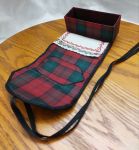
Two weekends ago, while perusing the local fleamarket, I saw this small Shaker style box. It is just the right size for a sewing box as it can hold small tools and pop into a bag or trunk.
I lined it with purple silk taffeta, giving it a divider and velvet pincushion. Being purple, it needed a lavender sachet.
I used Fanciful Utility techniques for the lining; covering pasteboard. This creates an insert that slides tightly into place without permanent glue. I prefer this method for most projects like this because it doesn’t alter the original piece.
When I listed this, Etsy reminded me it was 2016&17 when I previously offered a few of these lined Shaker style boxes. They were very popular then, as were some lined baskets I made. I feel like making some more if I can find the right materials in the wild. I would like to do some pincushions as well.
Today, I attended the Spring Fashion & Textile Symposium ay the Genesee Country Village and Museum. This was the third bi-annual fashion symposium.
Curator Brandon Brooks offered a captivating story of Hawaiian Kapa cloth, inspired by a dress in the RMSC collection. Brandon’s talks are always enjoyable. This time, I was so intrigued by how the fibers from a tree were pounded into cloth that I stopped taking notes.
The second speakers was Nellie Ludemann from the Seneca Falls Historical Society. (Nellie was one of the speakers at the Story of Fashion Symposium last Fall.) She spoke about the knitting mill in Seneca Falls, the longest running textile mill in New York. As an employer that hired predominantly women through most of the 20th century, I plan to follow future research. (The mill is now the home of the National Women’s Rights Hall of Fame.)
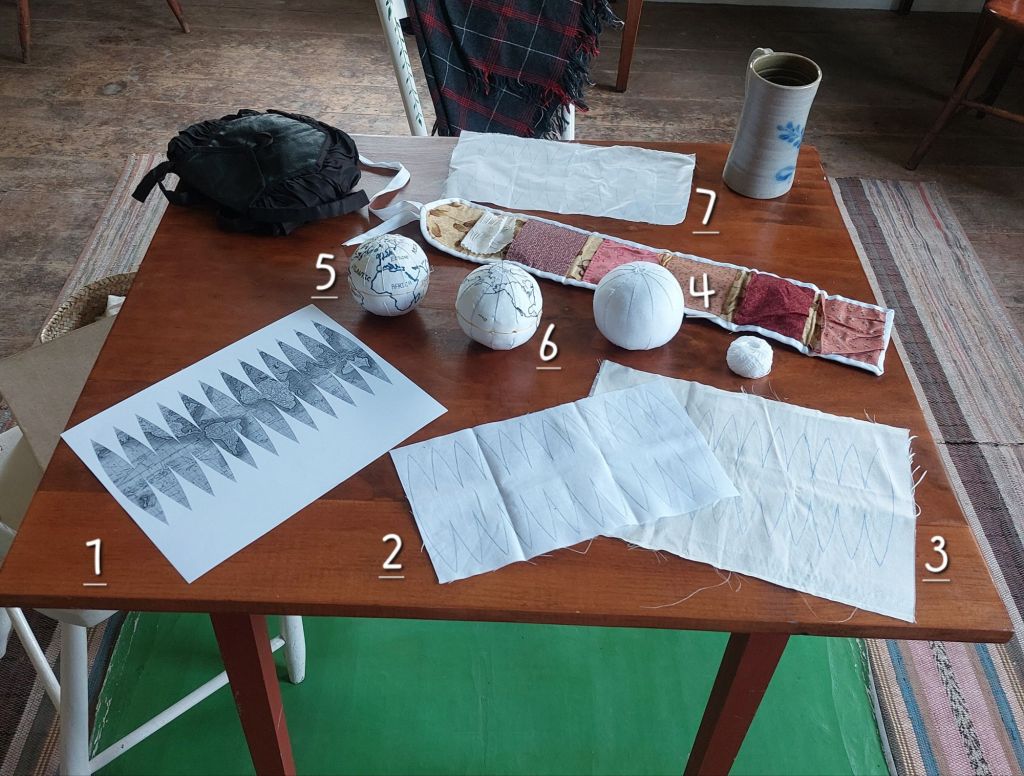
Lunch brought one of my favorite parts of these symposia: meeting new people. (Psst, I have a particular table I sit at, and see who sits down.) This lunch evolved into a fascinating discussion of math in fiber arts. I suspect if one of us didn’t check the time, we could have carried on exploring the discussion for another hour.
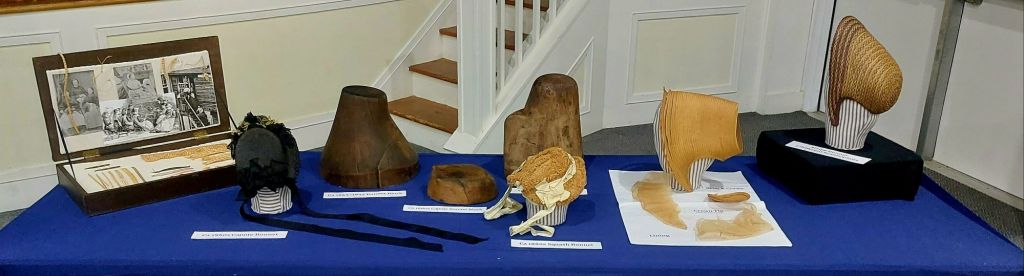
The first speaker after lunch was Angela from Burnley and Trowbridge. She presented part of her ongoing research based on a token book, a log of children that included swatches of their (or their parent’s) clothing for identification purposes. This hour was packed with so much information.
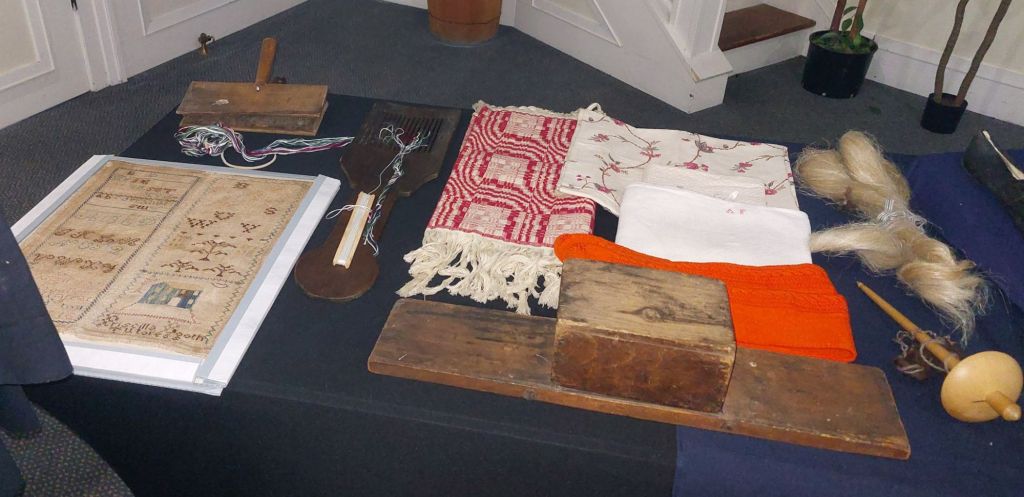
The final presentation of the day was from Rabbit Goody of Thistle Hill Weavers. She took us on a journey through some of her experiences producing and reproducing textiles for sites, cinema, and theater.
A sampling of textiles by Thistle Hill Weavers for cinema and theater.
The keynote for the Fall Symposium was announced at the end of the sessions. It is someone I know many will be excited to see. 😉