Engaging with Cats & Dogs

If you’ve followed me for some time, you know that, for me, one of the most important aspects of creating a program is connecting with and engaging visitors. I love when some aspect of what I am sharing with people sparks a conversation, stirs up a memory, or opens the door for a visitor to share their story as well.

Some times, the littlest thing can be what catches a visitor’s s attention, draws them in, and helps them connect with the aspects of history I am sharing with them. The most simple object can connect with a visitor, such as small strawberry pin cushions and emories. These tiny objects brought special smiles to visitors’ faces as they shared stories of little red strawberries. from visitors.

True connection with visitors can vary. A visitor may stand over my shoulder mesmerized by the turning of a pinking machine. A pair of siblings may pull over a bench to sit and ask questions. A young visitor may hop up and down as they make a connection with something they saw earlier elsewhere. Yet, engagement isn’t always active interaction. It can also be the quiet, elderly visitor in the corner staring at pen wipes, waiting for the room to clear so she can pull back her tears and tell me about watching her mother write with pen & ink as a child.

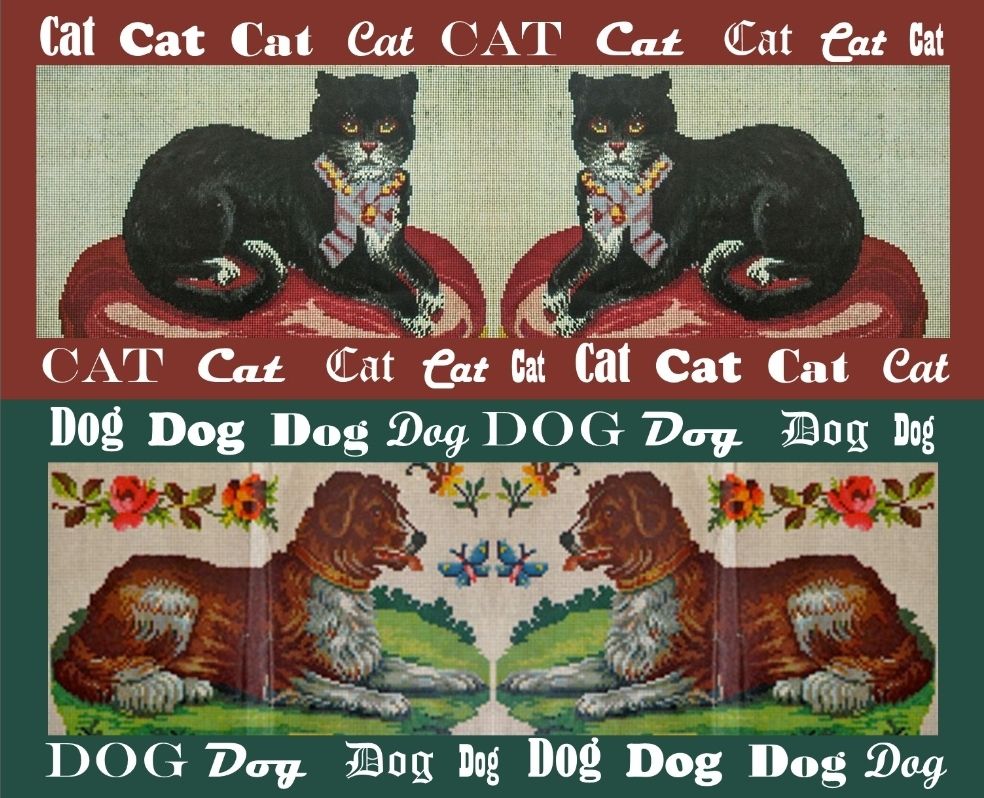
In developing my program for this month, I knew with all the stress in my life and likely in the life’s of the visitors I will see, I needed to do something fun that nearly everyone will be able to connect with on some level. This year’s 19th century handmade gifts for Holiday Open House are all about

Cats & Dogs

My hope is visitors will engage with the various pieces of cat & dog fancy work I’ve created. Maybe, they will share stories of the cat or dog, or similar projects or gifts they made. By doing so, I can help connect them with the history of handmade gifts and the educational aspects of fancy work for girls and women.

I also hope visitors will have a little fun with this and enjoy voting for cats or dogs.

Published in: on December 4, 2025 at 4:04 pm  Leave a Comment  

New Patreon Level

I added a new supporting tier to Patreon called Workshop Benefactor. This is something I’ve wrestled with for quite a while. It’s never easy for me to open a space where people can offer more support, and truthfully, I’m uncomfortable even allowing it. But to continue the research and writing I do, particularly with millinery and fancy work, I have reached a point where I need to carve out more time and resources to keep going.

If you’ve been following my work for years, you know how much care I put into every project and how much joy I take in sharing it. The Workshop Benefactor tier is simply a way for those who feel strongly about sustaining this work to do so in a more substantial way. It’s never expected. It’s never assumed. But it does make a real difference.

As always, I’m grateful for every kind of support, be it reading, commenting, sharing, or simply being here. Thank you for walking with me through this evolving creative life.

Published in: on December 1, 2025 at 10:24 am  Leave a Comment  

Happy Thanksgiving!

Happy Thanksgiving, friends & followers!

Whether you’ve been reading along with me for years or just recently found your way here, I’m grateful for the small community we’ve built together. Today can be joyful, messy, complicated, or all of the above, and however it meets you, I hope you find a pocket of calm, a good story to hold onto, or a moment that feels like warmth.

Published in: on November 27, 2025 at 10:10 am  Comments (2)  

Horsehair Bonnet

What happens when I break my “no buying” rule and put in an offer on a dreamy little bonnet when I really, really shouldn’t? 

The most well packaged box arrives on my doorstep when I am in the midst of a curl in a ball migraine. I brought the box in, set it on the table, took my meds, and layed on the couch in misery. 

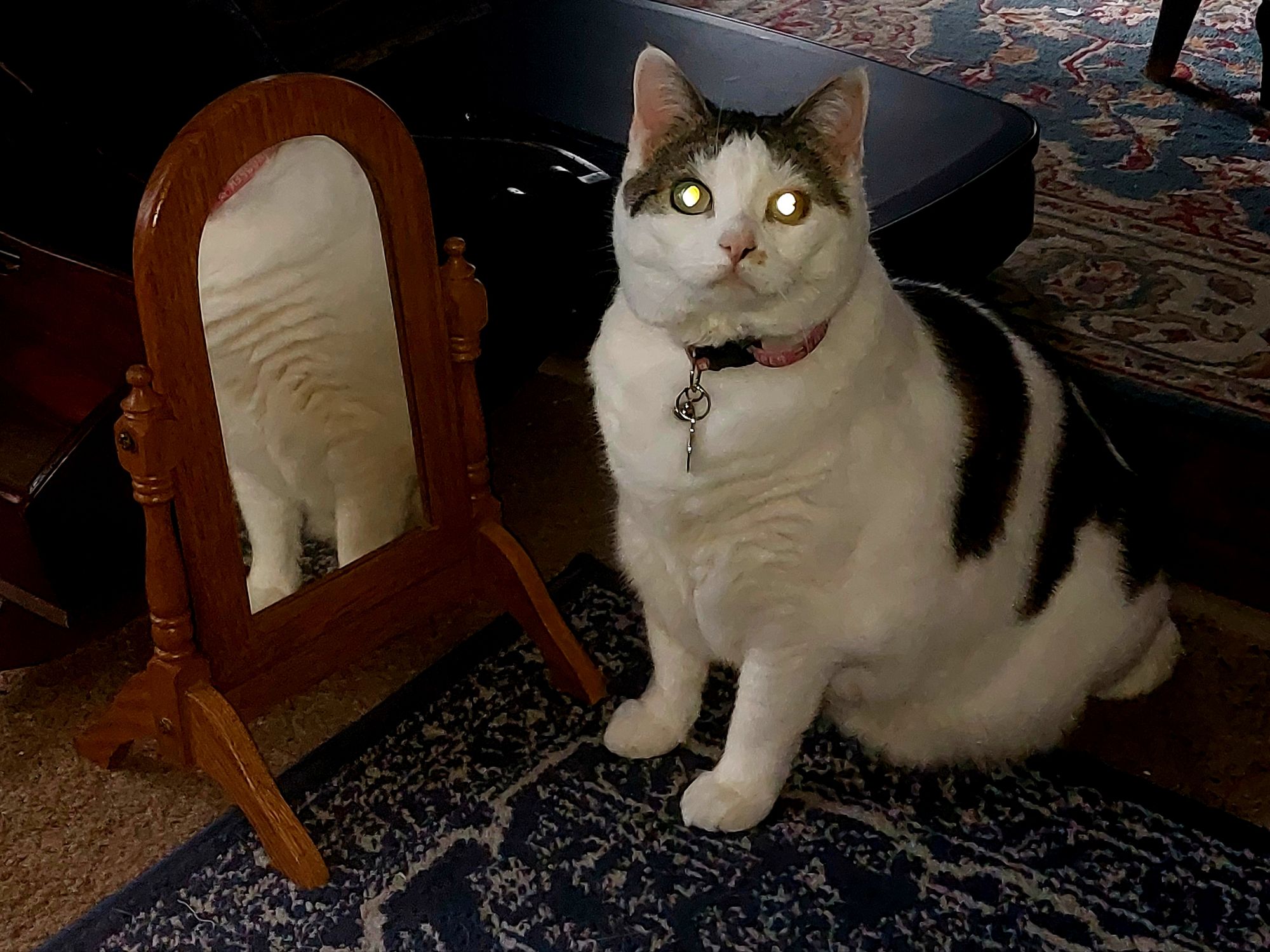
Eventually,  I talked myself into going to bed. Or, maybe that was the cat. Against all sensibility, recalling the last straw bonnet I bought,  I decided to just open the top to make sure the inside looked okay.

I cut open the tape on the 14″ cube. Looked inside to see the cute sticker attached to the newspaper.  And curiosity won. I removed the layers of paper to find an air filled, clear plastic bag. Inside the bag was a vintage hat box. As I untied the bag, I thought, “Of course, this would have made a great unboxing, and I’m not filming.” The vintage hat box was darling, with a handwritten note on top. I was so grateful the seller took the time to take such care in packaging. 

I allowed myself a peek inside. This is where I knew I needed to stop. I could not trust myself to touch the bonnet while I had a migraine.

Fast forward 2 days. Yes, it took that long for the migraine to fully pass before I trusted myself to look at this bonnet.

This bonnet is almost entirely horse hair. There are multiple braids or weaves used. The main bonnet is a plait of black or dark grey and white, which is nearly clear. The plait sewn as straw plait would. The thread used is thicker than the hair used in the plait and accounts for the slight hue of light brown in the body of the bonnet.

A tubular braid/weave edges the front of the brim. It is set in a wavey pattern over a flat light brown tbd. The tubular braid is made with the same colors as the body plait, but of slightly finer hairs. The flat tbd is a width of light brown fibers that aren’t straw, look more hair-like but looks flat to the eye. The fibers are layed side by side and sewn across.

The neck edge has a narrow bavolet created from rows of plait, the same used in the body of the bonnet, and two rows of tubular plait over the flat tbd. The lower tubular plait is the same as what is used on the brim edge. The upper row of tubular plait is a brown fiber that is not straw and thicker than horse hair.

The bonnet is wired around the inside. This wire is intact. (Often bonnets stored flat have broken wire. The seller indicated this bonnet was stored flat.) It is lined with two layers of an open weave material. There is some firmness or stiffness to this material. (Visually,  this material is similar to what I’ve found in straw bonnets.) The bonnet is simply trimmed with a brown silk ribbon. There is thread evidence of ties previously on the inside of the cheektabs.

I almost forgot to write about its time frame. I prefer to loosely date, particularly when it comes to bonnets or hoods that have become misshapen over time or have lost their fullness. Loosely,  this bonnet is ca 1860s to 1865. With what I think I see in the lines from crown to brim and the tabs, it is likely 1864-1865.  It may even match up with one of my blocks.

I need to find my magnifying glass to get a better look at the unknown fibers in this bonnet. These are not something I will be able to put under a microscope, though. I would also like to do some side by side fiber comparison in photographs for people to see.

Published in: on November 26, 2025 at 10:12 am  Leave a Comment  

Holiday Sale

Whether you want to call it a Black Friday Sale, which is no longer on black Friday, or a Cyber Week Sale, I’ve decided to start it early.

Why?

I’m bored.

Students start their break today.

I bought an original bonnet I shouldn’t.

The Holiday Sale

25% off e-patterns,  e-books, & e-workbooks.

15% off Holiday Exclusives, Patchwork Pin Cushions,  & Straw Baskets.

15% off Straw Millinery.

Sale ends November 30th.

Published in: on November 21, 2025 at 2:25 pm  Leave a Comment  

Which Winter for Which Weather?

Not sure which winter hood fits your 19th-century needs?

Think about the potential weather conditions for your event. Is is going to be cold? Very cold? Snowy? Windy? Might there be freezing rain? 🥶 ☃️ ❄️


Also, think about what you will be doing. Do you need to see what is happening around you? Are you doing farm chores? Do you need to keep an eye on children? Will there be traffic?

A wool wadded hood is the warmest hood. It also hugs the face, allowing you to see around you. This also means it won’t protect your face from wind or freezing rain.

A lappet style hood has the best protection for the face, shielding you from wind, driving snow, and freezing rain. This means it also limits your vision. The thinner batting layers provide light warmth.

A quilted hood can be made with wool batting, providing moderate warmth.  If the brim is turned forward,  it can provide some protection of the face.

My one-piece quilted hood is the fastest and easiest to make. When made up as the original with light batting, it provides light warmth. Turn the brim forward for some protection of the face. If made in the larger size with denser wool batting,  it could provide moderate warmth.

If you are looking for a hood that will protect your face and hair from the elements, draped hood like my Wool Winter Hood will suit. This provides light warmth, while covering your head and shoulders.

Don’t forget, several of my hood patterns are now available in doll scale.

Published in: on November 18, 2025 at 3:42 pm  Leave a Comment  

Today’s Shop Drop: 6pm ET

Share & Save Shop Link

Share & Save Shop Link

(Using the Share & Save link saves me approx $6 in fees on each hat)

Published in: on November 16, 2025 at 12:49 pm  Leave a Comment  

Holiday Recess Publication Plan

If I write a thing down, am I more or less likely to do it?

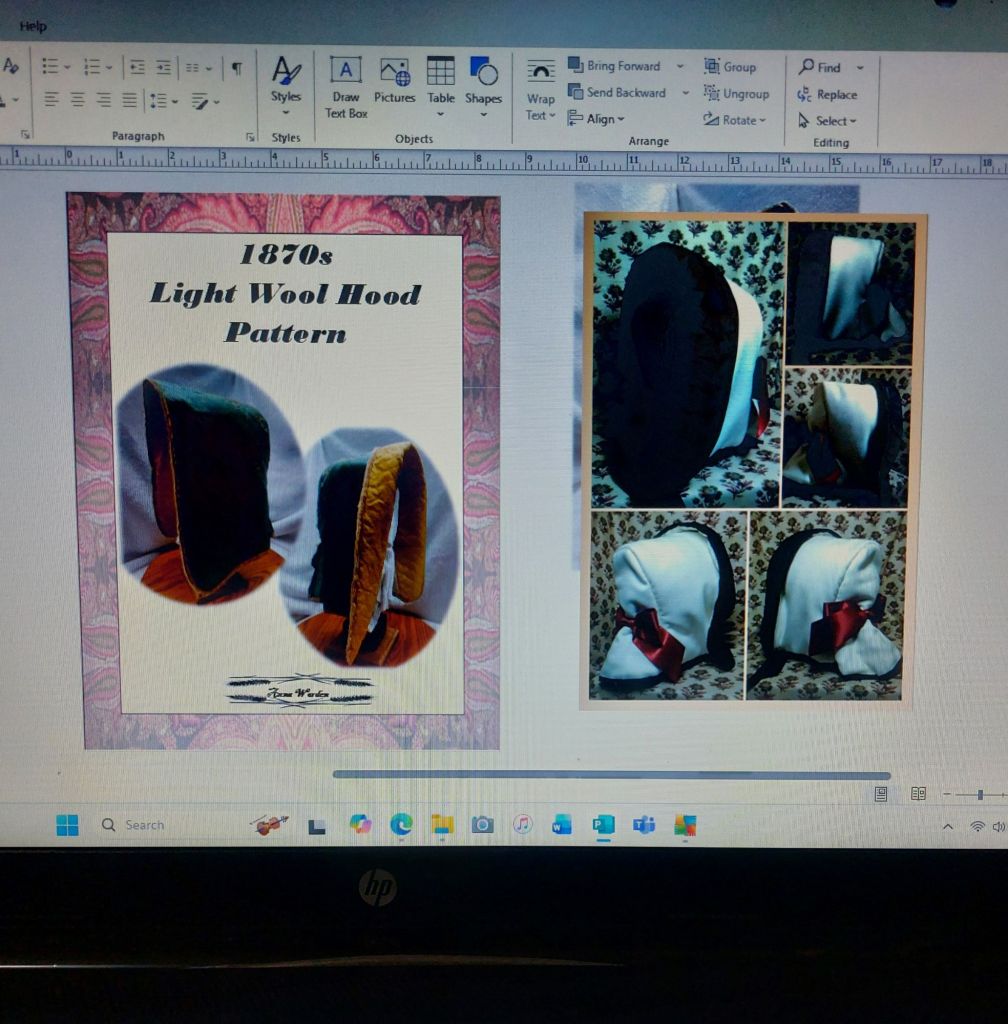
Some of you may recall this adorable winter hood that joined my collection back 2017.

Ever since I first patterned it out and started taking notes, I’ve wanted to do a published pattern with it. It is just too sweet not to share. Then, the chaos of life happened: gb drama, losing the carriage house, divorce, pandemic, etc. The sweet little hood project got set aside, or more literally, packed in an archival box and sat on a chrome shelf in the far side of the closet.

This hood will be my Holiday Recess focus project.

Step 1: Find the archival box this hood is in. The finding isn’t difficult, as the boxes are all labeled with the labels facing forward on the shelves. The doing is a little more cumbersome because a stack of totes and shipping boxes sit in the narrow space between the work table and closet wall. 

Step 1.2: Take new photos of the hood.

Step 2: Pull out the pattern & notes I did years ago. (Once upon a time, I started putting my hood patterns in a large sketch book. It was an excellent move.) Do a new, 8 years later, analysis. 

Step 3: Remind myself it is okay not to find the absolute perfect match for the tiny loop tape on the original.

Step 4: Make 2 hoods, remembering to take photos along the way.

Step 5: Write the directions

Step 6: Ink up the pattern. Scan. Digitize.

Step 7: Lay out the pattern & directions.

Yes, I think I can pull all of that off during the Holiday Recess and launch the pattern for January. 

Baring any other life chaos, there will be a new winter hood pattern for January.

This hood will need a name.

Published in: on November 12, 2025 at 12:17 pm  Comments (1)  

My Bergère Hats

With increased interest in my Bergère hats,  particularly by those not familiar with my 19th century straw millinery work, I thought it would be helpful to highlight a few aspects.

  • My straw hats are handsewn, not machine sewn. It takes between 8 and 12 hours for me to hand sew each hat, depending on the straw plait and how my hands are feeling.
  • My straw hats are shaped as I sew them and hand blocked. Occasionally I use a steam iron. Mass produced hats are heat pressed and cut into shape.
  • My Bergère hats are wired and sized, which stiffens the crown and brim. That means these hats are not soft and easily bendable, like mass-produced Bergère hats. You can shape the brim if desired, and the wire will hold the shape. You may need a little steam or damp cloth to soften the straw. Mass-produced Bergère hats are not sized or wired.
  • My Bergère hats react to the wind differently. This is something a friend noticed while wearing one of my Bergère hats at a windy event. She found she had much less difficulty with the wind compared with those wearing mass-produced hats.
  • My Bergère hats come in a variety of straws plaits. Plait can very in width, thickness, and firmness.  I note the type and width in their shop listings. I can also manipulate plait and straw into different arrangements.
  • Many of my Bergère hats are one of a kind as I can not replicate a previous exactly. 
Published in: on November 6, 2025 at 8:32 am  Leave a Comment  

I have Bergère hats for this week’s shop drop.
One is a plain wheat plait
One is a wheat plait with abaca circling the brim
One is a small Bergère suitable for a large doll or being made into a facinator.


https://amillinerswhimsy.etsy.com/listing/4397538802

https://amillinerswhimsy.etsy.com/listing/4397498464

https://amillinerswhimsy.etsy.com/listing/4397500806

Published in: on November 2, 2025 at 6:04 pm  Leave a Comment