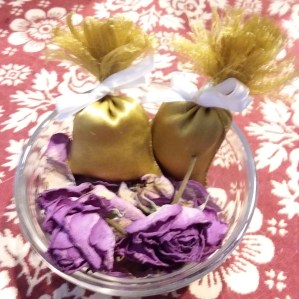
Ribbon sachets are easy to make using your short lengths of ribbon. You can fill them with your favorite petals, leaves, and flowers to tuck in your drawer, workbox, or pocket.
For today’s project, you will need:
A length of silk (or other easily frayed) ribbon approx 4 times the width. For example: 8″ of 2″ wide ribbon or 6″ or 1.5″ wide ribbon.
Matching or coordinating thread
A fine, sharp needle
Narrow ribbon, about 10″
A small ball of wool or poly fill
A couple tablespoons of flowers, petals, leaves of choice
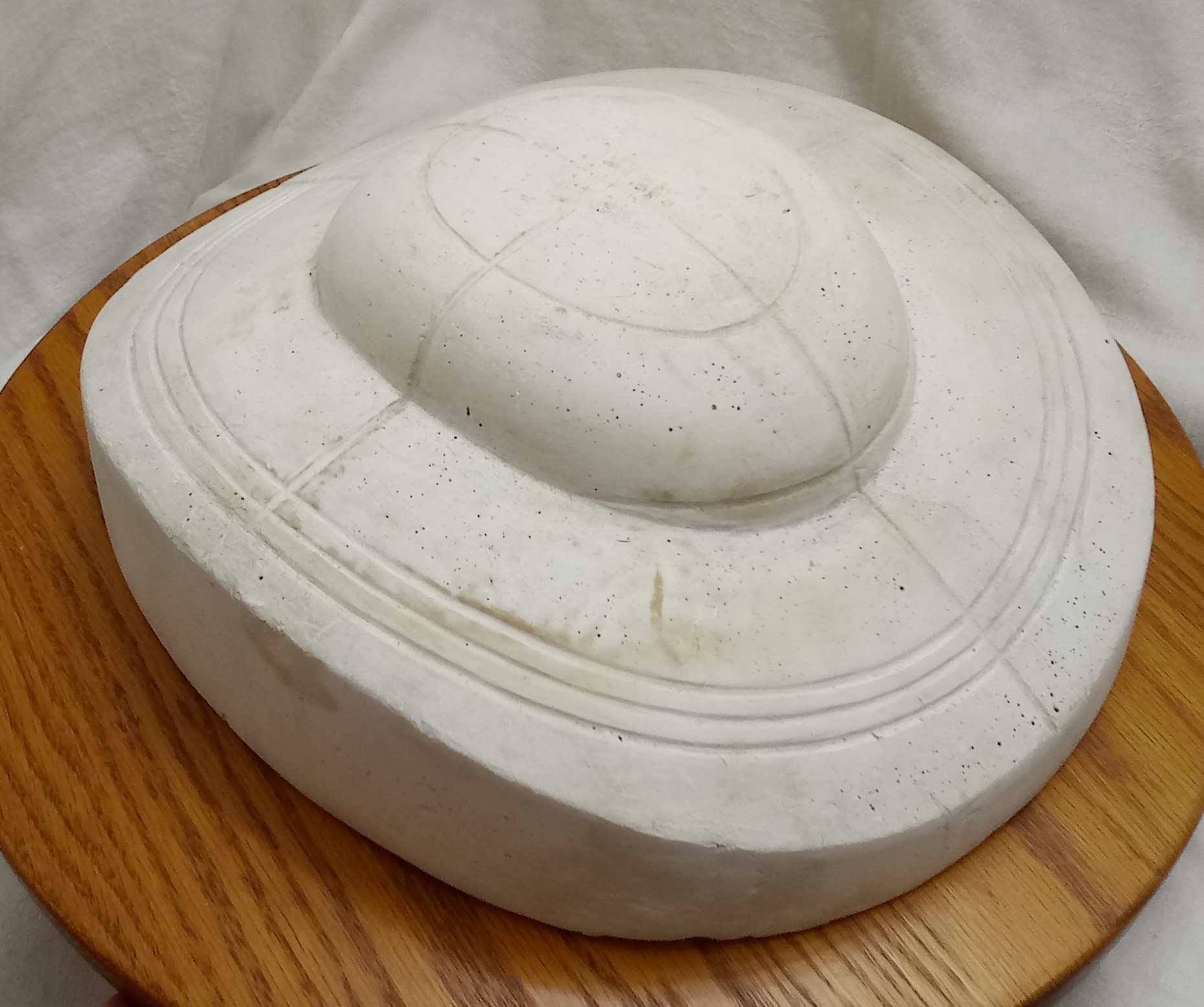
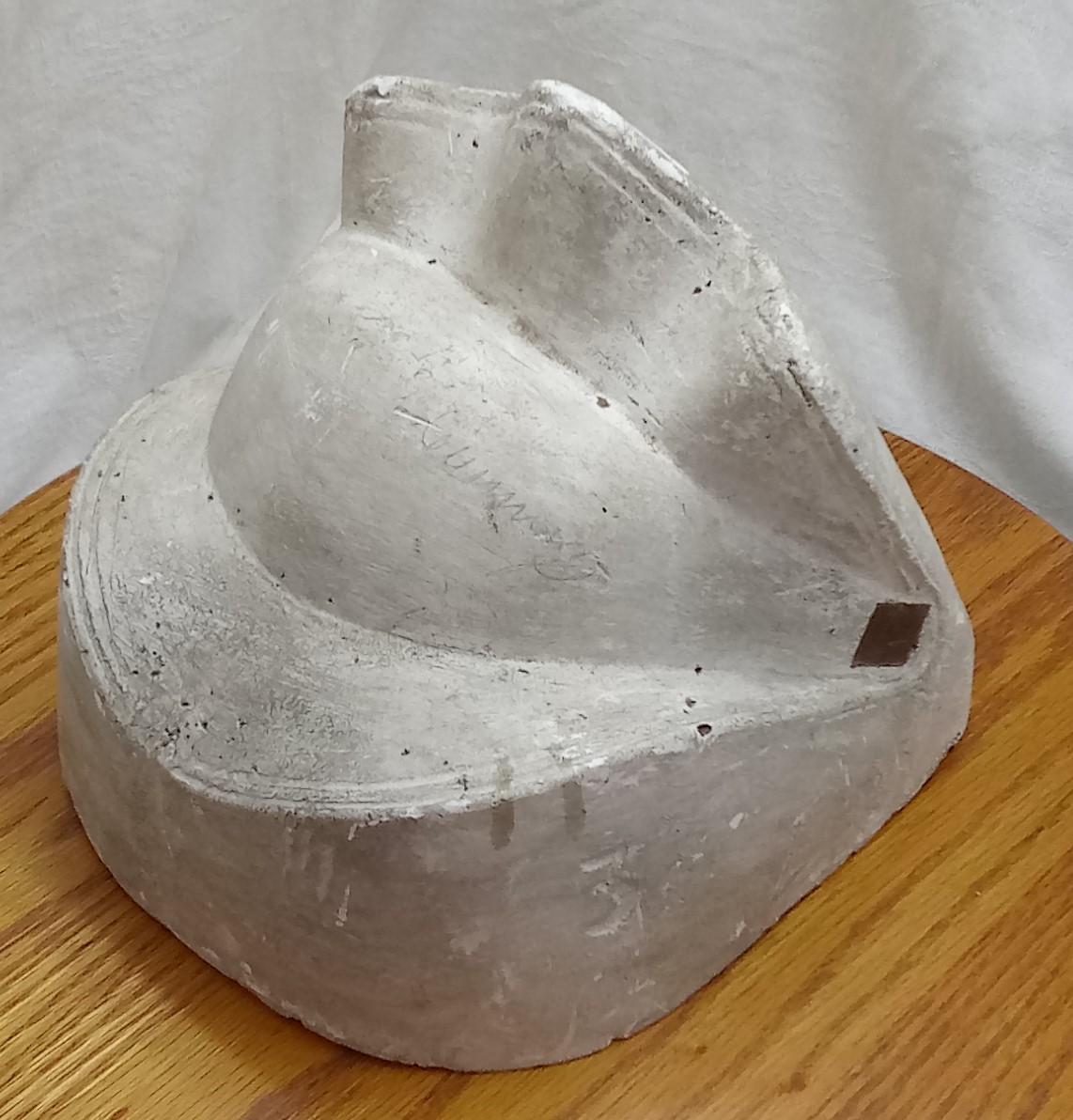
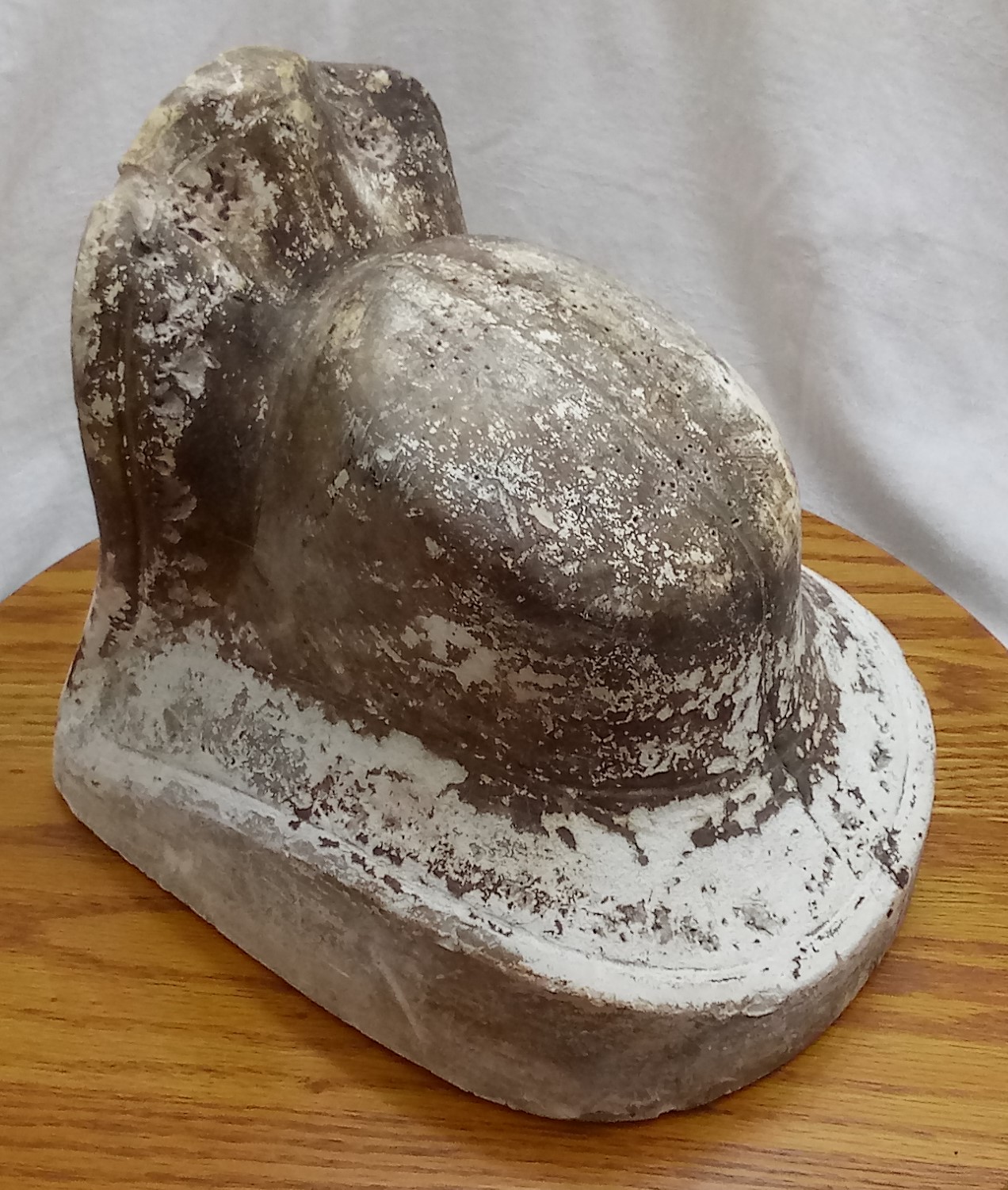
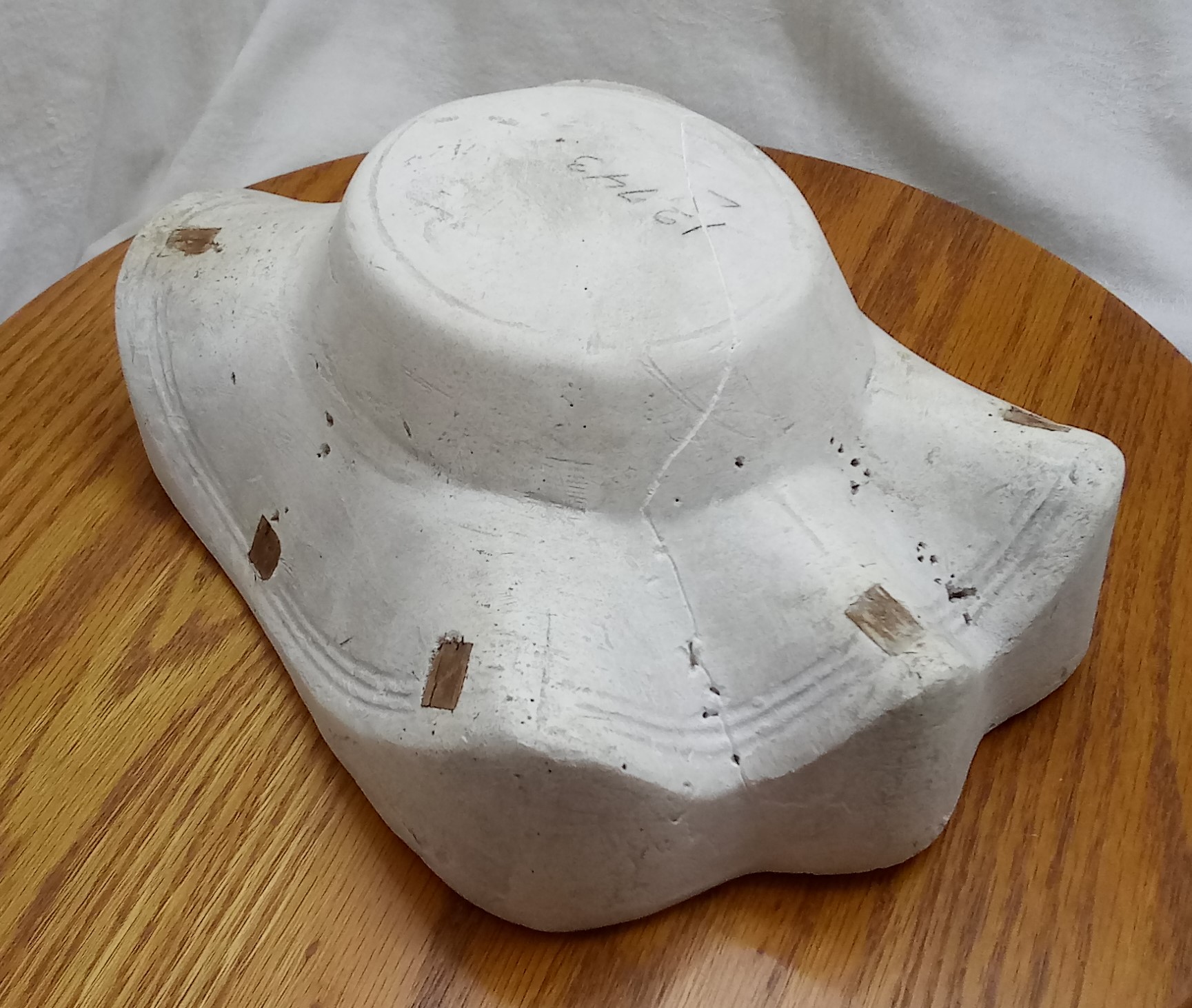
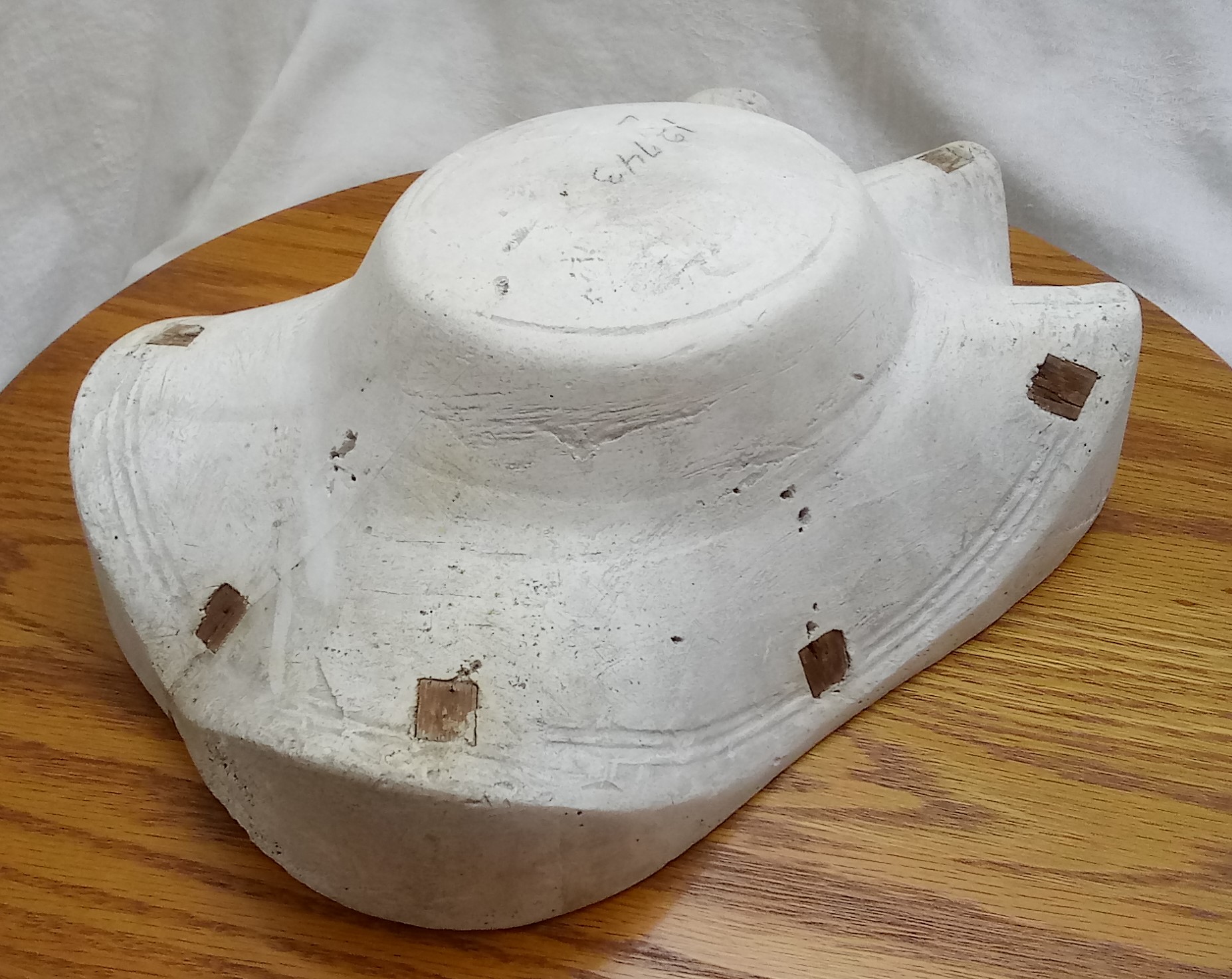
This week wraps up a two+ month long look at my plaster millinery blocks. Admittedly, I slacked on giving you textual information for the latter blocks. Life got…. well….
Here is a look at each of the original plaster blocks together.
Coming next to Millinery Monday? …….. I have yet to decide
I will be putting my cap design on Patreon when I ink it up better and scan it.
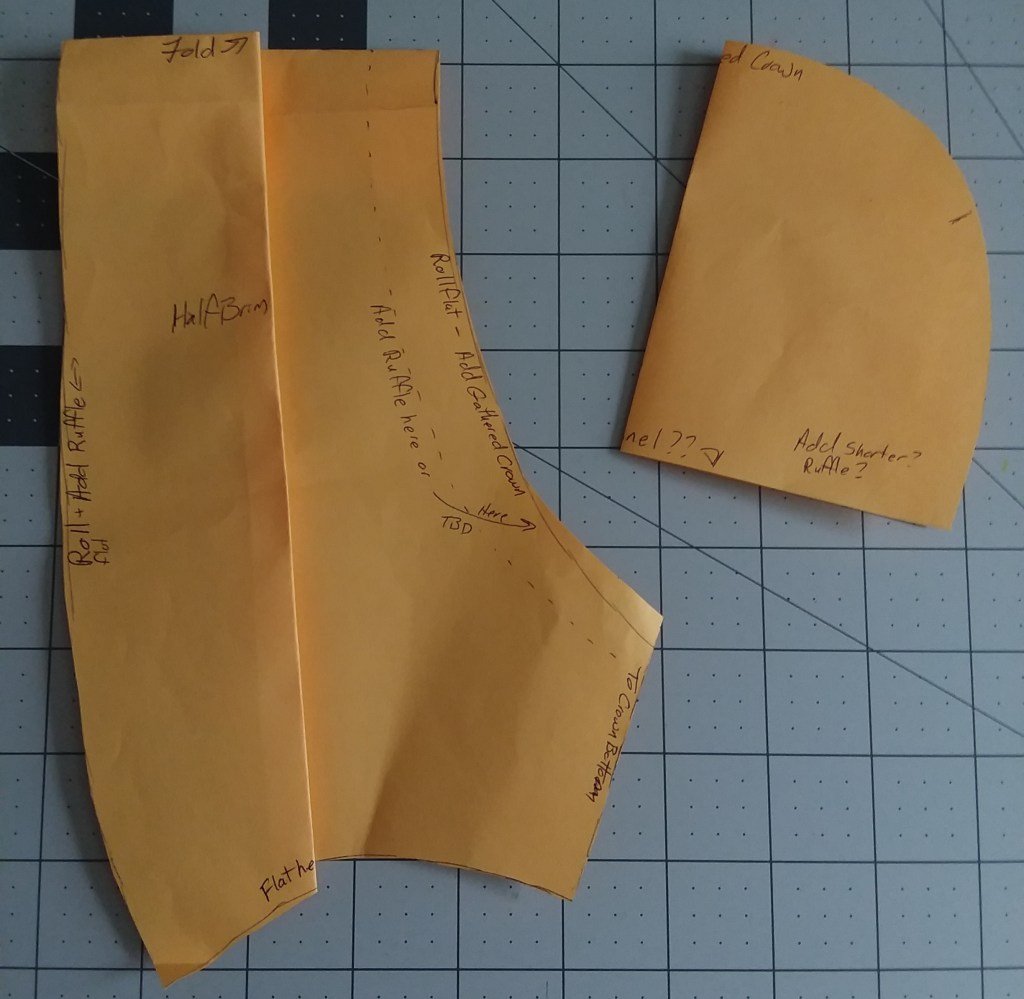
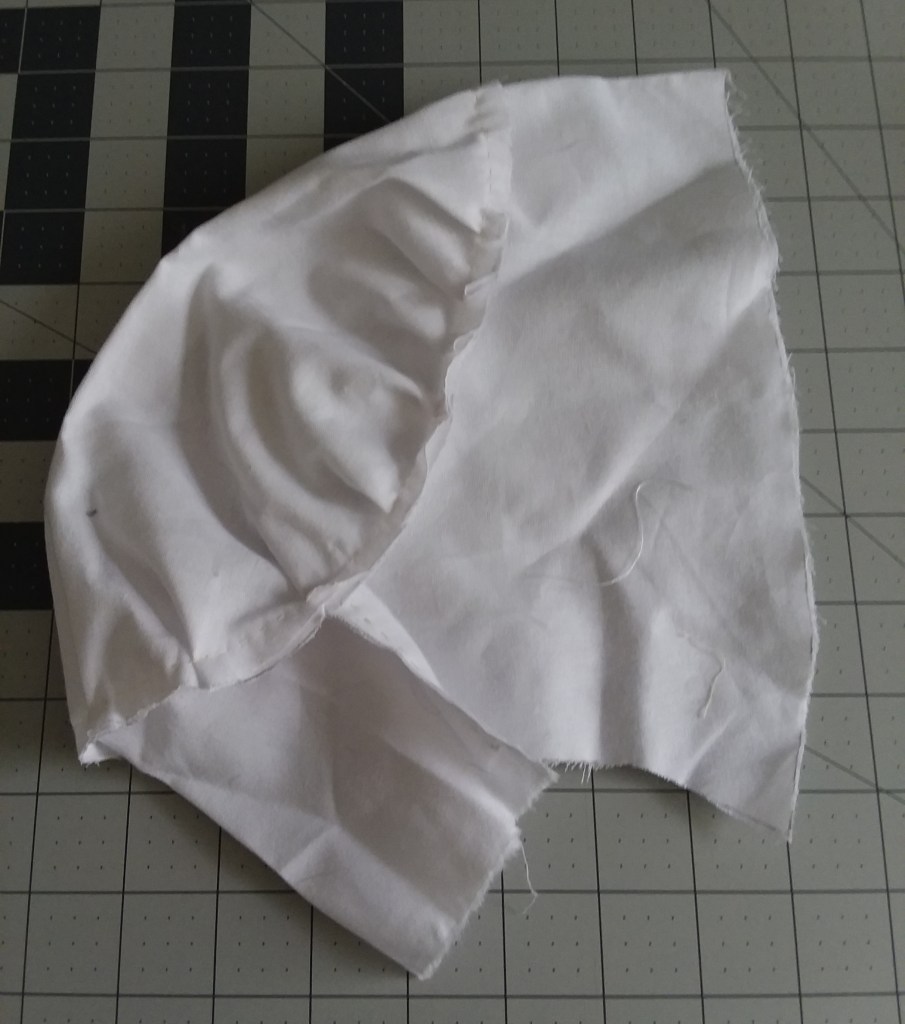
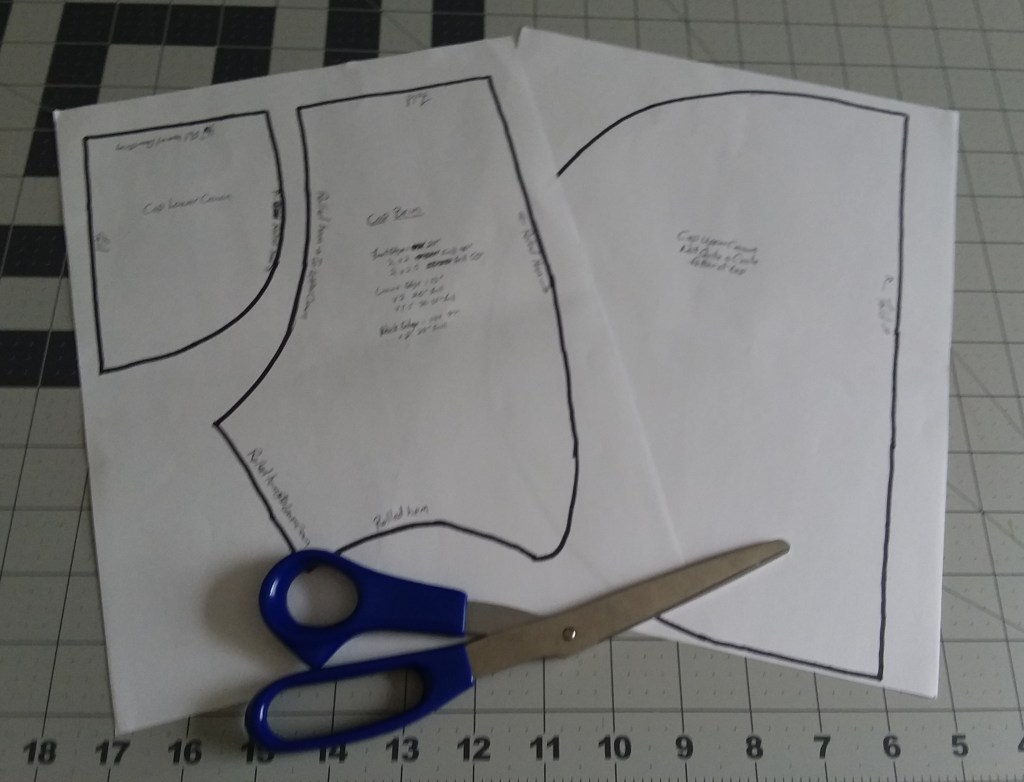
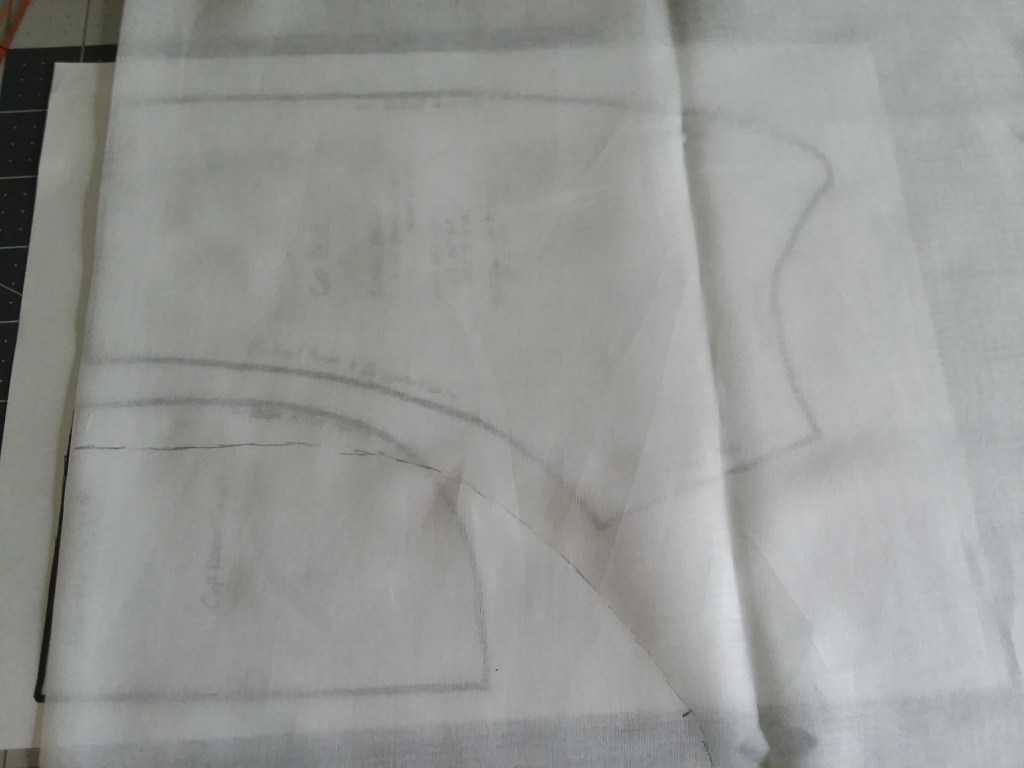
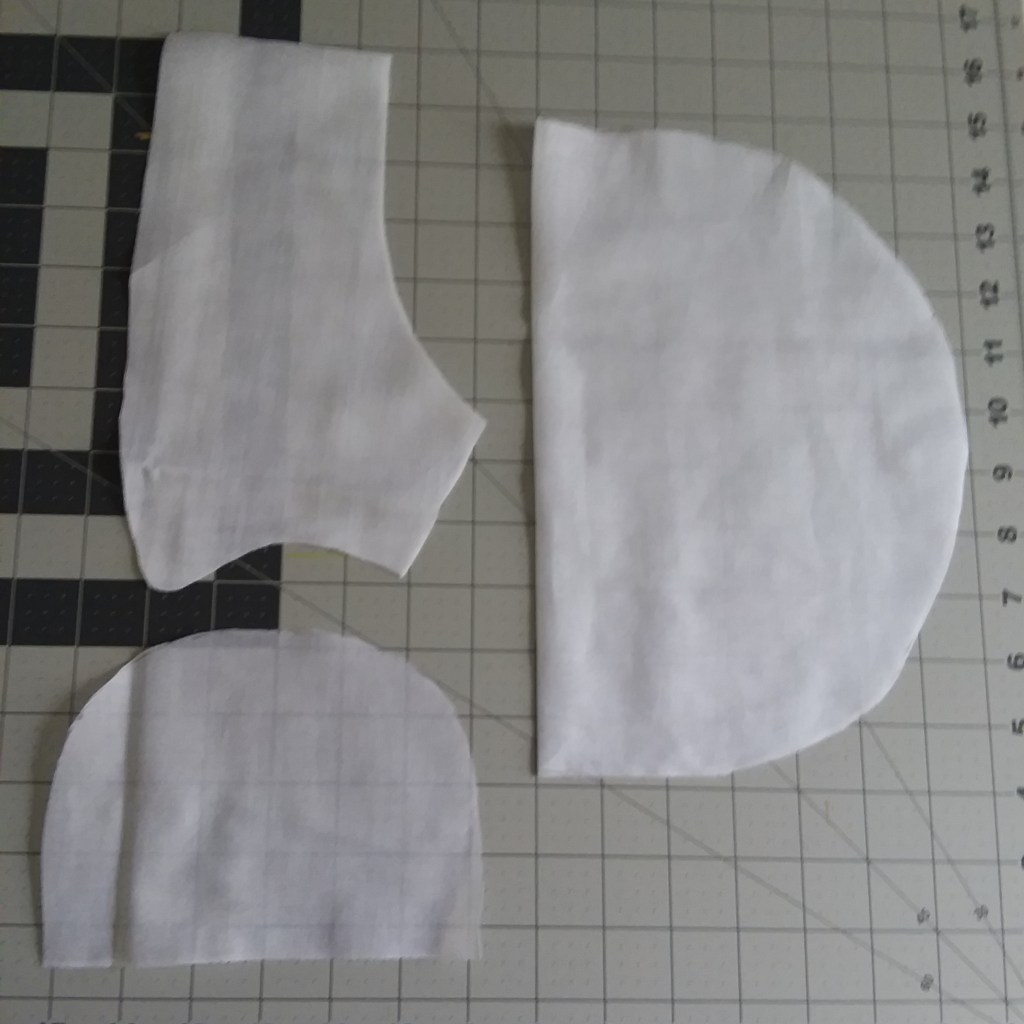
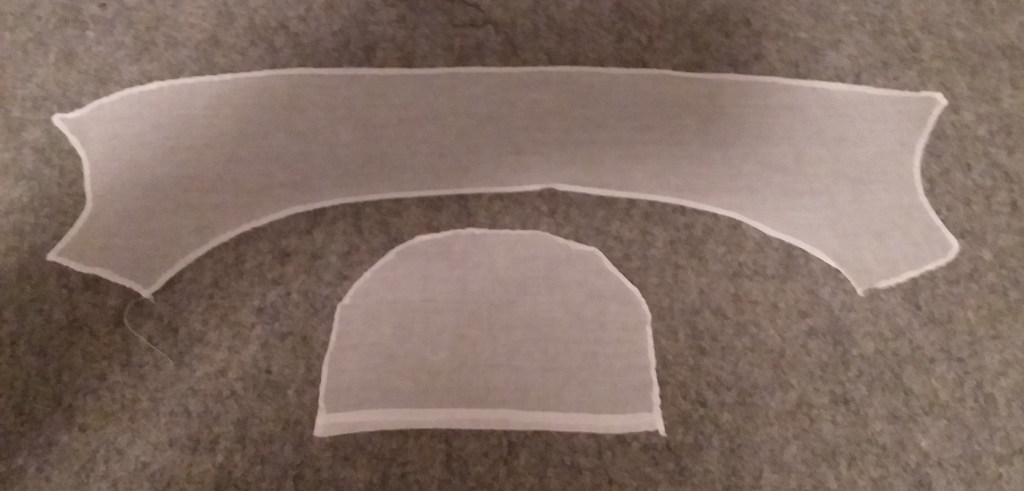
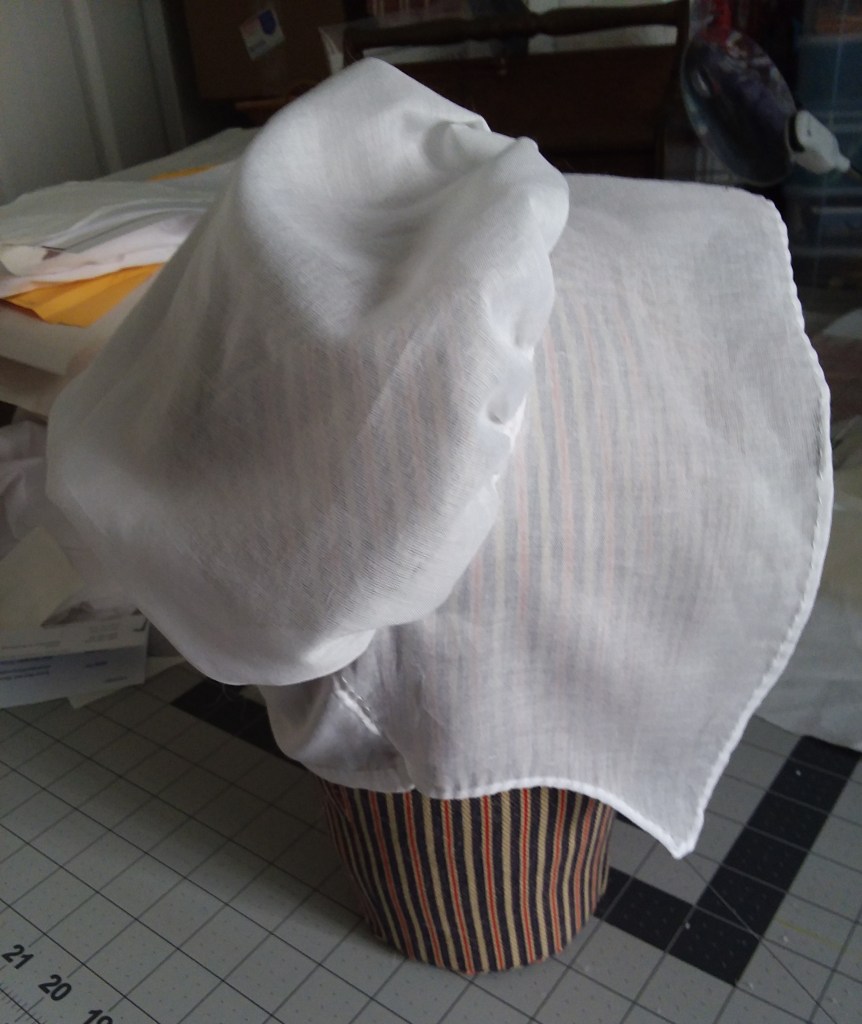
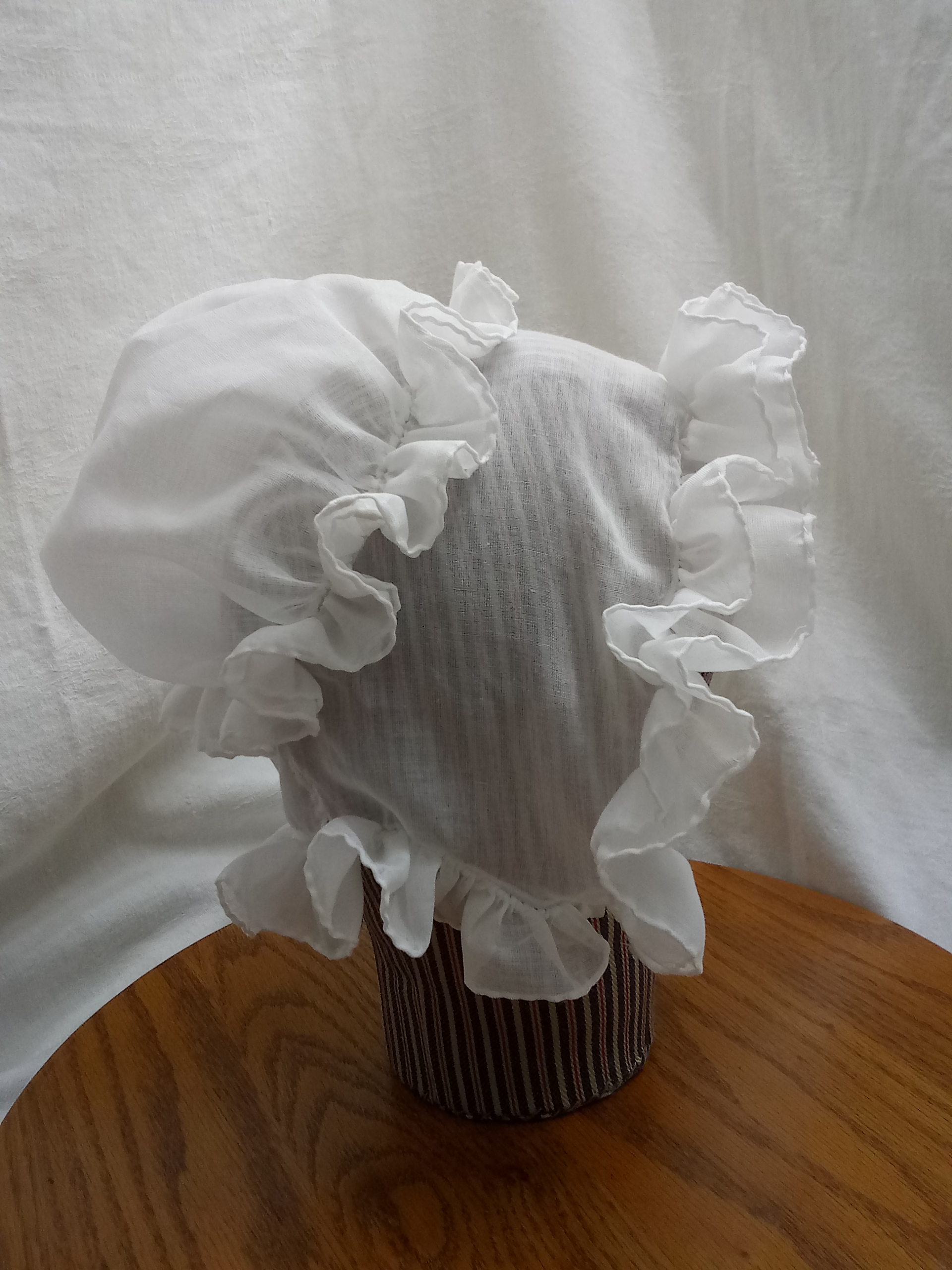
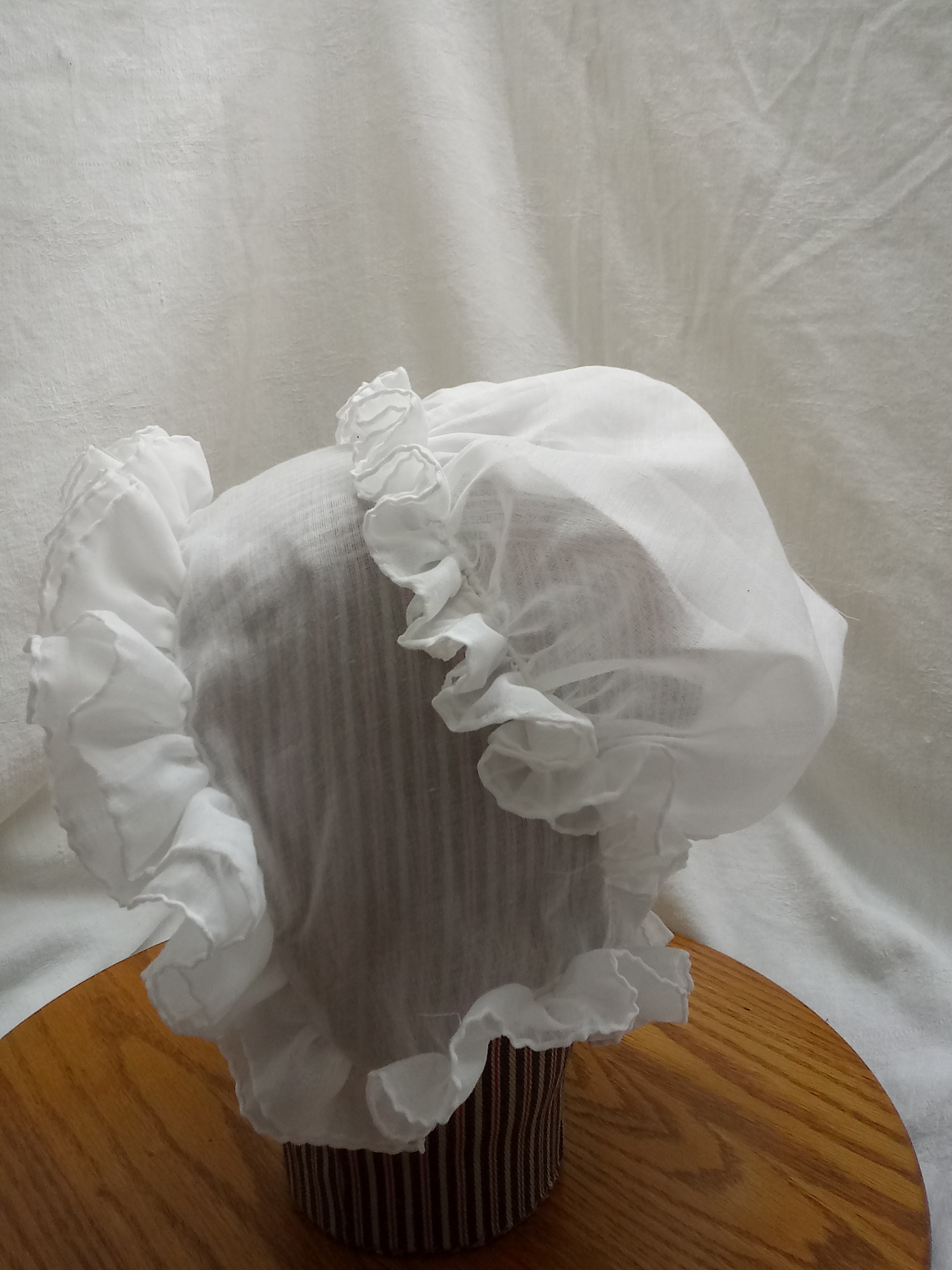
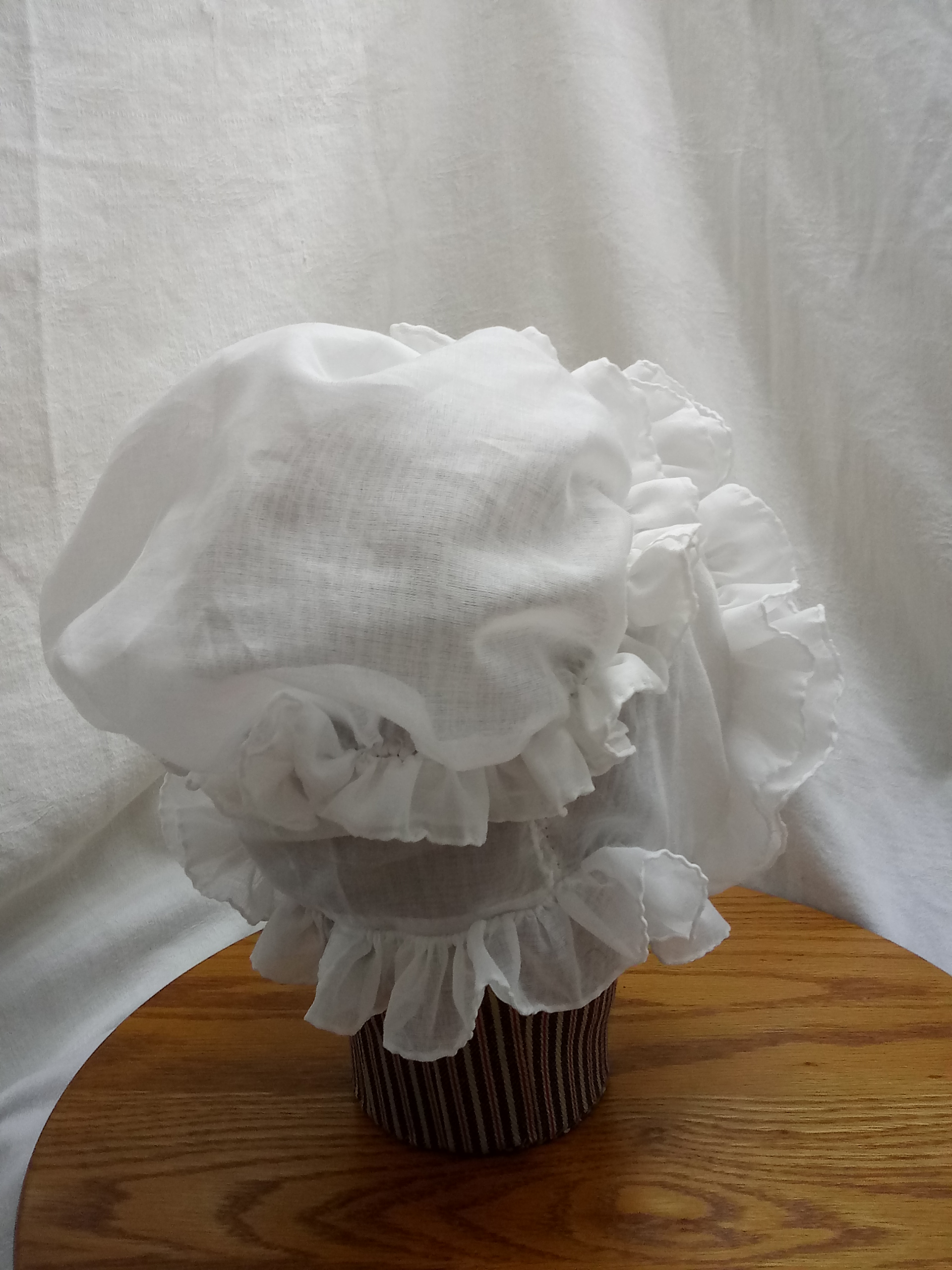
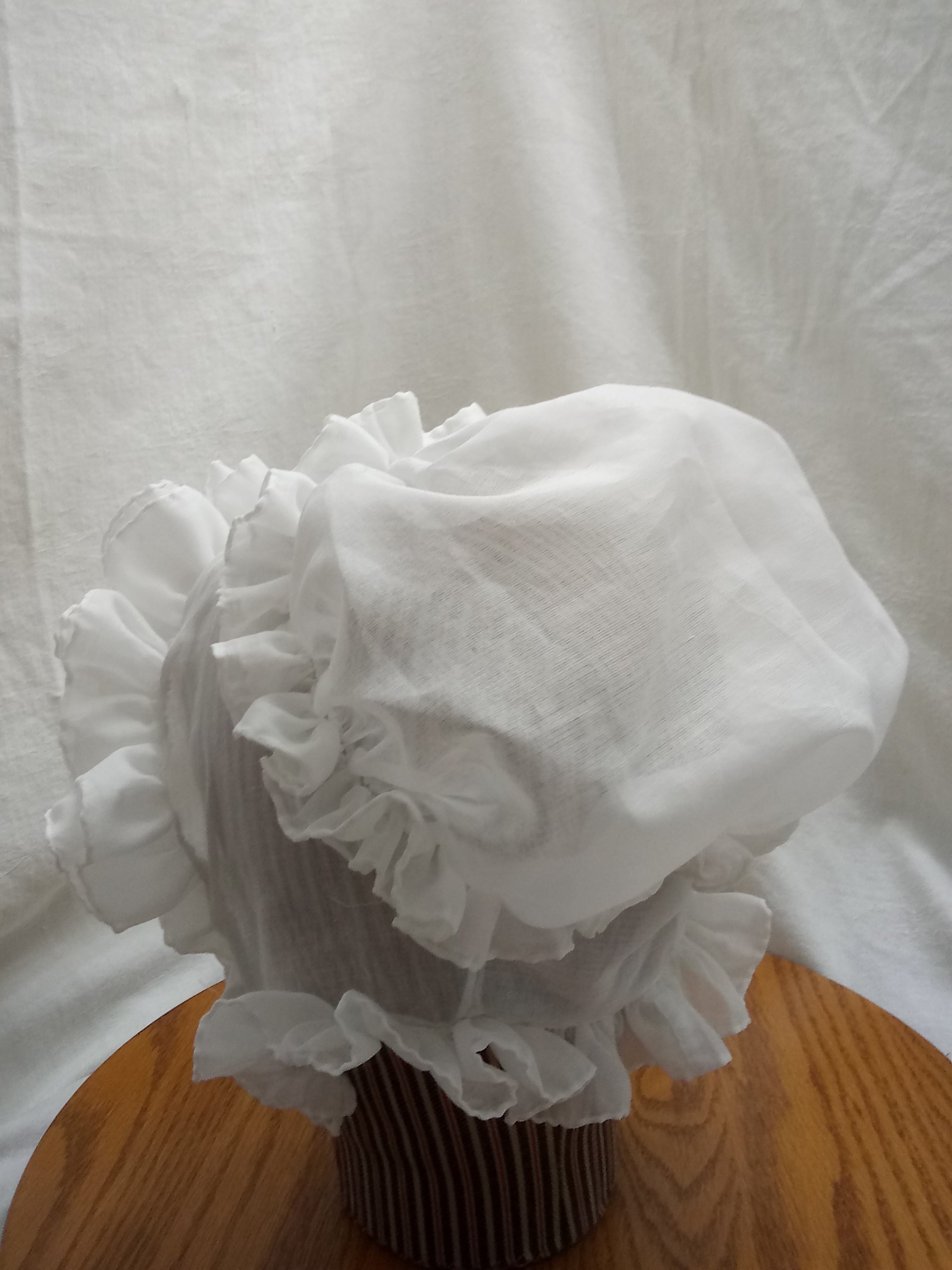
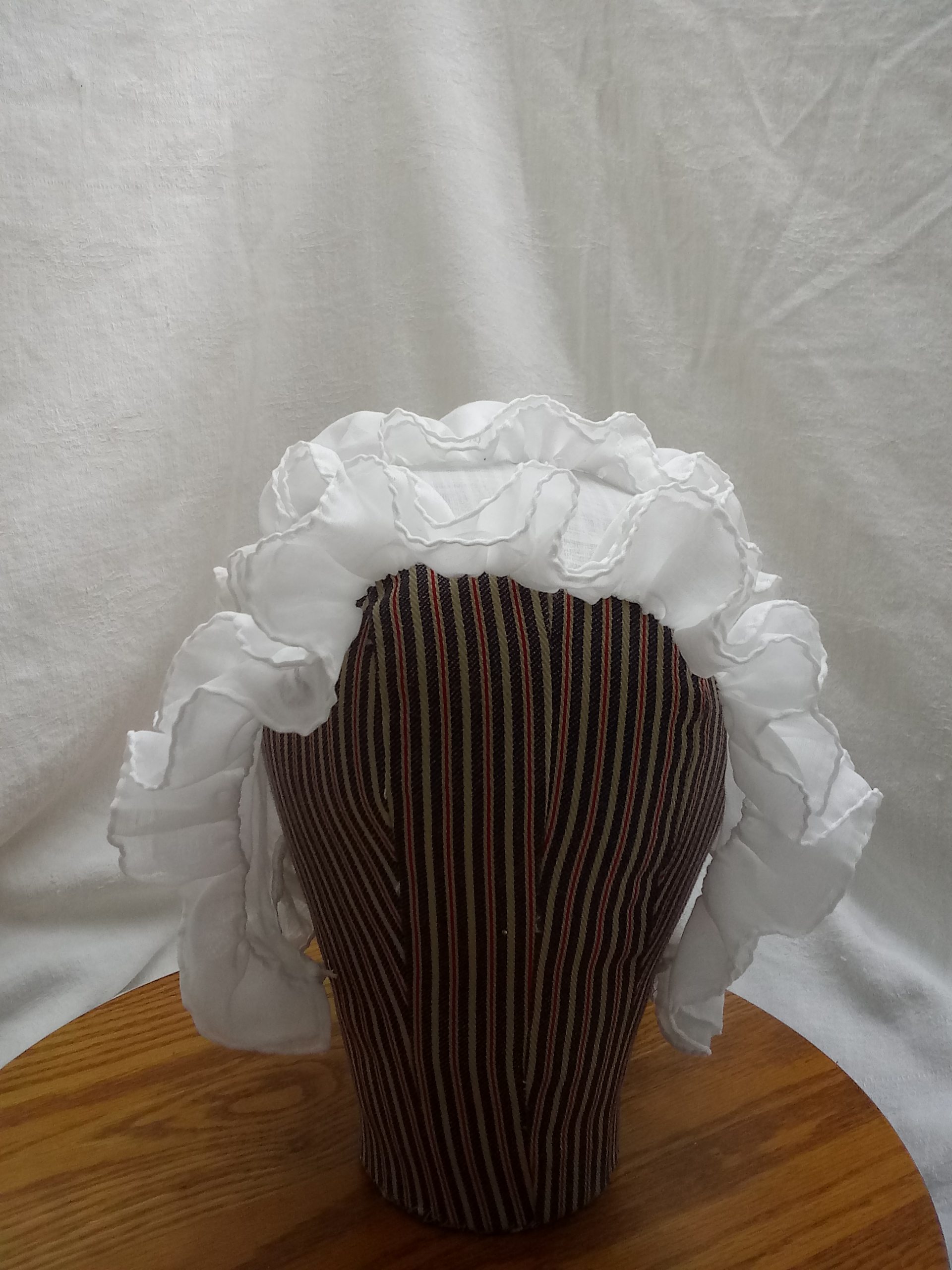
My first step was looking at original caps, lots of original caps, and deciding which styles fit my 1830s goal. Then I drew out the foundation shapes on paper and did a paper fitting. Folding, trimming, slashing, until I was happy with the fit and shape. The paper plan became a muslin mock-up. Keeping in mind the heavier drape to muslin, this was a check for how well it fit my head. I was pleased with the fit. I only altered the cheek area to be more rounded.I transferred the finished design to paper by hand, adding assembly notes. (Then, I wrote up a couple variations.)One of the nice things about working with sheer fabric for smaller projects is the pattern can go underneath and be traced through the fabric.The foundation is 3 pieces cut out.Each piece got a rolled hem. The back piece has a quarter inch hem on the bottom side. The crown (not pictured) has a rolled gather all the way around. The rolled hems were whipped together.
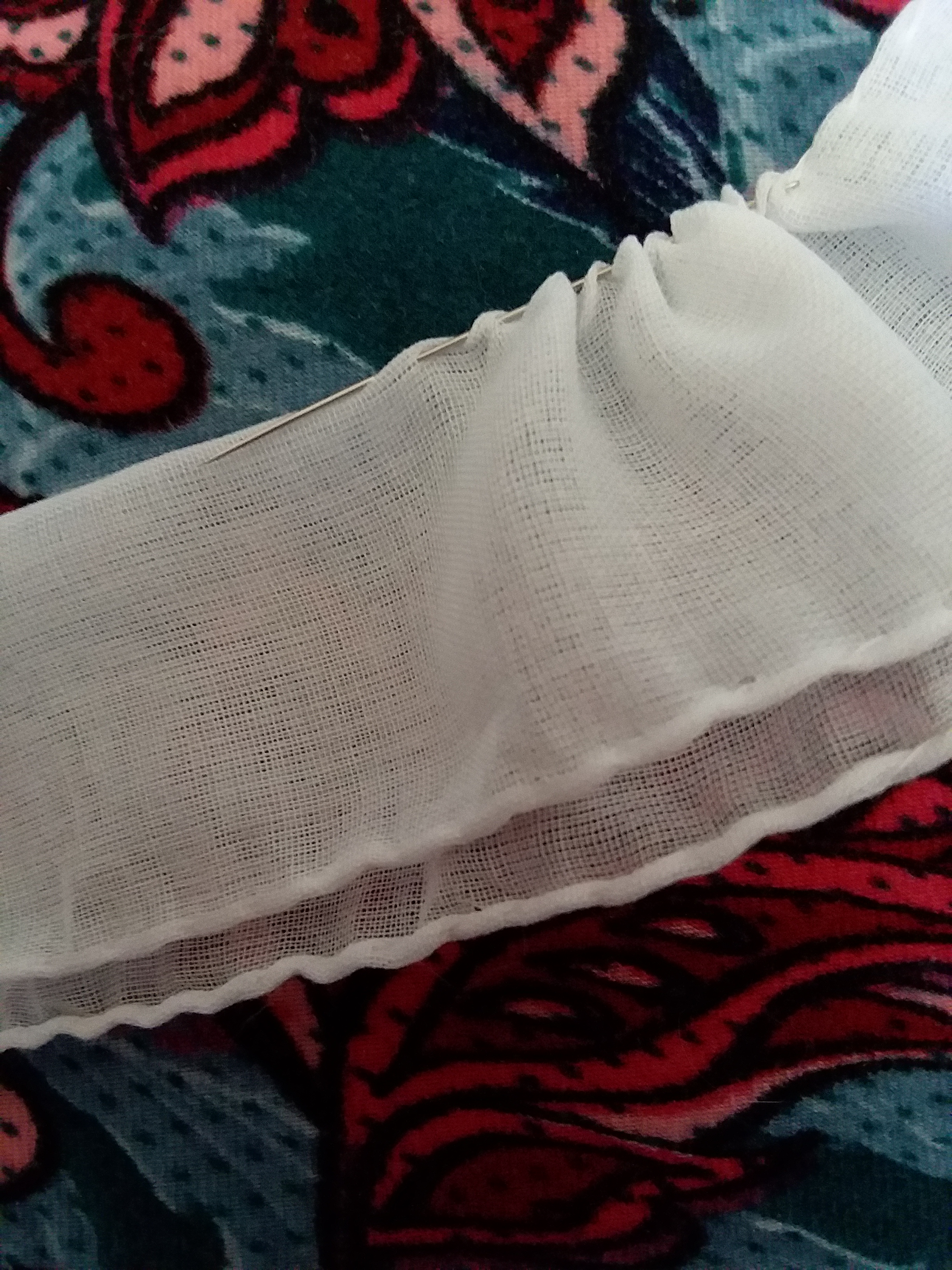
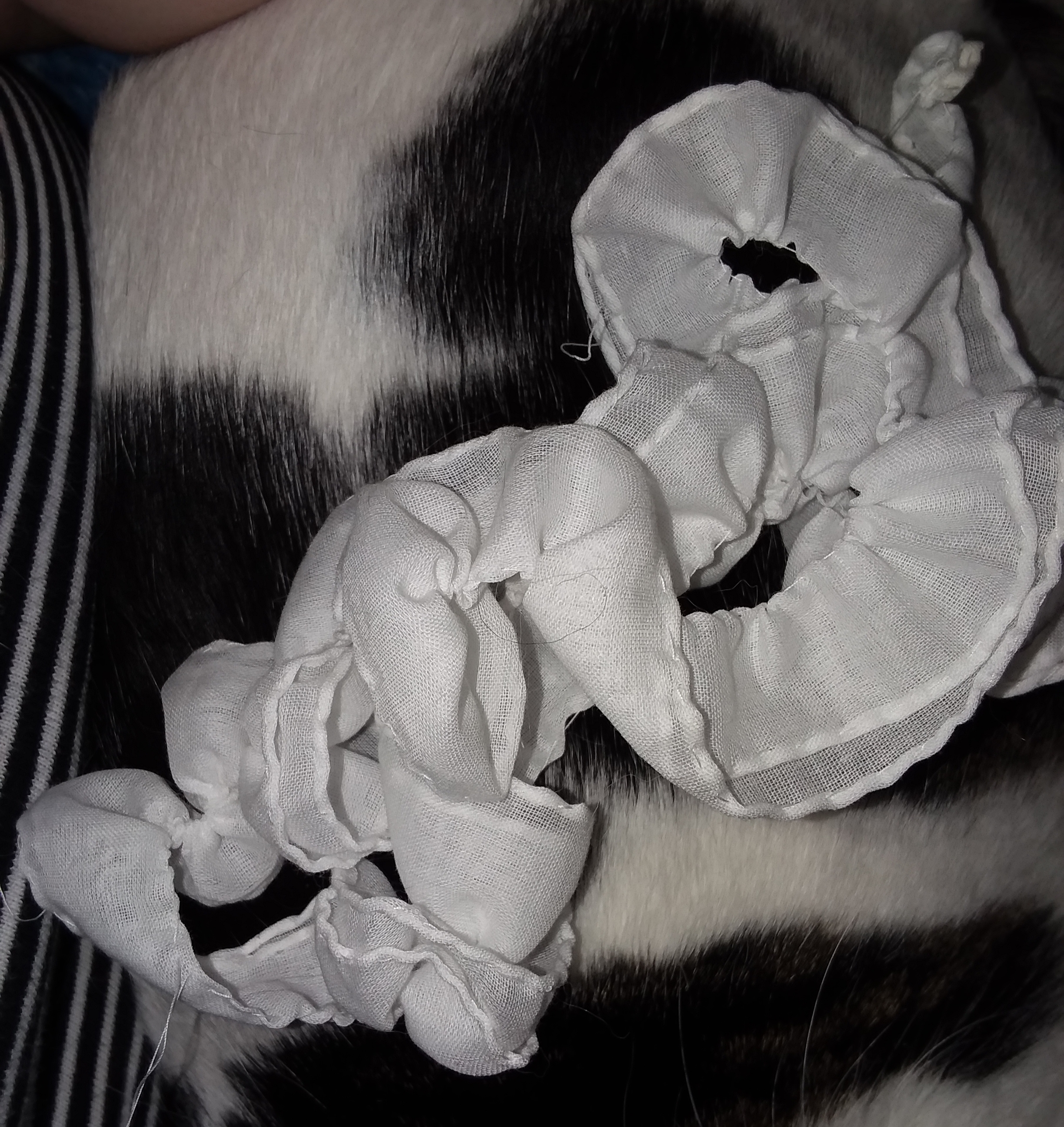
The ruffles are each double the length of the placement (brim edge, neck edge, crown.) I used a rolled hem along each side, tapering for the neck edge and crown. My rolled hem is not as fine as I would like. Muscle memory is challenged going from the type of sewing used for straw to the type of sewing used for sheer fabrics. The front ruffle and crown ruffle are both tapered doubles, while the neck ruffle is single. Clara for model.
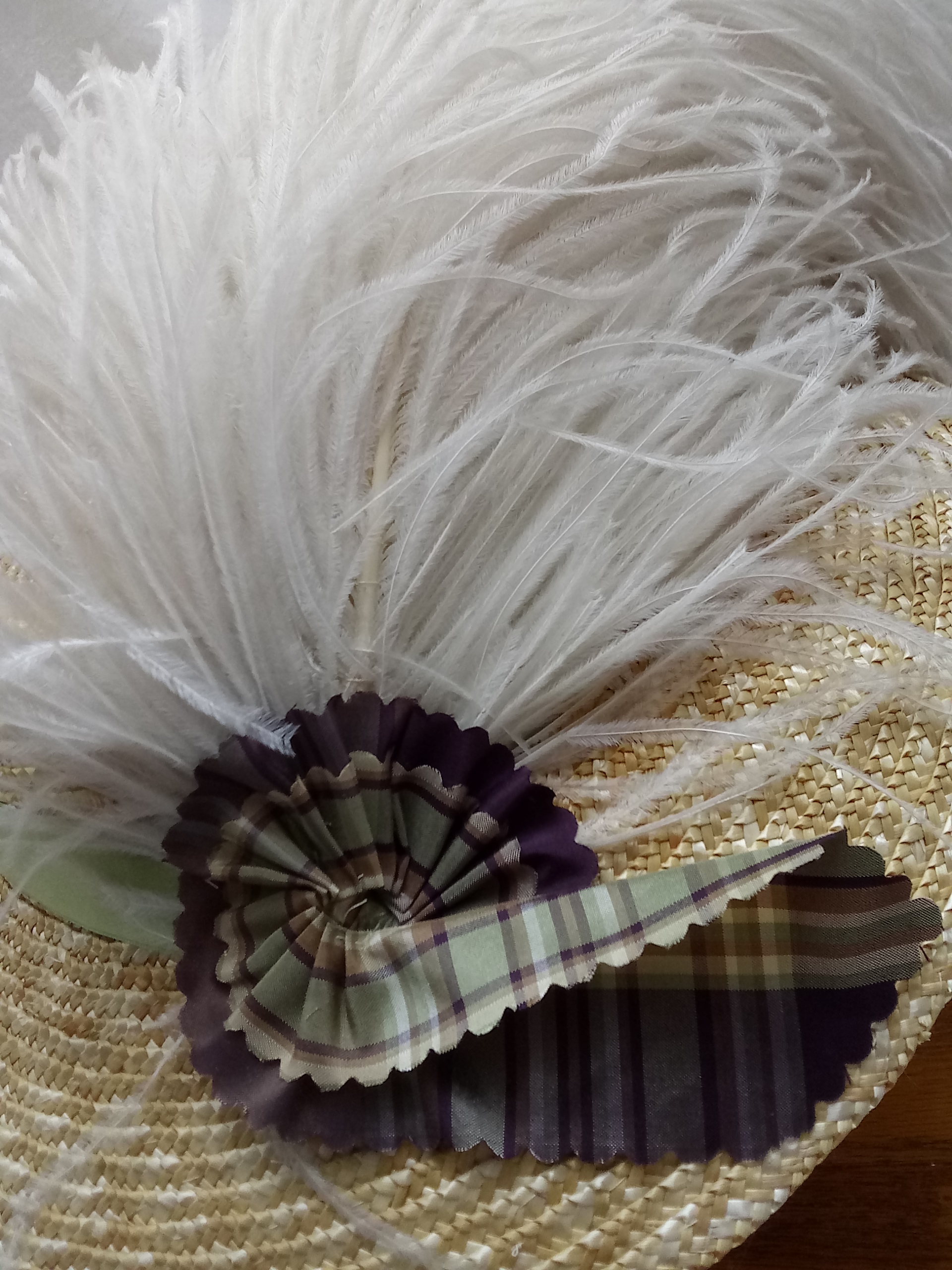
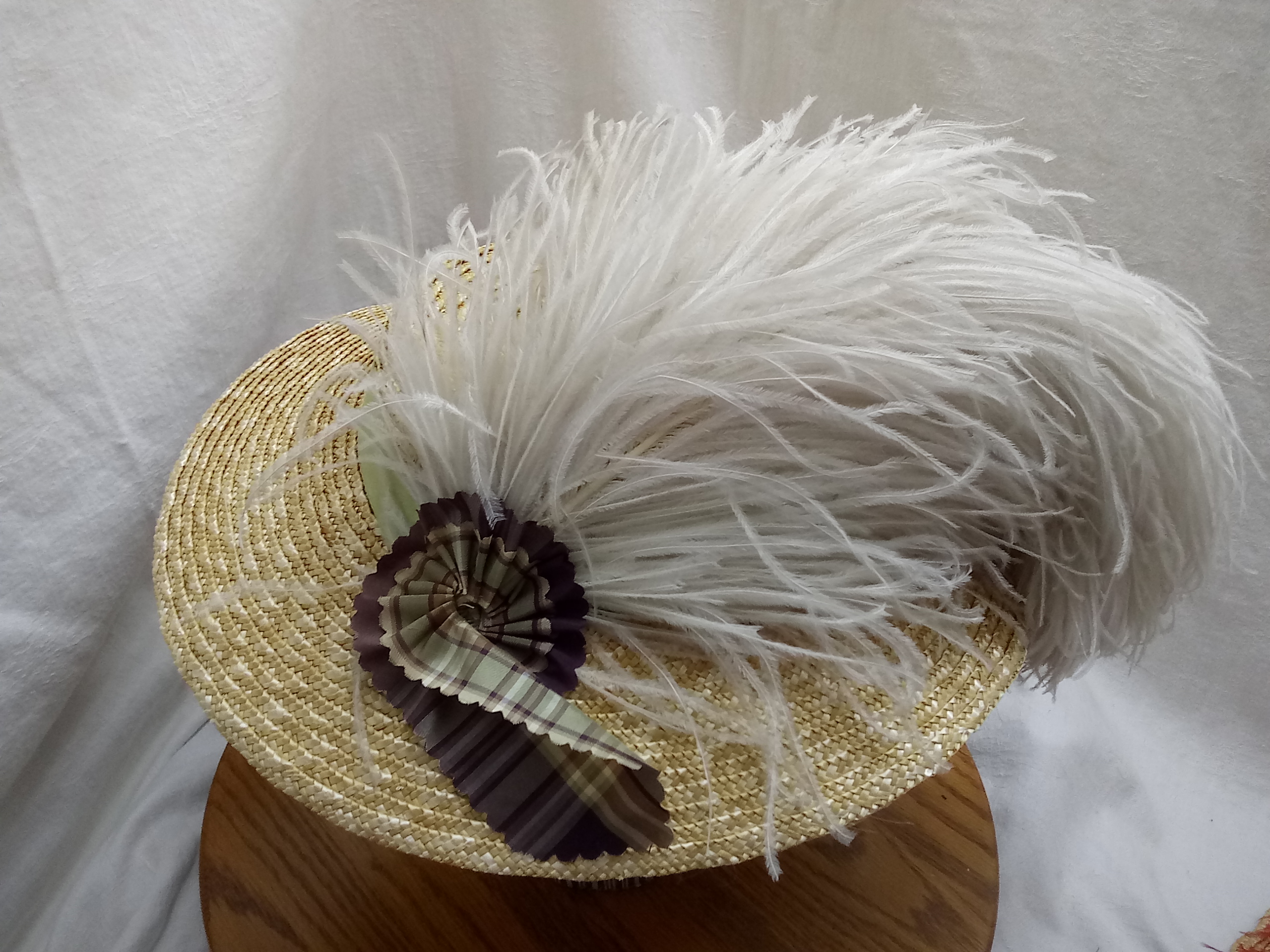
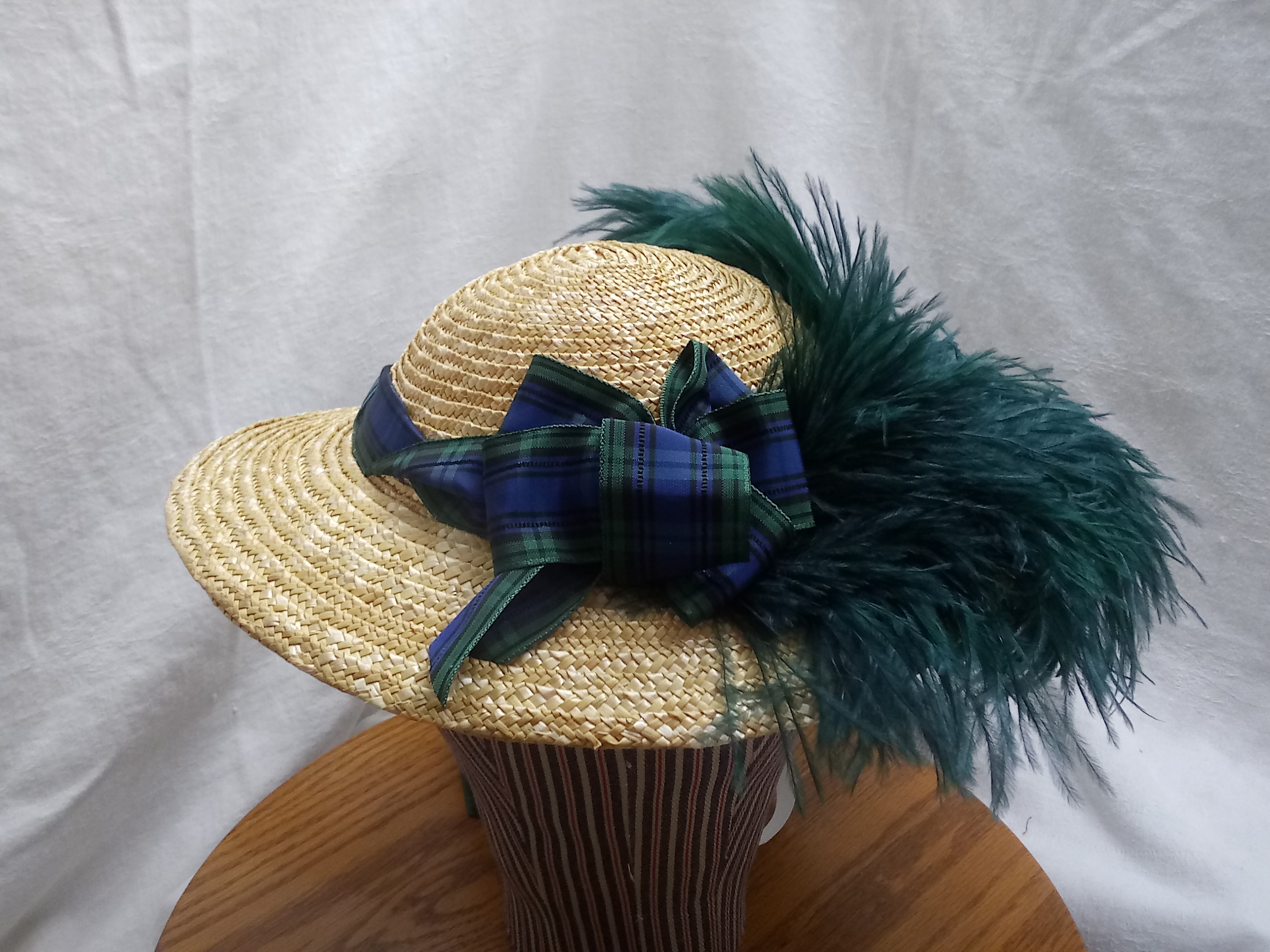
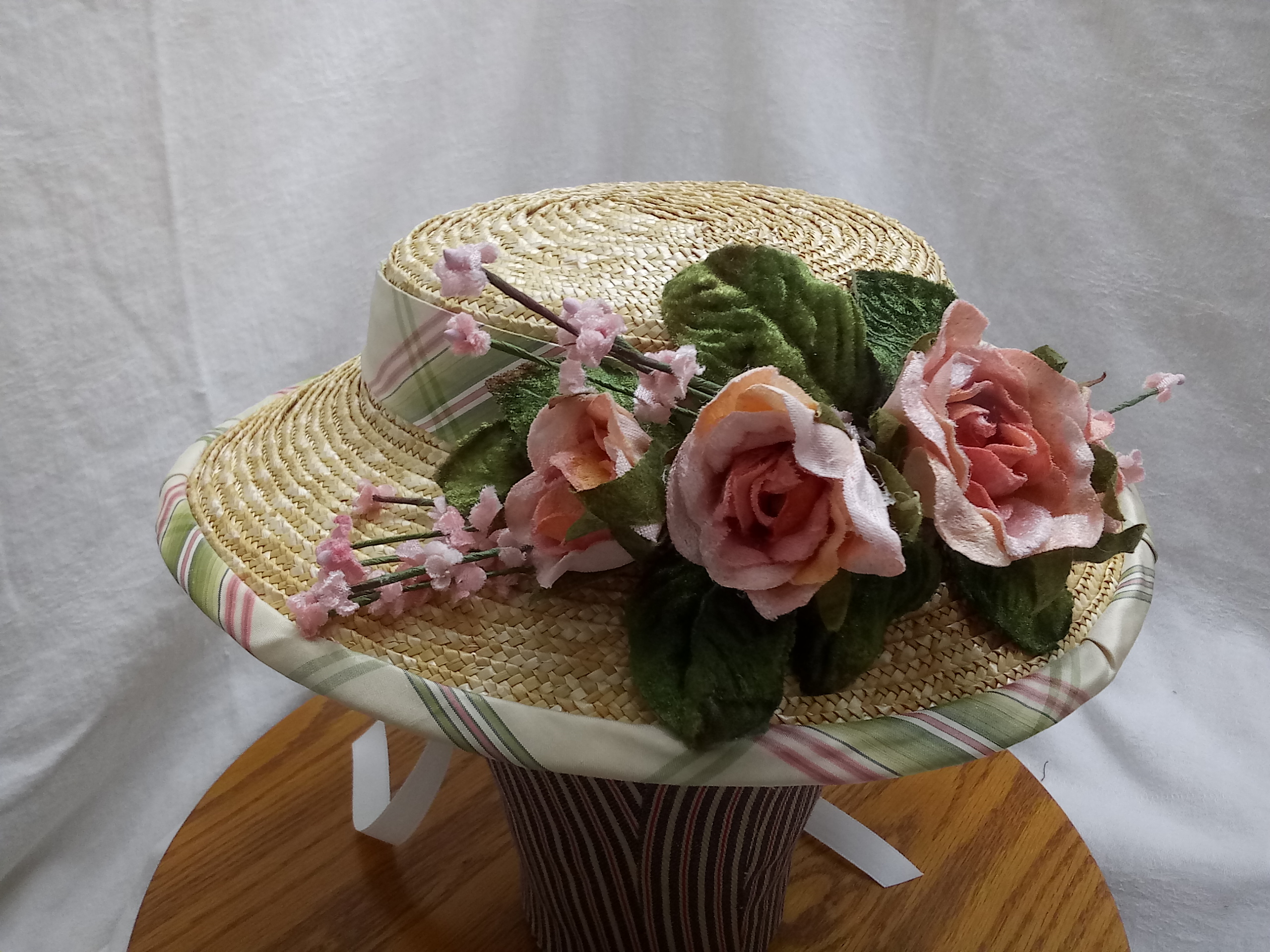
This fashionable tapered crown hat has a slightly wider brim than I usually offer. The underside of the crown is lined with silk taffeta in purples and greens. A green silk ribbon, plaid silk rosette, and an antique plume decorate it. This hat has a 21″ crown. Please check your head measure at the hairline before purchasing. Hat 1 inch to 1.5 inches smaller than your head measure are usually comfortable. The ribbon ties are narrower than I usually use.
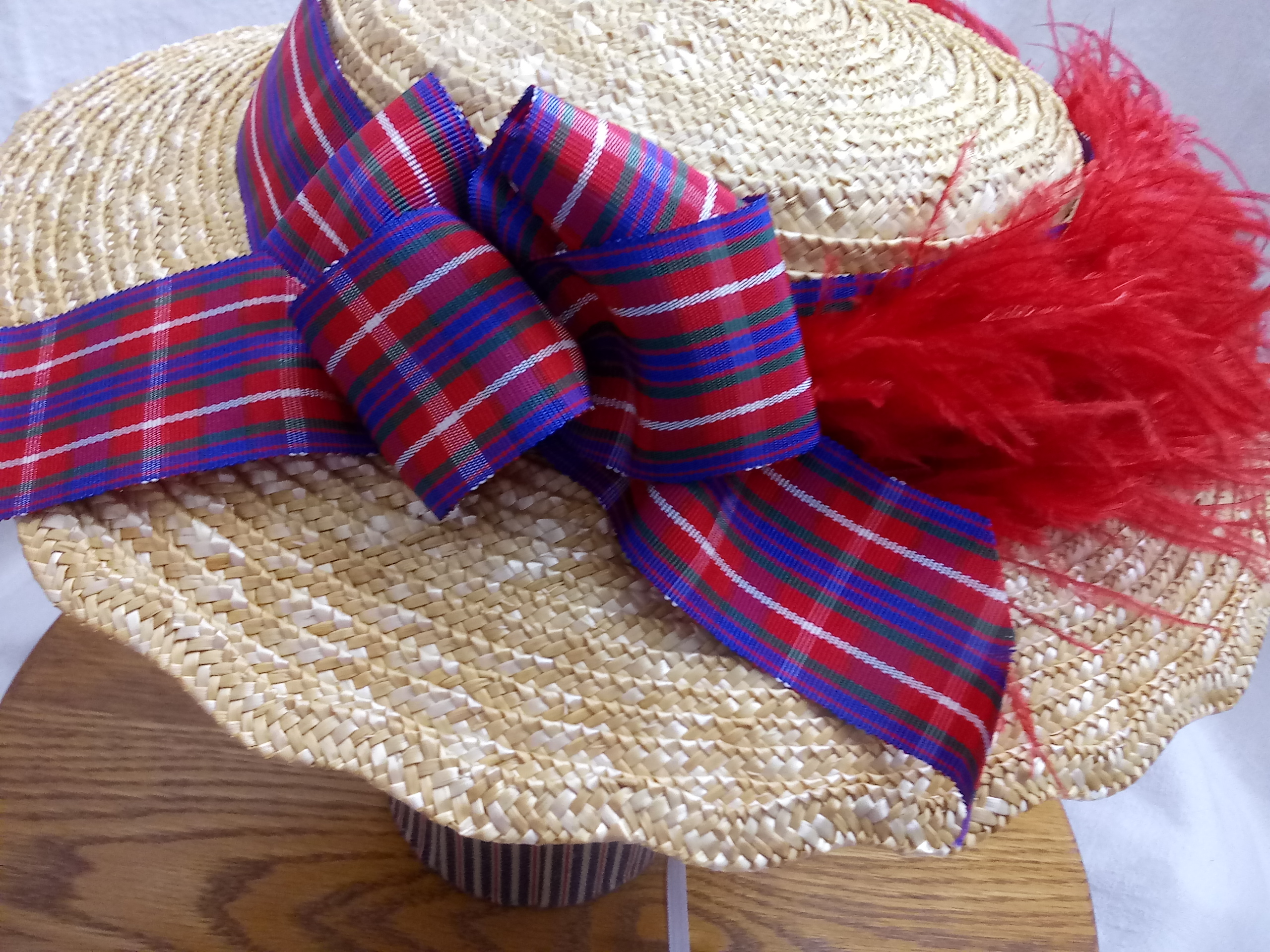
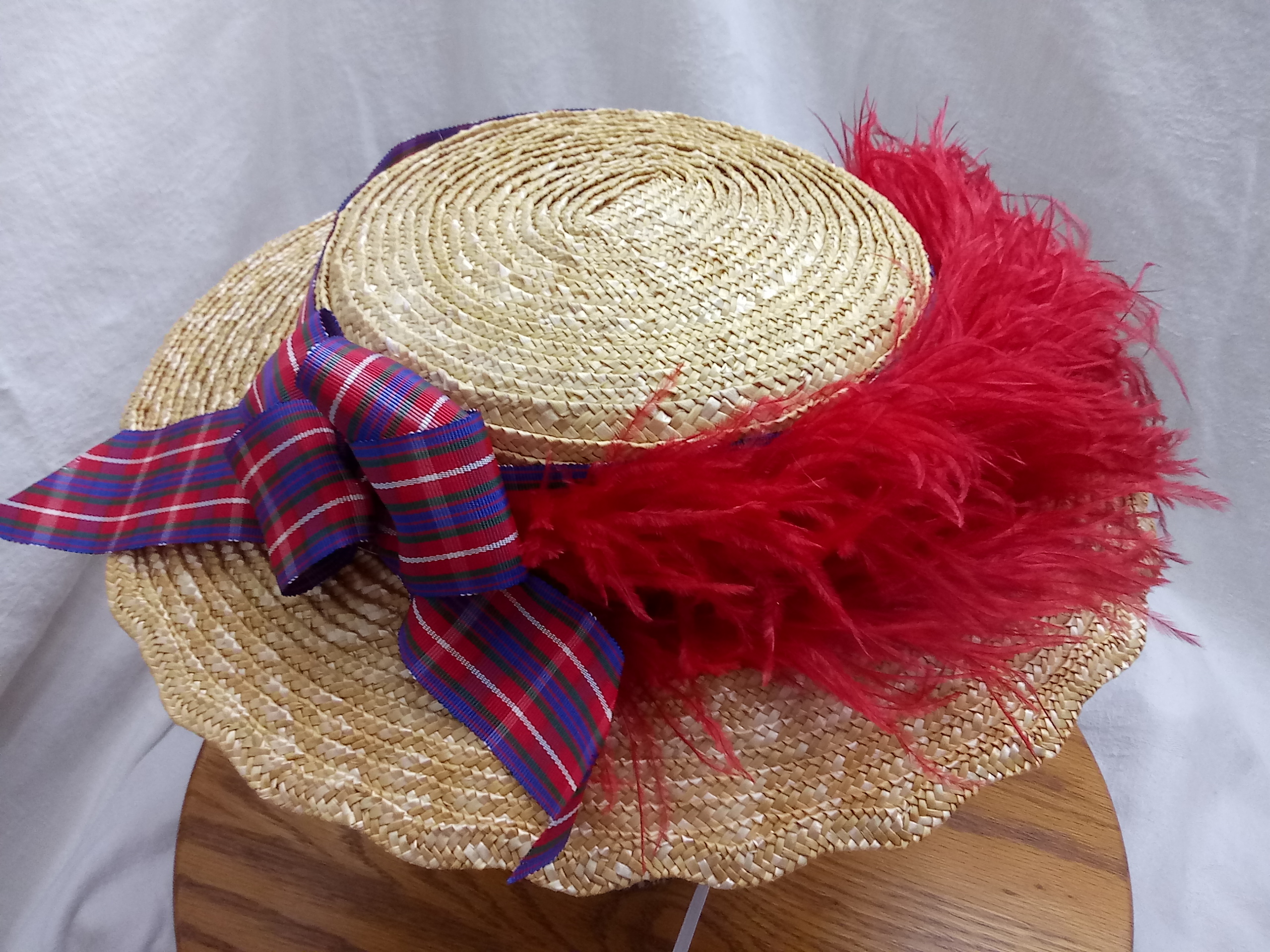
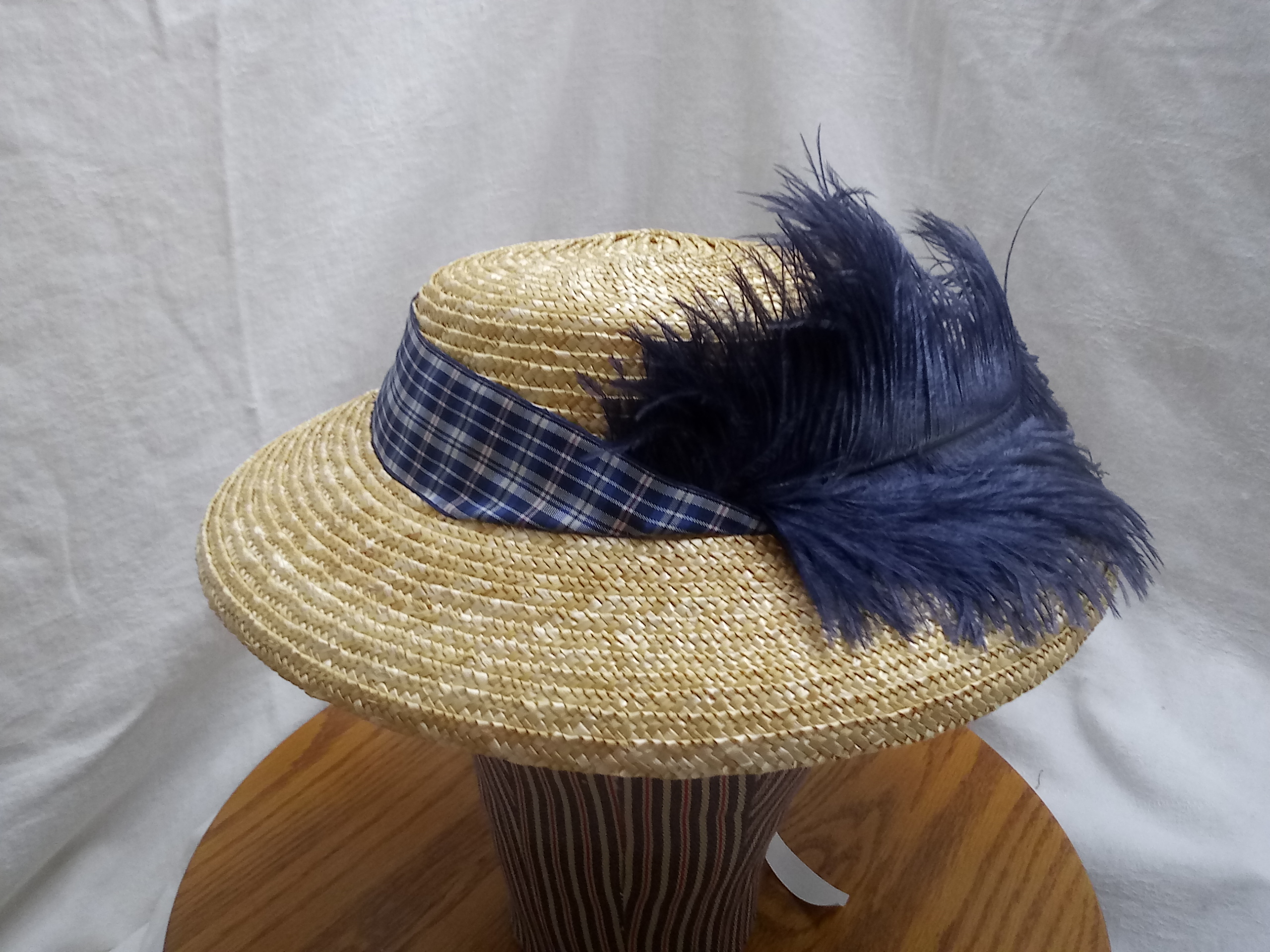
This fashionable tapered crown hat has a pretty scalloped brim. It is trimmed in beautiful red, white, and blue plaid ribbon and a vintage red plume This hat has a 21″ crown. The ribbon ties are narrower than I usually use.
I don’t know about where you are, but here this April has been the month of all seasons. We’ve had record warmth, record cold, and record snow.
This month wraps up out March/April Pocket Challenge. I have been stitching away on my red/green pocket in hope of actually getting it done. For a while, I didn’t think I would.
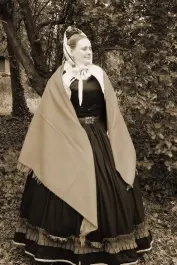
I made my 1830s stays using Redthreaded’s pattern. I was pleased with the pattern and how well it fit my me.
I started my first 1830s dress. Finally. Or should that be Finally. With two weeks until I need it, the skirt is together and the bodice slipped & drafted.
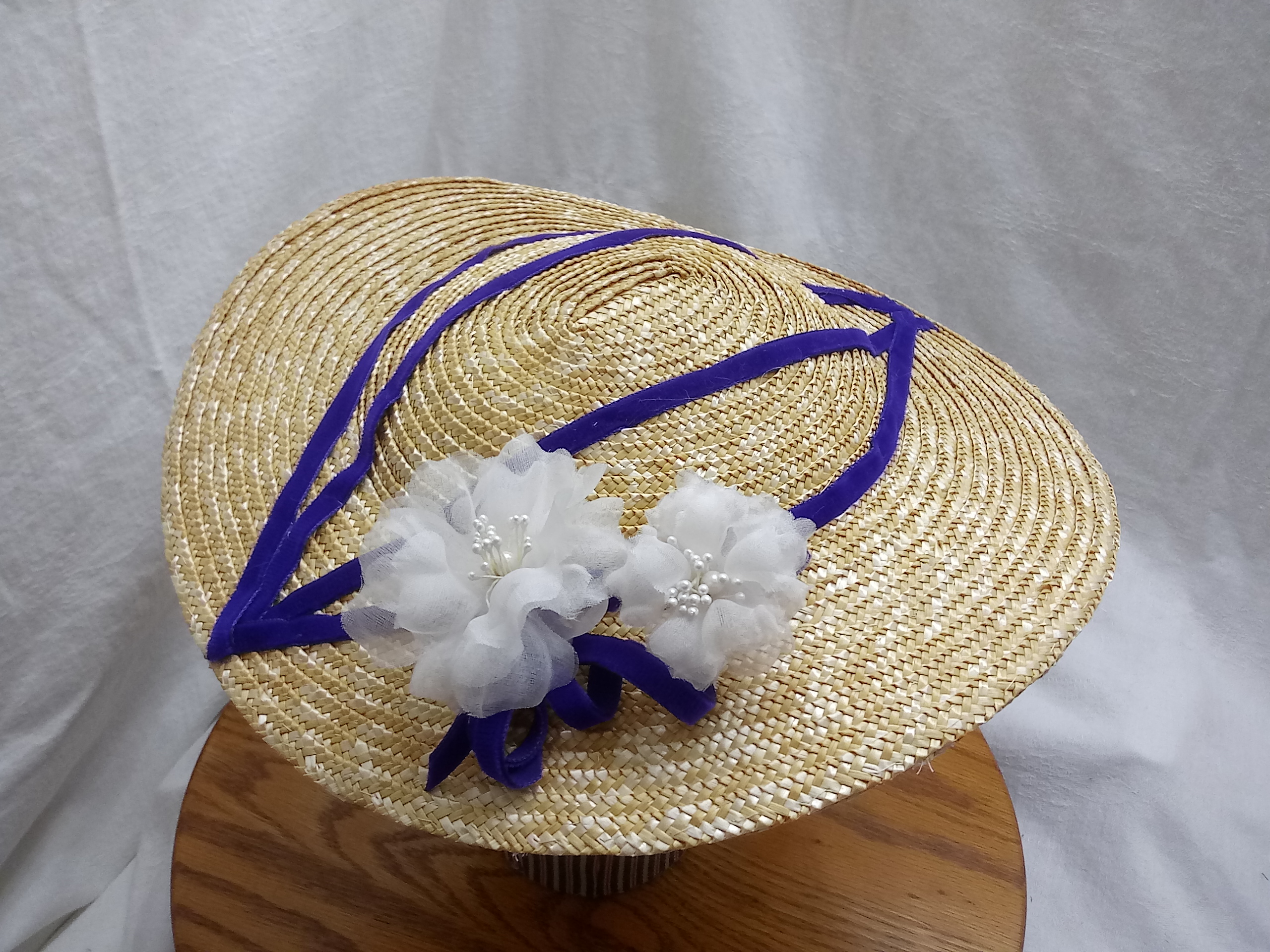
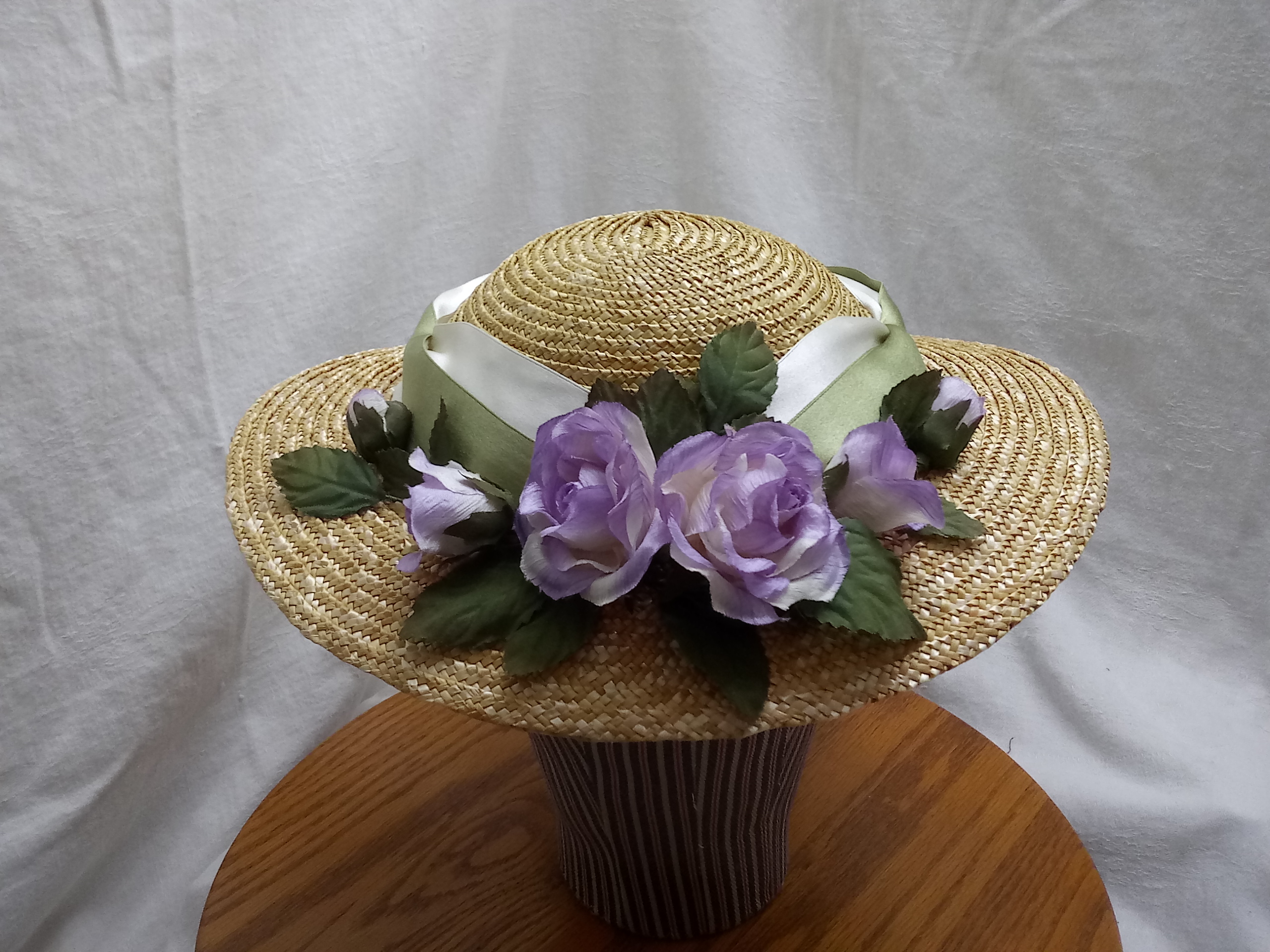
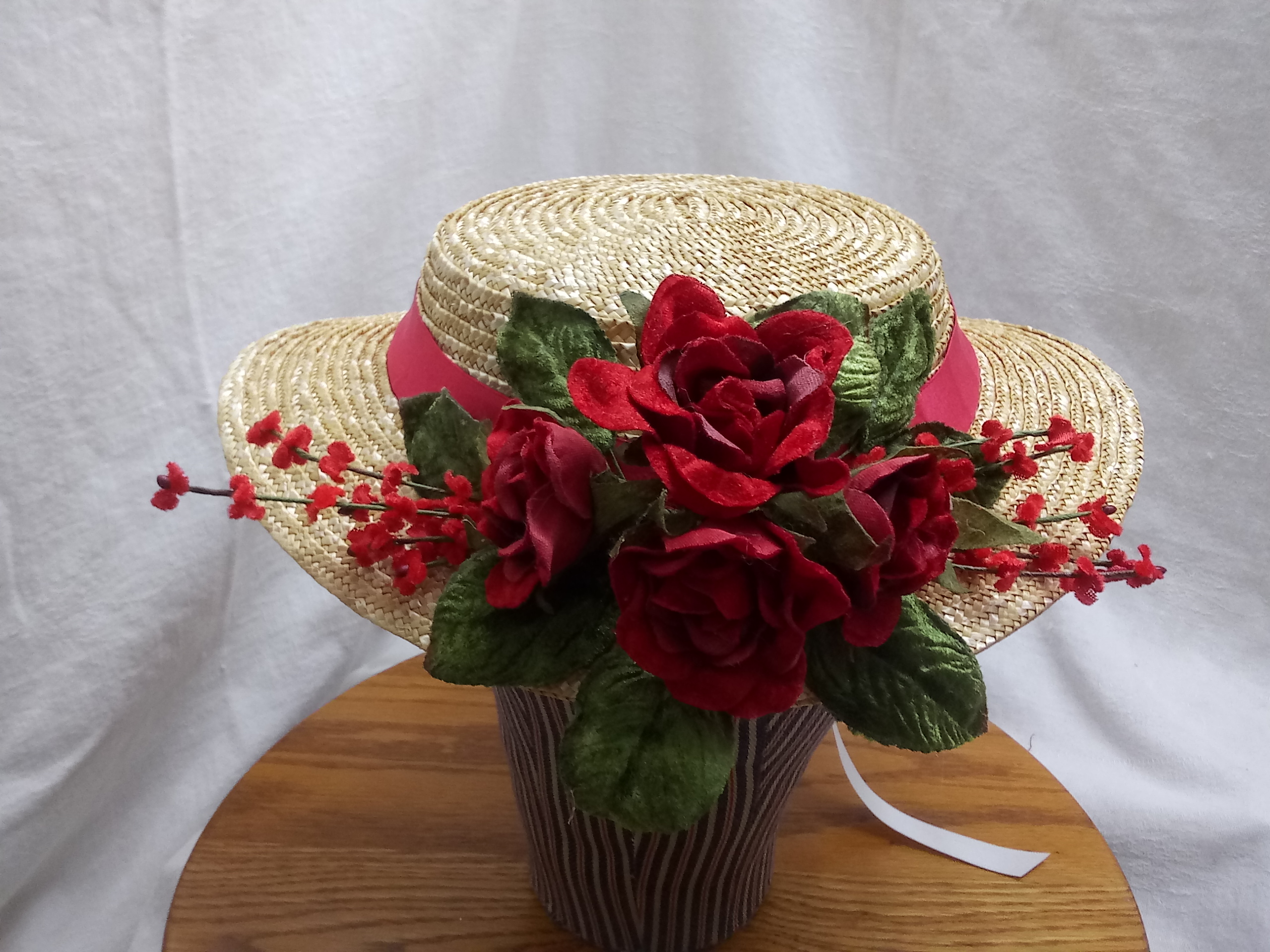
This month’s millinery was done in groups. There were also a couple that you didn’t get to see.
Coming Ahead:
The May/June Cap to Crowns Challenge
Finishing my 1830s dress
Many opening days: Sonnenberg Gardens, Genesee Country Village & Museum, Linwood Gardens. I hope to get in a good walk at each of these this month.
Pinking Demonstration at GCVM during the Antique Show. (This should keep me from shopping.)
Fabric and Swatch Book Zoom discussion for a local group.
Working on the extant straw bonnets: Special content available on Patreon.
Why shouldn’t you wear polyester dresses in a history setting?
Polyester and other synthetic fibers melt when in contact with, or in close proximity to, fire. If your dress or under cloths catch fire, they can melt and stick to your skin.
Polyester does not allow the body to breathe like wool or cotton will. If your body can not breathe during hot days or while doing period activities, you can overheat, get heat exhaustion, or even heat stroke. (In the case of a polyester covered bonnet, the heat can become trapped inside.)
The vast majority of polyester fabrics will not work up the way wool or silk or cotton will. They require modern sewing techniques that defeat the purpose of period sewing for most.
Oddly enough, mice like polyester. I don’t know why. Apparently, they think it is a yummy snack.
The cost: Yes, silk can be expensive. Yes, wool can be expensive. But, both can be had for less with patience and flexibility. I do not pay full price for my personal silks and wools. I can’t.
I took a quick look at what poly satin costs at the popular fabric/craft store. $9.99 to $14.99 a yard. Sure, that is less than $30/silk. But…. there are many other options out there. Here is a quick comparison of a couple. Currently, The Button Baron is offering limited runs of Family Heirloom Weavers fabric for $10/yard. Honestly, I would prize this type of dress over most nice silk dresses. Over on the discount fabric outlet sites, silk can be had for $10/yard or even as low as $6/yard. In each of these cases, the fabric is 55 to 60 inches wide, meaning a dress, even an 1850s dress, could be made with 5 yards. If you join some of the fabric resell groups, you can pick up dress lengths of silk and wool for $35 to $100 for longer lengths.
“Millinery 2021” covers much of what I talk about in my video, including how to measure for a hat.
Please follow and support me….
Consider Patreon for special content. Currently, I am sharing the progress with my original straw bonnets in need of TLC: http://www.patreon.com/AMillinersWhimsy
A Milliner’s Whimsy – If I Had My Own Blue Box (History Blog):www.amillinerswhimsy.com

















 If I Had My Own Blue Box: